

Think about the last time you caught yourself daydreaming and suddenly thought, “Whoa, I’m doing it again.” That tiny flash of recognition feels so ordinary, but it sits on top of something very ancient and very strange: the brain’s ability to notice itself. Evolutionary theorists are increasingly arguing that this kind of self-awareness did not arrive fully formed in humans, but grew step by step from far simpler abilities that even humble animals may share.
This idea is both exciting and unsettling. If they’re right, then the roots of “I” might stretch back far beyond our species, into tiny brains that couldn’t speak, plan for retirement, or worry about social media likes. In this view, self-awareness stops being a magical light switch that suddenly flipped on in modern humans and starts to look more like a dimmer dial that nature has been slowly turning up for hundreds of millions of years.
The Big Shift: From Consciousness as a Light Switch to a Dimmer Dial

For a long time, people talked about self-awareness like it was an all-or-nothing thing: either you had it, like a human, or you did not, like a rock. That picture is increasingly being replaced by a more gradual one where different species show different degrees and flavors of self-related abilities. Instead of asking whether animals are “conscious” in a yes-or-no way, researchers now ask what specific capacities they have that support monitoring, control, and flexible behavior.
This shift matters because it changes what counts as interesting. If we stop hunting for a single magic moment when self-awareness appeared and instead look for building blocks, we suddenly see them everywhere. Things like tracking your own body, noticing your mistakes, or predicting your next move all become part of the story. Self-awareness, in this frame, is more like a layered cake than a single cherry on top.
The Simple Ability at the Core: Monitoring Your Own Internal State

The leading idea is that before any creature could think “I am me,” it first had to sense what was going on inside its own body. This is sometimes called interoception: monitoring things like hunger, temperature, stress, or balance. Even very simple animals need some version of this just to stay alive; they have to react when energy is low, when damage occurs, or when the environment changes in threatening ways.
Over evolutionary time, this basic internal monitoring seems to have grown more complex and fine-grained. Instead of just triggering reflexes, brains began building rough “maps” of internal states, allowing them to compare what they feel now with what they felt before, and to predict what they might feel next. That shift – from simple sensing to mapping and prediction – is exactly the kind of small step that, repeated many times, could eventually support something that feels like an inner life.
Body Maps: How Knowing Your Own Body Sets the Stage for a Self

Another key building block is the brain’s ability to track the body’s position and movements, sometimes called a body schema. You depend on this when you reach for a glass with your eyes closed or feel where your foot is without looking at it. Many animals, from insects to mammals, have systems that constantly monitor limb positions and muscle tension to keep them upright and coordinated.
When these body maps become richer and more connected to other senses, you get an increasingly stable sense of “this is my body.” That may not yet be a full-blown self in the human sense, but it is a powerful platform. Once a brain can distinguish between what belongs to the body and what belongs to the outside world, it can start to anchor memories, goals, and feelings to that body, slowly knitting together the experience of being a particular creature in a particular place.
Error Detection: The Tiny “Uh-Oh” That Changes Everything

An especially intriguing candidate for the seed of self-awareness is error monitoring – the brain’s ability to notice when its own actions or predictions go wrong. You feel this when you slip on a word, press the wrong button, or miss a step and instantly sense that something is off. Neuroscientists find signals in the brain that spike when a mistake is made, even when people are barely aware of it.
From an evolutionary standpoint, this “uh-oh” system is gold. Any creature that can detect and correct its mistakes more quickly has a survival advantage. Over time, the same mechanisms that flag simple motor errors can be reused and extended to more abstract things: social blunders, bad decisions, even unhelpful thought patterns. What starts as a tiny correction signal might, many steps later, support the feeling of watching your own mind and judging what it is doing.
Metacognition: When the Brain Starts Thinking About Its Own Thinking
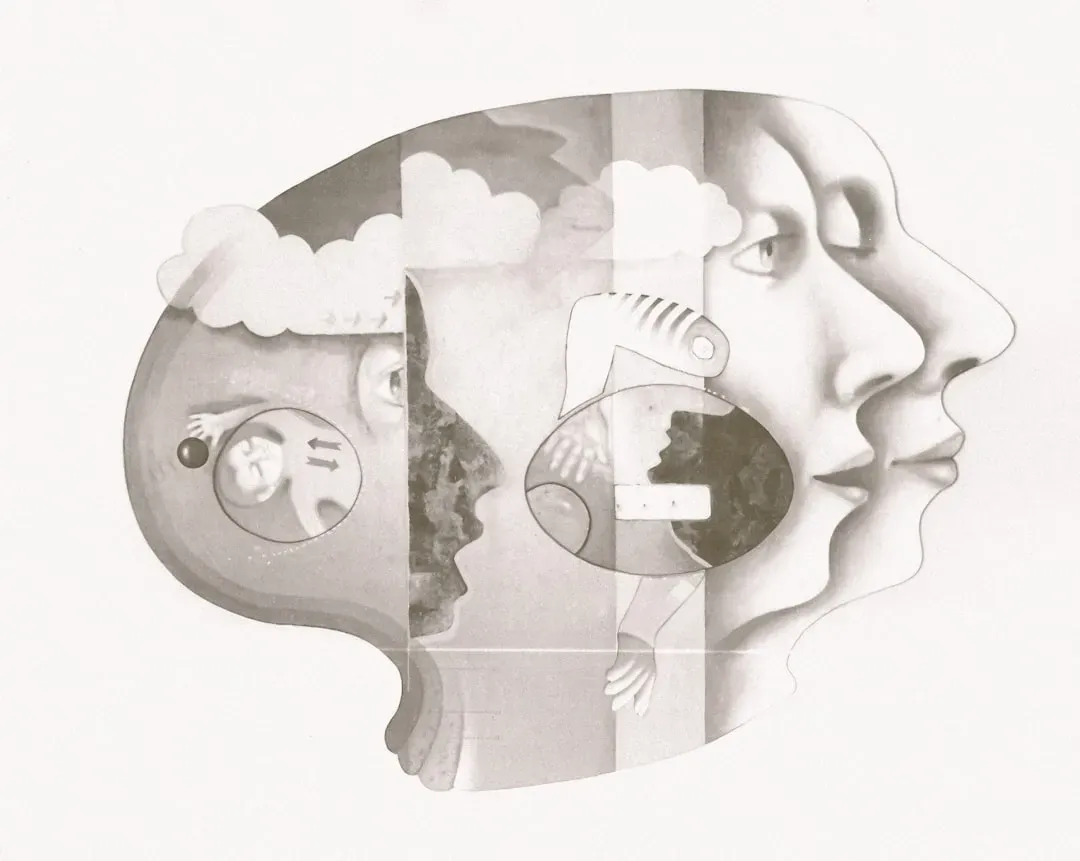
Once a brain can monitor both its internal state and its mistakes, a new layer becomes possible: metacognition, or “knowing that you know” (or that you don’t). Humans show this when they can say how confident they are in an answer, or when they realize they are confused and decide to seek more information. Interestingly, some animals, such as certain primates and even some birds, behave in ways that look a lot like this kind of self-monitoring.
Metacognition does not require poetic inner monologues or complex language. At its core, it is about tracking the reliability of your own mental processes and using that information to guide behavior. You might avoid a risky choice because you feel unsure, or you might double-check a memory that feels fuzzy. This ability to stand back, even slightly, from immediate impressions is a strong candidate for an early, low-level form of self-awareness.
From Simple Signals to the Story of “Me”
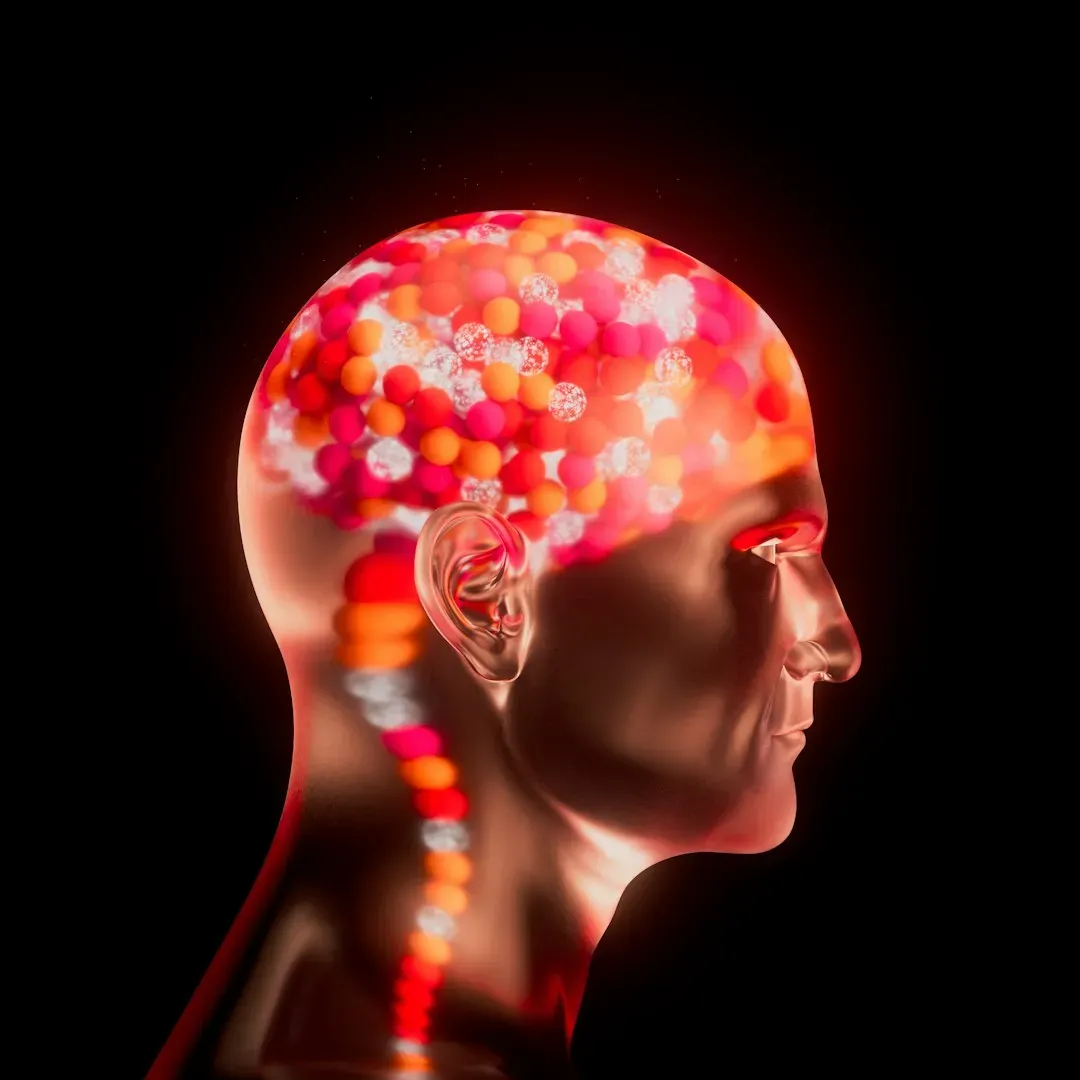
Here is where things get truly human: our brains do not just collect internal signals, they weave them into stories. We remember times we were brave or scared, times we succeeded or failed, and we use those memories to build a narrative about who we are. But that storytelling engine needs raw material, and the raw material comes from those simpler systems that track the body, monitor errors, and assess confidence.
You can think of it like a social media feed that started as a trickle of status updates – hungry now, tired later, mistake here, success there – and gradually turned into a curated profile with a sense of continuity. Evolutionary theorists suspect that humans did not suddenly get a built-in autobiography from nowhere. Instead, once the brain had enough self-related signals to work with, it began connecting them over time, producing that sticky, compelling sense of being the same person across days and years.
Personally, this is the part that hits hardest: the “me” I feel so deeply attached to might be less like a solid sculpture and more like a story the brain is constantly editing on the fly.
Animal Minds: Why Mirrors Are Only Part of the Picture
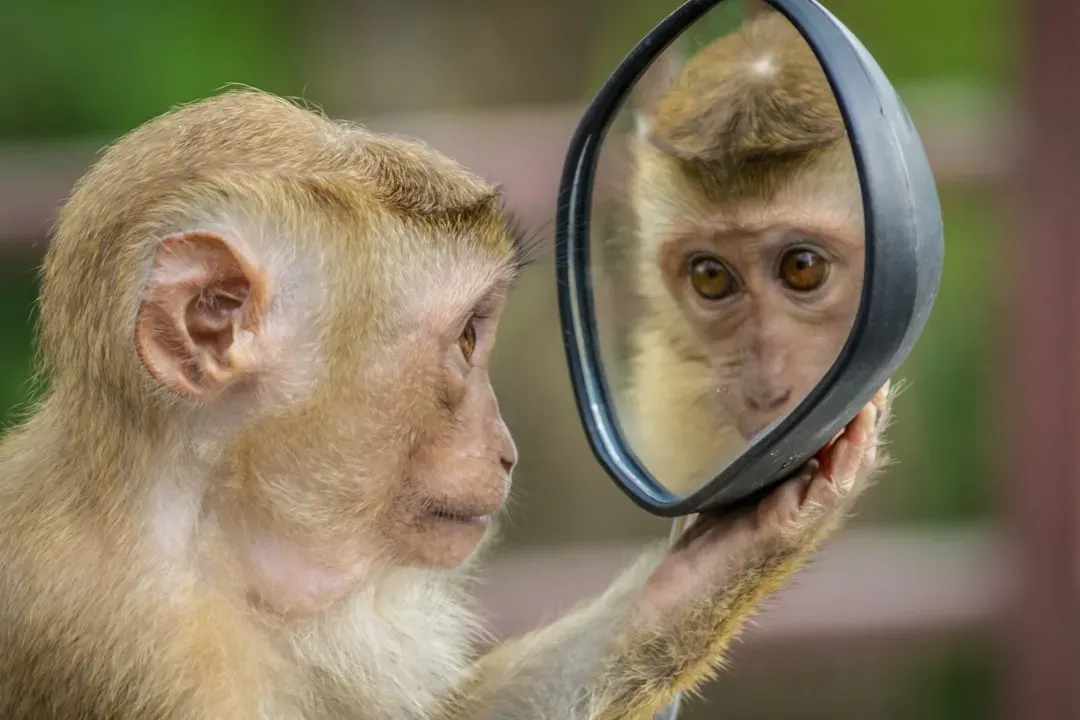
When people talk about self-awareness, they often bring up the classic mirror test: does an animal recognize itself in a reflection? A few species, like some great apes, dolphins, and magpies, seem to pass this test, and that is fascinating. But many researchers now argue that focusing too much on mirrors gives a narrow and possibly misleading view of how self-related abilities evolve.
After all, an animal can monitor its own body, track its confidence, and adjust its behavior based on internal cues without ever needing to understand a mirror. A nocturnal animal or one that lives in murky water may have no evolutionary reason to interpret reflections. So passing or failing the mirror test may say less about whether an animal has any self-related processing and more about how its world is structured. In that sense, simpler internal abilities could be widely shared, even if only a few species happen to show them in mirror-friendly ways.
Why This Matters for How We See Ourselves
If self-awareness is built from simpler pieces, and some of those pieces are shared with other animals, it challenges the comforting idea that humans sit on a totally separate pedestal. Our sophisticated inner lives may still be unique in degree and richness, but they might not be unique in kind. Instead, they could be the latest version of a very old design, tweaked and expanded rather than invented from scratch.
That perspective can be both humbling and oddly empowering. On one hand, it nudges us to treat other animals with more respect, since the gap between their minds and ours might be smaller and blurrier than we liked to believe. On the other hand, it reminds us that even our most mysterious experiences – self-doubt, pride, guilt, hope – are grounded in mechanisms that evolved for practical reasons. The ghost in the machine starts to look less like a ghost and more like a very clever machine learning to watch itself.
My Take: Self-Awareness as an Upgraded Survival Tool, Not a Cosmic Gift
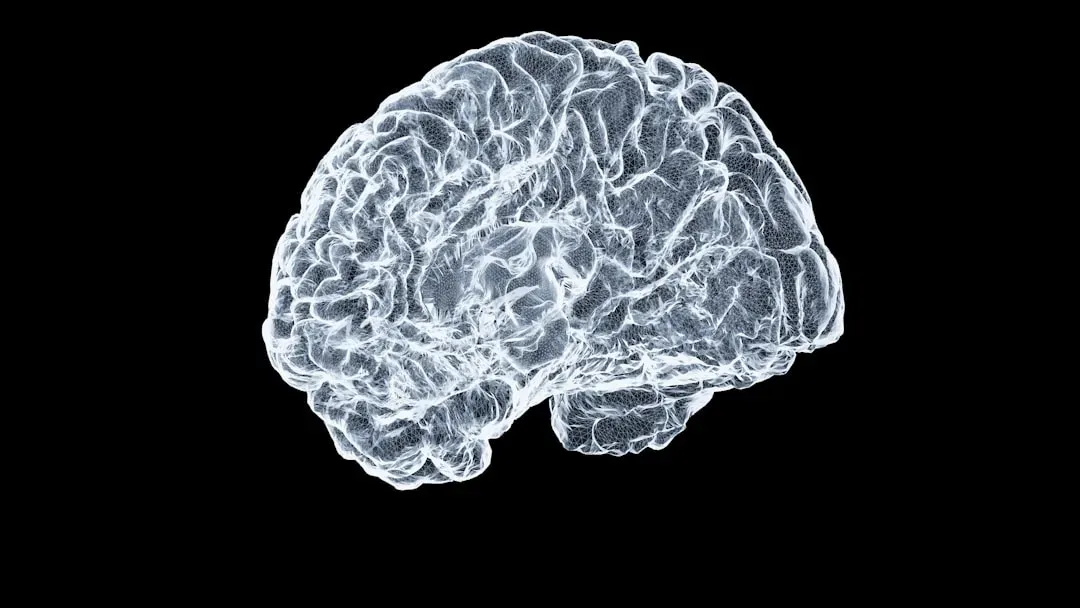
In my view, the most convincing way to understand self-awareness is not as a special cosmic gift, but as an upgraded survival tool that happened to become emotionally and philosophically explosive. The first tiny step was probably not a creature suddenly whispering “I exist,” but a nervous system that could better track its own state and errors. Once that happened, evolution had something incredibly useful to work with, and layer after layer got added until, eventually, you ended up with brains that worry about the meaning of life.
That story does not make self-awareness any less precious. If anything, it makes it more so. Instead of being handed down from nowhere, it is something that was slowly carved out over countless generations of trial and error, like a sculpture emerging from a rough stone. Knowing that, the real question becomes: now that we understand our self-awareness as a hard-won evolutionary upgrade, what are we going to do with it next?