
Most people assume our ancestors were simply surviving – scraping by on instinct while we’ve since built entire sciences to finally “understand” the animal kingdom. That assumption is exactly backwards.
Long before radio collars, drone footage, or a PhD in zoology, hunter-gatherers were reading animal behavior with a precision modern researchers are only now rediscovering – and in some cases still can’t fully replicate. Entire skill sets that took tens of thousands of years to develop have quietly vanished in a single century of convenience. Here’s what field scientists, anthropologists, and indigenous knowledge-keepers actually say we lost.
#1 – Every Footprint Told a Complete Story
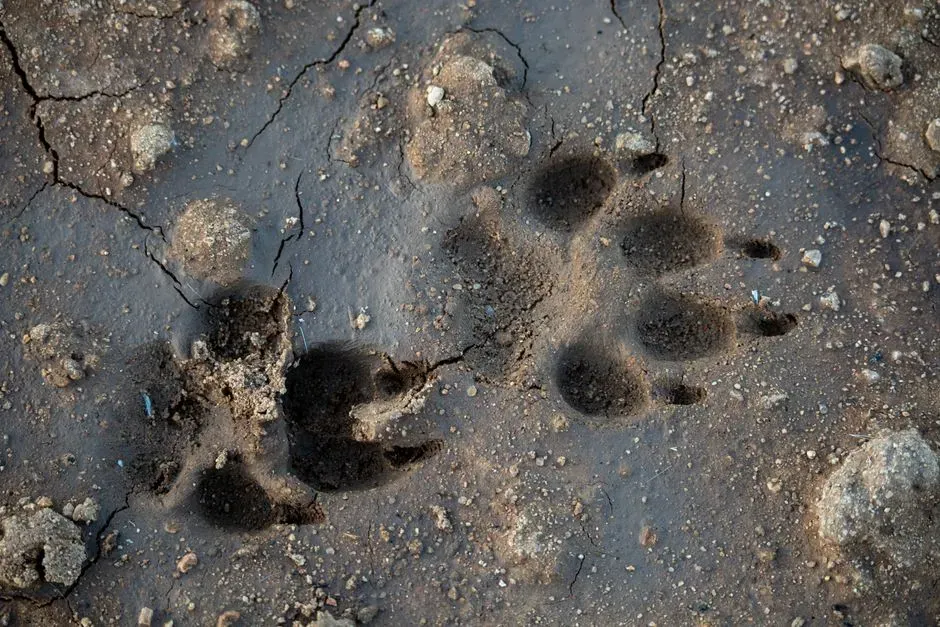
A single print in the sand was never just a shape to early trackers – it was a full biography. Master trackers could read species, sex, age, speed, mood, and even injury from a print most people would walk straight over without noticing.
The San Bushmen of the Kalahari built this into an entire discipline. Their ability to follow the faintest marks and interpret the behavior of animals from their track patterns has probably never been surpassed. This wasn’t guesswork – it was a structured, teachable science passed down through generations, complete with formal training in gait analysis.
What’s wild is how specific this got. Experienced trackers didn’t just follow a herd; San trackers followed the spoor of an animal across virtually any kind of surface or terrain, and their skills even enabled them to distinguish between the spoor of a wounded animal and that of the rest of the herd.
- One footprint = species, age, health status, direction, and urgency
- A herd’s mixed tracks = which individual was injured or vulnerable
Modern hunters rely on rifles and scent-blockers. Early humans relied on reading the ground like a sentence. That’s impressive on its own – but it’s nothing next to what came before an animal ever moved.
#2 – They Could Predict an Animal’s Next Move Before It Made It
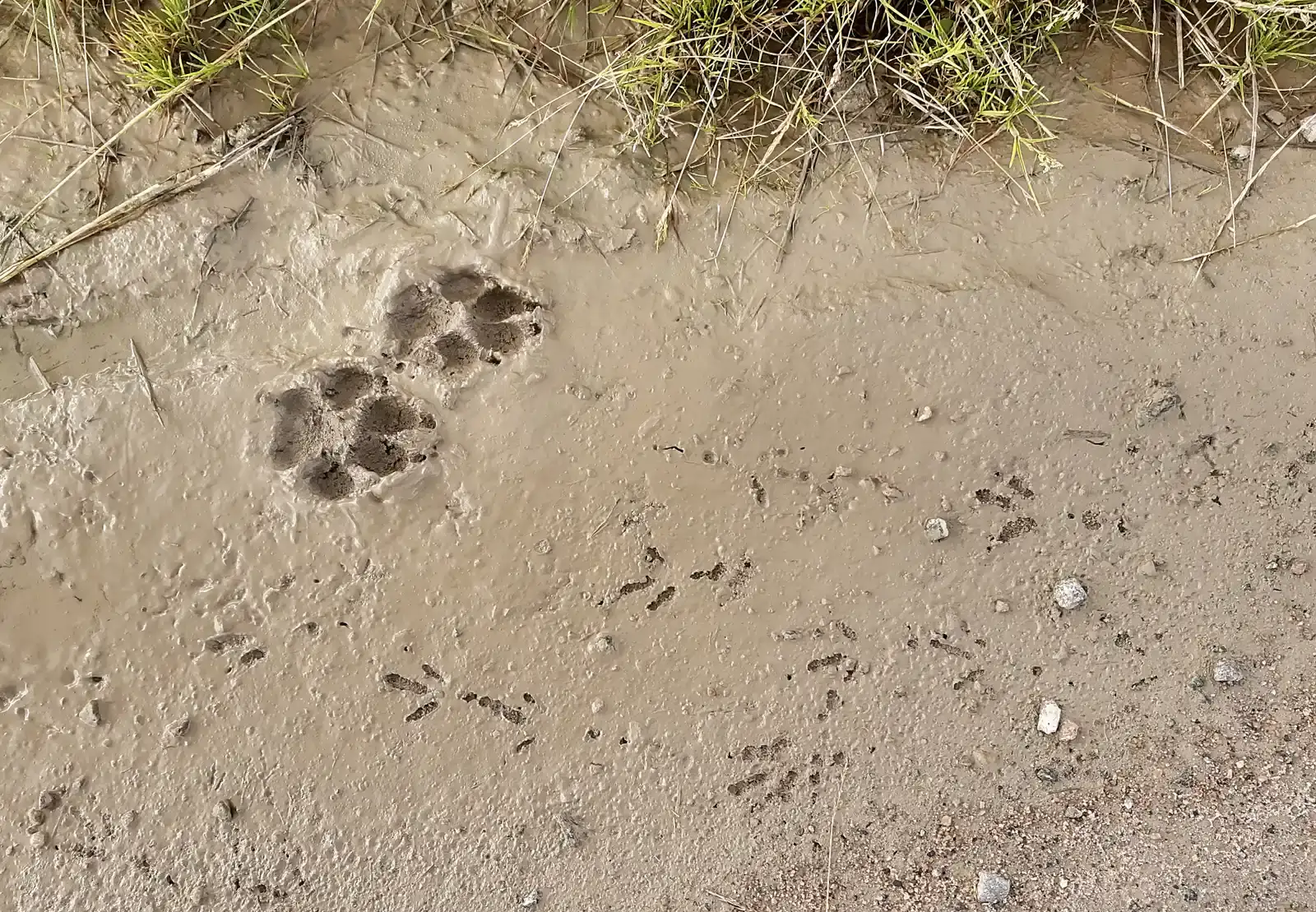
Here’s the part that sounds almost supernatural: skilled trackers didn’t just follow trails, they predicted where an animal was going to be before it got there.
This is called speculative tracking, and it’s a genuinely different cognitive skill than simply following footprints. It involves interpreting signs, forming a working hypothesis about what the animal is doing, and using that hypothesis to predict where it’s headed next. Instead of “following” footprints, the speculative tracker predicts where tracks will be found – because to track an animal well, you first have to think like it.
That’s not a metaphor. Trackers described literally simulating the animal’s body in their own mind. Looking at its tracks, one visualizes the motion of the animal and feels that motion in one’s own body.
Modern trackers confirm this isn’t ancient folklore – it’s still functionally necessary. To anticipate and predict an animal’s movements, a tracker has to know the animal and its environment so intimately that they can effectively identify themselves with that animal, visualizing its position and placing themselves inside it.
Most people today can’t predict what their own dog will do next. Early humans could predict a fleeing antelope’s exact route through unfamiliar terrain – and that’s still not the strangest partnership on this list.
#3 – They Held Actual Conversations With Wild Birds

This one sounds made up. It isn’t. In parts of Africa, humans have been having literal back-and-forth communication with a wild bird for possibly over a million years.
The greater honeyguide leads people directly to beehives using a specific chattering call, and humans respond with their own calls to keep the partnership going. The bird makes a characteristic chattering sound to grab a human’s attention, then indicates the direction of a bees’ nest by flying tree to tree. When it reaches the hive, it falls quiet and waits for its human partners to subdue the bees and crack it open.
This isn’t a one-off curiosity – it’s a full interspecies negotiation system. By using specialized sounds to communicate with each other, both species significantly increase their odds of accessing calorie-dense honey and beeswax, a resource neither could reliably get alone.
And it actually works, remarkably often. In Mozambique, Yao honey hunters find bee nests roughly three-quarters of the time when following honeyguides. Some researchers believe the alliance might stretch all the way back to Homo erectus – putting it at around 1.9 million years old.
Fast Facts
- Species: the greater honeyguide (Indicator indicator)
- Partnership age: possibly traced back roughly 1.9 million years, to Homo erectus
- Success rate: Yao honey hunters in Mozambique find nests about 75% of the time when following the birds
- The deal: humans leave beeswax and comb behind as payment for the next lead
We built smartphone apps to identify bird species by their calls. Early humans built entire hunting economies on talking to birds – and medicine, it turns out, came from watching animals just as closely.
#4 – They Learned Medicine by Watching the Sick
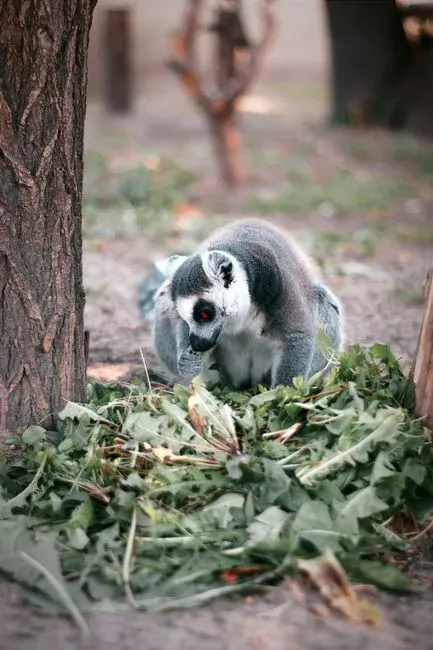
Long before pharmacies, early humans figured out which plants healed wounds and cured illness by copying the animals around them – a practice scientists now call zoopharmacognosy.
This wasn’t superstition; it was careful observational science passed down for generations. Since prehistoric times, humans have looked to wild and domestic animals as sources of herbal remedies, likely selecting medicinal plants in the first place by watching how animals used them.
Ancient naturalists documented specific cases that read almost like field notes. Aristotle and Pliny the Elder both recorded animals self-medicating with plants, including deer using dittany to treat arrow wounds. This wasn’t isolated folklore – the pattern repeats across cultures and continents.
Here’s the part that should genuinely humble modern medicine: Pliny pointed out two thousand years ago that animals had already made medical discoveries useful to humans. A large number of medicinal plants used in modern drugs were first identified by Indigenous peoples and past cultures who watched animals use them and simply followed suit.
Modern drug discovery is now circling back to this exact method – researchers study primate self-medication to hunt for new antibiotics. We forgot the source and had to reinvent the search.
#5 – They Read the Sky and Land Through Animal Behavior
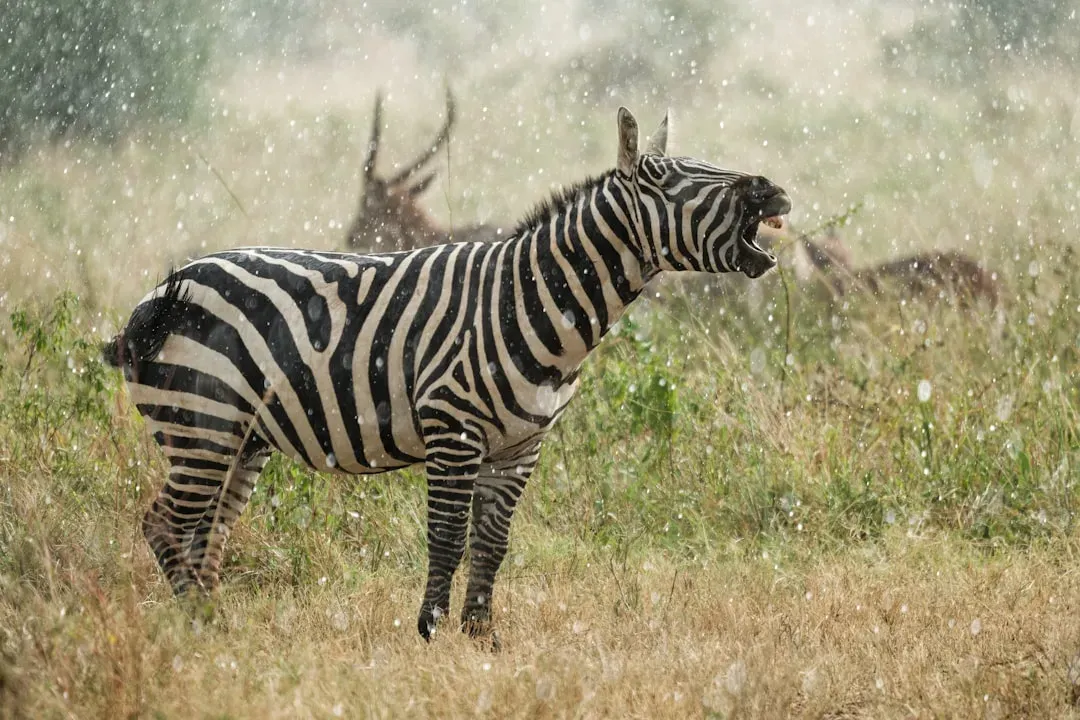
Long before satellite radar, early and indigenous communities forecasted weather with startling accuracy – by watching how animals behaved, not by watching the clouds.
This wasn’t vague intuition. It was a documented, testable system still used today in extreme environments. In Nunavut, Inuit elders share traditional weather-prediction methods based on careful observation of cloud patterns, wind direction, and animal behavior – methods that remain remarkably accurate for short-term forecasting even in a rapidly changing Arctic climate.
Farmers across other continents built the same system independently. They use a range of local biological indicators for climate prediction, including plant phenology, migratory bird behavior, and insect activity.
Here’s the controversial part: modern meteorology, with its billion-dollar satellites, still can’t always beat hyper-local animal-behavior forecasting for short-term, on-the-ground predictions in remote regions. That’s an uncomfortable truth for an industry built entirely on replacing this exact skill.
#6 – They Used Animals as a Living Calendar
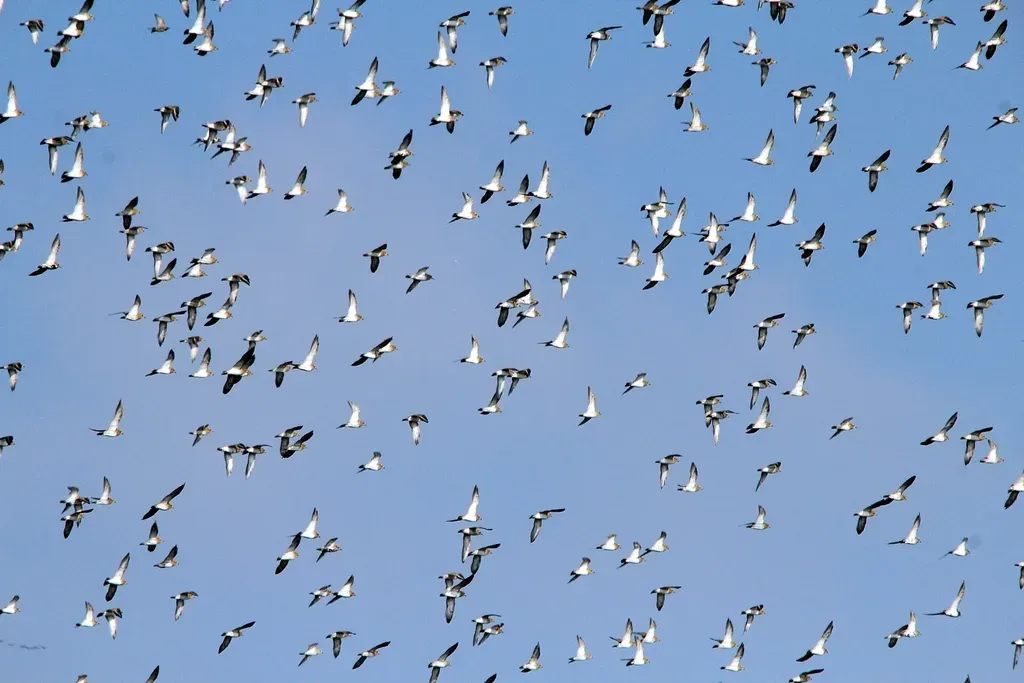
Forget paper calendars – early humans tracked entire seasons by watching when specific animals arrived, left, or changed behavior.
This is called phenology, and it wasn’t casual noticing – it was a precise seasonal clock. Plant cycles, animal behavior, weather patterns, and climate all cycle through seasonality together, and phenology is simply the study of those recurring life-cycle stages.
Specific migration timing became a trigger for entire community decisions – planting, moving camp, preparing for rain. The arrival of migratory birds effectively heralded the start of a new season.
Birds themselves gave away more than just their arrival date. They use their ability to sense air pressure to determine when it’s safe to migrate, and early observers noticed the pattern, using it as an early-warning system for storms long before barometers existed.
We now need machine-learning models trained on decades of satellite data to predict what a 10,000-year-old community understood by watching a single flock.
#7 – They Knew Water Wasn’t Found by Luck
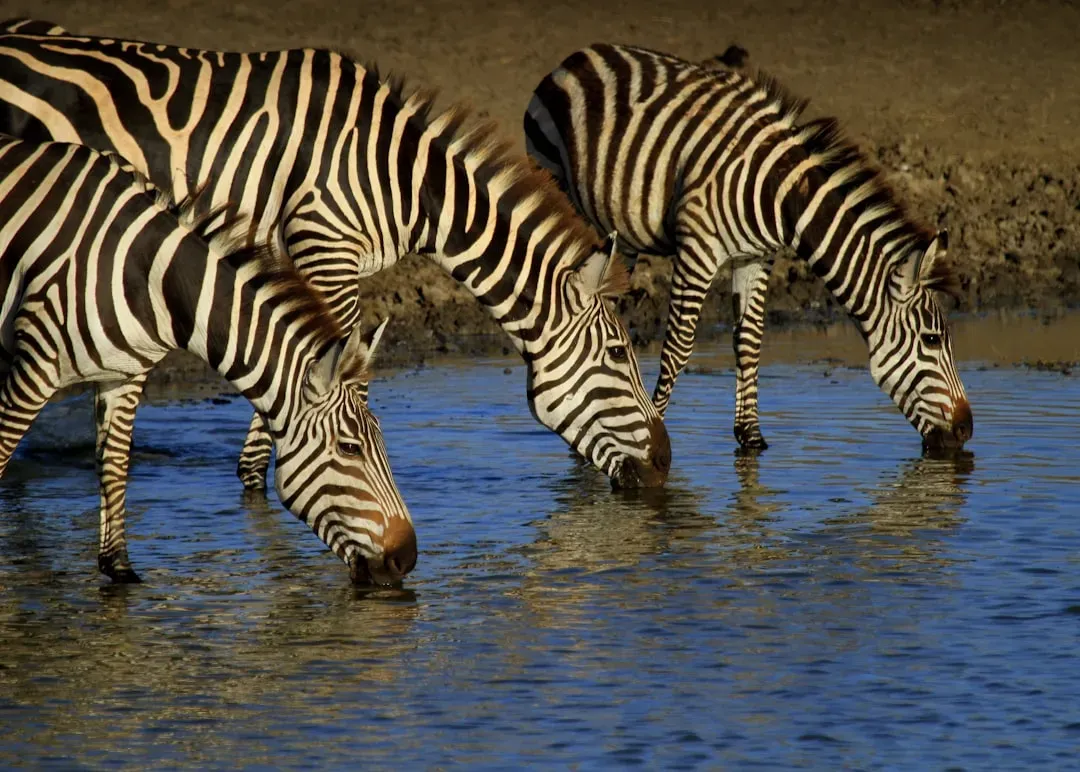
Modern survival shows love to dramatize “finding water in the wild” as some heroic gamble. Early humans didn’t gamble – they simply followed the animals who already knew where it was.
Grazing animals don’t wander randomly; they follow fixed, repeated routes shaped entirely around water access. Bushmen learned to predict animal movement by studying habit – grazers like antelope tend to follow specific paths to water, while predators use stealthier, less predictable routes to hunt near them.
This single piece of knowledge collapsed an enormous survival problem into a simple observational task: don’t search for water, watch the herbivores and let them lead you there. Predators understood this too, which is exactly why ambush points cluster near water sources – a pattern early humans exploited for both hunting and their own safety.
Quick Compare
- Grazing animals: fixed, repeated daily routes tied directly to water access
- Predators: irregular, stealthier routes built around ambushing prey near those same water points
- Early trackers: read both patterns at once – one led to water, the other warned of danger
It’s a small detail, but it flips the entire “man versus wild” survival narrative on its head. There was no heroic guesswork – just decades of inherited pattern recognition about who goes where, and why.
#8 – They Could Tell One Individual Animal From Another Just by Its Tracks
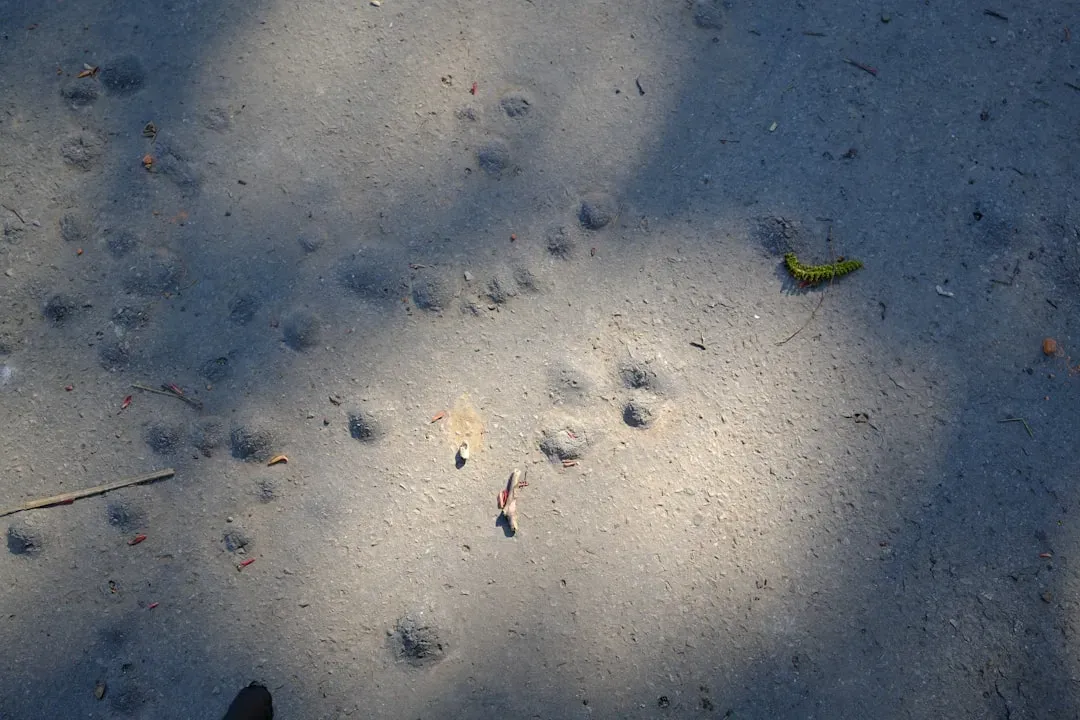
Here’s something that should sound impossible: expert trackers didn’t just identify a species from tracks – they could identify a specific individual animal, distinguishing it from every other member of its herd.
This mattered enormously for hunting efficiency, especially when tracking wounded prey through a mixed herd. San trackers could follow the spoor of an animal across virtually any kind of terrain, distinguishing the tracks of a wounded animal from the healthy ones running right beside it.
This kind of individual-level tracking extended beyond footprints. Trackers could estimate exactly how long ago an animal had passed through a location using subtle physical cues most people would never think to check – the freshness of dung, for instance, was a detail expert trackers used to gauge in real time how close they actually were.
Modern conservationists now use expensive camera-trap networks and AI image recognition to identify individual animals for population studies. A skilled tracker did the same job with nothing but eyesight and inherited pattern memory.
#9 – They Understood That Persistence Beats Speed
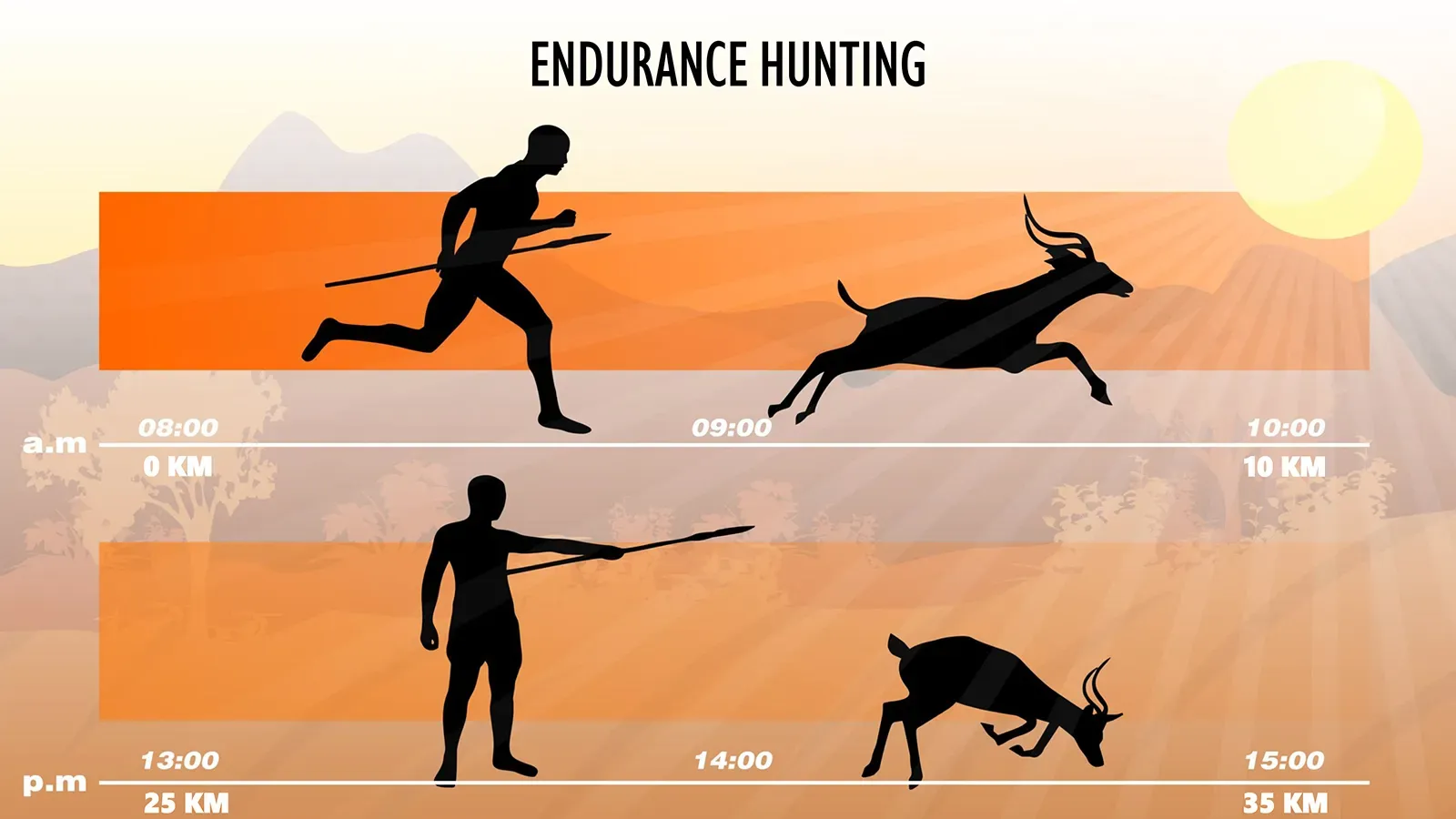
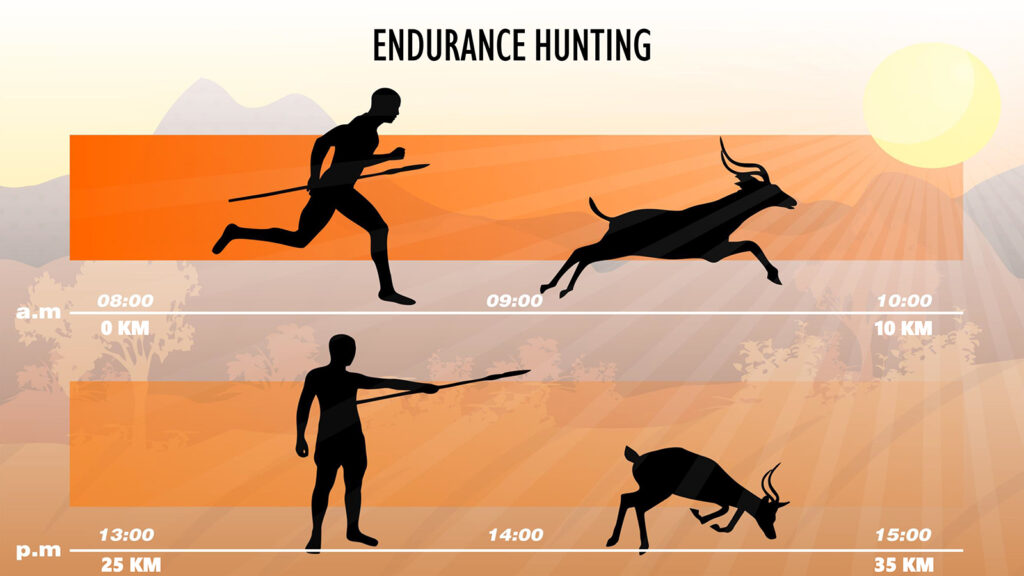
No human can outrun an antelope in a sprint. But over long distances, in heat, humans have a hidden physiological advantage that early hunters exploited ruthlessly – and it’s called persistence hunting.
The method is brutally simple: chase an animal, in heat, until its body physically fails before the human’s does. Persistence hunting is a form of pursuit predation where a predator brings down prey through indirect means – exhaustion, heat illness, or injury – and it demands adaptations for distance running, temperature regulation, and an efficient cardiovascular system.
The data on how effective this actually was is startling. Persistence hunting can yield roughly 4 kg of meat per day with an 80% success rate – a figure that competes favorably against methods like bow and arrow, which historically deliver much lower success.
Quick Compare
- Persistence hunting: roughly 4 kg of meat per day, about an 80% success rate
- Bow and arrow hunting: historically a far lower success rate by comparison
- Shared requirement: both demanded deep knowledge of an animal’s physiology and behavior under stress
The physiological endpoint even has a name: chase myopathy, a state that leaves an animal incapable of further retreat or defense. It meant a single hunter, alone, with no weapon but endurance, could be genuinely effective – and often was.
We built marathons as a sport. Early humans built an entire hunting economy around the exact same biological mechanism.
#10 – They Knew Domestication Was Never One-Sided

Popular history makes domestication sound like humans simply “tamed” wild animals through dominance. Early humans understood something far more accurate: it was always a negotiation, not a conquest.
The honeyguide relationship is the clearest surviving proof of this principle. This unique human-bird partnership is a remarkable example of cooperation between people and wild animals that arose through natural selection – meaning neither species was ever “in charge.” Each brought a skill the other lacked, and the relationship only worked because both sides kept showing up.
That reciprocity had real stakes, and early humans respected it as a two-way obligation, not a favor. Honey-hunters reward honeyguides with beeswax, brood, or honey – fearing, quite literally, that failing to do so could sour future encounters with a bird they depended on.
This is a genuinely controversial point worth sitting with: modern pet culture has flattened “domestication” into a one-directional story of human control. Early humans, by necessity, understood it as an ongoing negotiation where breaking trust had immediate, tangible consequences.
#11 – They Listened for Warnings Across Species Lines
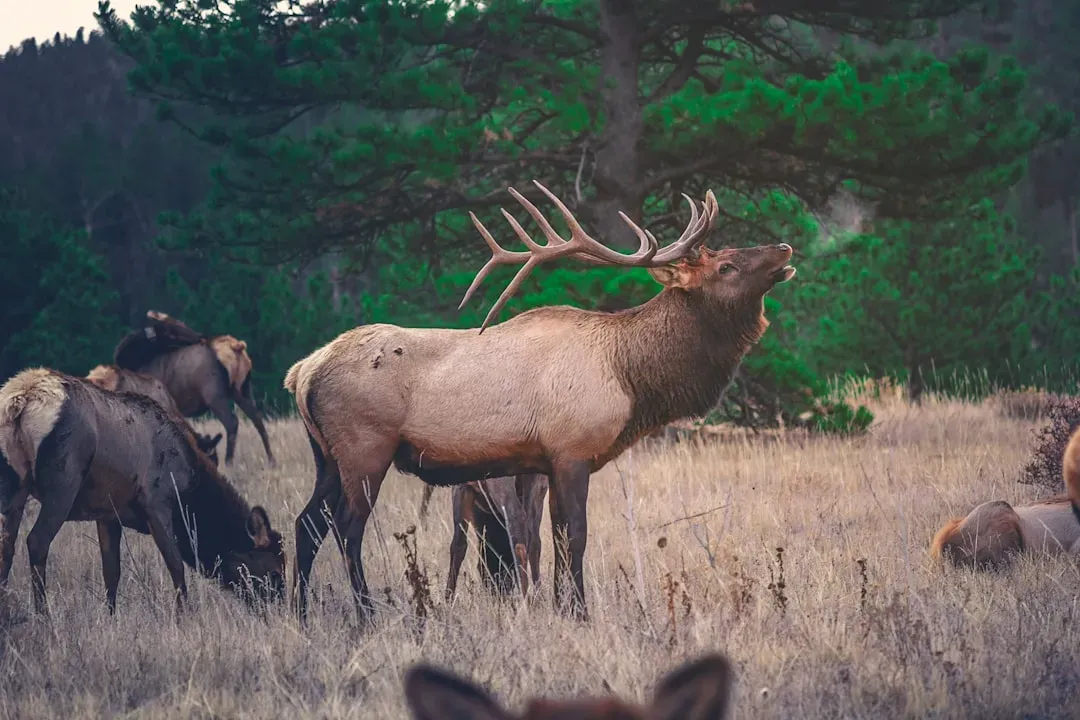
Early humans didn’t only watch animals for their own sake – they eavesdropped on animal-to-animal communication as an early-warning system for predators, storms, and danger long before it reached them directly.
A sudden change in bird chatter, an abrupt silence in the forest, or a specific alarm pattern from grazing herds functioned as a shared language across species. Communities embedded in wild landscapes learned to interpret these signals almost automatically – the same way modern humans instinctively react to a car horn.
This wasn’t mystical intuition – it was pattern recognition built from constant exposure. A community that spent generations near the same watering holes and grazing routes eventually learned which alarm behaviors meant “predator nearby” versus “mild disturbance,” simply through repetition and consequence.
Most people today live so far removed from wild ecosystems that this entire warning system is functionally invisible to us. We’ve replaced it with smoke detectors and weather apps – useful, but nowhere near as immediate or context-rich as reading a sudden shift in birdsong.
#12 – They Tracked the Moon and Stars Through Animal Behavior
Early humans didn’t separate the sky from the animal kingdom – they treated celestial patterns and animal behavior as one connected forecasting system, and it worked.
Communities that still practice this today confirm just how layered the system really was. Bio-physical cues in the environment – bird migration, shifts in insect breeding behavior, wind characteristics, and the position of certain constellations – all served as practical proxies for reading the weather ahead.
This wasn’t a handful of scattered observations – it was a full, cross-checked forecasting method. Farmers used astronomical markers like the sun, moon, and stars alongside biological indicators to predict the arrival of the rainy season.
Worth Knowing
- Bird migration timing signaled shifting seasons
- Insect breeding behavior flagged changes in temperature and rainfall
- Wind pattern shifts hinted at incoming storms
- Lunar phase and constellation position added a long-range check on shorter-term animal signals
The genuinely surprising part is how layered this system was. Early observers weren’t picking one signal and hoping for the best – they were cross-referencing lunar phase, animal breeding behavior, and bird migration simultaneously, building redundancy into their forecasts the same way modern meteorologists combine satellite, radar, and ground-sensor data. We just forgot the animals were ever part of the equation.
#13 – They Treated Restraint as Survival Strategy, Not Sentiment
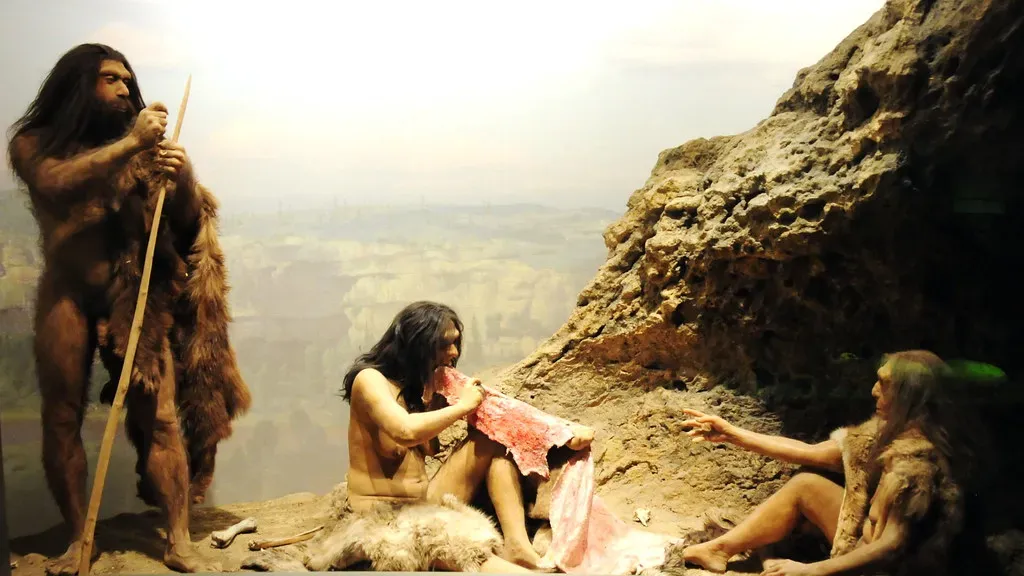
This is the one modern society has forgotten most completely: early humans understood that taking more than necessary from an animal population wasn’t generous or wasteful – it was a direct threat to their own future survival.
This wasn’t abstract conservation ethics. It was transactional self-interest, built directly into daily practice. The honeyguide relationship shows this principle in miniature: honey-hunters reward the birds with beeswax, brood, or honey, because the whole system only functions long-term if both sides consistently hold up their end.
That same logic scaled up to entire hunting and gathering economies. A community that overhunted a herd, ignored breeding seasons, or drained a watering hole wasn’t being “unlucky” the following year – they were experiencing the direct, predictable consequence of breaking a system they depended on.
Here’s the controversial part: modern industrial food systems have almost entirely disconnected consumption from consequence. Most people alive today have never once had to personally reckon with what happens when an animal population they depend on disappears. Early humans never had that luxury – and arguably, they understood the relationship between humans and animals more honestly because of it.
The Bottom Line
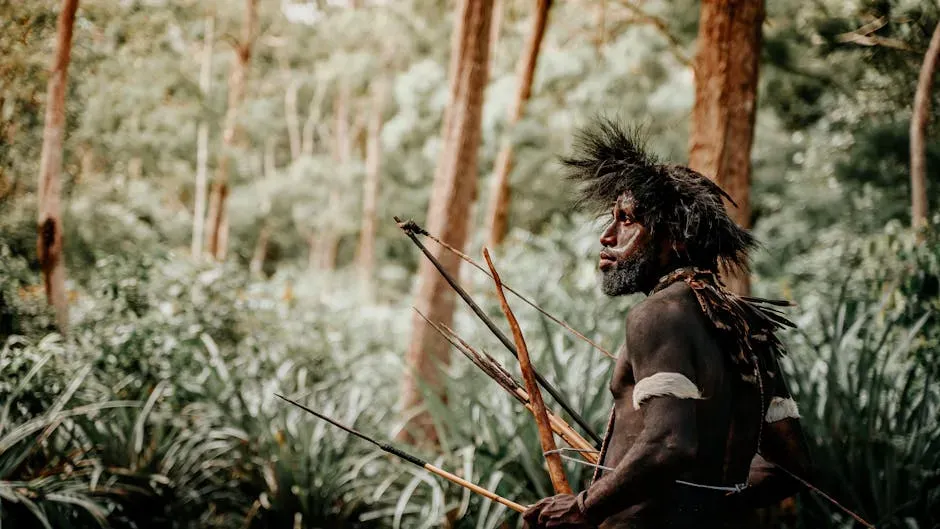
Strip away the myth of the “primitive” hunter-gatherer, and what’s left is a species that read tracks like text, predicted animal movement like a physics equation, forecasted weather through birdsong, and negotiated actual partnerships with wild animals.
We didn’t outgrow this knowledge – we outsourced it, trading direct observation for satellites, apps, and supermarkets, and lost the fluency in the process. The uncomfortable truth is that a Kalahari tracker or a Yao honey-hunter today can still out-read an animal faster than most modern biologists with a laptop.
Which of these lost skills surprised you the most – and do you think any of them are still worth relearning? Drop your thoughts below.