
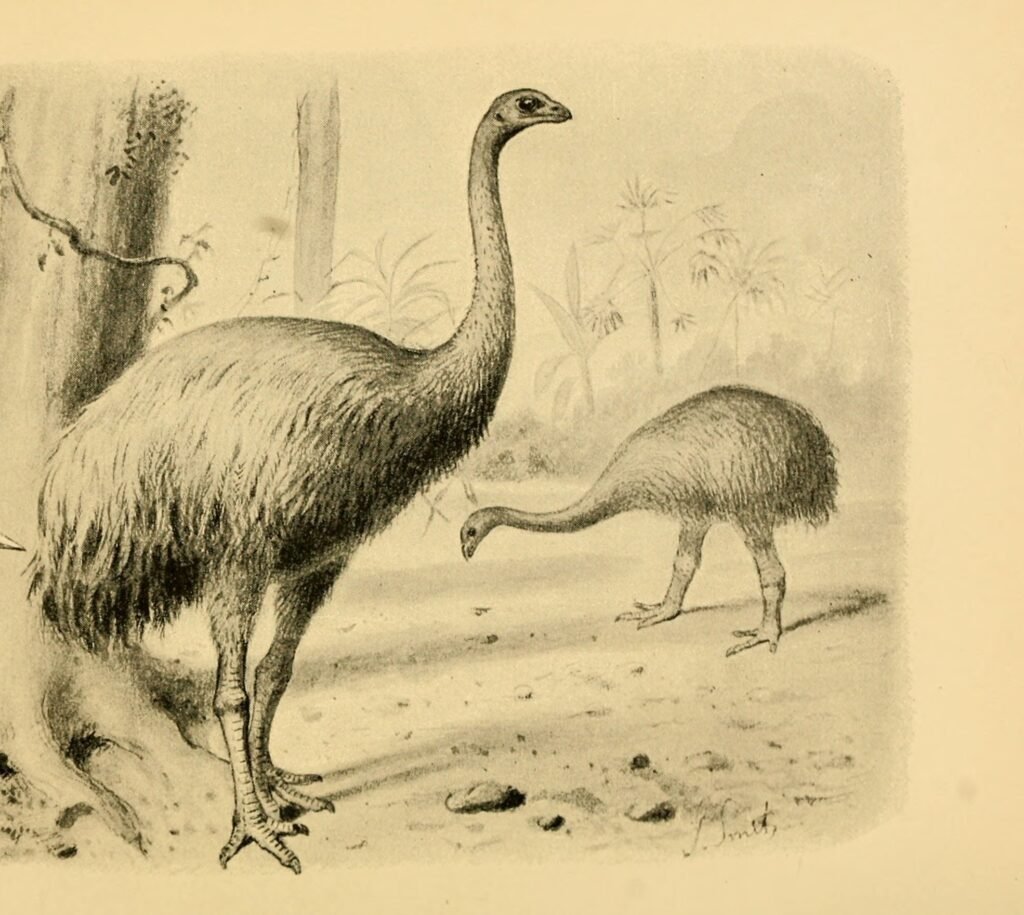
Everyone knows how the moa story ends: giant flightless bird, wiped out by humans, tragic footnote in extinction history. That part is true. But it skips the part that actually matters – the moa didn’t just exist until people showed up. It thrived for millions of years, through ice ages, volcanic eruptions, and a sky full of predators built specifically to kill it.
What kept a bird that couldn’t fly, couldn’t run fast, and laid only a handful of eggs a year alive for so long? The answer isn’t luck. It’s a stack of quiet, brutally effective survival tricks that scientists are still piecing together from bones, gizzard stones, and fossilized droppings. Here’s what actually kept the moa standing for as long as it did.
#1 – It Turned “Too Big to Fly” Into a Survival Superpower
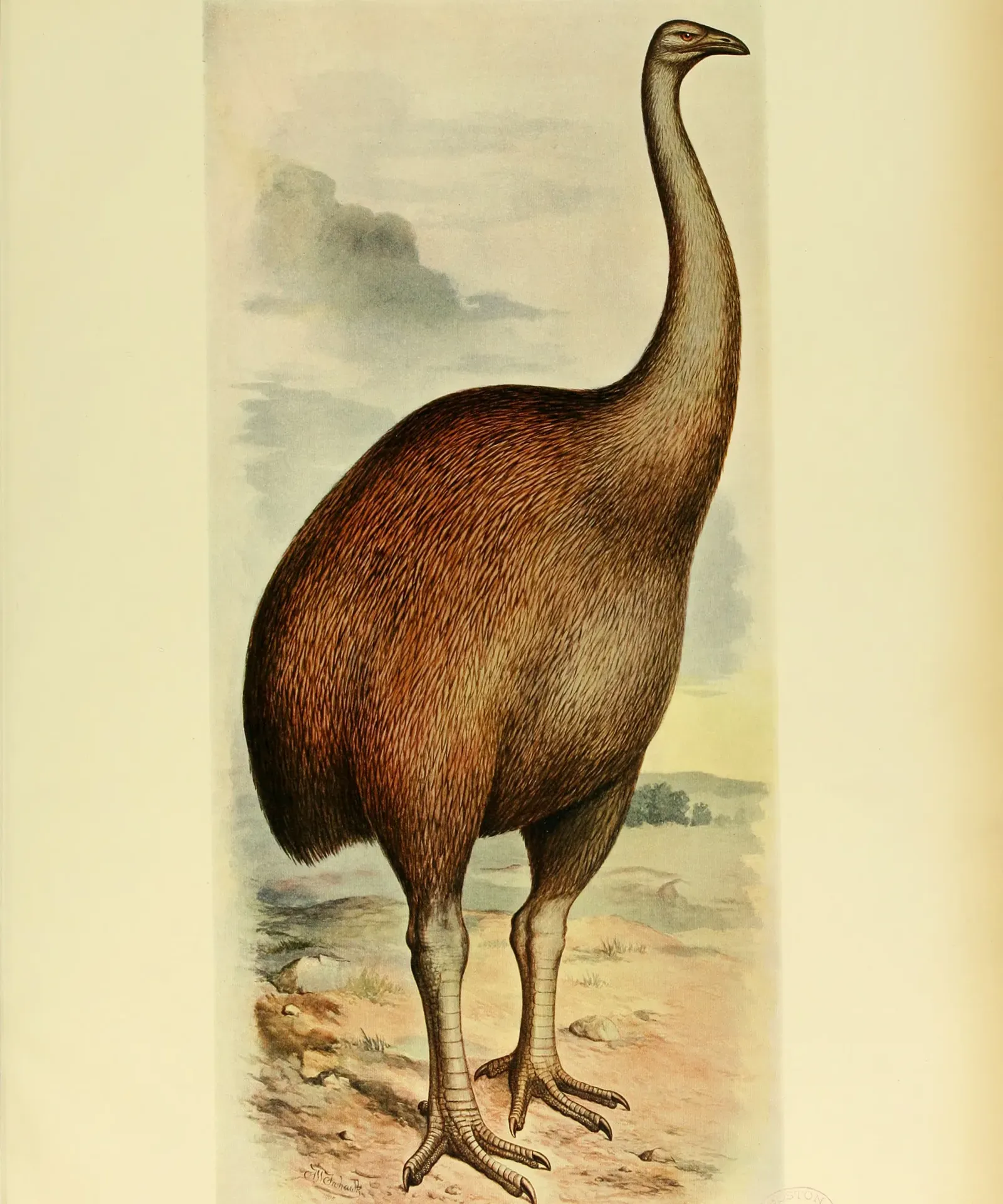
Losing the ability to fly sounds like a death sentence. For the moa, it was the opposite – a strategy that worked for millions of years. By going all-in on being flightless, moas didn’t just give up wings. They doubled down on size and raw strength instead.
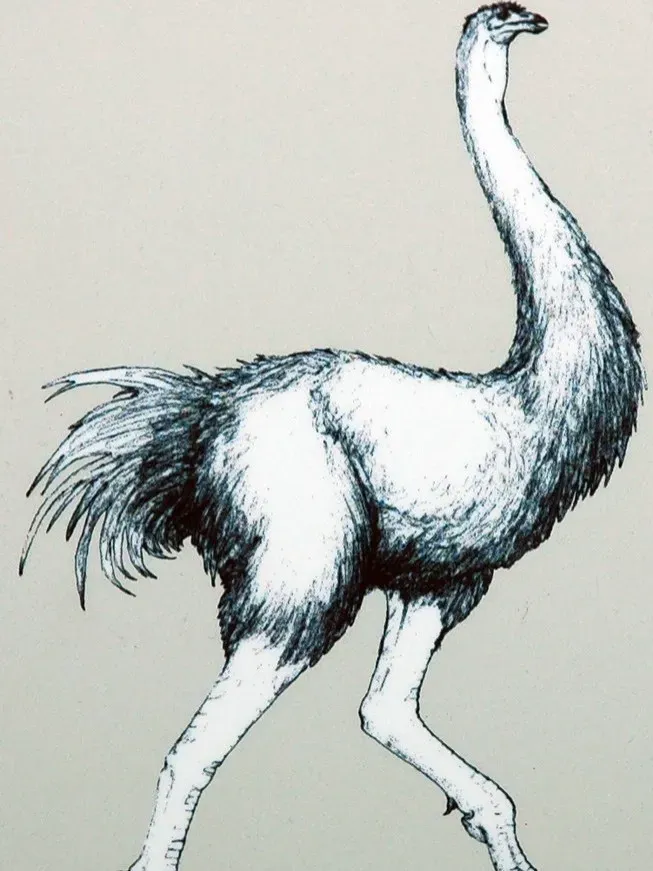
Some species stood over 3.5 meters tall with their necks extended, weighing more than a grown adult human. That size wasn’t for show. In prehistoric New Zealand, which had no native land mammals besides a couple of tiny bat species, being enormous meant most land predators simply didn’t exist for them.
Fast Facts
- At least nine distinct moa species are recognized, ranging from turkey-sized browsers to towering giants
- The largest known species, the South Island giant moa, could reach roughly 3.6 meters tall with the neck extended
- In several species, females grew dramatically larger than males – a rare pattern known as reversed sexual size dimorphism
- Pre-human New Zealand had only two native land mammals, both small bat species
Flight is metabolically expensive. By ditching it in a predator-poor world, moas could pour everything into dense leg bones, powerful muscles, and massive digestive systems built to process tough vegetation. That ground-titan build paid off best in dense forests and shrubby terrain, where flying isn’t even that efficient anyway.
The twist is almost funny in hindsight: the exact trait that looks like a fatal weakness today – being big, grounded, and slow – is what bought the moa an absurdly long run of evolutionary success.
#2 – It Became a Master of Slow, Steady Reproduction
Most animals survive by breeding fast, like rabbits flooding the system with offspring and hoping enough make it. Moas played the opposite game entirely: fewer eggs, bigger investment, longer lives. And for thousands of years, it worked beautifully.
Bone growth rings and comparisons with similar large birds suggest moas were long-lived, slow-maturing animals. Instead of racing to reproduce, they grew large, avoided predators, and bred steadily over many years rather than in one desperate burst.
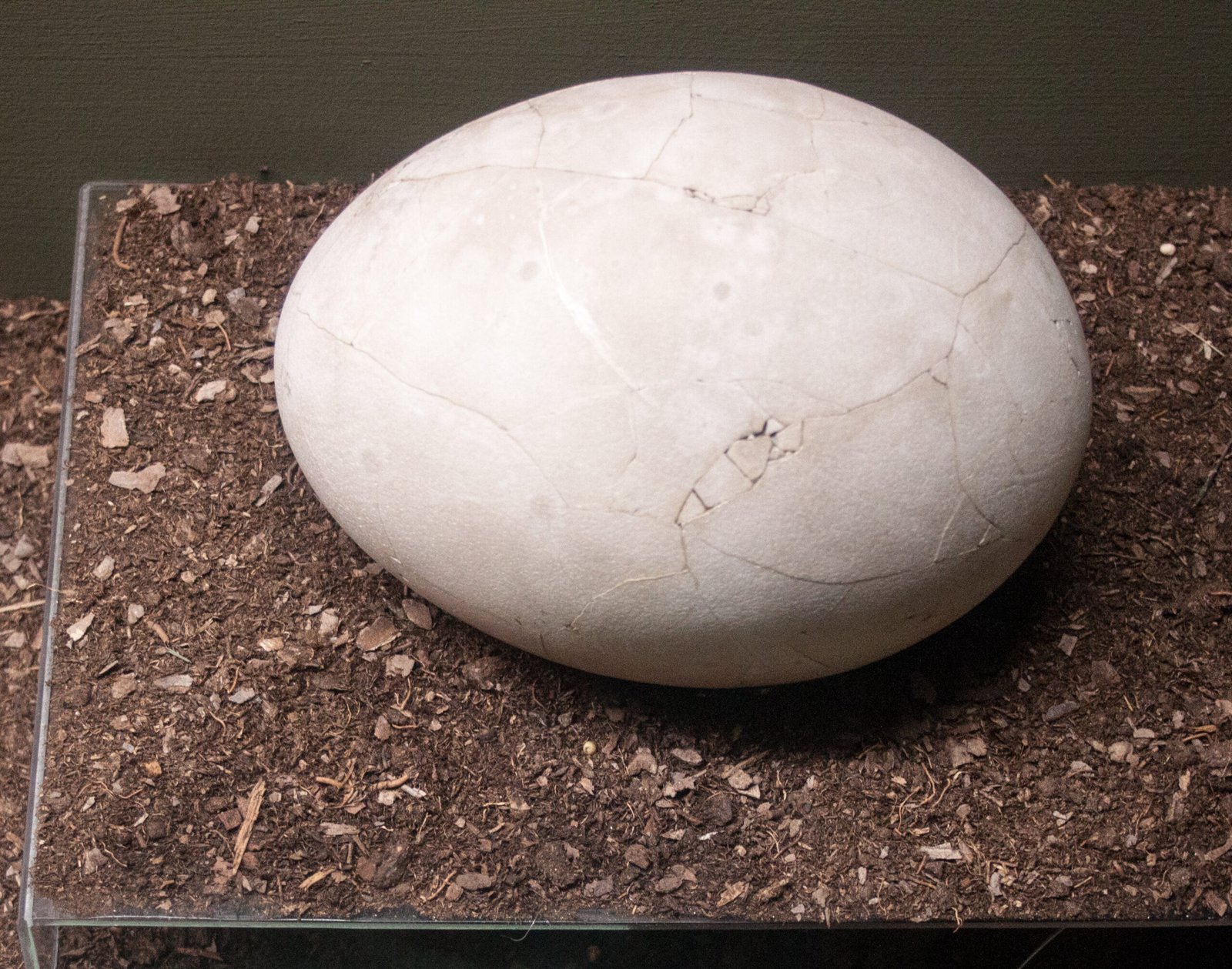
Females laid relatively few eggs each season, but those eggs were enormous – some roughly the size of a human head. A single moa egg could weigh the same as 50 to 60 chicken eggs combined, which tells you exactly how much energy went into each one.
In an island ecosystem with almost no ground predators, that math made total sense. The odds of an egg or chick getting eaten were historically low, so there was no evolutionary pressure to overproduce. This same slow, careful strategy eventually became a fatal liability once human hunters and egg-raiders showed up – but for thousands of years before that, it was one of the pillars holding the moa’s world together.
#3 – It Used New Zealand’s Isolation Like a Natural Fortress
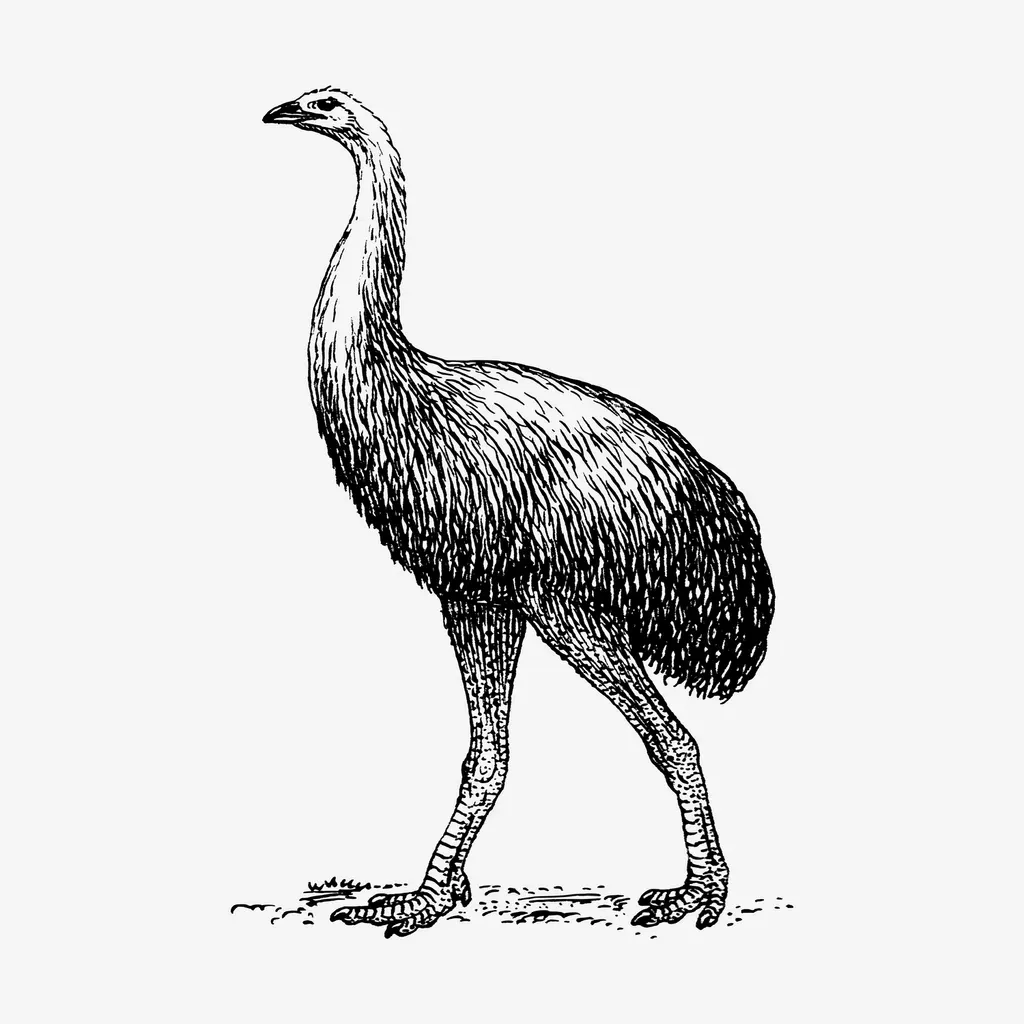
For millions of years, New Zealand floated in the Pacific like a biological bubble. No big cats. No wolves. No hyenas. No large native land mammals of any kind. In that vacuum, birds took over almost every ecological role mammals usually fill – herbivores, browsers, even apex predators.
Moas became the dominant large plant-eaters in that system, essentially playing the role of deer, antelope, and bison all rolled into one, just wearing feathers instead of fur.
That isolation did two things that mattered enormously for their survival. It kept out fast-breeding mammal predators that could have torn through nests and chicks, and it let moas evolve slowly and steadily instead of constantly scrambling to react to new threats.
Because of that shield, moas really only had one serious native predator to worry about: the giant Haast’s eagle, which targeted juveniles and occasional adults rather than raiding every nest like introduced rats, stoats, or pigs do today. Moas could afford calm, exposed ground nesting because for most of their history, the ground genuinely wasn’t that dangerous. People love to say island species are fragile – and eventually that became painfully true. But for most of the moa’s existence, New Zealand’s remoteness wasn’t a weakness. It was a fortress.
#4 – It Turned Browsing Into an Ecosystem Power Move
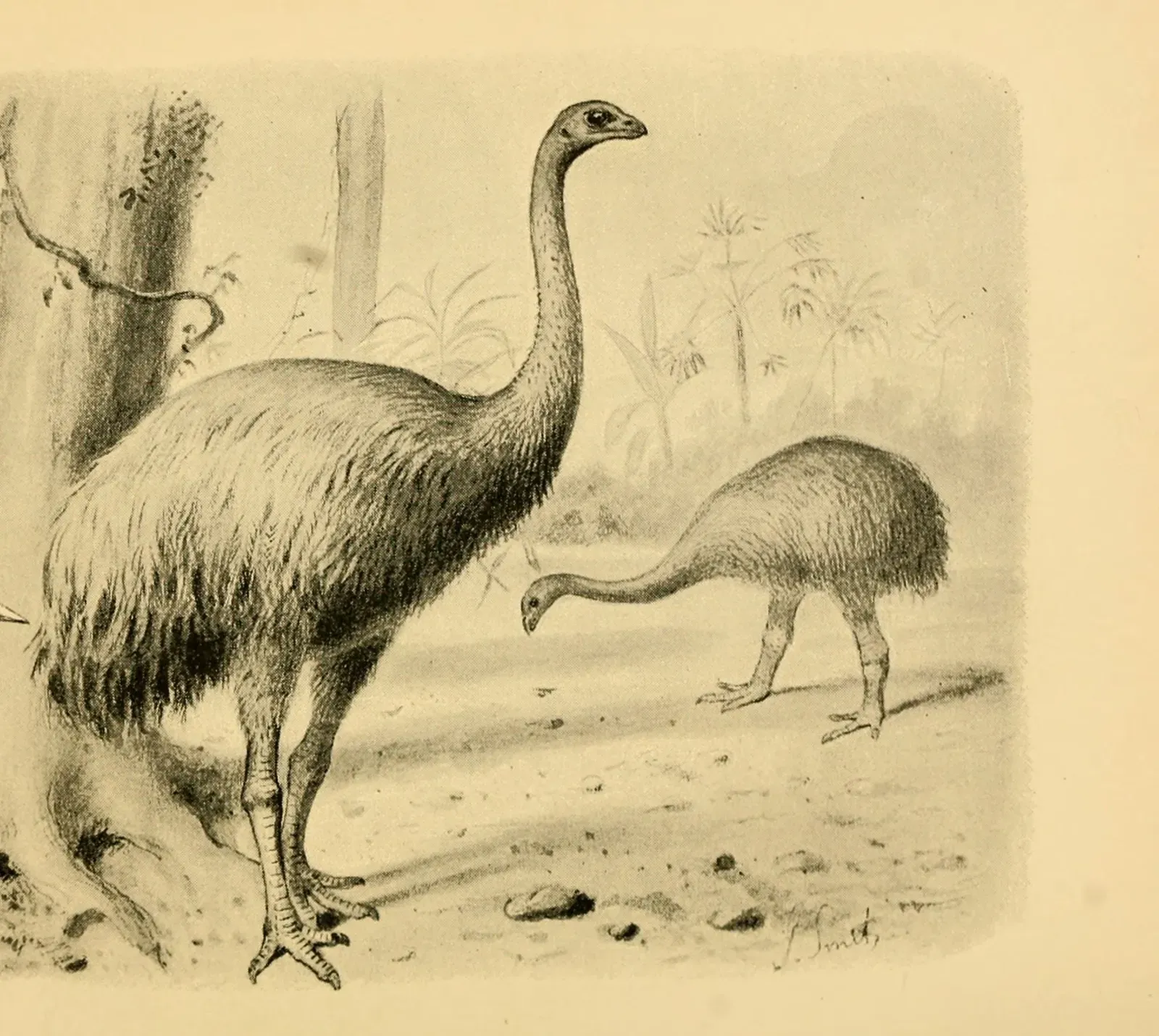
It’s easy to picture moas as just big birds mindlessly chewing leaves, but their feeding behavior was far more strategic than that – and it’s part of what kept them relevant for so long.
There wasn’t just one moa. There were multiple species, ranging from turkey-sized to towering giants, each with a different beak shape and body size. That variety wasn’t random. It meant they effectively divided up the plant world like a carefully organized grazing system, with some species working low shrubs, others stretching for small-tree foliage, and the biggest reaching heights nothing else on the islands could touch.
This niche-splitting reduced direct competition between moa species, let them exploit almost every plant layer in the forest and scrubland, and helped stabilize entire vegetation communities by preventing any single plant group from taking over unchecked.
Fossilized gizzard contents and coprolites – yes, fossilized droppings – show moas ate a mix of leaves, twigs, seeds, and fruit, and their digestive systems were tough enough to handle fibrous, low-quality material that would defeat many other animals. There’s a growing argument among paleoecologists that moas actively shaped forests and grasslands through what they chose to eat, much like elephants do in Africa today. When you’re the dominant herbivore for thousands of years, your menu choices literally rewrite the landscape around you.
#5 – It Spread Seeds and Engineered Its Own Food Supply
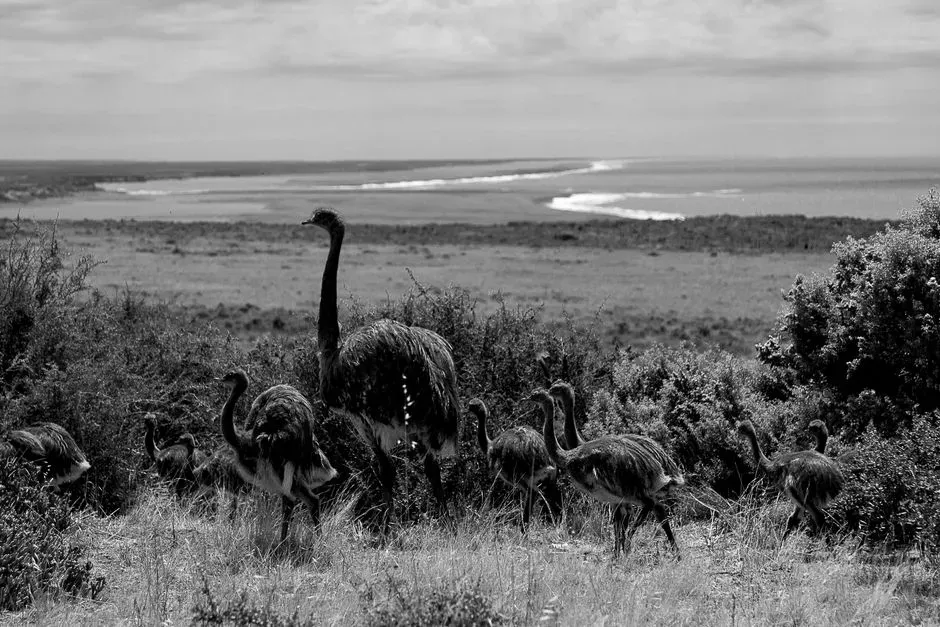
Here’s the part most people have never heard: moas may have helped create the very forests that kept them alive. Eating fruit, leaves, and seeds all day doesn’t just feed a moa – it moves plant life around the map, sometimes for miles.
There’s strong evidence that moas acted as major seed dispersers for many native plants, swallowing fruit whole and depositing seeds in their dung far from the parent tree. Some modern New Zealand shrubs still have unusually large, tough fruit that looks almost “overbuilt” for today’s small birds, as if it were designed for a giant that no longer exists.
That seed-moving role helped maintain diverse, resilient plant communities that could bounce back from storms, landslides, or volcanic ash. It also guaranteed fresh food would regrow in disturbed areas moas later wandered into, creating a feedback loop where their movement and plant abundance reinforced each other.
Even their droppings weren’t waste – they were nutrient-rich fertilizer that enriched the soil. In reconstructed ecosystems, removing moa-like herbivores leads to poorer soil structure and less plant diversity, which suggests their constant browsing and fertilizing actually sustained the very environments they depended on. Long before humans started talking about “managing landscapes,” moas were quietly doing a version of that just by living their daily lives.
#6 – It Exploited a Vertical World Most Animals Ignore
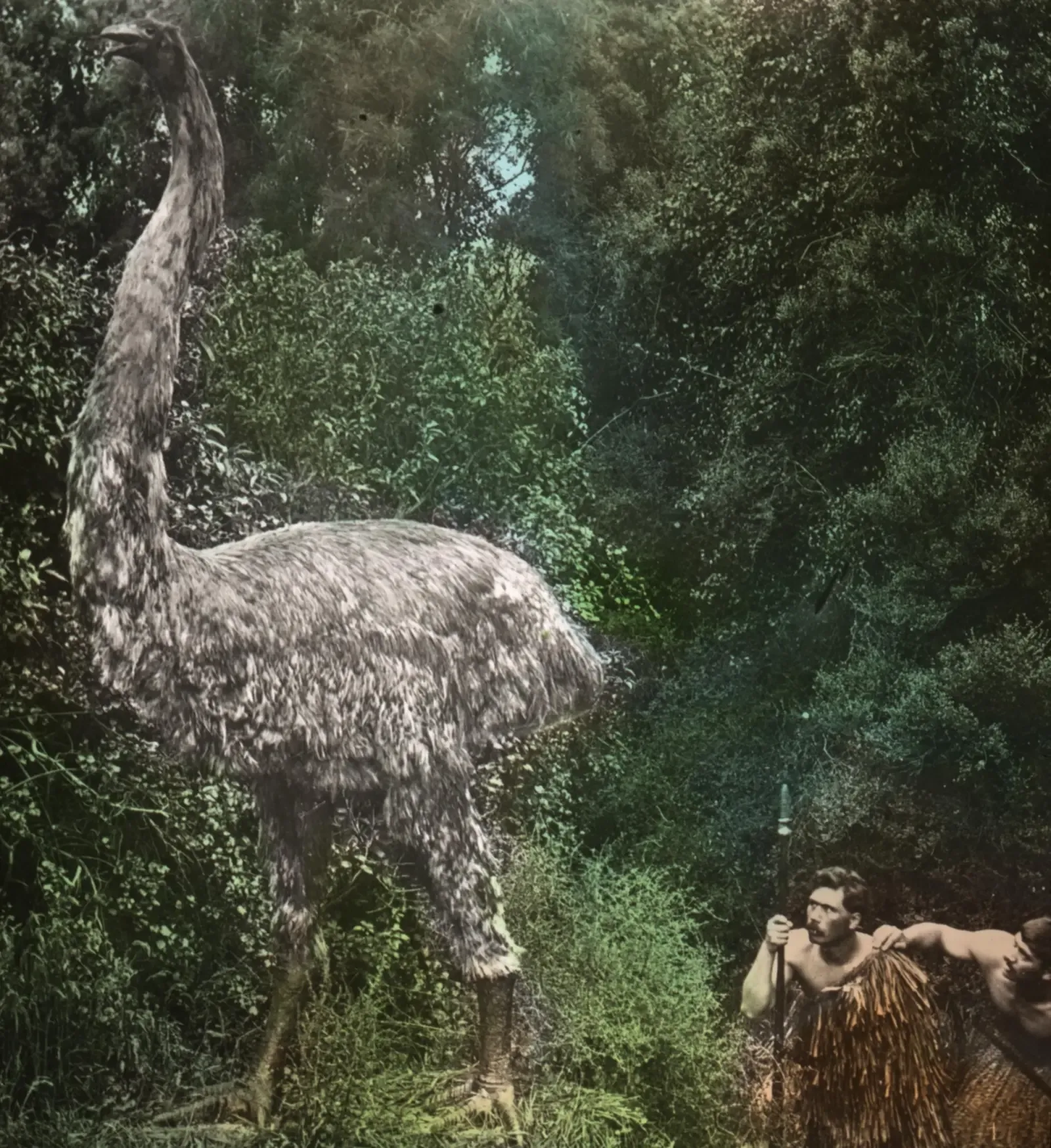
One of the strangest advantages moas had is something we rarely think about: vertical space. Unlike mammals, which are stuck at a roughly fixed body height, moas had long, flexible necks that could reach dramatically up or down, giving them a three-dimensional foraging zone in dense forest and shrubland.
Some larger species could access vegetation over two meters off the ground without jumping or climbing, while smaller species stayed low and nimble. That vertical reach let them exploit food after ground-level plants were stripped, browse young high leaves that tend to be more nutritious, and survive lean seasons simply by reaching further than anything else around.
Quick Compare
- Giant species could stretch their necks to browse foliage well above head height
- Mid-sized moa fed mostly at chest-to-shoulder level on shrubs and small trees
- The smallest species stayed close to the forest floor, working ground-level growth
It also meant multiple moa species could share the same patch of habitat without truly competing. A tall moa working the canopy and a smaller one browsing the understory could stand almost side by side without eating the same meal – a form of resource-sharing that ecologists know is critical for long-term coexistence.
What really kept them going was how this vertical flexibility responded to climate shifts. When cooler or drier phases changed which plant layers were most productive, moas didn’t need to migrate hundreds of miles or reinvent their diet. They just changed how high they reached. Evolution doesn’t always need a dramatic overhaul – sometimes surviving longer just means being able to bend a little.
#7 – It Survived Massive Environmental Swings by Being a Generalist at Heart
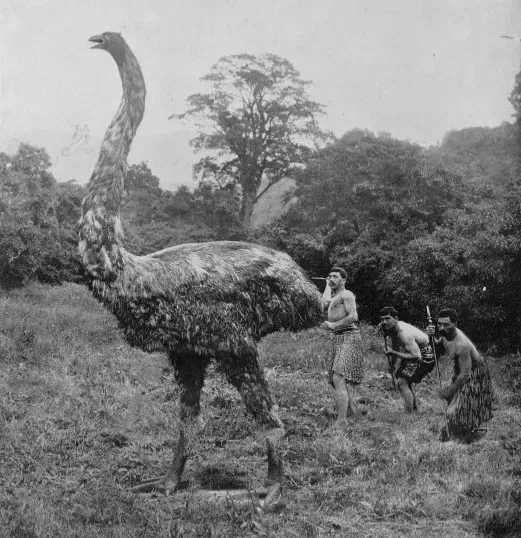
It’s tempting to picture ancient environments as stable and unchanging, but New Zealand’s climate and landscapes have been anything but constant. Glacial cycles, sea-level changes, and repeated volcanic eruptions reshaped habitats over and over across the last couple of million years. Moas persisted through all of it.
Not because they were hyper-specialized fragile relics, but because they combined a few specialist traits with a fundamentally generalist core. They used multiple habitat types – forest, shrubland, subalpine zones, even patchy grasslands. Their diet spanned leaves, twigs, fruit, seeds, and tougher woody material. Different species dominated in different environments, but as a group, moas were essentially everywhere.
That flexibility meant a regional disaster didn’t automatically wipe them out entirely. If a glacier advanced in one area, moas could retreat into refuges or shift downslope. If a volcano buried part of a forest in ash, surviving populations elsewhere could recolonize once the land recovered.
The fossil record shows moas spanning tens of thousands of years across wildly different climatic phases, the kind of pressure that would have crushed a narrower specialist. They rode out change not by being invincible, but by being just adaptable enough, spread out enough, and varied enough as a group to always have somewhere to fall back to.
#8 – It Outsmarted Its Only Real Predator for Centuries
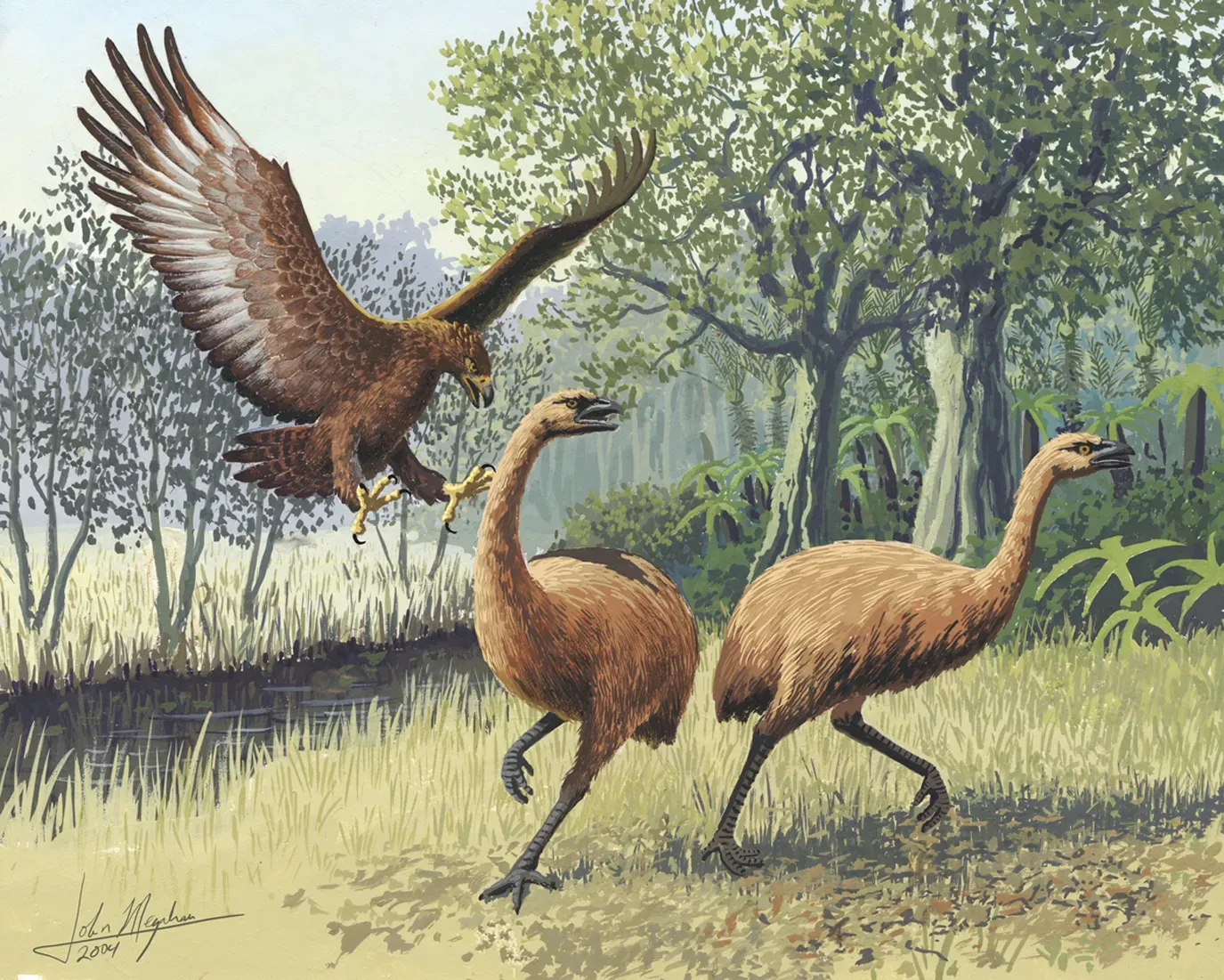
If you want proof that moas weren’t just lumbering victims waiting to happen, look at their long relationship with Haast’s eagle. This was no ordinary bird of prey – a massive raptor with a wingspan up to three meters, powerful enough to dive-bomb and kill juvenile moas and even some adults. For a long stretch of history, it was the apex land predator in New Zealand.
Why It Stands Out
- Wingspan reaching up to three meters, among the largest of any eagle known to science
- Estimated body weight up to roughly 15 kilograms, unusually heavy for a flying raptor
- Talons powerful enough to deliver crushing, puncturing strikes on prey many times its own size
- Vanished within decades of the moa’s extinction, having depended almost entirely on it for food
Yet both moa and Haast’s eagle coexisted for thousands of years without either species collapsing. That single fact tells you moas weren’t easy targets. Their sheer size made many adults difficult or risky to attack, living in loose groups likely improved early predator detection, and a preference for dense cover probably gave juveniles a fighting chance.
It’s very likely many moa species adjusted their behavior over time, avoiding exposed open areas during peak eagle activity and using forest edges more carefully. Surviving alongside a sky-borne killer for millennia isn’t luck. It’s adaptation, tested generation after generation.
The truly brutal twist is what happened after humans arrived. When moas were wiped out, Haast’s eagle collapsed shortly afterward – it had depended on moas so completely that once its prey vanished, the apex predator vanished too. That’s not the pattern of a weak, doomed herbivore. It’s the pattern of a powerful, balanced partnership that only failed under pressure it had never faced before.
#9 – It Used Geographic Spread as a Built-In Insurance Policy
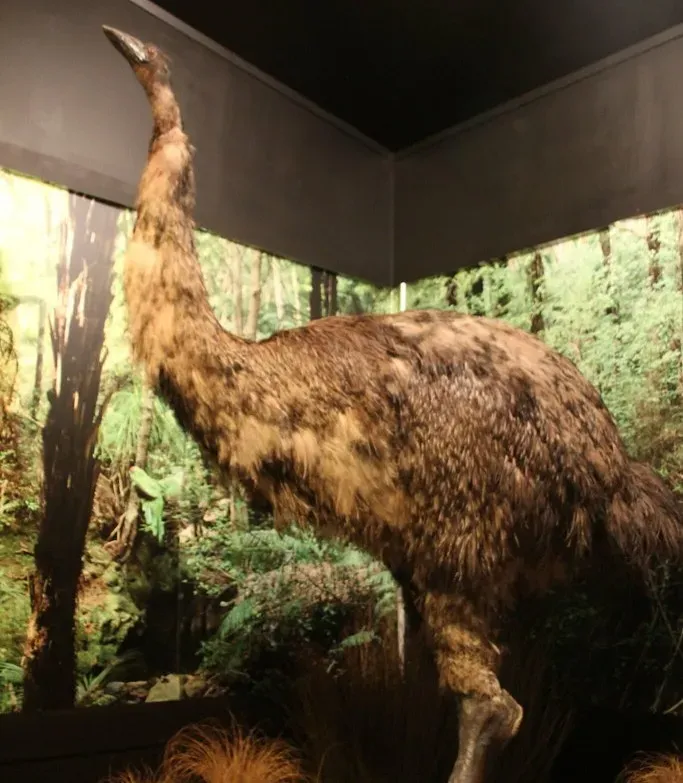
A lot of people picture the moa as one animal living in one place, but that’s not how risk works in nature, and it’s not how moas actually lived. Before humans arrived, moa species were scattered across both the North and South Islands, spanning different climate zones and elevations. Some preferred dense lowland forests, others were more at home in subalpine scrub or drier eastern regions.
That geographic spread functioned like an evolutionary insurance policy. A huge storm, landslide, or volcanic eruption might wipe out one population, but others dozens or hundreds of kilometers away would barely notice. Over time, those surviving populations could expand back into disturbed areas as the vegetation recovered.
This patchwork presence also cushioned moas against smaller, slower changes like shifting river courses or gradual cooling. While some populations declined, others quietly boomed where conditions were better. Ecologists now call this metapopulation dynamics – a species persisting as a network of subpopulations, some winking out while others re-form elsewhere.
Moas did this instinctively just by existing across a fragmented, varied landscape for thousands of years. When humans eventually arrived, they unknowingly attacked this system from multiple directions at once – hunting, burning, and fragmenting habitat across both islands simultaneously. But for a long time before that, spread and redundancy were quiet, unglamorous pillars of moa resilience.
#10 – It Took Full Advantage of a Mammal-Free World
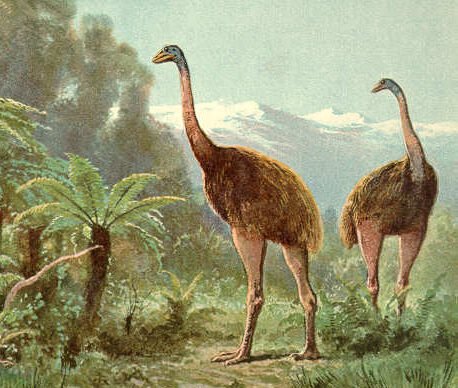
Here’s a truth ecologists rarely say out loud: mammals are often ecological bullies. In most parts of the world, large mammals dominate the herbivore niche, reproducing faster, moving further, and routinely outcompeting birds for food and territory. New Zealand was the exception.
With no native grazing mammals at all, moas stepped into that empty niche and acted like an entire missing class of animals, with no four-legged rivals nipping at their heels. That meant no deer or goats stripping ground plants faster than moas could respond, no pigs rooting up nests by the hundreds, and no small carnivorous mammals hunting chicks through the undergrowth.
In that world, being a big, relatively slow bird wasn’t a handicap – it was more than enough. Moas didn’t need to sprint like antelope or breed like rodents, because nothing was forcing them to. Their slow, careful life history was perfectly matched to a world where the “mammal problem” simply didn’t exist.
The shocking part is how quickly that balance shattered once humans introduced rats, dogs, and later pigs and mustelids. Within a geological blink, the moa’s carefully tuned trade-offs stopped working. Nests that had been safe for millennia suddenly weren’t, and vegetation patterns buckled under fire, browsing mammals, and hunting all at once. But for thousands of years before that tipping point, the moa’s entire survival playbook leaned hard into that mammal-free advantage, and it worked brilliantly.
#11 – It Was Better at Staying Hidden Than Its Size Suggests
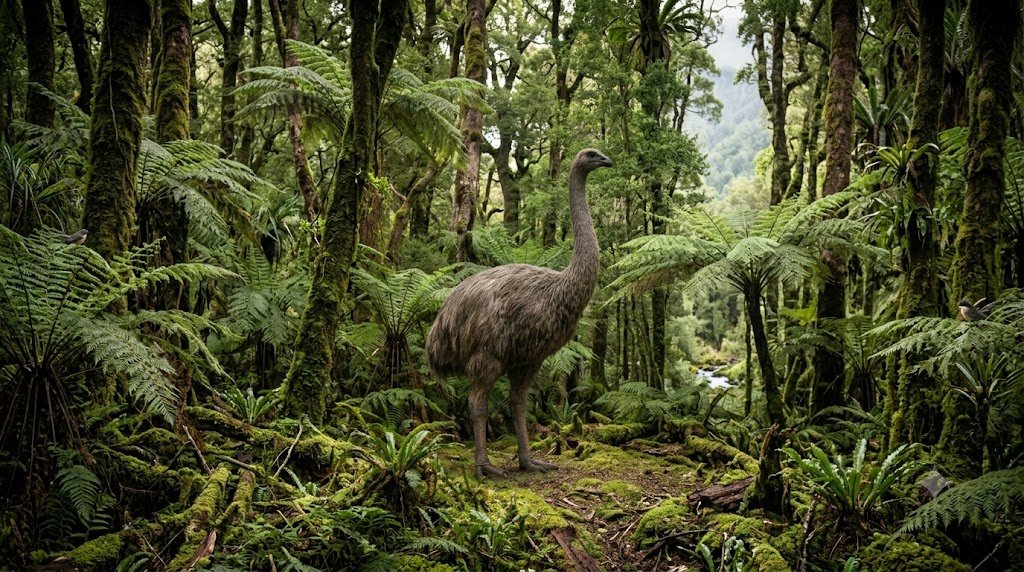
It sounds almost absurd to say a three-meter-tall bird was good at hiding, but size isn’t the whole story. New Zealand’s pre-human landscapes weren’t open plains – large swaths were dense forest, thick scrub, and tangled subalpine vegetation.
A tall, narrow-bodied animal with a flexible neck can vanish surprisingly well among trunks and undergrowth, especially with mottled, earthy coloration, which many scientists infer from surviving relatives and environmental reconstructions. Camouflage isn’t just about color, either. It’s also behavior – moving slowly and quietly instead of constantly rushing, freezing when danger approaches instead of bolting into the open, and using terrain to break up an outline.
Worth Knowing
- Long, flexible necks let moas peer above cover without exposing their whole body
- Mottled, earthy plumage likely helped break up their outline in dappled forest light
- Freezing in place was probably more effective against aerial attacks than trying to flee
- Dense forest and scrub covered much of pre-human New Zealand, offering near-constant hiding options
Moa limb and bone structure suggests they were strong walkers rather than sprinters, which fits a stealth-through-stillness strategy far better than a run-for-your-life one. In forests full of shadow and dappled light, that kind of stillness can be remarkably effective, especially against a threat that comes from above.
This more cryptic lifestyle likely bought moas crucial extra minutes during their most vulnerable juvenile stages – a chick freezing in thick brush instead of bolting into a clearing has a far better shot against an aerial predator. Once humans arrived with dogs, organized hunting parties, and eventually firearms, this hide-and-hope strategy backfired badly. But for most of the moa’s existence, it quietly extended the odds every single day.
#12 – It Played the Long Game… Until Humans Collapsed the Timeline
The most uncomfortable truth about the moa is this: it didn’t fail as an animal. It was sabotaged by a completely new set of rules it never had time to adapt to.
For millions of years, the moa’s strategy worked. Get big, not fast. Reproduce slowly, but reliably. Spread out across islands instead of crowding one hotspot. Ride out climate swings with a flexible diet and varied habitats. Ecologists call this a K-selected strategy – investing in survival and stability over speed and quantity. It’s the same general pattern seen in elephants, whales, and large primates. Not flashy, but built to last.
Then humans arrived in New Zealand roughly 700 to 800 years ago. In evolutionary terms, that’s yesterday afternoon. Suddenly the moa faced intense, organized hunting from a highly intelligent new predator, purposeful burning that rapidly cleared forest habitat, and introduced mammals raiding nests and competing for food, all at once.
Extinction is the rule. Survival is the exception.
Carl Sagan
A survival system tuned over millions of years was asked to handle a total rule change in a few dozen generations. It couldn’t. No animal could have. That’s not a reflection of weakness – it’s a reminder of how violently human expansion can short-circuit even the most time-tested ecological strategies. The fact that moas lasted as long as they did, through ice ages, volcanoes, and a predator arms race with a giant eagle, shows just how robust their playbook really was. They didn’t lose the long game. The game itself was yanked out from under them.
The moa wasn’t some evolutionary punchline lumbering toward inevitable extinction. It was a finely tuned island specialist that outlasted most people’s assumptions by stacking smart, patient advantages: huge size in a predator-light world, a cautious reproductive strategy that made total sense without mammals, flexible diets spread across multiple habitats, and a quiet double life as both landscaper and seed courier for New Zealand’s native plants.
For thousands of years, the moa’s way of doing things worked better than most species ever manage. Its collapse wasn’t proof that its strategy failed – it’s proof that we changed the rules faster than any animal on Earth could realistically keep up with. If a bird that survived ice ages and eagles couldn’t outlast us, the real question isn’t whether the moa was doomed. It’s how many species today are running the same losing race, just a few decades behind.