

Most people still picture Neanderthals as grunting cavemen who could barely bash two rocks together, let alone invent anything. That image isn’t just outdated – it’s flat-out wrong. Over the past two decades, archaeologists digging through caves in France, Spain, Croatia, and Germany have pulled a stream of Neanderthal-made objects out of the dirt that are so advanced entire teams of scientists initially refused to believe a “primitive” hominin could have made them.
Adhesives cooked from tree bark. Rope twisted from plant fiber. Underground stone rings built 336 meters from daylight. Jewelry worn 130,000 years before the first written word. Every single one of these objects was once dismissed as flat-out impossible for a Neanderthal to produce – until the dating came back and archaeologists had to eat their words. Here’s what the fossil record actually says, one stubborn discovery at a time.
#1 – Birch Bark Tar: The World’s First Synthetic Material
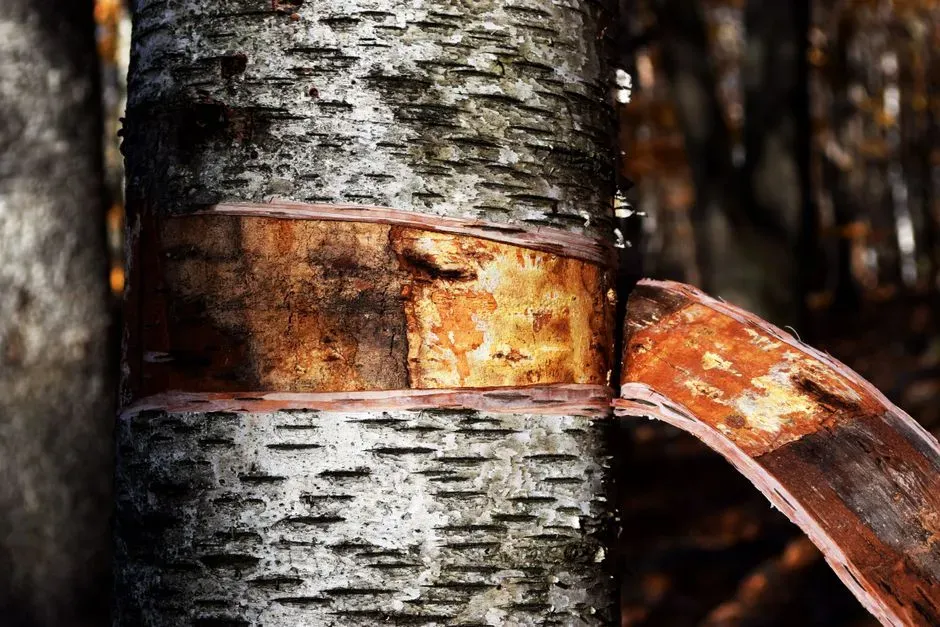
Long before humans figured out plastics or ceramics, Neanderthals were already turning tree bark into something that didn’t exist anywhere in nature.
The claim that felt impossible for decades was simple: a “primitive” hominin could not have engineered a chemical transformation like this. Yet Neanderthals were intentionally producing birch bark tar in Europe by at least 190,000 years ago, with the oldest confirmed sample coming from Campitello Quarry in Italy – unambiguously tied to Neanderthals, since no other hominin was even present in Europe at the time. This wasn’t a one-off fluke, either. Tar-hafted stone tools and adhesive residues have since turned up at two separate Neanderthal sites in Germany, dating to 40,000-80,000 years ago and roughly 120,000 years ago.
Fast Facts
- Oldest confirmed birch bark tar: at least 190,000 years old, from Campitello Quarry, Italy
- German tar-hafted tools date to 40,000-80,000 years ago and roughly 120,000 years ago
- Production method: stepwise, oxygen-restricted underground distillation
- Purpose: waterproof, decay-resistant adhesive for hafting stone points onto bone and wood
What makes this genuinely wild is the chemistry involved. The tar was used to glue stone points onto bone and wood, creating tools that were water-resistant and immune to organic decay – a serious upgrade over anything held together with vines or grip alone. Researchers in Tübingen reconstructed how the German tar was made and found Neanderthals had used the single most efficient method available: a stepwise, oxygen-restricted underground distillation process. The scientists behind that study didn’t mince words about what it implied, noting that this degree of complexity is unlikely to have been invented spontaneously.
Here’s the detail most people miss: this isn’t just an old technology, it’s one of the only Neanderthal inventions that clearly predates its use by modern humans altogether. Somewhere in Ice Age Europe, someone figured out that heating bark without oxygen produces glue – and then taught it to the next generation.
#2 – Twisted Cordage: Rope Nobody Thought Neanderthals Could Engineer
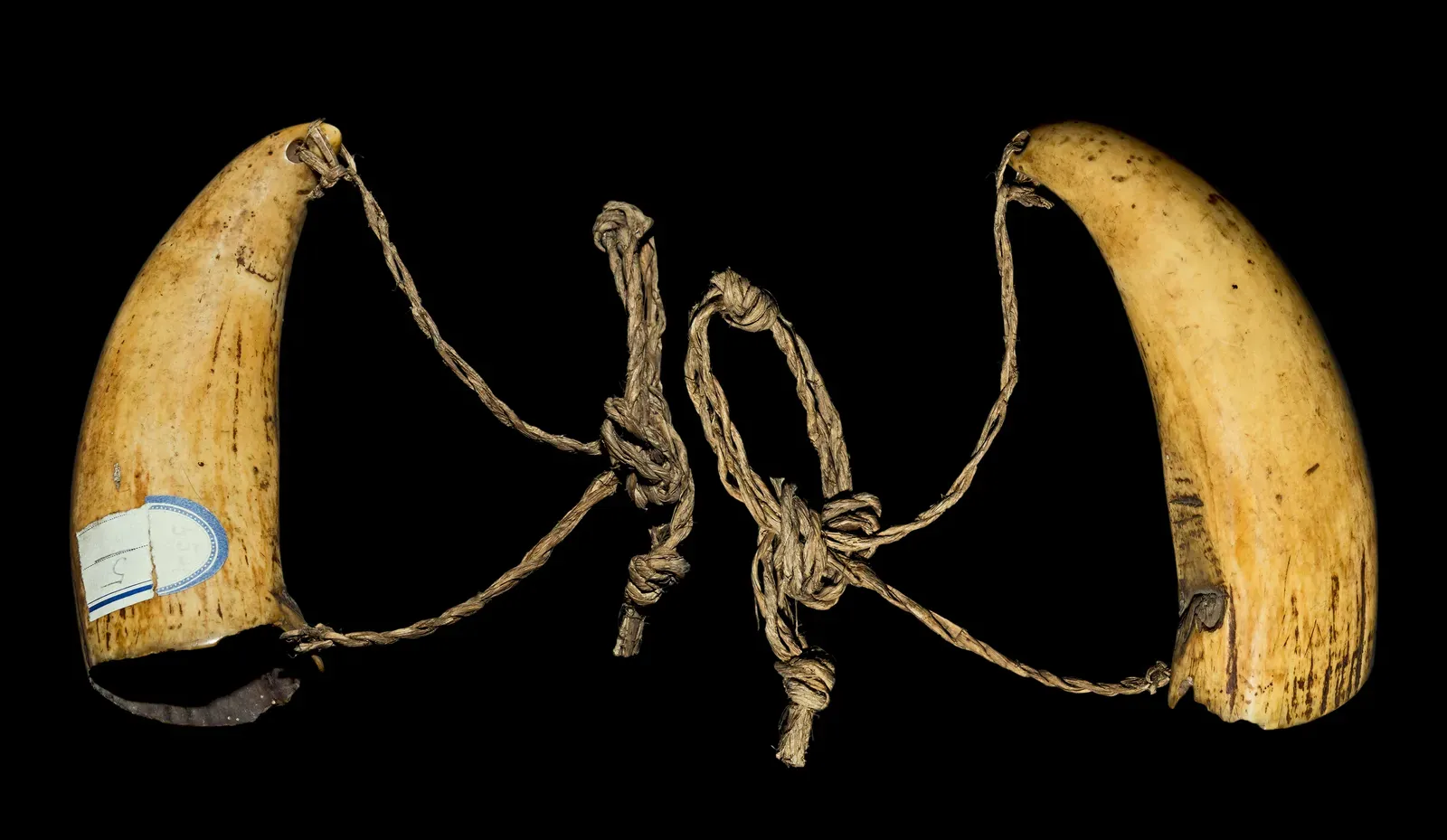
For decades, the idea of “Neanderthal string” sounded like a punchline. Then a French cave proved everyone wrong.
In 2020, researchers examining a stone tool from Abri du Maras in France found something that had no business surviving 40,000-plus years underground. Wrapped around the tool was a scrap of twisted plant fiber – now recognized as the oldest known direct evidence of fiber technology on Earth, at roughly 46,000 years old. Before this find, the oldest known cordage fragments came from Ohalo II in Israel and dated to only about 19,000 years ago, making this discovery more than twice as old as anything previously known.
The manufacturing process was anything but crude. The cord was built from three separate strands of fiber pulled from the inner bark of a coniferous tree, harvested in spring or early summer, soaked in water, then carefully separated. The strands were twisted clockwise to bind the fibers together, then twisted again in the opposite, counterclockwise direction to ply them into a single cord – a double-twist method known today as “S-twist” and “Z-twist” plying, and it’s the exact same principle rope-makers rely on now.
Most people don’t realize what this implies about Neanderthal brains. Twisted fiber is the foundation for clothing, bags, nets, mats, and boats – and understanding how to twist it correctly requires a working grasp of pairs, sets, and sequences, a genuinely mathematical way of thinking.
We are missing so much of what was there. Something like this gives you a window into that missing world.
Bruce Hardy, Kenyon College
#3 – Underground Stone Rings That Predate Modern Humans by 130,000 Years
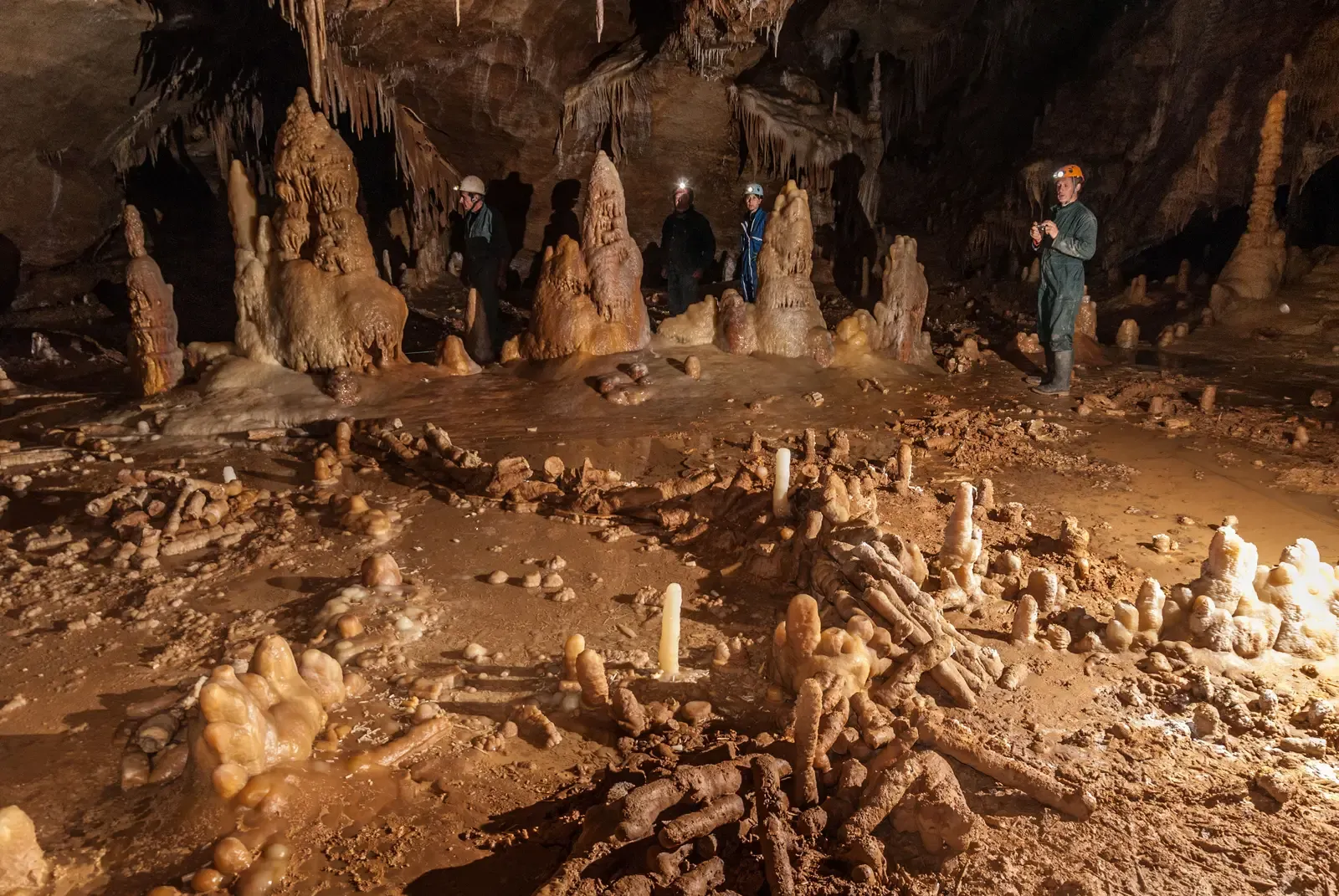
Deep inside a French cave, 336 meters from daylight, Neanderthals built something that looks disturbingly like architecture.
For years, mainstream archaeology insisted deliberate cave construction only began with modern humans. Then Bruniquel Cave blew that theory apart. First discovered in the early 1990s, six structures made from roughly 400 broken stalagmite pieces sit arranged in semi-circles as wide as 22 feet, more than a fifth of a mile from the cave entrance. This wasn’t random rockfall – the geometry was deliberate, the stalagmites were broken and stacked with clear intent, and traces of fire were found directly on top of them. Uranium-series dating pinned the age at 176,500 years, making these structures among the oldest reliably dated constructions ever attributed to any human species.
The logistics alone should stop you in your tracks. Neanderthals walked roughly three football fields into total darkness, arranged 15-foot-wide rings of broken rock, lit and tended small fires on top of them, then left. Tens of thousands of years later, collapsing rock sealed the cave entrance and preserved the evidence for more than 140,000 years. None of it was possible without some form of artificial lighting, which pushes the timeline for controlled fire management back even further than most textbooks admit.
Scientists who reviewed the find were blunt about what it means. The original research team called the attribution to early Neanderthals “unprecedented,” describing it as evidence of the deliberate “appropriation of a deep karst space” by a pre-modern human species. Geologist Dominique Genty, who worked on the dating, put it even more plainly: “It’s obvious when you see it, that it’s not natural.”
#4 – Eagle Talon Necklaces Worn 130,000 Years Ago
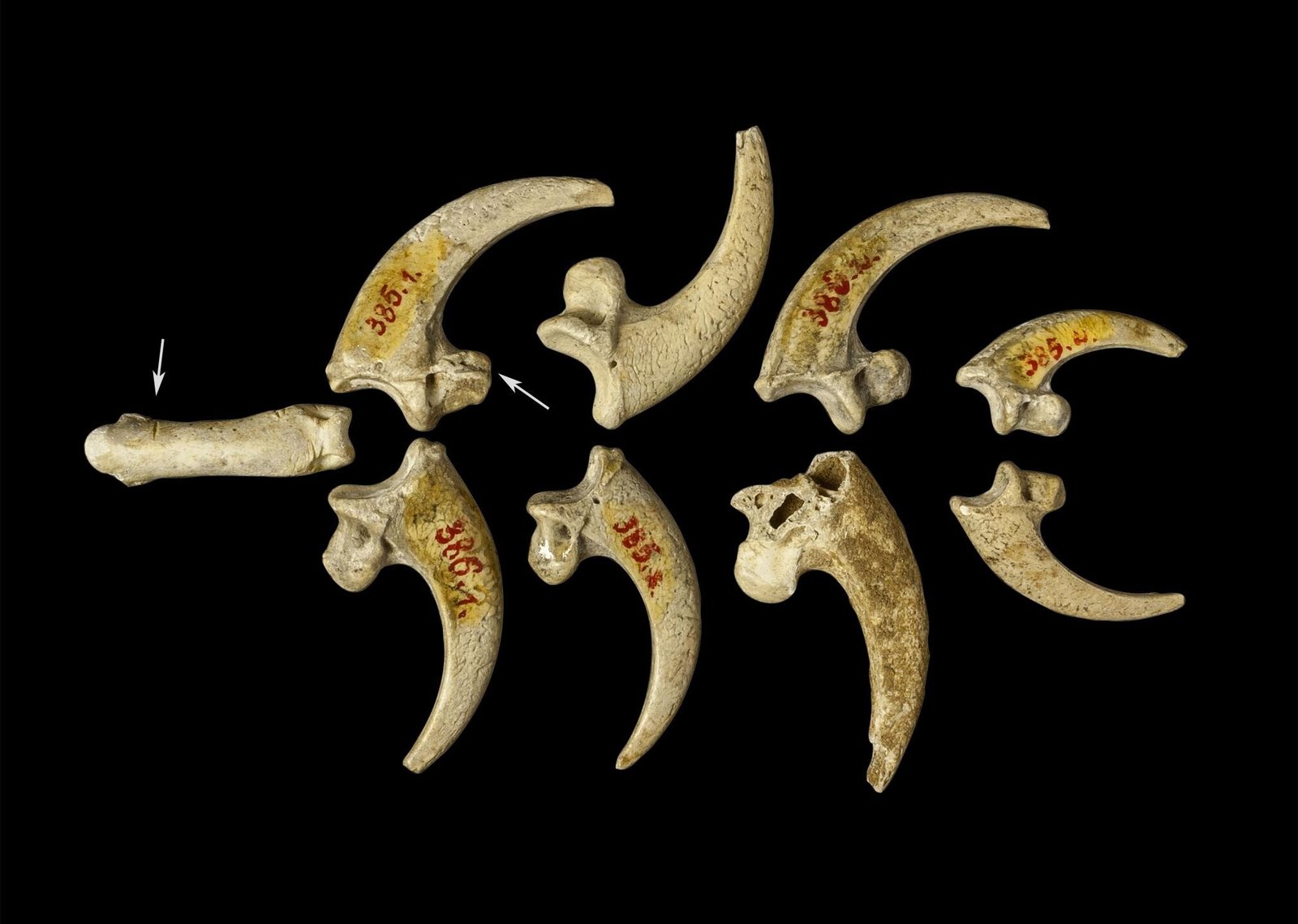
Jewelry is supposed to be a distinctly modern human invention. Neanderthals apparently disagreed – by tens of thousands of years.
The story starts in a museum drawer in Croatia, where a curator reviewing century-old bones noticed something odd on a set of eagle claws. Eight white-tailed eagle talons, all pulled from a single layer at the Krapina site, represent more talons than have been found across the entire European Mousterian period combined. The cut marks on them weren’t accidental butchery, either: three of the largest talons carry small, matching notches along the same edge, in exactly the spot you’d expect if they were strung together and mounted for wear.
This wasn’t an isolated Croatian quirk. Similar deliberately removed and modified raptor talons have since been documented at roughly a dozen Neanderthal sites across Europe. One Spanish specimen even carried leftover pigment residue – a fiber sealed under a thin silicate coating, with visible traces of red and yellow ochre that don’t naturally occur in that cave, strongly suggesting the claw was painted before it was worn.
The obvious conclusion made a lot of anthropologists uncomfortable. This pattern is concentrated in a specific stretch of southern Europe and spans roughly 80,000 years – meaning Neanderthals kept a jewelry-making tradition alive for longer than modern humans have had written history.
An important addition to growing body of evidence of personal ornament usage in Neanderthals, now spanning more than 80,000 years.
Davorka Radovčić
#5 – Composite Hunting Spears With Precision-Engineered Tips
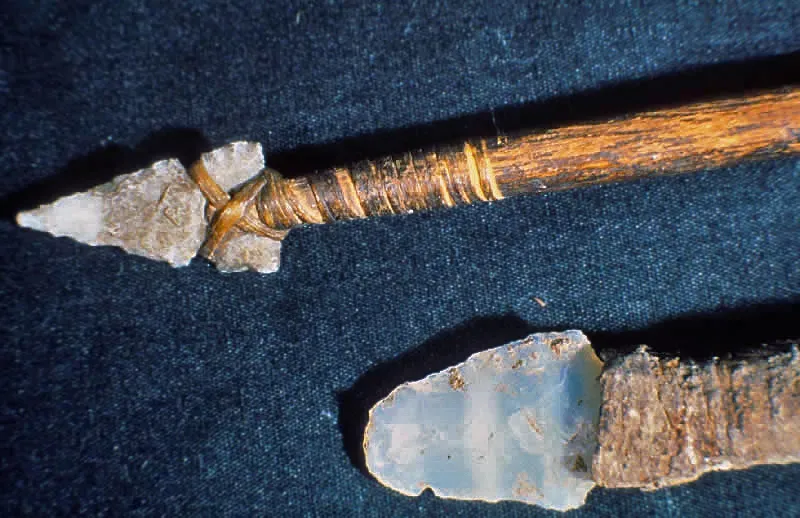
A wooden stick with a rock on the end sounds simple. It isn’t – not when the rock is fused on with chemistry and the shaft is balanced like a modern javelin.
Neanderthal hunting weapons weren’t crude clubs swung in desperation. They were engineered composite tools, with a carefully shaped stone point fixed onto a wooden shaft using the same tar adhesives described earlier, strong enough to bring down megafauna like straight-tusked elephants and wild horses at close range. Building one required an understanding of load-bearing stress, grip design, and weight distribution – concepts nobody had written down yet, but everybody making a spear had to instinctively respect.
The wood itself wasn’t grabbed at random. Spruce and yew were favored specifically for their flexibility and strength, and the finished shaft was fire-hardened to resist splintering on impact, a step that demanded real fire-management skill beyond simply keeping warm at night. Add a hafted stone tip glued on with birch tar, and you’re looking at a multi-stage manufacturing chain that required foresight, patience, and probably more than one pair of hands.
This is the detail experts keep circling back to: a single finished spear meant coordinating tool-making, woodworking, fire use, and adhesive chemistry into one object – four separate technologies fused together on purpose. That kind of integrated engineering was long considered a strictly modern-human trait, and Neanderthals were doing it long before we showed up.
#6 – The Levallois Technique: Assembly-Line Toolmaking
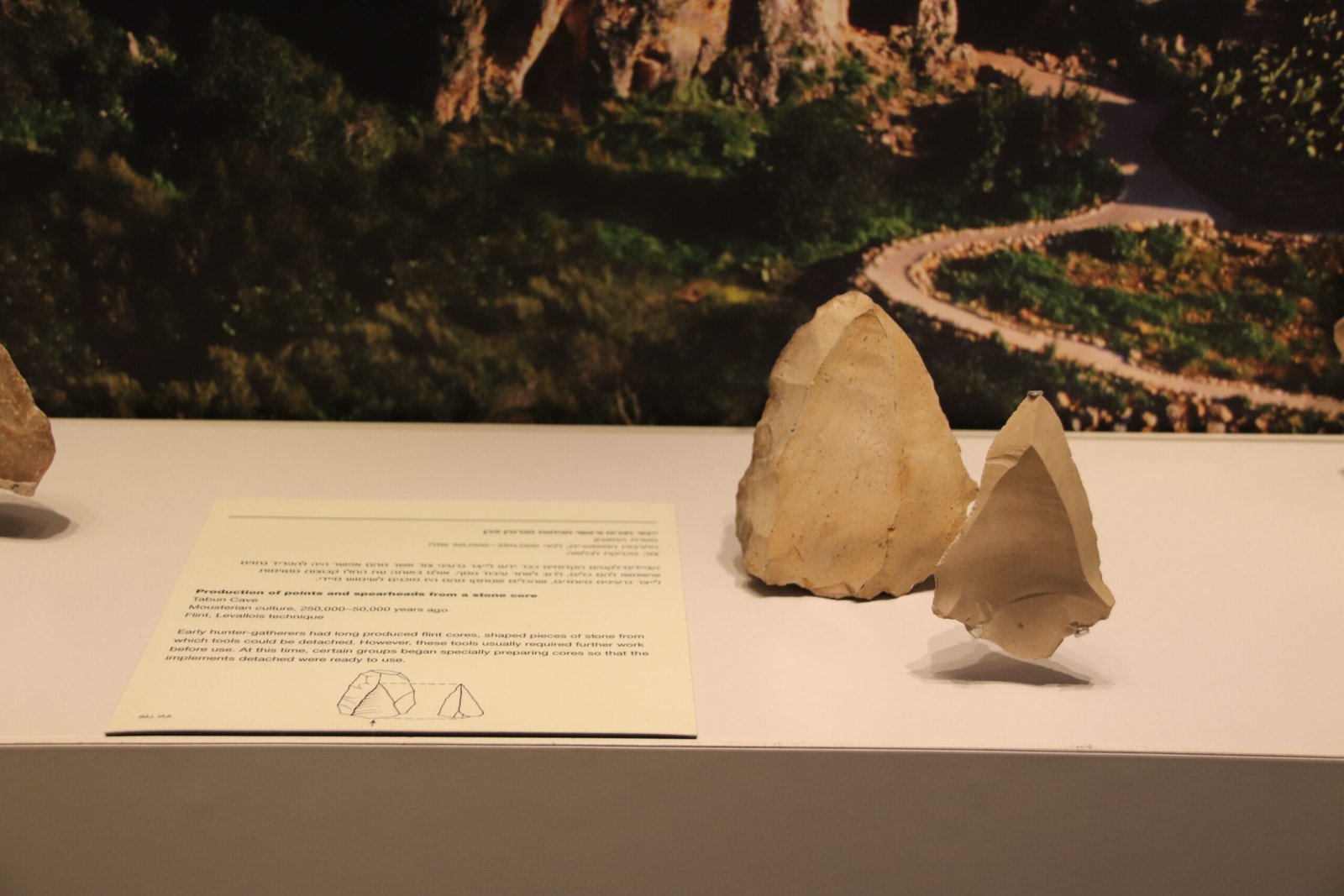
Most people imagine Neanderthal tools as random chips of rock, hacked off in frustration. In reality, they were mass-producing standardized blades using a method precise enough to function like an assembly line.
The Levallois technique, named after the Paris suburb where it was first identified, involved carefully shaping a stone “core” so that a series of predetermined, uniformly sized flakes could be struck off it in sequence. This wasn’t trial and error. It required planning the entire sequence of strikes before the first blow ever landed – holding a mental blueprint of the finished tool in your head before touching a single stone.
What’s genuinely surprising is how widespread and consistent the method was. Neanderthal populations separated by hundreds of miles and thousands of years produced nearly identical Levallois cores, which suggests the technique was taught deliberately across generations rather than reinvented from scratch every time. That’s structured social learning – passing down complex, multi-step knowledge the same way a craft apprentice learns a trade today.
Here’s the part that upends the “dumb caveman” stereotype for good: producing a usable Levallois flake requires holding several future outcomes in your head at once, a form of forward planning researchers consider genuinely advanced. It’s a world away from bashing two rocks together and hoping for a sharp edge.
#7 – Cave Engravings and Painted Symbols Older Than Modern Humans in Europe
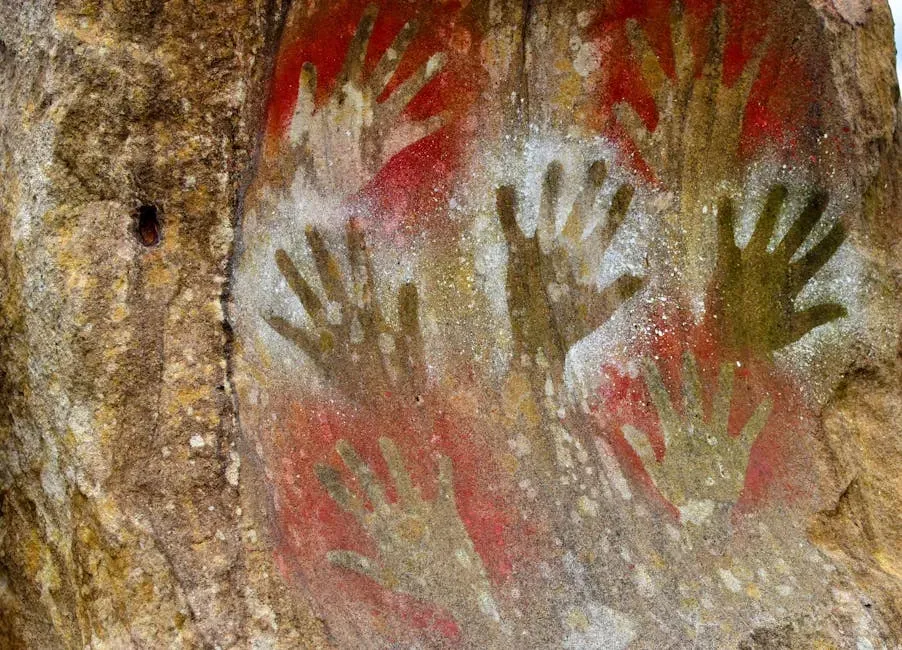
For decades, cave art was treated as sacred, untouchable proof of modern human superiority. Then dating technology caught up with the paint.
Deep inside a cave in Gibraltar, researchers found a deliberate hashtag-shaped engraving carved directly into the bedrock – a mark that couldn’t be explained by claws, erosion, or accident. It took repeated, controlled strokes with a stone tool to make, and it served no practical function at all, which is exactly what undercuts the old argument that Neanderthals were incapable of abstract thought.
At a Glance
- Gibraltar: a deliberate hashtag-shaped engraving carved into bedrock
- Northern Spain: a red, ladder-shaped painting dated using uranium-thorium methods
- Iberian site: a red hand stencil made by blowing pigment around a pressed hand
- Dating on both works places them before modern humans reached Europe
Hundreds of miles away in northern Spain, researchers used uranium-thorium dating on the thin mineral crust that had formed over a red, ladder-shaped design painted onto a cave wall. The resulting age placed the painting before modern humans are known to have set foot in Europe, leaving only one plausible artist. A red hand stencil at another Iberian site, made by blowing pigment around a hand pressed flat against the rock, dated to a similarly ancient window.
This is where the scientific community split hard down the middle, and it’s worth being upfront about that friction. Not everyone agrees these are secure evidence of a symbolic Neanderthal mind – a sizable group of anthropologists has publicly challenged the dating methods behind the Spanish cave art. Whichever side turns out to be right, the fact that this debate exists at all shows how far the conversation has shifted from simply dismissing Neanderthal creativity outright.
#8 – Pigment “Makeup Kits” Made From Seashells
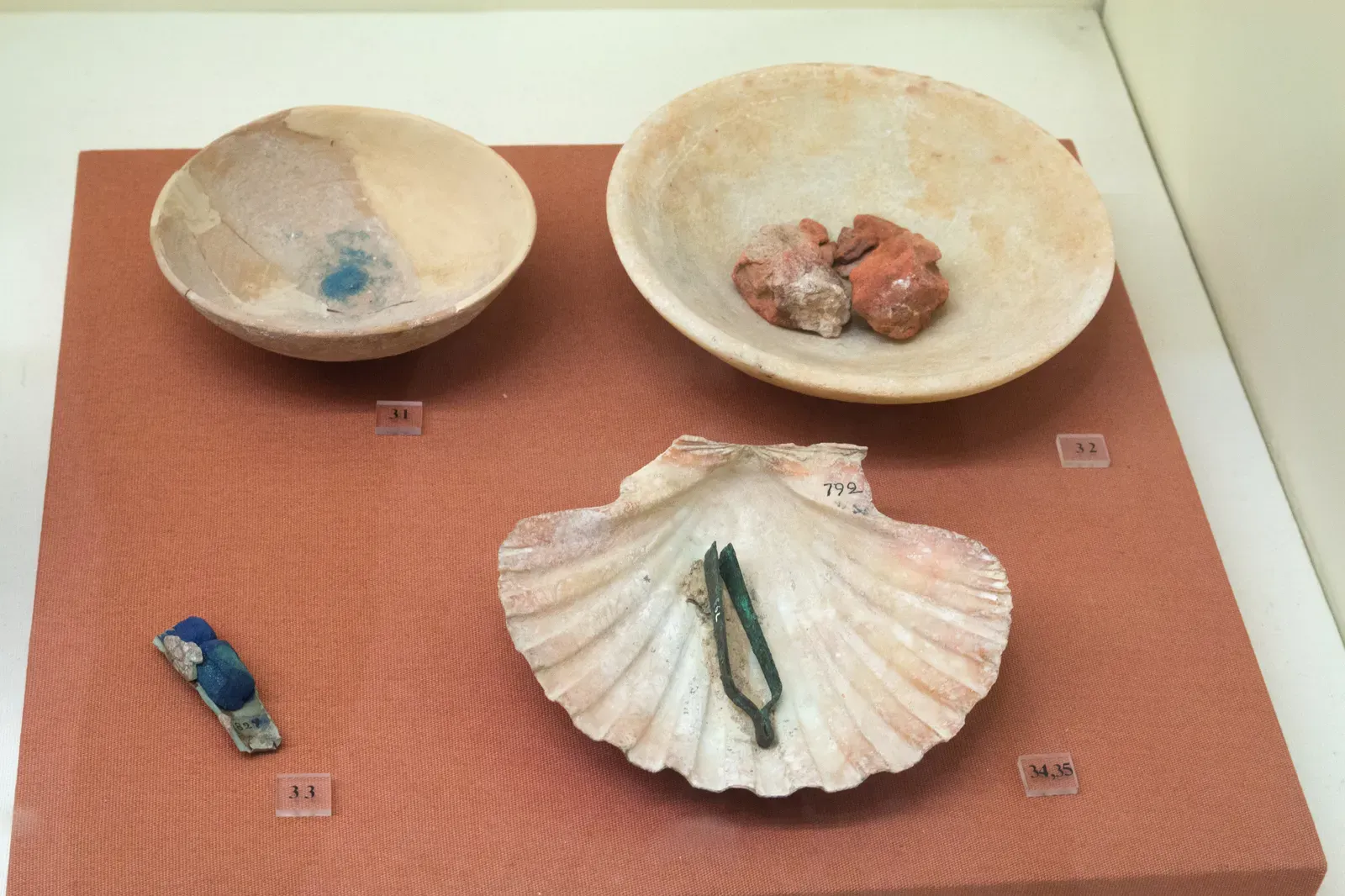
Long before mirrors or cosmetics counters existed, someone was mixing colored powders inside seashells on the Spanish coast – and it wasn’t a modern human.
Excavations at a coastal Spanish cave turned up shells that had clearly been used as small mixing containers, still holding traces of red and yellow ochre alongside other mineral pigments. These weren’t leftover food shells tossed aside after a meal; they’d been deliberately selected, cleaned, and repurposed to hold pigment. Dating placed the finds at more than 115,000 years old, tens of thousands of years before modern humans ever reached the region.
What makes this stand out is the sophistication of the mixing itself. Different mineral colorants were combined in specific ratios, which suggests the maker wasn’t randomly grinding rocks together but deliberately blending shades – the same basic principle behind pigment mixing in any art studio today. That level of intentional color control points to something closer to an aesthetic sense than a purely practical one.
Most people assume body paint equals primitive decoration, but the implications here run deeper. Mixing and storing pigment for later use requires planning across time – preparing something today for a purpose you won’t need until tomorrow. That’s a fundamentally different cognitive step than just smearing dirt on skin in the moment.
#9 – Deliberate Burials With Possible Ritual Intent

Burying the dead sounds like the most basic human behavior imaginable. For a long time, scientists insisted Neanderthals simply weren’t capable of it.
At sites like La Chapelle-aux-Saints in France, skeletons were found positioned in ways that looked deliberately arranged rather than left where they fell – limbs folded, bodies placed in shallow pits dug specifically to hold them. That kind of intentional placement, rather than natural burial by cave sediment or scavenger disturbance, strongly points to purposeful human action instead of coincidence.
At Shanidar Cave in Iraq, pollen clusters found near a Neanderthal skeleton sparked one of the most famous – and most contested – claims in all of paleoanthropology: that Neanderthals decorated graves with flowers. Later researchers pushed back hard, arguing that burrowing rodents likely carried the pollen into the sediment long after the burial happened. That controversy never fully resolved, and it’s a genuinely useful reminder that not every headline about “Neanderthal ritual” survives scrutiny.
Here’s the more defensible, less flashy truth that’s easy to miss: even setting the flower debate aside entirely, the sheer number of Neanderthal skeletons found in deliberately dug pits across multiple countries argues for a consistent behavioral pattern, not a handful of isolated flukes. Whether or not it involved elaborate ritual, something like intentional, repeated burial practice was clearly part of Neanderthal life.
#10 – Self-Medicating With Plant-Based Painkillers and Natural Antibiotics

This one sounds like science fiction: Neanderthals may have been running their own crude pharmacy, hundreds of thousands of years before the first hospital existed.
Researchers analyzing hardened dental plaque – essentially fossilized tartar – from Neanderthal remains at sites including El Sidrón in Spain found chemical traces of poplar bark, which naturally contains salicylic acid, the same active compound behind modern aspirin. This wasn’t found in an individual with healthy teeth, either. It turned up specifically in someone with a painful dental abscess, which suggests the bark chewing was a targeted response to pain rather than incidental snacking.
Worth Knowing
- Poplar bark naturally contains salicylic acid, the active compound in aspirin
- Traces were found in the dental plaque of a Neanderthal with a painful abscess at El Sidrón
- The same samples contained traces of a naturally penicillin-producing mold
- Points to symptom-based self-treatment, repeated and passed between individuals
Even stranger, the same dental calculus samples revealed traces of a mold known to naturally produce penicillin-like antibiotic compounds. Whether Neanderthals understood why the mold helped or simply learned through generations of trial and error that certain moldy substances soothed infection, the practical result was the same: a rudimentary but functional form of medicine, self-administered based on observed symptoms.
This flips the brutish-caveman stereotype on its head entirely. Recognizing symptoms, remembering which plants or molds relieved them, and repeating that treatment consistently requires memory, cause-and-effect reasoning, and knowledge transfer between individuals – the exact building blocks of any medical tradition, including our own.
#11 – Possible Sea Crossings to Mediterranean Islands

For decades, seafaring was considered strictly off-limits to Neanderthals. Boats, paddling, navigating open water – that was supposed to be an exclusively modern human achievement. The evidence now is messier, and honestly far more interesting, than that clean story.
Stone tools resembling Neanderthal-style Mousterian technology have turned up on Mediterranean islands including Crete and some of the Ionian islands – places that would have required crossing open water to reach, even accounting for lower Ice Age sea levels. That’s sparked a heated argument among archaeologists: were these genuinely deliberate crossings on simple rafts or logs, or could the islands have been reachable via land bridges during periods of extreme glaciation that later vanished entirely?
Neither side has definitively won the argument yet, and that’s worth being honest about. Some researchers think the tool similarities are coincidental, produced independently by separate populations working with similarly limited raw materials. Others insist the distances involved are simply too large to explain without some form of intentional water crossing, however primitive it might have looked.
This is exactly the kind of unresolved, contested claim worth debating rather than accepting outright – a useful reminder that not every “Neanderthals did this too” headline is settled science yet. Even the skeptics agree, though, that the debate itself has forced a serious reconsideration of just how mobile and resourceful Neanderthals really were.
#12 – Deliberately Managed, Long-Term Fire Technology

Fire feels like the most obvious human technology of all. But controlling it consistently, transporting it, and using it strategically was a far bigger leap than most people assume – and Neanderthals nailed it.
Excavations at multiple Neanderthal sites have turned up concentrated deposits of manganese dioxide, a mineral that isn’t especially useful for tools or pigment on its own. Modern fire-starting experiments have shown it dramatically lowers the temperature needed to ignite wood when added to kindling. Its repeated presence at Neanderthal hearths suggests they had identified and were deliberately exploiting a specific mineral’s chemical fire-starting properties, not just piling up random rocks near a flame.
Why It Stands Out
- Manganese dioxide deposits appear repeatedly at Neanderthal hearths
- The mineral is known to lower the ignition temperature of wood
- Bruniquel evidence shows fire managed 336 meters underground, in total darkness
- Dated to roughly 176,000 years ago, pushing back fire-use timelines significantly
The Bruniquel stalagmite structures mentioned earlier add another layer to this story. Evidence of controlled burning found deep within that cave system, hundreds of meters from any natural light source, means Neanderthals weren’t just building fires for warmth near a cave entrance. They were carrying flame or embers deep underground and managing it in total darkness – a far more advanced logistical feat than casual campfire use.
The real surprise is how long this fire mastery had to have existed before anyone found proof of it. Managing fire underground at Bruniquel 176,000 years ago pushes fire control among Neanderthals, or their direct ancestors, further back than almost any textbook timeline used to claim. It wasn’t a late-stage lucky discovery. It was baked into Neanderthal life from a remarkably early point.
The Bottom Line
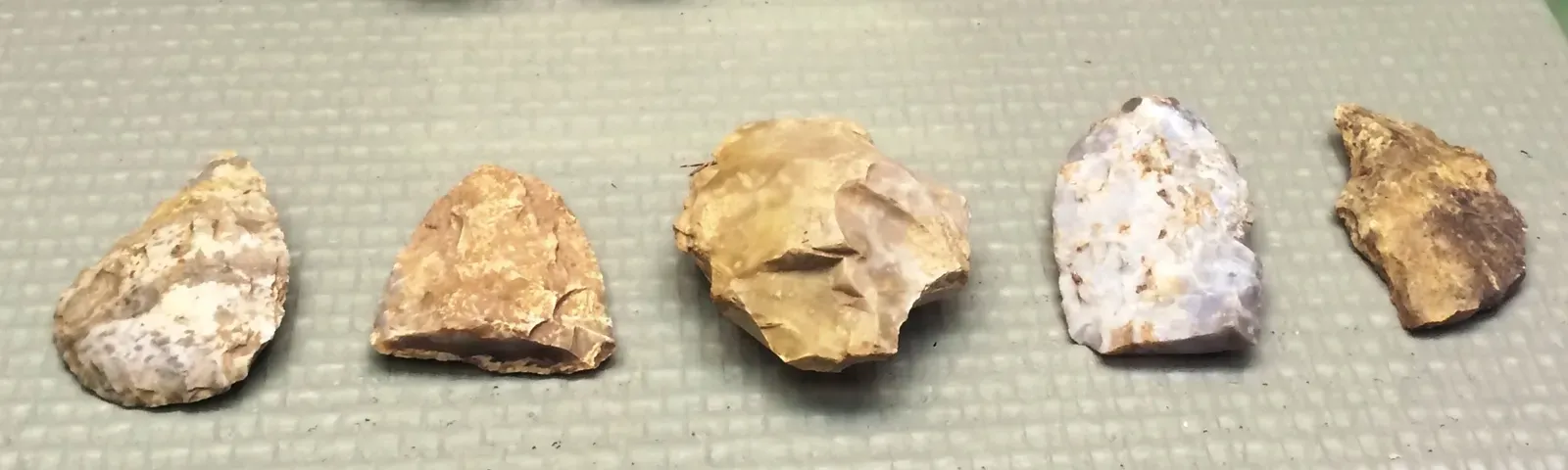
The pattern across all twelve of these discoveries is impossible to ignore: almost every technology once used to draw a hard line between “smart modern humans” and “dumb Neanderthals” has turned up in Neanderthal hands first. Adhesive chemistry, twisted cordage, underground construction, jewelry, standardized toolmaking, and even plant-based medicine all predate modern humans in Europe by tens of thousands of years.
Some claims here, like the cave art and the island crossings, remain genuinely contested, and that friction is part of what makes this science exciting rather than settled. Good research doesn’t need certainty on every point to still be worth taking seriously.
What’s no longer debatable is the core takeaway. Neanderthals weren’t a failed evolutionary experiment that lost out to smarter cousins. They were resourceful, inventive, and unnervingly close to us in ways the old stereotype never came close to admitting – and honestly, it says more about our own bias than about their intelligence that it took this long to notice. Which of these twelve findings surprised you the most? Drop it in the comments.