
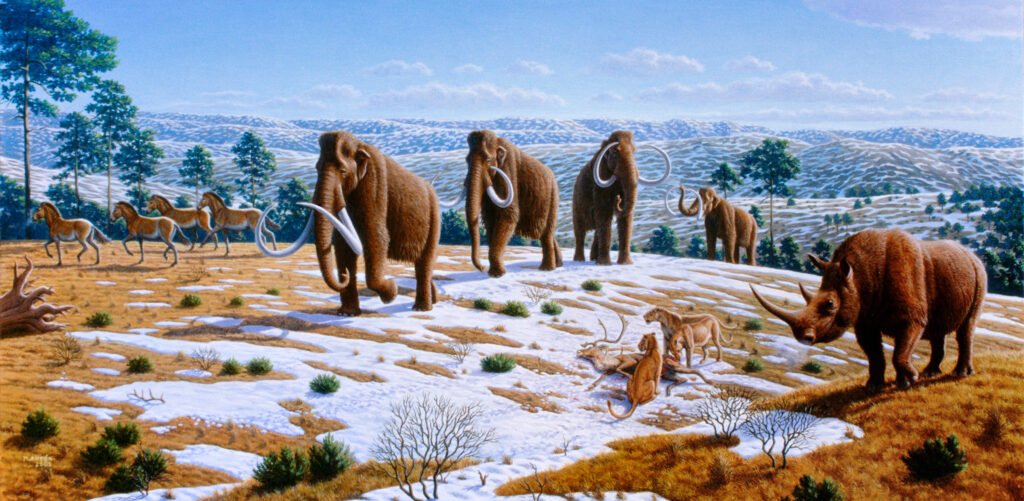
Most people picture early humans nervously side-stepping a mammoth or two and calling it survival. The real Ice Age was weirder, bloodier, and far more crowded than that. Our ancestors shared their hunting grounds with bus-sized wombats, lions bigger than any lion alive today, a nine-foot kangaroo that refused to hop, and a bear that could outrun a horse. These weren’t background scenery in some prehistoric documentary – they decided where humans could sleep, hunt, and survive the night.
And here’s the part that stings a little: in case after case, the giants vanish almost exactly when humans show up in force. Climate change gets a lot of the blame, and it isn’t innocent. But the fossils, the cut marks, and the timing keep pointing somewhere less comfortable. Here are the 14 extinct giants that once walked beside us – and the surprisingly personal reasons most of them didn’t make it.
#14 – The European Cave Bear: The Original Roommate from Hell
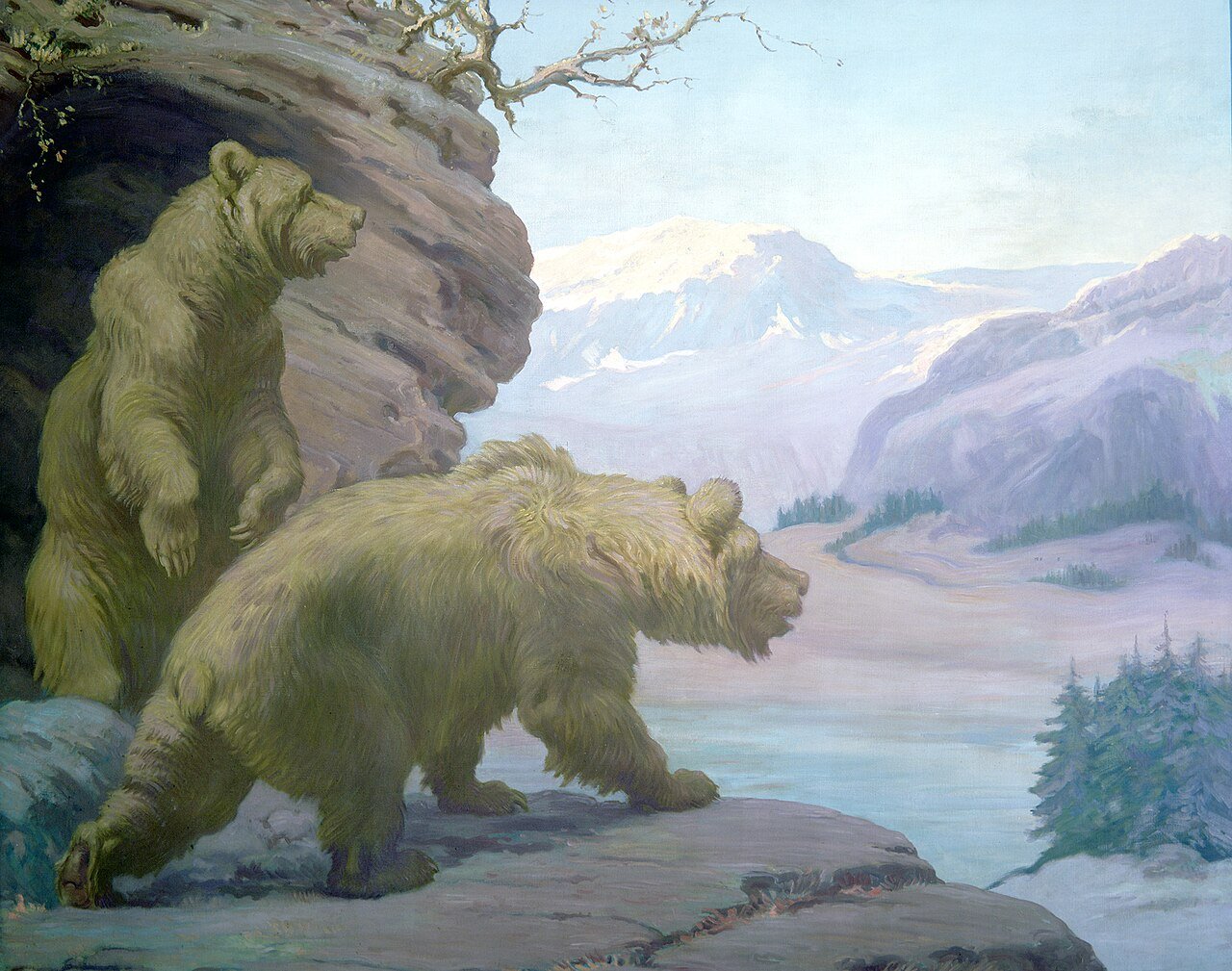
Cave bears weren’t just big. They dominated the very caves early humans wanted to live in, and that made them a landlord nobody wanted to argue with.
Standing over 3.5 meters (11+ feet) tall on their hind legs and weighing up to 1,000 kg (2,200 lbs), cave bears (Ursus spelaeus) were among the largest bears ever to exist. They roamed Ice Age Europe from about 250,000 to 24,000 years ago – the exact same landscapes Neanderthals and early Homo sapiens were trying to occupy.
Fast Facts
- Height: over 3.5 meters (11+ feet) standing upright
- Weight: up to 1,000 kg (2,200 lbs)
- Range: Ice Age Europe, cave systems especially
- Timeframe: roughly 250,000 to 24,000 years ago
- Diet: mostly plant-based, but powerful enough to dominate any shelter
Many famous Paleolithic caves show layers of bear scratches and nests buried under later human art. We literally moved into their old bedrooms once they were gone.
Most researchers think cave bears were heavily plant-based omnivores, but their sheer size made them lethal competition even without hunting humans. If a one-ton bear wanted your shelter, it got it. Cave bear bones with cut marks show people sometimes butchered them, but humans clearly weren’t running that relationship, at least not at first.
The real twist? Cave bears disappear from the record just as modern humans spread widely across Europe and climates worsened. Climate change stressed them; human competition probably finished the job. But that’s nothing compared to what we found about #13.
#13 – The Woolly Rhinoceros: A Tank with Fur and a Temper
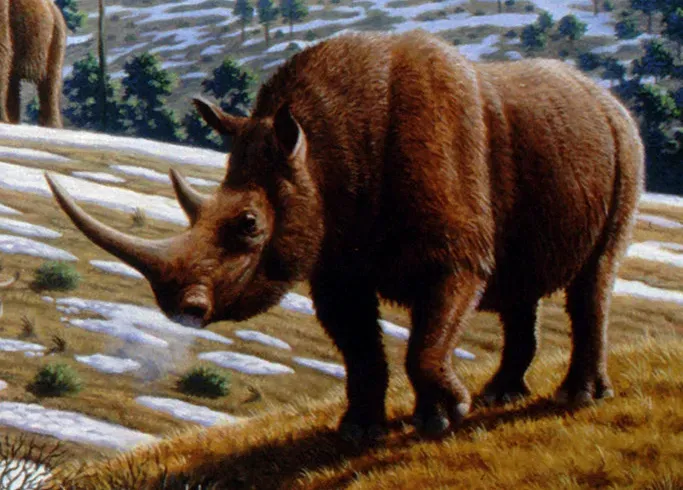
If you think rhinos are scary now, imagine one built for the Ice Age with a horn longer than your arm.
The woolly rhinoceros (Coelodonta antiquitatis) was a massive grazer of the mammoth steppe across Europe and northern Asia. It weighed around 1,800–2,700 kg (4,000–6,000 lbs), with a front horn that could reach 1 meter (3+ feet). Thick fur, short ears, and stocky limbs turned it into a low-slung, snow-plowing machine built to bulldoze through frozen grasslands stretching almost from Spain to Siberia.
These rhinos weren’t just background herbivores. Their grazing patterns likely shaped the vegetation of huge regions, influencing where herds of horses, bison, and even mammoths could feed.
Early humans painted woolly rhinos on cave walls, carved them into figurines, and left behind butchered remains, clear evidence they hunted them despite the obvious danger. One wrong move, and that horn could disembowel a hunter in seconds.
DNA and radiocarbon dates show woolly rhinos vanished about 14,000 years ago, right as climates warmed rapidly. Some scientists argue humans played only a minor role in their extinction. Others point out the suspicious overlap: whenever humans expand into a new region, the biggest animals almost always start disappearing. But even this Ice Age tank seems tame next to #12.
#12 – Megalania: The Giant Komodo Cousin That Haunts Australian Myths
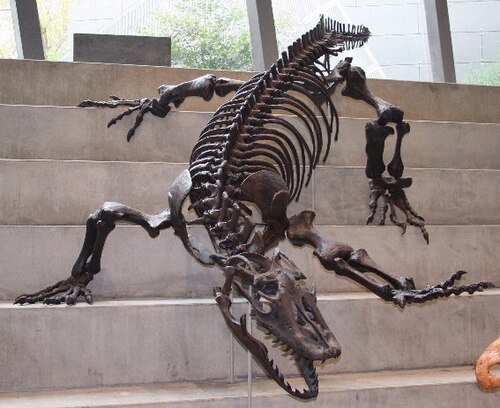
While most travelers obsess over modern Australia’s snakes and spiders, ancient Australia had something far worse: a land-dwelling monitor lizard big enough to look you in the eye.
Megalania (Varanus priscus) was a giant goanna, probably 5–7 meters (16–23 feet) long and over 500 kg (1,100 lbs). Picture a Komodo dragon scaled up into a crocodile-sized land predator, roaming the same open woodlands and plains where the first Aboriginal Australians were arriving 50,000+ years ago. Many paleontologists think it had a mildly venomous bite, like modern monitors, which adds another layer of nightmare fuel.
Its likely hunting style was ambush: rushing from cover, using its bulk to knock prey down, then letting blood loss, shock, and possible toxins finish the job. For early humans, this meant a real risk of being stalked while moving between waterholes or hunting grounds. You weren’t just watching for snakes; you were watching for a lizard longer than your car.
There’s an active debate about when Megalania finally disappeared. Conservative estimates say around 40,000–50,000 years ago, uncomfortably close to human arrival. Some Aboriginal oral traditions of “giant goannas” might echo very late survivors, which would mean our species actually remembered them. But as terrifying as Megalania was, it had serious competition from the marsupial side at #11.
#11 – Diprotodon: The Bus-Sized Wombat That Owned Australia
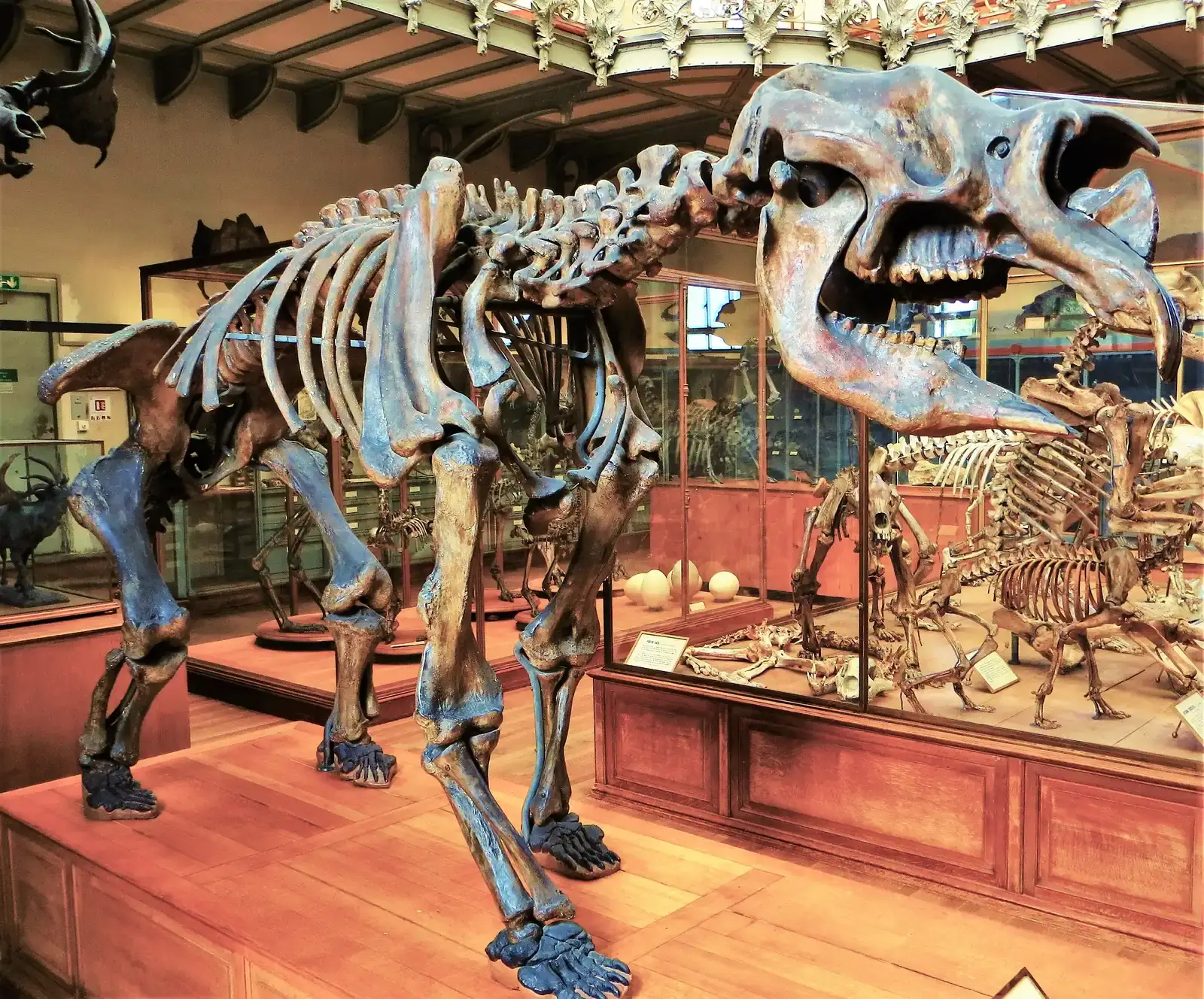
Everyone loves wombats. Now imagine a wombat the size of a small car casually walking through your camp.
Diprotodon, often called the “giant wombat,” was actually its own thing, but it belonged to the same broader marsupial group. Adults weighed up to 2,800 kg (6,000+ lbs), making it the largest marsupial to ever live. It roamed Australia’s woodlands and grasslands until about 40,000–45,000 years ago, completely overlapping with early Aboriginal people.
These weren’t predators. They were slow-moving, big-headed herbivores, likely browsing on shrubs, leaves, and grasses. But size alone made them ecosystem engineers:
- Their trails carved paths through vegetation.
- Their grazing helped shape entire plant communities.
- Their water-seeking behavior may have opened up wallows and depressions that other animals later used.
Cut marks on bones and possible trackways suggest humans hunted them, probably targeting young or weakened individuals. Some researchers argue that even modest hunting pressure, combined with drying climates, could have collapsed Diprotodon populations. Others insist climate alone did it. But the timing is painfully familiar: humans arrive, and the megafauna clock starts ticking.
Oddly enough, Diprotodon still isn’t the strangest Australian giant our ancestors met. Wait until you see #10.
#10 – Procoptodon: The Short-Faced Kangaroo That Didn’t Hop
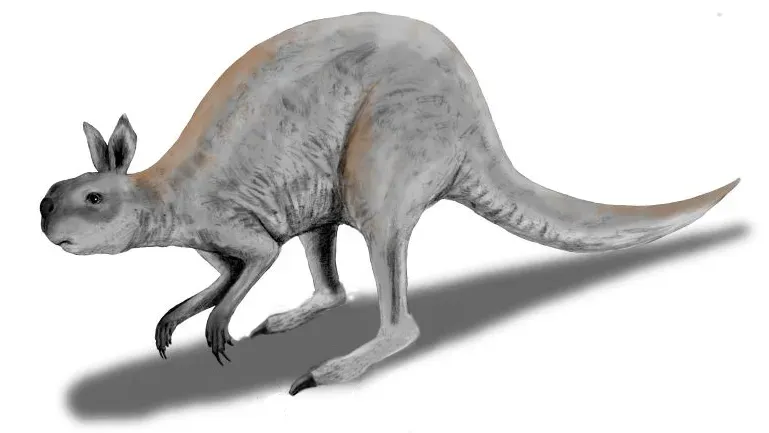
Kangaroos are already odd. Now strip away the cuteness and scale everything up.
Procoptodon, the “short-faced kangaroo,” stood up to 2.7 meters (9 feet) tall and weighed around 200–250 kg (440–550 lbs). Its face was flat, with forward-facing eyes and a massive, beak-like mouth built for crushing tough plants. Unlike modern kangaroos, evidence suggests it walked more than it hopped, perhaps striding upright on two legs and using its tail as a third support.
Quick Compare
- Height: Procoptodon up to 2.7m (9ft) vs. a modern red kangaroo around 1.5–1.8m standing tall
- Weight: Procoptodon 200–250 kg vs. a red kangaroo’s roughly 90 kg
- Movement: Procoptodon likely walked upright; modern kangaroos rely almost entirely on hopping
- Face shape: Flat, beak-like mouth vs. the elongated snout of living kangaroos
For early Australians, these animals would have been impossible to ignore. Herds, or at least loose groups, likely moved through semi-arid landscapes, grazing on saltbush and other hardy vegetation that humans also depended on. Their powerful arms and massive claws made close encounters risky; this wasn’t something you casually tried to spear at short range.
Some scientists think Procoptodon specialized on plants that became scarce as climates dried and humans burned vegetation to manage landscapes. If humans changed the fire regime, they may have unintentionally erased Procoptodon’s buffet. Add in direct hunting, and you’ve got a classic one-two punch: habitat shift plus predation.
If you think a 9-foot kangaroo sounds bizarre, wait until you meet the ocean’s answer to megafauna at #9.
#9 – Steller’s Sea Cow: The Slow, Floating Buffet
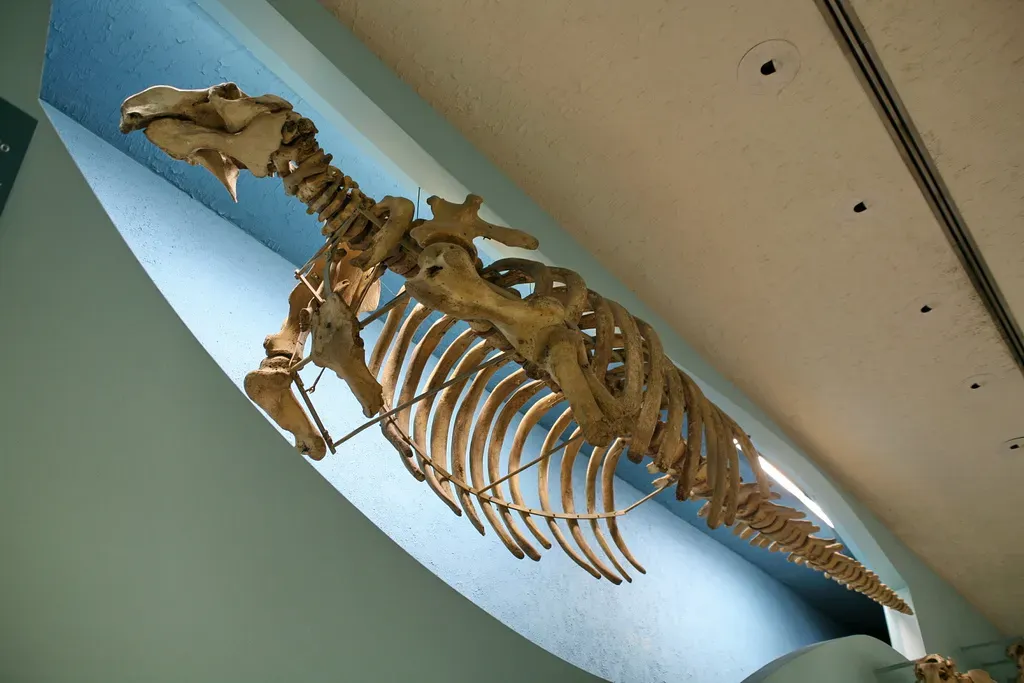
Not all extinct giants lived in the Ice Age or on land. Some disappeared shockingly recently – while we were already writing books and sailing the world.
Steller’s sea cow (Hydrodamalis gigas) was a massive, 8–10 meter (26–33 feet) relative of today’s manatees and dugongs. It lived in the cold waters of the North Pacific, especially around the Commander Islands near Russia. Unlike its southern cousins, it couldn’t fully submerge; it floated at the surface grazing on kelp, basically an elephant-sized target sitting in shallow water.
By the time European explorers “officially” documented it in 1741, Indigenous peoples along the North Pacific had known and probably hunted it for generations. But the arrival of Russian and European fur traders was catastrophic. Its slow movement, surface feeding, and thick blubber made it a perfect commercial resource. Within just 27 years of its scientific description, it was gone – extinct by around 1768.
Worth Knowing
- Discovered by science in 1741, extinct by roughly 1768 – just 27 years later
- Could reach 8–10 meters long, among the largest animals hunted to extinction in historical times
- Fed only on kelp near the surface, unable to dive to escape hunters
- One of the best-documented human-driven extinctions in recorded history
Some argue Steller’s sea cow populations were already shattered by earlier Indigenous hunting and ecosystem changes that reduced kelp. Others blame the European killing frenzy almost entirely. Either way, this is one of the clearest, best-documented cases of humans erasing a giant in real time.
And Steller’s sea cow isn’t even the most disturbing example of a giant we likely pushed over the edge. That honor goes to #8.
#8 – The Giant Ground Sloths: Gentle Monsters of the Americas
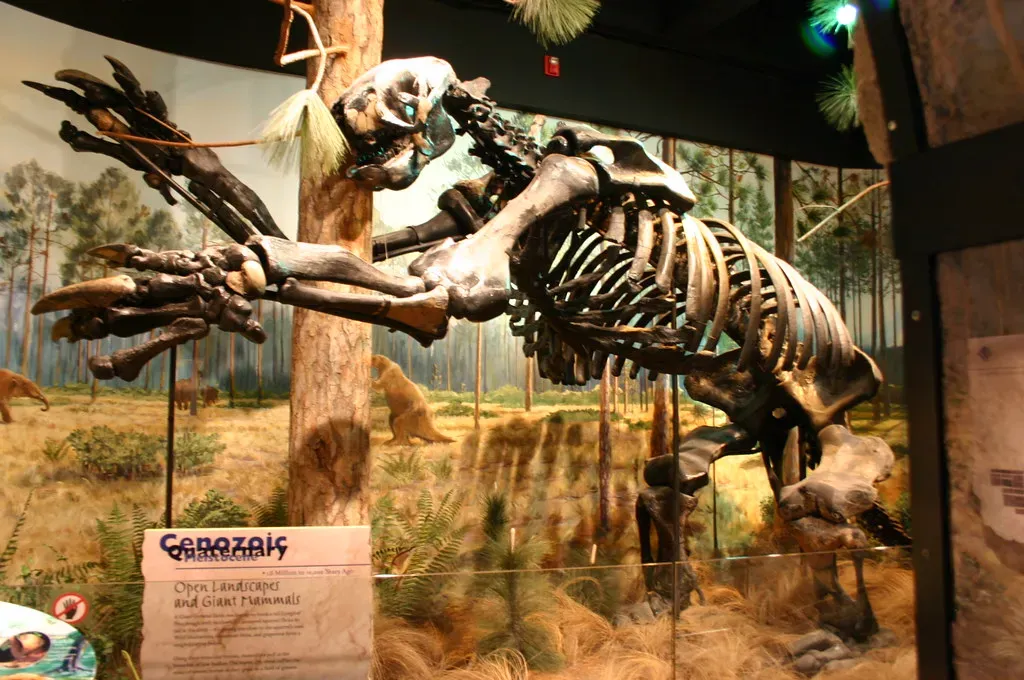
Forget everything you know about tree sloths. Their ancient relatives were land-roaming, elephant-sized tank-sloths that shared the Americas with the very first people to arrive.
Multiple species of giant ground sloths existed, but some, like Megatherium in South America and Eremotherium in North America, stood 4–6 meters (13–20 feet) tall when rearing up. They had massive claws, pillar-like limbs, and thick, muscular tails for balance. Despite their terrifying hardware, they were herbivores, likely browsing from trees and shrubs other animals couldn’t reach.
Fossils show ground sloths living right alongside early human stone tool cultures. In some caves, you literally see:
- Sloth bones with cut marks from butchering.
- Sloth footprints intersecting with human prints.
- Sloth dung preserved in layers beneath human occupation.
Many researchers think humans heavily targeted them because they were gigantic packages of meat, fat, and hide that moved slowly. Combined with rapid climate changes at the end of the last Ice Age, that hunting pressure probably shattered their populations.
The most controversial twist: evidence hints some Caribbean ground sloths might have survived until just a few thousand years ago, coexisting with early island farmers. If that’s true, we didn’t just meet them briefly – we lived with them for tens of thousands of years before finally wiping them out.
Yet even ground sloths weren’t the top herbivores in some areas. That role often belonged to #7.
#7 – The Giant Bison: Horned Bulldozers of the Ice Age Plains
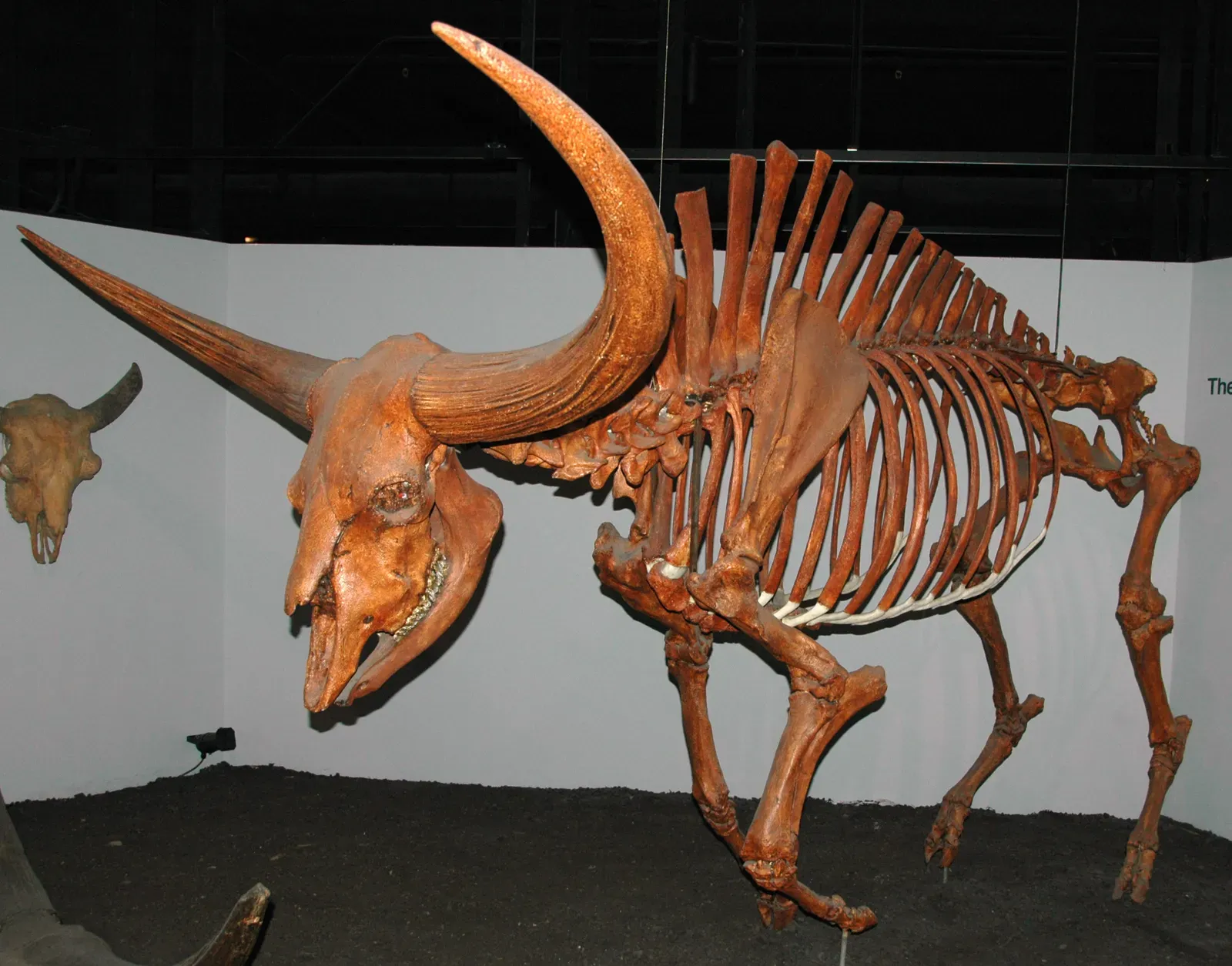
Modern bison already look prehistoric. Their Ice Age cousins were even more intense.
Bison latifrons and later Bison antiquus were giant bison species roaming North America during the Pleistocene. B. latifrons could weigh up to 2,000 kg (4,400 lbs), with horns spanning over 2 meters (6–7 feet) tip to tip. If a herd of these moved through your camp, you didn’t argue – you just got out of the way.
These giants shaped entire grassland ecosystems:
- Their grazing patterns created mosaics of short and tall vegetation.
- Their hooves churned up soil, helping seeds germinate.
- Their sheer numbers provided food for giant predators and, later, humans.
Early Americans clearly hunted them. Kill sites show sophisticated group hunting strategies – driving herds into natural traps, ambushing them near water, or surrounding smaller groups. This wasn’t casual opportunism; it was organized, socially coordinated hunting of animals that could easily kill a person with a single hit.
Some scientists argue that by the time humans arrived in large numbers, climate shifts had already stressed giant bison, shrinking their ranges. But the pattern repeats: soon after humans intensify their presence, the massive species vanish or evolve into smaller, more stressed forms. Modern bison are probably the downsized survivors of that megafaunal crash.
Still, even giant bison didn’t dominate like the next animal on this list in its home turf. That title goes to #6.
#6 – The Irish Elk: Antlers Like Portable Trees
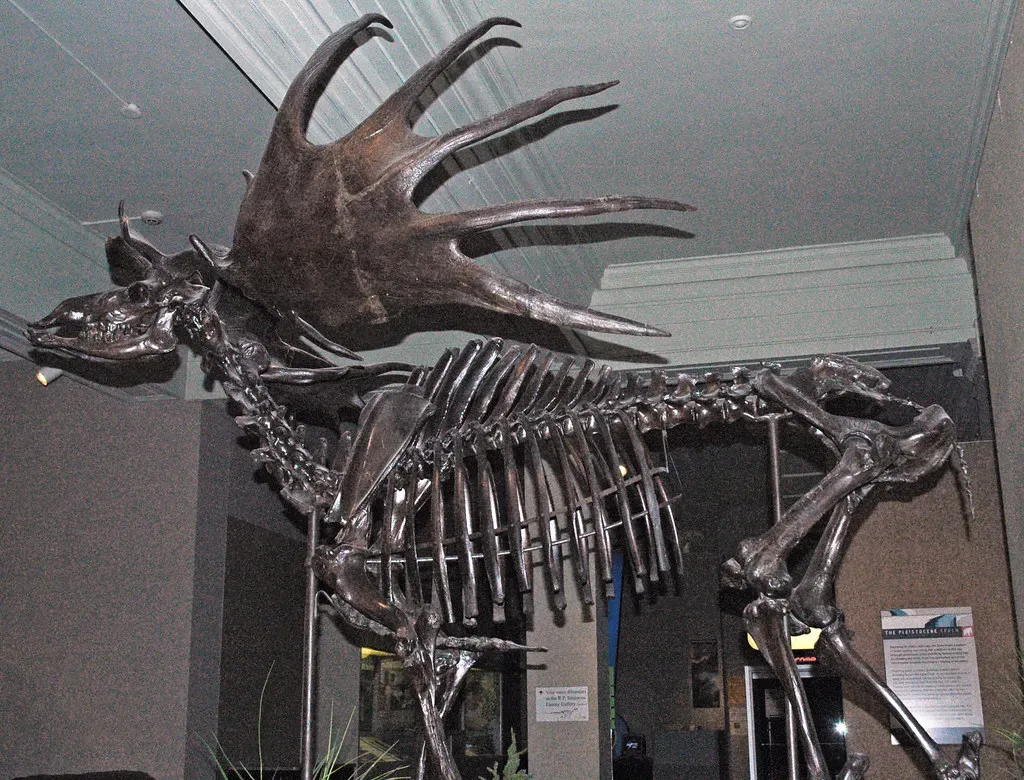
The “Irish elk” (Megaloceros giganteus) wasn’t truly Irish or an elk – but it was a deer with antlers so huge they practically broke the rules of biology.
Standing about 2.1 meters (7 feet) at the shoulder, with antlers spanning up to 3.5 meters (11+ feet), Megaloceros was a spectacular sight across Eurasia. It thrived in open woodlands and grasslands, overlapping in time and space with both Neanderthals and modern humans for tens of thousands of years.
Why It Stands Out
- Largest antler spread of any deer known to science, at up to 3.5 meters tip to tip
- Required a huge annual mineral investment just to regrow each year
- Overlapped with both Neanderthals and modern humans for tens of thousands of years
- Final population held on in western Siberia long after the Ice Age ended
Those antlers weren’t just for show. They were likely used in:
- Dominance displays and fights between males.
- Visual signaling in open habitats.
- Attracting mates – a flashy, costly advertisement of genetic health.
But those same antlers came at a price. They required massive mineral investment each year, and as forests expanded after the Ice Age, maneuvering through denser trees likely became harder. Some researchers argue that changing environments made their over-the-top antler strategy unsustainable, leading to their decline. Others say that’s overstated and that climate and human hunting together did the damage.
Evidence shows humans hunted and butchered Irish elk, and some cave art possibly depicts them. The final extinction wave around 7,700 years ago in western Siberia happens long after the Ice Age, when humans were well-established – another suspicious coincidence.
Yet compared to what humans faced in Africa, the Irish elk was “just” a big deer. Africa had #5.
#5 – The Giant Short-Faced Hyena: The Nightmare Scavenger
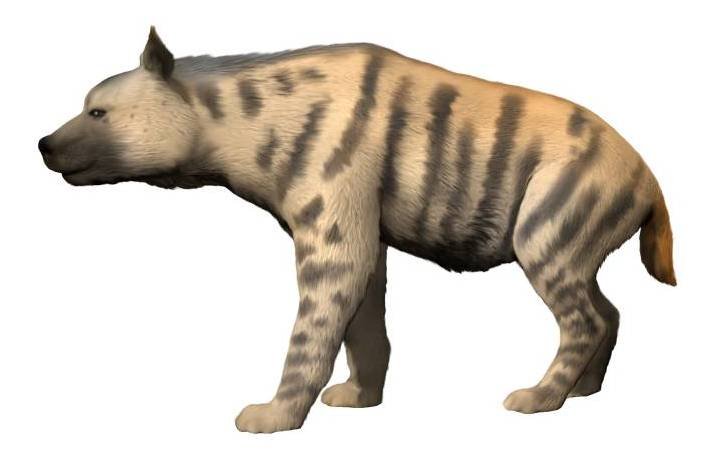
Hyenas get a bad reputation today. Their extinct relatives in Africa and Eurasia fully deserved it.
The giant short-faced hyena (Pachycrocuta brevirostris) was the largest hyena ever known, weighing up to 150 kg (330 lbs). It roamed from Spain to China and across parts of Africa, overlapping with Homo erectus, Neanderthals, and early modern humans. Its build suggests a powerful, bone-crushing animal, likely specialized in scavenging and stealing kills as much as hunting outright.
Fossil cave sites show piles of bones dragged in by these hyenas, many with distinctive tooth marks. In some places, you can see the time-share pattern: early humans used a cave, then hyenas took it over, then humans came back. We weren’t just competing with big cats – we were battling bone-destroying hyenas for shelter and carcasses.
Some researchers think these hyenas followed human movements, exploiting our kills the same way modern hyenas track lions. Others argue they were dominant in their own right, with humans cautiously navigating around their territories. Either way, sharing a landscape with them was dangerous. Going out at night wasn’t just risky; it was potentially fatal.
Incredibly, these were still not the top predators everywhere. North America had something perhaps even more intimidating at #4.
#4 – The North American Short-Faced Bear: The Sprinting Giant
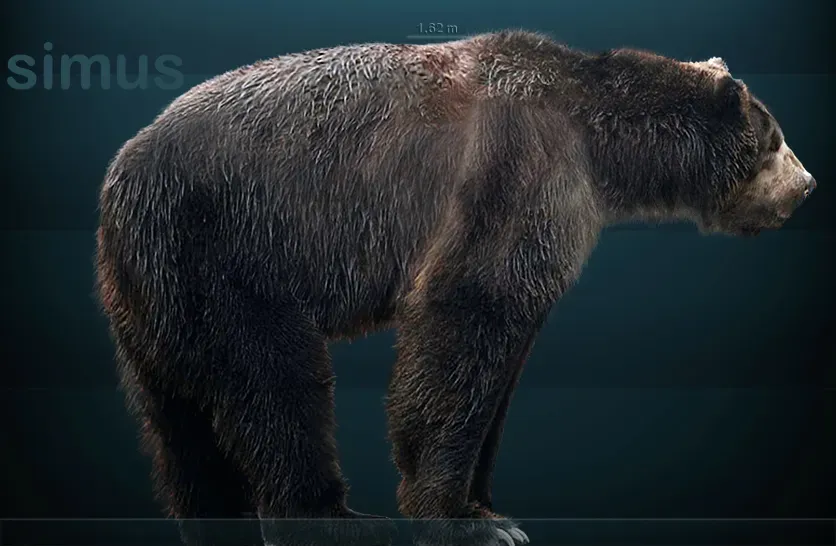
Imagine a bear that didn’t lumber – it ran you down across open ground.
Arctodus simus, the North American short-faced bear, has long been portrayed as a hyper-carnivorous, long-legged giant capable of chasing horses and humans alike across the Ice Age plains. Adults may have weighed 600–1,000 kg (1,300–2,200 lbs) and stood over 3.5 meters (11+ feet) when upright. Their long limbs and lightly built frame suggest speed and endurance, not the slow plod of modern grizzlies.
There’s still debate about how predatory they really were. Some isotopic studies of their bones hint at heavy meat consumption, suggesting either active hunting or intense scavenging from other large predators’ kills. Either way, they were a massive, apex-level competitor in the same regions where early Americans were trying to establish themselves.
For humans, this meant:
- Constant competition over carcasses.
- High risk when hunting large game that might attract these bears.
- Possible direct predation, especially on isolated individuals or small groups.
As with so many others, Arctodus disappeared near the end of the last Ice Age, about 11,000–12,000 years ago, just as climates shifted and human populations grew. Some scientists emphasize the climate angle; others see human pressure as the final nudge. But if you want the most dramatic symbol of Ice Age North America – predator and prey in one – you need to look at #3 and #2 together.
#3 – The American Lion: Bigger Than Any Lion Alive Today
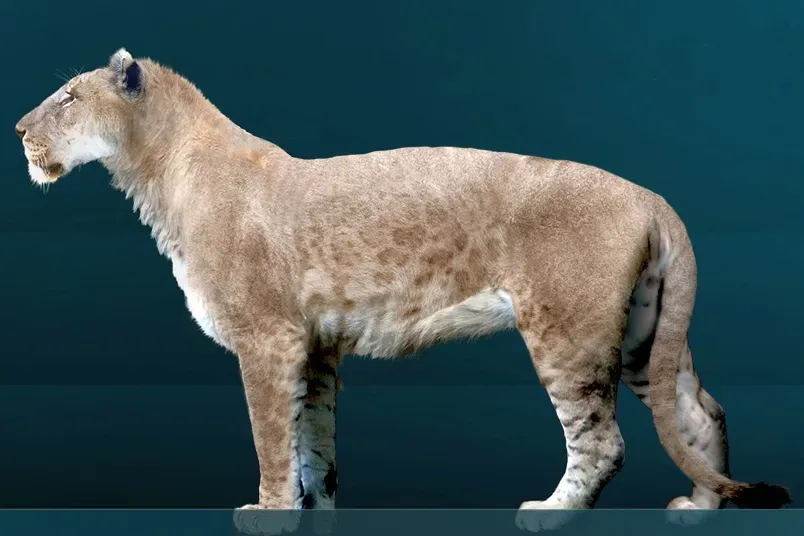
Most people don’t realize North America once had its own lion, and it was larger than modern African lions by a serious margin.
Panthera atrox, often called the American lion, roamed from Alaska down into Mexico. Males may have weighed 25–50% more than today’s African lions, with some estimates pushing 360–400 kg (800–880 lbs). Their fossils litter the La Brea Tar Pits in California, mixed with prey species and other predators in a deadly asphalt time capsule.
Whether they hunted in prides like African lions or more solitarily like tigers is debated. But their prey base included the full cast of megafauna: horses, camels, giant bison, young mammoths, and probably anything else they could overpower. Early humans in North America were effectively dropping into a landscape already dominated by these cats, not the other way around.
Stone tools and butchery marks show humans and lions targeting many of the same prey species. That means direct competition. A fresh kill left unattended for even a short time could easily be claimed by a lion, and nocturnal camp raids were a very real threat.
Interestingly, as North America’s megafauna collapsed around 11,000–12,000 years ago, the American lion vanished too. Take away its supersized prey and throw humans into the mix, and even the top cat can’t hang on. Which brings us to the undisputed icon of Ice Age giants – and one of our most famous victims – at #2.
#2 – The Woolly Mammoth: The Giant We Know Best – And Still Might Revive
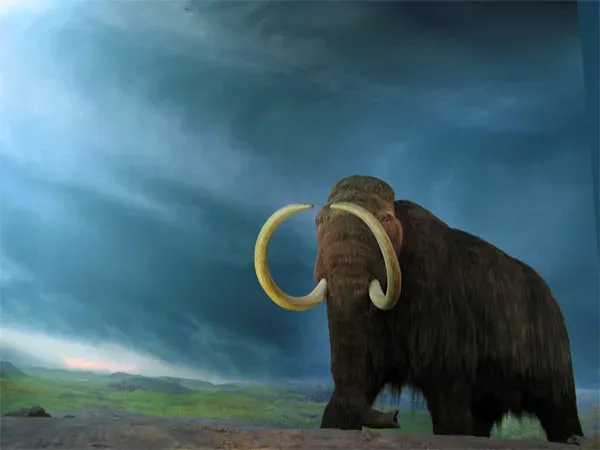
If there’s one extinct giant people recognize instantly, it’s the woolly mammoth – and our relationship with it is disturbingly intimate.
Woolly mammoths (Mammuthus primigenius) were smaller than the largest African elephants but still massive: up to 4 meters (13 feet) at the shoulder and 6–8 tons in weight. Their curved tusks could exceed 4 meters (13 feet) long. They were perfectly adapted to the cold – shaggy coats, thick fat layers, and small ears reduced heat loss as they grazed the mammoth steppe across Eurasia and North America.
At a Glance
- Shoulder height: up to 4 meters (13 feet)
- Weight: 6–8 tons
- Tusk length: over 4 meters (13 feet) in large males
- Last known survivors: isolated Arctic islands until roughly 4,000 years ago
- Modern relevance: subject of ongoing de-extinction research using elephant surrogates
Archaeological sites across Europe, Siberia, and the Americas show just how deeply humans depended on them:
- Bones used as building frames for huts.
- Tusks carved into tools, weapons, and art.
- Meat and fat forming a crucial calorie source in brutal winters.
Genetic and radiocarbon data indicate mammoths persisted on isolated Arctic islands until about 4,000 years ago – meaning they were alive while the pyramids stood in Egypt. We missed living mammoths by a geological heartbeat. Today, scientists are even exploring “de-extinction” projects using mammoth DNA and Asian elephant surrogates, sparking fierce ethical debates.
Most experts now see mammoth extinction as a double blow: rapid post-Ice Age warming shrank their habitat, and expanding human hunting pressure finished the job. We didn’t just coexist with mammoths; we followed them, built cultures around them, and ultimately outlasted them.
Yet for all their fame, mammoths weren’t the only giant elephants we walked beside. And the most awe-inspiring of all might be #1.
#1 – The Straight-Tusked Elephant: The Colossus of Early Europe
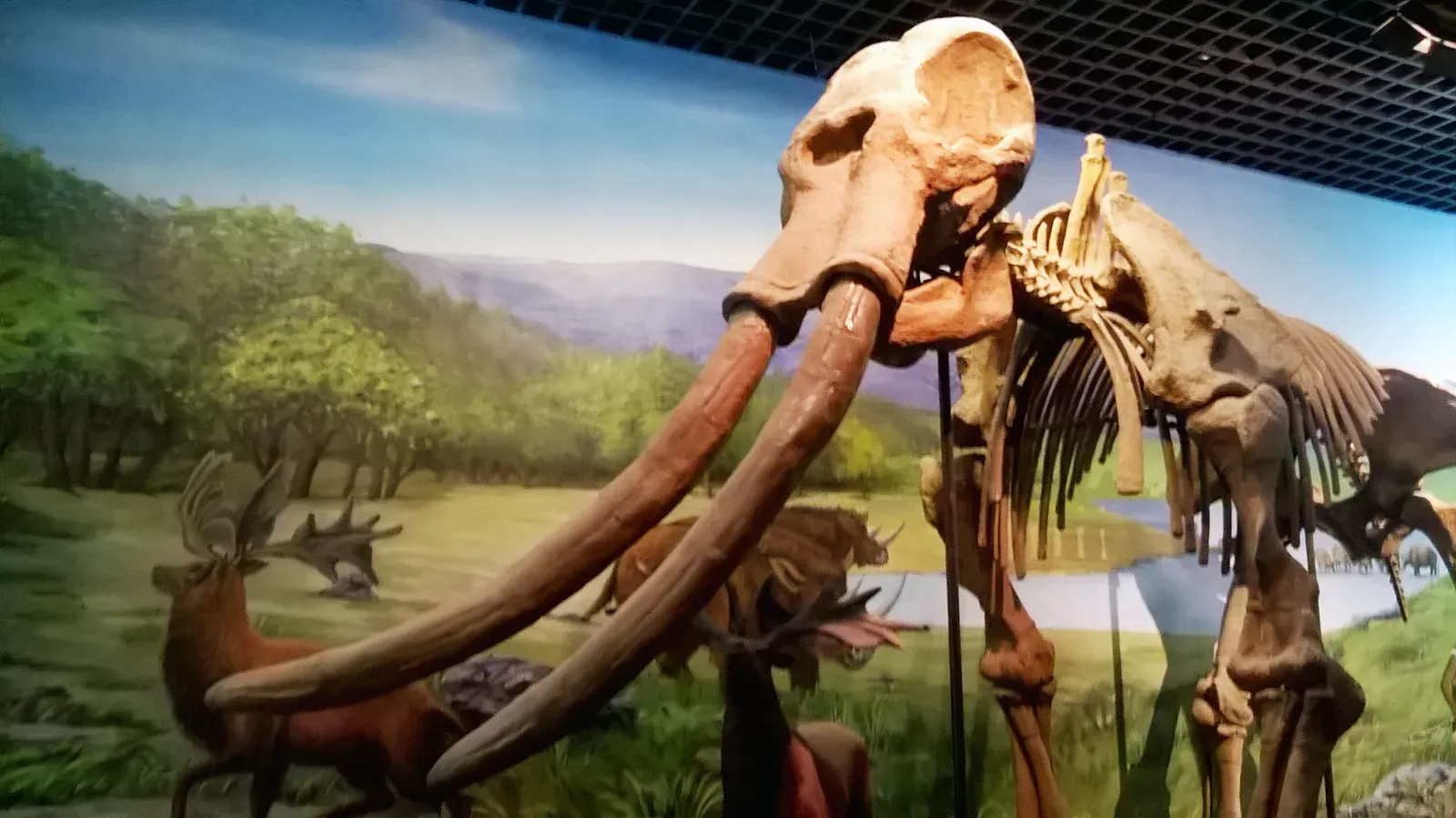
Before mammoths ruled the Ice Age headlines, Europe had an even more imposing elephant – one that stood taller than African elephants and overlapped with some of the earliest Europeans.
Palaeoloxodon antiquus, the straight-tusked elephant, ranged across Europe and parts of western Asia during warmer phases of the Pleistocene. Large males may have reached 4–4.5 meters (13–15 feet) at the shoulder and weighed over 10 tons. Their tusks were long, gently curved or nearly straight, giving them their common name and an unmistakable profile in open woodlands and river valleys.
Fossil sites in places like Germany, Italy, and the UK show clear evidence of interaction with early humans and Neanderthals:
- Cut marks on bones from butchering.
- Stone tools lying among elephant remains.
- Possible organized kill sites near ancient water sources.
The big argument is whether humans regularly hunted them or mostly scavenged individuals that died naturally or got stuck in mud. Some evidence suggests coordinated hunting – driving elephants into boggy ground or ambushing them near constrained passages. If that’s true, early humans weren’t just opportunistic scavengers; they were bold enough to take on 10-ton giants armed with nothing but stone tools.
Straight-tusked elephants disappeared roughly 100,000–30,000 years ago, depending on the region, as climates swung colder and Neanderthals and modern humans expanded. Once again, the timing is no coincidence. Where big-brained primates show up in force, the extra-large herbivores usually vanish soon after. And that’s the uncomfortable thread tying all these stories together.
The Bottom Line
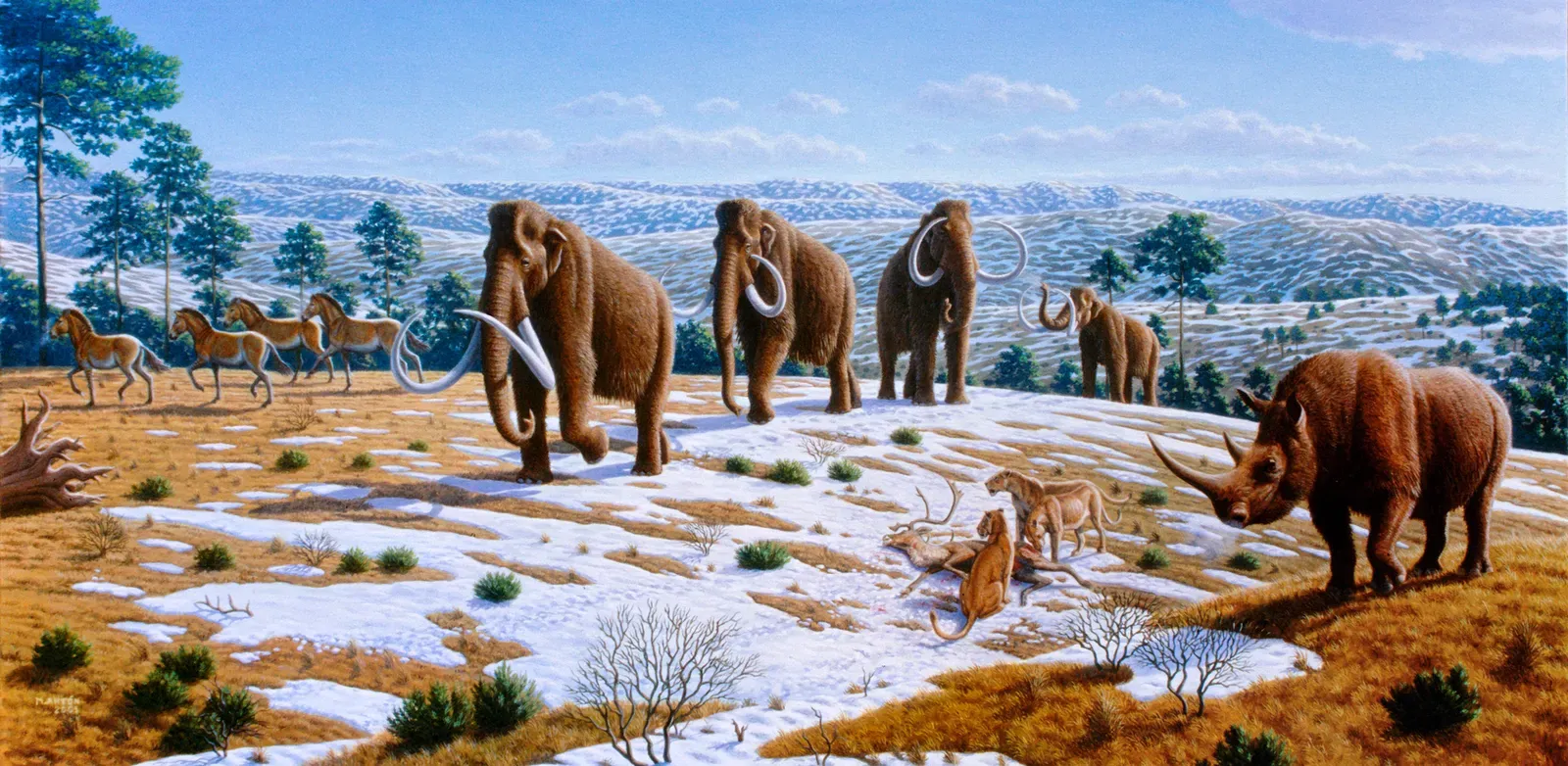
Looking across these 14 extinct giants, a pattern jumps out that’s hard to ignore: wherever humans went, the biggest animals started disappearing. Climate change mattered, especially at the end of the Ice Age, but pretending we were just innocent bystanders is pure denial.
From woolly mammoths to Diprotodon, from American lions to Steller’s sea cows, we repeatedly show up at the crime scene right before the giants vanish. That’s not a coincidence repeated fourteen separate times.
What’s even more unsettling is how recent some of these losses are. Steller’s sea cow disappeared less than 300 years ago, well within recorded history. Some ground sloths and mammoths survived into the age of agriculture and pyramids. These weren’t abstract prehistoric beasts; they were neighbors our species helped erase.
That’s the real lesson here, and it’s not a comfortable one. When people argue today that modern elephants, rhinos, and big cats will simply “adapt” to us, the fossil record says otherwise. Historically, they don’t adapt. They disappear. Did we miss a giant you think deserves to be on this list, or do you disagree about how much blame humans deserve? Drop your take in the comments.