
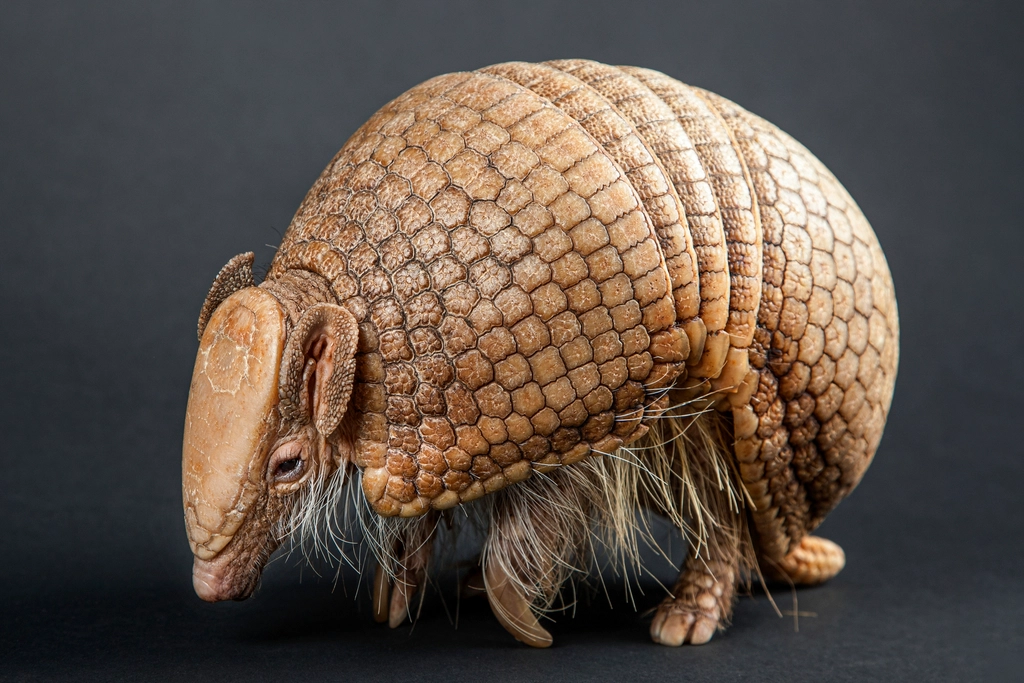
Picture an armadillo trundling across a dusty road at dusk, its little armored back catching the last bit of light. Now stretch that image to the scale of a small car, give it a massive domed shell and a heavy tail, and place it next to grazing mammoths and saber‑toothed cats. That is not fantasy; that is the deep evolutionary backstory of the armadillo. These animals are not just quirky roadside oddities – they are the surviving cousins of prehistoric giants that turned armor into an art form.
Once you understand that, armadillos stop looking like biological jokes and start looking like living time capsules. Their strange bodies, digging claws, and bony shells are not random quirks but the echo of a lineage that helped define South America’s ancient megafauna. The real story is even better than the headline: evolution has fine‑tuned the armored mammal design again and again, from tank‑sized glyptodonts to the pocket‑sized nine‑banded armadillos of today. And if that doesn’t make you see them differently the next time you spot one, nothing will.
The Armored Mammal Family Tree: Xenarthrans And Their Weird Spine
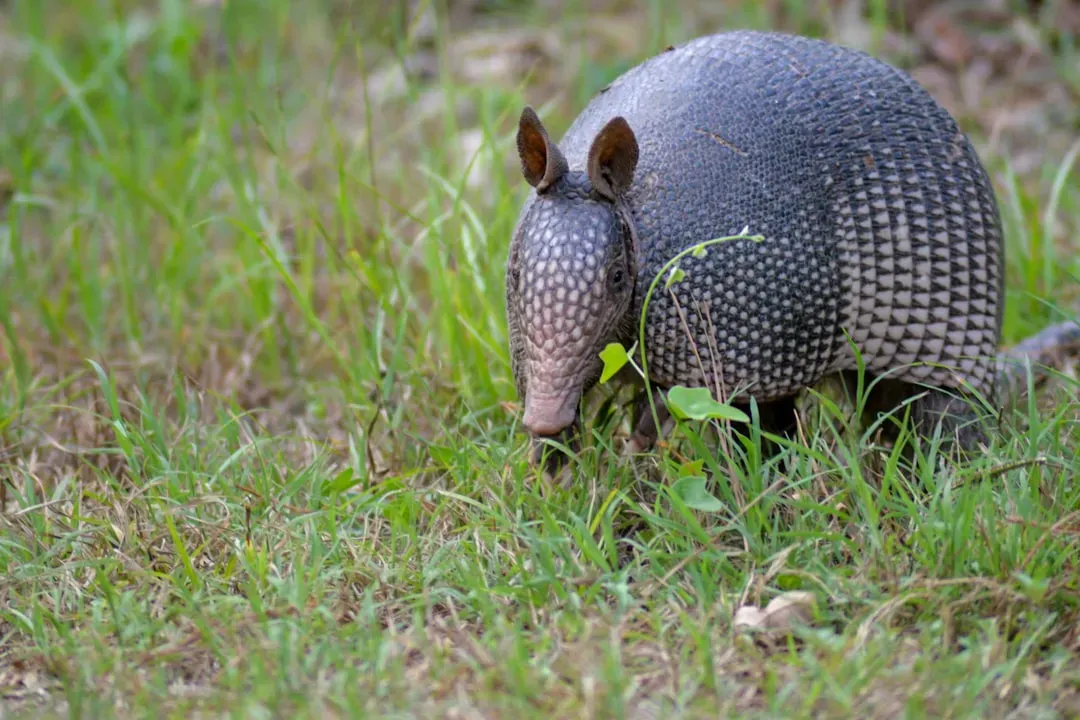
Armadillos sit in a wonderfully odd mammal group called xenarthrans, alongside sloths and anteaters. What unites them is not just geography or diet but skeletal weirdness: their vertebrae have extra joints and reinforcements, a structural quirk that gives the group its name and probably helped support powerful digging and heavy armor. When you look at an armadillo’s stiff, low‑slung body, that reinforced spine is doing a lot of the quiet heavy lifting.
This same broader group once included the giants that carried huge shells and club‑like tails, especially in South America where xenarthrans evolved largely in isolation for millions of years. So when we say armadillos are living relatives of armored giants, we are not being poetic; they literally share this deep structural blueprint. Think of xenarthrans as a lineage that specialized in slow, tough, and stubborn, rather than fast, sleek, and agile. Armadillos keep that tradition going, just scaled down to something that can realistically survive in a world shaped by humans.
Meet The Glyptodonts: Car‑Sized Cousins With Battle‑Ready Shells
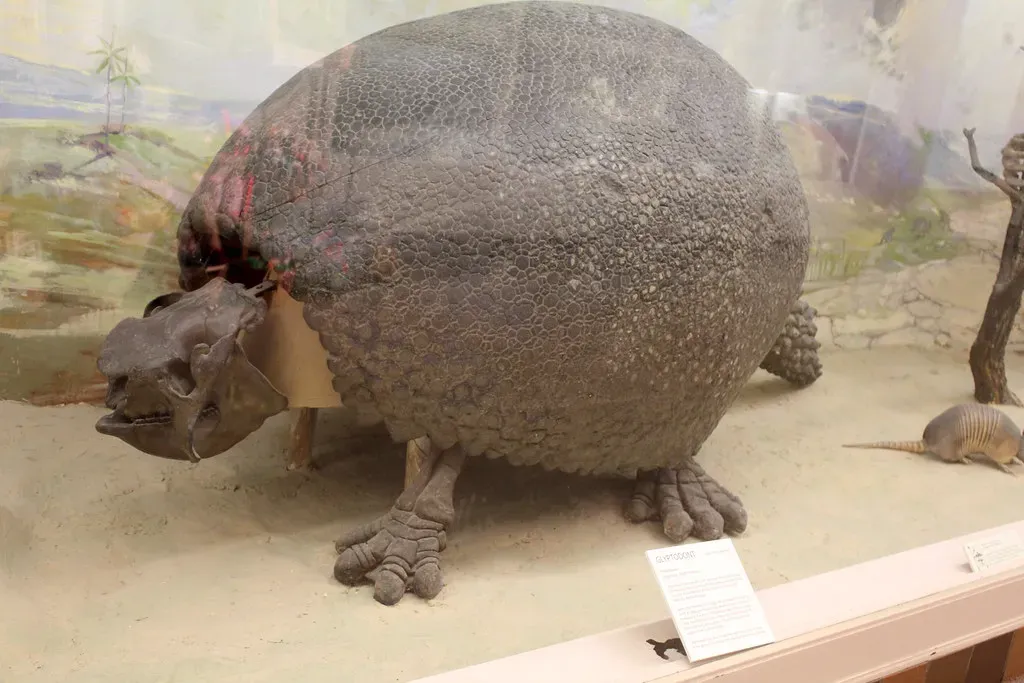
The most dramatic relatives of armadillos were the glyptodonts, massive herbivorous mammals that lived through much of the last few million years and survived into the late Ice Age. Many were roughly the size of a small car, with an arched shell made from fused bony plates and a thick, powerful tail that sometimes ended in a heavy club or spiky ball. If you mashed up an armadillo, a turtle, and a medieval war hammer, you would get something close to a glyptodont.
These animals were not walking slowly under flimsy shields; their shells were genuine armor that could weigh hundreds of kilograms. The plates were so tightly fused they formed a solid dome, more like a sculpted carapace than the flexible bands you see on modern armadillos. Some fossils even show evidence of impacts and healed injuries on the shell, hinting at clashes – whether against predators or each other – that left literal dents in the armor. Armadillos, by comparison, look like budget versions of a once‑premium armored design.
Bone As Armor: Osteoderms, Carapaces, And The Physics Of Being Tough
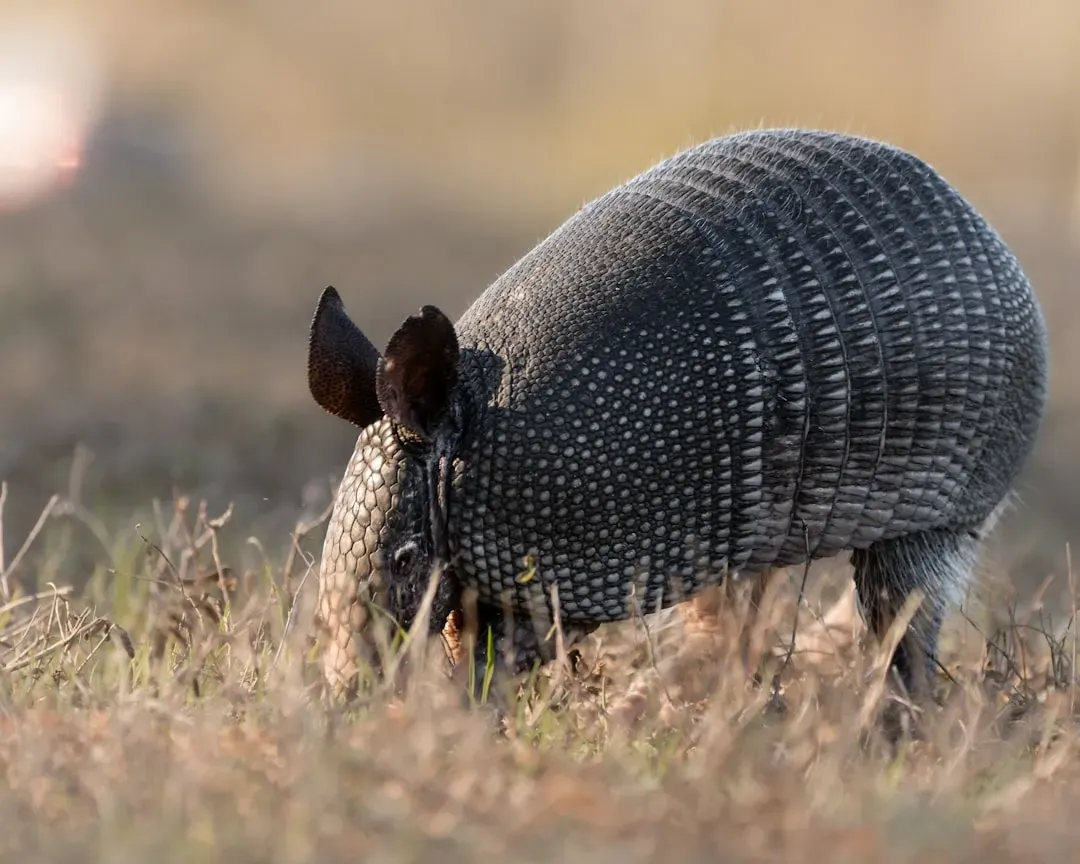
The key to both armadillos and their giant cousins is a humble concept: bone in the skin, known as osteoderms. In armadillos, these bony plates are arranged in bands and covered with a tough, keratinous surface, creating a flexible suit of armor that lets them curl, twist, and bolt into burrows. In glyptodonts, those same osteoderms fused into a nearly continuous shell, turning the animal into a rolling fortress that traded agility for serious protection.
This difference in architecture reflects trade‑offs that evolution is constantly negotiating. A flexible, banded armor like the armadillo’s is great for a small animal that needs to wiggle and scramble; a rigid dome suits a massive grazer that relies on size and sturdiness more than quick reflexes. Both designs are riffing on the same underlying toolkit: build armor directly into the body, rather than just wearing thick skin or fur. In that sense, today’s armadillos are like the compact, agile version of a platform that once also produced heavy tanks.
From South American Tanks To Global Survivors
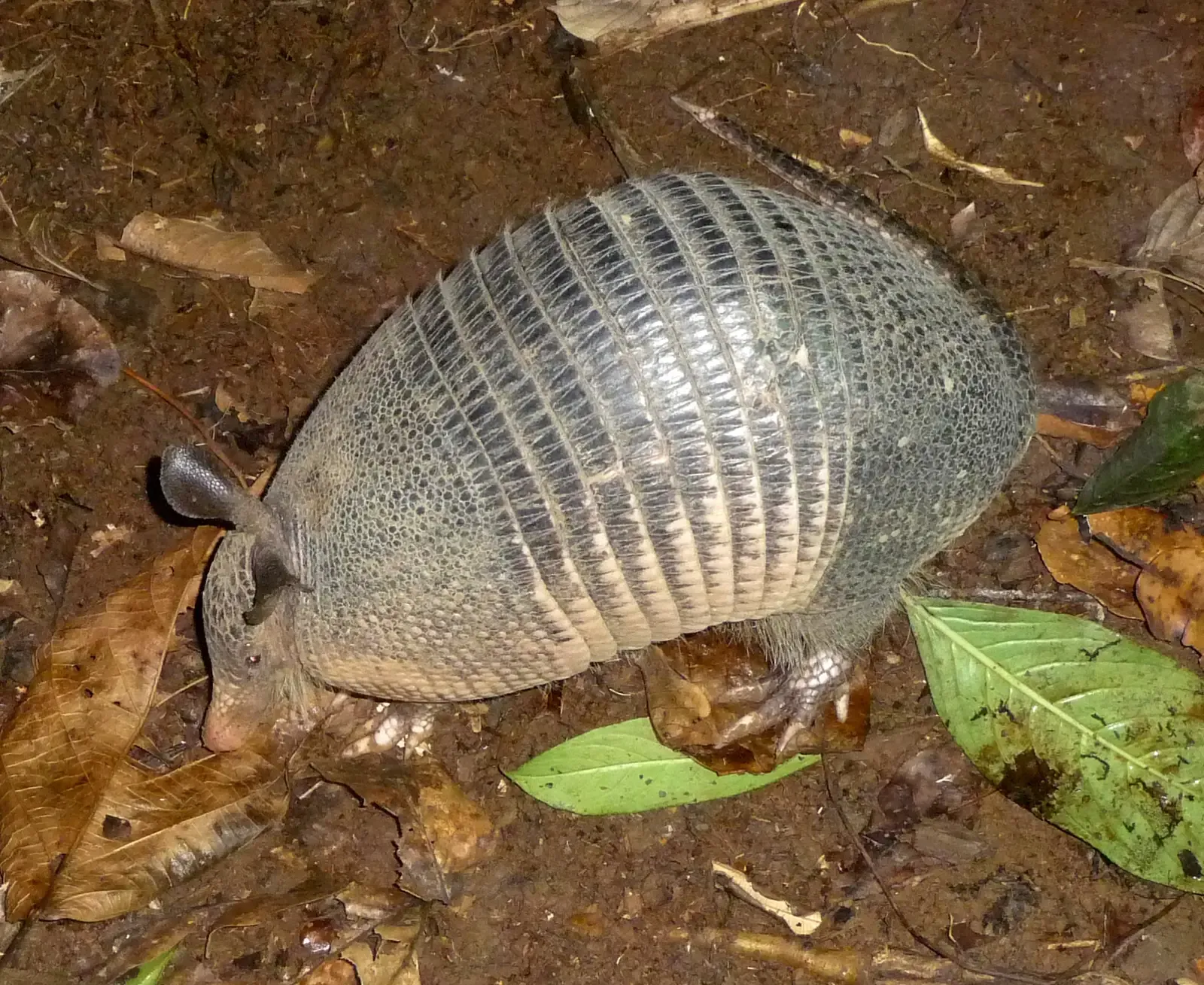
For much of their history, armored xenarthrans were a South American specialty. Before the continents connected, South America was like an evolutionary island where these armored grazers evolved alongside giant ground sloths and other bizarre mammals. When the Isthmus of Panama formed and North and South America connected, a wave of animals moved both ways, including armored species that headed north.
Glyptodonts eventually vanished, likely due to a tangle of climate shifts, habitat changes, and human pressures, but smaller armadillo species adapted and spread. Today some armadillos live as far north as the southern United States, steadily expanding their range. It is as if the legacy of the big armored tanks lives on in a fleet of smaller scouts that can slip into more fragmented, human‑dominated landscapes. The shell stayed; the strategy got lighter and more flexible.
The nine‑banded armadillo, probably the one most North Americans know, is the poster child for this survival story. It tolerates a mix of forests, fields, and suburbs, eats a wide variety of invertebrates, and reproduces in a surprisingly efficient way. While we tend to think of evolution as a story of big, dramatic beasts, the truth is that, in the long run, adaptability beats sheer size. The extinction of the giants and the persistence of the small survivors is that lesson written in armor.
DNA Evidence: How We Know Glyptodonts And Armadillos Are Kin
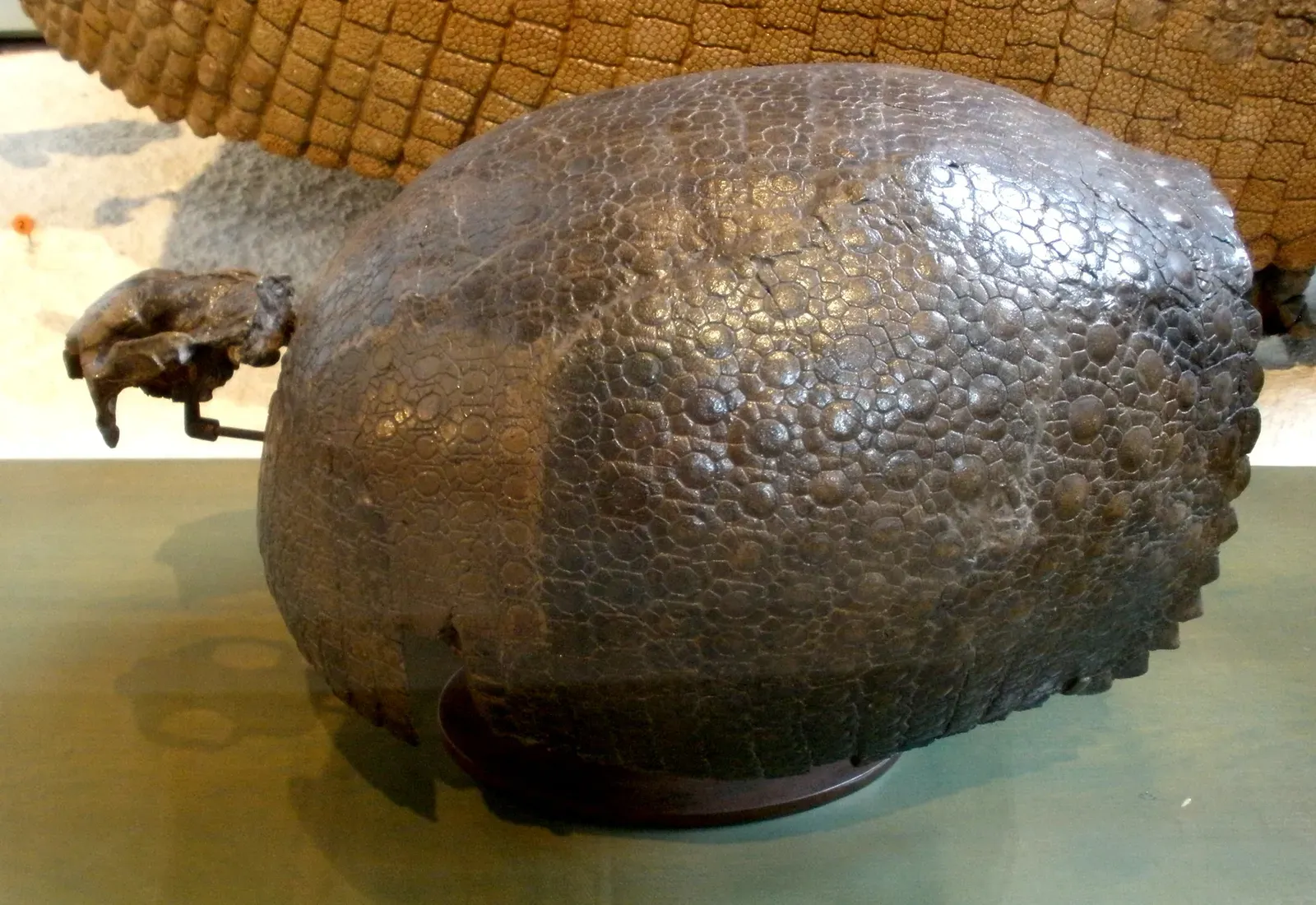
For a long time, paleontologists suspected glyptodonts were related to armadillos just by looking at their bones and shells. The shells had similar microscopic structures, and the skulls shared some odd features you do not see in other mammal groups. Still, glyptodonts were so much larger and more extreme that some researchers hesitated to place them neatly within the armadillo family tree; they seemed almost too overbuilt to be close kin.
That shifted when researchers managed to extract ancient DNA from well‑preserved glyptodont fossils and compare it to modern xenarthran genomes. The genetic evidence strongly supported what many had suspected: glyptodonts fall within the armadillo lineage, not beside it as some separate, parallel branch. In other words, those car‑sized armored beasts are not just distant cousins – they are essentially outsized armadillos that took the heavy‑armor pathway and then disappeared. Modern armadillos are the scaled‑down relatives that went the other direction.
Modern Armadillos: Miniature Time Travelers In Our Backyards
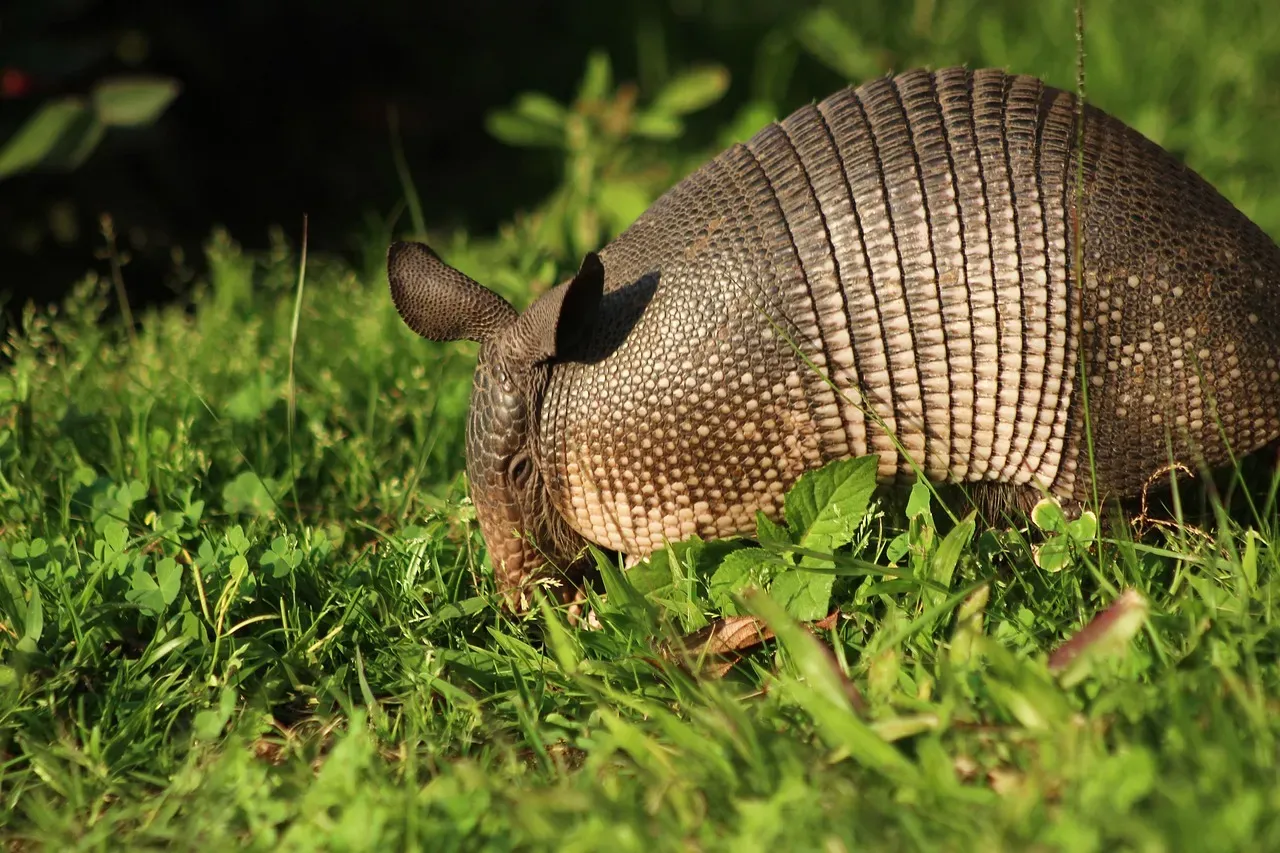
When you watch an armadillo snuffling in the leaf litter, you are seeing behaviors that make sense in the context of a long history of digging, foraging, and armoring up. Their strong forelimbs and claws, their low center of gravity, and their tendency to rely on a combination of defense and retreat all fit into that story. They are not speed demons or stealth specialists; they are persistence machines, betting on toughness and digging rather than sprinting or camouflage.
Different armadillo species push this general plan in different directions. Some live in dry, open habitats; others favor forests. A few species have particularly robust shells, while others are more lightly armored but more agile. Yet across that variety, they all carry that signature bony armor and xenarthran spine that link them back to the giants. If you think of evolution as a long‑running design lab, modern armadillos are the compact, all‑terrain version of a once massive and diverse armored lineup.
Why The Giants Vanished But The Little Tanks Stayed
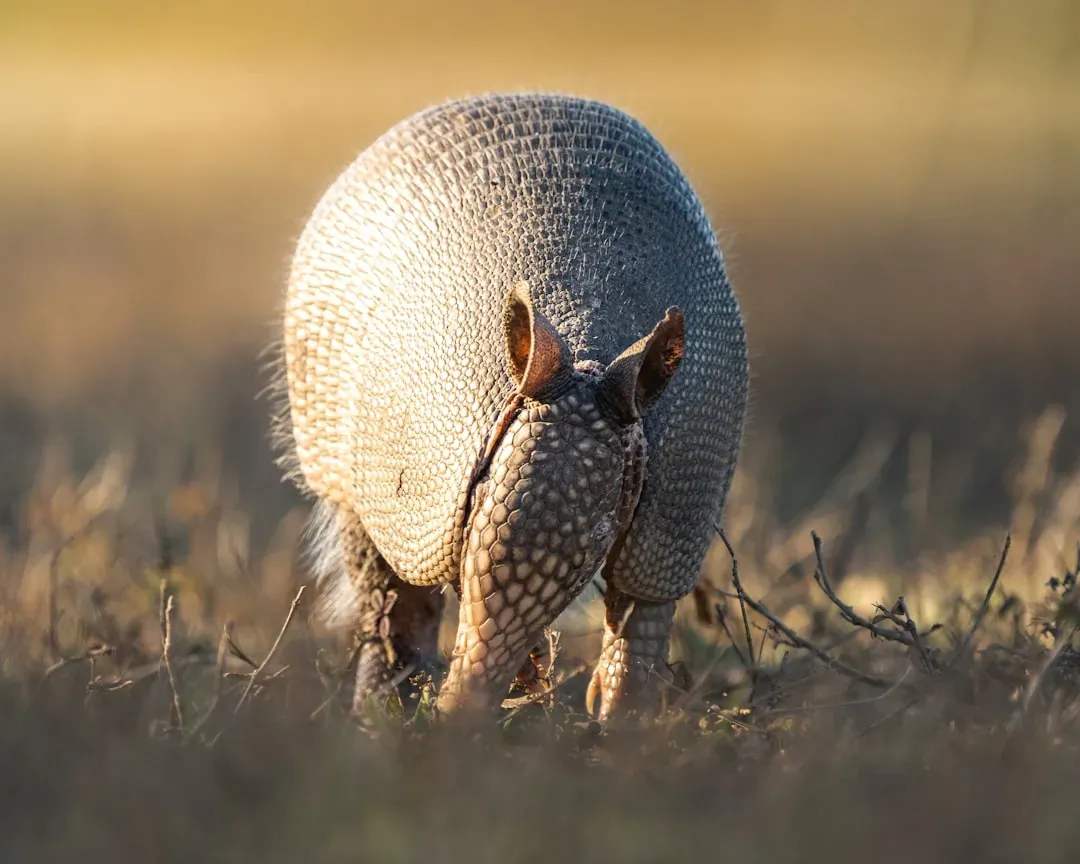
The obvious question is: if armor is so great, why did the huge armored mammals disappear while their smaller relatives lived on? The honest answer blends climate, ecology, and the arrival of humans. As the Ice Age ended, environments shifted, food sources changed, and large animals with slow reproduction and heavy bodies were at a disadvantage. Add in hunting pressure and habitat disruption, and the giants were pinned in a corner with fewer options.
Smaller armadillos, on the other hand, could squeeze into a wider range of niches, reproduce faster, and survive on more varied diets. A big, heavily armored grazer needs vast, relatively stable landscapes; a smaller omnivore can survive in patchy, changing environments, even ones crisscrossed with roads and farms. The irony is sharp: the most heavily armored forms did not win the long game. Instead, moderate armor combined with flexibility and modest size turned out to be the safer evolutionary bet.
What Armadillos Reveal About Evolution, Adaptation, And Us
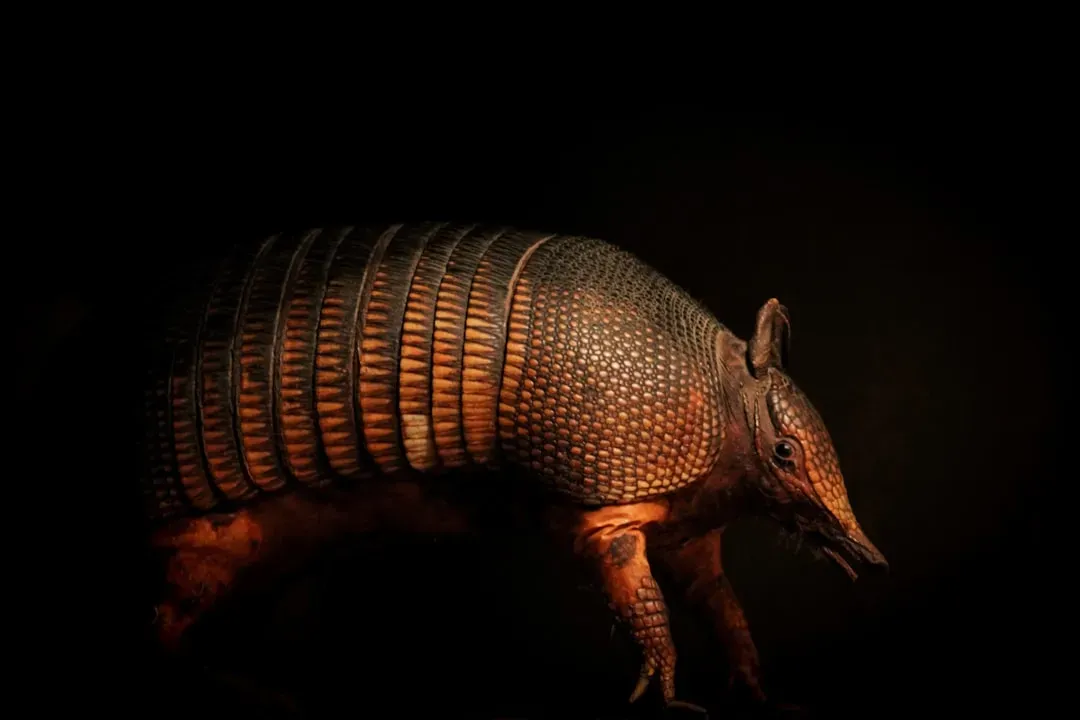
To me, the story of armadillos and their giant armored relatives is one of evolution’s most underrated epics. It challenges the idea that bigger and tougher always means better and that evolution is constantly marching toward more extreme, more impressive versions of things. Here, the flashy giants blinked out while the odd, medium‑sized survivors quietly threaded their way through upheaval after upheaval. That feels like a useful corrective to our obsession with the biggest, fastest, or fiercest creatures.
It also says something about how we see the animals around us. It is incredibly human to be dazzled by extinct titans while barely noticing their living cousins. But once you know that an armadillo is kin to a tank‑shelled Ice Age beast, it becomes much harder to dismiss it as just a funny little mammal in the ditch. In a way, our modern landscapes are haunted by the outlines of those missing giants, and armadillos are one of the clearest, living reminders that they were real.
Conclusion: The Last Armored Witnesses Of A Lost World
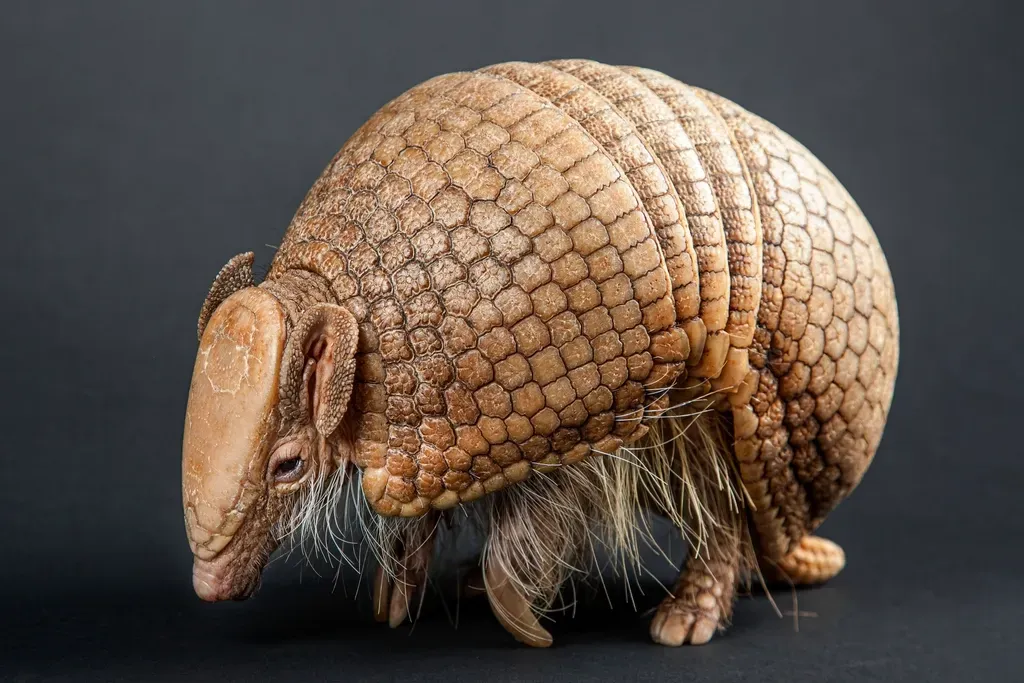
If I am honest, I think we massively underestimate armadillos. We treat them as curiosities or nuisances, when in reality they are the last armored witnesses of a vanished chapter of mammal history. Their shells, their awkward gait, and their stubborn digging are not evolutionary leftovers; they are the polished remnants of a design that once produced some of the most astonishing armored beasts to walk the planet. In a world where so many lineages have been cut short, that continuity matters.
There is something almost defiant about the fact that, after the fall of the armor‑plated giants, their smaller cousins are still here, trundling through our yards and fields. Evolution did not abandon the idea of armored mammals; it simply downsized and re‑tuned it for a harsher, more unpredictable world. The next time you see an armadillo, you are not just looking at a funny little creature – you are looking at a survivor from a family of giants that once wore carapaces like armor and shaped entire ecosystems. Knowing that, can you really see them the same way again?