
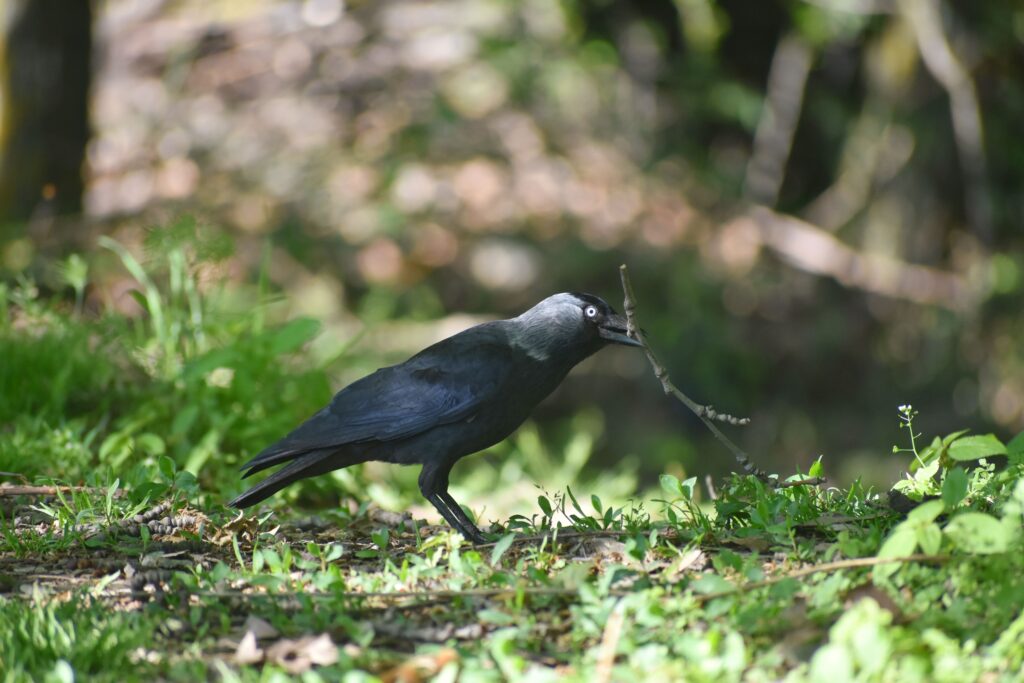
If you’ve ever locked eyes with a crow and felt weirdly judged, you weren’t imagining it. Corvids – the family that includes crows, ravens, rooks, jackdaws, magpies and jays – are doing things with tools that researchers once thought were the exclusive domain of humans and maybe a couple of great apes. Over the last few decades, science has gone from “birds are clever” to “oh wow, they’re basically feathery primates with wings and attitude.”
What makes this so wild is not just that corvids can use simple sticks. It’s that they build, modify, combine and strategically deploy tools in ways that look uncomfortably like our own problem-solving. They plan ahead, they learn by watching, they adapt to totally new materials like wire and plastic, and they appear to understand more about the physical world than we once dared to claim any animal (besides us) could.
Below are 11 specific, research-backed things corvids do with tools that once seemed impossible for a bird. Some of them are shockingly sophisticated, some are quietly clever, and all of them chip away at the old idea that you need a big primate brain to be truly inventive. I still remember the first time I saw a crow casually drop a nut at a crosswalk and wait for the light to change – it felt like watching a tiny, black-feathered engineer at work.
#1: Crafting Hooked Tools From Twigs and Leaves
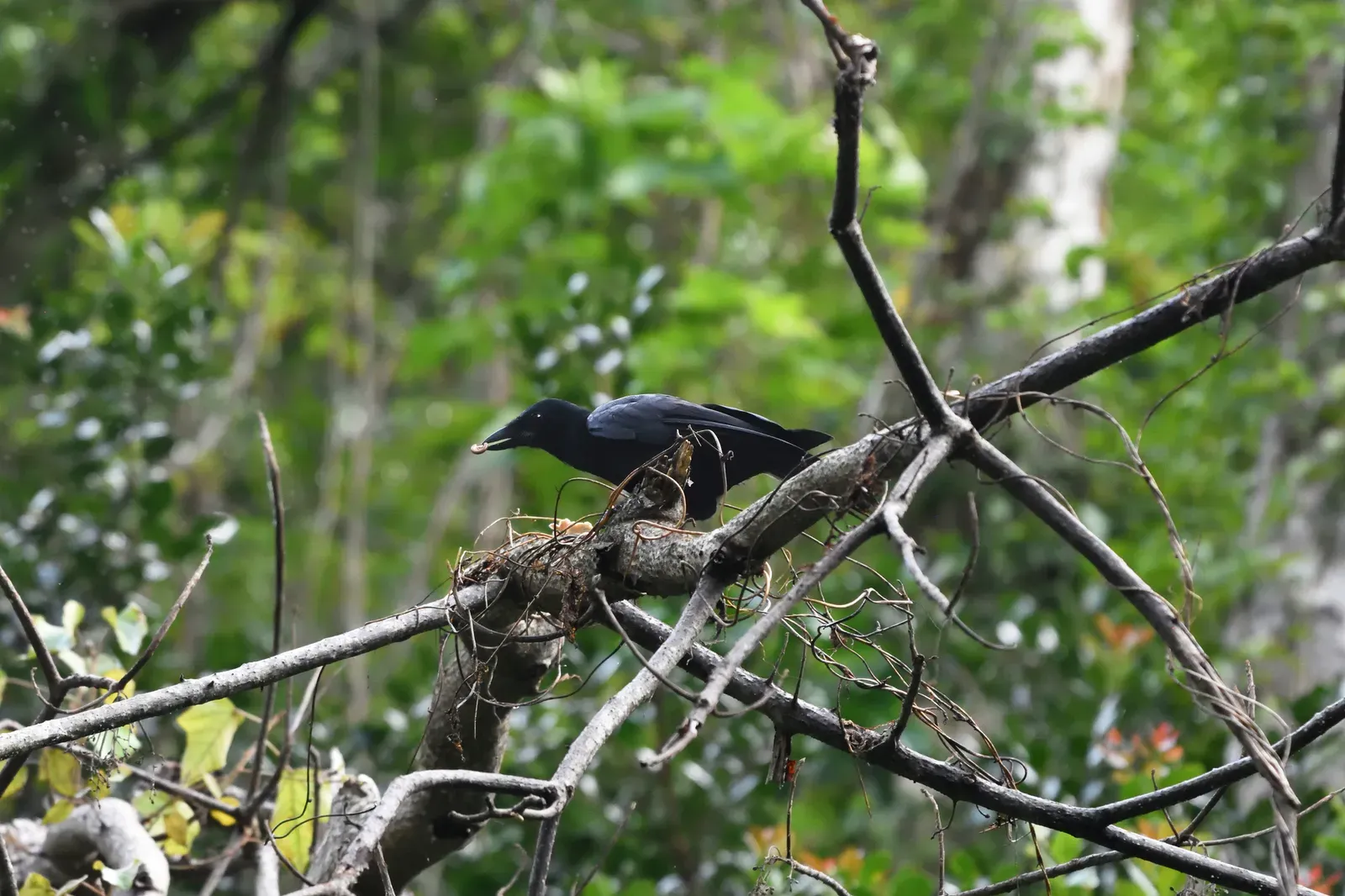
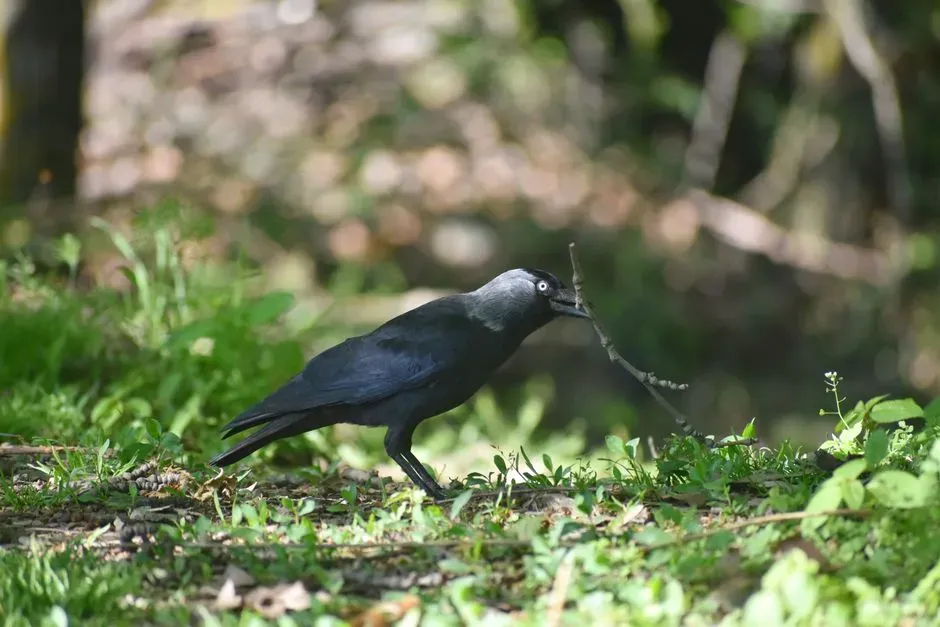
For a long time, the idea that a non-human animal could deliberately shape a tool for a specific purpose was considered almost sacred ground in human evolution. Then New Caledonian crows showed up and started cutting neat strips from pandanus leaves and bending twigs into hooks. They’re not just picking up whatever is lying around; they’re sculpting raw material into something more effective, and they do it in repeatable, recognizable patterns.
These birds will select a suitable twig, strip off side branches, and then carve or bend one end into a hook that can snag grubs out of holes. Some designs are surprisingly standardized within a local group, almost like regional tool “styles.” You can tell where a particular hook was likely made based on the cut pattern and shape, which is hauntingly similar to the way archaeologists recognize different human stone tool traditions.
In lab settings, individual crows routinely take unfamiliar materials like bits of plant or even pieces of tape and still manage to shape hooks that work. That suggests they’re not just copying a rigid template; they have an internal concept of “hookiness” and can express it using whatever’s around. To early researchers, this looked dangerously close to the sort of mental template-building that was supposed to be ours alone.
- They remove parts of twigs or leaves to create a specific functional shape.
- Tool designs can be locally consistent, hinting at cultural traditions.
- They can improvise with new materials, not just familiar plants.
#2: Bending Novel Materials Into Tools on the Fly
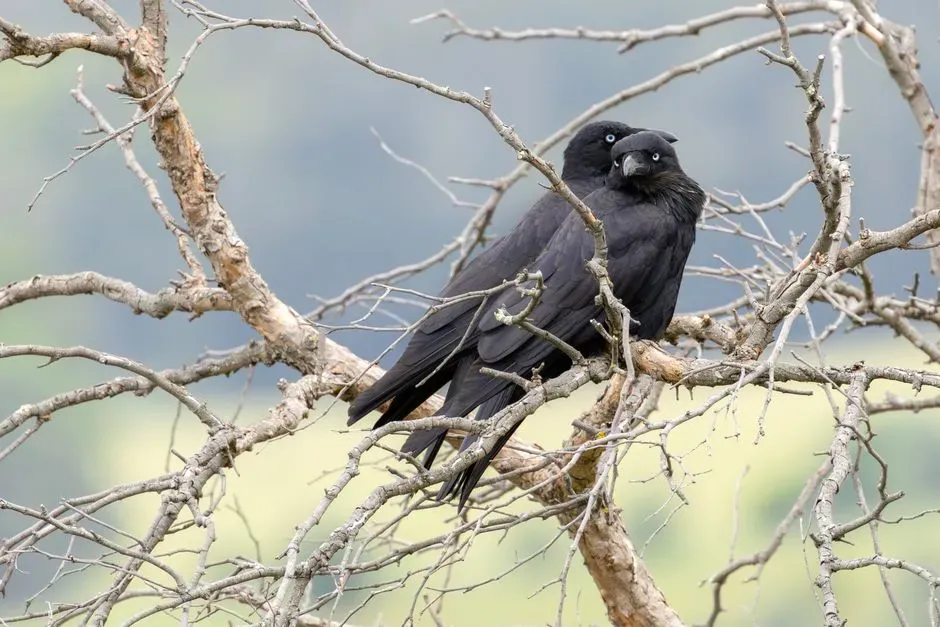
If crafting hooks from plants shook things up, what came next was even more unsettling for anyone clinging to human exceptionalism. In famous experiments, New Caledonian crows were given a straight piece of flexible wire and a tricky food puzzle. Without prior training on that exact material, individuals have been seen bending the wire into a hook shape to fish out a reward. That is not rote behavior; that is improvisation with a brand-new resource.
One especially well-documented case involved a crow that, after failing with the straight wire, calmly wedged one end under a surface and pulled until it curved into a useful hook. Then she used her newly created tool to retrieve the food. There’s no script in the wild for “wire,” no evolutionary history of dealing with metal, yet the crow treated it as just another candidate to be reshaped into something helpful.
This matters because it pushes their abilities into the realm of flexible problem-solving. They’re not limited to a fixed “tool repertoire” baked into their genes. Instead, they seem to understand the relationship between shape and function well enough to transfer that understanding to completely unfamiliar stuff – the kind of conceptual leap we once reserved for humans and a few apes.
- They can turn a useless object (straight wire) into a functional tool (hook).
- They use the environment (wedging, bracing) to help shape tools.
- They adjust strategies after failure, suggesting trial-and-error guided by insight, not blind repetition.
#3: Using Tools to Access Hidden, Hard-to-Reach Food
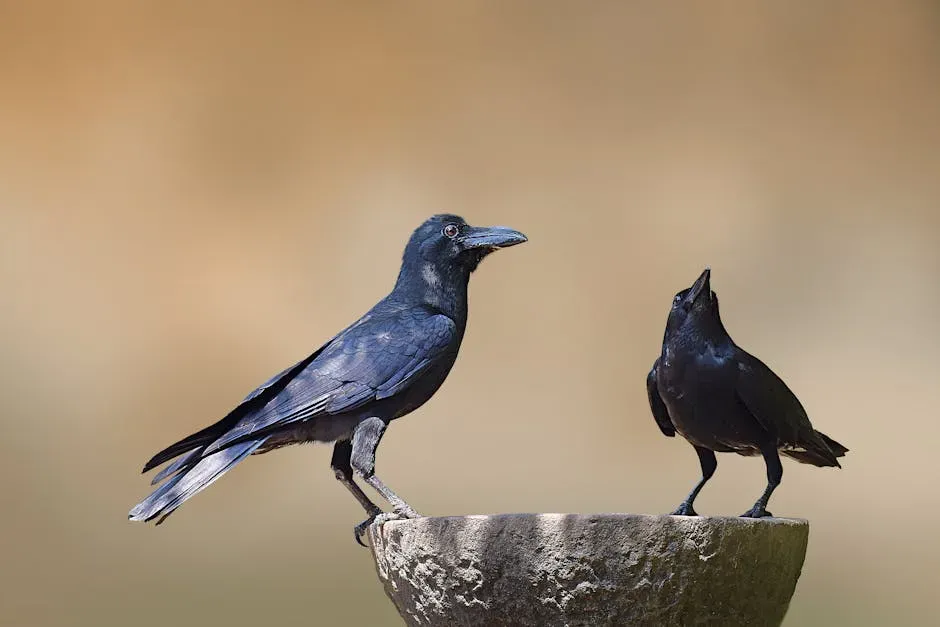
Plenty of animals will poke at things with sticks, but corvids take this to an almost surgical level. In the wild, New Caledonian crows routinely insert their crafted hooks deep into holes and crevices in dead wood to extract larvae. They appear to feel for subtle changes in resistance, much the way a human might feel for a stuck jar lid or a hidden latch. The bird can’t see the grub; it’s relying on feedback through the tool.
Tool use to access hidden food is a big cognitive leap because it requires understanding that the action at one end of the tool affects something out of sight at the other end. Experiments have set up transparent tubes, concealed compartments, and oddly shaped channels, and corvids still manage to manipulate their tools through twists and turns to reach the reward. They’re not simply stabbing randomly; their movements adjust in real time to the feedback they’re getting.
What’s really striking is that they adapt tools to the type of access needed. A long, straight stick might be chosen for a deep crevice, whereas a hooked tool works better for snagging something lodged in a corner. That suggests a basic appreciation of trade-offs: length versus maneuverability, hook versus straight edge. For a bird whose brain is roughly the size of a walnut, that sort of physical reasoning borders on mind-bending.
#4: Choosing and Modifying Tools for the Best “Fit”
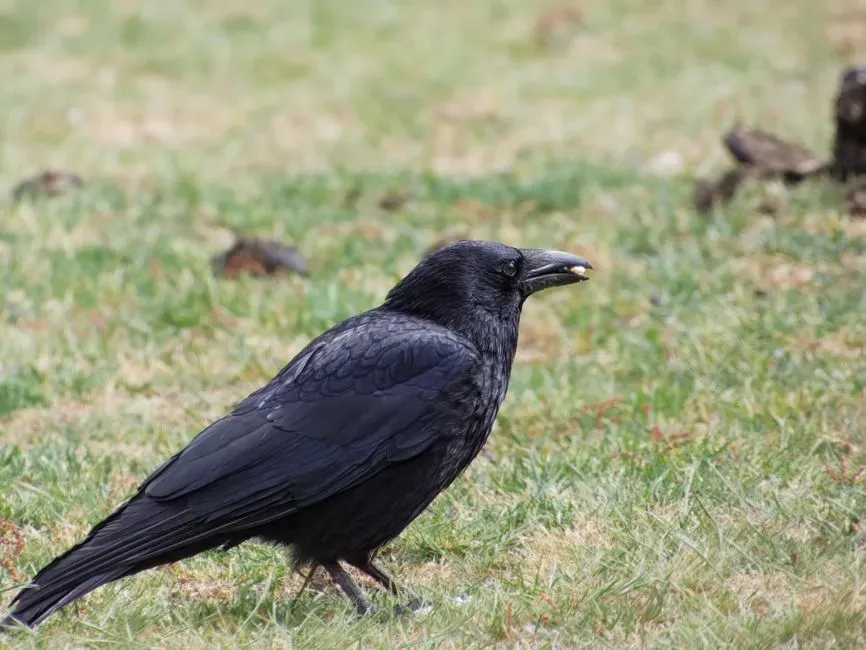
Humans tend to think of grabbing the right screwdriver as trivial, but deciding which object will work best for a given task is actually a complex cognitive move. Corvids are repeatedly showing that they can do a version of this. When presented with tools of different lengths or shapes, crows will often select the one that is long enough, or otherwise appropriate, without cumbersome trial and error. They are not always perfect, but their choices are far better than random.
In various studies, they have been offered a set of sticks where only the longest one can reach the food in a tube. Many crows go directly for the correct length or at least eliminate clearly unsuitable options quickly. Others go a step further and deliberately modify slightly-too-short tools by extending them or discard them altogether instead of stubbornly persevering with something that does not work.
This suggests they are mentally representing something like “distance to food” and “tool reach” and comparing the two. In some cases, they visibly inspect tools, turning them around in their beaks before making a choice, almost like a carpenter eyeing a piece of wood. The impression you get watching these experiments is of a bird quietly running a mental simulation: “Will this reach? No. That one might. Let me check.”
- They show clear preferences for tools that actually solve the task.
- They sometimes adjust tools to improve their suitability.
- Their behavior implies an internal sense of length and reach, not pure guesswork.
#5: Using Two or More Tools in Sequence (Tool Sets)
This is where things start to feel truly unsettling from a human pride perspective. Some corvids have been shown to use tools in sequence, essentially building what researchers call “tool sets.” In these tasks, the bird cannot get to the food with any single tool; instead, it must first use a shorter tool to retrieve a longer one, then use the longer one to access the reward. That chain requires holding several steps in mind, each with a different goal.
When presented with such puzzles, certain crows calmly work through the steps like they’re following a plan. They first pull out intermediate tools that have no direct food payoff, then switch to them as the situation evolves. In the most advanced setups, they have successfully used three tools sequentially, which starts to resemble human-like multi-step problem-solving: get the ladder so you can reach the shelf to get the key to open the door.
What blew researchers away was not just that these birds could stumble upon the sequence by luck, but that some of them seemed to solve the task quickly without exhaustive trial-and-error. They appeared to grasp that an apparently useless object (a short stick) had value because it opened the way to another object with higher value (a long stick). That is a subtle form of means–end reasoning: use one thing not for its direct payoff, but for the payoff of the next thing it unlocks.
#6: Combining Objects to Create New, Longer Tools
Using multiple tools in sequence is already complex, but corvids have been pushed even further in some carefully designed experiments: can they combine separate items to create a brand new tool that did not exist before? In certain tests, New Caledonian crows have been given short, non-functional pieces that could be slotted or wedged together to form a longer, functional tool. Astonishingly, some birds have figured this out.
Instead of giving up when each individual piece proved too short, these crows began to insert one piece into another or overlap them until they effectively created a longer rod. Once they had something with enough reach, they immediately used it to access food that had previously been out of range. This is a massive conceptual jump: recognizing that two separate objects, when combined, can produce an emergent property (extra length) neither had alone.
Even more compelling, a few birds repeated the combination strategy in new variations of the test, suggesting they had learned a general principle: parts can be turned into wholes with new capabilities. In human terms, that’s the difference between just using a hammer and realizing you can lash a rock to a stick to make one. It hints at the early stages of what, in our lineage, would eventually become full-blown technology.
- They can construct composite tools by physically connecting components.
- They re-use the combination strategy in new versions of the problem.
- This behavior points to an understanding of emergent properties like added length.
#7: Planning for the Future by Storing and Saving Tools
Animals live mostly in the now, or at least that was the dogma for a long time. The notion that a bird might think, “I will need this tool later, in a different place,” felt like science fiction. Yet there is growing evidence that corvids do something very much like that. In some studies, crows and ravens have taken useful tools away from the immediate problem and stored them for future use, even when no reward was available at the moment.
For example, when birds learned that a particular tool design would be required later to access food in a different room, they would select that tool in advance and carry or cache it, despite having no immediate reason to bother. They were effectively sacrificing short-term convenience for a future payoff, which is a hallmark of planning. This is particularly striking because the future context might be several minutes away and not visible at the time.
Wild corvids are also famous for caching food – hiding seeds, nuts, or meat for later – so extending that behavior to tools is not completely outlandish. But the idea that they may mentally anticipate a future problem and prepare a future solution upends an old assumption that animals are locked in the present tense. It suggests a timeline in their minds: not just “now” and “past,” but “later,” complete with expectations about what might be needed then.
#8: Learning Tool Use Socially and Culturally
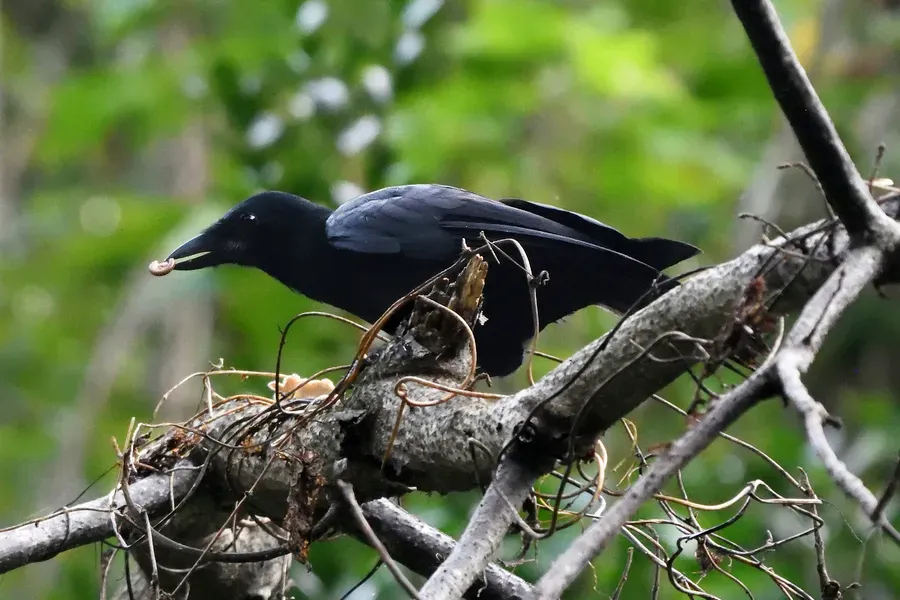
Another belief that has taken a beating in the last couple of decades is the idea that only primates, whales, and maybe elephants show true cultural transmission. Corvids are elbowing their way into that club. In the wild, young New Caledonian crows appear to learn tool-making techniques at least partly by observing adults, often their parents. Different populations show different “styles” of tool design, which remain stable over generations.
In controlled experiments, birds that watch a demonstrator solving a tool-use task often learn faster and make fewer errors than birds left on their own. That suggests they’re not just individually reinventing the wheel every time, but picking up tricks from others. Some rooks and ravens have been seen copying specific actions like pulling on strings, using the behavior of a knowledgeable bird as a blueprint for their own efforts.
When tool behaviors vary between groups and are passed on socially, many researchers start to talk about animal cultures. In corvids, those cultures are not just about calls or mating displays; they include nuts-and-bolts information about how to manipulate the physical world. It is as if each region has its own little school of engineering, taught not through lectures, but through daily life and quiet observation.
- Young birds often watch adults closely during foraging and tool use.
- Distinct tool designs cluster within particular geographic areas.
- Social learning speeds up problem-solving, reducing the need for pure trial-and-error.
#9: Understanding Cause and Effect in “Physics” Puzzles

One of the most talked-about sets of experiments with corvids involves what are sometimes called “Aesop’s fable” tasks. Inspired by the old story of a crow dropping stones into a pitcher to raise the water level, scientists created modern versions: tubes of water with floating food just out of reach, plus objects of different shapes and weights. Could real crows figure out how to manipulate water levels using tools?
The answer, remarkably, has often been yes. In these tests, birds learn to drop heavy objects into the water, raising the food until it can be reached. More intriguingly, they tend to prefer stones over floating objects that do not change the water level, and in some setups they choose solid items over hollow ones, which sink less effectively. That suggests they are attending to functional properties: weight, displacement, and cause-and-effect, not just color or novelty.
Not every bird passes every version of these tasks, and there is healthy debate about exactly what they understand. Still, the pattern of choices is hard to explain without granting some level of physical reasoning. They are not flowing through a pre-programmed instinct for “drop rock, get food”; they are differentiating between objects that matter and ones that do not, and adjusting behavior based on those differences. In their own way, they are doing a kind of backyard physics.
#10: Using and Adapting Human-Made Objects as Tools
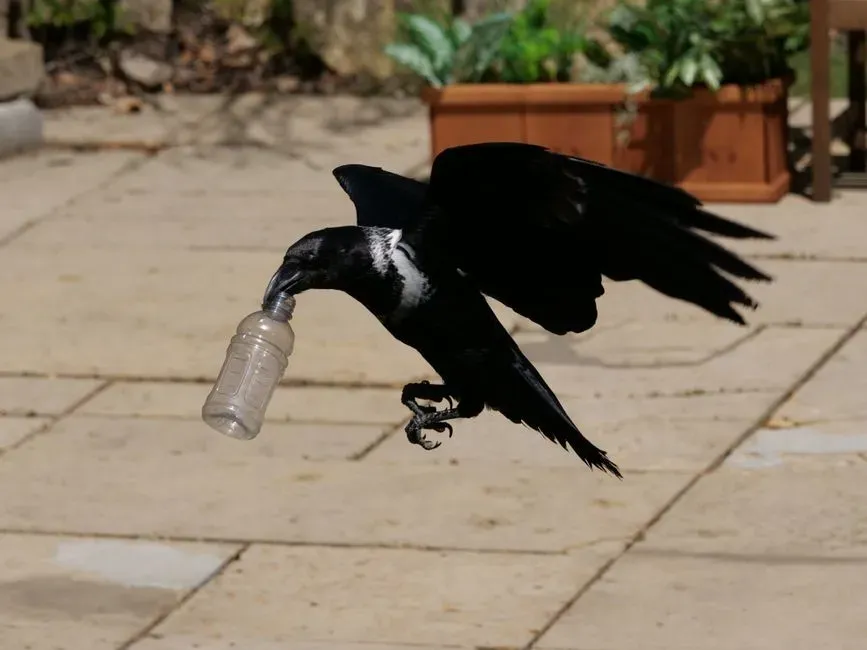
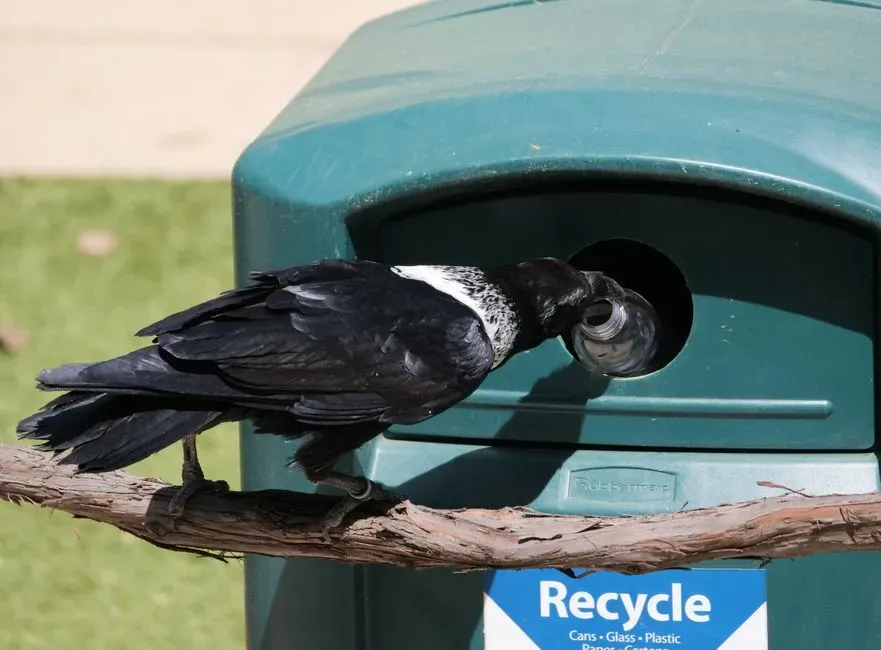
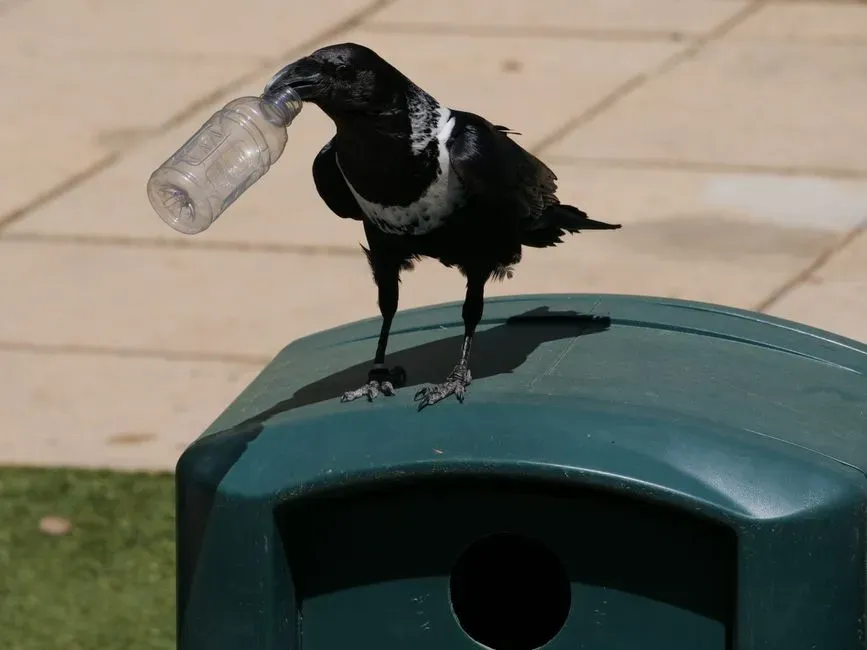
One thing I personally find both hilarious and humbling is how easily corvids fold human junk into their toolkits. Urban crows and magpies have been seen using everything from bits of wire to plastic strips and even small sticks from brooms to pry, poke, and pull things in our built environments. For them, our trash is just a new ecosystem of potential tools waiting to be evaluated.
There are reports of crows using found metal to lever open containers, wedging bottle caps to manipulate small gaps, or repurposing pieces of cardboard as platforms to move food across water or snow. On highways, some populations drop hard-shelled nuts on the road or from the air, then wait for cars to crack them. While not a “tool” in the traditional sense, using high-speed vehicles as crushing devices is very much tool-like reasoning: exploiting an external force to achieve a goal.
This opportunistic mindset says something important about how corvids see the world. They are not just bound to a narrow set of natural materials; they are evaluating any object they encounter – including human artifacts – for its potential affordances. In a way, they are some of the only wild animals that have fully enrolled our industrial landscape as part of their extended toolbox.
- They adopt wires, bottle caps, plastic, and other debris as functional tools.
- They exploit cars and other human infrastructure as “external” tools.
- Their behavior in cities shows remarkable flexibility and creativity.
#11: Flexibly Switching Between Beak, Body, and Tool Strategies
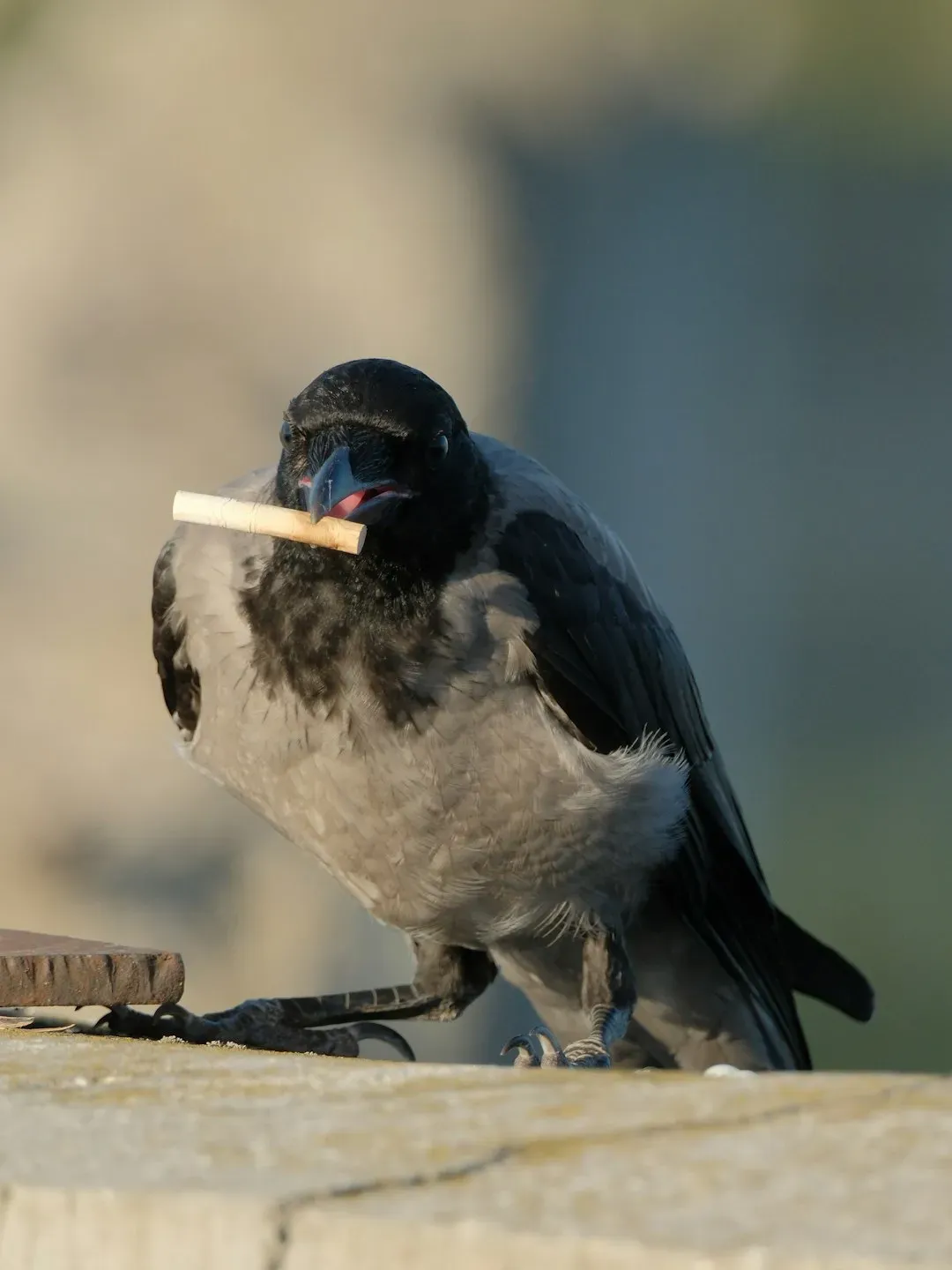
It’s tempting to picture tool-using animals as always grabbing a stick at the first sign of trouble, but corvids are more efficient and subtle than that. One of the most impressive, if less flashy, things they do is decide when not to use a tool. In various experiments and field observations, they often start with direct methods – their beak, feet, or body – and only shift to tool use when those strategies fail or are clearly inefficient.
For instance, a crow might first try to peck or pull at a food item; if it cannot reach it, it will then fetch a tool and try again. If the food moves into an easier position, some birds abandon the tool in favor of a simpler approach. That willingness to switch strategies shows that tools are part of a flexible repertoire, not a rigid routine. They are evaluating costs and benefits moment by moment.
This kind of strategic switching was once thought to require fairly high-level executive control: monitoring your own actions, inhibiting old habits, and updating plans in real time. Seeing it in birds forces us to rethink the relationship between brain size, brain structure, and cognitive sophistication. Corvids are not just tool users; they are tool strategists, treating sticks, wires, and stones as optional extras that can be turned on or off depending on the problem at hand.
Conclusion: What Corvid Tools Really Tell Us About Intelligence
When you step back and look at the full picture – the crafted leaf hooks, the bent wires, the multi-step tool chains, the water-displacement puzzles, the car-assisted nut cracking – it becomes hard to argue that corvids are doing something simple or mechanical. They are not tiny, feathered robots. They are running complex evaluations of objects, actions, and outcomes in a way that overlaps uncomfortably with how we use the word “thinking.”
To me, the most important lesson is not that crows and ravens are “as smart as” humans. That comparison is a bit childish and, honestly, misses the point. What their tool use really shows is that intelligence can evolve along very different evolutionary paths and still arrive at surprisingly similar solutions. A primate brain and a bird brain, separated by millions of years of evolution, somehow converged on a shared ability: to reshape the world with tools, to plan ahead, to innovate.
There is also a quiet challenge here to our sense of entitlement over technology. We used to see stone tools as the hard dividing line between “us” and “them.” Now, watching a crow construct a hook or combine pieces into a longer rod, that line looks more like a smudge. In my opinion, if anything is uniquely human, it is not tool use itself, but the scale at which we have built and networked our tools. The spark? That might be far more widespread than we ever wanted to admit.
So the next time a crow watches you from a lamppost while you fumble with your keys or drop your phone, remember: there is a non-zero chance that the bird is running its own quiet analysis of you, the walking tool-user. And if that doesn’t make you look twice at every black-feathered silhouette on a power line, what will?