Imagine standing on a vast stretch of frozen landscape tens of thousands of years ago, surrounded by woolly mammoths, giant ground sloths, and dire wolves. You have no maps. No roads. No history books to consult. You are, in every sense of the word, the first person to set foot on an entirely unknown continent. That is the reality archaeologists are slowly piecing together when they try to answer one of the greatest unsolved questions in human history: who were North America’s first people, and when did they actually arrive?
The deeper you dig into this subject, the more complicated and fascinating it becomes. Every new fossil, every ancient footprint, every strand of ancient DNA seems to rewrite what we thought we already knew. There is genuine scientific drama here, real disagreement between brilliant minds, and discoveries so extraordinary they sound like fiction. So let’s dive in.
The Long-Held Theory That Almost Everyone Believed
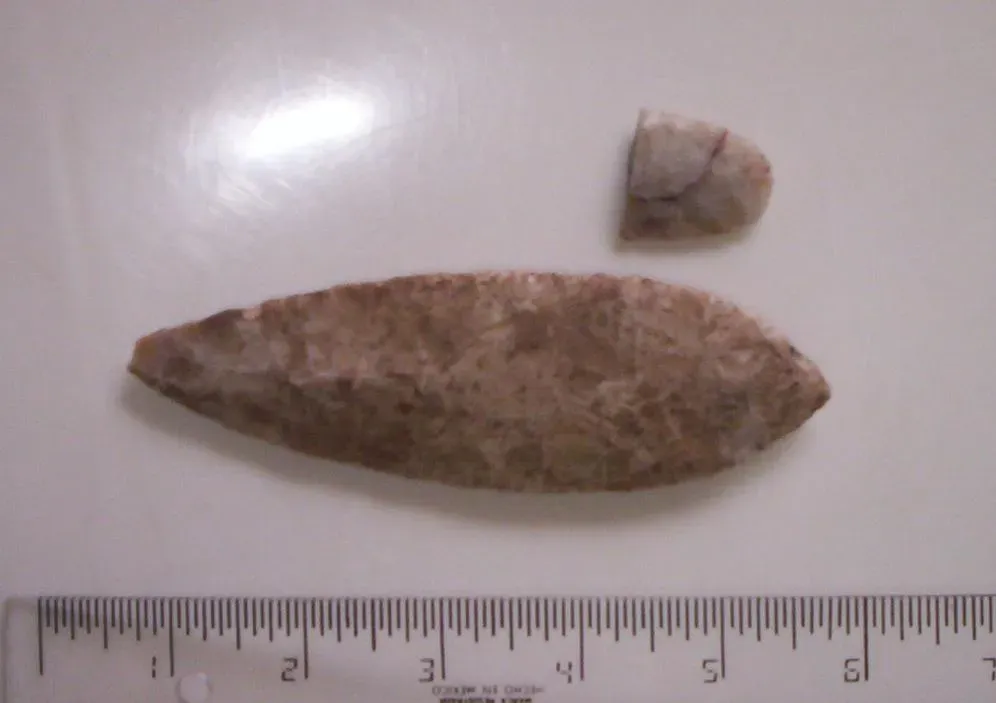
For most of the twentieth century, the dominant story was surprisingly tidy. The standard story of the peopling of the Americas had Asians migrating across a land bridge into Alaska some 14,000 years ago, after Ice Age glaciers melted back, and gradually spreading southward across a land never before occupied by humankind. It was a clean narrative, and for decades, it held firm.
The Clovis First theory refers to the hypothesis that the Clovis culture represents the earliest human presence in the Americas about 13,000 years ago. Archaeologists built careers around it. Textbooks enshrined it. Here’s the thing, though. Science rarely stays comfortable for long. The previously accepted model, termed ‘Clovis-first,’ suggesting that the first inhabitants of the Americas were linked with the Clovis tradition, a complex marked by distinctive fluted lithic points, has been effectively refuted.
The Clovis People: Stone Tools, Mammoths, and a Mysterious Disappearance
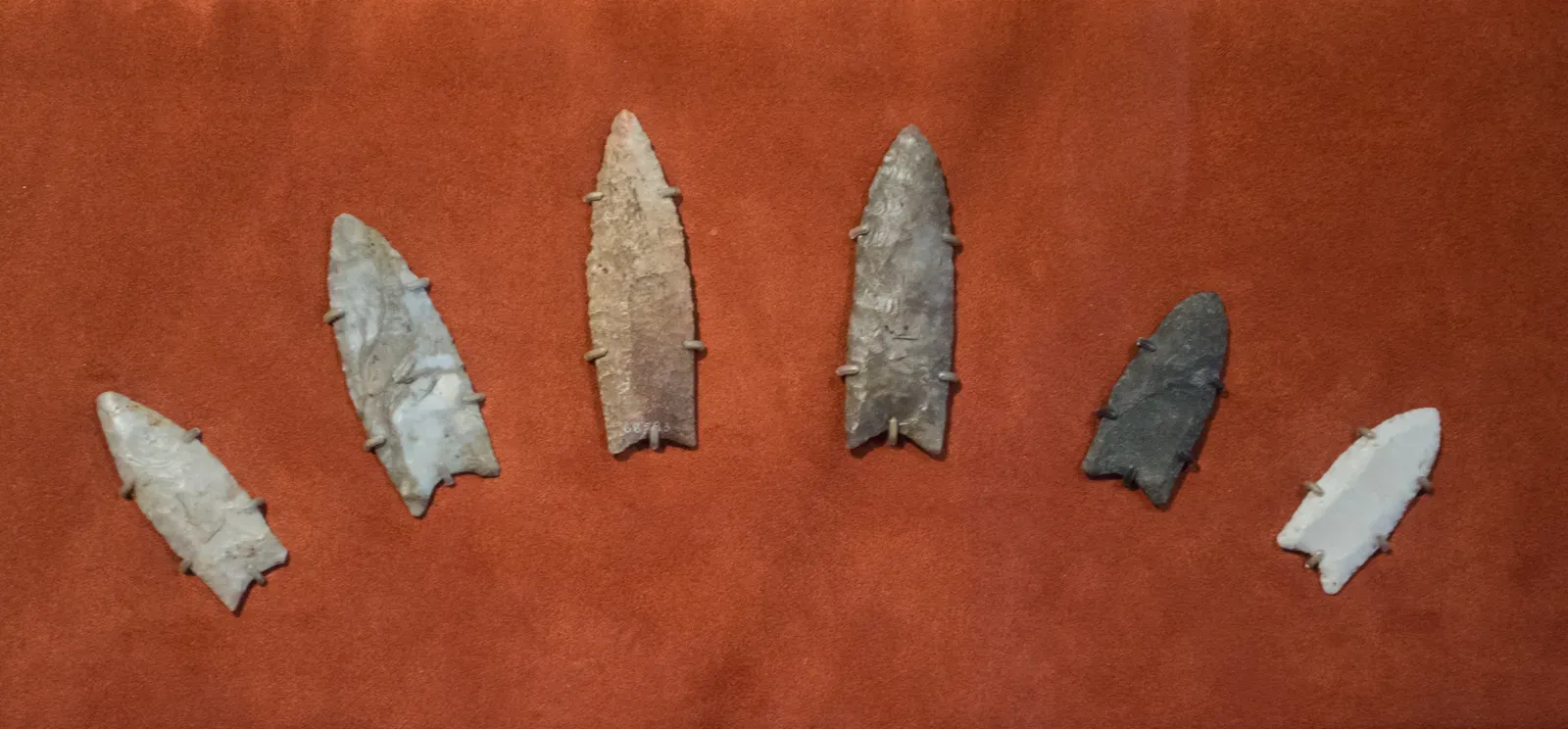
Even if the Clovis people were not the first, they remain one of the most compelling chapters in North American prehistory. More than 10,000 Clovis points have been discovered, scattered in 1,500 locations throughout most of North America, and they seem to have materialized suddenly, by archaeological standards, spreading fast. The oldest securely dated points, discovered in Texas, trace back 13,500 years. That is an astonishing geographic reach for any ancient culture.
The Clovis peoples are thought to have been highly mobile groups of hunter-gatherers. It is generally agreed that these groups were reliant on hunting big game. Clovis peoples had a particularly strong association with mammoths, and to a lesser extent with mastodon, gomphothere, bison, and horse. Honestly, picture these people as the ultimate Ice Age road warriors. New testing of bones and artifacts shows that Clovis tools were made only during a brief, 300-year period from 13,050 to 12,750 years ago. Three hundred years. That is barely ten generations of people who left a mark that still astonishes researchers today.
Footprints Frozen in Time: The White Sands Discovery
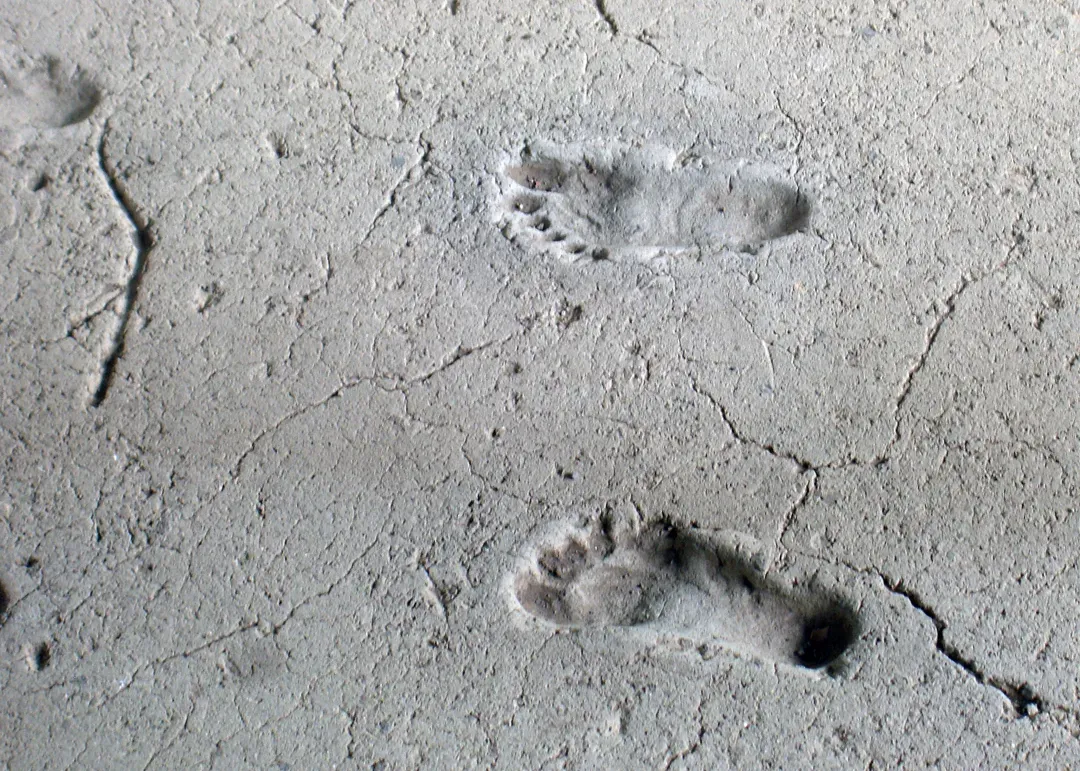
(Original text: self-made), CC BY-SA 3.0)
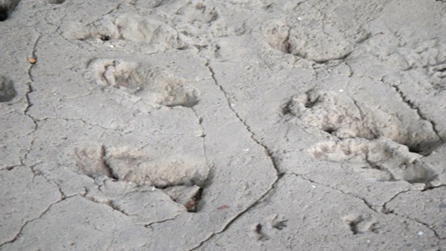
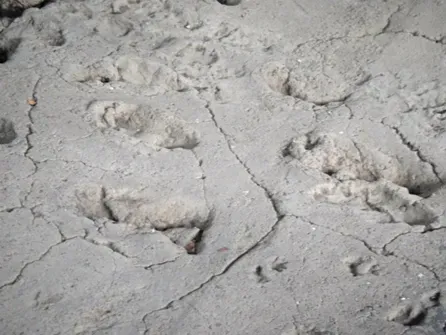
Few archaeological findings in recent memory have rattled the scientific community quite like what was uncovered in New Mexico. The most striking recent discovery comes from White Sands National Park in New Mexico, where dozens of human footprints were preserved in ancient lakebed sediments. When researchers first announced the age of those footprints, many scientists simply refused to believe it.
Some scientists questioned whether the seed dates might be unreliable, so a team led by University of Arizona researchers returned in 2022 and 2023 to date the ancient lakebed mud itself. Two independent laboratories both reported the same range: 20,700 to 22,400 years ago. In total, scientists now have 55 radiocarbon dates on three different types of material, all pointing to the same time period. That kind of multi-layered confirmation is difficult to dismiss, even for die-hard skeptics. This is the strongest evidence that people were walking in North America during the height of the last Ice Age.
The Beringia Land Bridge: A Highway Across Ice and Ocean
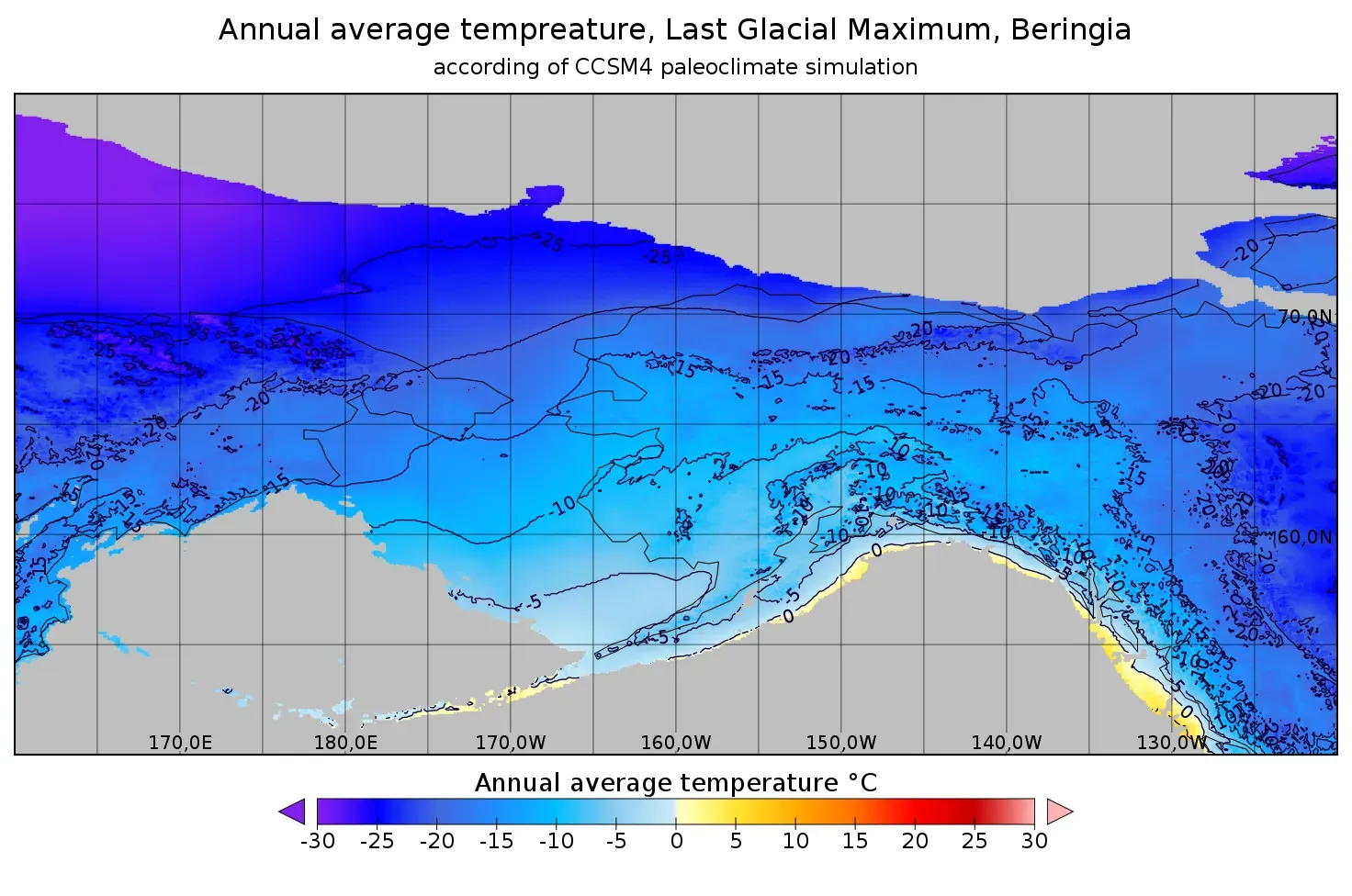
The most widely accepted pathway into the Americas has always been Beringia, the ancient land bridge that once connected what is now Siberia to Alaska. According to paleoclimatologists, thick ice sheets covered much of the northern latitudes from 23,000 to 19,000 years ago, a period known as the Last Glacial Maximum. With all of that sea water trapped in ice, sea levels dropped, exposing a stretch of dry land between Asia and North America. Think of it as a natural highway, hundreds of miles wide, slowly opening and closing across geological time.
The ancient ancestors of the first Americans left Siberia between 24,000 and 21,000 years ago. Thanks to advances in genome sequencing and data analysis, we know that some of the first humans to set foot in North America, known as Paleo-Americans, were direct descendants of ancient people in Siberia, which is solid evidence for the land bridge hypothesis. Yet the land bridge story, compelling as it is, turns out to be only part of the picture. New evidence has emerged that sheds light on the possible first people to populate the Americas. Dating of stone and ivory tools found at an archaeological site in Alaska suggests that these early pioneers traveled through the region on their way to the continent about 14,000 years ago.
The Coastal Route: Paddling Down the Kelp Highway
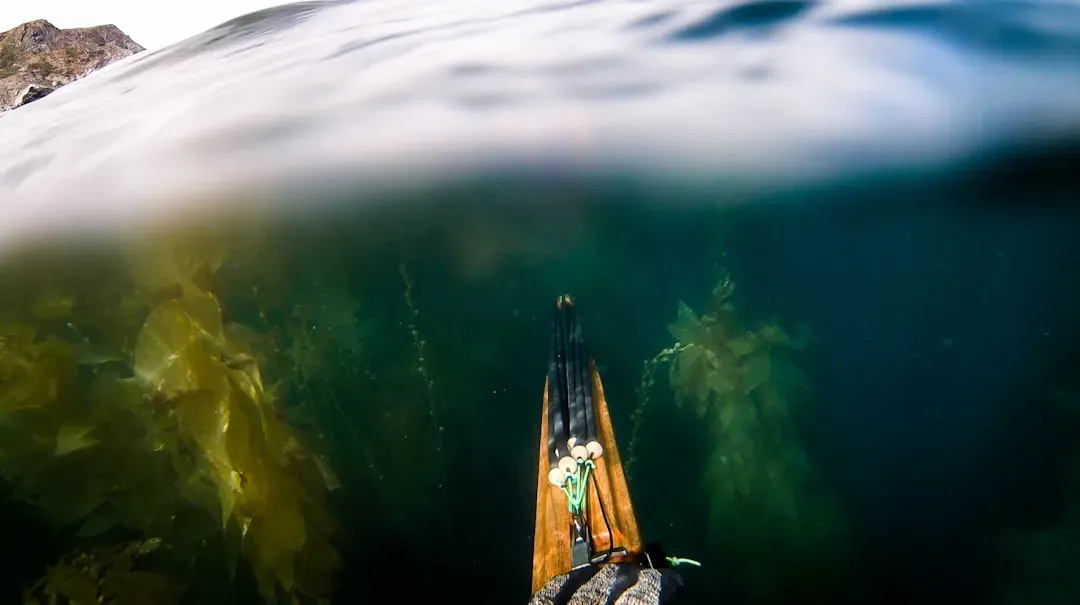
Here is where things get genuinely exciting. An alternative migration theory suggests that early peoples did not just walk inland. They may have traveled by boat along the Pacific coastline. Archaeologist Jon Erlandson helped develop the “kelp highway” hypothesis, which proposed that the first Americans followed a Pacific Coast route from Northeast Asia to Beringia and the Pacific Northwest, using boats to navigate highly productive nearshore kelp-forest ecosystems. It is a bold idea, but the ecological logic holds up remarkably well.
Another proposed route has them migrating down the Pacific coast to South America as far as Chile, either on foot or using boats. Any archaeological evidence of coastal occupation during the last Ice Age would now have been covered by the sea level rise, up to a hundred metres since then. That is the maddening thing about this theory. The best evidence may be sitting under dozens of metres of ocean. Melting ice has left many ancient sites underwater, drowning the artifacts and other evidence that might have shed light on ancient peoples’ paths through Beringia and possibly down the West Coast of North America.
Ancient DNA: What Your Genes Remember That History Forgot
One of the most revolutionary tools in understanding North America’s first inhabitants is ancient DNA analysis. It has transformed the field almost overnight. The ANA lineage was estimated as having been formed between 20,000 and 25,000 years ago by a mixture of East Asian and Ancient North Eurasian lineages, consistent with the model of the peopling of the Americas via Beringia during the Last Glacial Maximum. Genetics, in other words, is confirming what the rock layers have been hinting at for decades.
DNA sequences acquired from a handful of ancient human remains found at archaeological sites in the Americas suggest that the peopling of the Americas is far more complex than a single population of Clovis people crossing Beringia some 13,000 years ago. In 2018, one group of researchers found evidence of four separate migrations from North America to South America, with more-recent groups displacing older ones. That same year, another study pointed to a split of Native American ancestors between 18,000 and 14,000 years ago into two separate branches, which then split and mixed again and again as they radiated into the Americas. You might wonder: how could anyone keep the story of a single migration straight when the genetic evidence keeps revealing new chapters?
Indigenous Voices and the Power of Oral History
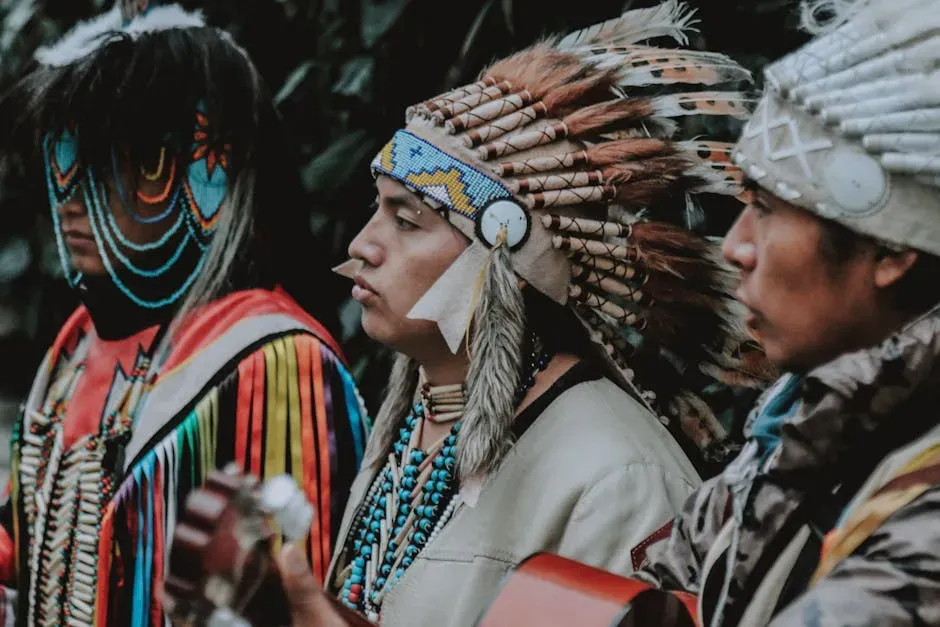
For a long time, Western archaeology barely acknowledged what Indigenous peoples themselves had been saying for thousands of years. That attitude has been shifting, and honestly, it is long overdue. Throughout history, Aboriginal societies in North America have relied on the oral transmission of stories, histories, lessons and other knowledge to maintain a historical record and sustain their cultures and identities. These traditions were never simply myths. They were living archives.
To American Indians, the oral tradition of past generations is seen as a valid source of history and a source of knowledge of the sum total of a people’s past experiences. This historical knowledge helps to explain the how and why of present-day conditions and also offers possible solutions to current challenges that Native people face. The footprints at White Sands also supported the claims of Indigenous scholars who have long attested that their ancestors predated the Clovis, statements bolstered by recent findings from geneticists who had started using a combination of ancient and modern DNA from humans and commensal microbes to trace multiple human migrations that date back as far as 24,000 years ago. Science and oral history are, slowly but surely, beginning to tell the same story.
Controversy, Disagreement, and Why the Debate Is Far from Over
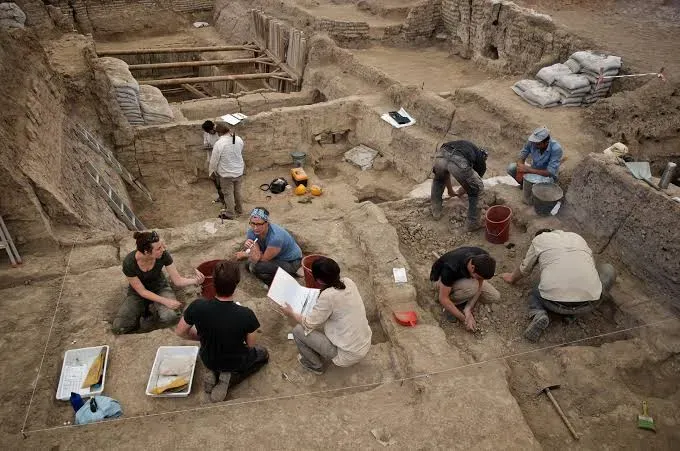
I think it is worth being honest about something: this field is not settled. Not even close. One of the biggest challenges facing researchers seeking to revise the story of the peopling of the Americas is intellectual inertia. Some archaeologists have noted there is “denialism” in the field, and that the long-standing belief that humans did not live in the Americas until 13,000 years ago causes people to discount older artifacts found there. It is hard to say for sure how long these battles between old and new theories will continue, but the debate is clearly far from resolved.
A new analysis of archaeological sites in the Americas challenges relatively new theories that the earliest human inhabitants of North America arrived before the migration of people from Asia across the Bering Strait. Led by University of Wyoming researchers and colleagues from multiple institutions, the analysis suggests that misinterpretation of archaeological evidence at certain sites in North and South America might be responsible for theories that humans arrived long before 13,000 to 14,200 years ago. Meanwhile, discoveries like the Alaskan ivory tools keep coming. Stone and ivory tools from an Alaskan site dated to about 14,000 years ago indicate early human migration through Beringia into North America. Every new dig site seems to add a layer of complexity rather than simplify anything.
Conclusion: The Story Is Still Being Written
What you are witnessing in real time is science at its most humbling and most exciting. The question of who first walked across North America is not a closed book. It is a living, breathing investigation with new chapters appearing every few years. Most archaeologists think it is still likely that people lived in the Americas before Clovis culture and that they arrived in waves of migrations, both overland and by sea. The answer is almost certainly more complex and more interesting than any single theory has ever suggested.
What we do know is this: the first North Americans were ingenious, resilient, and far more ancient than the old textbooks ever admitted. They crossed frozen land bridges, possibly paddled coastlines in open boats, survived the height of the last Ice Age, and left their footprints literally preserved in ancient mud for us to find thousands of years later. As Clovis people settled into different ecological zones, the culture split into separate groups, each adapting to its own separate environment. The end of Clovis marked the beginning of the enormous social, cultural and linguistic diversity that characterized the next 10,000 years. That diversity is the real legacy of North America’s first people. It is not a single group, a single route, or a single moment. It is a long, layered, and deeply human story still unfolding beneath our feet.
What surprises you most about all of this? Drop your thoughts in the comments below.