When you think about footprints, you probably picture the shallow impressions left in beach sand, gone with the next wave. Now imagine those same impressions surviving not for hours, but for over 110 million years, locked deep inside limestone rock beneath the Texas soil. That’s precisely what researchers and volunteers have been uncovering across Central Texas, and the story those ancient tracks are telling is nothing short of extraordinary.
You might assume that prehistoric herbivores simply wandered alone, blindly munching on Cretaceous vegetation with no real social agenda. Think again. The fossilized trackways preserved across Texas are quietly rewriting everything we thought we knew about dinosaur society. So let’s dive in.
A Prehistoric Highway Buried Beneath Texas
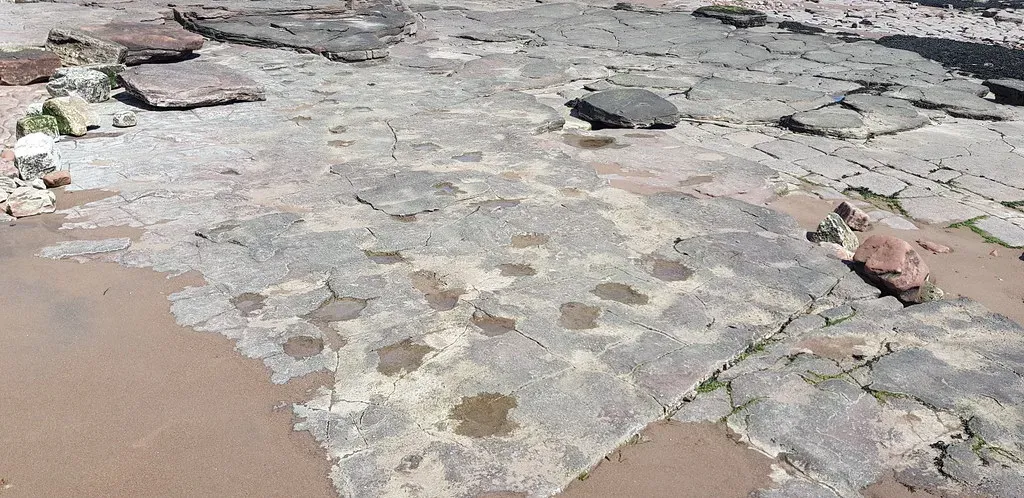
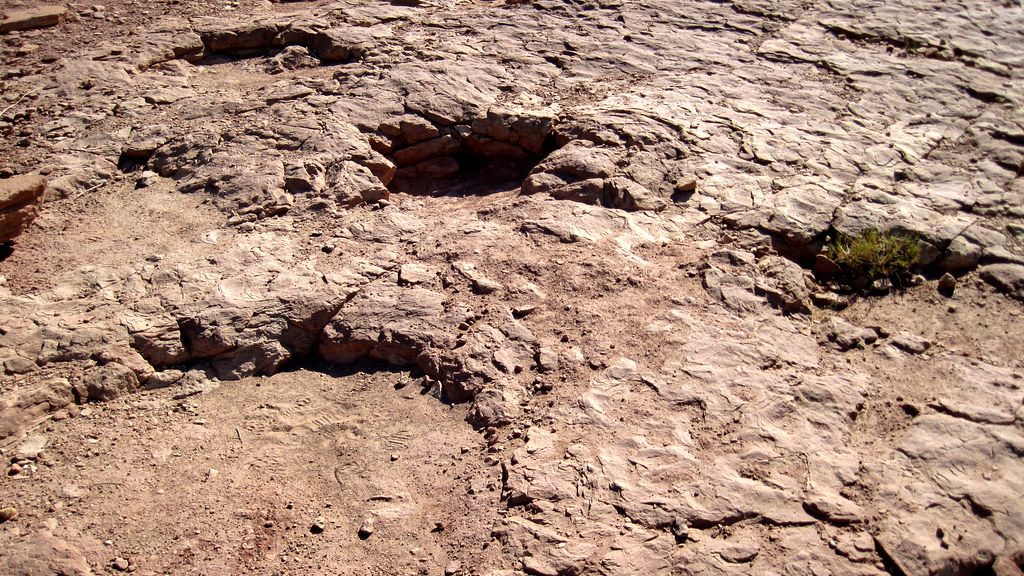
You’re standing at the edge of the Paluxy River in Glen Rose, Texas, and beneath the water are stones that haven’t been seen by human eyes in over a century. According to geologists, the rock layer near Glen Rose containing fossilized dinosaur footprints is 113 million years old. That’s not just ancient history. That’s ancient on a scale that genuinely defies imagination.
Dinosaur Valley State Park is where the discovery of the world’s first sauropod tracks was made by paleontologist Roland T. Bird in 1938, along the Paluxy River. Bird’s discoveries on the Paluxy River and other Texas track sites changed how paleontologists and the public view dinosaurs. The sauropod trackways proved that these enormous creatures could walk on land, refuting the prevailing belief that sauropods were primarily aquatic.
Some sites, like the Paluxy River tracks in Texas, offer entire trackways, moments frozen in mid-action, like ancient time-lapse photography. Honestly, that comparison gives me chills. A time-lapse of animals that vanished 65 million years ago, still playing out in stone.
How Floods and Drought Are Gifting Scientists New Clues
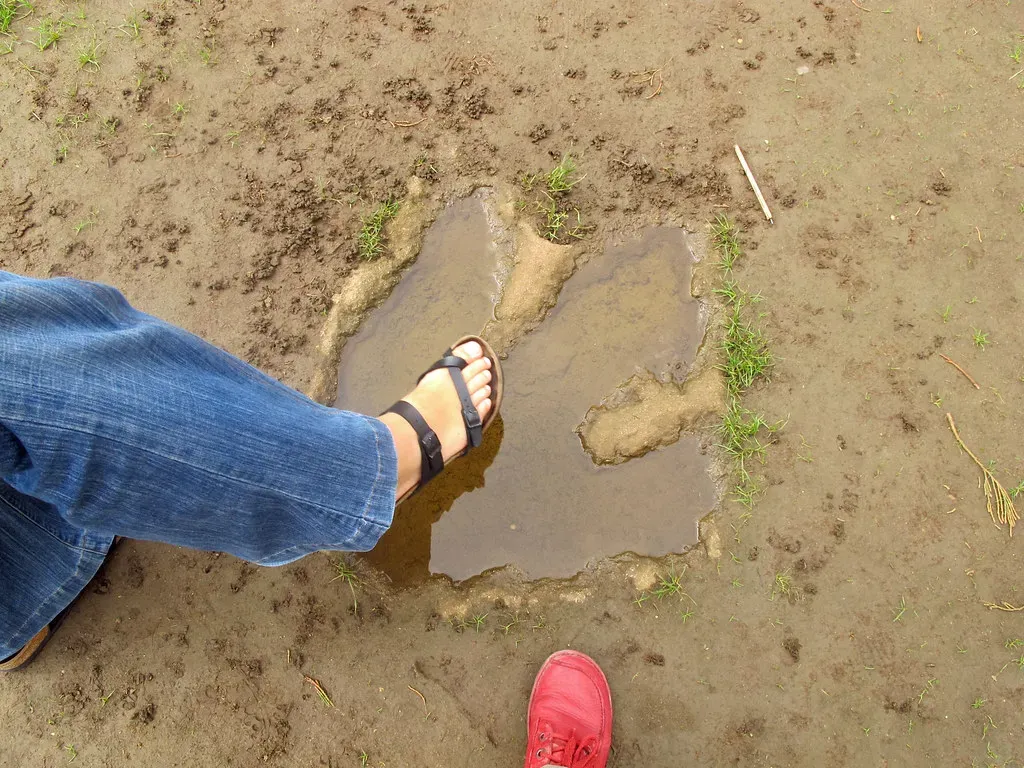
Here’s the thing. You’d never expect a natural disaster to hand scientists a breakthrough, but that’s exactly what keeps happening in Texas. After recent flooding in Texas, rare 115-million-year-old dinosaur footprints were revealed, offering an incredible glimpse into the prehistoric world. The tracks were uncovered in Northwest Travis County after floodwaters swept away sediment and brush, bringing the prints to light.
University of Texas paleontologists confirmed at least 15 individual footprints, with each measuring approximately 18 to 20 inches long, dating back 110 to 115 million years. Fifteen individual prints in one burst of discovery. Each one a direct, physical signature of a creature that walked the earth so long ago, the entire human species hadn’t yet emerged.
Drought also plays a surprising role. A severe drought in Texas offered a rare sighting of some ancient dinosaur tracks preserved in stone for about 113 million years. Park superintendent Jeff Davis noted that months of searing, dry weather dried up more of the Paluxy River than usual, exposing tracks that are very rarely seen. Nature, it turns out, can be its own paleontologist.
The Giants Who Left These Marks: Identifying the Trackmakers
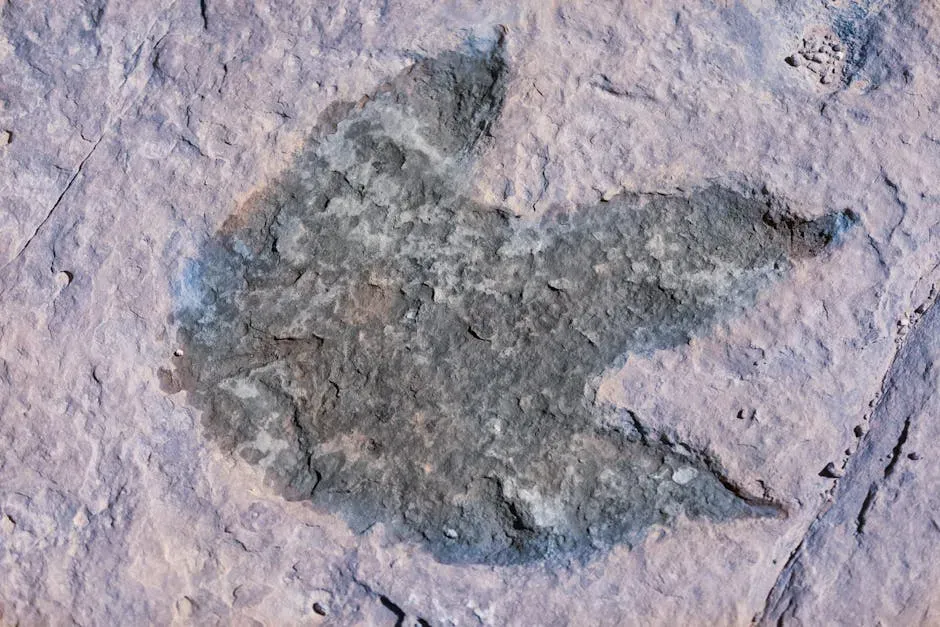
Three primary dinosaur track makers in Texas during the Lower Cretaceous were sauropods, theropods, and ornithopods, a group of herbivores that left broad, three-toed tracks. You can think of these as three very different kinds of residents sharing one ancient neighborhood, each leaving their own calling card in the mud.
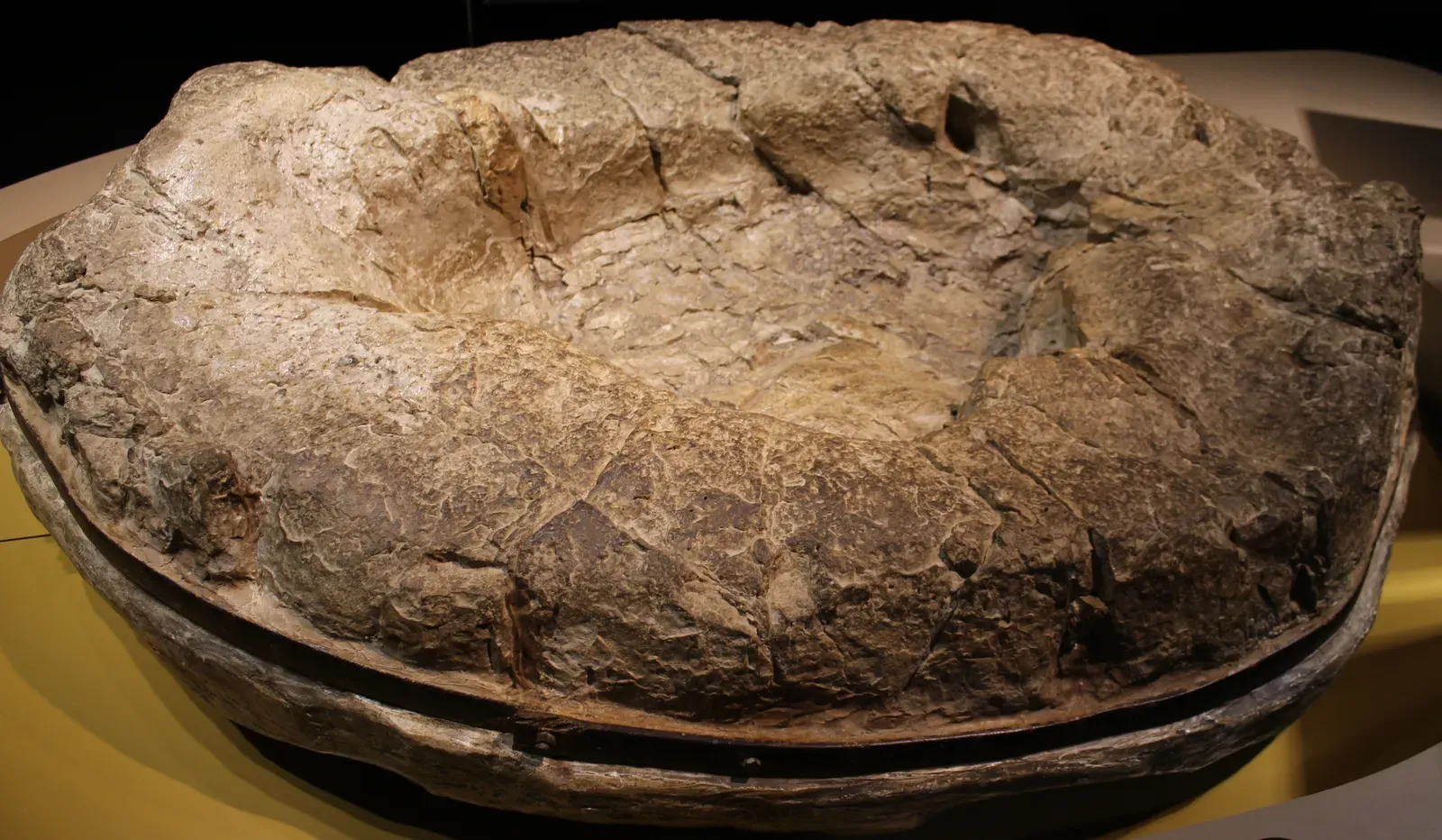
If you see a basin-shaped sauropod track in Texas, a prime suspect is Sauroposeidon proteles, the State Dinosaur of Texas and the tallest known dinosaur, reaching heights of 60 feet. Other species that left tracks behind include the Sauroposeidon, a herbivore that stood about 18 metres tall and weighed about 39 tonnes. The Sauroposeidon is a type of sauropod dinosaur, whose tracks are large and elephant-like.
The footprints were created some 115 million years ago when what is now a neighborhood in Northwest Travis County was a beach on the Western Interior Seaway. Just let that sink in. A bustling Texas suburb was once a coastal shoreline teeming with enormous, plant-eating giants. I know it sounds crazy, but the geology doesn’t lie.
Parallel Trackways and the Evidence for Herding
Now here’s where things get genuinely exciting. Field research at track sites sheds light on the size, posture, gait, stride, and speed of track makers and provides insight into individual and group behaviors that cannot be gleaned from skeletal remains. Bones tell you what an animal looked like. Footprints tell you what it was actually doing.
Trackways were first noted by Roland T. Bird along the Paluxy riverbed in central Texas, where numerous washbasin-size depressions proved to be a series of giant sauropod footsteps preserved in limestone. Because the tracks are nearly parallel and all progress in the same direction, Bird concluded that they were all headed toward a common objective and suggested that the sauropod trackmakers passed in a single herd.
A stomping ground of sauropod footprints near Bandera suggested that sauropods likely traveled in herds, like today’s megafauna on the move. Picture wildebeest crossing the Serengeti. Now scale them up to 60 feet tall and plant them in ancient Texas. That’s roughly the spectacle these tracks suggest.
Age Segregation: When Young and Old Traveled Apart
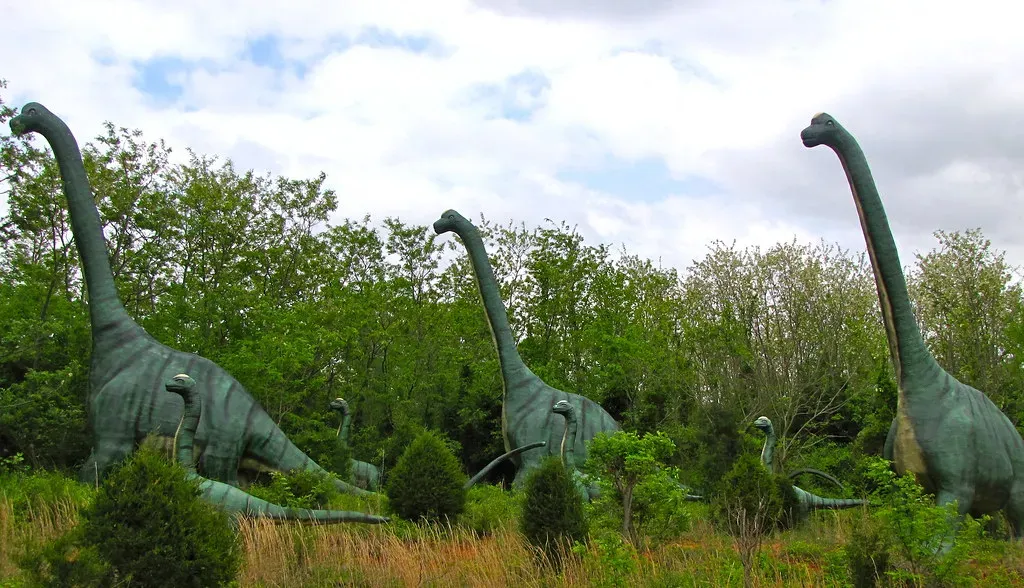
If you thought the herd behavior discovery was impressive, hold on. The social complexity gets deeper still. Many lines of fossil evidence, from both bone beds and trackways, indicate that sauropods were gregarious animals that formed herds. However, the makeup of the herds varied between species. Some bone beds appear to show herds made up of individuals of various age groups, mixing juveniles and adults, while a number of other fossil sites and trackways indicate that many sauropod species traveled in herds segregated by age, with juveniles forming herds separate from adults.
An assemblage in the Upper Cretaceous Javelina Formation of Big Bend National Park in Texas consists entirely of juvenile Alamosaurus. Both the Mother’s Day and Big Bend assemblages are interpreted as remnants of age-segregated herds. This is startling. These animals weren’t just moving together. They were organizing themselves by developmental stage, in a way that mirrors behaviors we see today in elephants and certain whale species.
When age segregation is recognized, in both fossil and modern taxa, it is thought to minimize the fitness costs related to behavioral synchronization within social groups. Age segregation of herds also contraindicates extended parental care as typical of at least some sauropod taxa. In plain terms, younger animals grouped together likely because it made survival and movement more efficient, without the burden of keeping pace with massive adults.
What Trackways Tell You That Bones Never Could
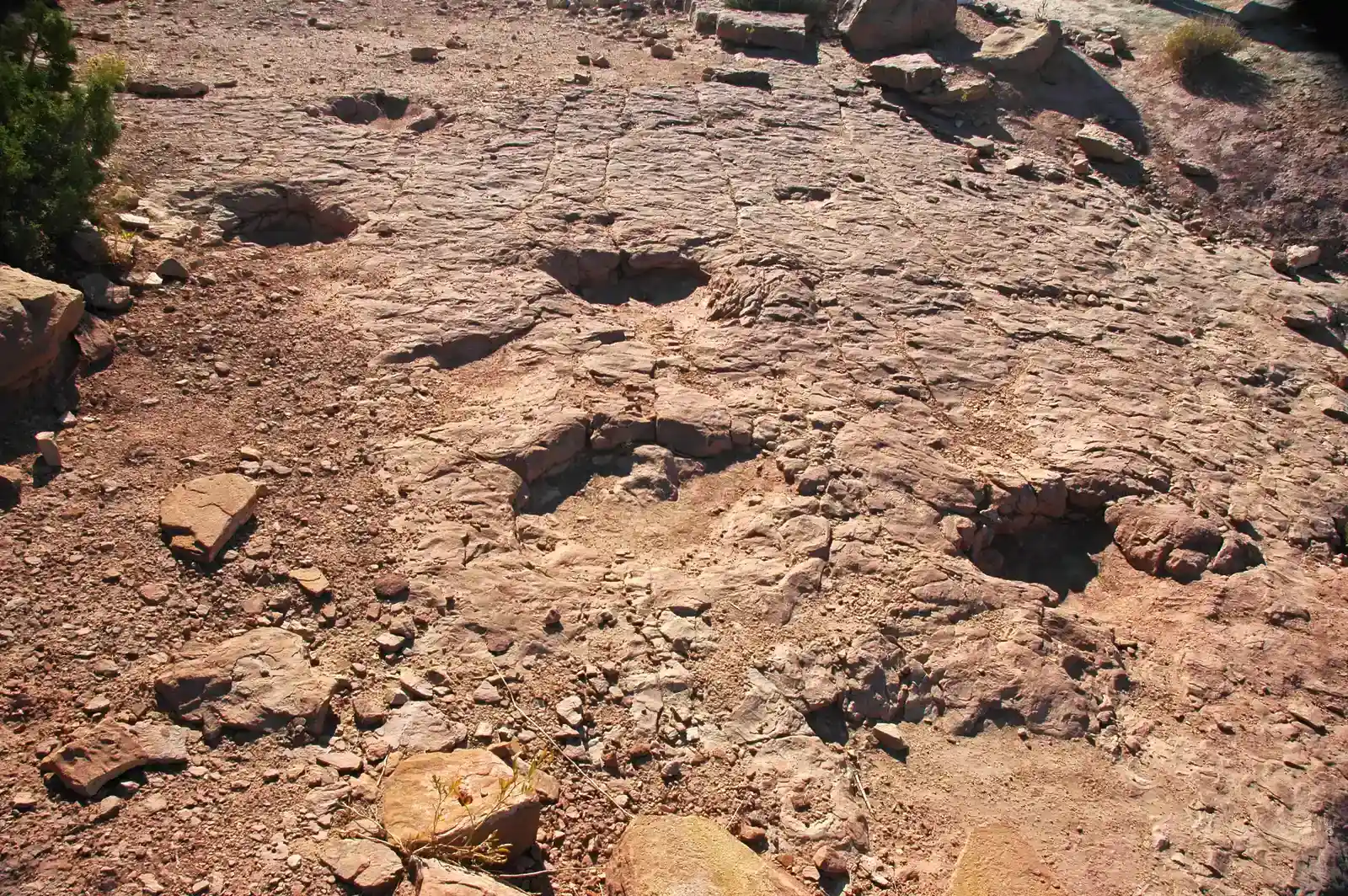
Unlike bones or teeth, footprints capture a moment in time, an action, a decision, even a struggle for survival. These tracks preserve behaviors that skeletal fossils alone cannot reveal, such as migration, hunting strategies, parental care, and social interactions. It’s the difference between a photograph and a medical scan. Both give you information, but one shows you the living moment.
Tracks are trace fossils, direct evidence of dinosaur behavior. They provide unique data on how dinosaurs moved, their size, speed, and even social interactions such as herd movements. Prior to Bird’s discoveries, paleontologists also believed dinosaurs dragged their tails like lizards. Yet Texas trackways show no tail marks: dinosaurs held their tails aloft while walking. One set of footprints overturned a long-held assumption in one fell swoop.
Tracks are some of the only evidence we have of behavior. They can tell us if animals moved together in herds or if a predator was stalking prey. It’s direct evidence of what these animals were doing when they were alive. That directness is rare in paleontology. Most evidence requires layers of interpretation. Trackways are different. They are, in a real sense, the animals still walking.
Modern Science Unlocking Even More Secrets From the Stone
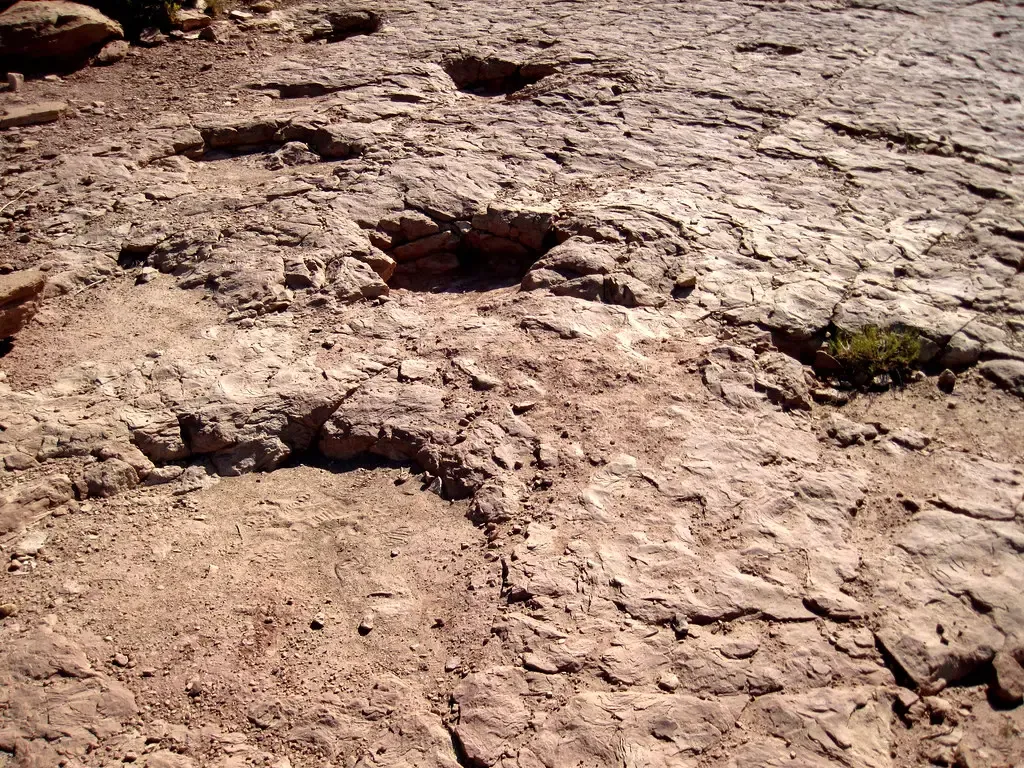
You might think that everything discoverable from these tracks was found decades ago. Not even close. University of Texas paleontologists plan to return to newly discovered sites and use new technology like drones and laser-surface scanning to see what additional information they can uncover. These are the same tracks once brushed off as geological curiosities. Now they’re getting the full treatment of 21st-century science.
Parallel trackways suggest herding or pack movement, much like today’s wildlife that often moves in social groups across grasslands. It is now generally accepted that there is abundant trackway evidence for gregarious behavior among large herbivorous dinosaurs, most notably Late Jurassic and Early Cretaceous sauropods and large Cretaceous ornithopods. Trackway evidence for gregarious behavior among other dinosaurs is more scattered and ambiguous.
Studying ancient footprints is not just about satisfying curiosity; it has real implications for modern conservation. By understanding how prehistoric animals adapted to changing climates, migrated across continents, and formed complex social structures, we can gain insights into the resilience and vulnerability of today’s wildlife. The past, it turns out, is more than history. It’s a guide.
Conclusion: The Ground Beneath You Is Still Talking
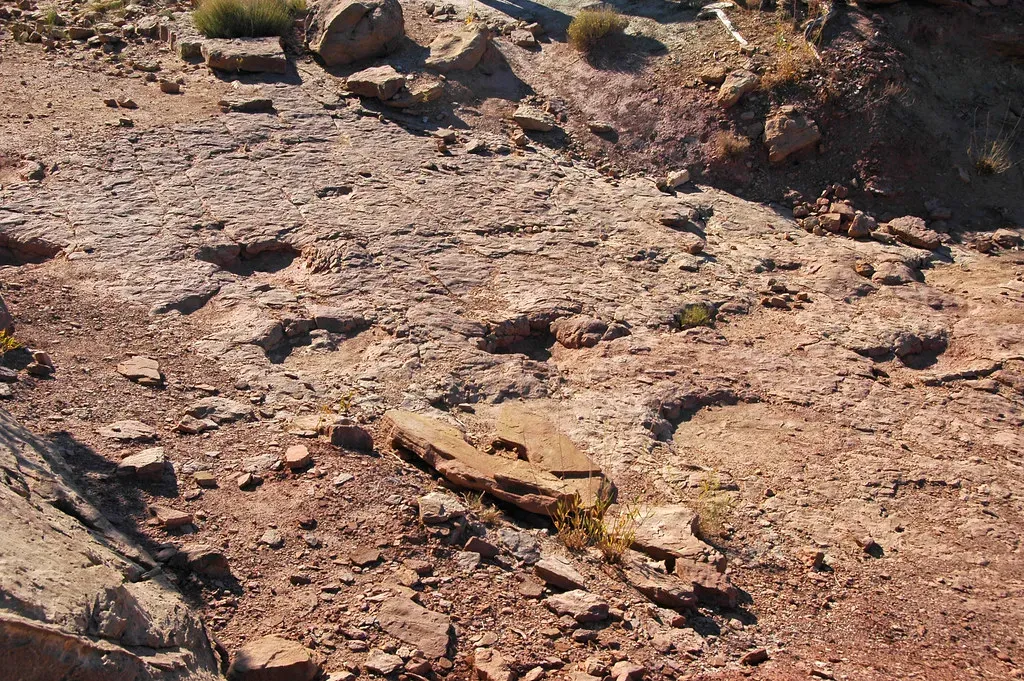
The ancient footprints scattered across Texas are more than geological curiosities. They are behavioral records, social diaries written in limestone by creatures that roamed these lands over 110 million years ago. From the parallel sauropod trails suggesting coordinated herd movement, to the age-segregated assemblages at Big Bend implying structured social groups, these tracks have steadily dismantled the old image of dinosaurs as solitary, cold-blooded wanderers.
Every flood that strips away Texas sediment, every drought that reveals a hidden riverbed, brings the possibility of yet another revelation. The fossils reveal not only the types of creatures that once lived in the region but also offer clues about their movement patterns, social structures, and interactions with the environment. The more you look, the more complex the picture becomes.
Think about that the next time you walk across muddy ground. You are, without knowing it, participating in the same ancient act of leaving a trace. The only difference is whether anyone will be around 113 million years from now to read it. What do you think those future scientists would make of your footprints? Drop your thoughts in the comments.