There is something deeply stirring about standing on a patch of earth and realizing that someone – someone who looked remarkably like you – once crossed it tens of thousands of years ago, probably exhausted, probably hungry, and almost certainly unaware they were rewriting the story of an entire species. The history of human migration is not a neat timeline on a museum wall. It is a tangled, breathtaking, sometimes heartbreaking saga of survival, curiosity, and relentless movement.
What drove our ancestors to leave the only continent they had ever known? What allowed small groups of wandering hunters to eventually populate every corner of this planet, from the scorching savannas of Africa to the frozen edges of the Arctic? The answers lie buried in fossils, encoded in our DNA, and scattered across archaeological sites on nearly every landmass on Earth. Prepare yourself. This story is far bigger, older, and stranger than most people imagine. Let’s dive in.
Africa: The Cradle That Started It All
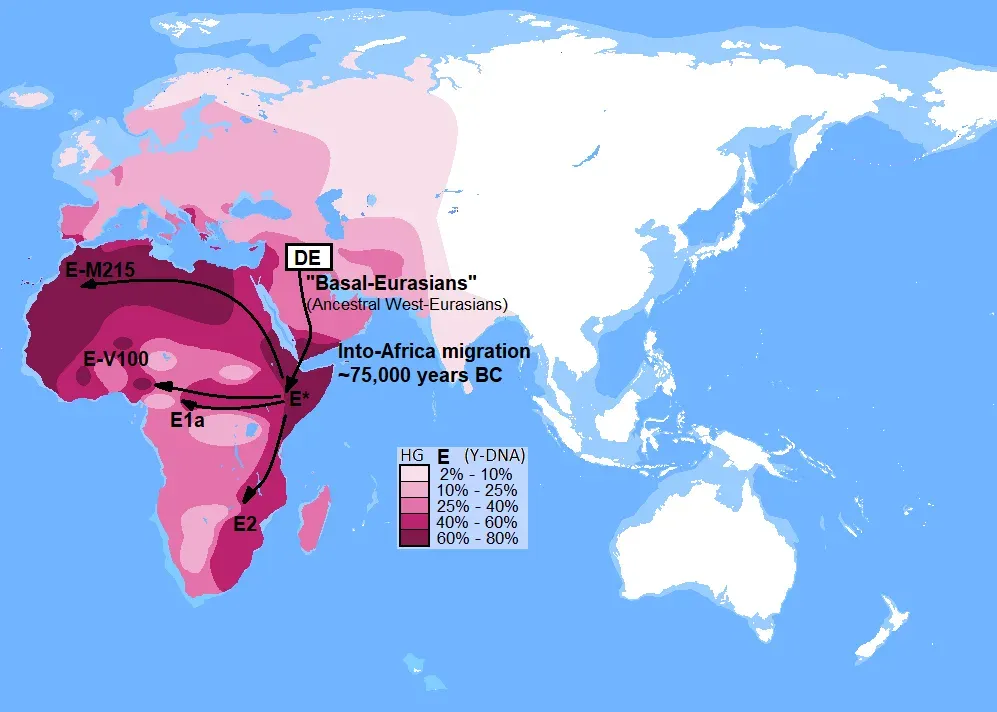
You have to go back. Way back. The earliest humans developed out of australopithecine ancestors about 3 million years ago, most likely in the area of the Kenyan Rift Valley, where the oldest known stone tools have been found. Think about that for a moment. The entire human story – every civilization, every language, every art form – traces its origin to a relatively small region of eastern Africa.
Within Africa, Homo sapiens dispersed around the time of its speciation, roughly 300,000 years ago. Africa, in other words, was not just a starting point. It was also the first arena of human spread, where our ancestors explored, adapted, and diversified long before they ever looked beyond the continent’s borders. Modern genetic studies affirm that all contemporary humans share a common ancestry rooted in Africa.
The First Pioneers: Homo Erectus Leaves the Continent
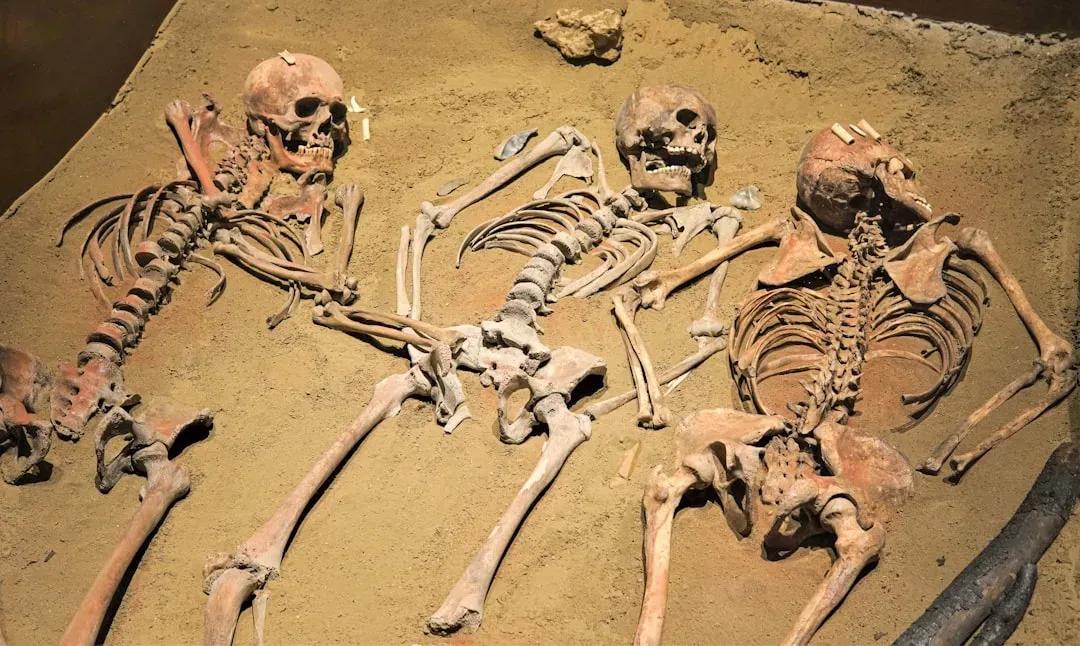
Here is the thing – Homo sapiens was not the first human species to venture beyond Africa. Not by a long shot. Homo ergaster, or African Homo erectus, may have been the first human species to leave Africa, and fossil remains show this species had expanded its range into southern Eurasia by 1.75 million years ago. They were rugged, resourceful, and apparently not at all content to stay put.
Around 1.8 million years ago, Homo erectus migrated out of Africa via the Levantine corridor and Horn of Africa to Eurasia. This migration has been proposed as being related to the operation of the Saharan pump, around 1.9 million years ago. Homo erectus dispersed throughout most of the Old World, reaching as far as Southeast Asia. Honestly, you can almost picture it – small bands of early humans following game and coastlines, moving instinctively toward new horizons, with no map and no guarantee of return. The most successful was Homo erectus, which is thought to have migrated from Africa to southeast Asia around 1.8 million years ago and lived there for more than 1.5 million years.
The Great Exodus: Modern Humans Break Free
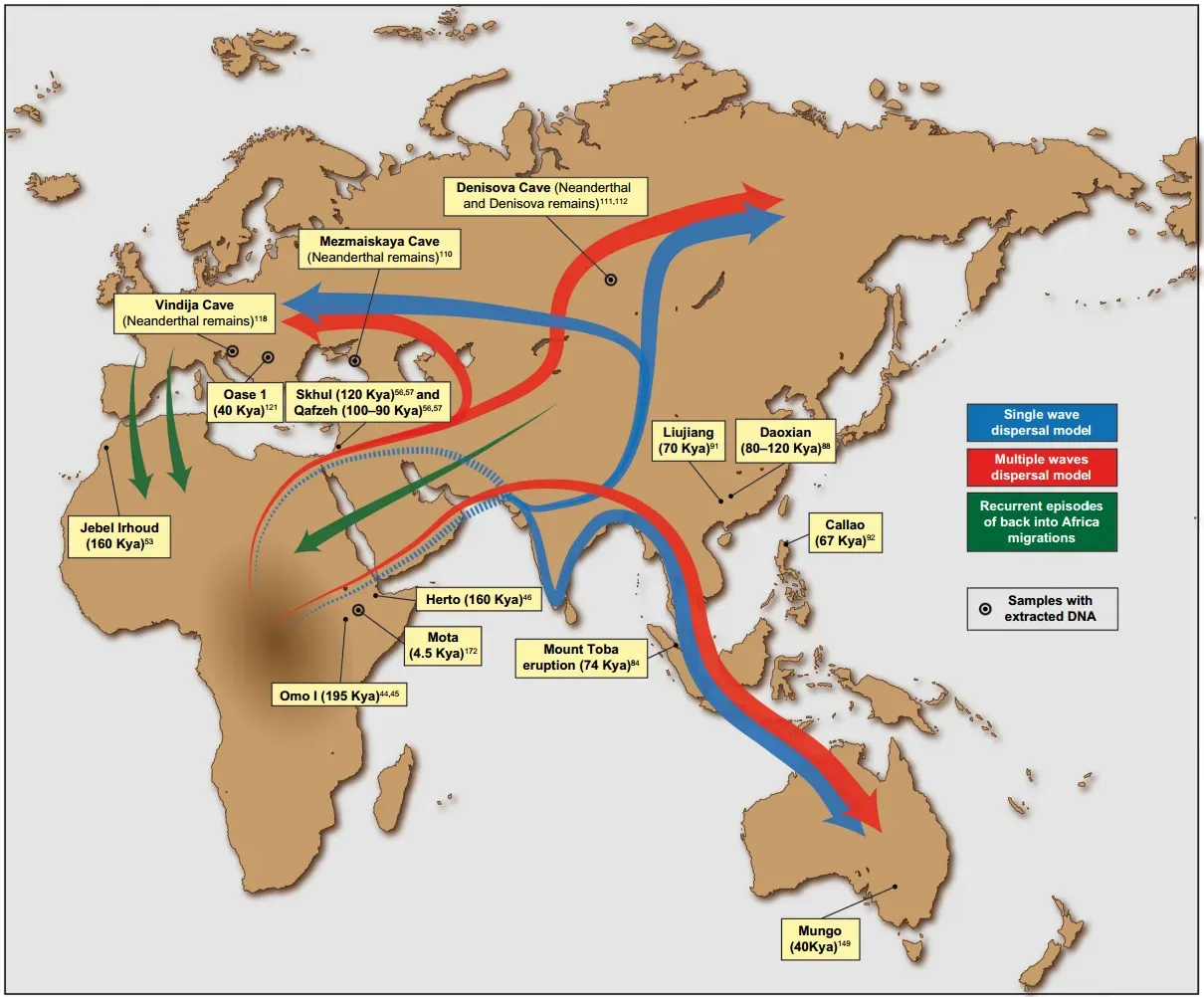
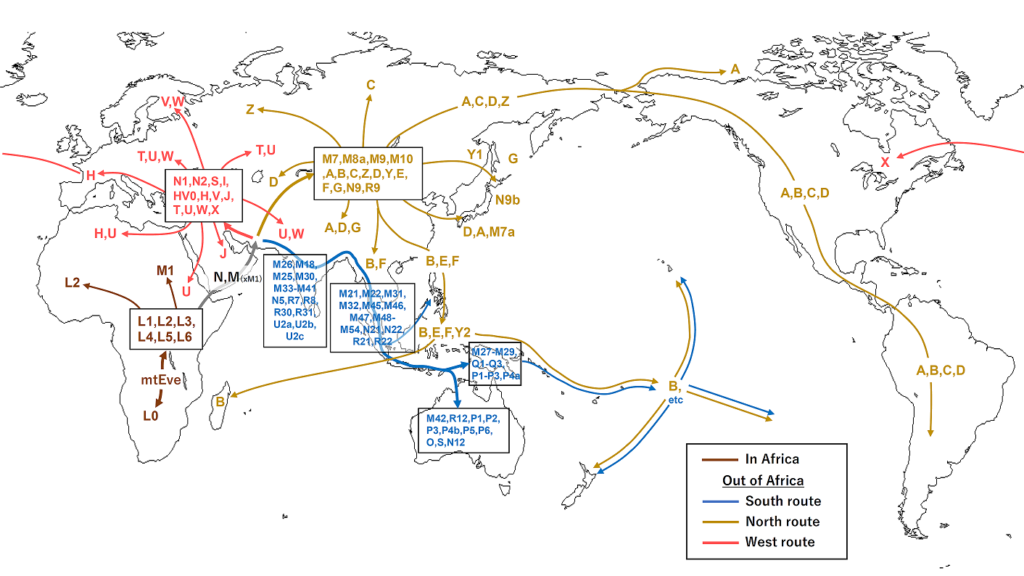
When modern Homo sapiens finally made their own bid for the wider world, it did not happen in one grand, coordinated departure. Human migration out of Africa across the Sinai Peninsula and the Red Sea near Bab-el-Mandeb was not a single event as is often suggested, but occurred in waves, with Earth’s axis wobble causing shifts in climate and vegetation roughly every 20,000 years. Climate, it turns out, was both the obstacle and the invitation.
DNA evidence suggests the original exodus involved anywhere from 1,000 to 50,000 people, and scientists lean toward a land bridge crossing what today is the Bab el Mandeb Strait separating Djibouti from the Arabian Peninsula at the southern end of the Red Sea. From there, migrants could have followed a southern route eastward along the coast of the Indian Ocean. It’s wild to consider – the ancestors of billions of people today may have numbered fewer than a small modern town. It has been estimated that from a population of 2,000 to 5,000 individuals in Africa, only a small group, possibly as few as 150 to 1,000 people, crossed the Red Sea. The group that crossed the Red Sea travelled along the coastal route around Arabia and the Persian Plateau to India, which appears to have been the first major settling point.
Early Dispersals and Dead Ends: The Forgotten Migrations
![Early Dispersals and Dead Ends: The Forgotten Migrations (Skin colour and vitamin D: An updateProvided under Creative Commons free license (p.1, with link to Attribution 4.0 International (CC BY 4.0) page)"This is an open access article under the terms of the Creative Commons Attribution License, which permits use, distribution and reproduction in any medium, provided the original work is properly cited. © 2020 The Authors. Experimental Dermatology published by John Wiley & Sons Ltd" [1], CC BY-SA 4.0)](https://nvmwebsites-budwg5g9avh3epea.z03.azurefd.net/dinoworld/5c0caa84ff9b200276143667595846ed.webp)
Provided under Creative Commons free license (p.1, with link to Attribution 4.0 International (CC BY 4.0) page)
“This is an open access article under the terms of the Creative Commons Attribution License, which permits use, distribution and reproduction in any medium, provided the original work is properly cited. © 2020 The Authors. Experimental Dermatology published by John Wiley & Sons Ltd” [1], CC BY-SA 4.0)
Not every migration wave out of Africa succeeded. Some groups made it astonishingly far only to ultimately vanish from the genetic record. Inside a cave in Laos, scientists have dated a pair of modern human bones to between 68,000 and 86,000 years ago. Although these precocious migrants likely didn’t contribute much genetically to modern populations, they blazed a trail into Southeast Asia followed by later generations. Think of them as scouts – fearless pioneers whose direct lines simply did not survive, yet whose journeys still matter.
Today, all non-Africans are known to have descended from a small group of people that ventured into Eurasia after around 50,000 years ago. However, fossil evidence shows that there were numerous failed dispersals before this time that left no detectable traces in living people. Research suggests that the majority of the earliest human groups eventually faded away after they arrived in Eurasia and that most people alive today can trace their ancestral lineage to the migration that occurred between 59,000 and 47,000 years ago. Survival, it seems, was never a guarantee – even for our own species.
Encounters with the Others: Interbreeding with Neanderthals and Denisovans
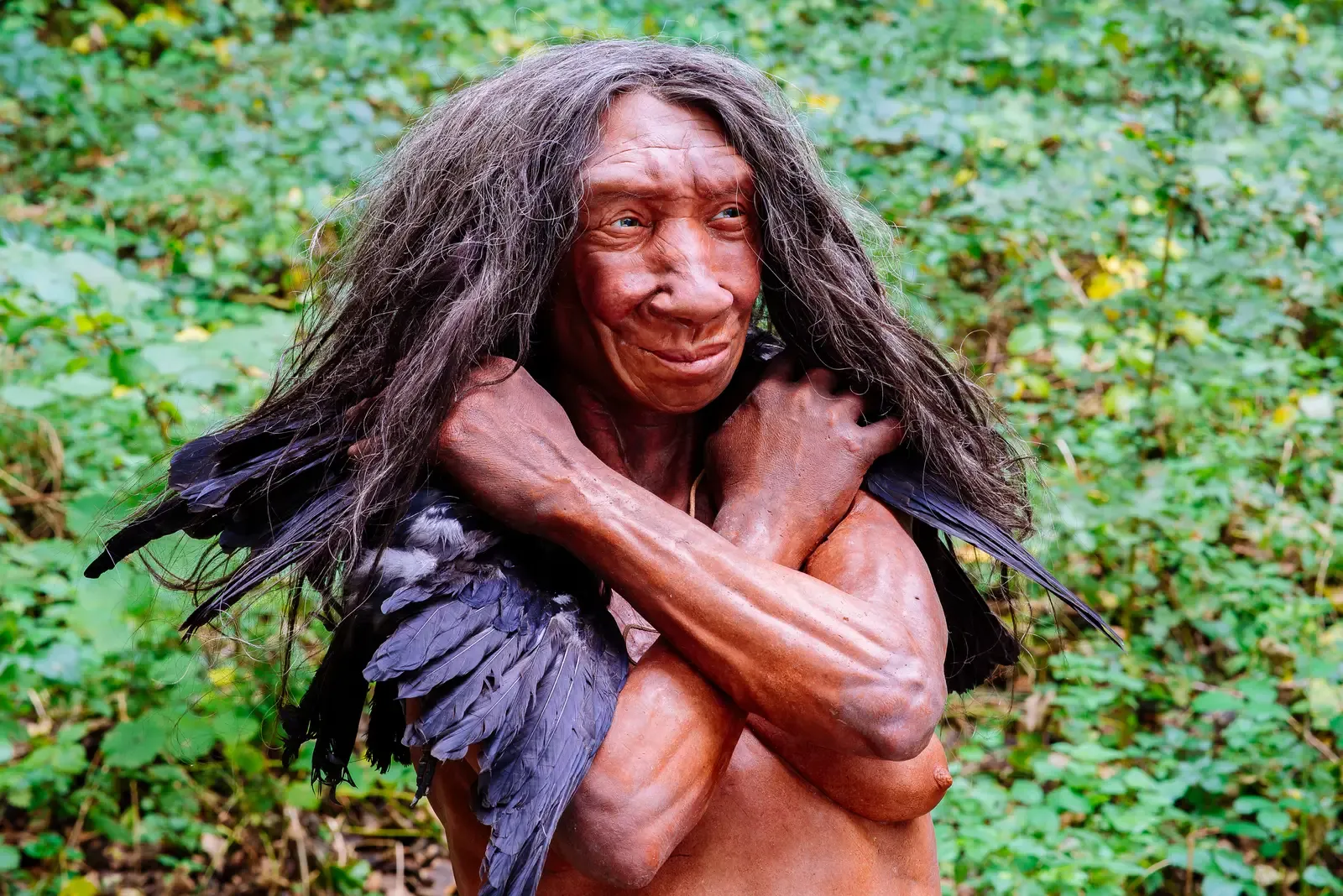
Here is something that still manages to feel surprising, even in 2026: when your ancestors left Africa and pushed into Eurasia, they were not alone. Other human species were already there – and they did not keep their distance. Interbreeding between archaic humans, such as Neanderthals and Denisovans, and anatomically modern humans took place during the Middle Paleolithic and early Upper Paleolithic. It has been revealed via genomic sequencing that all modern human populations outside of Africa today carry approximately 1–4% Neanderthal DNA, which is a result of genetic admixture that occurred after modern humans migrated out of Africa.
Multiple interbreeding events with distinct Denisovan populations helped shape traits like high-altitude survival in Tibetans, cold-weather adaptation in Inuits, and enhanced immunity. Their influence spanned from Siberia to South America, and scientists are now uncovering how these genetic gifts transformed human evolution, even with such limited physical remains. The Denisovans, in particular, are a fascinating case. Denisovan admixture is most prominent in Oceania, where modern human populations derive approximately 4–6% of their genome from this archaic group, while those in Eurasia and the Americas have been found to carry lower levels. Your genome, wherever you are in the world, may carry the whisper of a species we barely know.
Crossing Into the Americas: The Last Great Frontier
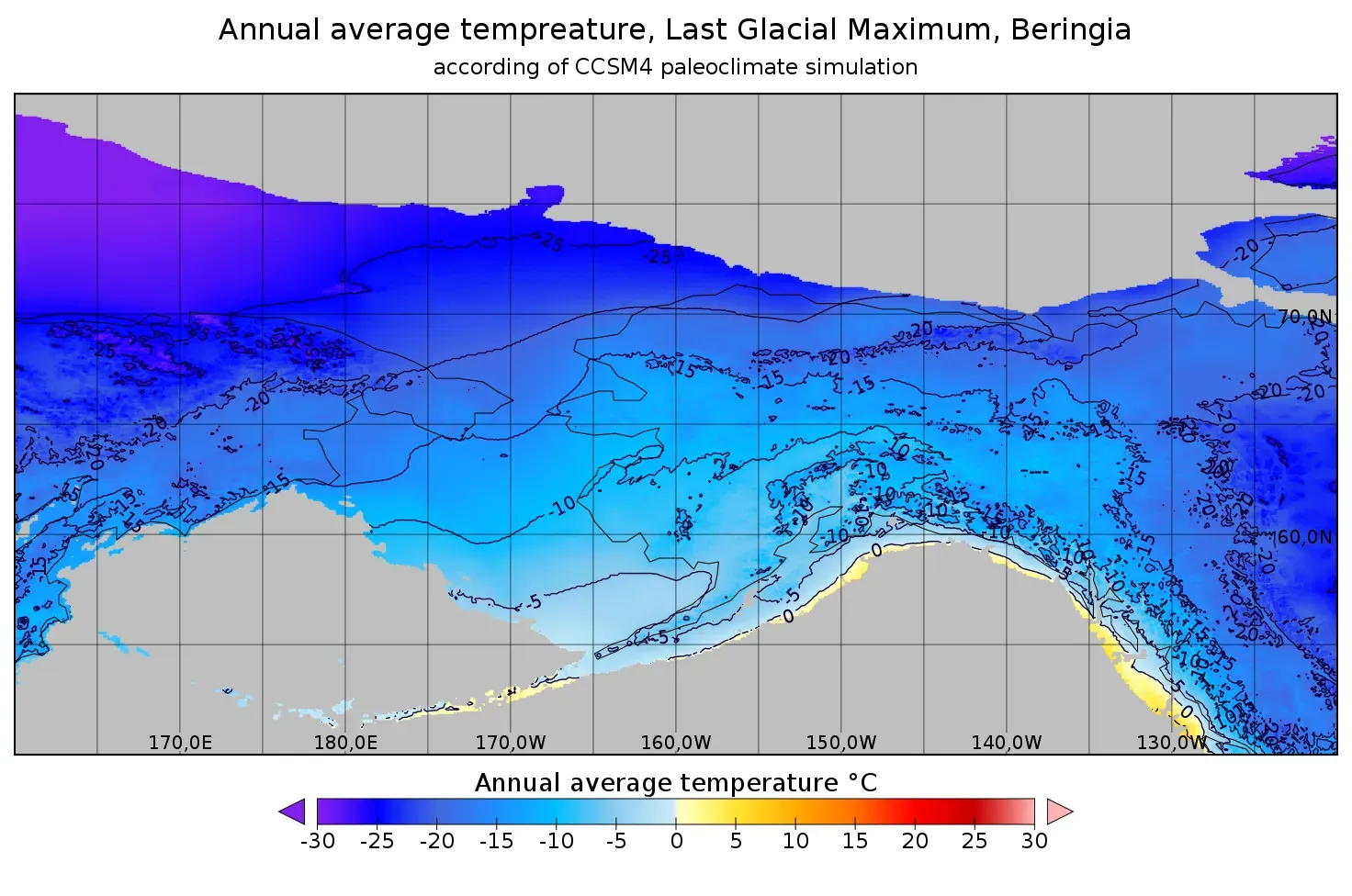
According to most archaeologists and geneticists, the best theory for how the first humans migrated to the Americas is that they crossed the Bering Strait from Asia via a now-extinct land bridge. This land connection, known as Beringia, was no narrow footbridge. It was a vast, flat stretch of exposed seabed – more like a subcontinent – that formed when Ice Age glaciers locked up enough of the world’s water to drop sea levels dramatically. During the last glacial period, enough of the Earth’s water became frozen in the great ice sheets covering North America and Europe to cause a drop in sea levels, and for thousands of years the sea floors of many interglacial shallow seas were exposed, including those of the Bering Strait.
Evidence based on Native American languages, tooth anatomy, and genetics suggests that there were at least three migrations of different Siberian peoples into North America, with the first group of migrants giving rise to most Native American groups. Interestingly, recent research has revealed that this was never strictly a one-way journey. New evidence shows that these early migrations were not one-way trips: researchers have uncovered traces of Native American ancestry in the DNA of Siberians who lived centuries ago, and this American heritage – still present in the genomes of some Siberians today – adds to a scattering of archaeological evidence suggesting that North Americans were in contact with their northern Asian neighbors for thousands of years before Europeans arrived. The ancient world, it turns out, was far more connected than we ever gave it credit for.
Conclusion: A Story Written in Our Bones and Blood
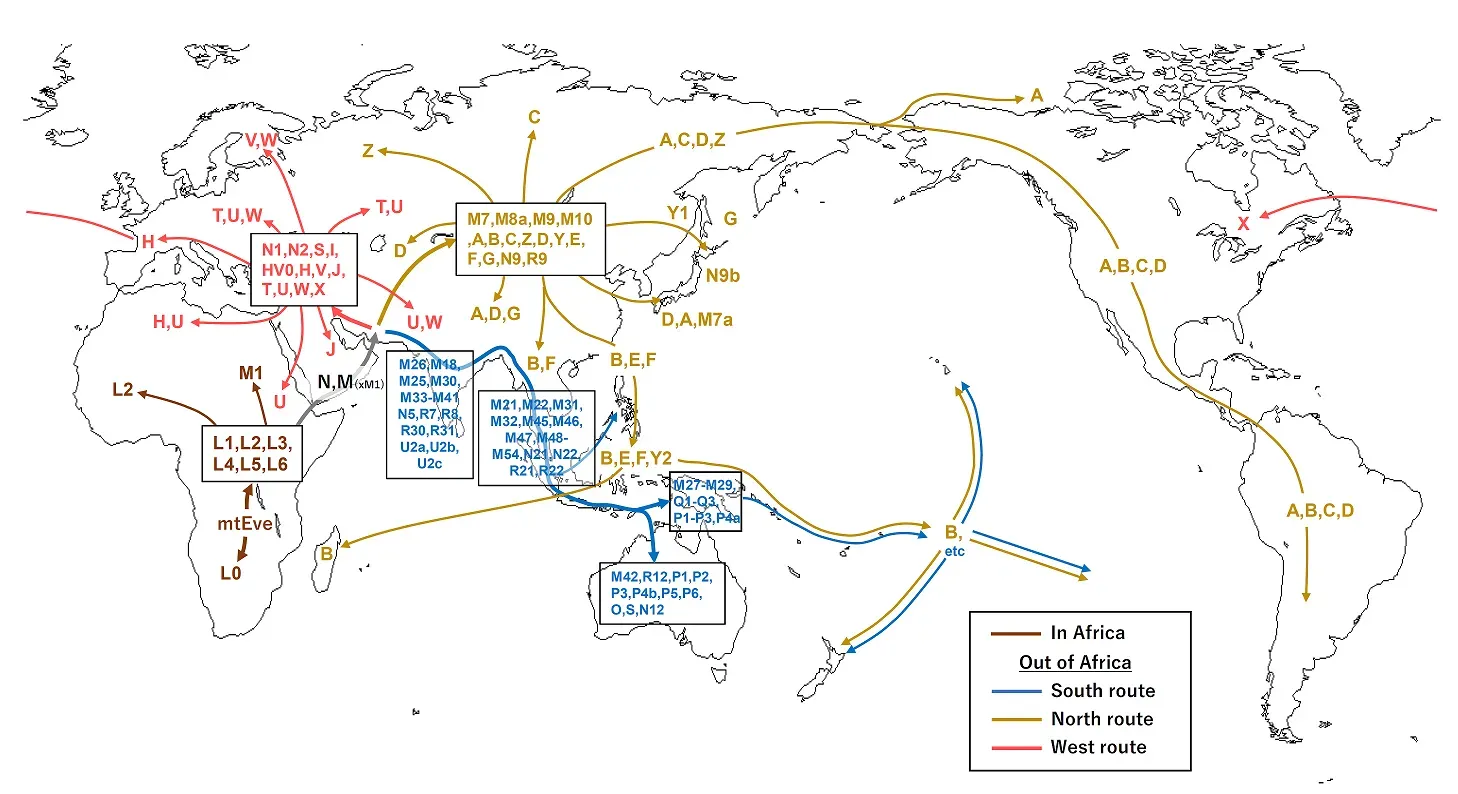
崎谷満『DNA・考古・言語の学際研究が示す新・日本列島史 日本人集団・日本語の成立史』(勉誠出版 2009年)
崎谷満『新日本人の起源 神話からDNA科学へ』(弁制出版 2009年)
The map is from http://www.craftmap.box-i.net/world.php (No copyright), CC BY-SA 4.0)
When you zoom all the way out, what you see is not just the story of ancient migrations. You see the story of what it means to be human. Restless. Adaptive. Curious beyond all reason. From the first footprints in the Kenyan Rift Valley to the crossing of Beringia, our ancestors never stopped moving – not because they had to, and not always because it was safe, but because somewhere in their bones, the pull forward was simply stronger than the fear of the unknown.
The science keeps evolving too. Ancient DNA has emerged as a powerful tool for studying human migration through the detection of admixture signatures. Every new fossil, every sequenced genome, every ancient cave adds another sentence to this unfinished story. What is already clear, though, is that the diversity you see in the world today – every face, every culture, every language – is the living result of an epic journey that began in Africa and never truly stopped. We are all, in the most literal sense, children of migrants. What do you think about that? Tell us in the comments.