
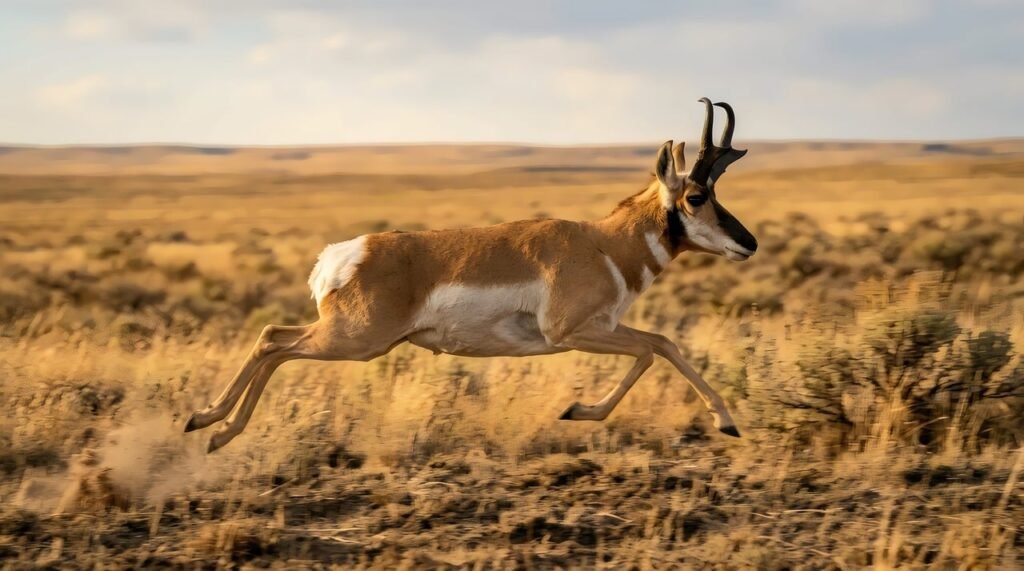
If you built the fastest supercar on Earth and then suddenly removed all speed limits, you’d expect to see it tearing down every road. But what if that car ended up trapped in a neighborhood where nobody ever drove over twenty miles an hour? That’s the pronghorn in a nutshell: an animal built for a race that ended thousands of years ago, still carrying the hardware for a danger that no longer shows up.
Pronghorn are not just “kind of quick.” They are outrageously, almost absurdly fast for the predators they live with today. Coyotes, wolves, cougars – impressive hunters, sure, but none of them can fully justify an animal that can cruise at highway speeds. To really understand why pronghorn move like living race cars across the American West, you have to go back to the end of the Ice Age, when North America was crowded with monsters that would look more at home in a fantasy movie than in a biology textbook.
The Second-Fastest Land Mammal You’ve Probably Never Really Thought About
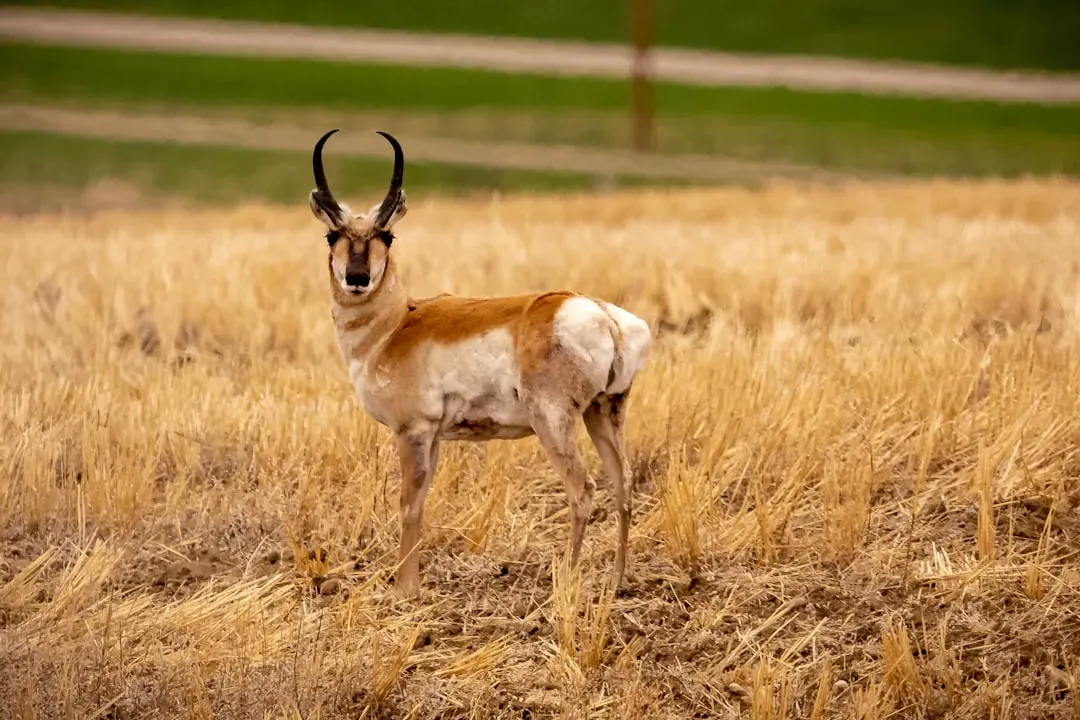
Ask most people about the fastest land animal and you’ll hear “cheetah” right away, but hardly anyone mentions that the pronghorn is basically in second place. These North American natives can sprint at speeds close to a car on a city highway and, even more impressively, they can keep up a blistering pace for much longer than a cheetah can. Where cheetahs are short-burst sprinters, pronghorn are built like ultra-marathon sprinters that never got the memo about slowing down.
What makes this so intriguing is that none of the big predators around them today really require that extreme level of speed to escape. Modern threats like coyotes or wolves are quick, but they’re not in the same league. It’s like seeing someone wear a Formula 1 helmet to ride an electric scooter – technically useful, but clearly designed for a more intense scenario. That mismatch is the first big clue that the story of pronghorn speed starts with predators that are no longer here.
Ghosts of Ice Age Predators: The Original Threats
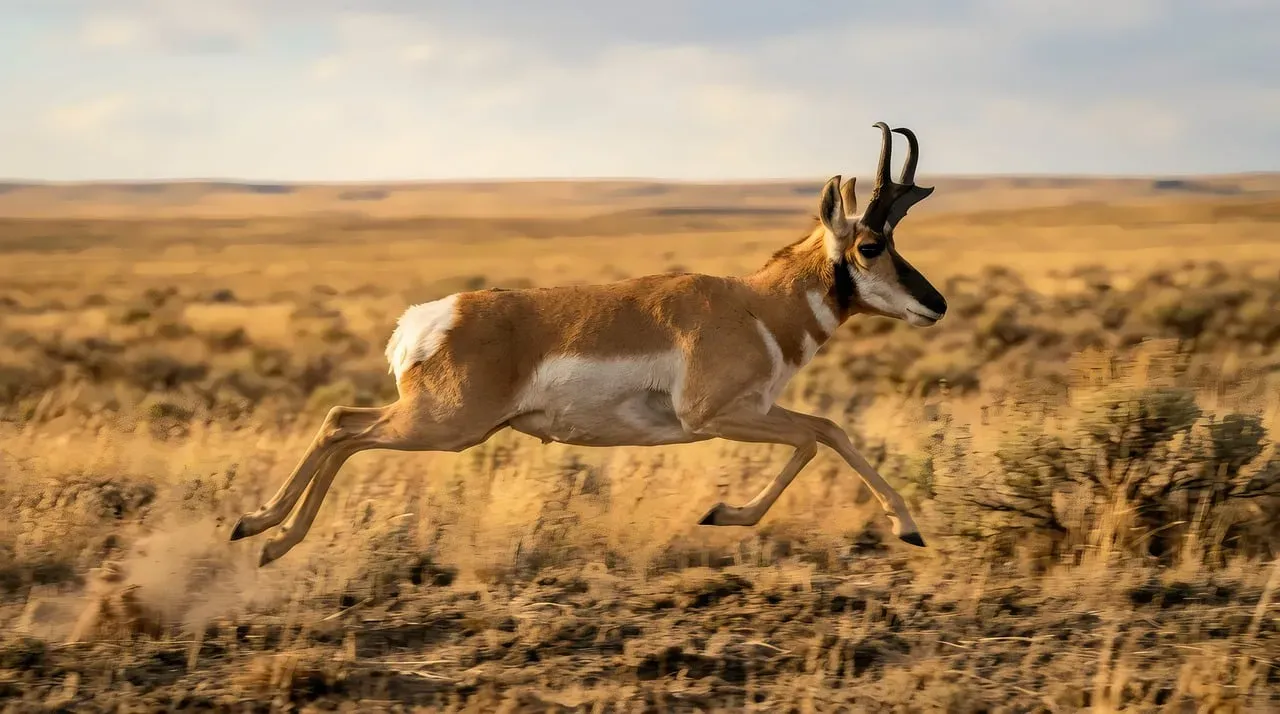
To understand why pronghorn evolved such extreme speed, scientists look back to the late Pleistocene, the tail end of the last Ice Age. Back then, North America was full of terrifying pursuit predators: the American cheetah-like cats, giant short-faced bears, dire wolves, and big saber-toothed cats. These weren’t gentle background characters; they were specialized hunters that likely chased prey at high speed across open landscapes, the same kind of habitat where pronghorn still live.
The American “cheetah” is one of the leading suspects in this evolutionary story. While there’s still some debate about exactly how similar it was to true African cheetahs, its body shape and limb proportions suggest it was fast – very fast – and likely hunted in open country. In that world, any herbivore that survived long enough to pass on genes probably had something extra in the speed department. Pronghorn, it seems, inherited that edge and then some, and those adaptations have stuck around long after the big Ice Age predators died out.
Built Like a Living Race Car: The Anatomy of Extreme Speed
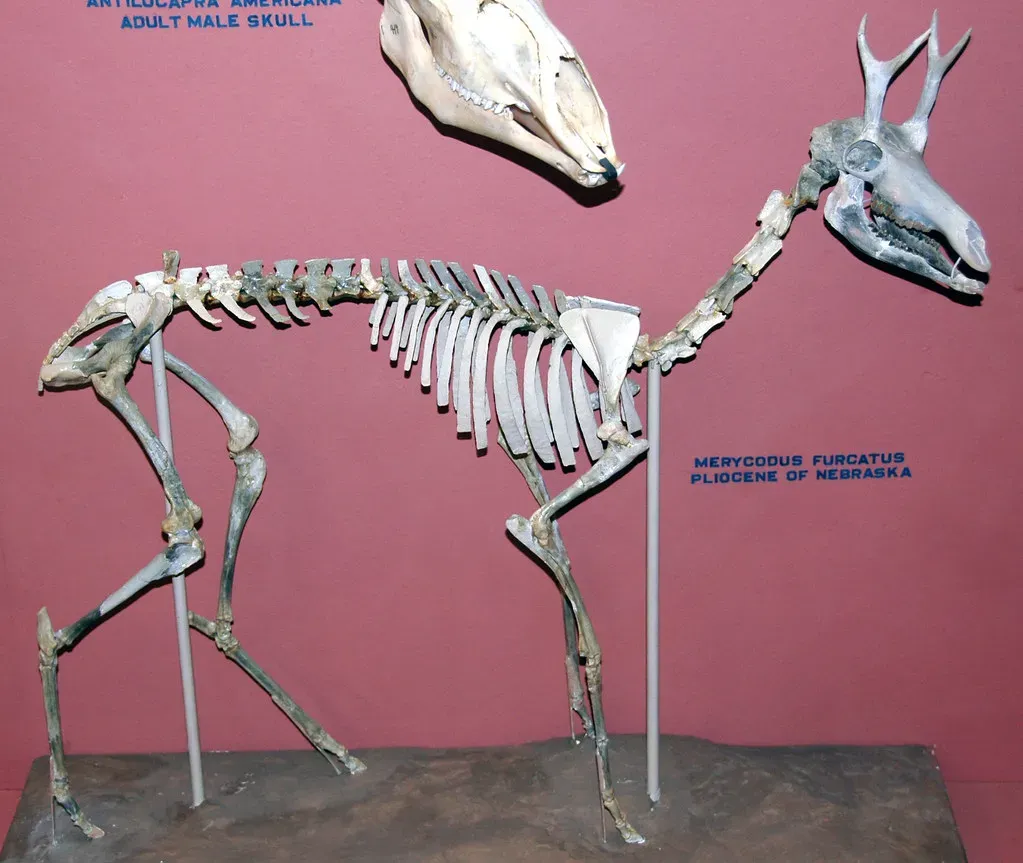
Speed at this level doesn’t happen by accident; it’s engineered by evolution piece by piece. Pronghorn have exceptionally large lungs and hearts relative to their body size, which means they can pull in oxygen and pump it through their bloodstream at a rate that would flatten most other mammals. Their muscles and circulation are tuned for sustained, high-output performance, letting them keep up a rapid pace instead of just exploding into a short, desperate dash.
Look at their skeleton and you see the same story. Pronghorn have long, lightweight legs, a flexible spine, and especially lightweight lower limbs that help reduce the energy cost of swinging legs back and forth. Their hooves and joints are designed for shock absorption and efficient stride, a bit like high-tech running shoes compared to heavy work boots. None of this is subtle; every part of the pronghorn’s body hints that it was shaped in a world where the difference between life and death might be a few extra miles per hour.
Outrunning Enemies That No Longer Chase Them
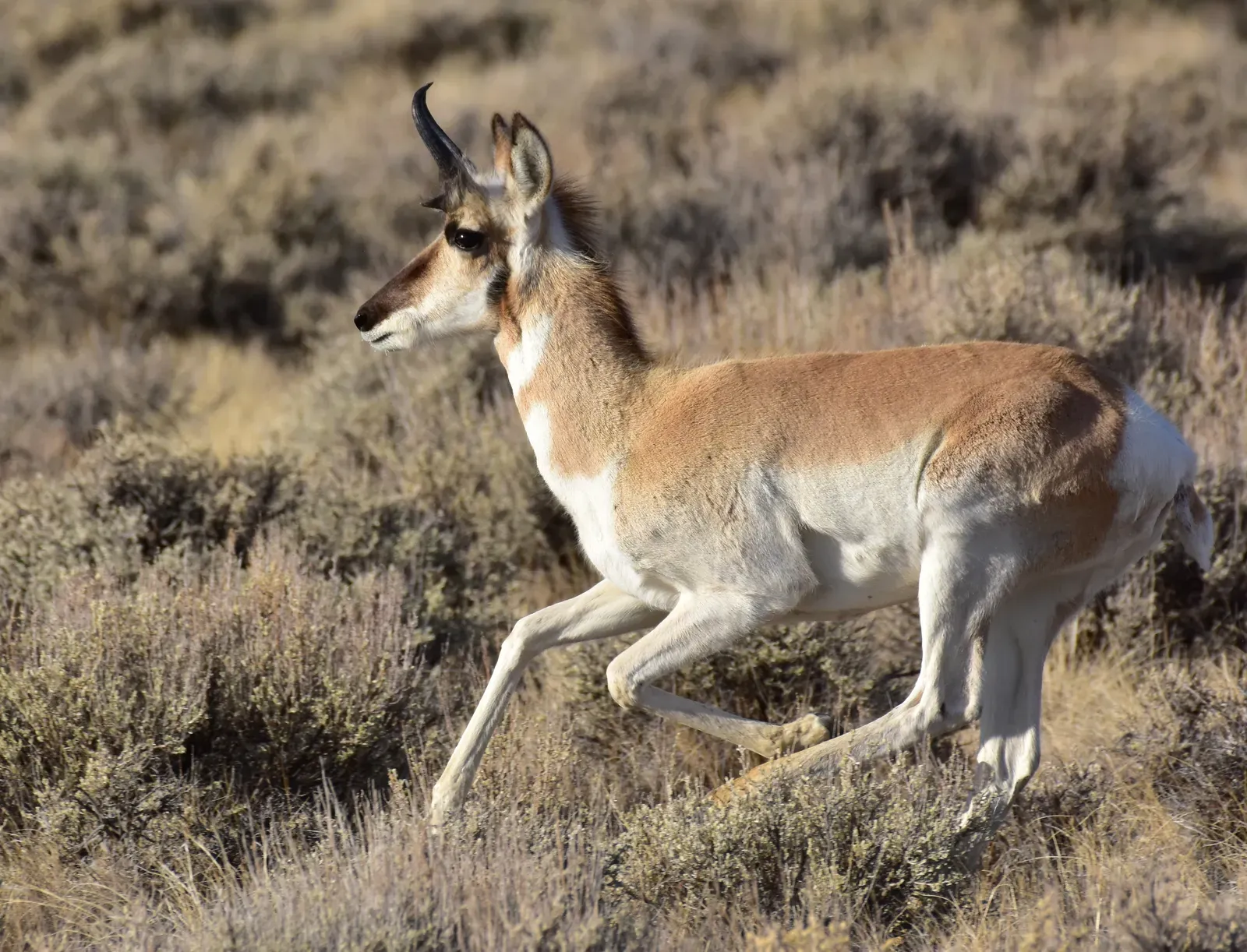
Today’s pronghorn share the landscape with predators like coyotes, wolves, bobcats, mountain lions, and golden eagles, and those are serious threats, especially to fawns. But when you compare the abilities of these predators to pronghorn performance, it’s obvious that modern chases are usually decided long before the pronghorn even hits its full stride. A healthy adult can simply lean on its built-in speed advantage and leave most pursuers far behind on the open plains.
From an evolutionary point of view, that kind of overkill looks like a historical leftover. The traits pronghorn evolved under the pressure of Ice Age pursuit predators still function today, but they’re far more powerful than the current environment strictly requires. It’s a bit like watching someone bring a fire hose to water a potted plant; the original need was much more intense, and even though the situation has changed, the tool has not. That mismatch is precisely why pronghorn are often used in textbooks and lectures as a classic example of evolution shaped by vanished enemies.
Why Evolution Didn’t “Dial Back” Their Speed
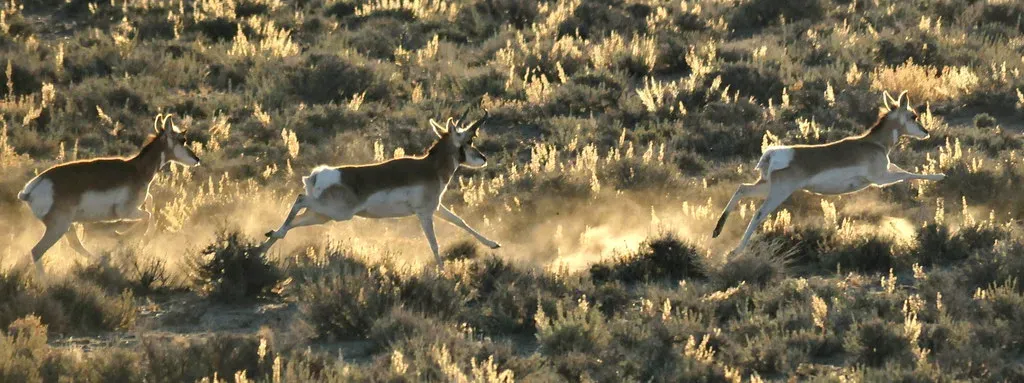
A fair question is why pronghorn are still this fast if the old predators are gone. You might assume that without the same level of predation, evolution would gradually “relax” their speed and shift resources elsewhere. But evolution does not work like a conscious engineer that removes features as soon as they’re not needed. Traits disappear only when there is active pressure to change them, like a cost that outweighs the benefit.
In the case of pronghorn, their speed still provides real advantages. Even if modern predators are slower than Ice Age hunters, being far faster than necessary still reduces the risk of being caught. As long as the cost of maintaining that high-performance anatomy is not catastrophically high, natural selection has little reason to remove it. So their speed has become an evolutionary echo, a kind of muscle memory of past danger that continues to pay off enough to stick around.
Landscape, Vision, and the Need to See Danger Coming
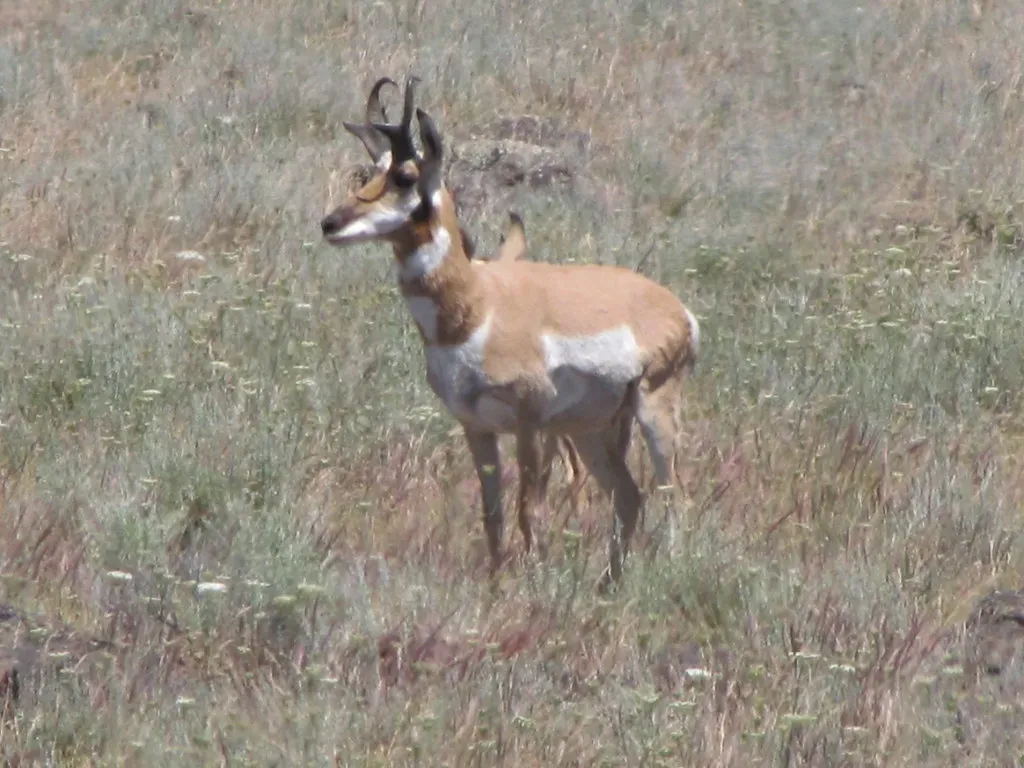
Speed alone does not explain how pronghorn survive; they also have to know when to use it. These animals live in wide-open country – sagebrush steppe, grasslands, and deserts – where there are few trees to hide behind. In this environment, seeing danger early is as important as running fast. Pronghorn have huge, high-set eyes positioned for a wide field of view, allowing them to spot movement from long distances without needing to constantly turn their heads.
That combination of open terrain, long-range vision, and rapid escape forms a tight survival package. Imagine being able to notice a moving shape half a mile away and immediately shift into a sustained sprint that few predators can match. In the Ice Age, that might have meant the difference between being a quick meal for something like an American cheetah-type predator or living to reproduce. Today, it still means survival – but now the threats are relatively slower carnivores, vehicles, fences, and human disturbance, making their old escape system both useful and, at times, tragically mismatched to modern dangers like highways.
The Mystery of the American “Cheetah” and What It Means for Pronghorn
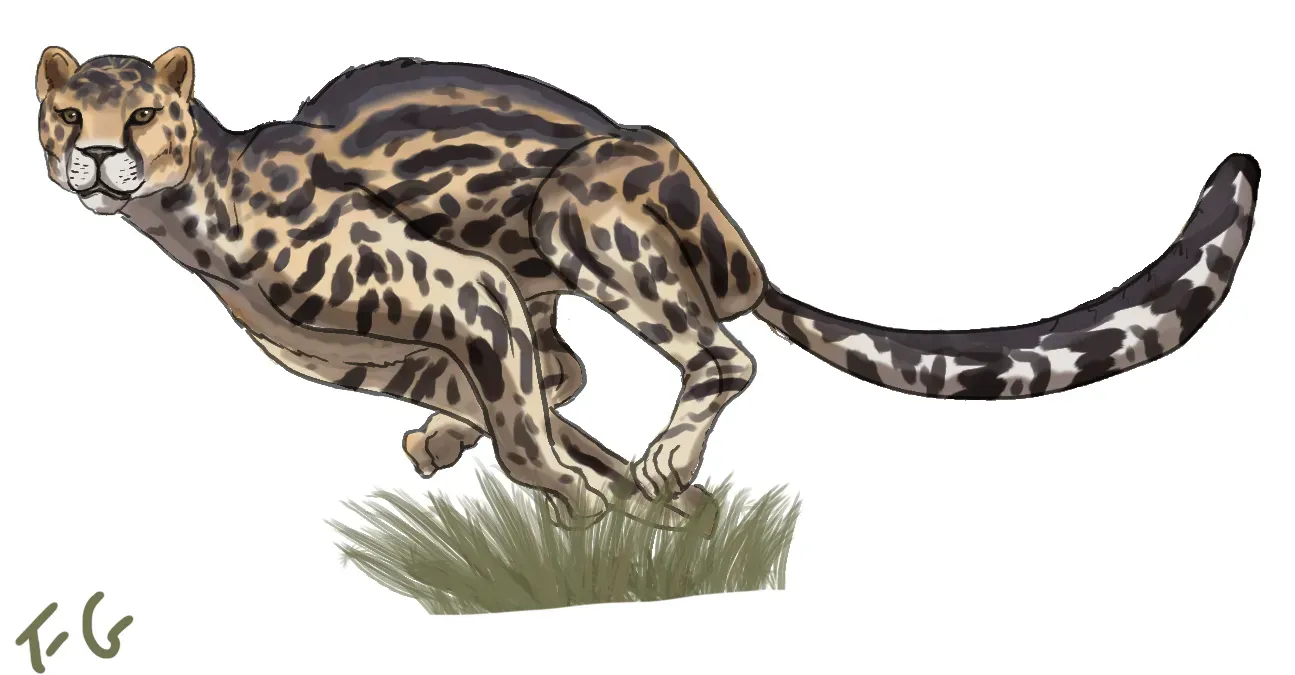
One of the most fascinating parts of this story is that the supposed main villain – the American cheetah-like cat – is still not fully understood. Fossils show a big, slender, long-legged cat that roamed North America and probably did a lot of its hunting in open areas, similar to how modern cheetahs behave in Africa. Some researchers think it hunted pronghorn or their ancestors, pushing them to evolve more and more speed over many generations. Others argue its lifestyle may have been more like a cougar’s, with ambush-style hunting playing a larger role.
Even with those scientific debates, the broad idea remains strong: pronghorn evolved in a predator community far more intense and specialized for speed than what we see in North America today. Whether or not the American cheetah was a perfect cheetah copy, it still represents a level of threat that lined up with the pronghorn’s extreme escape abilities. That’s why so many biologists see pronghorn as living evidence of an ancient arms race, the last contestant on a racetrack that has long since been abandoned by most of its rivals.
Pronghorn in a Human-Dominated World
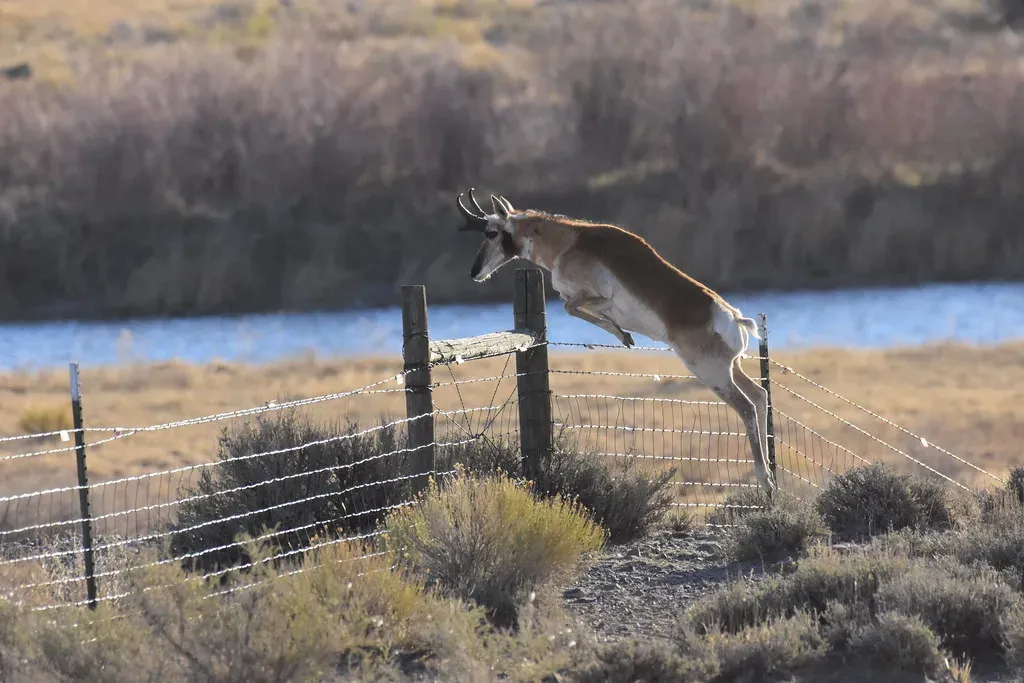
Fast-forward to the present, and pronghorn are trying to use Ice Age hardware in a twenty-first century setting. They still migrate long distances across the West, tracing paths that go back far beyond recorded history, but now those routes are sliced up by roads, fences, farms, and energy infrastructure. A pronghorn can outrun a wolf, but it cannot sprint through a barbed-wire fence or leap it as easily as deer do, and that creates a new kind of survival challenge that speed was never designed to solve.
What I find both inspiring and frustrating is how stubbornly pronghorn keep trying anyway. They weave through fence lines, squeeze under wires, and follow narrow migration corridors that sometimes pass through busy, modern landscapes. Conservationists have started to fight for wildlife overpasses, fence modifications, and protected migration routes, in part because these animals are living proof of deep time – still shaped by vanished predators, yet forced to navigate housing developments and highways. Their story makes it very clear: you can be the second-fastest land mammal on the planet and still be tripped up by something as simple as a poorly placed fence.
What Pronghorn Teach Us About Evolution, Time, and Our Role
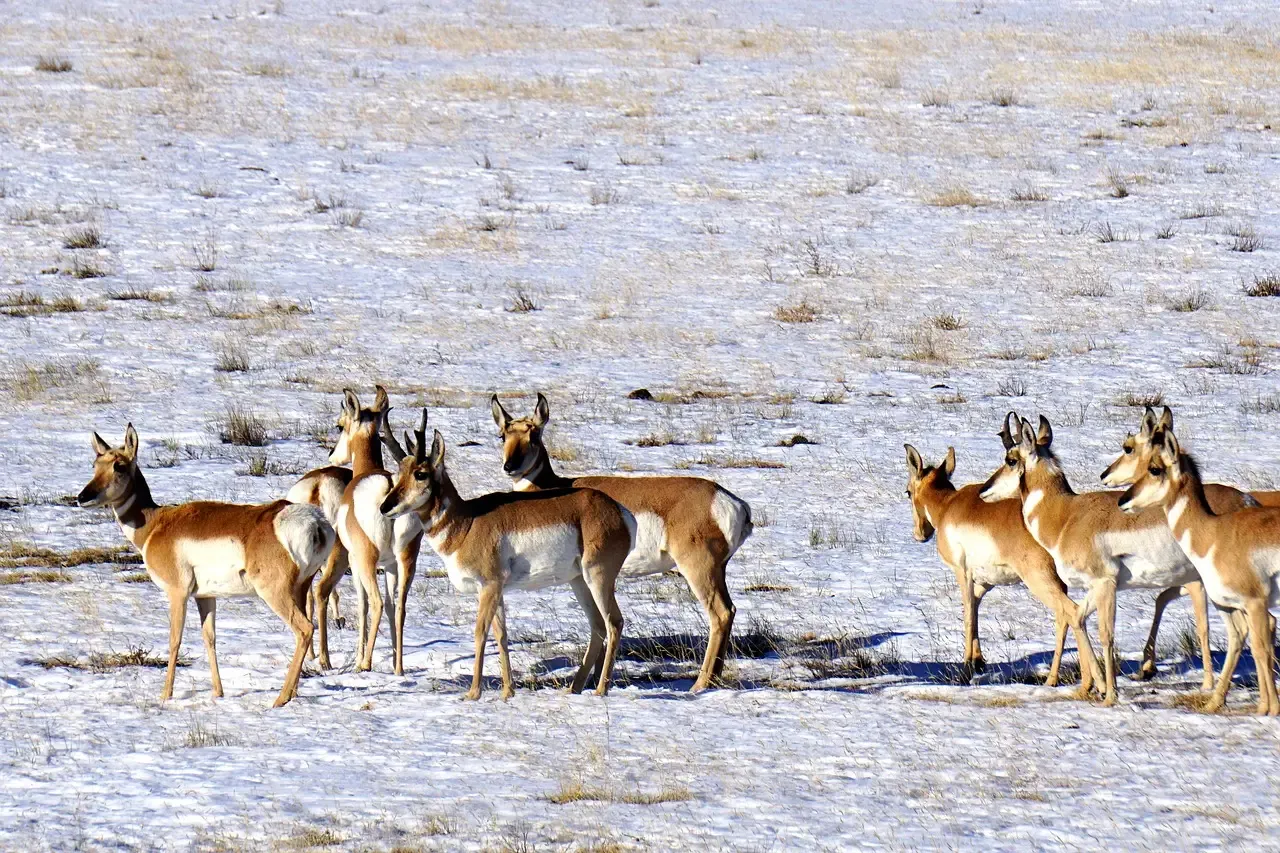
When you look at pronghorn through this lens, they become more than just another wild animal on the prairie. They are living archives of a world that no human ever photographed, packed with predators that defined their bodies but vanished before we could see them in action. Their speed is like a fossil you can watch moving, breathing, and reacting – a reminder that evolution leaves traces not just in bones, but in living behavior and anatomy.
To me, that makes pronghorn one of the most quietly powerful arguments for taking the past seriously when we plan the future. We tend to think in election cycles or news cycles, while animals like pronghorn carry decisions made by natural selection thousands of years ago. If we bulldoze migration routes or fragment open habitat, we are not just inconveniencing a few speedy antelope; we are snapping a chain that runs back through Ice Age predators and deep evolutionary history. In a world obsessed with fast change, pronghorn tell a different kind of speed story – one where the race goes on, long after the original opponents have disappeared.
Conclusion: The Fastest Reminder That the Past Still Matters
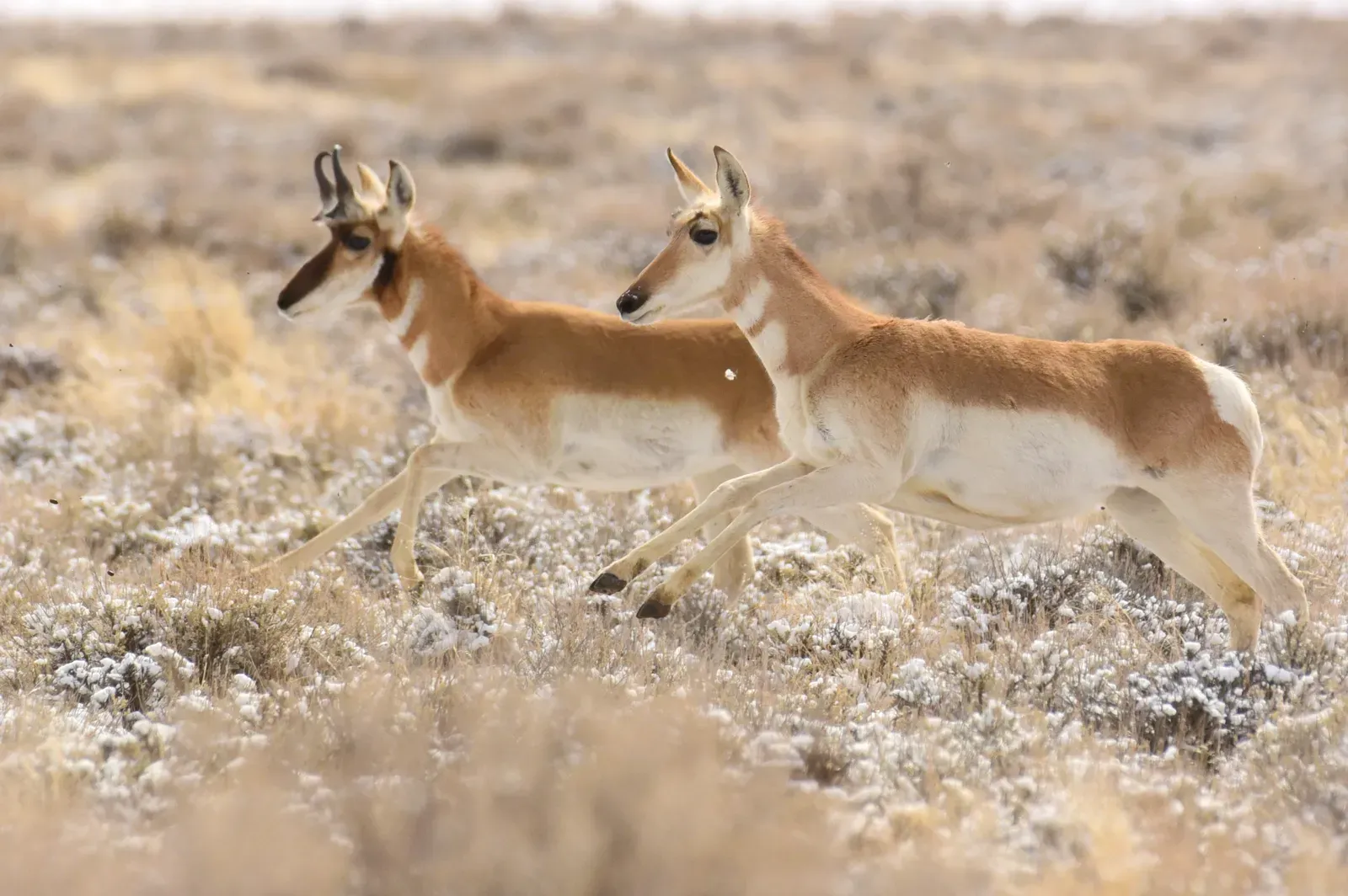
Pronghorn are, in a sense, overbuilt for the world they now inhabit, and that is exactly what makes them so important. Their speed is a stubborn message from the Pleistocene, proof that evolution does not cleanly reset when the cast of predators changes. Instead, it leaves behind survivors that still wear the armor and carry the engines of an older war. I think we underestimate how strange that really is, and how privileged we are to witness it in real time.
If anything, their story should nudge us toward a more humble, long-term view of wildlife and landscapes. We are now the biggest force reshaping their world, more disruptive than any vanished cheetah-like cat, and we face a choice: either we carve the land into pieces that even the fastest animal cannot navigate, or we respect the deep-time stories written into species like the pronghorn and make room for them. To me, the pronghorn’s speed is not just a biological curiosity; it’s a challenge. If an animal can carry an evolutionary memory of ancient predators for thousands of years, can we carry the responsibility of not being the final threat they cannot outrun?