

Music is so common in our lives that it feels almost invisible, like air. Yet when anthropologists stepped back and looked at the global picture, they realized something quietly astonishing: every known human culture, from Arctic hunter‑gatherers to dense megacities, makes music. Not only that, but these cultures seem to have stumbled onto similar musical solutions, even when separated by oceans, millennia, and radically different environments. That should not happen by accident. It hints that music is not a luxury or a cultural quirk, but something deeply wired into how human beings hear, feel, and live together. What makes this story even more gripping is the way different societies solved the same acoustical puzzles with totally different raw materials. Where one culture used bamboo, another carved bone; where one stretched animal skin, another hammered bronze. Still, they ended up with comparable pitch systems, similar ways of spacing notes, and recognizable families of instruments. It is as if humanity has been running the same experiment again and again across the globe: given a body that hears sound in a particular way and lives in groups, what kind of music will you build? The answers rhyme more than they differ – and that rhyme is where things get really interesting.
Why Every Known Culture Has Some Form of Music

Walk into any society anthropologists have ever documented and you will find music: lullabies for babies, songs for work, rhythms for dance, chants for rituals, melodies for mourning. This global pattern is so consistent that researchers treat music as a cultural universal, right alongside language and kinship. Even in small, isolated communities with little outside contact, people sing and play instruments, often woven tightly into daily life rather than set apart as a separate “art form.” The striking part is that music takes root even in harsh conditions where survival is a full‑time job. It shows up in long-distance herding calls, rowing chants, and songs encoded with practical information like navigation or plant knowledge. That persistence suggests music is not just entertainment, but offers real advantages: regulating emotion, coordinating groups, teaching memory, and signaling identity. You can skip having a writing system and still be a culture; you cannot, apparently, skip music.
Independent Invention, Not One Giant Musical Family Tree

It is tempting to imagine that music began in one place and simply radiated outward, like a viral hit that slowly went world‑wide. But the archaeological and ethnographic record paints a messier, more interesting picture. We find early flutes in Paleolithic Europe, mouth bows and rattles in Africa, shell trumpets in Oceania, and complex drumming traditions in the Americas – often with no plausible continuous chain of contact stretching between them over deep time. The time scales and geographic barriers are huge. Anthropologists and musicologists argue that although musical styles spread and mix all the time, there have been many separate episodes where people, faced with the physical reality of vibrating materials and a human ear, independently invented musical tools. Think of it like the independent invention of agriculture or writing in different parts of the world. Put similar brains into similar bodies with similar social pressures, and certain solutions keep popping up. Music, in this sense, looks like convergent cultural evolution rather than a single ancestral tradition.
Shared Acoustical Problems: How Do You Turn Raw Noise Into Notes?

Underneath the rich variety of global music lies a simple physical constraint: sound is just air vibrating. To make music, you have to take messy vibrations and carve them into something humans can hear as organized pitches and rhythms. That means grappling with problems like how to produce stable notes, how to tune them in relation to each other, and how to make patterns that a human brain can track and remember. Whether you are blowing across a bone flute in prehistory or designing a modern synthesizer, you are wrestling with the same physics. One of the core shared problems is deciding which pitches “fit” together. Not every pair of notes sounds equally smooth or pleasant. Certain vibration ratios, like those between octaves and simple intervals, tend to sound more stable to human ears. Many musical cultures, even if they never calculated ratios or built theory on paper, stumble into scales where steps are not random but structured – repeating patterns of intervals that can be reused across songs. That is not a coincidence; it is a solution to the acoustical task of making a usable, reusable vocabulary of notes from the infinity of possible frequencies.
Different Materials, Same Instrument Families

If you line up instruments from around the world, you start to notice familiar shapes in unfamiliar materials. There are things you blow across or into to excite columns of air. There are strings you pluck, bow, or strike to make them vibrate. There are membranes or solid surfaces you hit to create percussive pulses. Organologists formally group these into categories like aerophones, chordophones, idiophones, and membranophones. What is wild is how almost every culture seems to reinvent at least some of these families, even when they have access to very different raw materials. One community might fashion hollow reeds into flutes, while another uses bone, bamboo, or metal tubes. One might stretch animal hide across a wooden frame for a drum, while another uses pottery, gourds, or metal pans. Underneath the local flavor, though, the acoustical logic is the same: get a stable resonating body, control how it vibrates, and shape the resulting sound with holes, tension, or size. That repeating pattern hints that there are only so many practical ways to make a controllable musical sound, and humans have, over and over, discovered them in parallel.
Convergent Scales and Tuning Systems Across the Globe
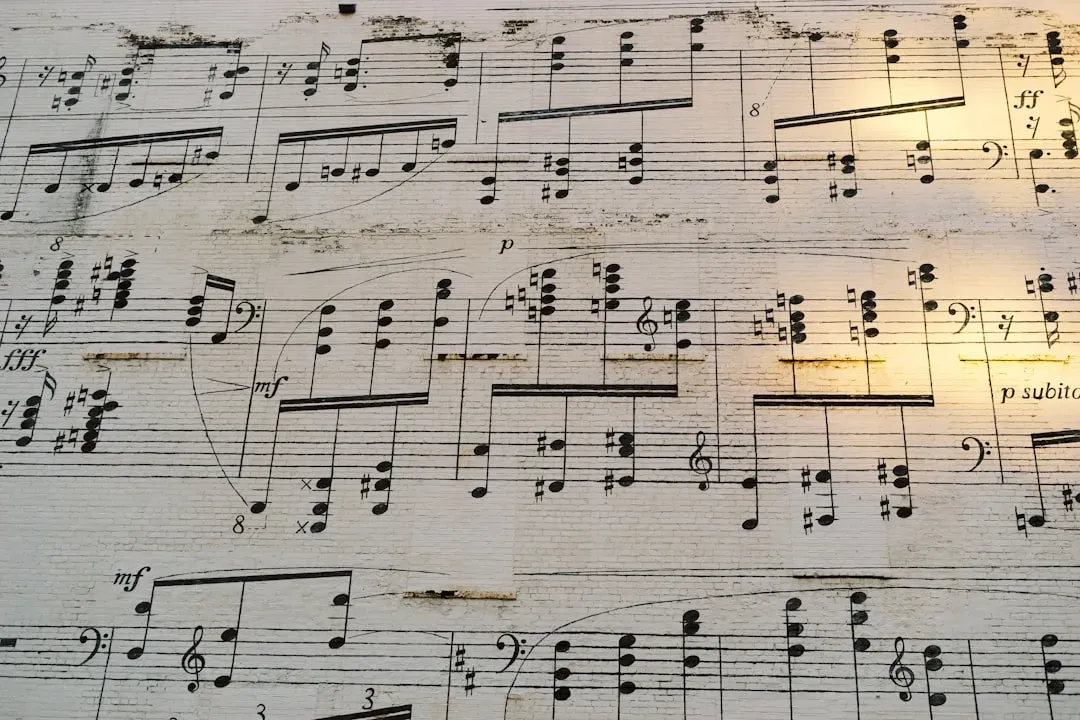
Scales feel like they should be wildly arbitrary, the kind of thing a culture could design however it wanted. Yet when researchers map out scales from very different musical traditions, they keep seeing familiar patterns crop up. Step sizes are rarely completely random. Many traditions gather notes within an octave into a smallish set of steps and often use repeating patterns of intervals. You see pentatonic (five‑note) structures in far‑flung places, as well as systems that privilege certain stable anchor tones against which melodies move. The explanation is not mystical; it is rooted in acoustics and perception. The human ear is more sensitive to certain intervals and finds some combinations easier to track and sing accurately. Instruments built from real materials, not perfect math, also push makers toward certain tunings that are physically achievable and stable. You can hear the differences between, say, a West African tuning system and a European one, but you can also hear the shared logic: both carve a continuous sea of possible frequencies into a manageable set of steps that musicians and listeners can navigate without getting lost.
Rhythm, Movement, and the Body’s Hidden Metronome

Rhythm might be the most universal musical building block of all. People everywhere clap, stomp, drum, and dance. What counts as a “natural” beat varies by culture, but nearly all musical traditions feature regular pulses, repeating cycles, and structured patterns of accent and silence. These are not random decorations; they sync up with the way human bodies move and the way groups coordinate actions. Marching, rowing, grinding grain, or dancing in a circle all lend themselves to shared beat patterns. From an acoustical point of view, rhythm is a solution to the problem of organizing time, the same way scales organize pitch. Our nervous systems are very good at locking onto regular pulses, which lets large groups of people move together with minimal verbal communication. That makes rhythmic music a powerful tool for rituals, protests, sports, and celebrations. Cultures that never exchanged a single instrument design still independently discovered that if you want humans to move as one, carefully shaped sound pulses are your best friend.
Social and Emotional Functions: Why We Bother Solving These Problems

All this convergent problem‑solving would not matter if music did not do anything for us. But it clearly does. Anthropologists consistently find music wrapped around big life events: births, initiations, weddings, funerals, seasonal changes, warfare, and healing. These are precisely the moments when emotions run hot and communities negotiate who they are. Music, with its ability to steer attention, intensify feelings, and create a sense of shared experience, is a perfect tool for that job. On a more everyday level, music serves as emotional self‑regulation and social glue. People use songs to soothe infants, pump themselves up for work, or recover from heartbreak. They signal allegiance to subcultures with playlists and hairstyles. From a personal point of view, I have often noticed that the songs that mattered most to me at rough times acted like emotional scaffolding, something I could lean on until I could stand again. That does not feel like a cultural luxury; it feels like part of the basic mental toolkit humans reach for when words alone are not enough.
What This Universality Really Says About Being Human

When you step back from the details, the big picture is hard to ignore: put humans anywhere on Earth, give them enough time, and they will turn vibrations in air into something patterned, shared, and meaningful. They will invent tools to shape sound, discover workable ways of tuning and rhythm, and fold the resulting music into the deepest parts of their social and emotional lives. That is not cultural fluff; it looks a lot like an emergent property of being the kind of creature we are, with a particular nervous system, vocal apparatus, and need for connection. My opinionated take is that we should stop treating music as an optional add‑on and start seeing it as one of the clearest signatures of our species. The fact that cultures, separated by oceans and centuries, kept solving the same acoustical challenges with different materials tells us something profound: there are only so many ways to make sound feel like home to a human ear, and we have tirelessly explored nearly all of them. Maybe the more honest question is not why every culture developed music, but how we ever fooled ourselves into thinking life could be fully human without it. When you listen to a song today, do you hear just entertainment, or do you hear the echo of a problem your ancestors were solving long before history began?