Imagine standing on what is now American soil, looking up to see a creature with a wingspan stretching as wide as a school bus, or a flightless beast standing taller than you, staring you down with a beak built like a sledgehammer. You might think this sounds like science fiction. It is not. The prehistoric record of North America is packed with feathered giants that most people have never heard of, and the fossil evidence unearthed right here in the United States is nothing short of jaw-dropping.
From the rivers of Florida to the foothills of Washington State, from the desert sands of South Carolina to the canyon country of Utah, pieces of these enormous birds have been quietly waiting underground for millions of years. Researchers keep pulling them out, and every new find reshapes what you thought you knew about ancient life on this continent. So let’s dive in.
The Gastornis: A Man-Sized Giant That Walked Where You Walk
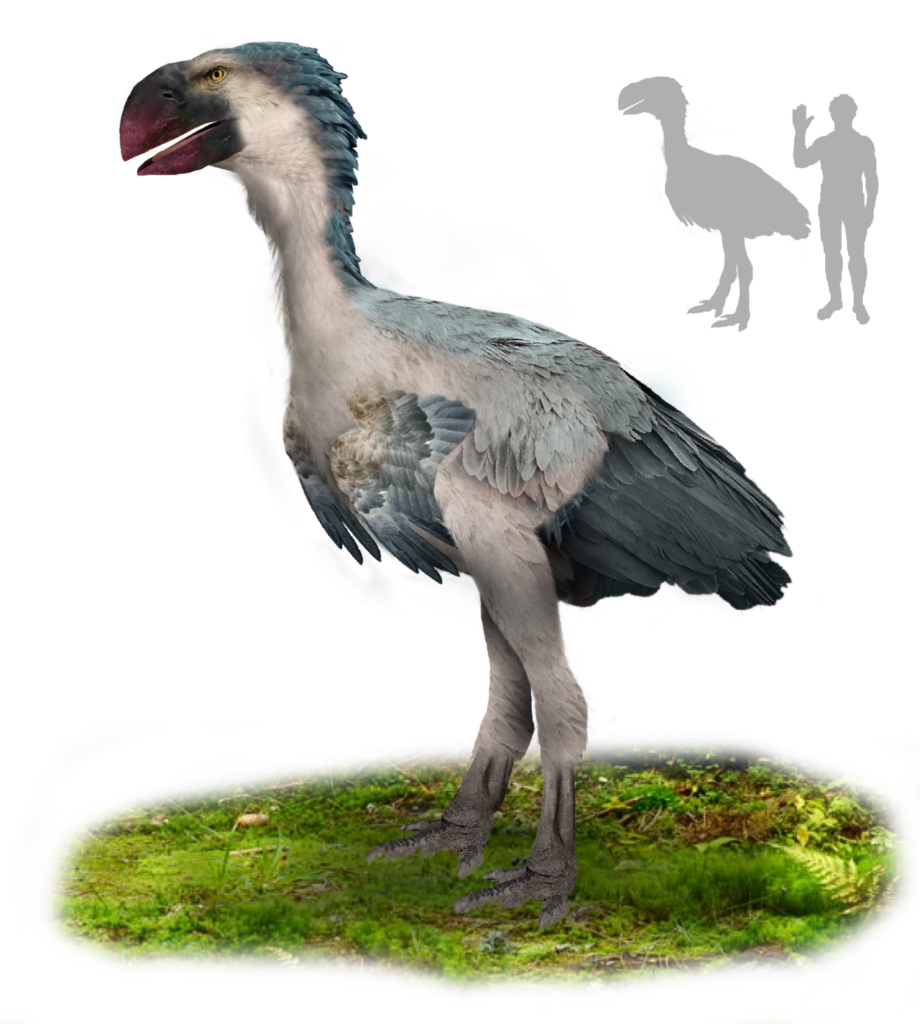
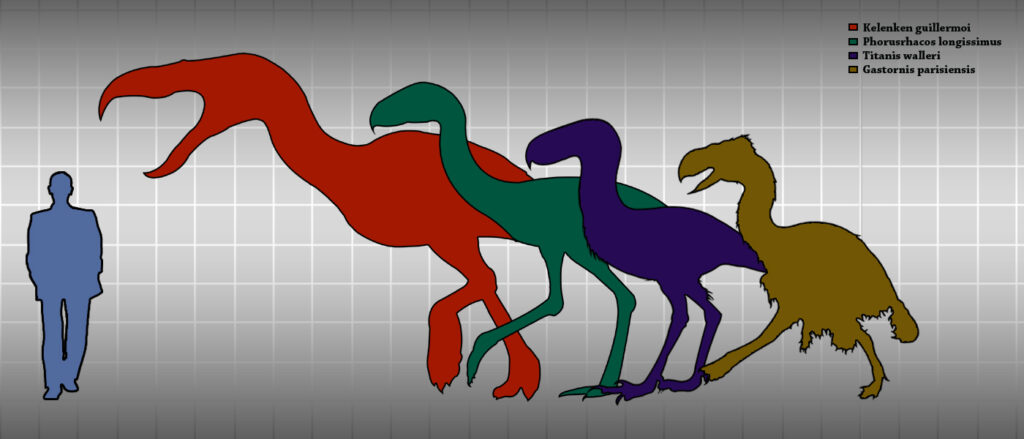
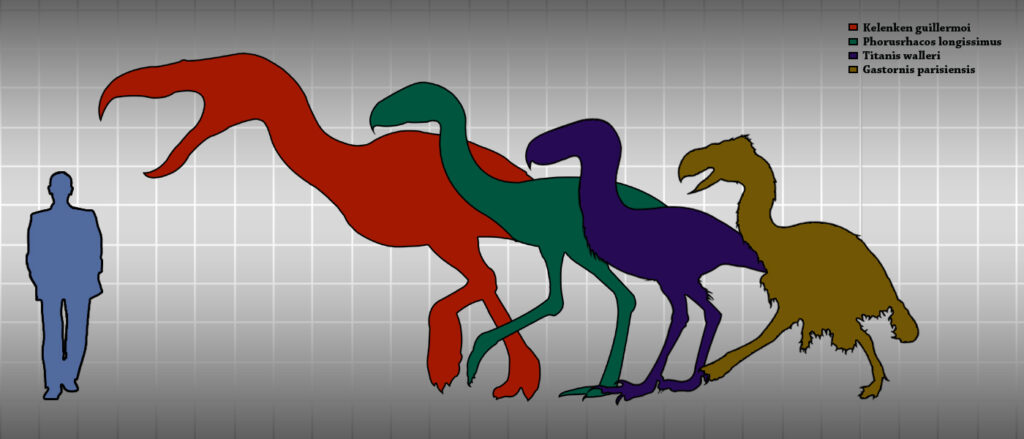
Picture a bird standing taller than most people you know, with legs like tree stumps and a beak so powerful it could crack open a bowling ball. That is roughly what roamed parts of North America around 50 million years ago. The Gastornis was a very large species of bird known from its many fossils, including a few almost complete specimens. Several species of this bird have been identified, with the largest being Gastornis gigantea, which grew up to about six and a half feet tall and had an average weight of just over 300 pounds.
In 1916, an American Museum of Natural History expedition to the Bighorn Basin in Wyoming’s Willwood Formation found the first nearly complete skull and skeleton, which was described in 1917 and gave scientists their first clear picture of the bird. This was a landmark moment. For the first time, researchers could look at an almost complete picture of this enormous creature and begin to understand just how dominant it once was on this continent.
Footprints Frozen in Time: The Washington State Discovery
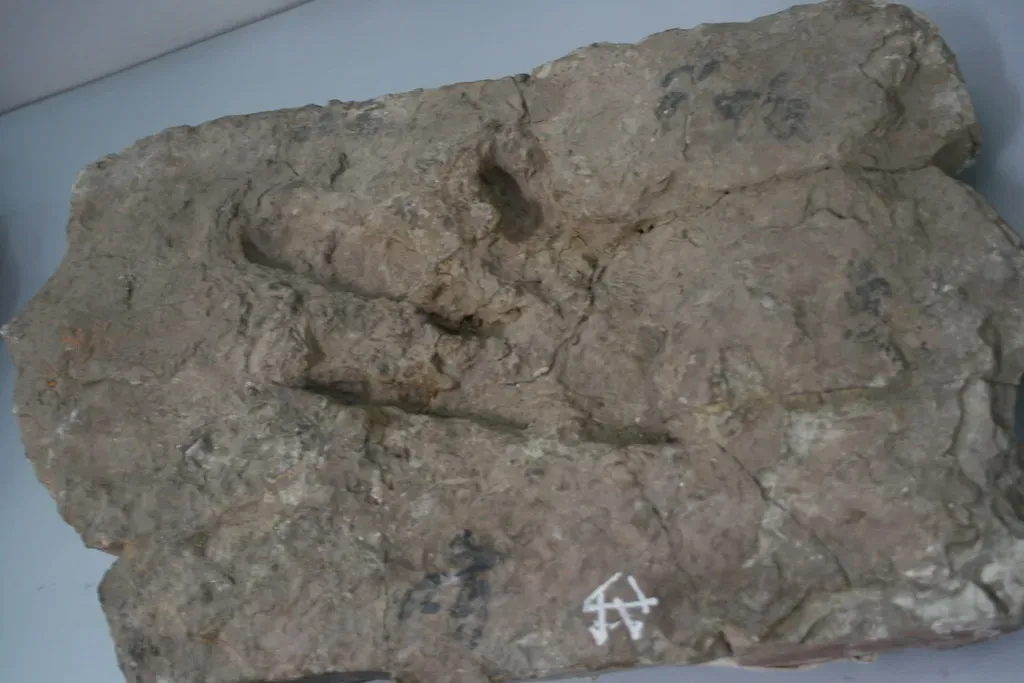
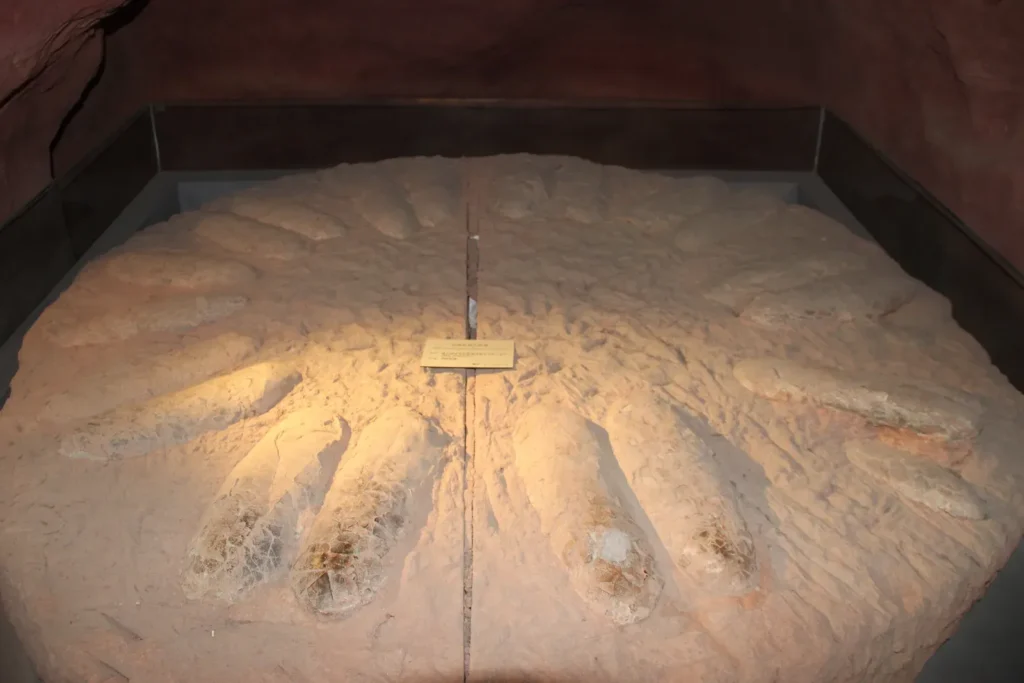
Here is the thing about fossils: sometimes the most exciting discoveries happen not because of careful planning, but because of a freak accident. On January 9, 2009, heavy rain triggered a massive landslide that swept down a ridge in the Mount Baker foothills in Whatcom County, Washington. The slope failure exposed a multitude of blocks of Lower Eocene sedimentary rock containing abundant fossils, including foliage impressions, invertebrate trace fossils, and a diverse variety of tracks. Among these were about 20 spectacular three-toed footprints left by the giant ground bird Gastornis.
The first discovery of Gastornis footprints in the Eocene Chuckanut Formation of northwestern Washington revealed the imprints of broad triangular toenails rather than sharp talons. That detail is more important than it sounds. In 2024, two additional important discoveries were made, including a trackway preserving three adult tracks and two tracks left by a Gastornis chick. The adult bird trackway had stride and pace distances consistent with the short lower limb bones observed in Gastornis skeletal remains. You are looking at a snapshot of a family, frozen in stone for over 50 million years.
Was It a Predator or a Plant-Eater? The Debate That Stunned Scientists
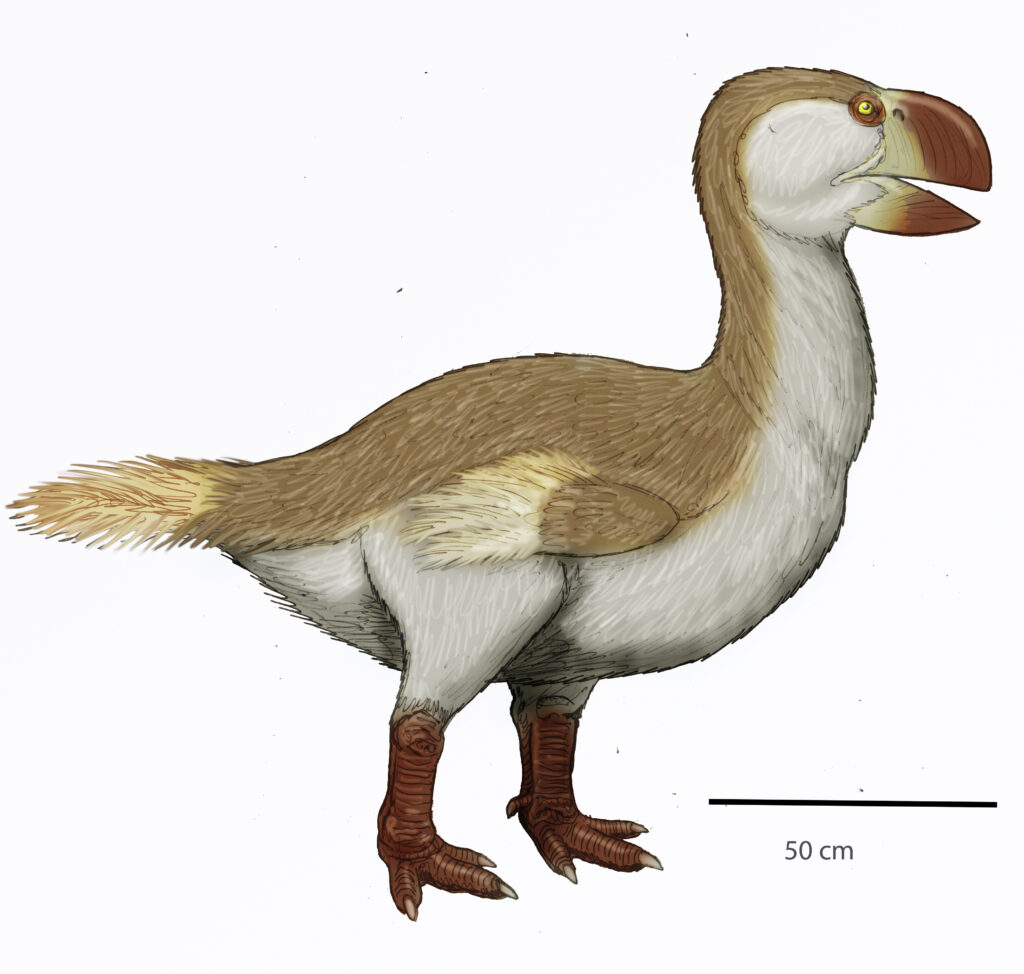
Honestly, this is where things get genuinely fascinating. For decades, scientists assumed the Gastornis was a terrifying apex predator, stalking ancient horses the size of dogs across the Eocene landscape. The giant skull, the powerful beak, the sheer bulk of the animal all seemed to scream “killer.” Gastornis species were traditionally thought to have been predators of various smaller mammals. However, several lines of evidence, including the lack of hooked claws in known Gastornis footprints, studies of their beak structure, and isotopic signatures of their bones, have caused scientists to now consider that these birds were probably herbivorous, feeding on tough plant material and seeds.
Recent evidence suggests that Gastornis was likely a true herbivore. Studies of calcium isotopes in the bones of Gastornis specimens showed no evidence that it had meat in its diet. The geochemical analysis further revealed that its dietary habits were similar to those of herbivorous dinosaurs and mammals when compared to known fossil carnivores such as Tyrannosaurus rex. So the most fearsome-looking bird on the American continent may have been the prehistoric equivalent of a very large, very scary vegetarian. I know it sounds crazy, but the chemistry does not lie.
Titanis Walleri: The Terror Bird That Invaded the United States
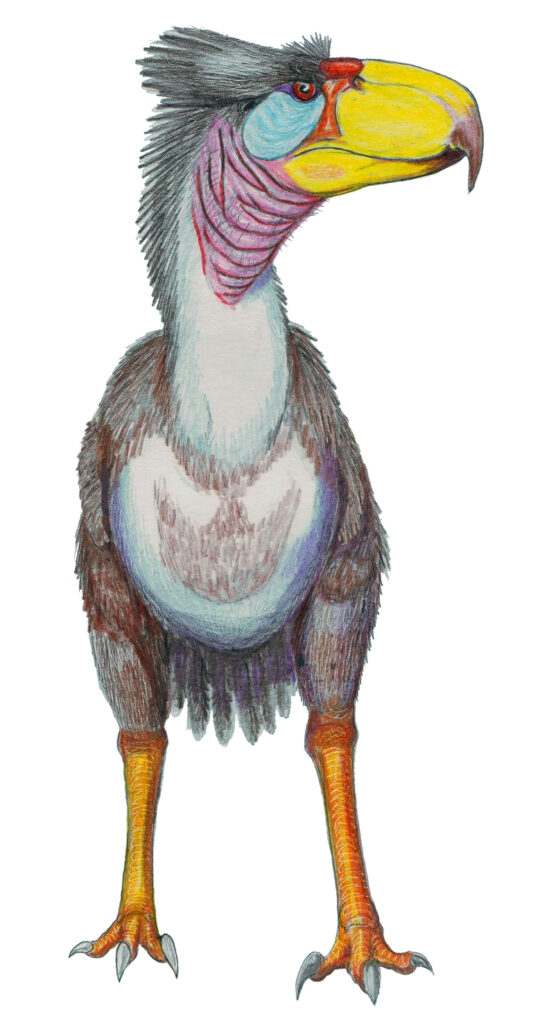
Let’s be real: the name “terror bird” is not subtle, and nothing about this animal was subtle either. Titanis is a genus of phorusrhacid, an extinct family of large predatory birds, in the order Cariamiformes, that inhabited the United States from the early Pliocene to the early Pleistocene. It migrated into North America from South America, and its arrival on American soil was a big deal, biologically speaking. The first fossils were unearthed by amateur archaeologists Benjamin Waller and Robert Allen from the Santa Fe River in Florida and were named Titanis walleri by ornithologist Pierce Brodkorb in 1963.
A University of Florida-led study determined that Titanis walleri, a prehistoric seven-foot-tall flightless terror bird, arrived in North America from South America long before a land bridge connected the two continents. That revelation rewrote the scientific understanding of how these creatures spread across the Americas. The terror bird was carnivorous, weighed about 330 pounds, had powerful feet, and a head larger than a man’s. It is known in the fossil record from a single toe bone in Texas and in Florida by about 40 bone fragments from different skeletal regions. Forty fragments. That is all it takes to reconstruct a nightmare.
The Largest Flying Bird Ever Found: South Carolina’s Jaw-Dropping Discovery
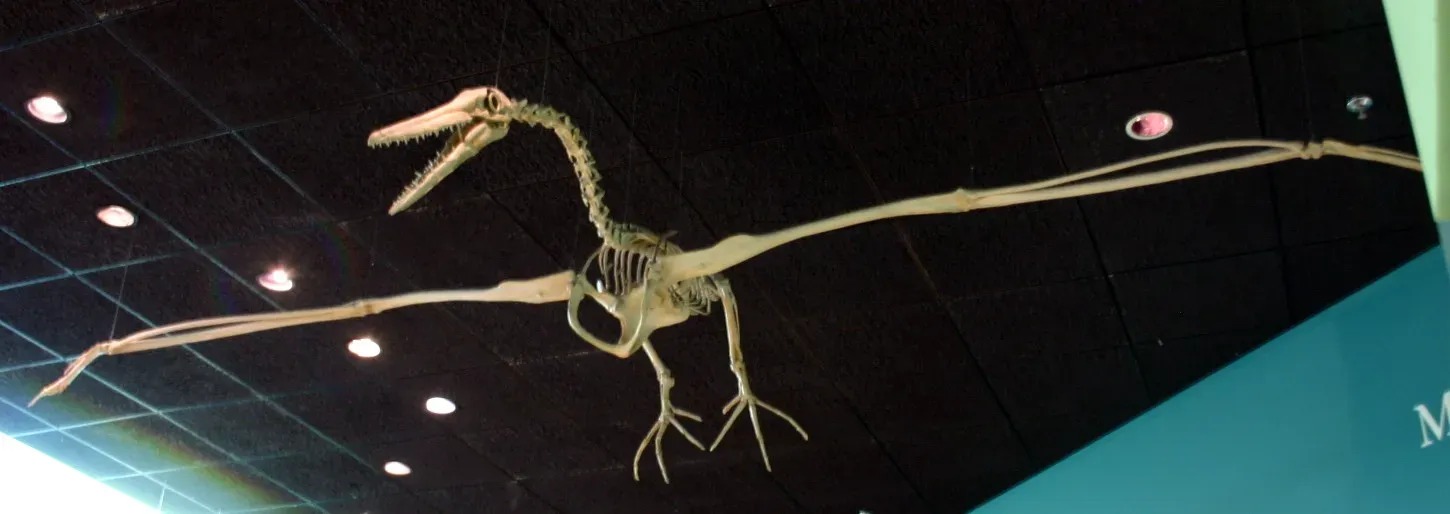
derivative work: Haplochromis (talk), CC BY-SA 2.0)
You might not associate Charleston, South Carolina, with world-record-breaking prehistoric discoveries. Yet that is exactly where one of the most astonishing avian fossils ever uncovered was hiding, quite literally under an airport. The evidence for these creatures comes from fossils found at Charleston International Airport. In 1983, a team led by paleontologist Al Sanders unearthed the bones and recognized that they belonged to a large bird. The researchers had their hands full with other fossils, and the avian bones went into storage. Three decades would pass before an analysis revealed just how remarkable the forgotten animal was. Sanders and his colleagues had recovered the largest flying bird on record, a never before seen species belonging to the enigmatic group known as the pelagornithids.
The Pelagornis sandersi, which lived 25 to 28 million years ago, boasted a wingspan of 20 to 24 feet, twice as long as the biggest birds alive today, the California condor and the Royal albatross, or roughly as long as a school bus. That wingspan is genuinely hard to visualize. As with other birds, the species’ bones were hollow, making them lighter for flight. With wings so long, what remained unclear was how it achieved liftoff, as the wings were simply too long to flap fast enough from a standstill. Researchers suspect the bird might have run downhill into a headwind or waited for a wind gust to take to the air. Essentially, the biggest flying bird that ever lived may have needed a running start, just like a Boeing 747.
Utah’s Prehistoric Sky Giant: The Most Complete Dinosaur-Era Bird in North America
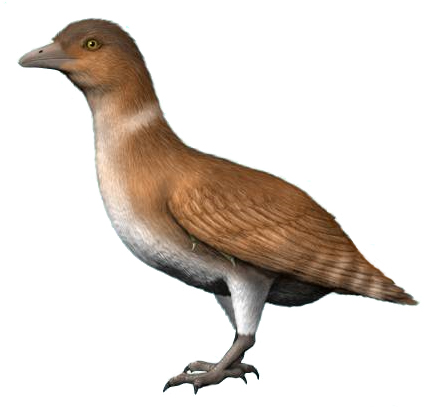
While most of the birds in this article feel ancient in a distant, abstract way, the discovery in Utah brings things into razor-sharp focus. A fossil found in the Grand Staircase-Escalante National Monument in Utah is not only one of the largest dinosaur-era birds ever found in North America, but it is also the continent’s most complete skeleton for a long-extinct group of birds called the enantiornithines. The enantiornithines, or “opposite birds,” were a primitive lineage related to modern birds that thrived globally during the Cretaceous period but were killed off by the same mass extinction event that wiped out the non-avian dinosaurs 66 million years ago.
It is by far the most complete skeleton of an enantiornithine bird from North America. Researchers note that they have elements representing the entire skeleton except the skull, and it shows the bird had advanced adaptations for flight that had not been seen in any other enantiornithine. The team named the species Mirarce eatoni. The relative completeness makes it a very important specimen that fills a gap in our knowledge of bird evolution in America, right before the dinosaurs went extinct. It is hard not to feel a sense of wonder at that. One fossil, one gap, one moment of connection across 66 million years of time.
Conclusion: The Skies and Lands of Ancient America Were More Wild Than You Ever Imagined
What you have just read is not the full story. It may not even be close. The latest evidence indicates that pelagornithids rose to prominence in the aftermath of the asteroid impact that doomed the dinosaurs, and they may have developed their impressive size as an adaptation to foraging over the open ocean. The ancient American landscape, from its coasts to its inland plains, was a world where birds were some of the most dominant and terrifying creatures alive.
The lack of truly enormous fliers today is the exception to the rule: giant flying animals darkened the skies for most of the past 120 million years. Think about that the next time you glance up at a hawk circling overhead. What you are seeing is a shadow, a modest echo, of something far more spectacular that once ruled this land. Discoveries keep coming, and with each new fossil pulled from the earth, the ancient story of America’s giant birds grows stranger, grander, and more humbling. What do you think is still out there, waiting to be found?