When most people think of ancient civilizations, their minds jump to Egypt, Rome, or Greece. The idea that North America has its own deep, layered, and often startling ancient history rarely makes the headlines it deserves. Yet from the bayous of Louisiana to the cliffs of Colorado, the ground beneath your feet holds secrets that have genuinely forced historians and archaeologists to revise the timelines they once considered settled.
Archaeological discoveries throughout the Americas are pushing back the date for when humans reached the New World by thousands of years, rewriting the long-standing theory that people arrived only 13,000 years ago. Each of the eight sites below has, in one way or another, complicated something you thought you knew about the story of this continent.
1. Cahokia Mounds, Illinois: America’s Forgotten Metropolis
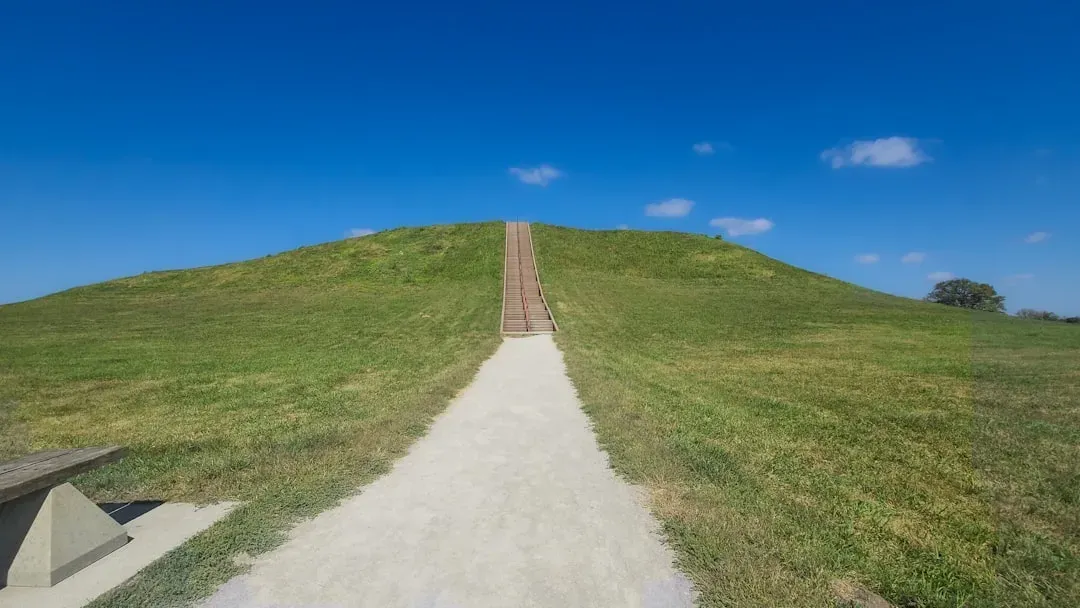
If you’ve never heard of Cahokia, you’re not alone, and that’s precisely what makes it so remarkable. At its peak, around 1100 CE, this metropolis stretched over 4,000 acres, encompassed about 120 earthen mounds, and hosted a population of nearly 20,000 individuals, larger than London at that time. You’re not reading about a minor settlement here. You’re reading about a city.
Among the largest features are an enormous central plaza encompassing nearly 40 acres and numerous immense earthworks, including the pyramidal Monks Mound, the largest prehistoric earthen structure in the Western Hemisphere, which rises to 100 feet, covers more than 14 acres, and contains more than 25 million cubic feet of earth. Materials excavated at the site indicate that the city traded with peoples from as far away as the Gulf of Mexico, the Appalachians, the Great Lakes, and the Rocky Mountains. That kind of reach, across thousands of miles of terrain, challenges any narrative that dismisses pre-Columbian North America as a collection of scattered, simple communities.
2. Poverty Point, Louisiana: Built Without Wheels, Domesticated Animals, or Agriculture
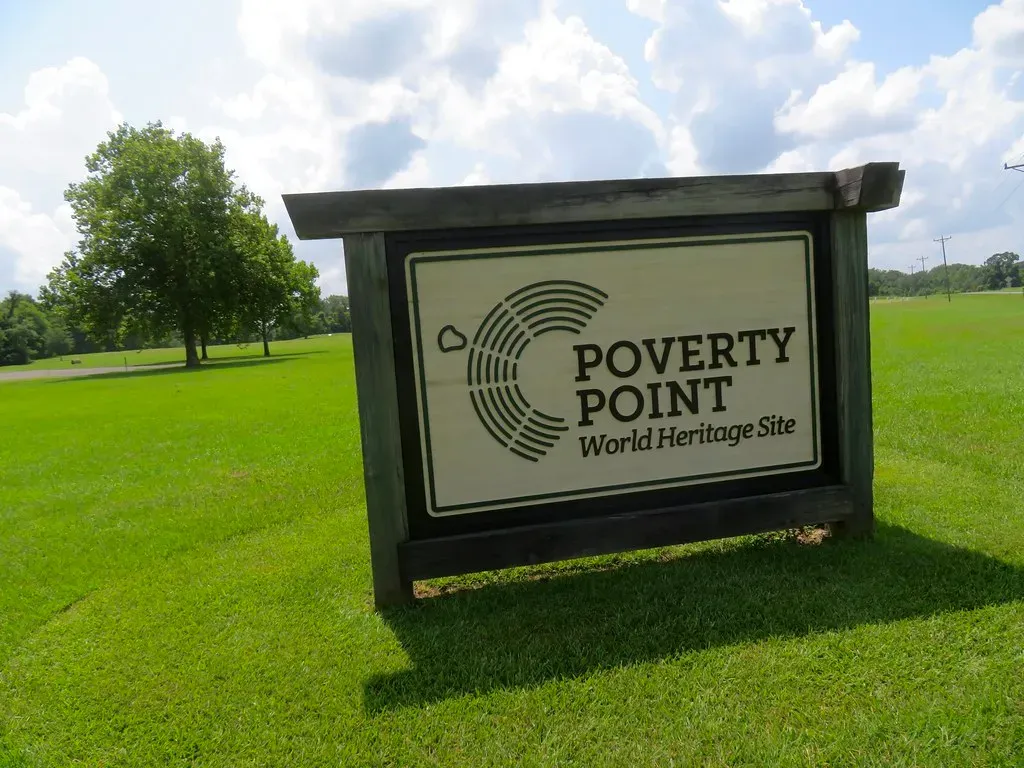
You might assume that any society capable of building a monumental earthwork complex first needed farming, organized government, and draft animals. Poverty Point dismantles that assumption entirely. The people who built and lived at the site did not raise crops but instead lived by hunting, fishing, and gathering wild food, making their accomplishments even more astounding. They were hunter-gatherers, and yet what they left behind rivals structures built by far more “complex” civilizations.
Hand by hand and basketful by basketful, men and women shaped nearly 2 million cubic yards of soil into stunning landscapes, resulting in a massive 72-foot-tall mound and enormous concentric half-circles and earthworks that dwarfed every other earthen monument site for 2,200 years. Projectile points that come from stones native to present-day Ohio, Tennessee, Missouri, and Arkansas have been found here, and the Bayou Macon area lacks stone itself, so when scientists discovered more than 70 tons of rocks there, it became clear the extent to which residents were involved in trade with other communities. The sheer scale of organization required here continues to reshape what researchers believe about early social structures.
3. White Sands, New Mexico: Footprints That Broke the Timeline
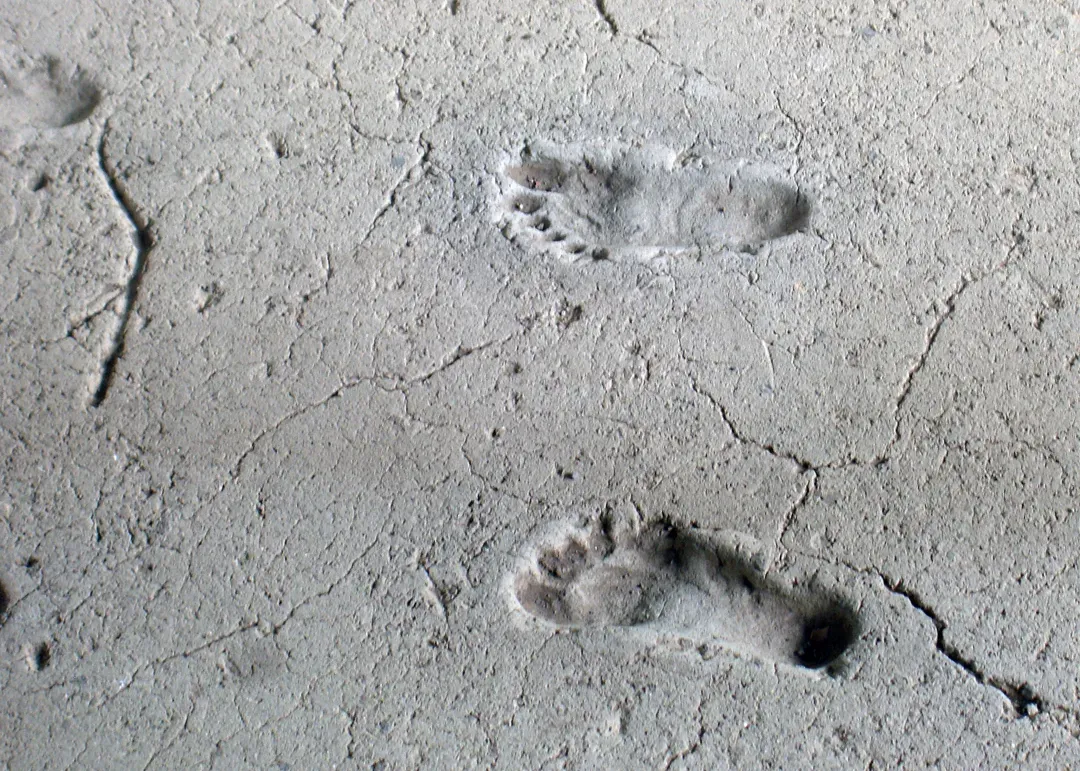
(Original text: self-made), CC BY-SA 3.0)
Imagine standing in a national park in New Mexico and looking down at the oldest confirmed human footprints ever found on the continent. The discovery of fossilized footprints in White Sands National Park offered evidence that humans roamed North America 21,000 to 23,000 years ago, much earlier than previously thought. The implications are significant. For decades, the accepted story was that the first Americans arrived no earlier than around 15,000 years ago.
When these dates were published in 2021, they were met with skepticism. However, after another study got the same number, the archaeological community realized that the chronology had to be pushed back to accommodate these new dates, and now it’s widely accepted that humans entered the Americas more than 20,000 years ago. The archaeological site contains 61 human tracks, mostly from teenagers and children. Those unremarkable footprints, pressed into ancient mud by young people going about their daily lives, rewrote a chapter of human history.
4. Meadowcroft Rockshelter, Pennsylvania: Shelter Used Long Before Clovis
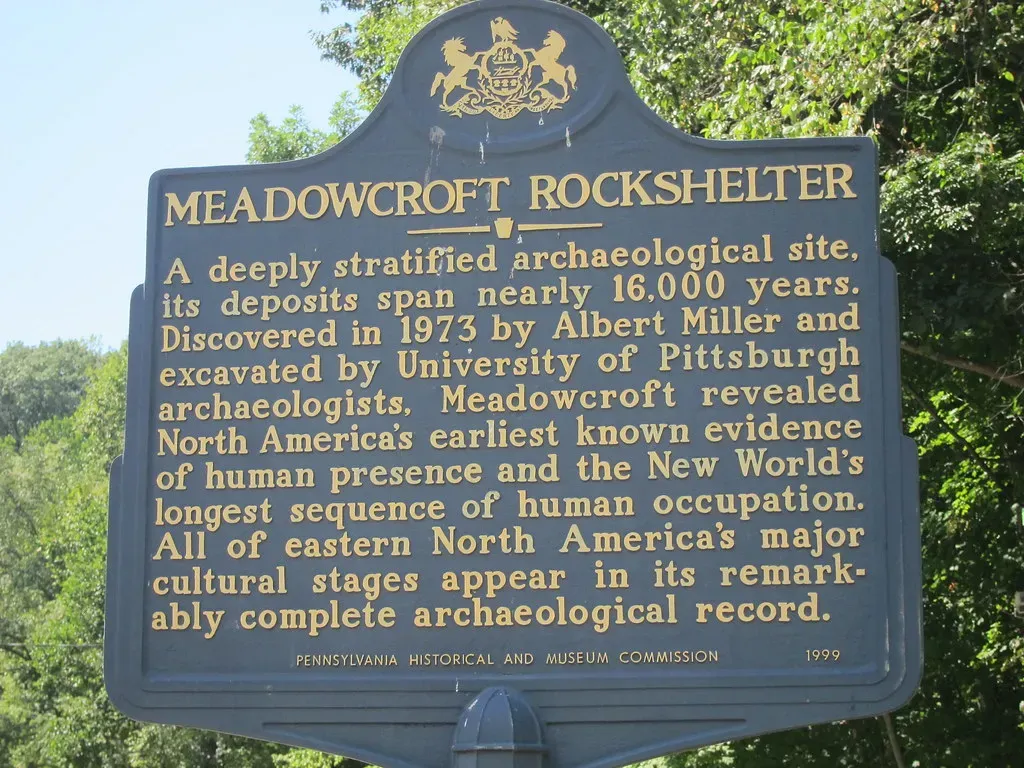
Tucked into southwestern Pennsylvania, Meadowcroft Rockshelter spent decades being dismissed by mainstream archaeology. The Meadowcroft rock shelters are a National Historic Landmark located in southwestern Pennsylvania that contain evidence of human occupation. The site was first discovered in 1955 by a farmer, who found a flint knife, flint flakes, and burnt bones in a groundhog hole. Archaeologists didn’t excavate Meadowcroft until the 1970s, when they uncovered a wide array of human artifacts, including stone tools, spearpoints, and wooden instruments.
Known as one of the most significant prehistoric sites in North America thanks to its careful preservation, Meadowcroft was discovered in the 1950s and has been a key location for the study of early human habitation. Dating back more than 16,000 years, the rockshelter harbored a wealth of artifacts, from stone tools to weapons, that tell the story of the life of early humans in the area. Pottery, plant, and animal remains, and a hearth, one of the earliest to be discovered in North America, have all been excavated at the site. That hearth alone speaks volumes. Someone sat by a fire in Pennsylvania thousands of years before history books would place them anywhere near there.
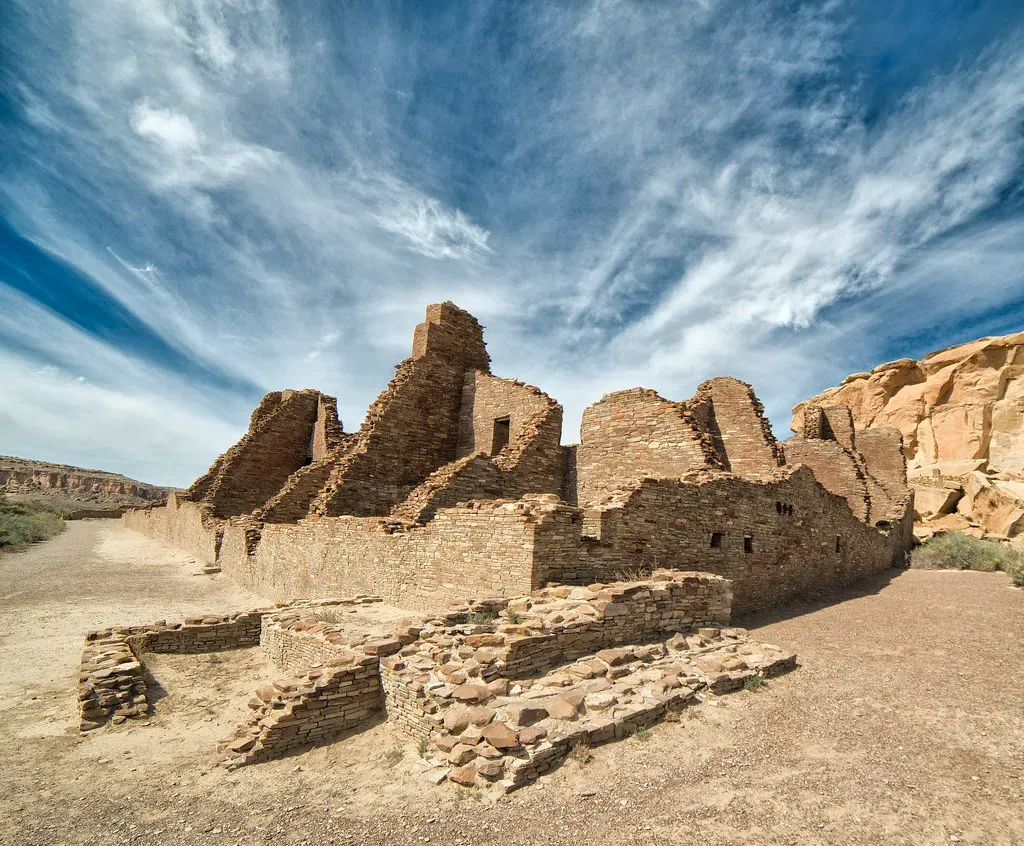
5. Chaco Canyon, New Mexico: A City Built Around the Sky
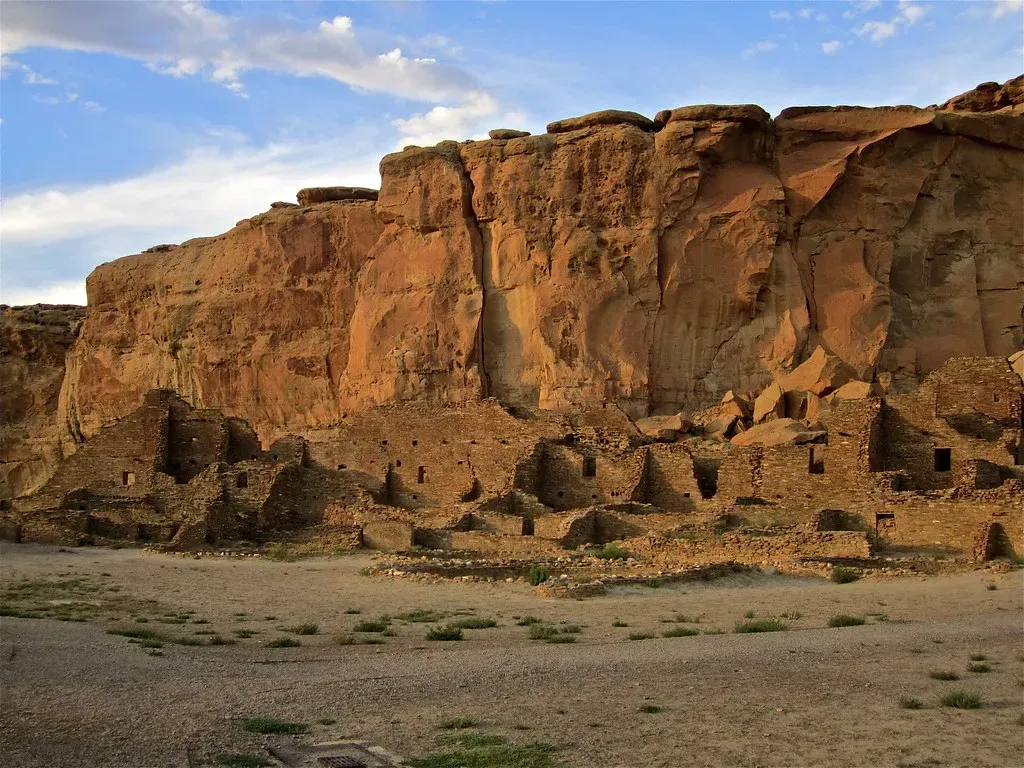
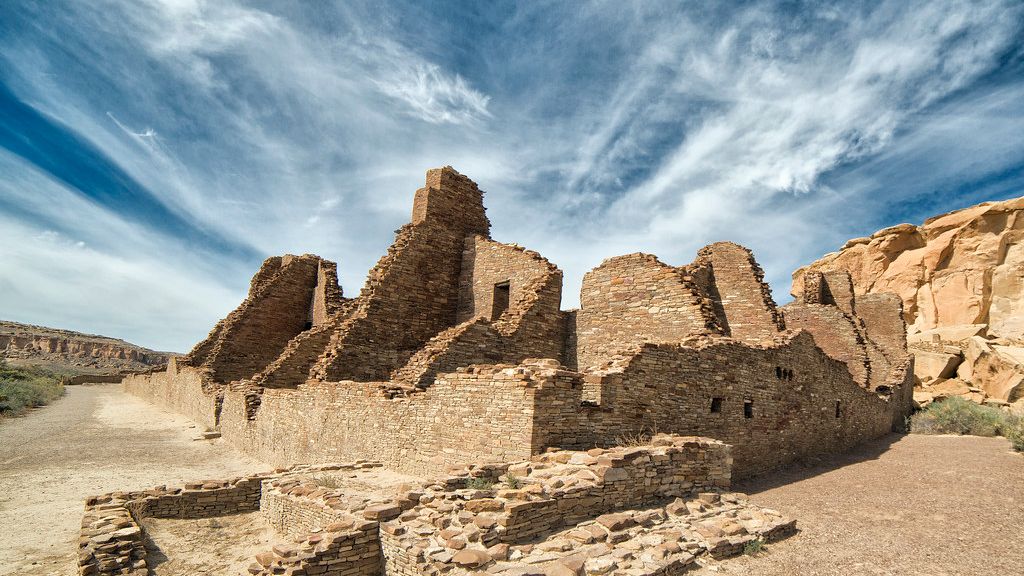
When you visit Chaco Canyon, you’re not just looking at ruins. You’re looking at evidence of a civilization that understood astronomy well enough to engineer it into their architecture. In the park are the remains of an ancient civilization that thrived in the Southwest from the 9th to the 12th centuries. Visitors are allowed to explore the area’s many kivas, great houses, and petroglyphs to learn about the culture, religion, and daily life of the Chacoans.
Pueblo Bonito is one of the largest and best-preserved ancient buildings in North America, constructed by the Ancestral Puebloans around 800 CE. The site features over 650 rooms and dozens of kivas. It is thought to have served as a ceremonial and trading center for the Chacoan culture. Many archaeologists believe Pueblo Bonito was most likely abandoned around 1126 CE due to a combination of deforestation and droughts that left the area uninhabitable. The precision of alignment between Chaco’s great houses and celestial events suggests a level of intellectual sophistication that textbooks have historically underestimated.
6. Great Serpent Mound, Ohio: A Mystery That Has No Agreed-Upon Date
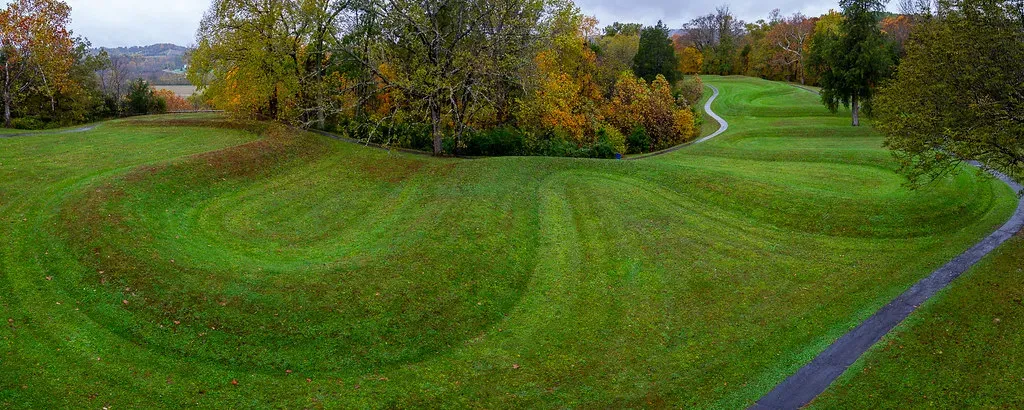
You can look at Serpent Mound on a map and immediately understand why it unsettles researchers. This is actually the world’s largest serpent effigy, a mound that winds across a plateau in the shape of a snake, more than 1,300 feet long and up to 25 feet wide, protruding from the grassy ridge by up to five feet. What’s most baffling isn’t the scale, though. It’s that nobody can agree on when it was built.
It’s believed to have been constructed by Native Ohioans, though archaeologists haven’t been able to pinpoint a specific culture or date, with estimates varying wildly from 321 BC to AD 1070. There are three burial mounds nearby, two created by the Adena culture between 800 BC and AD 100 and one by the Fort Ancient culture. It’s thought the mound was constructed as a religious or ceremonial site over 1,000 years ago by Indigenous peoples of the area. Designed to align with the positions of the sun and the stars, it is speculated that the mound played an important role in the spiritual and cultural practices of the people who built it. A structure of this size, with debated origins and clear astronomical intent, still holds more questions than answers.
7. Mesa Verde, Colorado: Cities Built Into Cliff Faces
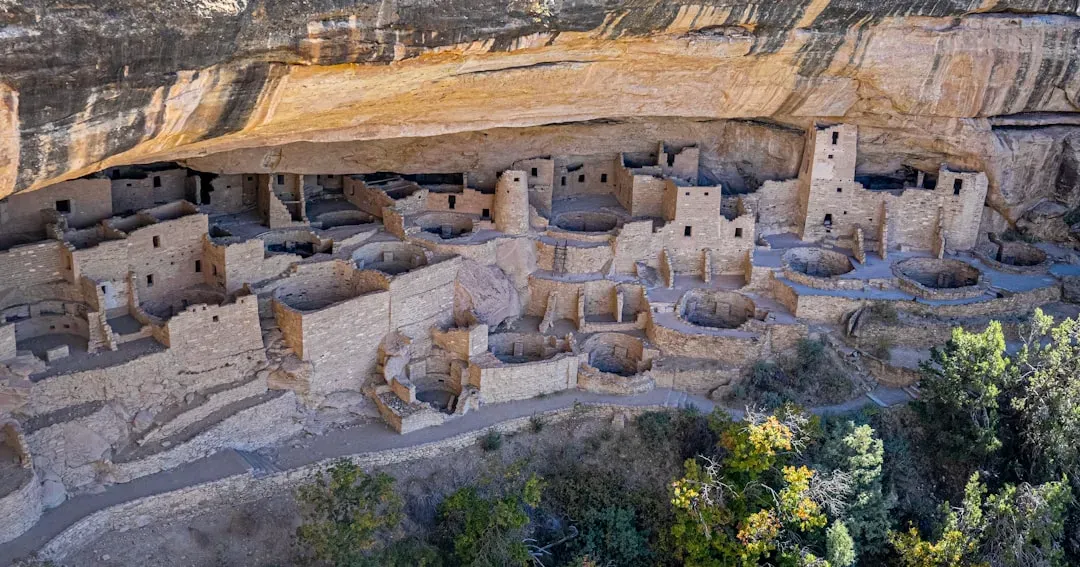
There’s something genuinely hard to process about standing before Mesa Verde’s cliff dwellings. These weren’t rough shelters. They were planned, multi-story structures built into sheer rock faces with engineering precision. In southwestern Colorado lies Mesa Verde National Park, a breathtaking testament to the ingenuity and resilience of the Ancestral Pueblo people. This UNESCO World Heritage Site preserves nearly 5,000 archaeological treasures, including over 600 meticulously constructed cliff dwellings. These ancient structures, such as the renowned Cliff Palace, are carved into the rock faces of towering mesas and serve as a remarkable window into a civilization that thrived from 550 to 1300 CE.
What challenges traditional assumptions here is the sheer sophistication of the construction combined with the mystery of the departure. It’s the presence of abundant standing architecture that makes these sites so famous. The Ancestral Pueblo people didn’t simply disappear. They left deliberately, abandoning fully functioning, carefully built communities for reasons still actively debated. The scale of social organization required to plan, build, and then collectively abandon over 600 dwellings carved into cliff stone forces a genuine rethinking of how “primitive” these societies actually were.
8. Ozette Village, Washington: A Makah Pompeii Preserved in Mud
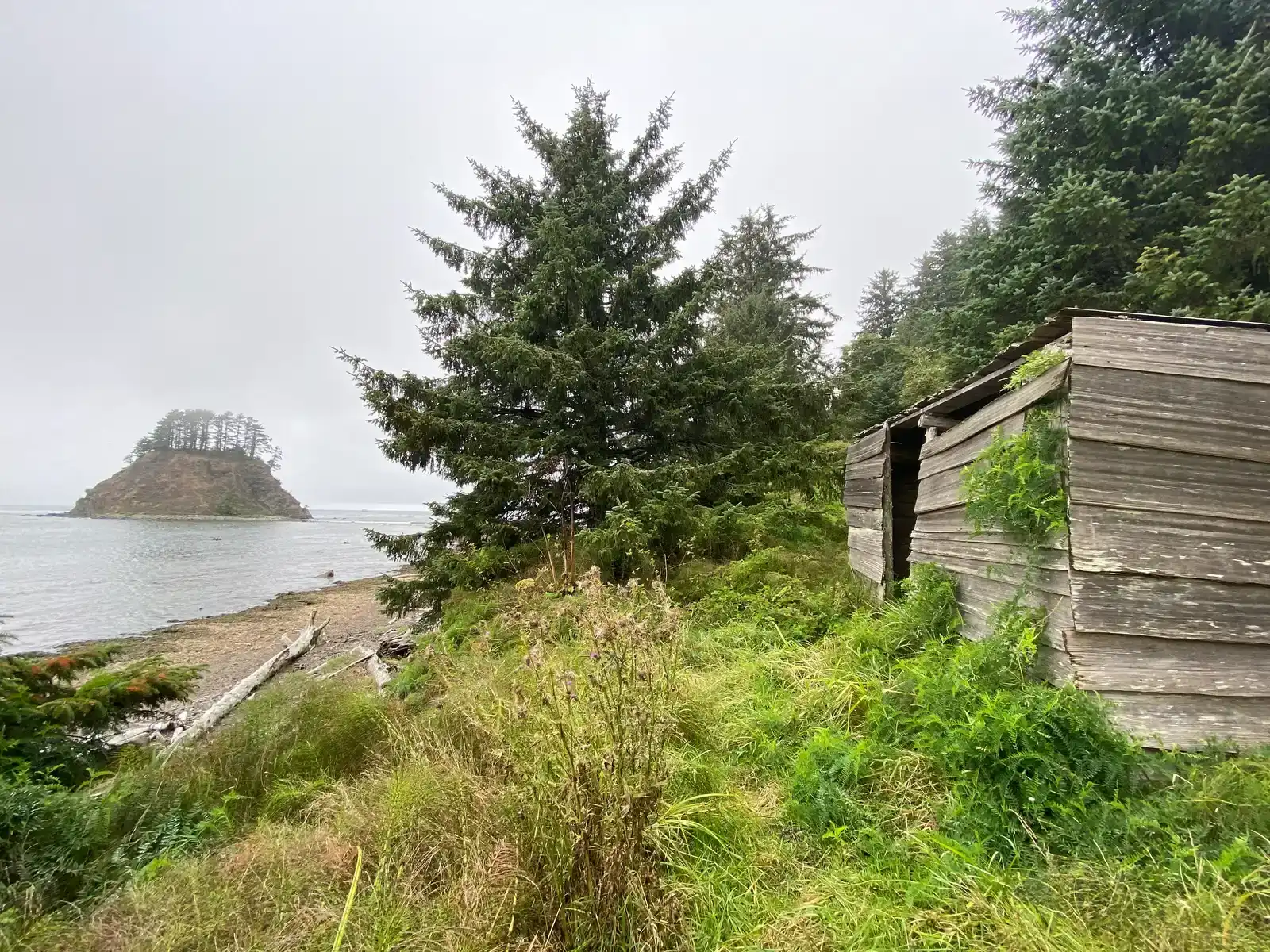
Few sites in North America offer the kind of preserved snapshot that Ozette does. One site with particular significance is the Ozette Indian Village Archaeological Site in Neah Bay, Washington. Around 1550 CE, a mudslide buried a Makah village along the coast. In the 1970s, this site garnered the attention of archaeologists when tidal erosion revealed wooden artifacts buried in the earth. Wooden artifacts rarely survive in a wet maritime environment, so archaeologists quickly studied the site.
They discovered six longhouses and 55,000 artifacts, including baskets, boxes, bows and arrows, knives, games, and toys. This site gives us a picture of what life looked like during that time. What makes Ozette so significant is precisely what makes it rare: organic materials that should have decayed over centuries were instead frozen in time by mud. The artifacts recovered weren’t ceremonial objects or tools left behind by accident. They were the everyday life of real people, and that intimacy of detail challenges the tendency to view pre-Columbian coastal societies as simple or underdeveloped.
Conclusion
The history of North America did not begin in 1776, or even with the first European contact. It stretches back tens of thousands of years, layered with urban centers, astronomical knowledge, long-distance trade networks, and architectural achievements that continue to surprise the researchers who study them. You don’t have to travel to Egypt or Peru to encounter the deep human story. Much of it is right here, beneath the soil of states you might drive through without a second thought.
What these eight sites share is the persistent quality of inconvenience. They make clean narratives uncomfortable. They push back timelines, challenge assumptions about complexity, and remind us that absence from a history book doesn’t mean absence from history. The most honest thing archaeology can tell you is that the story is always older, stranger, and more intricate than any single textbook ever captured.