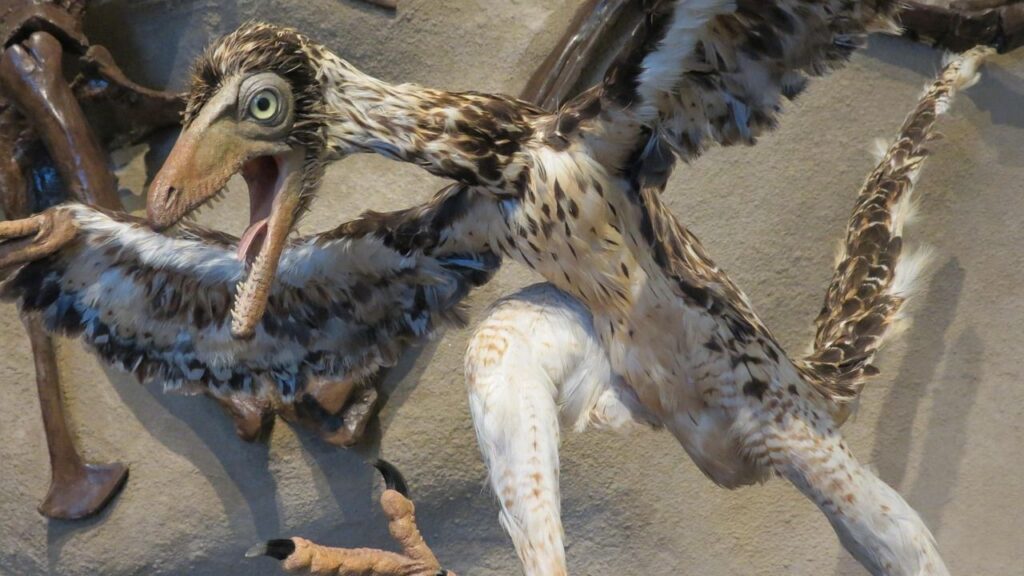
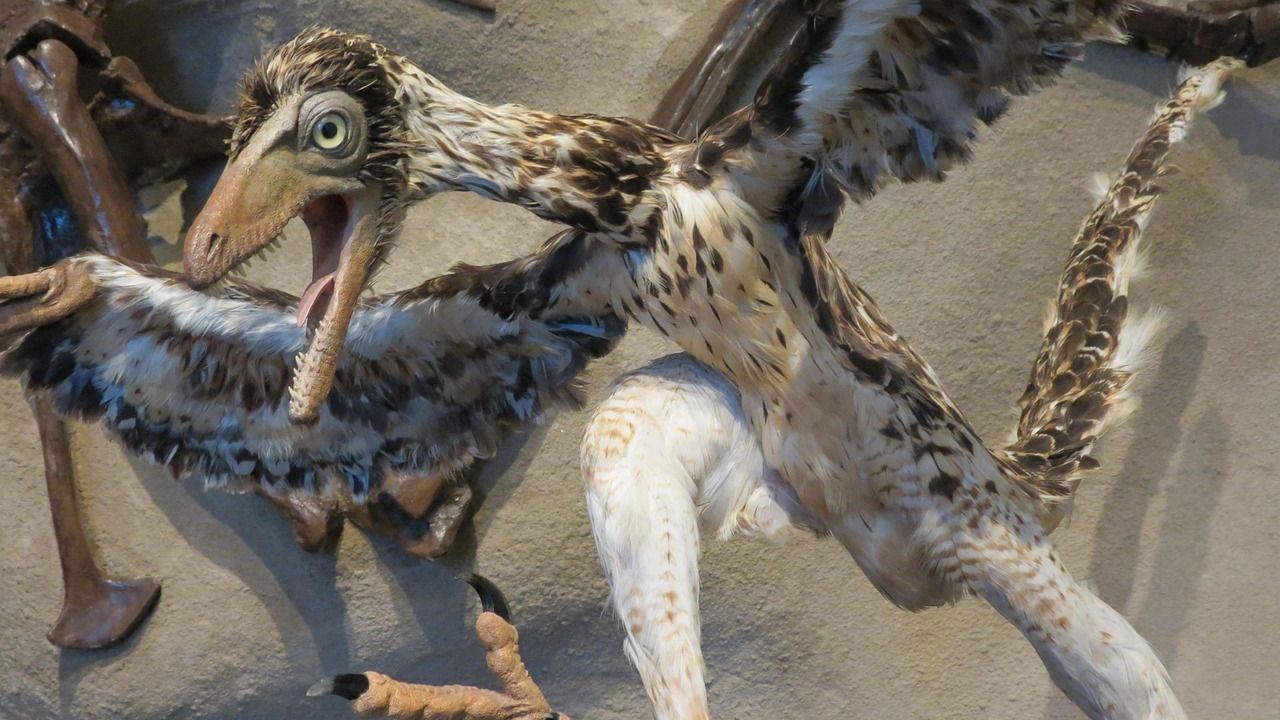
Archaeopteryx, one of the world’s first proto birds, has a set of weird, never-before-seen features, new study reveals – Image for illustrative purposes only (Image credits: Pixabay)
A fresh examination of the Chicago specimen of Archaeopteryx has brought to light a cluster of anatomical details in the skull that had never been recorded in this species before. These traits, preserved in remarkable detail, point to feeding mechanisms that closely resemble those seen in living birds. The findings push back the earliest evidence for several avian adaptations by millions of years and suggest that efficient food handling developed in tandem with the ability to fly.
Preserved Details That Stand Out
The Chicago fossil, long held at the Field Museum, contains an almost complete skull with an unusually intact palate. Researchers used advanced imaging to identify a small additional bone that would have allowed greater tongue mobility. They also detected faint traces of soft tissue interpreted as oral papillae, small projections on the roof of the mouth that function like fleshy teeth in modern species.
Further scrutiny revealed narrow openings near the front of the jaw. These channels likely housed nerves and blood vessels, forming an early version of the bill-tip organ that helps contemporary birds detect prey hidden in soil or vegetation. Together the features indicate that Archaeopteryx possessed a more sophisticated feeding apparatus than its dinosaur ancestors.
Why These Traits Matter for Flight
Flight demands high energy, and the new observations suggest Archaeopteryx met that demand through specialized mouth structures rather than relying solely on improved wings. A mobile tongue and sensory-rich beak tip would have allowed the animal to locate and manipulate small prey or seeds with greater precision. Oral papillae could have aided in gripping and swallowing food quickly, reducing the time spent on the ground where predators posed a threat.
Scientists note that these adaptations appear in an animal that still retained many non-avian traits, such as teeth and a long tail. The combination shows that the transition to bird-like feeding was gradual and began well before fully modern flight capabilities emerged.
Comparing Ancient and Modern Anatomy
| Feature | Archaeopteryx | Modern Birds |
|---|---|---|
| Tongue mobility | Extra bone present | Highly mobile in most species |
| Roof-of-mouth projections | Oral papillae identified | Common for food handling |
| Sensory jaw openings | Early bill-tip organ | Used for probing and sensing |
Questions That Remain Open
While the new details strengthen the link between feeding efficiency and flight, researchers caution that the exact diet of Archaeopteryx is still uncertain. The fossil does not preserve stomach contents or direct evidence of foraging behavior. Additional specimens and comparative studies with other early birds will be needed to determine how widespread these mouth features were among Jurassic avialans.
The work also leaves room for debate on whether the structures evolved primarily for aerial lifestyles or served multiple functions in a ground-dwelling animal that occasionally took to the air. Future analyses of related fossils may clarify these points.
The study underscores how even well-known fossils can yield fresh surprises when examined with modern techniques. Each new detail refines the picture of how dinosaurs gave rise to the diverse birds that fill today’s skies.