Gujarat – The Asiatic lion population climbed to 891 individuals in 2025, surpassing previous records as more than half ventured outside the traditional confines of Gir National Park and Wildlife Sanctuary.
Conservation Delivers Dramatic Growth
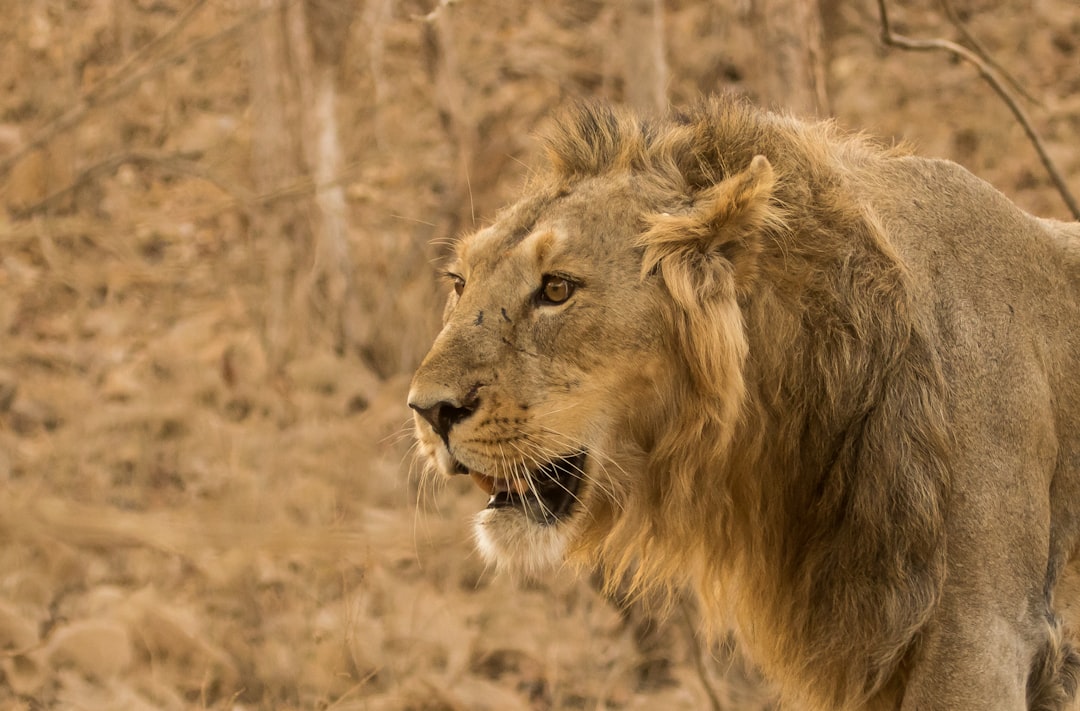
Conservation Delivers Dramatic Growth (Image Credits: Unsplash)
The latest census marked a 32 percent rise from 674 lions counted in 2020, adding 217 animals over five years. This surge continued a recovery trend that lifted numbers from just 523 in 2015.
Forest officials hailed the increase as evidence of effective protection measures. Gujarat Chief Minister Bhupendra Patel noted the expanded presence across multiple districts during the announcement. The population now includes roughly 196 adult males, 330 adult females, 140 sub-adults, and 225 cubs.
Lions Claim New Territories
For the first time, over 500 lions occupied areas outside Gir’s core zones, with 394 in the national park, wildlife sanctuary, and immediate surroundings. The rest formed nine satellite populations in diverse landscapes.
These groups appeared in sanctuaries like Barda, where 17 lions established a foothold just 15 kilometers from Porbandar. Others settled in Girnar, Mitiyala, and Pania, alongside coastal and human-modified zones. The largest pride, numbering 17, roamed Bhavnagar district.
- Amreli’s Savarkundla-Liliya region hosted 125 lions.
- Bhavnagar coasts supported growing prides.
- Southwest Saurashtra between Sutrapada and Veraval saw new dispersals.
- Barda Wildlife Sanctuary gained 17 residents.
- Smaller groups in Jetpur (6) and Babra-Jasdan (4).
The census spanned 11 districts: Junagadh, Gir Somnath, Bhavnagar, Amreli, Rajkot, Morbi, Surendranagar, Botad, Porbandar, Jamnagar, and Devbhoomi Dwarka.
Census Effort Spans Vast Landscape
Teams conducted the 16th Asiatic lion estimation from May 10 to 13, 2025, covering 35,000 square kilometers across 58 talukas. Around 3,000 participants, including forest staff, volunteers, and enumerators, used direct sightings, camera traps, GPS collars, and high-resolution photography.
Two phases ensured accuracy: preliminary scans followed by final verification. Officials tracked age, sex, location, and physical traits for each sighting. Senior forest officer Mohan Ram described the movement as lions reclaiming ancestral habitats.
Progress Tempered by Persistent Risks
Despite gains, 669 lions perished between 2020 and 2025 from natural causes, injuries, diseases, and human-related incidents like wells, electrocution, and vehicles. Expansion into farmlands heightened conflicts with residents.
Experts warned of vulnerabilities in a single population prone to outbreaks or fires. Barriers such as highways and fences complicated dispersal. Wildlife biologist Ravi Chellam highlighted risks in suboptimal habitats dominated by people.
| Census Year | Population |
|---|---|
| 2015 | 523 |
| 2020 | 674 |
| 2025 | 891 |
Key Takeaways
- 891 lions total, up 32% since 2020.
- Majority (497+) in nine satellite populations outside Gir core.
- Spread across 11 districts signals resilience but raises conflict concerns.
Gujarat’s lions embody a conservation victory, yet their bold expansion demands vigilant management to sustain this roar. What steps should follow to secure their future? Share your thoughts in the comments.