Picture this: you wake up one morning, and everything you’ve ever known about our blue marble has changed forever. The sunlight that once warmed your face is gone, replaced by an eerie twilight that stretches endlessly across the horizon. The oceans have turned into a toxic soup, and the very air you breathe carries the scent of death and destruction. This isn’t some apocalyptic movie script – this was Earth’s reality sixty-six million years ago when a massive asteroid slammed into our planet with unimaginable fury.
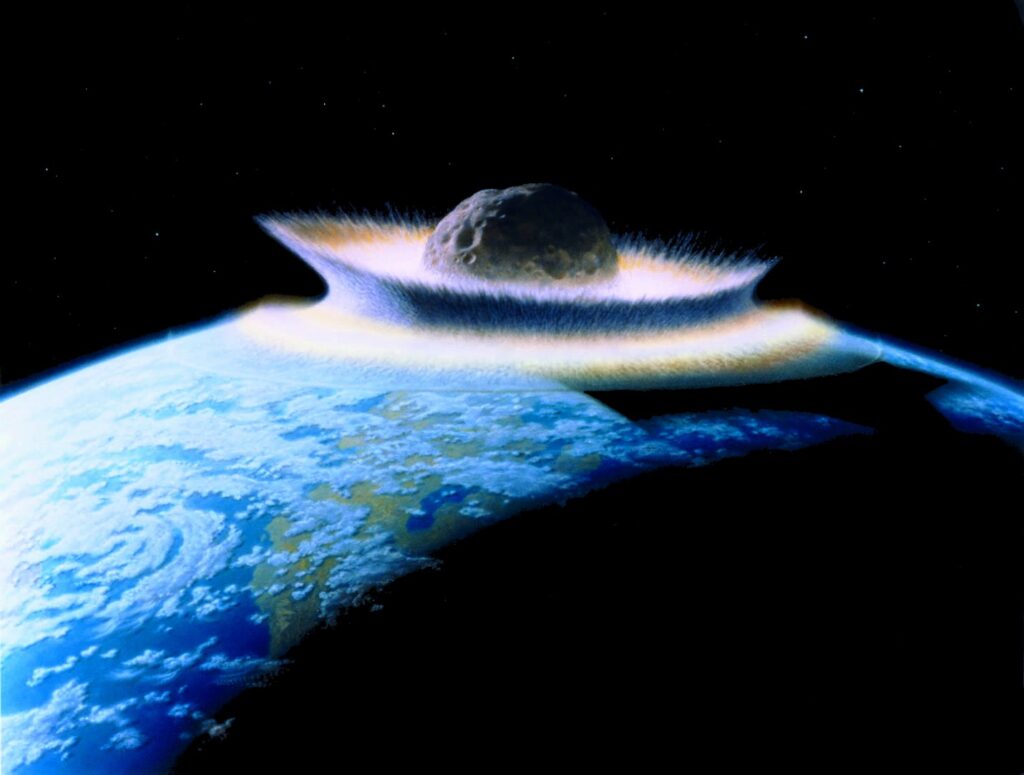
Sixty-six million years ago an asteroid roughly 10 to 15 kilometers (6 to 9 miles) in diameter hit Earth in what is now Mexico. The impact killed approximately 75% of all species on Earth, including the dinosaurs. But here’s what most people don’t realize: the asteroid itself wasn’t the real killer. It was what came after that transformed Earth into a hostile planet where survival became a desperate fight against impossible odds.
The Moment of Absolute Destruction
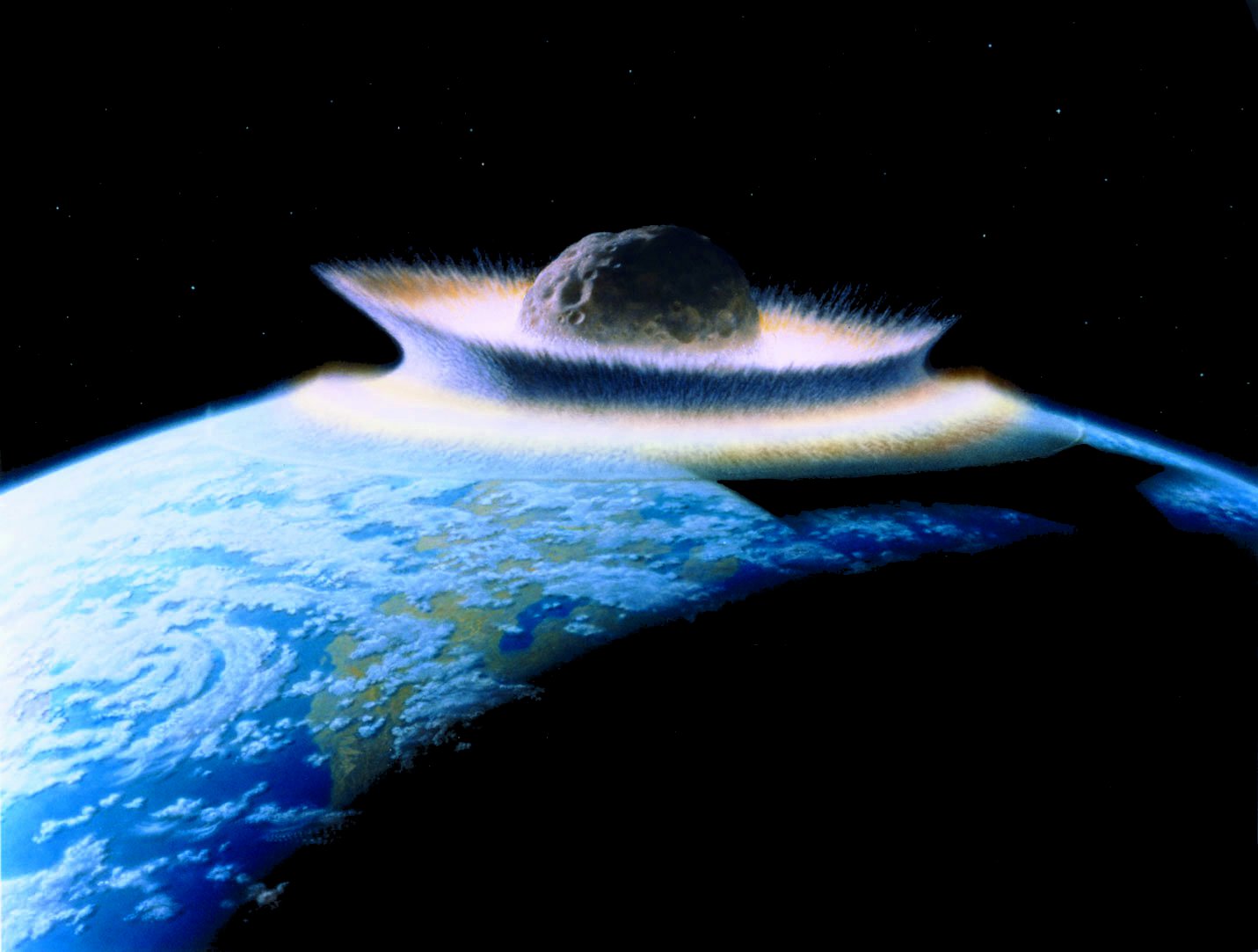
When you imagine an asteroid impact, you might think of a spectacular explosion and then… well, that’s it. But the reality was far more terrifying and complex. Approximately 66 million years ago, an asteroid nearly 10 kilometers (6.2 miles) across hit the Earth near what is now the Yucatan Peninsula, close to the current towns of Chicxulub Pueblo and Chicxulub Puerto (after which the resulting crater is named). The asteroid hit at an estimated speed of 20 kilometers per second (more than 58 times the speed of sound) at a relatively steep angle of between 45 and 60 degrees to the Earth’s surface. The impact produced as much explosive energy as 100 teratons of TNT, 4.5 billion times the explosive power of the Hiroshima atomic bomb.
Initially, the impact blasted a cavity 100 km (62 miles) wide and 30 km (19 miles) deep. The impact was accompanied by a massive plume of 25 trillion metric tons of molten material shooting up into the atmosphere, with the temperature of some of this molten material being several times hotter than the surface of the sun. Think about that for a moment – rock so hot it made the sun look cold by comparison, launched into space like nature’s most destructive fireworks show.
Global Inferno: When the Sky Rained Fire
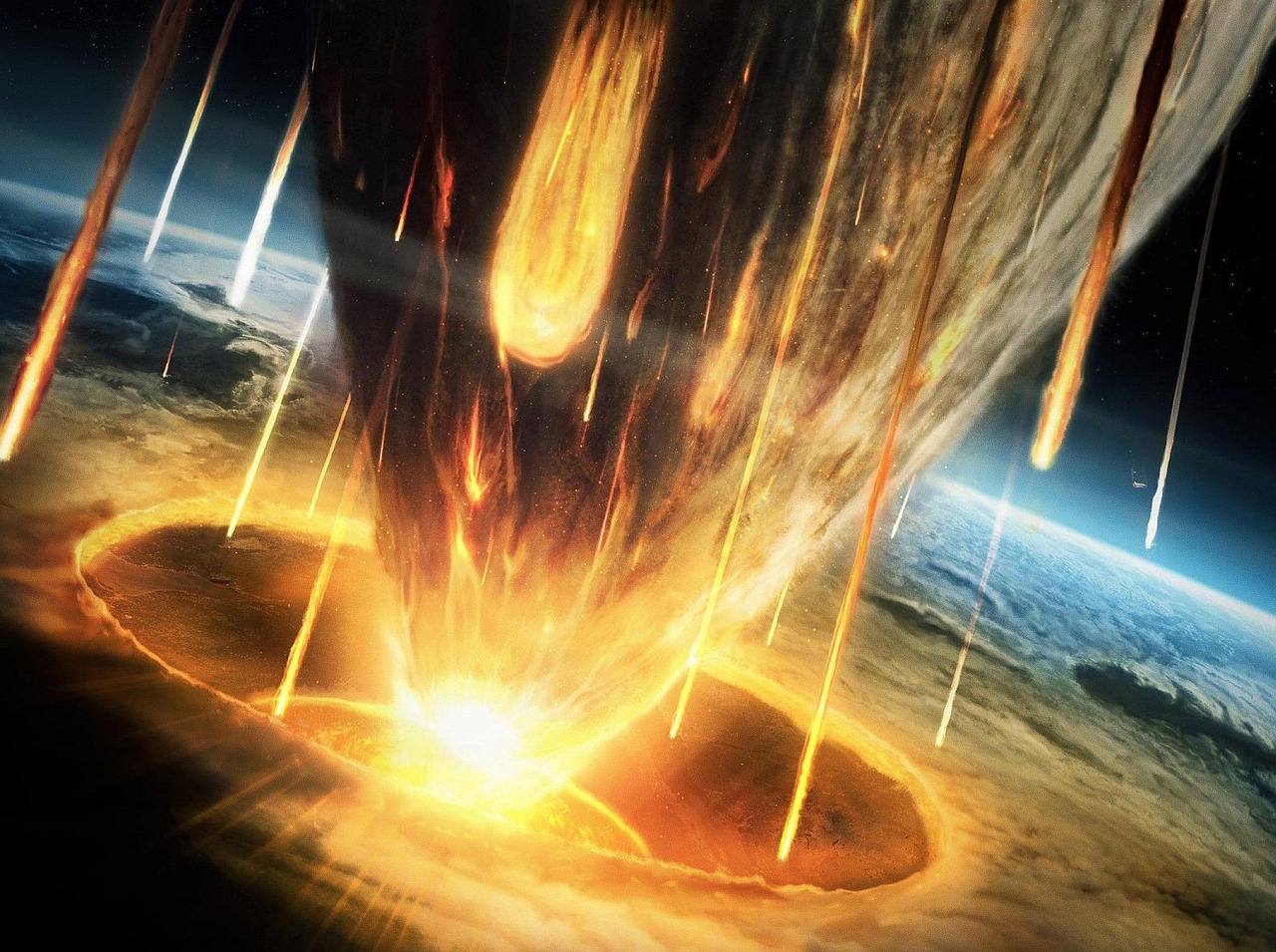
What happened next sounds like something out of a nightmare. When the asteroid plowed into the Earth, tiny particles of rock and other debris were shot high into the air. Geologists have found these bits, called spherules, in a 1/10-inch-thick layer all around the world. “The kinetic energy carried by these spherules is colossal, about 20 million megatons total or about the energy of a one megaton hydrogen bomb at six kilometer intervals around the planet,” says University of Colorado geologist Doug Robertson. All of that energy was converted to heat as those spherules started to descend through the atmosphere 40 miles up, about 40 minutes after impact.
Imagine millions of shooting stars all falling at once, but instead of being beautiful, they’re incandescent torches turning the entire atmosphere into a furnace. As Robertson and colleagues wrote in a paper titled “Survival in the First Hours of the Cenozoic”: “For several hours following the Chicxulub impact, the entire Earth was bathed with intense infrared radiation from ballistically reentering ejecta.” Earth became a world on fire. The friction of falling made each spherule an incandescent torch that quickly and dramatically heated the atmosphere. Any creature not underground or not underwater – that is, most dinosaurs and many other terrestrial organisms – could not have escaped it. Animals caught out in the open may have died directly from several sustained hours of intense heat, and the unrelenting blast was enough in some places to ignite dried-out vegetation that set wildfires raging.
The Nuclear Winter That Followed

If you thought the global firestorm was the end of it, you’d be wrong. The worst was yet to come. An impact winter is a hypothesized period of prolonged cold weather due to the impact of a large asteroid or comet on the Earth’s surface. If an asteroid were to strike land or a shallow body of water, it would eject an enormous amount of dust, ash, and other material into the atmosphere, blocking the radiation from the Sun. This would cause the global temperature to decrease drastically.
A team of researchers led by the Royal Observatory of Belgium has recently disclosed that a nuclear winter caused by debris, rather than the asteroid impact itself, played a pivotal role in the extinction of dinosaurs 66 million years ago. According to the experts, dust from pulverized rock, amounting to around 2,000 gigatons, was propelled into the Earth’s atmosphere, overshadowing the sun and severely disrupting plant photosynthesis. These findings were made possible through advanced modeling techniques, which demonstrated that the atmospheric dust, equivalent to over 11 times the mass of Mt. Everest, persisted for up to 15 years, triggering a global nuclear winter, which ultimately caused the dinosaur extinction.
Picture trying to live in a world where high noon looks like dusk for years on end. Plants couldn’t photosynthesize, temperatures plummeted, and the entire food chain collapsed like a house of cards.
Toxic Seas: When Oceans Became Acid Baths
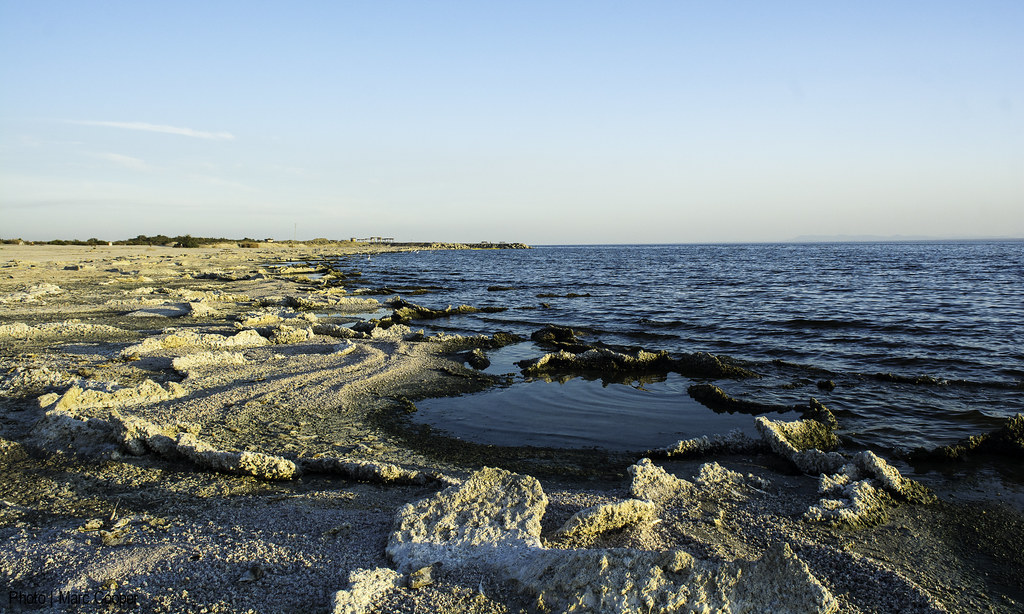
While the land was dealing with fire and ice, the oceans faced their own apocalyptic transformation. The oceans soured into a deadly sulfuric-acid stew after the huge asteroid impact that wiped out the dinosaurs, a new study suggests. Eighty percent of the planet’s species died off at the end of the Cretaceous period 66 million years ago, including most marine life in the upper ocean, as well as swimmers and drifters in lakes and rivers. Scientists blame this mass extinction on the asteroid or comet impact that created the Chicxulub crater in the Gulf of Mexico.
A new model of the disaster finds that the impact would have inundated Earth’s atmosphere with sulfur trioxide, from sulfate-rich marine rocks called anhydrite vaporized by the blast. Once in the air, the sulfur would have rapidly transformed into sulfuric acid, generating massive amounts of acid rain within a few days of the impact, according to the study, published today (March 9) in the journal Nature Geoscience. The very oceans that had nurtured life for billions of years became hostile environments where shells dissolved and marine ecosystems collapsed.
Within 1,000 years of the impact, the pH of the surface oceans dropped by 0.25 units, the new work shows. The researchers also investigated the ecological impact of the asteroid and found that the amount of photosynthesis by aquatic organisms was cut in half during the same time frame.
Catastrophic Climate Chaos

The asteroid impact didn’t just change the weather – it completely rewrote Earth’s climate playbook. Three-dimensional atmospheric model simulations show that climatic effects of such impacts would include drastic cooling of land surfaces due to interception of sunlight by high-altitude dust. Impacts of comets and small ( ∼ 10 km) asteroids with Earth – frequent events over geologic time – would generate atmospheric dust in amounts orders of magnitude greater than historically large volcanic explosions. Three-dimensional atmospheric model simulations show that climatic effects of such impacts would include drastic cooling of land surfaces due to interception of sunlight by high-altitude dust.
This global dispersion of dust and sulfates would have led to a sudden and catastrophic effect on the climate worldwide by causing large temperature drops, devastating the food chain. An impact winter would have a devastating effect on humans, as well as the other species on Earth. With the sun’s radiation being severely diminished, the first species to die would be plants and animals who survive through the process of photosynthesis. This lack of food would ultimately lead to other mass extinctions of other animals that are higher up on the food chain and possibly kill up to 25% of the human population.
The temperature swings were absolutely brutal – imagine surviving a global heat wave only to be plunged into an ice age that lasted for years.
Massive Tsunamis and Seismic Devastation

The destruction wasn’t limited to what we could see in the sky or feel in the temperature. The blast was enough to cause geologic disturbances, such as earthquakes and landslides, as far away as Argentina – which in turn created their own tsunamis. Not that the effects were limited to the area of impact. The blast was enough to cause geologic disturbances, such as earthquakes and landslides, as far away as Argentina – which in turn created their own tsunamis. As dangerous as the waves were to life in the western hemisphere, however, the heat was worse.
The asteroid hit in water, creating mega-tsunamis reaching from southeastern Mexico all the way to Texas and Florida and up a shallow interior ocean that covered what is now the Great Plains. The blast would have thrown chunks of the asteroid and Earth so far that they would have briefly left the atmosphere before falling back to the ground. Picture waves taller than skyscrapers racing across continents at speeds that would make modern bullet trains look sluggish. These weren’t just coastal floods – they were continent-reshaping forces that carried sediment and debris hundreds of miles inland.
The Collapse of Ecosystems Worldwide

When people think about mass extinctions, they often focus on the big, charismatic species like dinosaurs. But the real tragedy was the complete breakdown of entire ecosystems. In addition to wiping out so much life on land, the impact decimated ocean ecosystems as well. Vaporized rock led to a buildup of sulfuric acid that rained down on oceans along with toxic metals like lead and mercury. More than 90% of marine phytoplankton went extinct, researchers have shown.
Think about it – when ninety percent of the ocean’s tiny plant-like organisms die off, the entire marine food web collapses from the bottom up. The cooling effect of an impact winter is caused by the ejection of massive amounts of dust, soot, and other particulates into the upper atmosphere, which block incoming solar radiation. The reduced sunlight and global cooling can lead to the collapse of food chains, widespread crop failures, and the extinction of many plant and animal species.
The survivors found themselves in a world where the rules of survival had been completely rewritten overnight.
A World Forever Changed
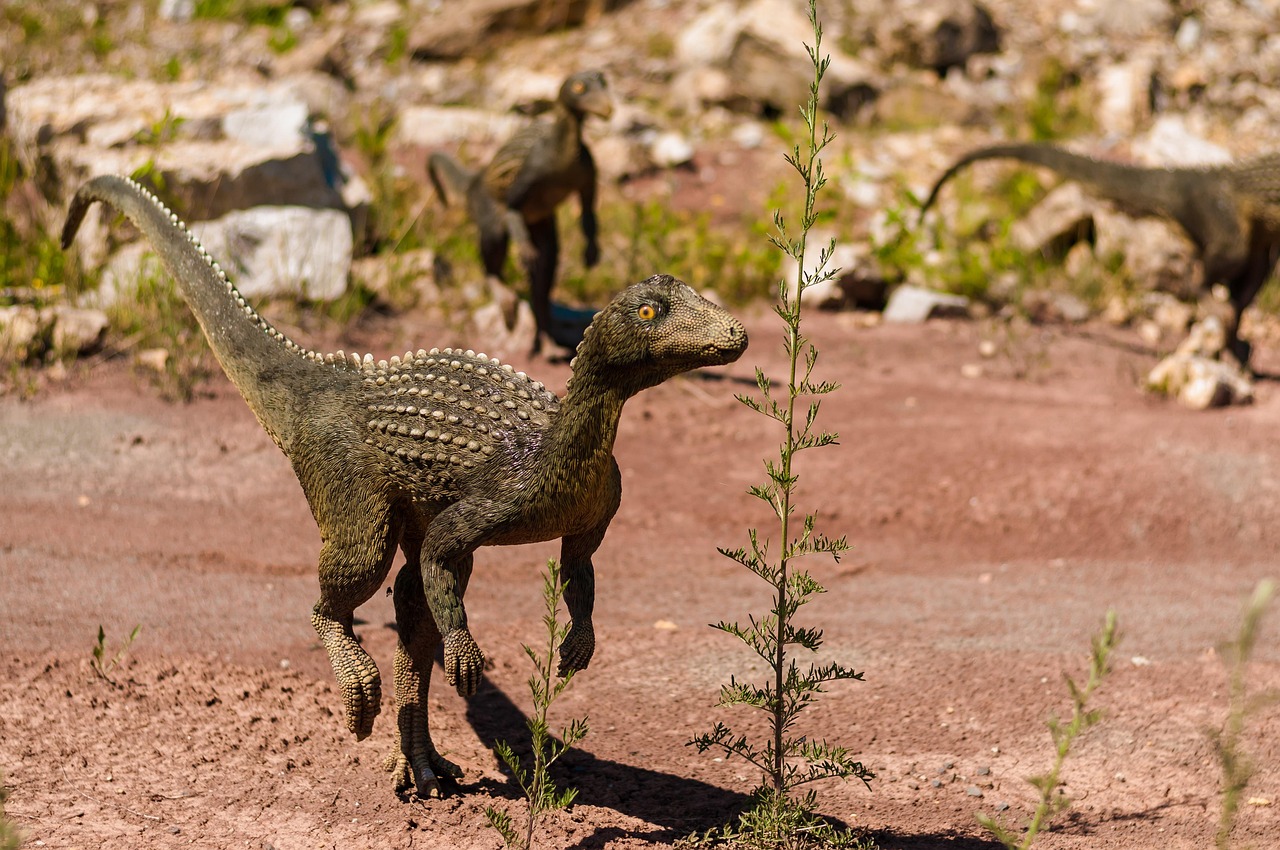
What’s truly haunting about the asteroid impact aftermath is how it demonstrates just how fragile our planet’s systems really are. What followed was irreversible climate change, species decline and extinction. In short, it wasn’t the asteroid that killed the dinosaurs. It was climate change. Understanding why and how is critical for humans to navigate today’s changing climate.
But if they could be so quickly and irrevocably destroyed, then we could also suffer the same fate. By looking at the ancient record of worldwide death, we face the mortality of our species and the question of what our long term survival might demand of us. The dinosaurs had ruled Earth for over 160 million years, surviving countless challenges and disasters. Yet in the span of a few catastrophic months, their entire world ended.
What makes this story even more sobering is that similar rocks are still out there, silently orbiting through space, with the potential to write another chapter of planetary devastation.
Lessons from Earth’s Darkest Hour
The aftermath of the Chicxulub impact teaches us something profound about resilience and recovery. Yet that destruction also paved the way for newcomers, says Julio Sepúlveda, a biogeochemist at the University of Colorado, Boulder, who was not involved in the research. “If you wipe out an important group from an ecosystem, you have an empty ecological niche.” Those newcomers, other algae and photosynthetic bacteria, were “ready to take over the world,” Bralower says. As they proliferated in oceanwide blooms, they would have acted as a food source themselves for animals higher up the food chain like krill and shrimp, Bralower and his colleagues propose.
Life found a way, but it took millions of years for complex ecosystems to recover. The Earth that emerged from this catastrophic period was fundamentally different – a planet where mammals would eventually rise to dominance and where, sixty-six million years later, we would develop the technology to study and understand what happened during those dark months when our world nearly died.
The asteroid impact aftermath reminds us that our beautiful, life-sustaining planet exists in a cosmic shooting gallery, and sometimes, the shots find their mark with devastating consequences that echo through geological time.
What would you have thought if you could have witnessed Earth’s transformation from a thriving, dinosaur-filled world to a hostile planet shrouded in darkness and poison?