Everyone knows the story. A massive space rock slammed into Earth roughly 66 million years ago, and the dinosaurs were gone. It’s practically a school-textbook staple. Simple, dramatic, done. Yet if you’ve ever paused to wonder whether the real answer might be more complicated, more layered, even more terrifying, you’re in very good company.
Scientists have been wrestling with the question of what truly wiped out the non-avian dinosaurs for decades. The debate regarding the cause of the extinction has proven to be extremely controversial among researchers, earning it the nickname the “dinosaur wars.” Honestly, when scientists start calling something a “war,” you know there’s more to uncover. So let’s step past the asteroid headline and look at what else might have sealed the fate of the most iconic creatures Earth has ever produced. Let’s dive in.
Theory 1: The Deccan Traps – When India Became a Volcano
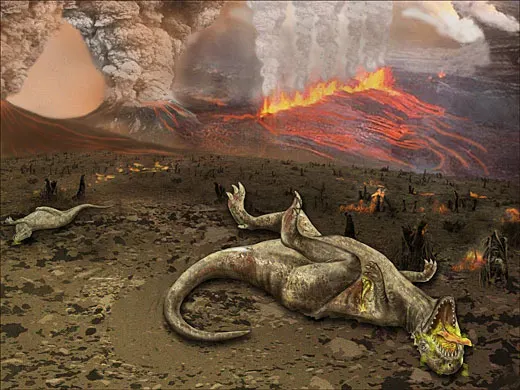
Picture the western part of modern-day India, but instead of farmland and cities, imagine a landscape vomiting lava across an area roughly the size of Texas. That’s what was happening during the Late Cretaceous. The Deccan Traps are an area of volcanic flood basalts in western India spanning approximately 1.3 million square kilometers, created by massive volcanic activity during the same time period in which the Chicxulub impact occurred. This wasn’t a regular eruption. This was geological violence on a scale almost impossible to comprehend.
During their nearly one million years of eruptions, the Traps are estimated to have pumped up to 10.4 trillion tons of carbon dioxide and 9.3 trillion tons of sulfur into the atmosphere. Think about that for a moment. Volcanic activity of this magnitude would have spewed out huge amounts of carbon dioxide into the atmosphere, causing greenhouse warming, while also causing levels of toxic gases like sulfur and chlorine to rise, resulting in acid rain and further damaging the global environment. That’s not just unpleasant. That’s a slow-motion planetary nightmare.
According to researchers, the massive volcanoes started erupting about 400,000 years before the Chicxulub impact and wrapped up about 600,000 years after. That’s a stunning length of time during which the climate was being relentlessly destabilized. There has long been evidence that Earth’s climate was changing before the asteroid hit. Some 400,000 years before the impact, the planet gradually warmed by roughly 5 degrees Celsius, only to plunge in temperature right before the mass extinction. The Deccan Traps may well have been warming the planet like a slow-burning fuse before the asteroid provided the final spark.
Theory 2: The Great Draining – Sea Level Regression and Lost Worlds

Here’s something most people don’t picture when they imagine the world of the dinosaurs: vast shallow seas covering entire continents. The great plains of North America, for example, formed the bed of a shallow seaway that spread across the continent throughout the Cretaceous, while eastern Europe formed an archipelago. All those shallow seas teemed with life, and while they had always fluctuated somewhat, they finally dried out for good towards the end of the Mesozoic. What happened when those seas drained? Ecological catastrophe, frankly.
Marine regression is the process whereby very shallow seas that covered much of the low-lying areas of continents drain away, back into the deeper ocean basins. One of the greatest such marine regressions is recorded in rocks near the end of the Cretaceous Period. Unlike the eruption of the Deccan Traps, which took place over millions of years, the terminal Cretaceous marine regression occurred over a much shorter period of time, only tens or hundreds of thousands of years. That’s fast enough to devastate ecosystems without giving species time to adapt.
The regression removed a major source of marine productivity and modified global circulation patterns. For the terrestrial realm, it made climates more continental, meaning hotter summers and colder winters, because now not every place was essentially close to the sea shore. You can almost imagine the dinosaurs’ world literally shrinking around them. With marine regression, coastal plain habitats were being drastically reduced, stranding dinosaurs in ever-smaller areas, similar to what humans are doing to the habitats of large mammals in Africa today. That comparison to modern habitat loss should give every one of us pause.
Theory 3: The Long Goodbye – Gradual Climate Cooling and Biodiversity Collapse
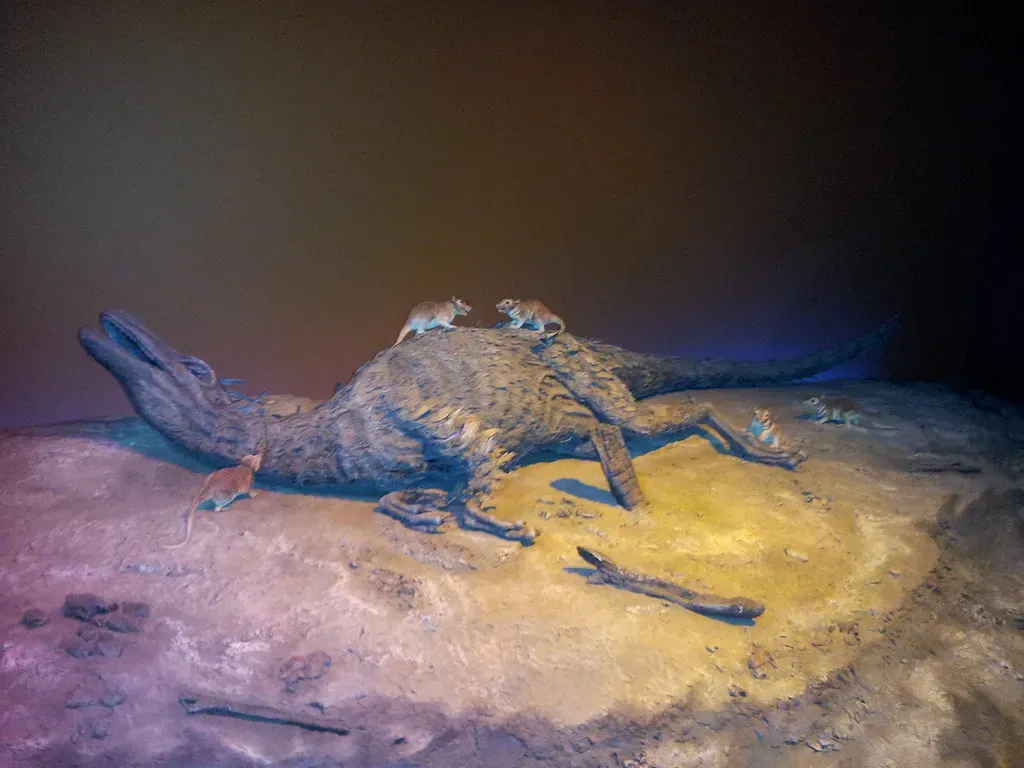
What if the dinosaurs were already sliding toward extinction long before anything hit, erupted, or drained? That’s actually a serious scientific hypothesis and, I think, one of the most underrated ideas in all of paleontology. Research indicates that the decline of dinosaurs was likely driven by global climate cooling and a drop in herbivorous diversity. It’s the ecological equivalent of a stock market crash that happens slowly, then all at once.
A study analyzed six key dinosaur families and found evidence of a decline in diversity beginning around 76 million years ago, long before the Cretaceous-Paleogene extinction event. That’s a full 10 million years of slow decline. Research results imply that warm periods favored dinosaur diversification, whereas cooler periods led to enhanced extinctions, as observed in the latest Late Cretaceous. Think of it like this: the dinosaurs were extraordinarily well-adapted to a warm, lush world. When that world started cooling, their kingdom started crumbling from within.
It is likely that climatic deterioration would have made thermoregulation more difficult, and that global climate cooling was an important driver of the dinosaur diversity decline. The herbivores struggled first. The decline in herbivore diversity is likely partly due to hadrosaurs outcompeting other herbivores. When the plant-eaters weaken, everything up the food chain weakens with them. The carnivores follow. The whole system unravels. Whether the asteroid delivered the final strike or just accelerated an already-crumbling empire is the real question scientists argue about today.
Theory 4: The Comet Shower – Death From a Thousand Blows
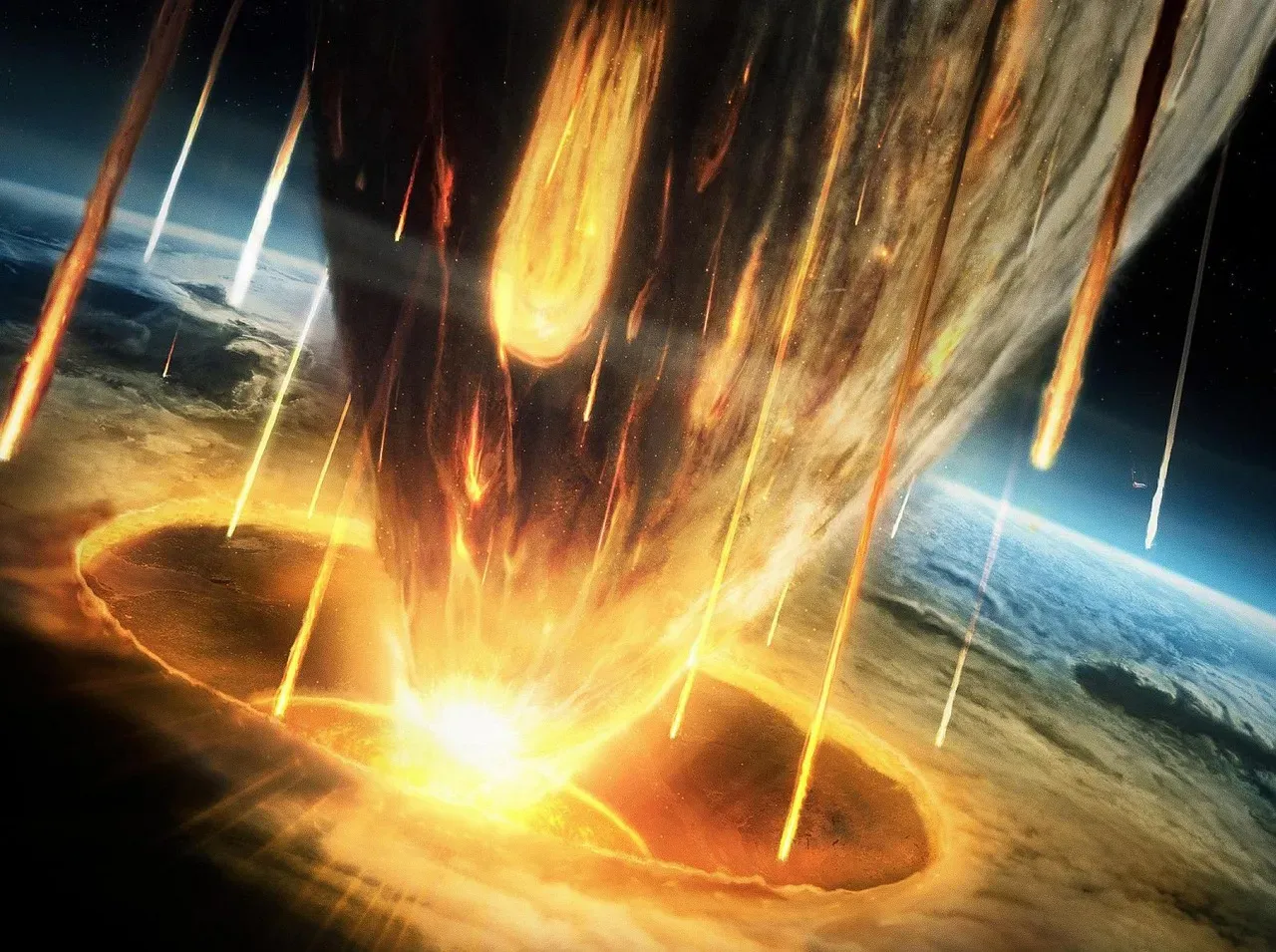
Most people assume the asteroid-impact story means one rock, one explosion, one extinction. But what if it wasn’t just one? The extinction of the dinosaurs may have occurred 65 million years ago as a result of a single asteroid or comet impact, but it is also possible they died out as a result of many comet impacts over one to three million years, a group of scientists has theorized. Now that’s a genuinely terrifying alternative to wrap your head around.
Comet showers occurring over a period of time may have caused the extinctions, according to scientists including researchers at NASA’s Jet Propulsion Laboratory. Such showers are caused by close passage of neighboring stars through the Oort cloud of comets surrounding the solar system. Picture our solar system drifting too close to a passing star, which then disturbs a vast reservoir of comets sitting at the outer edge of our cosmic neighborhood, sending them raining inward toward the inner planets like a cosmic shotgun blast. It sounds like science fiction. It’s not.
This scenario suggests the possibility of near-simultaneous multiple impacts, perhaps from a fragmented asteroidal object. In addition to the 180-kilometer Chicxulub crater, there is also the Boltysh crater in Ukraine and the Silverpit crater in the North Sea, both from similar time periods. Multiple craters from roughly the same era point intriguingly toward a multi-impact scenario. Chicxulub may have traveled with companions, as other impact craters from similar strata show that a number of catastrophically large collisions may have followed Chicxulub like aftershocks, worsening an already dire ecological situation. A series of devastating blows over thousands or millions of years would make extinction almost mathematically inevitable.
Theory 5: Death From the Stars – Supernovae, Gamma Rays, and Cosmic Radiation
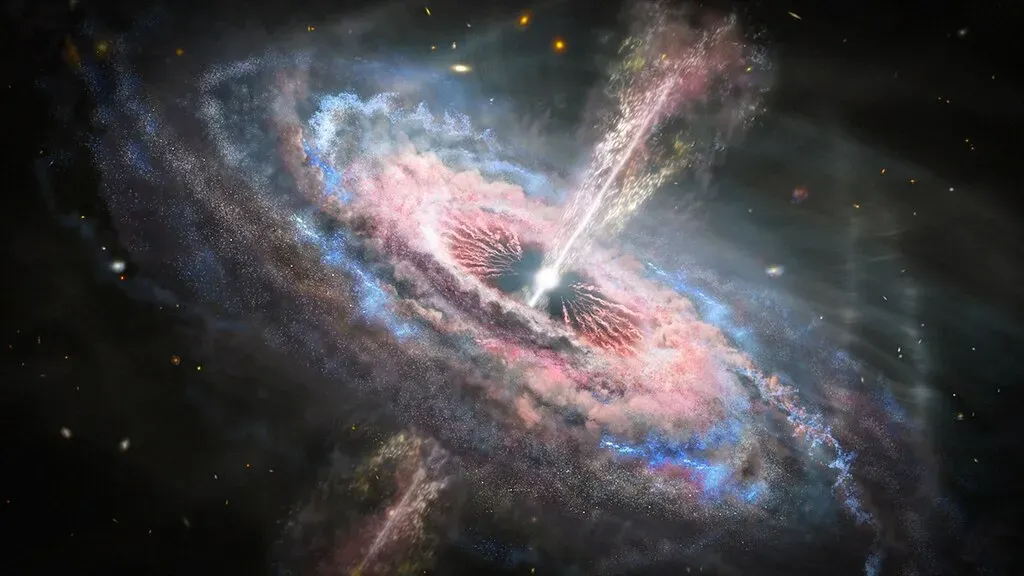
This is the one that sounds the most dramatic, and honestly, it deserves its moment. Long before the asteroid hypothesis gained its dominant position, scientists were already looking to the stars for answers. Almost ten years before the iridium discovery, physicist Wallace Tucker and paleontologist Dale Russell proposed that a supernova and its accompanying radiation at the end of the Cretaceous had caused the extinction of dinosaurs. The idea was bold. The eventual evidence pointed elsewhere. Yet the concept never fully died.
Scientists have suggested that a nearby supernova explosion might produce climatic effects so drastic as to cause the extinction of many animals, including the dinosaurs. How? The ozone layer in the upper atmosphere normally shields Earth’s surface from harmful ultraviolet light. A gamma-ray burst or nearby supernova would quickly destroy that layer. Without ozone protection, ultraviolet radiation pours directly onto Earth’s surface and into its oceans, burning photosynthesis-dependent food chains from the bottom up. Take away the base of the food web, and the rest collapses.
A supernova delivers a one-two punch. The explosion immediately bathes Earth with damaging UV, X-rays, and gamma rays. Later, the blast of supernova debris slams into the solar system, subjecting the planet to long-lived irradiation from cosmic rays accelerated by the supernova. That prolonged exposure is the terrifying part. It’s not a single catastrophic flash but a sustained cosmic bombardment lasting potentially thousands of years. Killer cosmic rays from nearby supernovae could be the culprit behind at least one mass extinction event, researchers have said, and finding certain radioactive isotopes in Earth’s rock record could confirm this scenario. Whether or not the evidence ultimately confirms this for the dinosaurs, the principle remains hauntingly real.
Conclusion: The Truth Is Probably Messier Than the Story
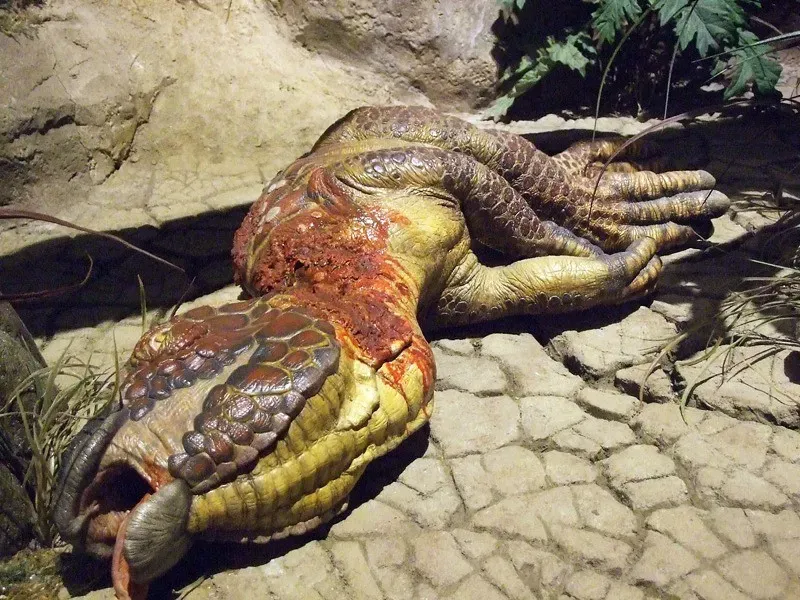
Let’s be real: the asteroid story is compelling because it’s clean. One event, one cause, one ending. History loves that kind of narrative. Science rarely delivers it. Researchers have discussed scenarios combining three major postulated causes: volcanism, marine regression, and extraterrestrial impact. In such a scenario, terrestrial and marine communities were stressed by changes in and loss of habitats, with dinosaurs, as the largest vertebrates, affected first by environmental changes as their diversity declined. Reality, as it turns out, tends to pile catastrophes on top of each other.
The most honest scientific position in 2026 is that the dinosaurs likely fell victim to a perfect storm – warming, cooling, volcanic poisoning, sea loss, cosmic bombardment, and yes, probably at least one catastrophic impact too. Today, paleontologists have discerned that most dinosaur lineages disappeared by about 66 million years ago after intense volcanic activity, climate change, and a catastrophic asteroid impact triggered one of the worst mass extinctions in our planet’s history. No single villain. Just an overwhelming convergence of forces that made survival statistically impossible.
The story of the dinosaurs is, at its heart, a reminder that even the most dominant creatures on Earth can be brought low by forces entirely beyond their control. Creatures that ruled for 170 million years were gone in what amounts to a geological eyeblink. It’s humbling, sobering, and more than a little fascinating. What do you think toppled the dinosaurs? Does the multi-cause picture change how you see their extinction?