Massachusetts – The eastern hog-nosed snake survives through elaborate ruses in sandy habitats, yet intensifying human pressures challenge its foothold at the edge of its northern range.
Theatrical Tactics Against Predators
Theatrical Tactics Against Predators (Image Credits: Upload.wikimedia.org)
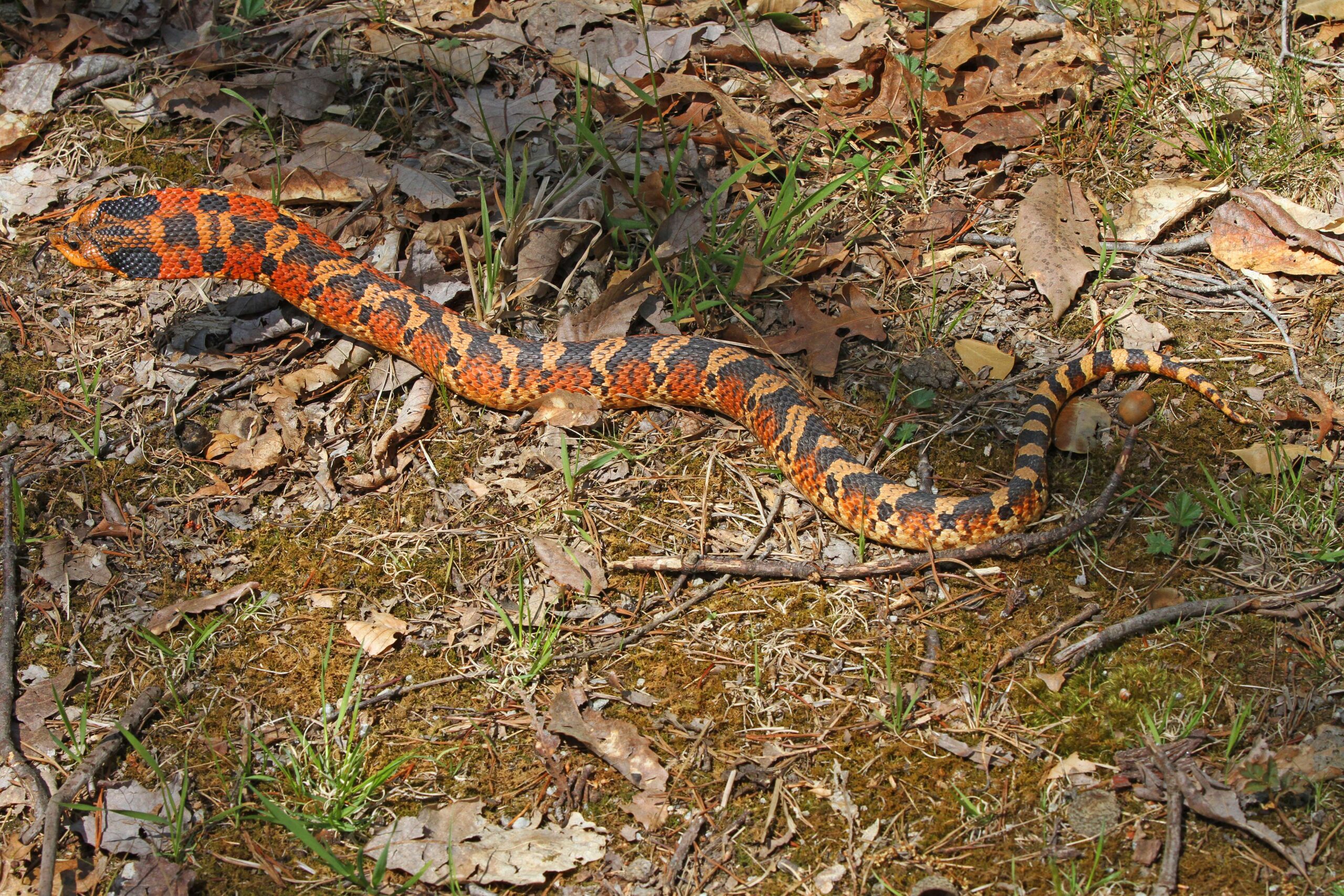
Nothing captures the eastern hog-nosed snake’s ingenuity quite like its defensive repertoire. When threatened, the snake rears up, flattens its head and neck into a cobra-like hood, and emits a loud hiss to intimidate foes. If the bluff fails, it flips onto its back, lolls its tongue from an open mouth, and releases a foul odor through defecation or vomiting to feign death and deter attackers.
These displays often lead to misunderstandings. Frequently mistaken for venomous species, the harmless reptile strikes with a closed mouth and rarely bites humans. Adults measure 20 to 46 inches, featuring stocky bodies with keeled scales, an upturned snout for burrowing, and patterns of dark saddles over yellow, olive, or gray backgrounds. This specialized anatomy suits its role as a toad-hunting expert, capable of withstanding the amphibians’ toxins.
Sandy Strongholds Under Threat
Eastern hog-nosed snakes thrive in open, dry landscapes such as sandplains, pine barrens, coastal dunes, and grasslands. In Massachusetts, confirmed sightings span Franklin, Hampshire, Hampden, Worcester, Middlesex, Norfolk, Bristol, Plymouth, and Barnstable counties, typically below 300 meters elevation. Females lay clutches of up to 40 eggs in summer, which hatch into 7- to 9-inch juveniles within two months.
Habitat fragmentation poses the greatest risk. Road mortality claims many individuals, while development erodes sandy soils essential for nesting and foraging. Persecution stems from fear fueled by their dramatic shows, and heightened predator densities – raccoons, skunks, foxes – from human expansion further strain populations. Birds of prey, milk snakes, and racers also prey on them.
Status and Protective Measures
Massachusetts lists the eastern hog-nosed snake as a species of special concern under the Endangered Species Act, though it holds no federal status. The designation reflects localized declines amid broader stability across its range from southern New England to Florida and central Texas.
State agencies prioritize habitat restoration. MassWildlife manages sites in Franklin County and on Cape Cod through prescribed burns and grassland maintenance to bolster snake numbers. Citizens contribute by reporting road-killed specimens to databases like Linking Landscapes and live sightings via the Heritage Hub platform.
Frontline Conservation in Action
Zoo New England leads efforts for the state’s northernmost populations in eastern Massachusetts. Their Field Conservation Department supports herpetologists in tracking demographics, nesting sites, and habitat preferences to inform management. In 2023, protectors safeguarded a nest that yielded six hatchlings, each weighing just 4 to 6 grams – smaller than a AA battery.
Partners like Mass Audubon collaborate on surveys in north-central regions. These initiatives emphasize non-invasive monitoring and public education to reduce killings. Early data suggest stable pockets, but expanded protection remains crucial for long-term viability.
Key Takeaways
- The snake’s death-feigning act deters predators but invites human harm.
- Sandy habitats demand active restoration via fire and land management.
- Reporting sightings empowers agencies to map and protect populations.
Revival hinges on blending science, stewardship, and awareness to let these dramatic survivors continue their ancient performances. What steps can communities take next to support such species? Share your thoughts in the comments.