Picture yourself standing at the edge of a murky Cretaceous river. The water ripples. Before you can react, massive jaws lined with banana-sized teeth erupt from the depths. This isn’t a dinosaur, though those giants roam nearby. This is something even more terrifying, an ancient crocodile that viewed those dinosaurs as nothing more than its next meal.
We’ve always imagined dinosaurs as the ultimate prehistoric monsters. Films, books, and museums have cemented their place as the undisputed rulers of the ancient world. Yet beneath the surface of prehistoric waterways lurked predators so formidable that they made tyrannosaurs think twice before taking a drink. These weren’t the crocodiles you see lazing on riverbanks today. They were colossal, cunning, and often deadlier than any land-dwelling dinosaur. Let’s dive in.
The Terror Crocodile That Made Dinosaurs Prey
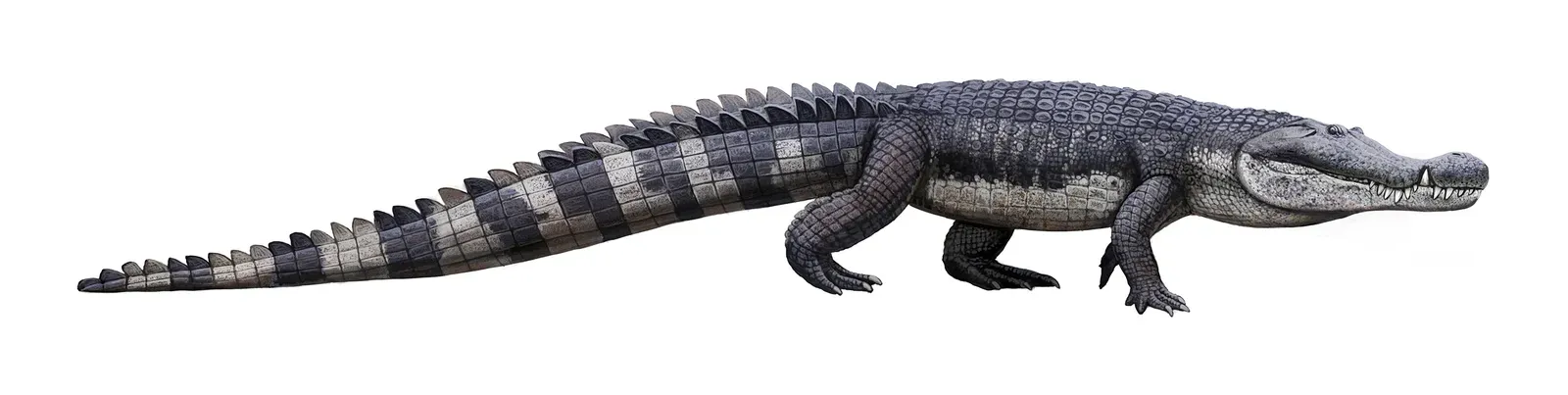
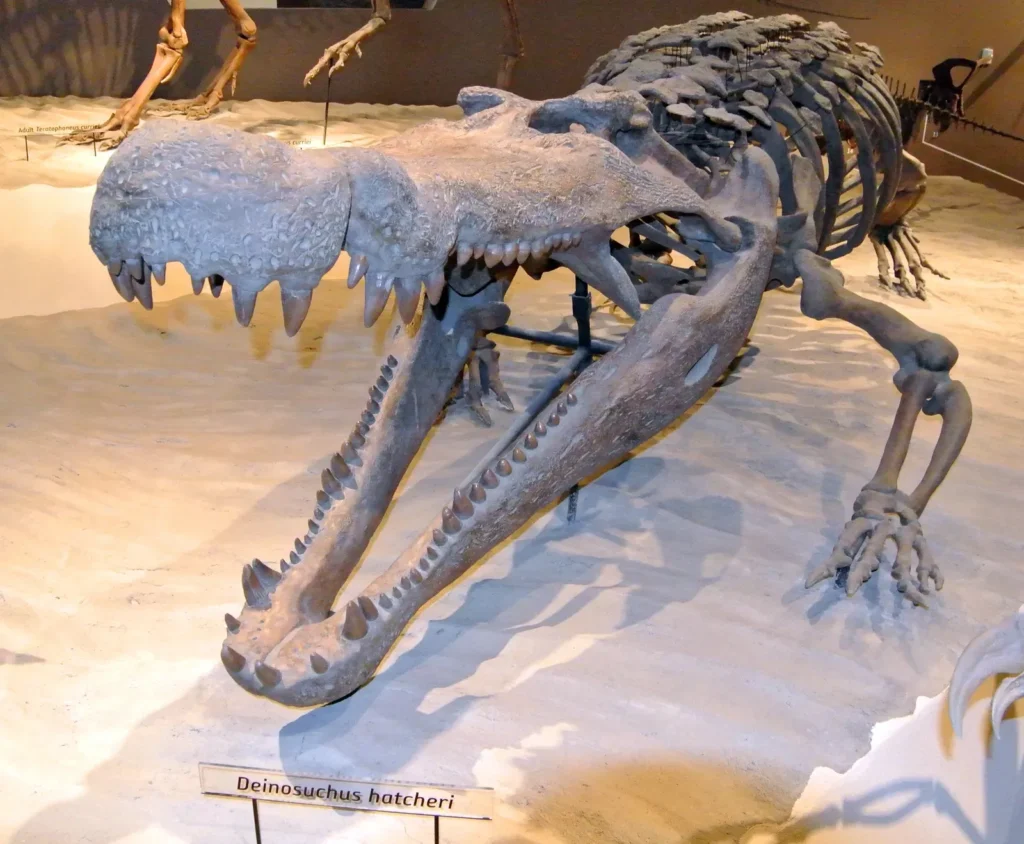
Around seventy-five million years ago, North America’s largest and most formidable carnivore was not a dinosaur but a croc named Deinosuchus, which could reach more than thirty-five feet in length and weigh over five tons. Think about that for a moment. The fossils of Deinosuchus are often found in the same formations as the carnivorous tyrannosaurs, but Deinosuchus could grow to be longer and more massive than the tyrant dinosaurs, making it a true apex predator.
Bite marks on bones leave no doubt that the immense reptile caught and ate dinosaurs. Hadrosaurid tail vertebrae found near Big Bend National Park show evidence of Deinosuchus tooth marks, strengthening the hypothesis that Deinosuchus fed on dinosaurs. Honestly, imagine being a hadrosaur, peacefully munching vegetation near the water’s edge, only to be yanked underwater by a creature twice your weight. This wasn’t an opportunistic scavenger. This was a calculated hunter that dominated coastal wetlands with ruthless efficiency.
Bigger Than You Ever Imagined
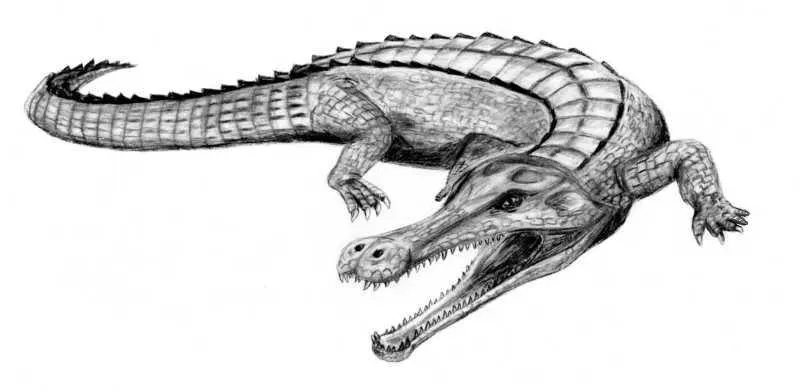
Let’s talk size, because sheer mass matters when you’re discussing danger. Sarcosuchus, a distant relative of living crocodilians, reached up to roughly thirty to thirty-one feet in total length and weighed between three and a half to over four metric tons. Some estimates push it even further. The largest known skull of Sarcosuchus measured over five feet long, and the individual it belonged to was estimated at a total body length exceeding thirty-eight feet, with a body weight estimated at eight metric tons.
Deinosuchus measured around thirty-five feet in total length, placing both creatures firmly in the heavyweight division of prehistoric predators. These weren’t just big reptiles. They were armored, patient, nearly invisible death machines lurking where dinosaurs had to drink. Modern saltwater crocodiles can reach lengths of about twenty feet and are already terrifying. Now triple that mass and add teeth designed to crush bone.
Teeth Like Bananas and Jaws Built to Crush
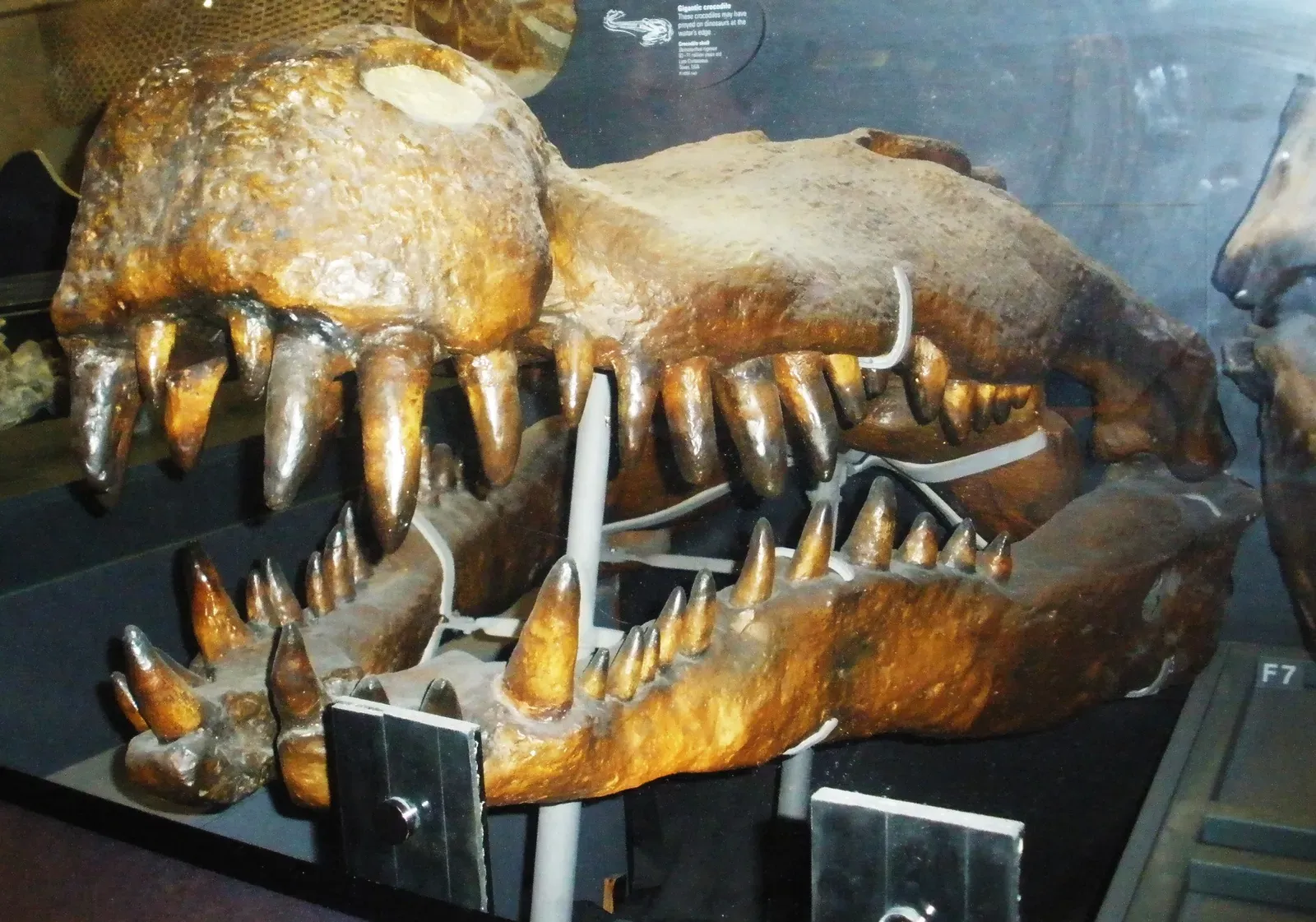
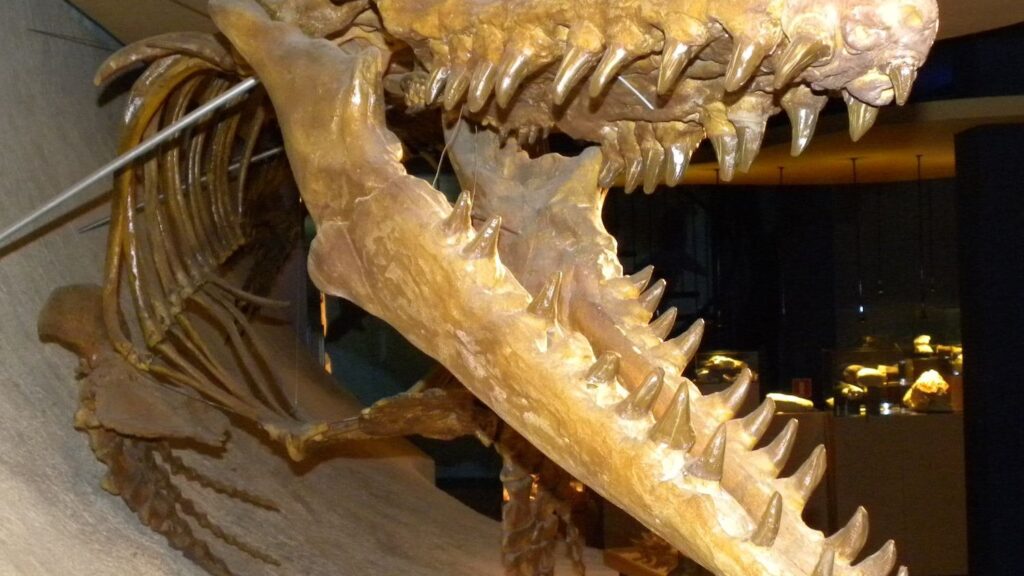
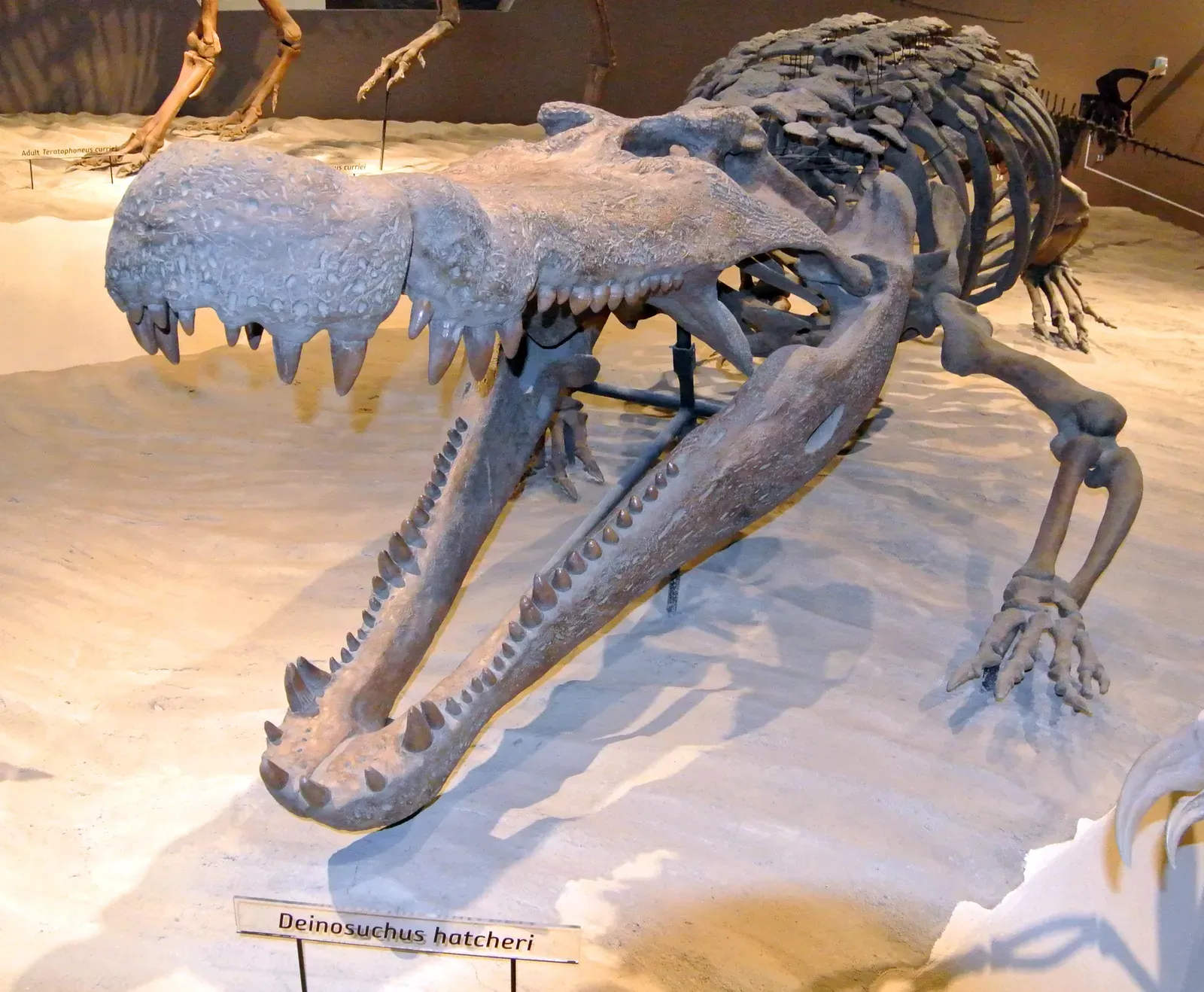
Deinosuchus had teeth the size of bananas and bodies at least thirty-three feet long, allowing it to subdue just about any animal that wandered within reach, including dinosaurs. The teeth weren’t just for show either. Deinosuchus had large, robust teeth built for crushing, and its back was covered with thick hemispherical osteoderms. This meant protection from retaliation and weapons capable of pulverizing turtle shells or snapping dinosaur bones like twigs.
Compare this to even the most fearsome theropods. T. rex had powerful jaws, sure. However, no theropod dinosaurs in Deinosuchus’s eastern range approached its size, indicating the massive crocodilian could have been the region’s apex predator. While dinosaurs roamed the land in all their terrible glory, these crocodilians controlled the shorelines, rivers, and estuaries, ambushing anything foolish enough to venture too close.
A Lifespan That Outlasted Dinosaur Generations
Here’s something that sends chills down my spine. Each Deinosuchus might have taken over thirty-five years to reach full adult size, and the oldest individuals may have lived for more than fifty years, a completely different growth strategy than that of large dinosaurs, which reached adult size much more quickly and had shorter lifespans. According to paleontologist Gregory M. Erickson, a full-grown Deinosuchus must have seen several generations of dinosaurs come and go.
Imagine the accumulated hunting knowledge of a predator that’s been perfecting its craft for half a century. It would have known every watering hole, every migration route, every vulnerable moment in a dinosaur’s life cycle. That kind of experience makes for an opponent far more dangerous than raw size alone could ever suggest.
Masters of Ambush in Every Habitat
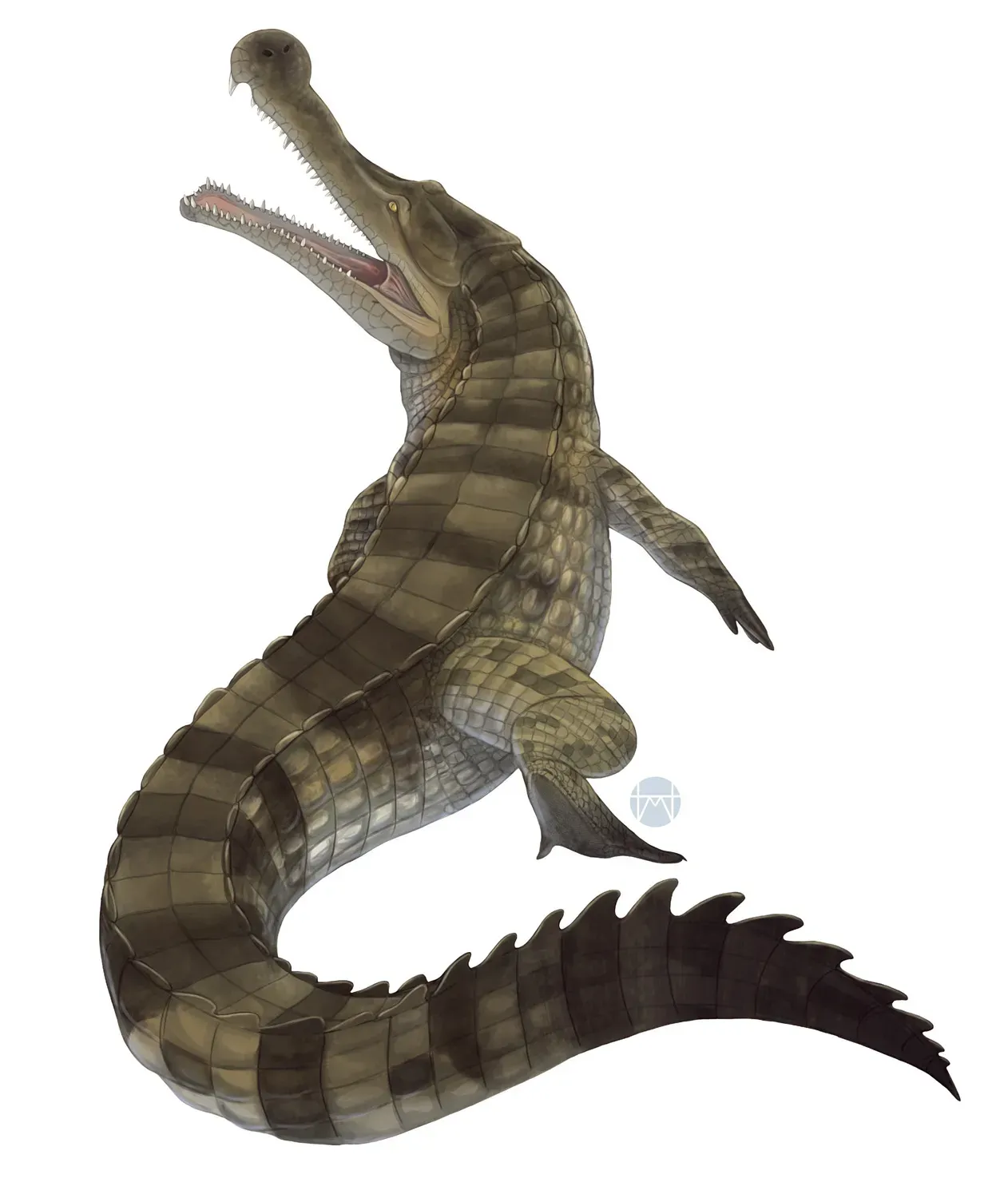
Deinosuchus retained the salt glands of ancestral crocodilians, enabling it to tolerate salt water, which gave it a massive advantage. Unlike modern crocodiles and alligators confined to freshwater, Deinosuchus had a unique ability to survive in saltwater, making it a far more versatile and widespread predator, allowing it to traverse vast regions of North America and reach both coastal and inland habitats teeming with large prey.
The feeding patterns of Deinosuchus varied by geographic location; smaller specimens of eastern North America would have been opportunistic feeders consuming marine turtles, large fish, and smaller dinosaurs, while the bigger specimens that lived in Texas and Montana might have been more specialized hunters, capturing and eating dinosaurs such as hadrosaurs, ceratopsians, and small and large theropods. Versatility in both habitat and diet meant these creatures weren’t specialized into extinction. They adapted, thrived, and dominated wherever water met land.
The African Supercroc That Hunted Dinosaurs
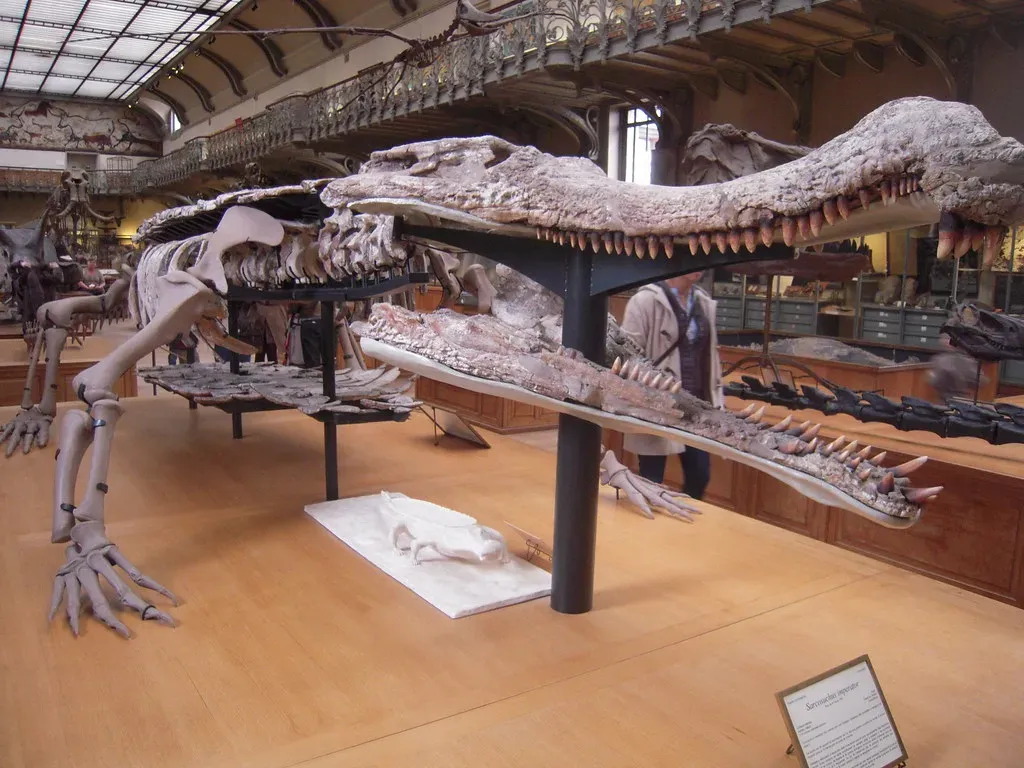
While Deinosuchus terrorized North America, Africa had its own nightmare. Sarcosuchus imperator had a generalized diet similar to that of the Nile crocodile, which would have included large terrestrial prey such as the abundant dinosaurs that lived in the same region. Sarcosuchus was an apex predator in its freshwater habitat, and considering its size, no other animal that lived in the same region would have been massive enough to feed on it, though some apex carnivore species like Carcharodontosaurus and Spinosaurus would have competed for prey.
The remains of Sarcosuchus were found in a region dating from approximately one hundred twelve million years ago, and the stratigraphy indicates it was an inland fluvial environment, entirely freshwater with a humid tropical climate. These creatures didn’t just survive alongside dinosaurs. They actively hunted them, competing directly with the most fearsome theropods for dominance of the food chain.
Death Rolls and Drowning Tactics
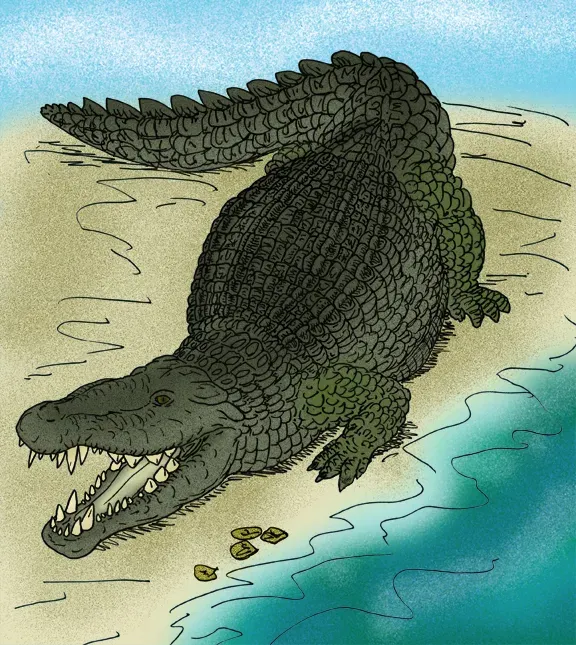
Deinosuchus is generally thought to have employed hunting tactics similar to those of modern crocodilians, ambushing dinosaurs and other terrestrial animals at the water’s edge and then submerging them until they drowned. This strategy is still used by modern crocodiles, proving its devastating effectiveness. Once those jaws clamped down, escape became nearly impossible. The victim would be dragged into deep water, rolled violently to disorient and drown it, then torn apart at leisure.
However, a 2014 analysis suggested that unlike Deinosuchus, Sarcosuchus may not have been able to perform the death roll maneuver, suggesting that if it did hunt big game, it probably did not dismember prey in the same fashion as extant crocodilians. Still, with jaws powerful enough to grab and hold prey weighing several tons, dismemberment techniques become a minor detail. The sheer grip strength would have been sufficient to incapacitate most prey.
Galloping Crocodiles With Tusks
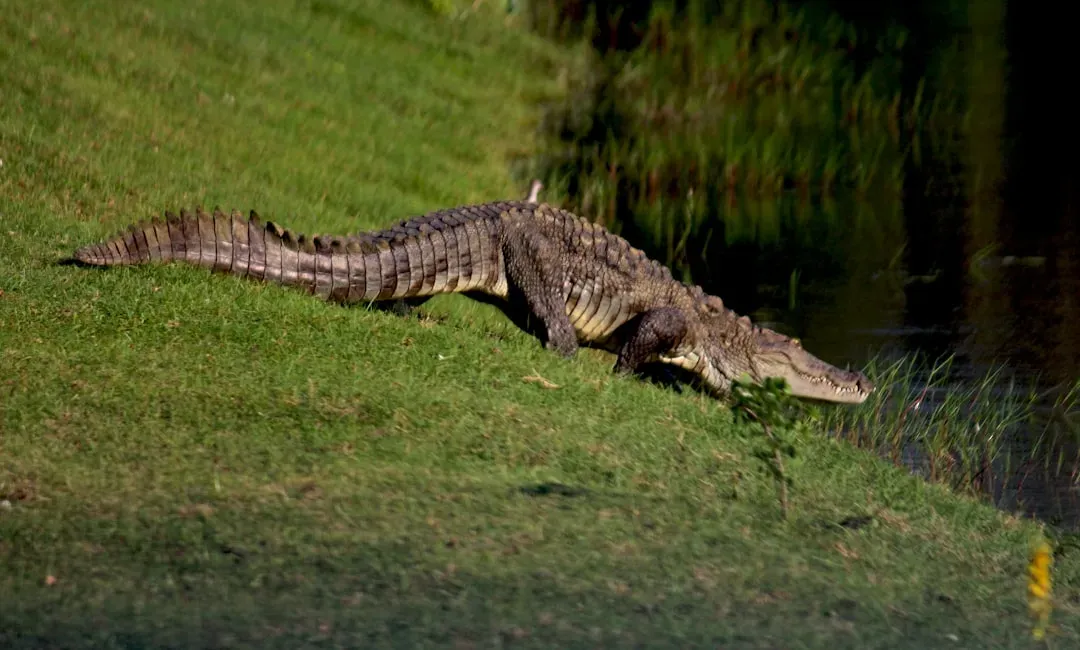
Let’s shift gears to something that sounds like science fiction. Kostensuchus atrox was a hypercarnivore with blade-like teeth capable of subduing sizable prey, possibly even small dinosaurs, and its sharp, serrated teeth and powerful jaw structure suggest it hunted actively rather than scavenging. Based on its leg structure, Kaprosuchus probably could gallop after prey, using its tusks to slash at dinosaurs’ legs.
Yes, you read that correctly. Galloping crocodiles. With tusks. Species like Pristichampsus, Baurusuchus, and Kaprosuchus had long legs positioned directly under their bodies, likely letting them run and even gallop like dogs or horses. These weren’t lumbering ambush predators. They were active pursuit hunters that chased down prey on open ground. The variety of hunting strategies ancient crocodilians employed makes them far more adaptable and dangerous than any single dinosaur species.
Why Crocodilians Survived While Dinosaurs Perished
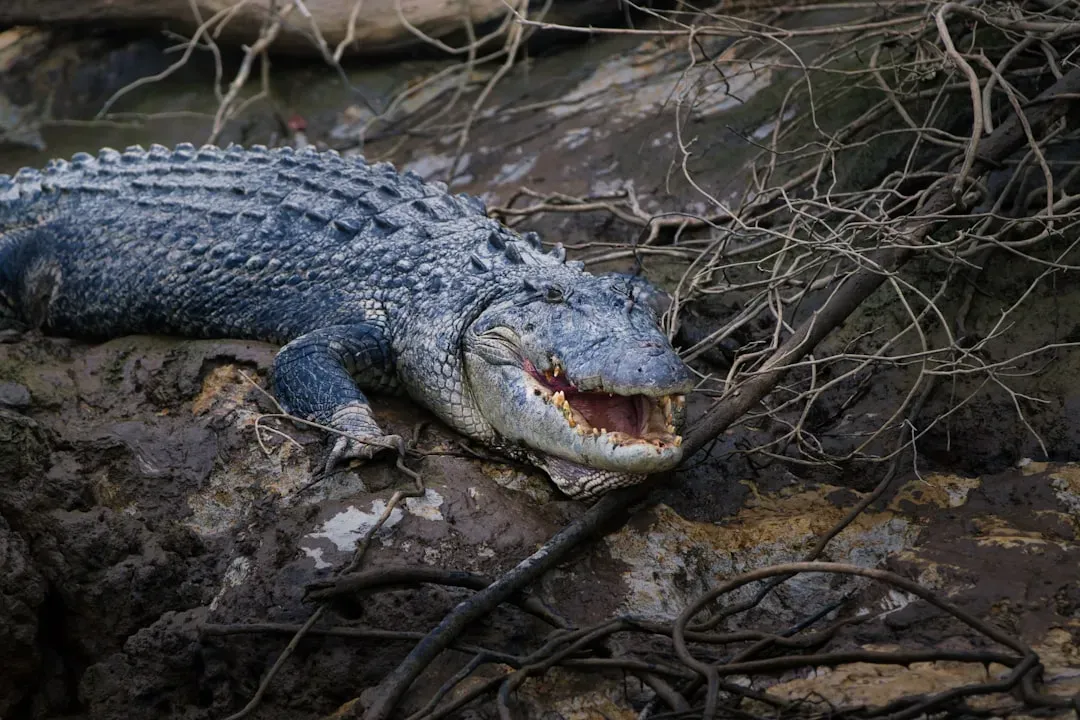
Crocodylomorphs survived both the end-Triassic mass extinction roughly two hundred one million years ago and the end-Cretaceous mass extinction about sixty-six million years ago, which killed all non-avian dinosaur species. The team hypothesizes that this ability to eat almost anything was behind their success, while so many other groups went extinct. Dietary flexibility gave them the edge when ecosystems collapsed.
Today’s twenty-six species of living crocodylians are nearly all semiaquatic generalists, lending some credence to the saying that it is better to be a jack of all trades rather than a master of none. While specialized dinosaurs became vulnerable to environmental shifts, crocodilians adapted. This versatility could be one explanation why crocodiles survived the meteor impact at the end of the Cretaceous period, in which the dinosaurs perished. Their ability to go months without food, tolerate varying temperatures, and exploit multiple food sources meant they weathered catastrophes that obliterated other lineages.
The Legacy of Earth’s True Survivors
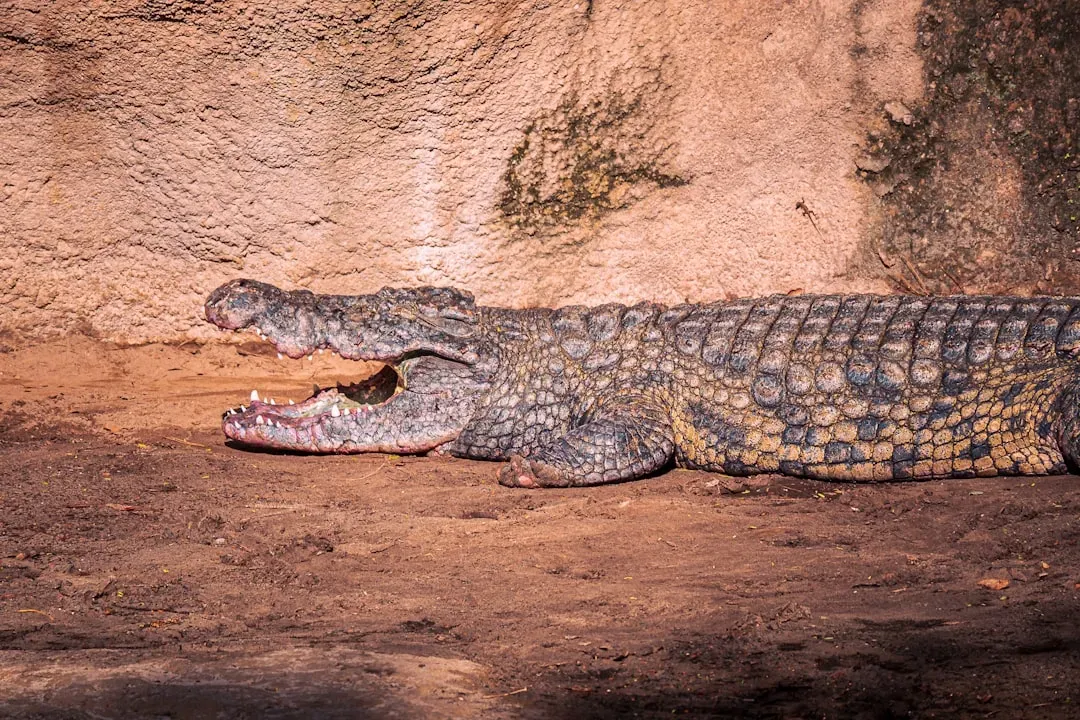
So, were ancient crocodiles In many ways, absolutely. They were versatile predators that dominated aquatic and shoreline environments where dinosaurs were most vulnerable. They outlived entire dynasties of dinosaurs, accumulated decades of hunting experience, and possessed adaptations that allowed them to thrive in conditions that would have killed most other predators.
Their ancestors have survived two mass extinctions over two hundred thirty million years, making them among Earth’s most successful predators ever. While dinosaurs captured our imagination with their size and ferocity, crocodilians quietly proved themselves the ultimate survivors, outlasting and often outcompeting the so-called rulers of the Mesozoic. The next time you see a crocodile basking in the sun, remember, you’re looking at a lineage that hunted dinosaurs, survived apocalypses, and continues to thrive in a world that has changed beyond recognition.
What do you think? Could you imagine encountering one of these prehistoric terrors? Tell us in the comments.