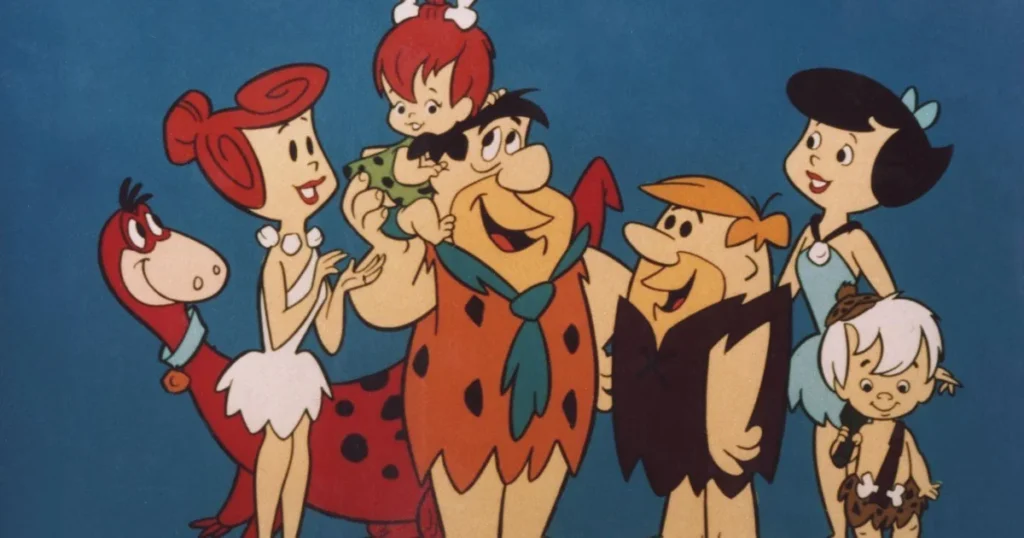
Every time you see Fred Flintstone clock out of work by sliding down that brontosaurus’ tail, there’s a tiny flicker of a question in the back of your mind: could any of this, even in the loosest sense, be real? Not the talking appliances or the foot-powered cars, of course, but the basic idea of humans and dinosaurs sharing a stone-age suburb called Bedrock.
Viewed through modern science, The Flintstones is like a chaotic mash‑up of three hundred million years of Earth history stuffed into a single neighborhood. Yet buried under the gags and anachronisms are some surprisingly interesting questions about evolution, extinction, and what a real “Bedrock” might have looked like. Let’s pull out the scientific magnifying glass and see just how much of Bedrock could survive contact with actual paleontology.
Humans and dinosaurs: could they ever have shared a neighborhood?
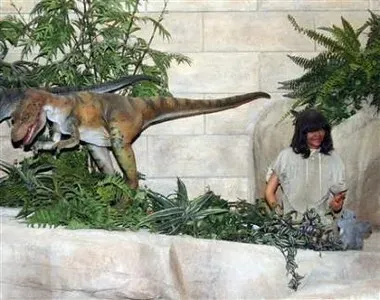
This is the big one. In The Flintstones, humans live not just alongside dinosaurs, but use them as cranes, dishwashers, garbage disposals, and pets. In real life, non‑avian dinosaurs disappeared around sixty‑six million years ago, while our own species, Homo sapiens, only shows up a few hundred thousand years ago. If you turned Earth’s history into a single day, dinosaurs would clock out around 10:40 p.m., and humans would wander in at about 11:58 p.m.
Paleontologists are in essentially total agreement that no human ever saw a T. rex, triceratops, or brontosaurus, because those animals were gone tens of millions of years before anything resembling us evolved. The closest we get to “living dinosaurs” are birds, which are literally the surviving branch of the dinosaur family tree. So if Bedrock wanted even the thinnest veneer of scientific plausibility, Fred’s pet “dino” would need to be more like a big, semi‑tame emu or terror bird than a purple sauropod puppy. Fun? Maybe less so. Accurate? Much more.
Did any Bedrock animals resemble real prehistoric creatures?
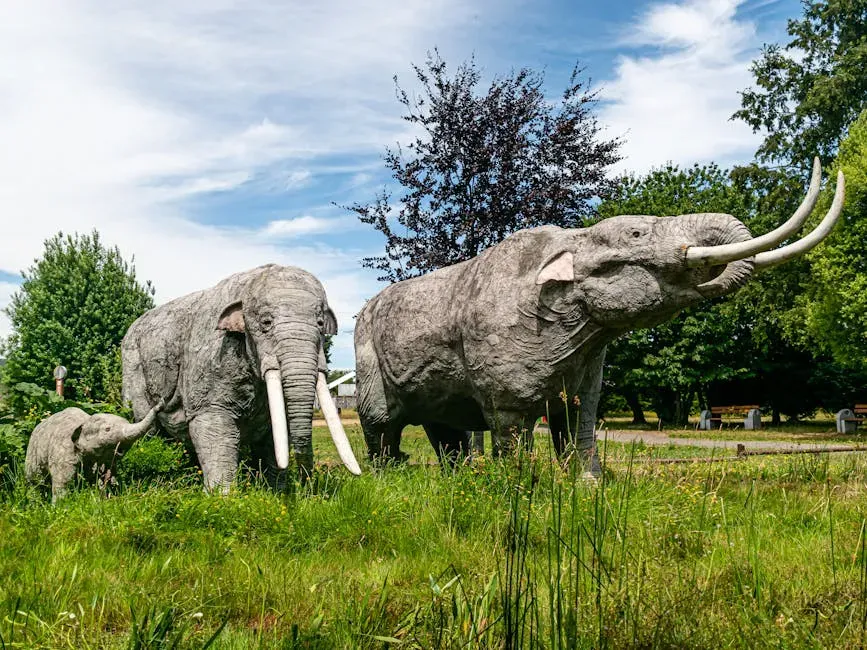
Most Bedrock animals are pure comedic fantasy: tiny mammoths under the sink, stegosauruses as living forklifts, and deep‑sea monsters stuck in the bathtub drain. But a few designs echo genuine prehistoric beasts. The series leans heavily on sauropods (the long‑necked “brontosaurus types”), pterosaurs, saber‑toothed cats, woolly mammoths, and assorted reptilian oddities that look vaguely like real fossils, then get cranked to eleven for laughs.
Here’s the twist: many of the mammals it shows, like saber‑toothed “Smilodon”-style cats and mammoths, actually did live alongside early humans – just not alongside non‑avian dinosaurs. Real ice age ecosystems already had a kind of rough, dangerous grandeur that could easily inspire Bedrock’s background art. If you stripped out the dinosaurs and left an imaginative mix of big cats, mammoths, ground sloths, and giant birds around a small human town, you’d have something that, visually, starts edging closer to a plausible Pleistocene Bedrock.
Could a Stone Age suburb like Bedrock ever really exist?
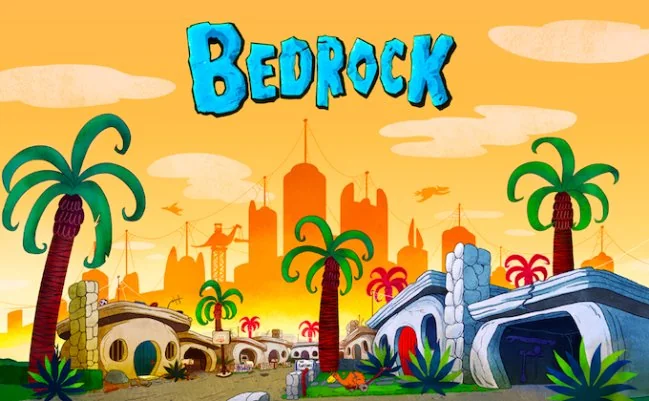
Bedrock looks oddly modern: tidy streets, regular houses, construction sites with hard hats, bowling alleys, and drive‑ins – just all carved out of stone and powered by exhausted animals and bare feet. From an archaeological perspective, this is a fever dream. Early human settlements and the earliest towns did not pop up in an age of giant reptiles and mammoths; they emerged when people began farming, storing food, and building more permanent homes, long after the age of dinosaurs was over and after the big ice age megafauna began to fade.
If you smudge the timeline and simply ask whether a “proto‑suburb” could ever be made mostly of stone, the answer is closer to yes, but with caveats. Many early complex societies used stone heavily, but they also used wood, mudbrick, and other perishable materials. Streets were not neatly paved roads with traffic patterns; they were more like dense, irregular pathways. More importantly, technology and social organization that support something like a car culture, bowling leagues, and time clocks tend to ride on metal tools, writing, and complex economies. A fully suburban Bedrock set entirely in the Stone Age, with no metals at all, would be historically impossible. A rougher, more village‑like Bedrock in a later era, though? That starts to look less ridiculous.
Could dinosaurs really be used as living machines?
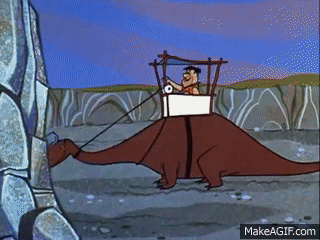
One of the show’s signature jokes is the “appliance dinosaur”: a bird functioning as a record player needle, a pig as a garbage disposal, a giant saurian crane hoisting boulders. From a biomechanical angle, using animals as living tools is not completely absurd – humans have used oxen to plow, horses to pull carriages and cannons, elephants to drag logs, and dogs to haul sleds. Big animals can absolutely serve as engines of physical labor.
The truly unrealistic part is the mix of scale, specialization, and safety. Many dinosaurs would have been incredibly dangerous, fragile in the wrong ways, or simply too hard to domesticate. You cannot just clip a harness to a multi‑ton sauropod and expect it to cheerfully move boulders by the end of the week. Domestication is a long evolutionary partnership, not a weekend training montage. Paleo‑experts point out that only a tiny fraction of all animals we have ever encountered became domesticated at all. The odds that a random cross‑section of dinosaur species would be tractable, trainable, and happy to work in construction for generations are very low.
What would real prehistoric life around humans have looked like?
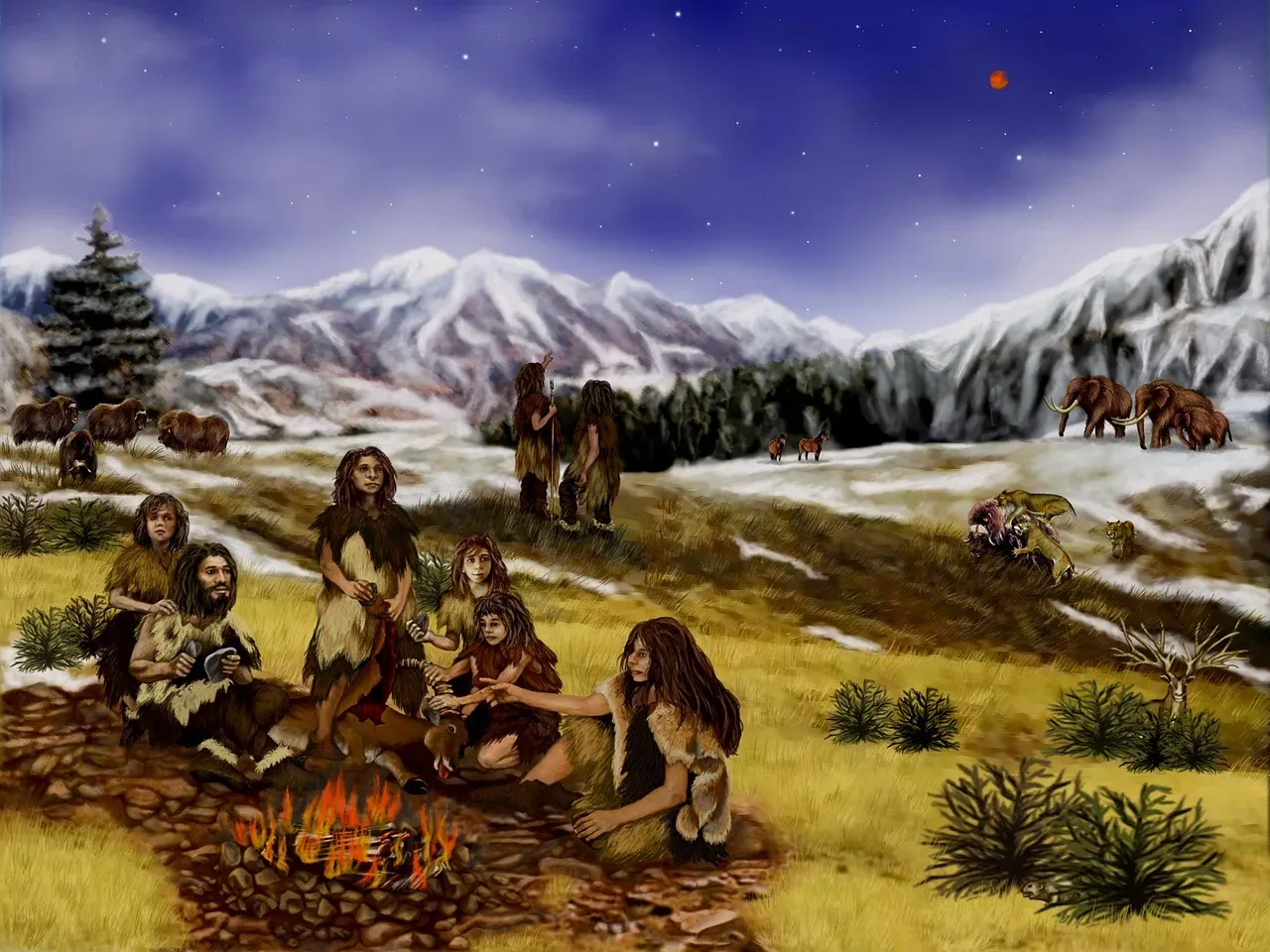
If we set the Flintstones’ dinosaurs aside and focus on the question behind the fantasy – what did daily life look like when humans really did share the planet with large, dramatic animals? – the answer is already wild without any purple reptiles. Early Homo sapiens and our close relatives lived alongside woolly mammoths, mastodons, giant ground sloths, saber‑toothed cats, enormous bison, and massive flightless birds. For a child walking out of a shelter onto a mammoth‑studded plain, the world might have felt as spectacular as any Bedrock backdrop.
That said, the rhythm of life would have been brutally different from the cozy sitcom loop of work, bowling, and backyard barbecues. Many communities were nomadic or semi‑nomadic, following herds and seasons rather than commuting to a quarry. Food, shelter, and safety consumed most waking hours. Instead of a dinosaur crane on a construction site, the closest analog might be a hunting party coordinating to bring down a mammoth using stone points and teamwork. Imagining Bedrock as a flexible, moving camp that sometimes paused near dramatic cliffs and strange beasts gives you a version that rhymes a little more with actual prehistory.
I still remember standing in front of a full mammoth skeleton in a museum as a kid, feeling something flip in my brain. It suddenly clicked that people not so different from me once stood in front of this animal while it was alive, sizing it up as both a threat and dinner. In that moment, the distance between my world and a Flintstones‑style world of big, looming creatures felt weirdly smaller – even if the science says our timelines never crossed with the dinosaurs on the posters down the hall.
Could Bedrock’s ecosystem ever survive as shown?
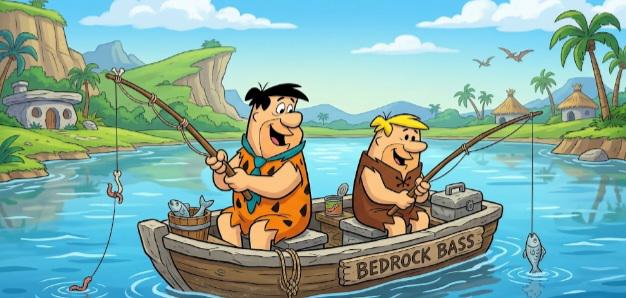
From a paleontologist’s perspective, Bedrock breaks the rules of ecology as hard as it breaks the rules of time. It mixes tropical sauropods with ice age mammoths, Jurassic pterosaurs with Pleistocene tigers, and then drops a human suburb in the middle without asking how all these animals would find food, water, and space without crashing the system. Real ecosystems are the product of long, tangled histories – who eats whom, who competes with whom – and that balance is fragile. Bedrock’s animal mash‑up would likely collapse, with some species outcompeted, others overhunted, and giant dinosaurs needing far more food and territory than a compact rock suburb can offer.
There is also the small detail that humans are very good at reshaping and, frankly, destroying ecosystems they move into. Even in real prehistory, the arrival or expansion of humans often coincides with the decline or disappearance of large animals. A real Bedrock trying to keep mammoths, giant reptiles, saber‑toothed cats, and a thriving human population all in one cozy, comedic valley would be like trying to run a zoo, a city, and a wilderness preserve on the same street. Scientifically, Bedrock as shown would struggle to last more than a blink of geological time before humans, climate, or simple ecological stress tore that balance apart.
So, could The Flintstones actually have happened?
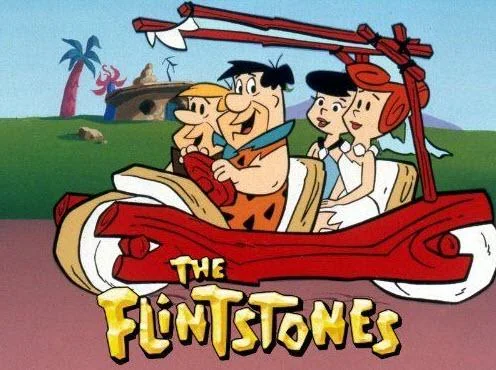
On the strict question – could Bedrock exist exactly as shown, with humans in Stone Age outfits commuting to jobs on dinosaur cranes – the scientific answer is a solid no. The timelines do not overlap, the technology is misplaced, the ecosystem is an impossible mash‑up, and the domestication of dinosaurs is, to put it mildly, a fantasy. From a paleontology perspective, Bedrock is more like a collage of cool things from wildly different eras than a snapshot of any real time on Earth.
But here is where I land, personally: The Flintstones still does something powerful by compressing that history. It makes people curious. It nudges kids and adults to ask whether humans saw dinosaurs, what the Stone Age was really like, and how ecosystems change. In that sense, Bedrock’s chances of “survival” are actually pretty good – not as a real place in Earth’s past, but as a playful gateway into geology and evolution. The real world it points toward is stranger, harsher, and more awe‑inspiring than anything the show could animate. And in a way, that lingering question – what if Fred really did walk past a giant beast on his way home? – is exactly what keeps us walking into museums, opening fossil books, and wondering what else our planet used to hide. Did you expect the truth to be even wilder than the cartoon?