Somewhere out there, pressed into ancient rock that was once a muddy shoreline, is a moment frozen in time. A single step. A living, breathing animal passing through its world millions of years ago, completely unaware it was leaving behind a message for us. That’s honestly one of the most mind-bending things about paleontology. You don’t need a skeleton to feel the presence of a dinosaur. You just need mud, sunlight, and a little bit of luck.
Fossilized bones are some of the most tangible evidence of a dinosaur, but preserved footprints, also known as ichnites, are a type of trace fossil and a window into the lives of these prehistoric animals. These ancient impressions can tell us things about behavior, movement, and ecology that bones simply cannot. If you thought footprints were just, well, footprints, prepare to think again. Let’s dive in.
What Exactly Is a Dinosaur Footprint, and How Did It Survive?
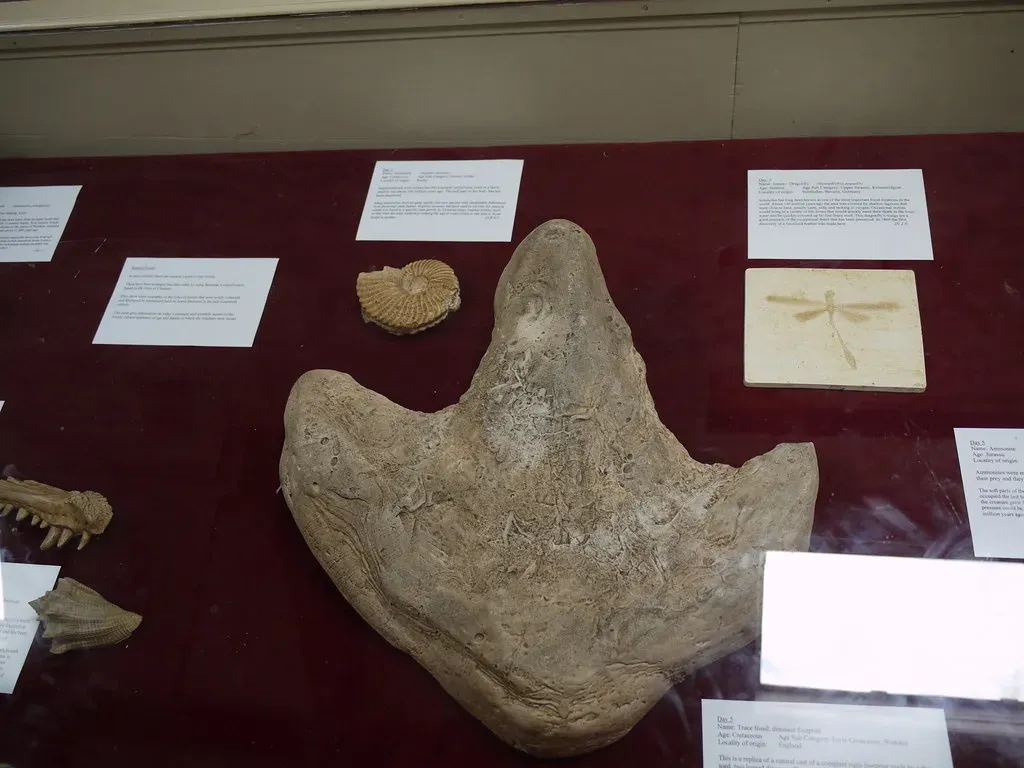
Here’s the thing about footprints: they’re fragile by nature. Your own prints in garden soil disappear with the next rainfall. So how did some dinosaur tracks survive for over a hundred million years? Unlike bones, which needed to be covered quickly once a dinosaur died, tracks first needed to be baked hard by the sun. This process could take anywhere from days to months depending on conditions. Only then would a layer of mud, ash, or similar material help to preserve the tracks.
The consistency of the ground heavily influences the shape, size, and depth of a track. For a perfect print, the ground cannot be too hard or too soft. If it is too hard, the resulting print would be very shallow or not form at all. If too soft, the track could collapse in on itself. Think of it like Goldilocks. The conditions had to be just right, which is why every single surviving dinosaur footprint is, in its own way, a minor miracle.
Reading a Footprint Like a Book: Shape, Size, and Diet Clues
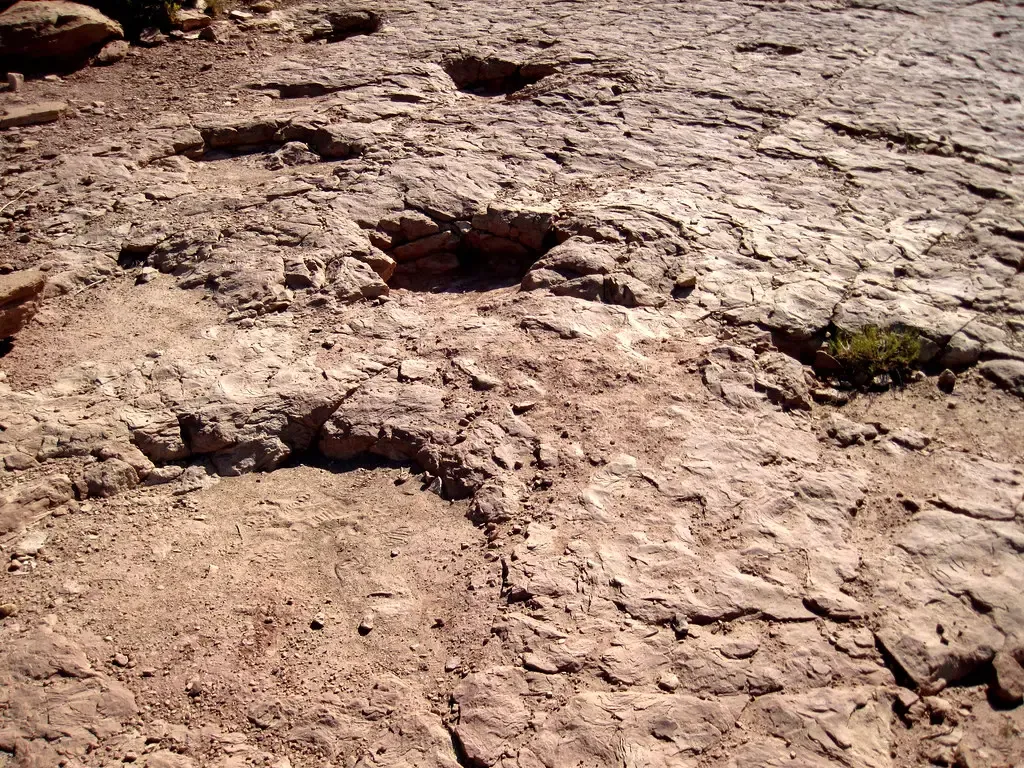
Footprints are rich with information. Track experts have learned that these fossil traces can reveal how big an animal was, whether it was moving slowly or quickly, and sometimes, what it liked to eat. I know it sounds crazy, but the shape of a toe can suggest whether you’re looking at a predator or a peaceful plant-muncher. That’s a remarkable amount of detail hidden in something you could literally step over on a hike.
A three-toed, sharp-clawed print means the trackmaker was a meat eater, specifically a theropod. A three-toed print with rounded toes probably belonged to an ornithopod dinosaur, a plant eater. Pairs of unequal-sized prints were the work of another plant eater, the long-necked, long-tailed sauropods. Scientists also use print length to estimate overall body size. Multiplying print length by four gives a rough estimate of leg length, though this ratio was not exact and probably differed significantly among species and age groups within the same species.
How Fast Were They Really? The Speed Debate
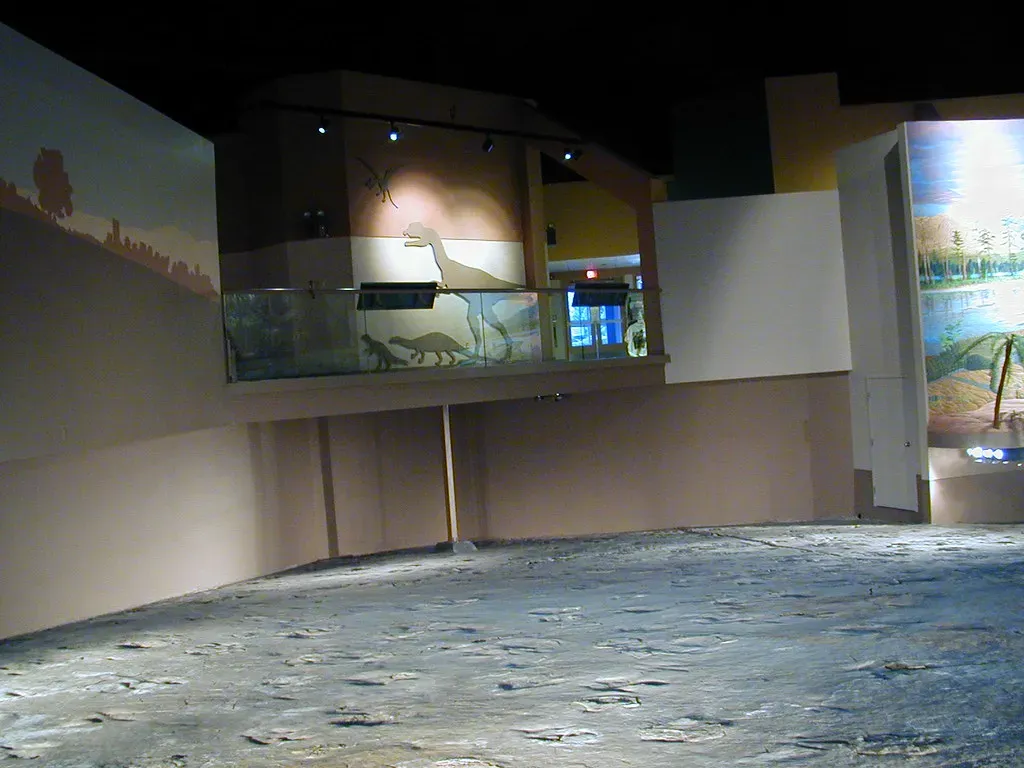
Scientists estimate the relative speed of a dinosaur from the distance between prints of the right and left feet. In modern animals, and presumably in dinosaurs, a step length four or more times the footprint length indicates running. The dinosaurs at Davenport, with step lengths three times the print length, were walking slowly. This formula sounds simple, but applying it to ancient animals has stirred up a surprisingly heated debate among researchers in recent years.
A newly discovered fossil trackway in Inner Mongolia reveals what may be the fastest-running theropod dinosaur from the Cretaceous period, clocking in at speeds of up to 45 km/h. Still, not everyone is convinced these speed calculations are accurate. While trackways may offer important insights into locomotor behavior in extinct dinosaurs, using them for anything but broad comparisons of relative speeds carries too much uncertainty. Researchers now strongly advocate that speed calculations from fossil trackways be presented in broad terms rather than as specific values.
Social Animals or Solitary Wanderers? Herding Behavior Revealed
One of the most emotionally compelling discoveries in dinosaur ichnology is the evidence of social behavior. It changes everything about how you picture these creatures. Instead of lone monsters prowling ancient landscapes, you start imagining something more like the animal kingdoms we see today, complete with family groups and protective instincts.
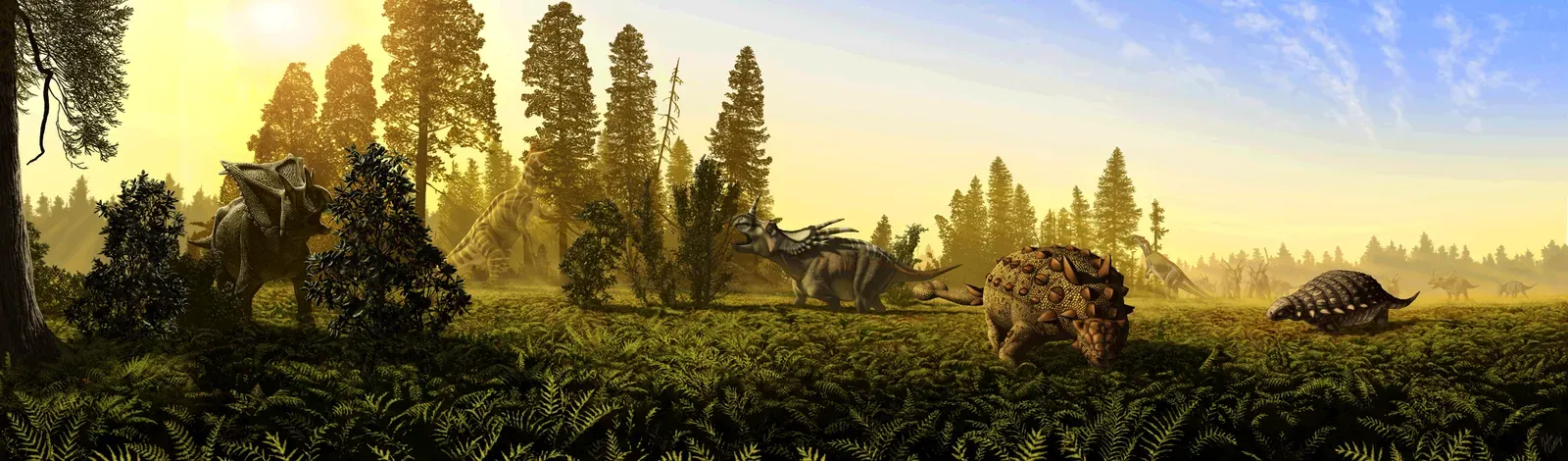
A set of sauropod dinosaur tracks in Texas shows juvenile footprints positioned in the center of the group, flanked by adults all moving together in the same direction. Even more recently, a collection of footprints made by multiple species of dinosaur was uncovered in Canada. These 76-million-year-old trackways could provide scientists with a rare glimpse into the social lives of these ancient reptiles. Footprints uncovered in the Canadian province of Alberta could be evidence that some dinosaurs moved in herds comprising multiple different species. Many of the newly described footprints were made by ceratopsians, the group of horned dinosaurs that includes Triceratops, with the 13 ceratopsian tracks thought to belong to at least five individuals walking together during the Cretaceous Period.
Dinosaurs Were Dancers? The Surprising Truth About Mating Rituals
This is honestly one of the most jaw-dropping things paleontology has uncovered in recent memory. The idea that dinosaurs performed elaborate courtship dances, much like modern birds, would have seemed absurd a few decades ago. The evidence, however, is surprisingly compelling. Researchers have presented extensive and geographically widespread physical evidence of substrate scraping behavior by large theropods, considered compelling evidence of display arenas or leks, consistent with nest scrape display behavior among many extant ground-nesting birds. Large scrapes, up to 2 meters in diameter, occur abundantly at several Cretaceous sites in Colorado, constituting a previously unknown category of large dinosaurian trace fossil.
Researchers discovered these courtship dances by closely examining 35 dinosaur tracks preserved in stone at Colorado’s Dinosaur Ridge, where scrapes, gouges, and other marks from stomping feet and claws on the preserved rock reveal that dinosaurs would move in particular ways, zipping backwards or side-to-side, with dug-in marks suggesting the creatures would dig their claws into the ground and then kick dirt behind them. Evidence at the site strongly points to the theory that dinosaurs visited this location over and over again at different times, suggesting that this once long-ago stretch of tidal mud was a major place for courtship and mating. It’s like a prehistoric nightclub, and we now have the scuff marks to prove it.
Footprints as Medical Records: When Dinosaurs Were Injured
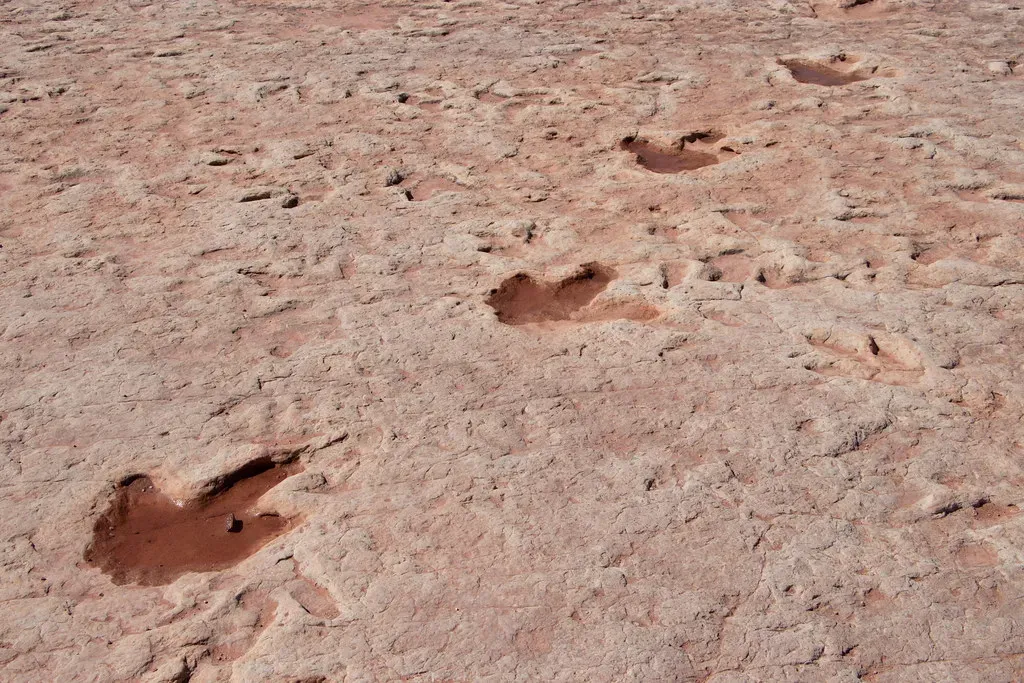
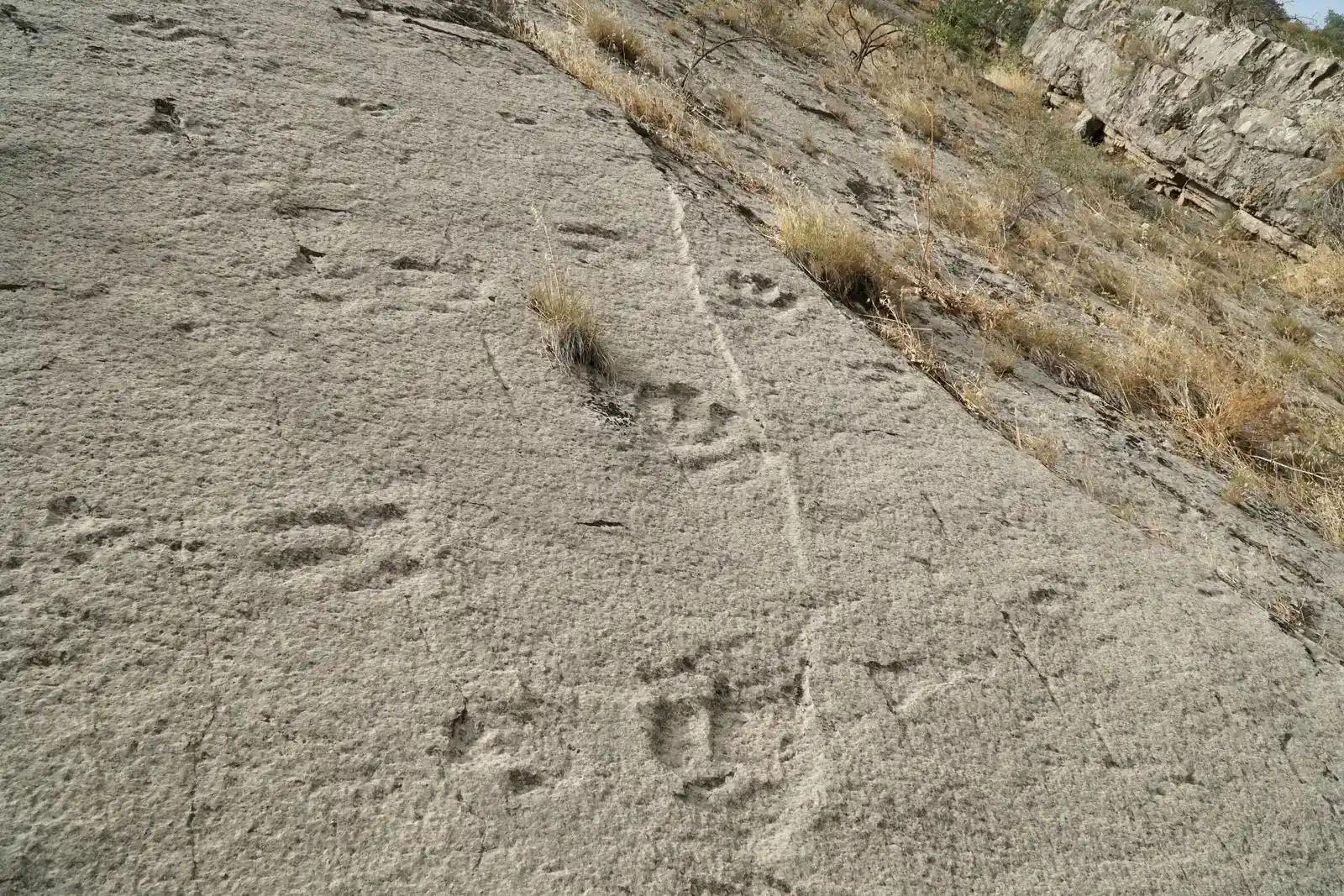
Here’s something you might not have expected. Dinosaur footprints can act as a kind of ancient medical record. When an animal was injured, its gait changed, and those changes were preserved in stone for scientists to study millions of years later. A set of dinosaur footprints in Spain has unusual features because the dinosaur that made the tracks had an injured foot, according to a study published in PLOS ONE by Carlos M. Herrera-Castillo of the Autonomous University of Madrid and colleagues.
The footprints are spaced more widely than typical theropod tracks, indicating that this dinosaur adjusted its gait to compensate for its injured foot. This is further supported by certain deformations in the right footprints, which suggest the animal was putting more weight on that side. Similar toe deformities and compensating behaviors are also seen in modern birds, and this evidence sheds light on how this dinosaur, and perhaps many others, found ways to survive despite pathological setbacks. Honestly, there’s something deeply human about the image of a limping dinosaur still carrying on.
When Dinosaurs Went Swimming: Aquatic Traces and Ancient Coastlines

Most people picture dinosaurs as purely land animals. Some, however, clearly had a different relationship with water. Tracks associated with long linear grooves usually show where a trackmaker’s claws dragged through the sediment as it swam in shallow water. These swim tracks present evidence that a given site was covered by water deep enough to make an animal somewhat buoyant. It’s a completely different image from the thundering land-beast stereotype, and it’s all written in the mud.
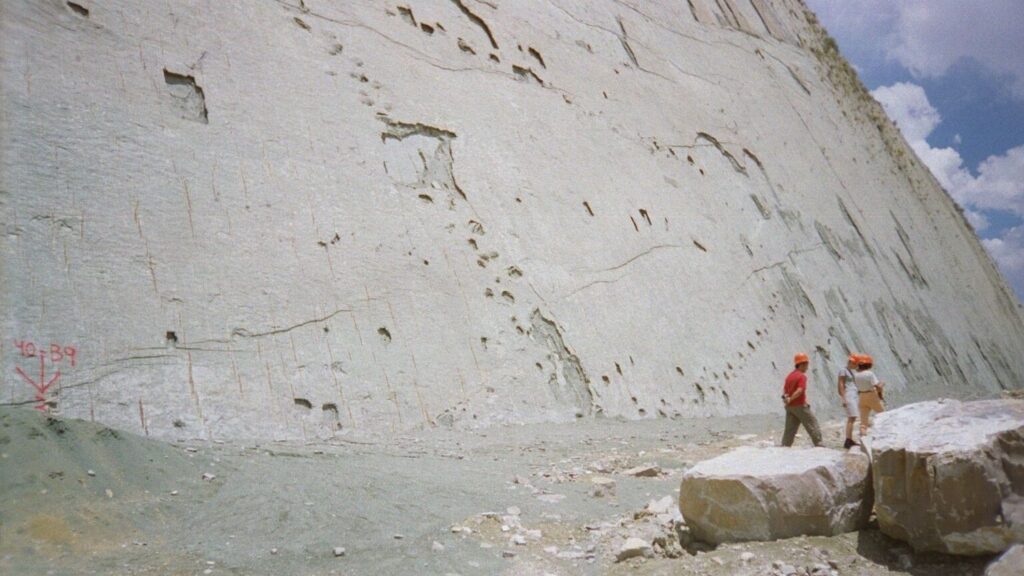
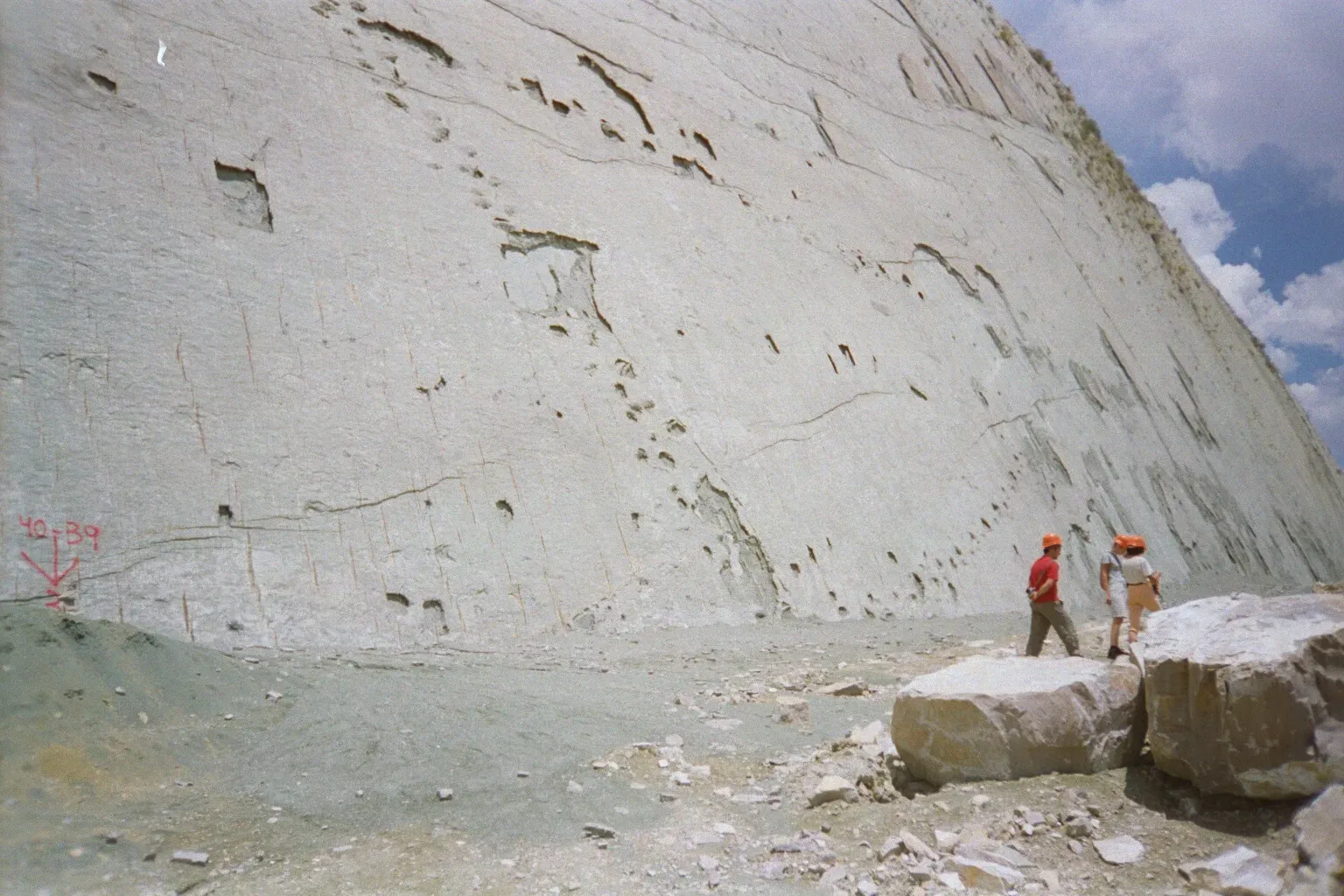
A total of nearly 18,000 tracks, including over 16,600 footprints as well as 1,378 swim tracks and several tail traces, have been located along the Carreras Pampa track site, an ancient coastline located in Torotoro National Park in central Bolivia, according to a paper published in the journal PLOS One. The dinosaurs that once roamed this region also made awkward attempts to swim, scratching at what was squishy lake-bottom sediment to leave 1,378 additional traces. The longest swim trackway studied by the researchers measured over 130 meters in length, and to date it remains the longest exposed swim trackway in the world. A 130-meter swimming trail. Let that sink in for a moment.
The Future of Footprint Science: Machine Learning Meets Prehistoric Stone
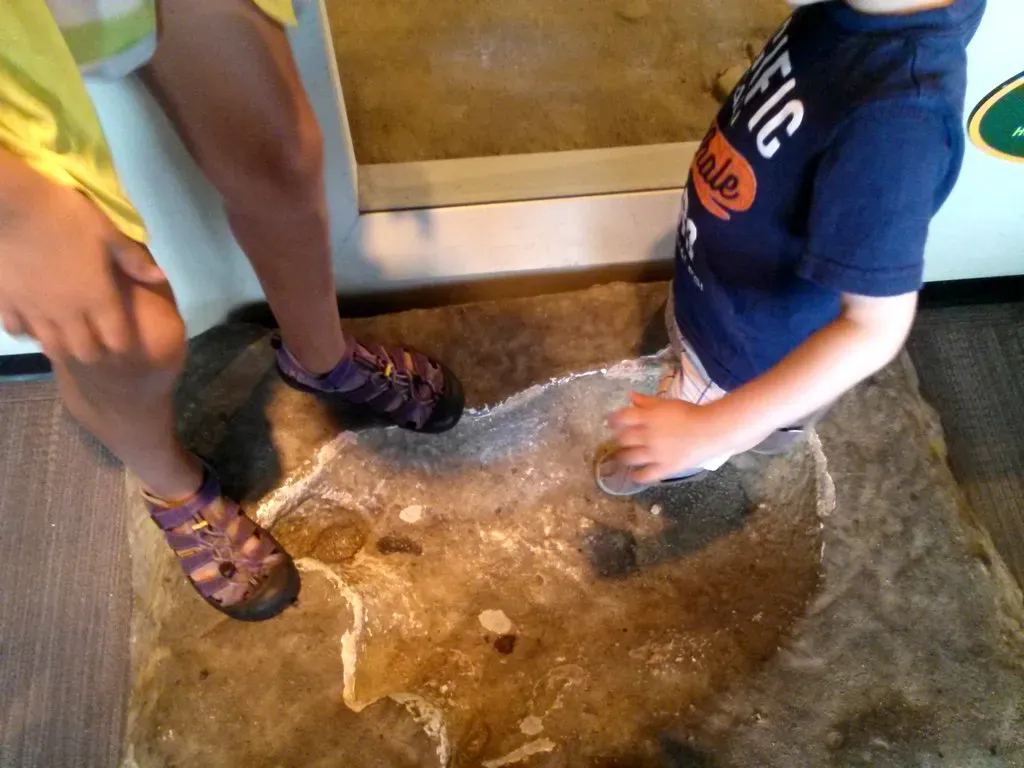
You might think the field of studying ancient footprints is slow-moving, but right now it’s in the middle of a technological revolution. Recently, machine learning has been heralded as a tool for classifying and identifying tracks. Researchers have used an unsupervised neural network to process a dataset of nearly 2,000 dinosaur tracks, which recognizes eight ways in which they most vary. It’s a bit like teaching a computer to be a dinosaur detective, which, when you think about it, is about as cool as science gets.
Because trace fossils reflect interactions between animals and their environments, they can reveal aspects of behavior difficult to discern from body fossils, such as preferred habitats and locomotion styles. Furthermore, because trace fossils can be locally abundant and are embedded into the sediments in which they formed, they provide critical information on the distribution and origination times of species. Cadence, which summarizes the overall rhythm of movement across trackways, and step duration, which reveals temporal variations between individual steps, together offer potential for three-dimensional animated reconstructions of dinosaur behavior, providing a more refined understanding of locomotion and behavioral patterns. The ancient past and cutting-edge technology are converging, and the results are extraordinary.
Conclusion: Every Footprint Tells a Story
What started as a simple impression in Mesozoic mud has become one of the richest sources of knowledge we have about how dinosaurs truly lived. Not just what they looked like frozen in bone, but how they moved, who they traveled with, how they courted partners, and even how they coped with pain. Dinosaur tracks provide a snapshot of when these animals roamed across our planet. They are direct evidence of how an individual was behaving at a specific moment in time.
There’s something deeply moving about that. A footprint is the most personal fossil that can exist. It’s not a tooth or a rib. It’s the last touch between a living creature and its world. And we’re still learning to read what it left behind. As technology advances and more sites are uncovered, from the Bolivian coastlines to the plains of Inner Mongolia, we’ll keep getting closer to understanding the full, vivid, wonderfully complex lives these animals lived.
Which discovery surprised you the most? The dancing dinosaurs, the swimming giants, or the injured survivor that refused to slow down? Tell us in the comments.