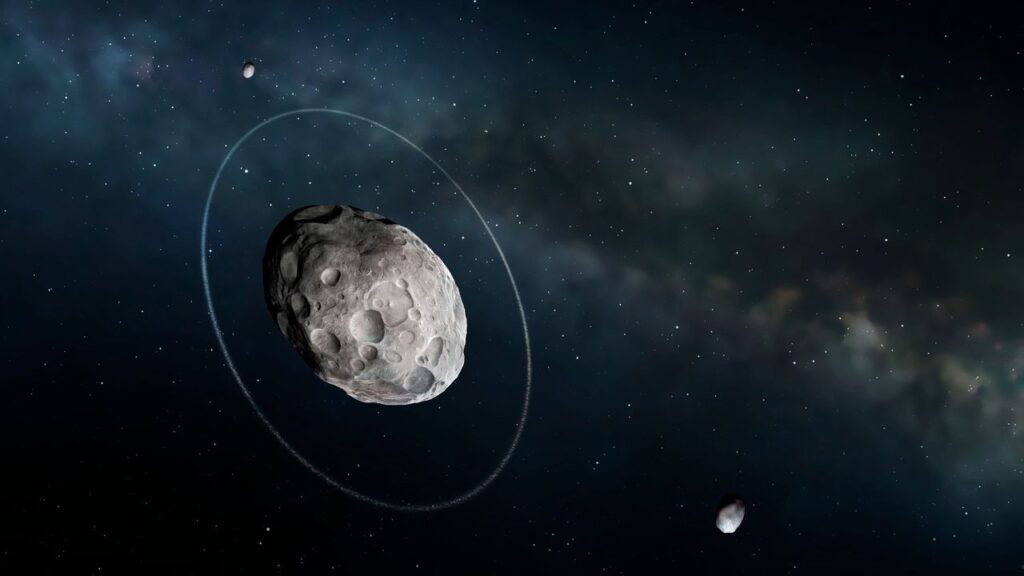
Astronomers continue to uncover the solar system’s smaller worlds, where dwarf planets like Pluto and Ceres hold intriguing secrets just beyond the familiar eight planets.
Pluto’s Legacy Sparks Interest in Dwarf Worlds

Pluto’s Legacy Sparks Interest in Dwarf Worlds (Image Credits: Cdn.mos.cms.futurecdn.net)
Pluto captured imaginations for decades as the ninth planet before its 2006 reclassification. That decision by the International Astronomical Union introduced the dwarf planet category for bodies that orbit the sun, maintain a spherical shape due to gravity, but fail to clear their orbital paths.
Today, five dwarf planets receive official recognition: Ceres, Pluto, Haumea, Makemake, and Eris. Ceres resides in the asteroid belt between Mars and Jupiter, marking it as the sole dwarf in the inner solar system. Pluto dwells in the distant Kuiper Belt, accompanied by its moons.
These objects challenge traditional views of planetary formation. Researchers study them to understand the solar system’s early history and potential building blocks of larger planets.
Why Word Searches Make Learning Cosmic Facts Fun
Word search puzzles transform dry facts into interactive challenges. Participants scan grids for hidden terms like “CERES,” “PLUTO,” “HAUMEA,” “MAKEMAKE,” and “ERIS,” honing pattern recognition along the way.
Such activities engage multiple brain regions simultaneously. Solvers improve visual scanning and attention to detail while reinforcing vocabulary on niche topics like astronomy.
- Ceres: Largest asteroid, visited by NASA’s Dawn spacecraft.
- Pluto: Features a heart-shaped glacier and thin atmosphere.
- Haumea: Elongated shape, spins rapidly with two moons.
- Makemake: Methane-rich surface, no known moons until recently.
- Eris: Larger than Pluto, prompted the dwarf planet debate.
Cognitive Gains from Puzzle-Solving
Psychology research highlights word searches as tools for mental sharpness. They strengthen short-term memory, enhance concentration, and build problem-solving skills without high pressure.
Regular practice quiets mental overstimulation, reducing stress through focused activity. The satisfaction of completion releases feel-good neurotransmitters, fostering a sense of achievement.
Studies suggest these exercises support cognitive maintenance, particularly beneficial for adults seeking low-stakes brain training. Astronomy-themed puzzles add educational value, blending recreation with discovery.
Comparing the Dwarf Planets
| Dwarf Planet | Location | Key Feature |
|---|---|---|
| Ceres | Asteroid Belt | Water ice deposits |
| Pluto | Kuiper Belt | Five moons |
| Haumea | Kuiper Belt | Fast rotation |
| Makemake | Kuiper Belt | Organic surface |
| Eris | Scattered Disc | Largest known |
This table outlines basic distinctions. Each world offers unique insights into solar system diversity.
Key Takeaways
- Dwarf planets expand our understanding of solar system formation.
- Word searches provide accessible cognitive workouts with thematic learning.
- Five official members lead a growing list of candidates.
Dwarf planets remind us the solar system holds more mysteries than textbooks reveal. Grab a pencil, print a word search grid packed with these names, and test your skills today. What do you think about Pluto’s status? Tell us in the comments.