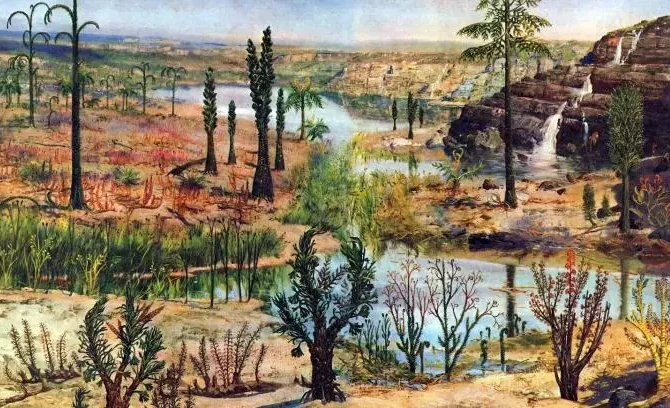
Close your eyes and picture a forest. You probably imagine towering oaks, rustling pines, maybe the hush of a fern-lined woodland floor. Now throw all of that out. Completely. The first forests that ever existed on this planet looked nothing like that mental image, and honestly, they were stranger than most science fiction writers could dream up.
We are talking about a world roughly 390 million years ago, where trees had hollow trunks, shed their branches like a lizard drops its tail, and grew through a biological process so complex that no tree alive today even comes close to replicating it. The story of Earth’s earliest forests is one of the most astonishing chapters in our planet’s history. You might want to sit down for this one.
The World’s Oldest Known Forest Is Not Where You’d Expect
If someone asked you to guess where the oldest fossil forest on Earth was found, you might say somewhere remote, somewhere wild and untouched. You’d be wrong, and in a delightfully surprising way. The oldest fossilised forest known on Earth, dating from 390 million years ago, was found in the high sandstone cliffs along the Devon and Somerset coast of South West England.
The fossils, discovered and identified by researchers from the Universities of Cambridge and Cardiff, are the oldest fossilised trees ever found in Britain, and the oldest known fossil forest on Earth. This fossil forest is roughly four million years older than the previous record holder, which was found in New York State. Let that sink in for a moment. The oldest forest ever discovered is in England, near what is now, of all things, a holiday camp.
A Forest That Looked Like Nothing on Earth Today
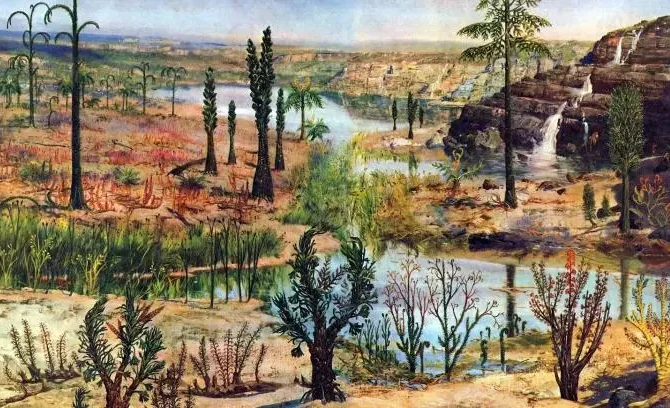
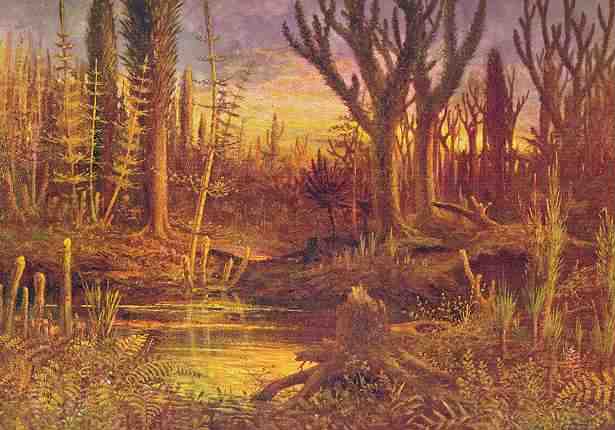
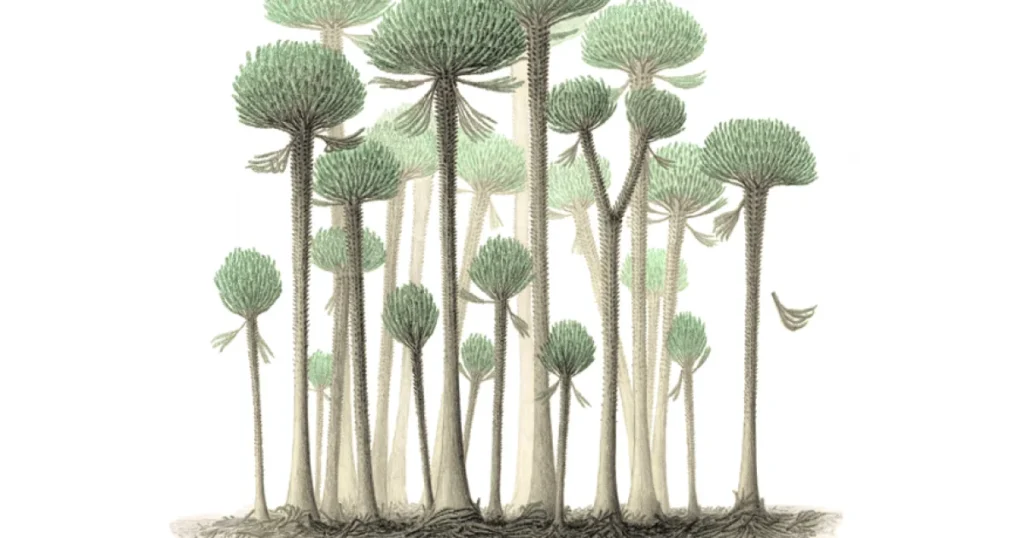
The fossilised trees, known as Calamophyton, at first glance resemble palm trees, but they were a “prototype” of the kinds of trees we are familiar with today. Rather than solid wood, their trunks were thin and hollow in the centre. Think of them as the rough draft of what a tree could eventually become. They were weird, experimental, almost like nature was sketching its first concept art.
Scientists describe this as “a pretty weird forest, not like any forest you would see today.” There wasn’t any undergrowth to speak of, and grass hadn’t yet appeared, but there were lots of twigs dropped by these densely-packed trees, which had a big effect on the landscape. This period marked the first time that tightly-packed plants were able to grow on land. No undergrowth, no grass, no familiar sounds whatsoever. Just closely packed hollow-trunked oddities shedding debris across an alien landscape.
The Bizarre Biology of the First Trees
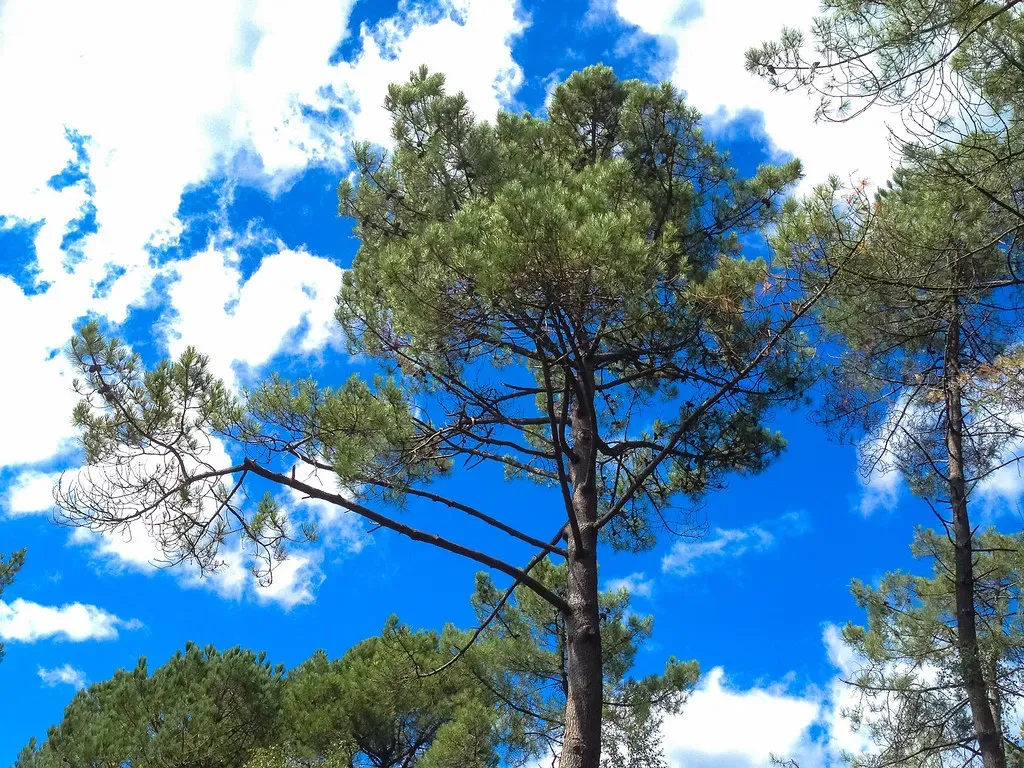
Here’s the thing that really blows my mind about these ancient plants: they grew in a way that modern science has never seen replicated. Today’s trees grow through a relatively simple mechanism. The trunk is a single cylindrical shaft made up of hundreds of woody strands called xylem, which conduct water from the roots to the branches and leaves. New xylem grow in rings at the periphery of the trunk just behind the bark, adding girth so the tree can get taller.
The fossils reveal that, unlike modern trees with a single shaft, cladoxylopsids had multiple xylem columns spaced around the perimeter of a hollow trunk. A network of crisscrossing strands connected the vertical xylem, much like a chain-link fence spreads from pole to pole, and soft tissue filled the spaces between all these strands. New growth formed in rings around each of the xylem columns while an increasing volume of soft tissue forced the strands to spread out. Honestly, it sounds less like a tree and more like some kind of living architectural experiment.
How These Trees Actually Grew Bigger
You might wonder how a tree with a hollow, structurally fragile core could possibly grow tall enough to form a canopy. The answer involves one of the most complex biological growth strategies ever discovered. Using anatomically preserved trunks, scientists showed how these trees could grow to a large size by the production of large amounts of soft tissues and new wood around the individual xylem strands and by a controlled structural collapse at the expanding base. Researchers have discovered a complex tree growth strategy unique in Earth history, but with some similarity to that of living palms.
The bottom of the trunk slowly collapsed outward to form the large flat-bottomed tree bases characteristic of this type of plant. No tree does anything as complicated today. Scientists estimate cladoxylopsids could have been 8 to 12 meters tall. So you had a hollow-cored, structurally collapsing, xylem-splitting giant reaching four stories high. Nature, apparently, was not interested in keeping things simple.
How These Ancient Forests Rewired the Entire Planet
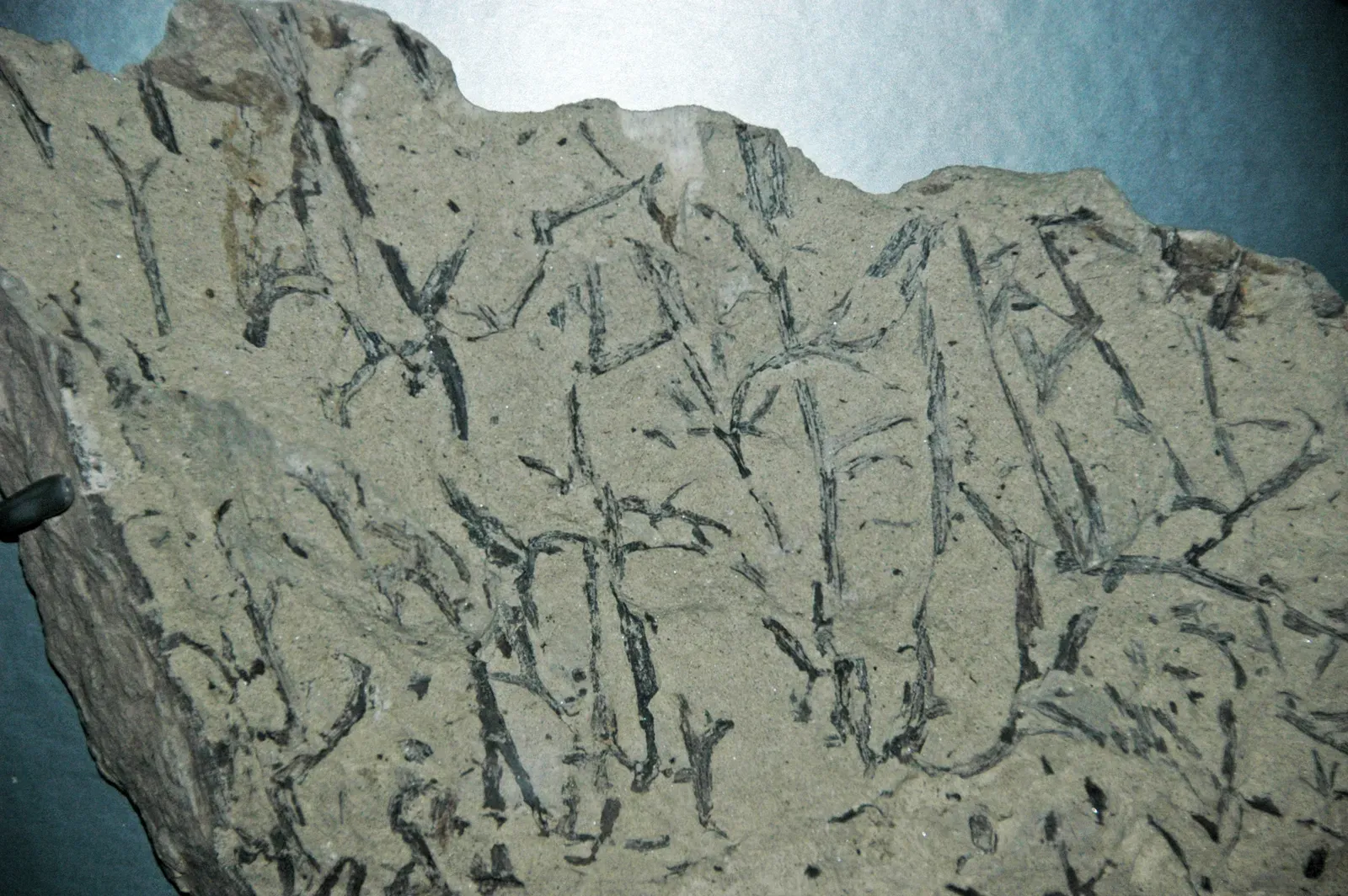
The arrival of Earth’s first forests was not just a botanical curiosity. It was arguably the single greatest transformation the planet’s surface has ever experienced. The origin of trees and forests in the Mid Devonian, around 393 to 383 million years ago, was a turning point in Earth history, marking permanent changes to terrestrial ecology, geochemical cycles, atmospheric CO2 levels, and climate.
Deep roots penetrated and broke up the rocks within and below the soil. Geologists call this processing “weathering,” and it triggers chemical reactions that pull CO2 from the atmosphere and turn it into carbonate ions in groundwater. This ultimately runs off into the sea and is locked away as limestone. Partly because of weathering and its knock-on effects, atmospheric CO2 levels dropped to modern levels soon after the appearance of woody forests. A few hollow-trunked, alien-looking trees essentially air-conditioned the entire planet.
A Silent World Without Birds, Dinosaurs, or Anything Familiar
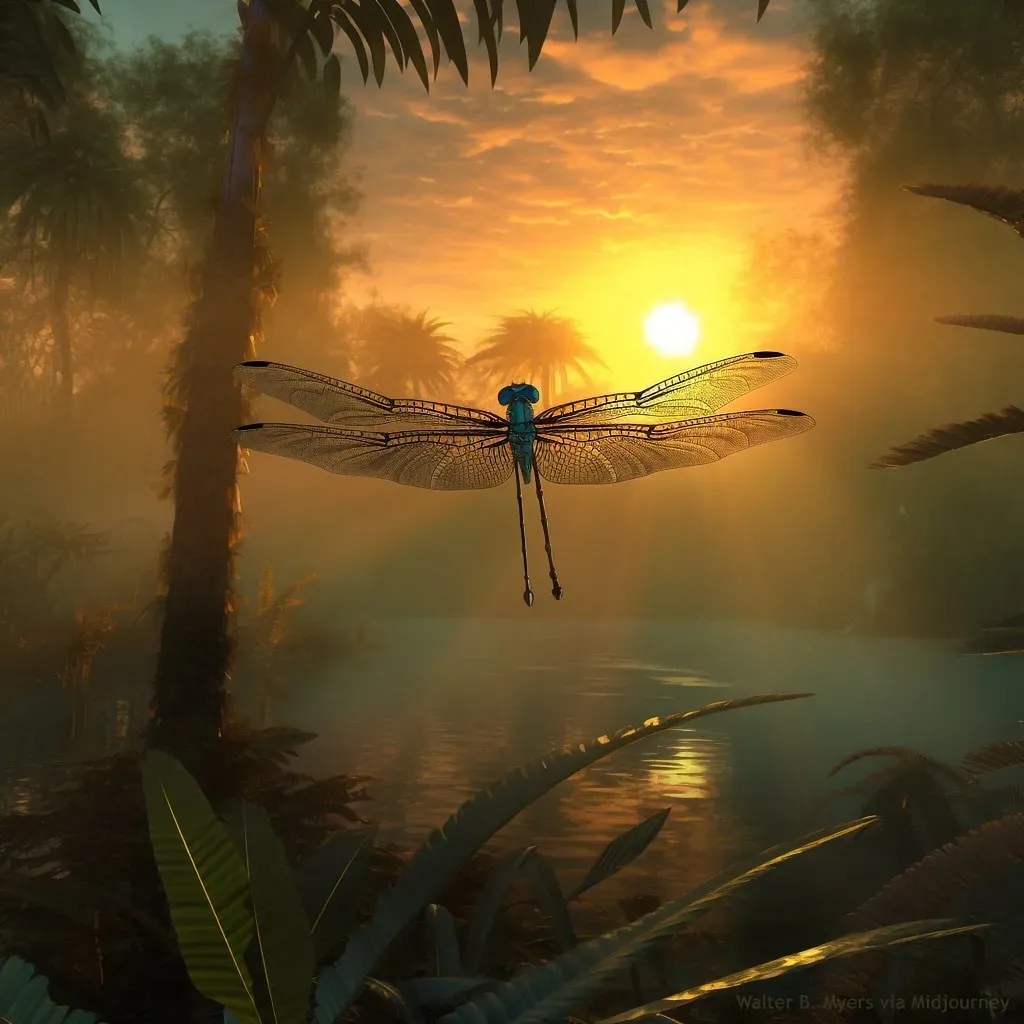
Perhaps the most eerie detail of all is what was not in these ancient forests. Walk through them in your imagination and you would hear absolutely nothing recognizable. At the time this ancient forest existed, no birds or vertebrates lived on land. Dinosaurs wouldn’t appear for another 150 million years. Instead, the forest was likely home to millipede-like bugs and other insects. No birdsong, no rustling mammals, no howling wind through leafy canopies. Just the quiet clicking of ancient arthropods.
Some research suggests the removal of so much atmospheric CO2 led directly to a sustained rise in oxygen levels, with the atmosphere containing about 35 percent oxygen by 300 million years ago. This, in turn, may have led to the evolution of gigantic insects at that time, some with wing spans of 70 centimeters, which may have lived in the ancient forests. So the very trees that shaped the air we breathe also gave rise to dragonflies the size of seagulls. The ripple effects of these first forests are almost impossibly far-reaching.
The Strange Disappearance and Lasting Legacy
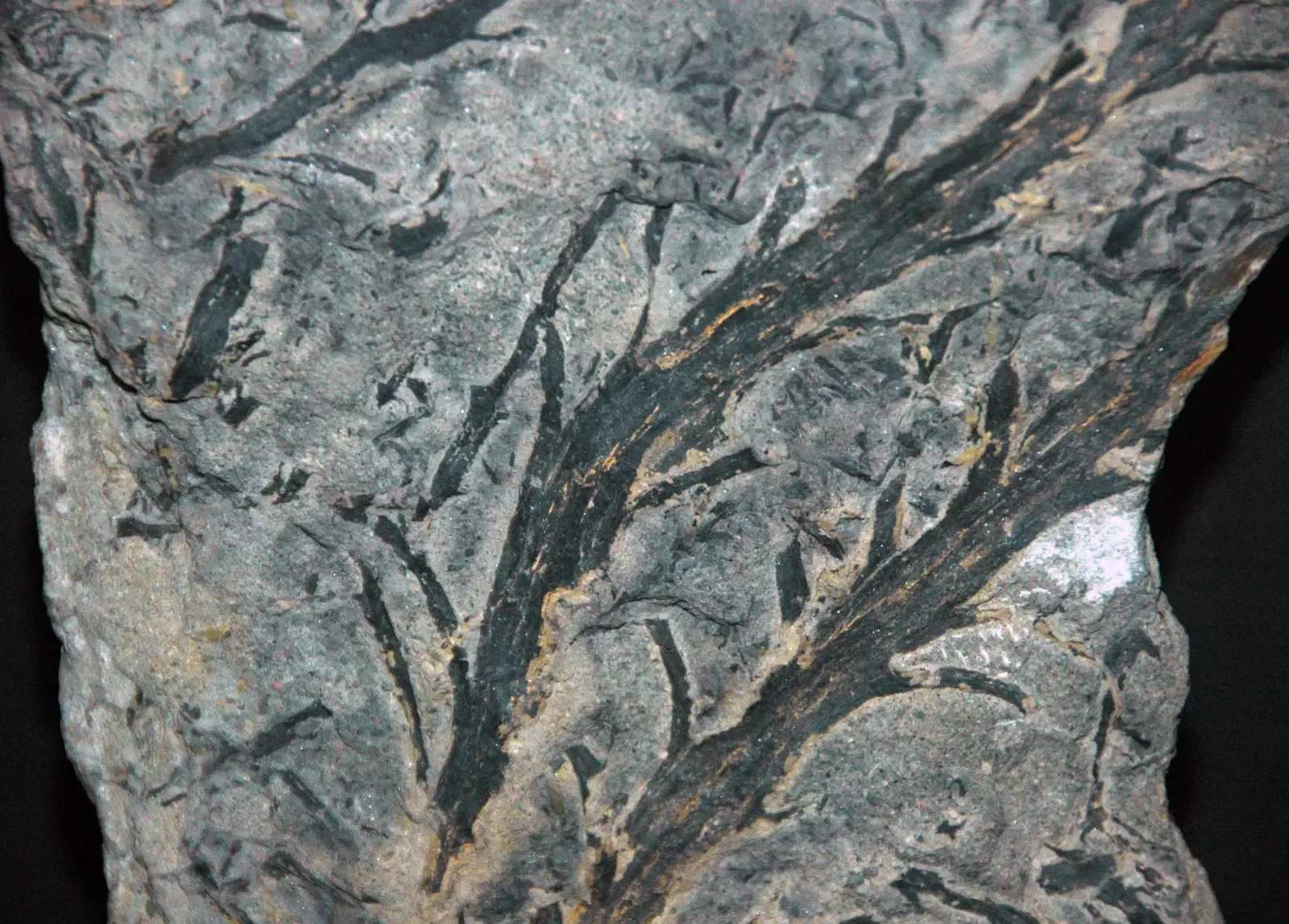
After dominating Earth for millions of years, the cladoxylopsids simply vanished. Despite their early critical role in the evolution of life on Earth, the cladoxylopsids do not have any modern descendants. They disappeared at the end of the Devonian period, perhaps because they were left in the shade of taller, more robust trees, or because changing environmental conditions may have favored Archaeopteris, the ancestors of modern trees that appeared about 385 million years ago.
Yet their legacy is written into everything around you. The trees that grew a few tens of millions of years after the first forests have also had an indirect impact on the modern climate. The fossilised remains of these forests formed the coal that fueled the Industrial Revolution in Europe and North America. These findings put a sobering lens on the climatic shifts our planet is undergoing now. Around the world, forests are being cut away, and the ancient carbon left by prehistoric trees, our main source of coal, is being dug up and burned. What is happening today is the opposite of what happened in the Devonian.
Conclusion
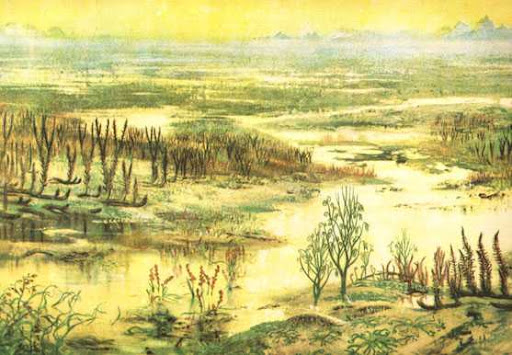
Earth’s earliest forests were alien, structurally baffling, and yet world-changingly powerful. They rewired the atmosphere, sculpted river systems, sparked the rise of giant insects, and laid the foundation for every forest that has ever existed since. They did all of this without a single leaf, without any undergrowth, and without a creature large enough to cast a shadow beneath them.
The next time you stand in a forest, surrounded by birdsong and the smell of earth and bark, you are standing in the distant echo of something far stranger and more radical than you can easily imagine. Those first hollow-trunked pioneers made your world possible. What do you think about it? Share your thoughts in the comments below.