Papua New Guinea – Deep in the rugged highlands of Papua New Guinea, a elusive canine captures the imagination with its otherworldly calls. The New Guinea singing dog, a primitive breed teetering on the edge of extinction, fills the misty forests with yodel-like howls rather than typical barks. Long presumed lost to the wild, recent camera trap evidence confirmed small populations persist in remote mountain regions. This ancient lineage offers a window into canine evolution, blending wild instincts with tentative human coexistence.
The Haunting Vocalizations That Give It Its Name
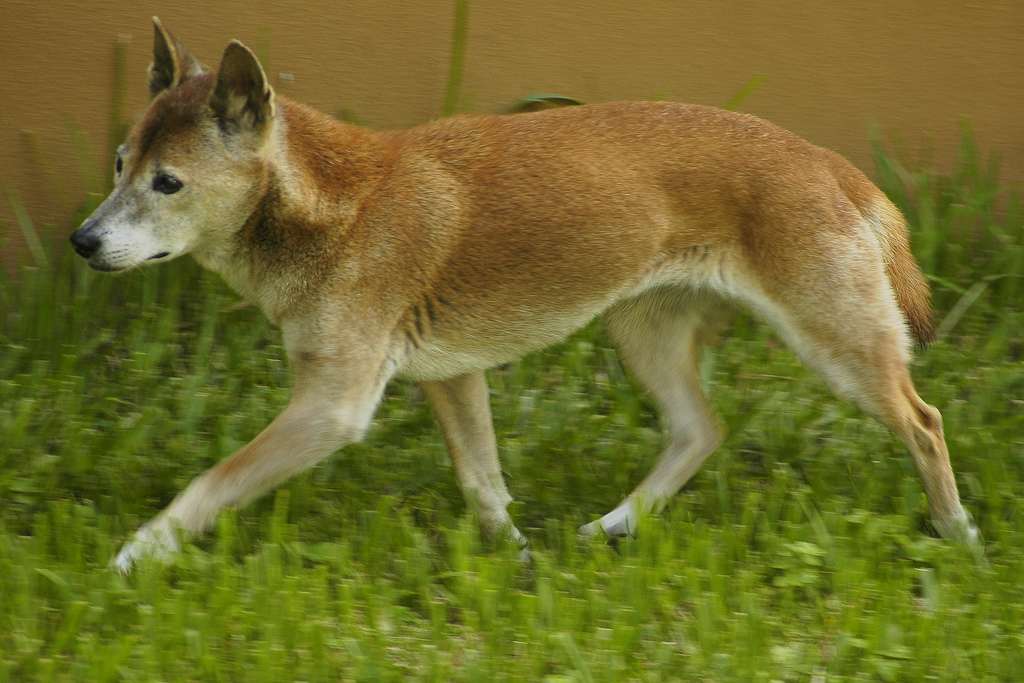
The Haunting Vocalizations That Give It Its Name (Image Credits: Upload.wikimedia.org)
Unlike most dogs, the New Guinea singing dog rarely barks. Instead, it unleashes a series of resonant howls that rise sharply in pitch, hold steady tones for seconds, and descend in melodic waves. Observers compare the sound to whale songs or distant birdsong, especially when groups harmonize at dawn.
These vocalizations serve communication purposes across steep terrains, allowing pairs or small family units to coordinate hunts or signal territory. A unique throat structure, resembling a human uvula, may enable such complex tones. Researchers first documented this trait in 1897, but wild recordings remain scarce.
Ancient Roots and Distinctive Physical Features
Genetic studies trace the New Guinea singing dog’s ancestry to early dogs brought by Asian migrants around 10,000 years ago. After land bridges formed and separated, southern populations evolved into Australian dingoes, while highland groups developed separately. This basal lineage split from dingoes roughly 3,450 years ago, earning the dog a reputation as a “living fossil.”
Standing small to medium in size, these dogs feature wedge-shaped heads, erect triangular ears, and glossy sandy coats. Their bodies boast exceptional flexibility, with elastic joints suited for climbing trees and navigating rocky cliffs. Carnivorous hunters, they prey on birds, small mammals, and occasionally fruit, relying on agility over endurance.
Habitat, Behavior, and Village Life
These canines thrive in damp, moss-covered cloud forests at altitudes from 2,500 to 4,700 meters. Once widespread, wild groups now number only a handful, confined to Papua New Guinea’s most inaccessible peaks. Most survivors linger near highland villages, scavenging or assisting with hunts while maintaining fierce independence.
Highly intelligent and energetic, they form tight pairs rather than packs. Males sometimes aid in pup-rearing, though females defend fiercely. Their history of livestock predation once sparked conflicts, yet gradual interbreeding fostered wary partnerships. Still, their untamed drive demands rigorous training and vast spaces.
Conservation Struggles and Domestication Limits
Wild populations edged toward extinction decades ago, with captive breeding sustaining several hundred individuals worldwide. The 2020 rediscovery via motion cameras sparked optimism, proving purebred highland dogs endure. Efforts prioritize research zoos over pet trade, as these dogs resist full domestication.
Experts warn against ownership; their intensity overwhelms novices, and they pose risks around children or small pets. Lifespans reach 15 years in controlled settings, bolstered by lean builds and active lifestyles. Conservation hinges on habitat protection amid human expansion.
| Feature | New Guinea Singing Dog | Australian Dingo |
|---|---|---|
| Size | Small-medium, agile climber | Larger, endurance runner |
| Vocalization | Yodel-howl | Standard howl/bark |
| Status | Semi-wild, near villages | Mostly wild |
Key Takeaways
- Rare yodel-like songs distinguish them from barking dogs.
- Ancient genetics link them closely to dingoes but mark them as unique.
- Conservation focuses on wild remnants and ethical breeding.
The New Guinea singing dog’s persistence challenges definitions of wild and domestic, reminding us of fragile biodiversity in remote corners. As highland echoes fade under development pressures, renewed focus on protection could secure their future. What do you think about these elusive singers? Tell us in the comments.