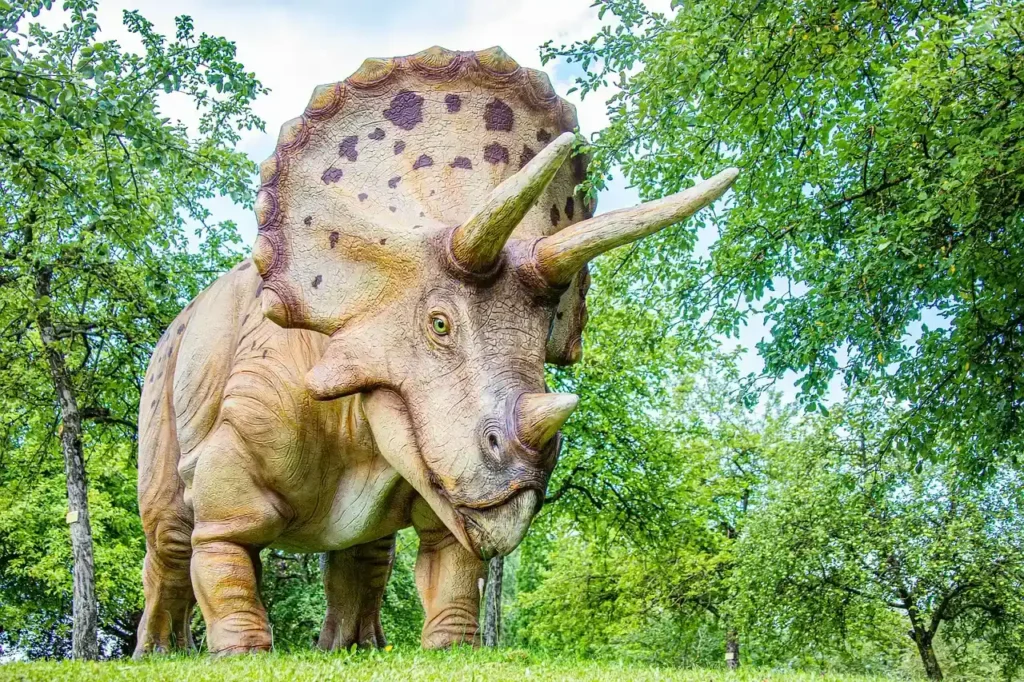
Triceratops is the dinosaur most of us grew up trusting: three horns, giant frill, plant-munching tank, end of story. The funny thing is, the more scientists study it, the messier and more surprising that “simple” story becomes. Triceratops has gone from being a kids’ book cliché to one of the most debated, dissected, and reimagined dinosaurs on the planet.
Over the last few decades, fresh fossil discoveries, better technology, and a more skeptical attitude have forced paleontologists to quietly rewrite almost everything about this animal. Its horns, its frill, its posture, its growth, even how it lived and died – none of it has escaped revision. The result is not a ruined childhood favorite, but a creature that is far stranger, more dynamic, and frankly cooler than the version on your old lunchbox.
Triceratops Was Not Just a Horned Tank on Four Stumpy Legs
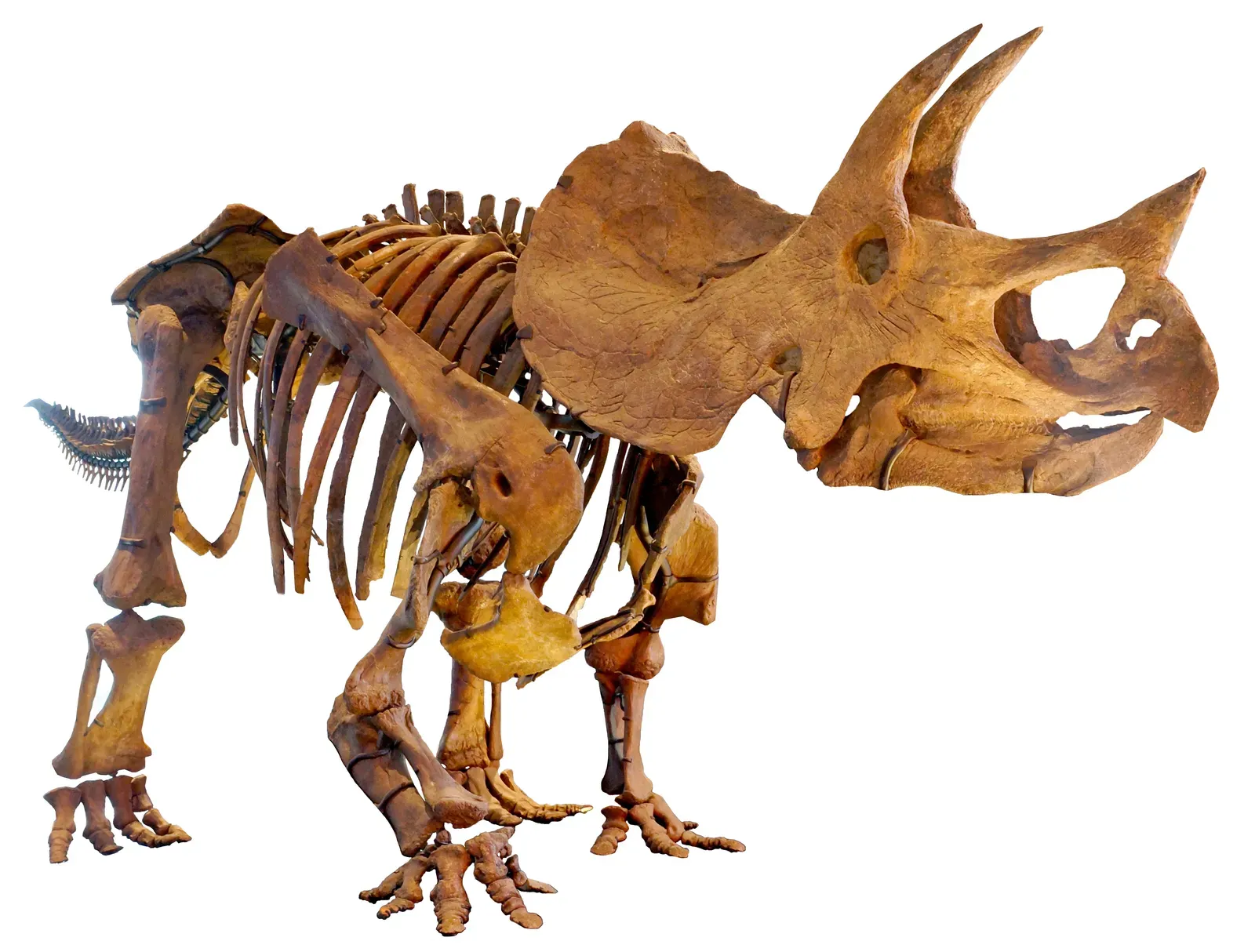
For a long time, Triceratops was drawn like a prehistoric bulldozer: heavy, sluggish, and almost glued to the ground. Early reconstructions treated it like a reptilian rhino that mostly plodded around and waited for trouble to come to it. That imagery stuck in museums, textbooks, and toys, so it felt like settled fact rather than a guess built on incomplete fossils and older ideas about dinosaurs being slow.
Reanalysis of limb bones and joints has painted a much livelier picture. The forelimbs were not splayed out like a lizard but held in a more columnar, semi-erect stance that could support an active, mobile animal. The bone structure shows strong muscle attachment points and a body designed to move, pivot, and push with serious force. Instead of a living tank that barely shuffled along, Triceratops looks more like a powerful, surprisingly agile brawler that could react fast when it needed to.
The Horns Were Not Just Simple Weapons Aimed at Tyrannosaurus
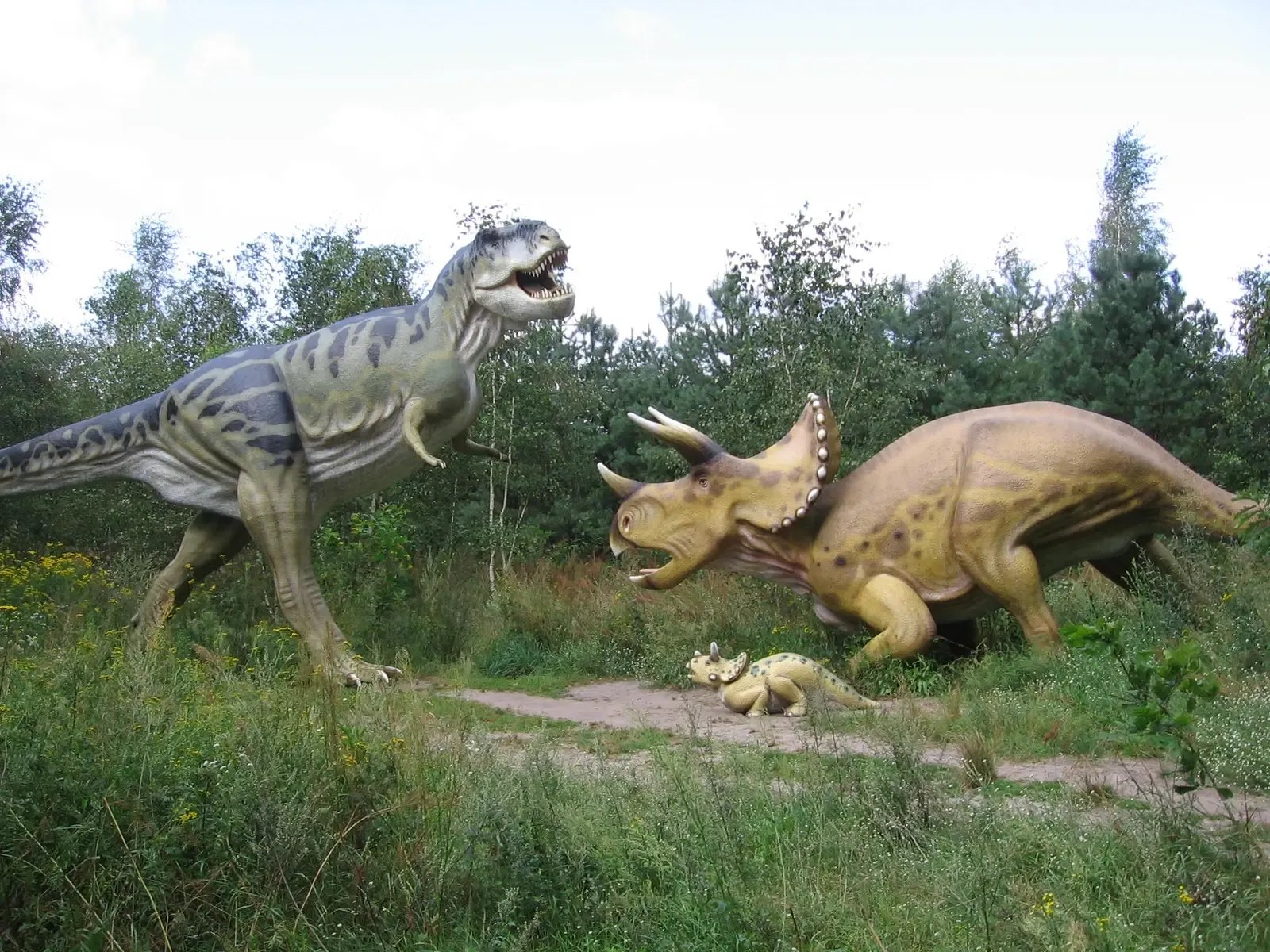
It is tempting to imagine Triceratops horns as purpose-built for jousting with Tyrannosaurus rex, because that showdown is the blockbuster image we have been fed forever. But nature rarely designs a body part for a single movie-style fight. When scientists started closely inspecting horn cores, healed injuries, and wear patterns, they found signs of repeated horn-to-horn contact between Triceratops individuals themselves.
This suggests the horns were at least as important for social behavior as for predator defense. Think of them as multi-use tools: weapons in dominance contests, visual signals of strength and maturity, and last-resort defenses if a tyrannosaur pushed its luck. That shift changes Triceratops from a passive prey victim into an animal with its own internal drama, where rival adults may have locked horns, shoved, and tested each other long before any predator showed up.
The Frill Was Not Just a Giant Neck Shield
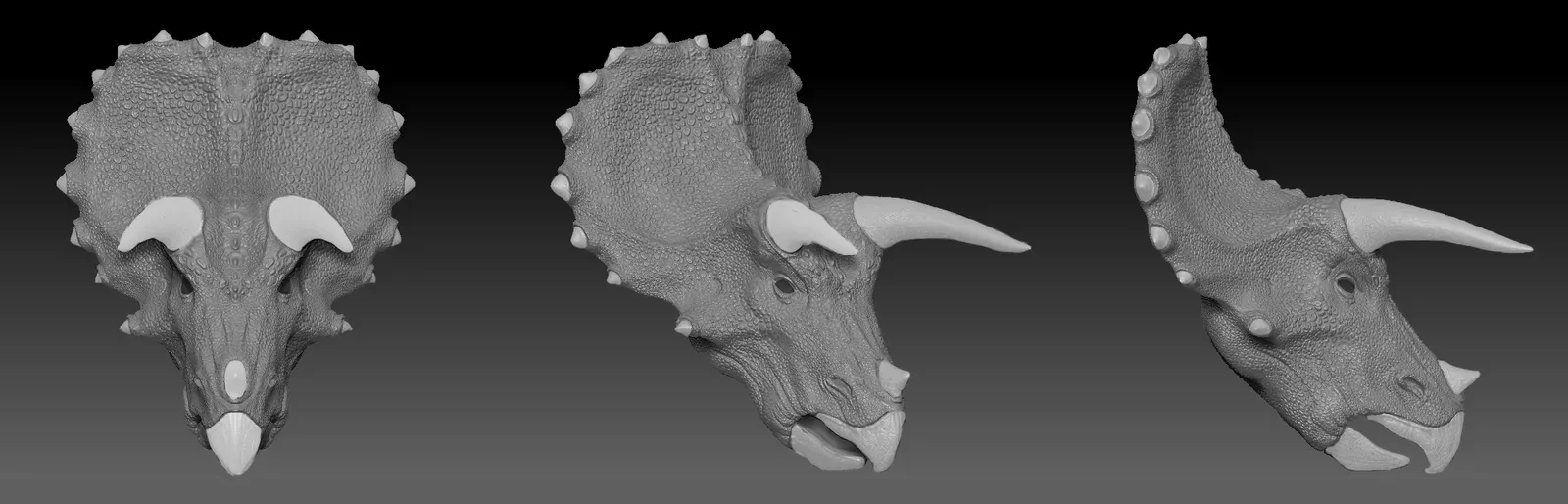
Growing up, it seemed obvious that the big bony frill existed to protect the neck from bites. It looks like a shield, so everyone assumed it acted like a shield, end of story. But detailed studies of the frill bones, including thin sections examined under microscopes, revealed that large parts of the frill were relatively light, thin, and full of blood vessels rather than thick armor.
This anatomy fits much better with a signaling and display role than with heavy-duty protection. A thin, well-vascularized frill could have supported bright skin coverings, seasonal color changes, and maybe even a role in temperature control. Rather than a static shield, the frill starts to look more like a living billboard and social interface, helping individuals identify each other, advertise health, and negotiate relationships – a lot more subtle and complex than a simple defensive plate.
Triceratops Might Not Be a Lone Species After All
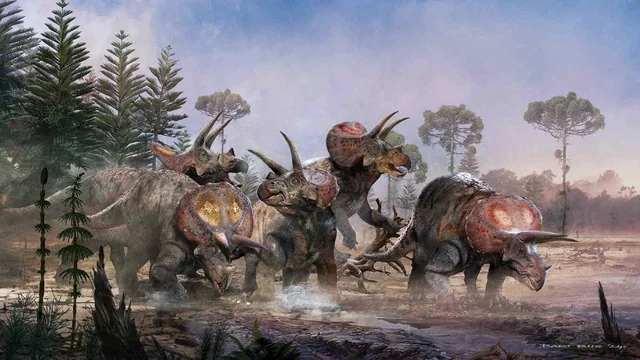
For years, Triceratops was treated like a neat, tidy species with only a couple of closely related cousins. Then more skulls started to pile up, and with them came confusing differences in horn shape, frill length, and bone texture. At first, scientists tried to sort these into separate genera and species, but that turned out to be trickier than it looked. What if some of those “different” dinosaurs were really the same animal at different ages?
Debates erupted about whether certain named horned dinosaurs were actually growth stages of others. In that storm of argument, Triceratops sat at the center as researchers tried to tease apart which traits came from age, which came from individual variation, and which truly marked different species. The current picture is messy and still in motion, which is exactly what makes it so fascinating: Triceratops is no longer a single, simple identity, but part of a tangled horned-dinosaur family portrait that scientists are still sorting out bone by bone.
Those “Baby Triceratops” Skulls Changed Everything About Growth
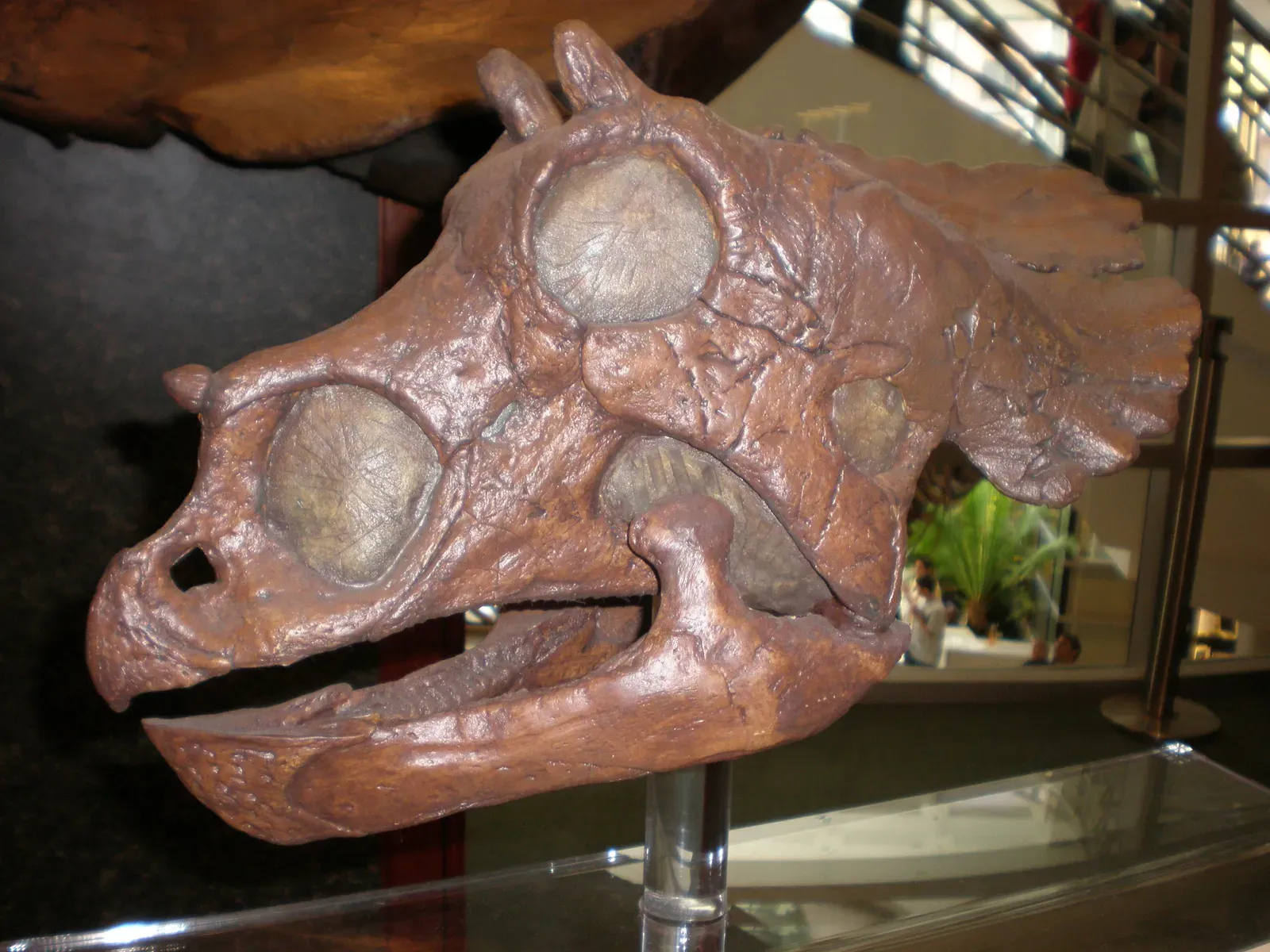
Once paleontologists started finding small, juvenile skulls that clearly belonged to Triceratops, a major shift began. These youngsters did not look like miniaturized versions of the adults we all recognize. Their horns curved differently, the frill was shaped another way, and the surface of the bones had a different texture. It was like comparing a teenager’s face to a grandparent’s – the same person, but with features still in motion.
By lining up skulls from different sizes and ages, scientists discovered that Triceratops went through dramatic shape changes as it grew. Horns could start curved backward and later sweep forward, while frills expanded and altered their outlines over time. That means some skulls once declared to be “new” species may just be different life stages. Instead of a static dinosaur that looked the same its whole life, Triceratops turns out to be a shape-shifter, reinventing its own face as it matured.
Its World at the End of the Cretaceous Was Not Empty or Simple
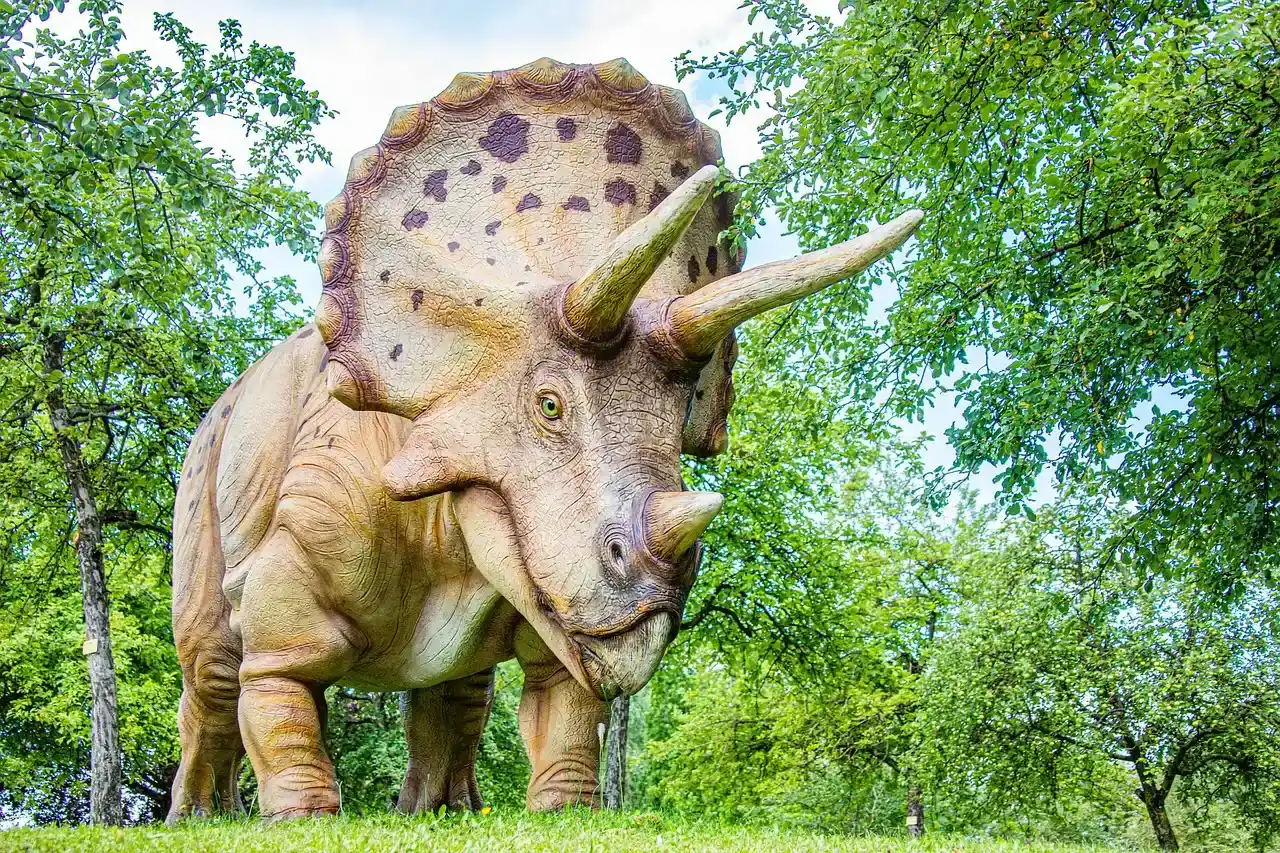
The classic story often paints the very end of the dinosaur era as a quiet stage with only a handful of survivors waiting for the asteroid. In that stripped-down version, Triceratops is one of the last horned dinosaurs left standing in a fading ecosystem, plodding through its final days. But the fossil record from western North America tells a richer story, filled with varied plants, multiple herbivores, and shifting environments.
Triceratops did not live in some lonely, dying world. It shared floodplains and forests with duck-billed dinosaurs, smaller herbivores, crocodilian relatives, and of course tyrannosaur predators. Changing sea levels and climate fluctuations made its landscape dynamic and sometimes stressful, but not barren. Understanding that pulsing, crowded environment turns Triceratops from a tragic final act into an active participant in one of Earth’s most complex dinosaur communities right up until everything changed.
Its Diet and Feeding Style Were Much More Specialized Than “Plant Eater”
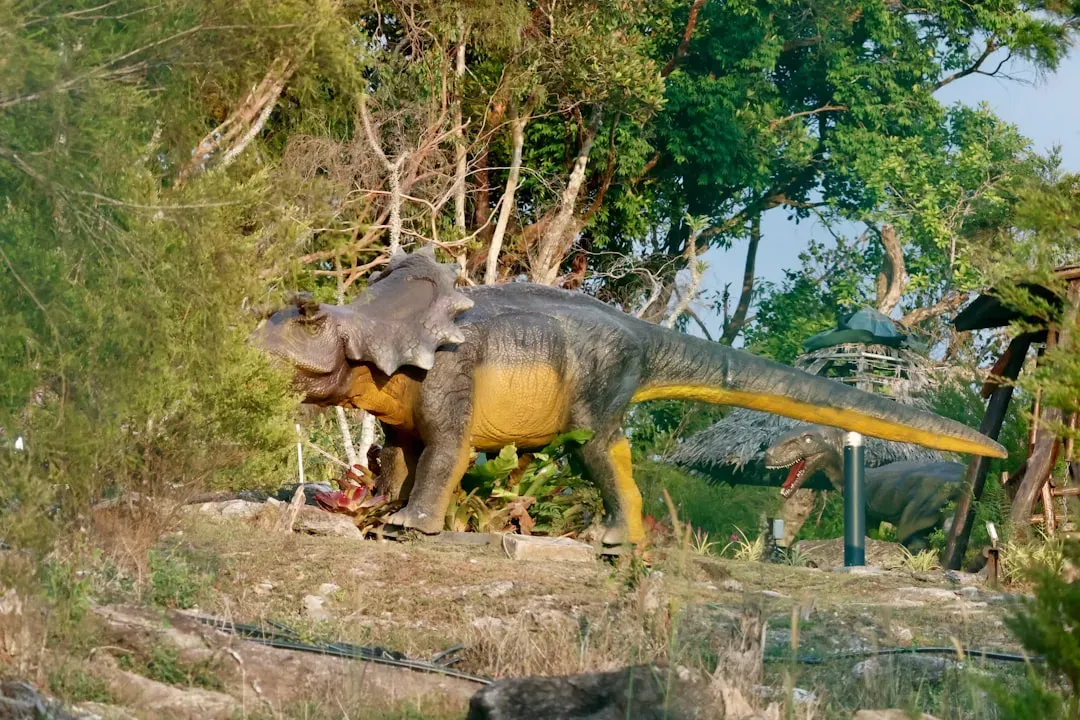
Calling Triceratops a “plant eater” is technically true but also painfully vague, a bit like calling a chef a “food person.” Detailed studies of its beak, jaw mechanics, and worn tooth surfaces suggest it was built to do more than casually nibble leaves. The way the teeth are stacked in dental batteries and the motion of the jaws indicate a powerful slicing and crushing action, capable of handling tough, fibrous plants.
Some evidence points to a preference for low-growing vegetation, meaning Triceratops may have spent a lot of time sweeping its head close to the ground and stripping plants near knee level. Instead of a generalist browser, it may have behaved more like a specialist gardener of rough, ground-level plant life, reshaping its environment as it fed. That gives it a more active ecological role, almost like a prehistoric combination of a lawnmower and a bulldozer shaping the structure of the landscape.
Triceratops Was Not the Silent, Stoic Giant We Imagined
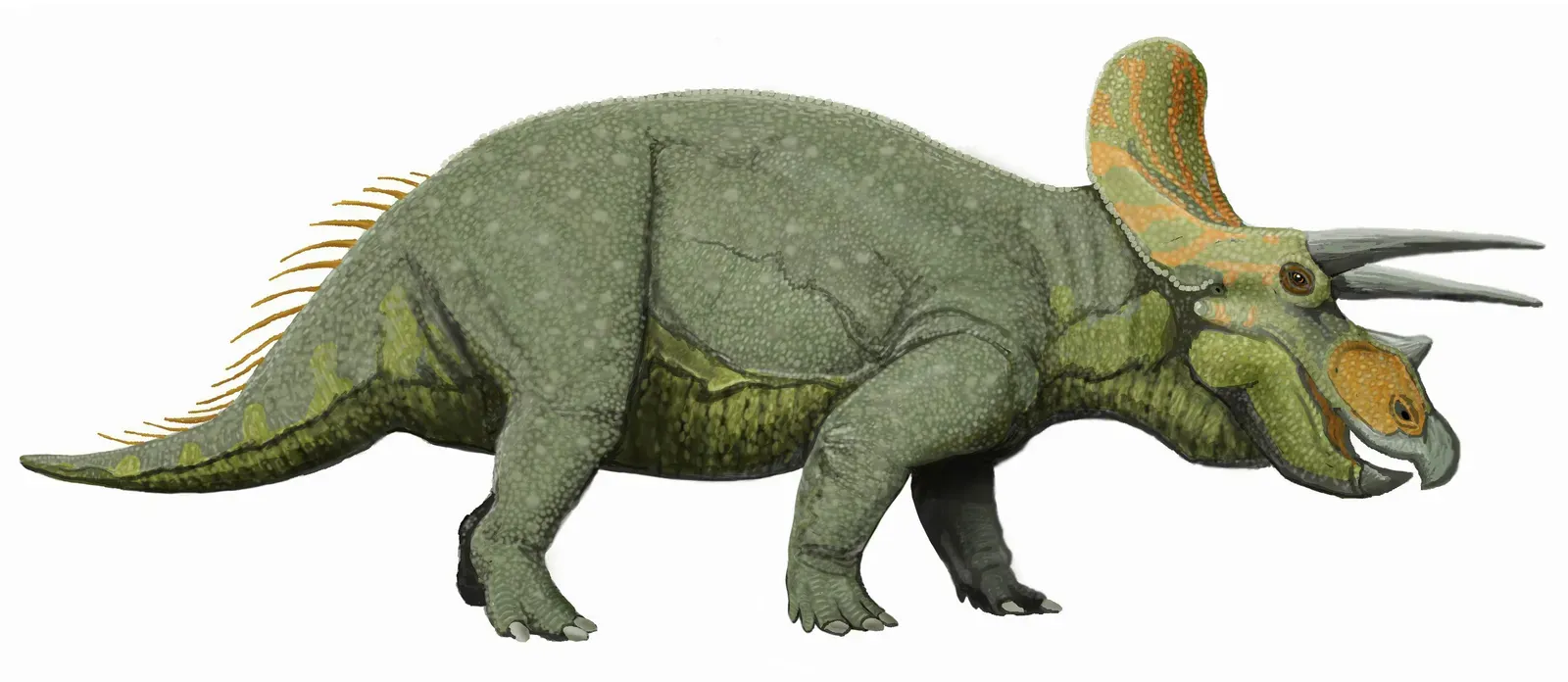
It is easy to picture big herbivorous dinosaurs as quiet background creatures while the predators did all the roaring and drama. But when you look at the skull of Triceratops, with its complex nasal passages and large head resonating with hollow spaces, it is hard to believe it lived in silence. The frill and horns also open possibilities for visual signals paired with sound, like body language cranked up to eleven.
While we cannot hear it directly, many scientists suspect that Triceratops communicated with snorts, bellows, or low-frequency calls that could travel through the ground and air. Combine that with color patterns on the frill and postures of the horns, and you have an animal engaged in constant conversation with its own kind – warning rivals, attracting mates, calming juveniles, or coordinating movement. Suddenly, those “stoic” giants look more like emotional, expressive herd members with a full social life, not just extras in a Tyrannosaurus chase scene.
The Real Triceratops Is Messier, Weirder, and More Interesting Than the Textbook Version
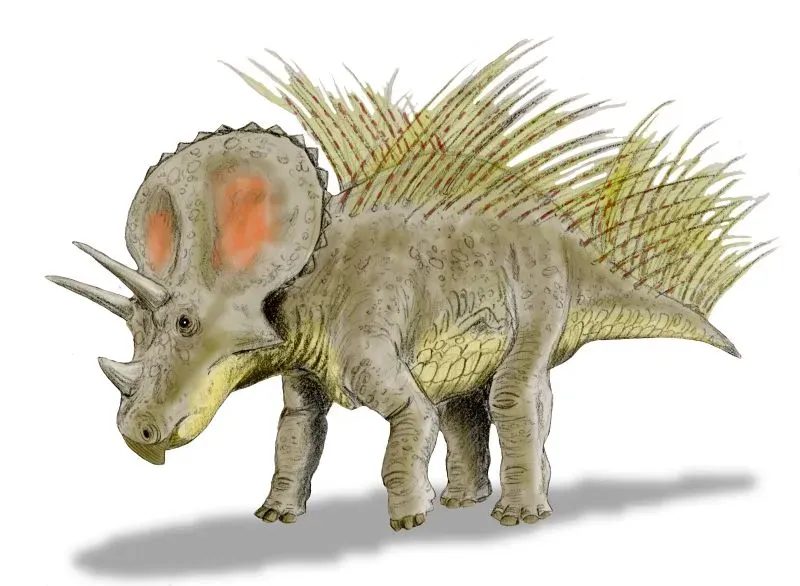
The more I follow the research, the more I think the biggest mistake was ever believing Triceratops was “solved” in the first place. Every new skull, every reinterpreted limb bone, every debate about growth turns the animal into something less cartoonish and more real. It is not a flawless knight in bony armor standing off a single villain, but a changing, social, sometimes battered creature living in a complex and dangerous world.
If anything, the corrections have made Triceratops more impressive, not less. We traded a flat, armored caricature for an animal with evolving facial features, intricate social behavior, specialized feeding, and a role in a vibrant late-Cretaceous ecosystem. To me, that is a trade worth making every time. When you look at a Triceratops skull now, the real question is not what we used to get wrong – it is how much more this three-horned puzzle is still hiding from us. What do you think we will have to rewrite next?