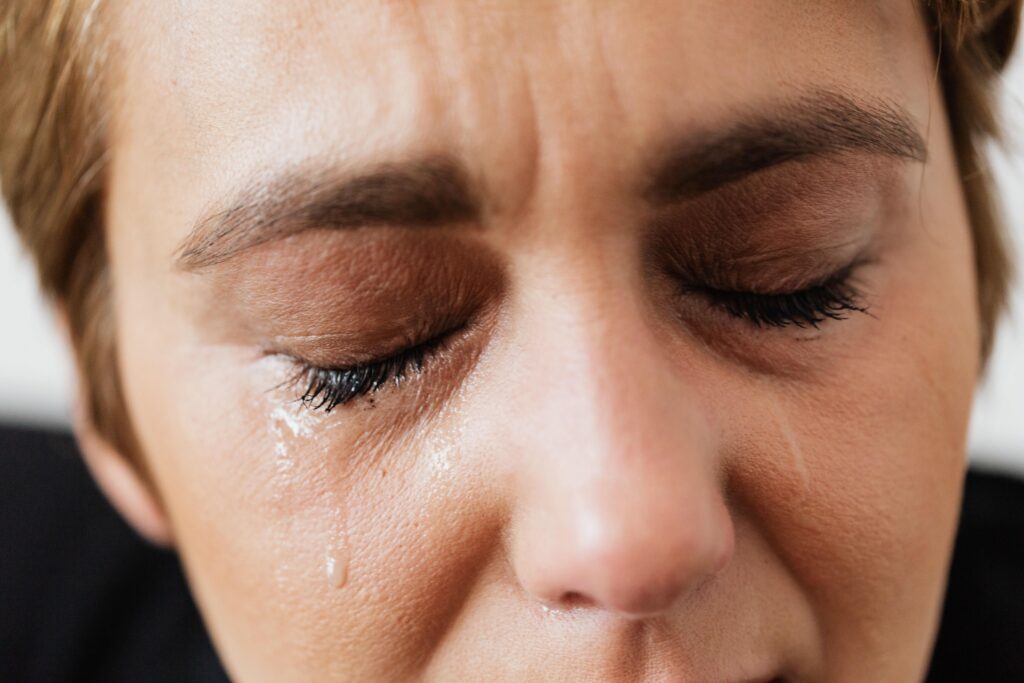
Imagine sitting in a dark cinema, watching a fictional story that you know is not real, and suddenly your eyes well up and tears start rolling down your face. Nothing physically harmed you, yet your body reacted as if something deeply important just happened. That strange, wet, vulnerable reaction is one of the most human things we do, and as far as scientists can tell, no other animal on Earth does it quite like us.
Emotional tears are a biological riddle hiding in plain sight. They are visible, messy, and sometimes inconvenient, yet they have survived millions of years of evolution. If they were useless or harmful, natural selection should have wiped them out. Instead, they are still here, shaping our relationships, our culture, and even how we see ourselves. The mystery is not just why we cry, but why the evolution of an intelligent ape ended up involving salt water streaming down its face when feelings get too strong.
The difference between reflex tears and emotional tears

When people talk about crying, they often toss everything into one basket, but biology is a lot more specific. Humans produce at least three types of tears: basal tears that constantly lubricate the eye, reflex tears that flush out irritants like smoke or dust, and emotional tears that appear in response to feelings such as sadness, joy, grief, or overwhelming relief. Basal and reflex tears make perfect sense from a survival standpoint: they protect and clean a fragile organ that we rely on for vision.
Emotional tears, though, are the odd ones out. They show up when there is no dust, no onion, no physical danger to the eye – just feelings. Chemically, emotional tears have been found to contain different mixes of hormones and signaling molecules compared to simple reflex tears. That suggests they are more than accidental leaks; they might be part of a larger emotional and physiological reset system. Yet even knowing that, scientists still cannot fully agree on what exact evolutionary advantage they first provided or how they took root in our species.
Are humans really the only species that cries from emotion?

If you live with a dog, you might feel certain your pet has cried from sadness or loneliness. Animals absolutely display emotional behaviors: dogs whine, chimpanzees wail, elephants seem to mourn, and many species vocalize sharply when distressed. But here’s the key distinction: while many animals produce tears to lubricate and protect their eyes, clear evidence that they produce visible tears specifically triggered by emotion, in the way humans do, is lacking.
Researchers have described emotional vocalizations, body language, and social gestures in a wide range of mammals and birds, but crying in the human sense – a wet face from emotional arousal – appears to be uniquely ours. There are a few scattered and debated reports of animals showing increased tear production during stressful or emotional situations, but nothing that looks like the culturally recognized phenomenon of weeping. So for now, evolutionary biology treats emotional tears as a distinctively human trait, even if we still leave a small door open for future discoveries that might complicate that picture.
Chemicals, hormones, and the body’s internal storm
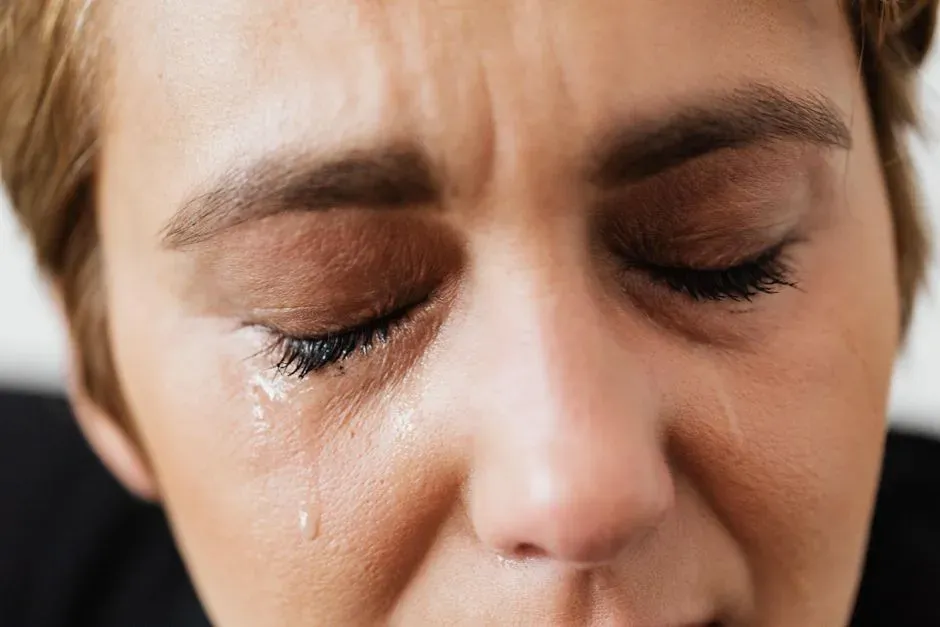
One popular idea is that emotional tears serve as a kind of physical pressure valve for our internal chemistry. Emotional stress shifts levels of hormones like stress-related glucocorticoids and other signaling substances across the body. Some studies have suggested that emotional tears may carry slightly different concentrations of certain molecules than reflex tears, which raises the possibility that crying helps offload or rebalance parts of the stress system. It is not a magical detox, but it could be a small, meaningful nudge toward emotional regulation.
At the same time, crying triggers noticeable bodily changes: breathing patterns shift, heart rate can fluctuate, and muscle tension may rise and then fall. Many people report feeling calmer or “emptied out” after a good cry, even if nothing in the outside world has changed. That subjective relief might be partly psychological, but it also likely reflects genuine physiological transitions. The tricky part is that we still cannot say with confidence whether the tears themselves are causing the regulation, or whether they are just one visible part of a broader emotional wave passing through the nervous and endocrine systems.
Tears as a powerful social signal

If emotional tears do anything obviously useful, it is in the social realm. Tears transform the face more dramatically than almost any other everyday expression. A tear-streaked face is like a bright, flashing sign that says: I am overwhelmed, I am not a threat, I need help, or I am deeply moved. In small, interdependent human groups, being able to broadcast vulnerability in a way that others could not easily fake might have helped strengthen bonds, invite comfort, and reduce aggression.
Some researchers have argued that tears blur vision on purpose, physically making a person less capable of fighting or attacking, which visually reinforces a signal of surrender or submission. That might sound dramatic, but in conflict situations, a clear, visible cue that someone has given up or is asking for mercy could lower the chance of further violence. In this view, emotional tears are not just an internal release; they are a kind of evolved body language endorsed by natural selection because it helped us survive emotionally charged group interactions.
Crying, attachment, and early life

If you think about when we first learn the power of tears, it starts in infancy. Babies do not shed visible emotional tears from birth; they cry vocally first and develop tearful crying a bit later as their tear ducts mature. Still, from very early on, caregivers learn to read the intensity, pitch, and body language of crying as signals of need. Visible tears likely make those signals even more compelling as children grow and their emotional worlds become more complex. That feedback loop can shape how children learn to seek comfort, express distress, and navigate social relationships.
In that sense, emotional tears might be part of a broader attachment system. A child who cries when scared or hurt and receives soothing may become more secure in their relationships. On the flip side, a child whose tears are ignored or punished may learn to bottle them up or deploy them strategically. Evolution does not design perfect behavior; it sets the stage and then culture and experience do the rest. Emotional crying looks like one of those traits where biology provides the tool, and life teaches us how, when, and with whom to use it.
Gender, culture, and the rules we learn around tears
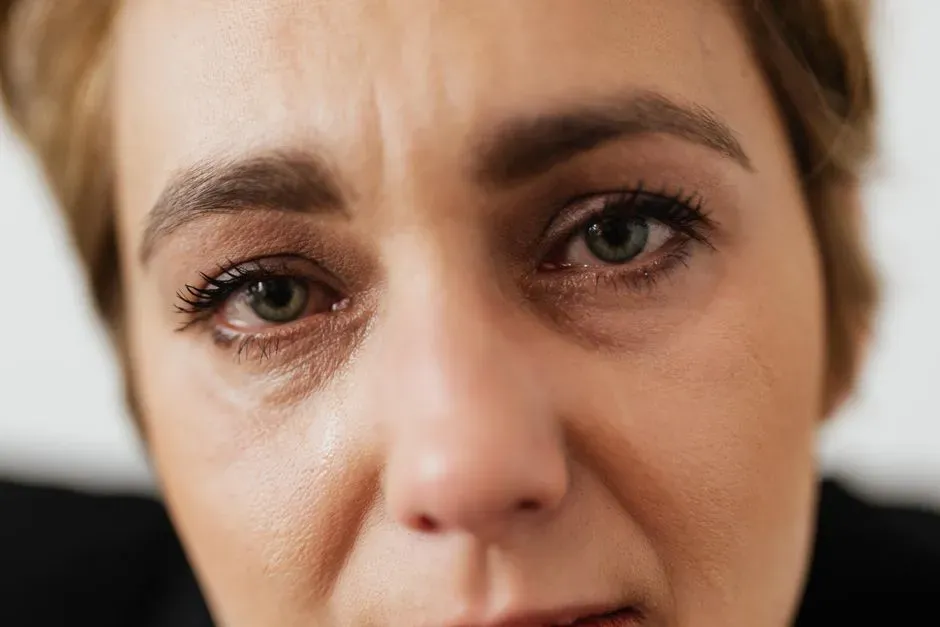
Even though humans everywhere have the capacity for emotional crying, the way societies treat tears is wildly uneven. In many cultures, women are allowed or even expected to cry more openly, while men are pressured to hold it in unless the situation is extreme, such as death or war. Studies that compare self-reports from different countries suggest that in some places, people cry more frequently and more openly than in others, reflecting differences in emotional norms, gender roles, and social safety.
Those cultural rules do not change the biology of emotional tears, but they do change how often we see them and what they mean. A public tear in a setting where crying is rare can become a powerful act, interpreted as weakness by some and as honesty or courage by others. Personally, I think we underestimate how much social training shapes our relationship with tears; many adults are not reacting to the feeling itself, but to the mental movie of what crying is supposed to say about them. That social layer sits on top of the ancient biological impulse, twisting and reshaping it in fascinating ways.
Crying, mental health, and emotional regulation

People sometimes talk about having a good cry as if it were a medication, but the science is more nuanced and a bit frustrating. Some studies find that crying leads to improved mood afterward, especially when it happens in supportive environments or leads to comfort from others. Other research shows that crying can make people feel worse, particularly if they feel ashamed, judged, or alone. There is no single universal truth here; it depends heavily on context, personality, and history.
That said, it is clear that emotional tears are deeply entangled with mental health. Difficulty crying, or feeling numb even in highly emotional moments, can sometimes be a sign of burnout, depression, or emotional disconnection. On the other side, feeling completely overwhelmed by frequent crying can signal its own kind of distress. The presence or absence of tears is not a diagnostic tool on its own, but it does act like a visible clue about what might be happening inside a person’s emotional life, especially when paired with other changes in behavior and mood.
Why the mystery of emotional tears is not solved yet

For all the theories swirling around emotional crying – social bonding, stress relief, submission signals, hormonal clearing – none has locked in as the definitive explanation. The honest answer is that we probably evolved to cry emotional tears for several overlapping reasons that reinforced each other. A small chemical benefit here, a social signaling advantage there, and maybe some group-level effects on cohesion and conflict, all gradually layered on top of a basic tear-producing system that originally just protected our eyes.
Scientists are also limited by the kind of research that is possible. We cannot go back in time to watch early humans cry, and we cannot easily study emotional tears in other species when we are not even sure they exist there in the same way. So we are left with clues from modern humans: brain scans, hormone measurements, psychological experiments, and cultural comparisons. Put together, they suggest emotional tears are a uniquely human, deeply social, and only partly understood evolutionary quirk – one that says as much about our minds and relationships as it does about our eyes.
Conclusion: a strange, beautiful flaw in the human design
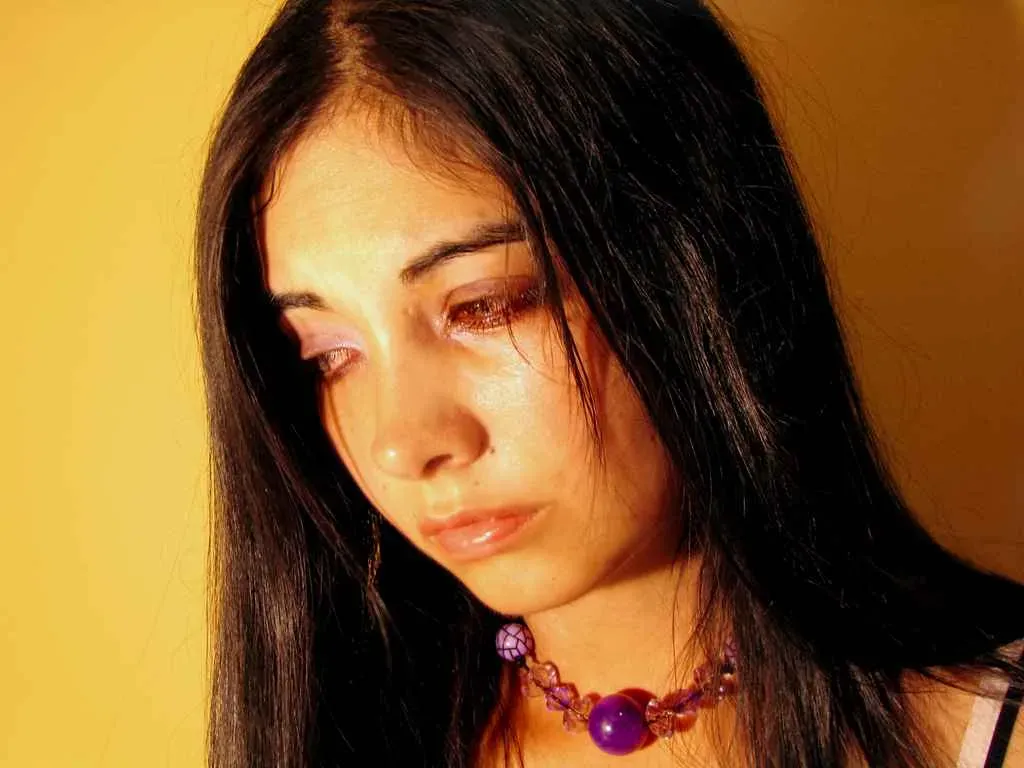
If evolution were only about efficiency, emotional tears might look like a mistake: they blur our vision, expose our vulnerability, and often arrive at the worst possible moments. Yet I suspect that is exactly why they matter. Crying forces us to be seen, and to see others, in a raw, unpolished form that words alone rarely capture. The fact that we still do not fully understand why this behavior evolved is, in a way, a reminder that not everything important about being human can be reduced to a simple survival checklist.
In my view, emotional tears are a kind of evolutionary gamble that paid off: by making our inner world visible on our faces, they helped us build the kind of deep, empathetic, complicated relationships that define human life today. Maybe we will eventually nail down a clearer, more precise explanation, but even then, I doubt that will make a choked-up voice and wet cheeks any less powerful. The next time your eyes fill for no practical reason at all, you might just be witnessing one of the strangest, most fragile gifts evolution ever gave us – who would have guessed that salt water could mean so much?