If you feel like your back is constantly negotiating with gravity and losing, you are not imagining it. The human spine did not start out as a sleek, custom-built column for walking on two legs; it is the legacy of a creature that moved on all fours, slowly repurposed over millions of years into something that can just barely handle upright life. That tinkered, hand‑me‑down design is a big reason why back pain is almost a universal human experience by adulthood.
Once you see your spine as an evolutionary compromise instead of a perfect architectural blueprint, a lot of things suddenly make sense: the aching lower back, the stiff neck after hours at a desk, the way one badly timed twist can ruin a week. In this article, we’ll walk through how evolution reshaped a horizontal backbone into a vertical load‑bearing column, what trade‑offs came with that shift, and why so many of us pay for it with chronic pain. And along the way, I’ll share why I think “bad backs” are less a personal failing and more the inevitable price of being an upright ape in a world we weren’t built for.
From four-legged to two-legged: a spine forced to adapt
Think about our distant ancestors not as smaller, hairier people, but as tree‑climbing primates whose spines were mostly horizontal, like a flexible bridge suspended between the shoulders and hips. In that world, the backbone did not have to carry the full weight of the body in a vertical line; it shared the load across four limbs, with gravity pulling more sideways than straight down. When early hominins started standing and walking on two legs, that old bridge suddenly had to become a vertical crane, bearing weight in a way it was never originally “designed” to do.
Over roughly a couple of million years, natural selection modified this ancestral spine rather than starting from scratch. Vertebrae thickened, curves developed, muscles rearranged, and the pelvis rotated and widened to support upright posture. But evolution works like a handyman patching an old house, not an architect drafting a brand‑new one; the result is workable but full of compromises. Our spine is still, at its core, a modified quadruped structure doing its best impersonation of a skyscraper column, and that awkward retrofit explains a lot of its vulnerabilities.
The S-curve: ingenious solution, built-in problem
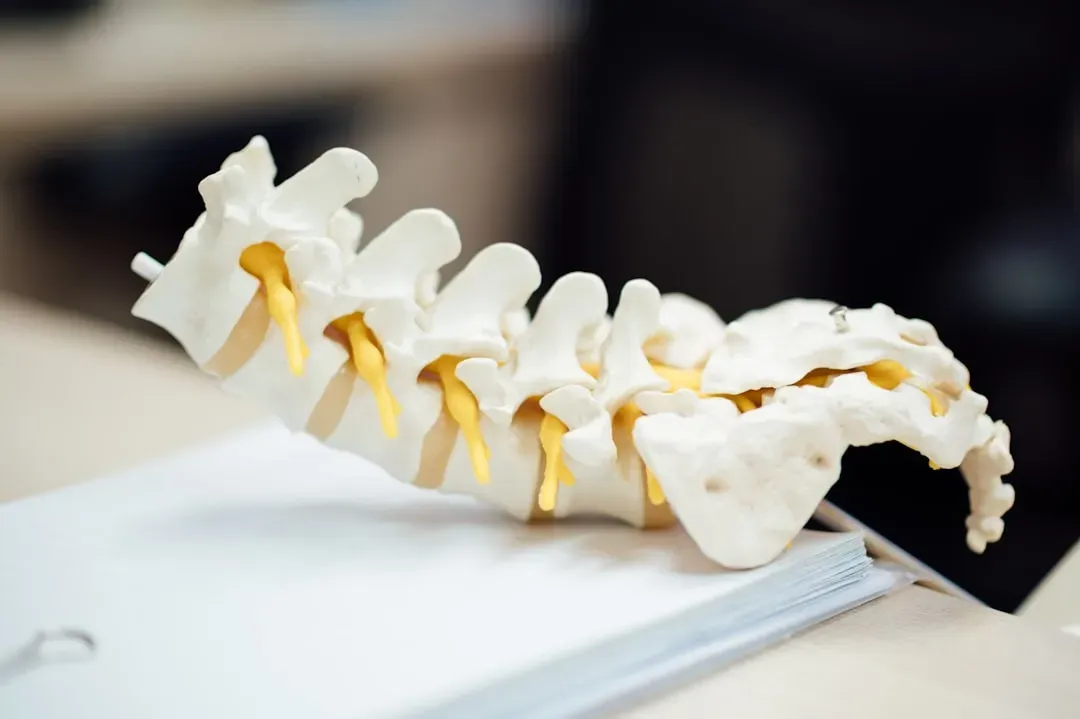
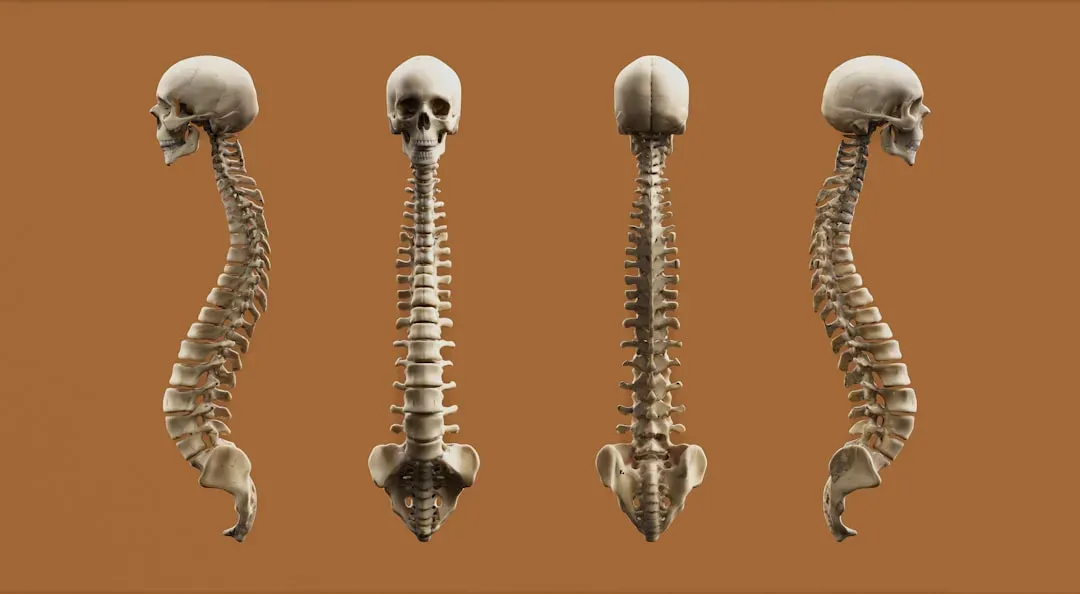
One of the most striking changes in our transition to bipedalism is the development of the spine’s S‑shaped curves. Instead of being mostly straight, the human spine bends inward at the neck and lower back and outward at the upper back and pelvis. These alternating curves help bring the head over the feet, keep our center of mass balanced while we walk, and act like a spring that absorbs shock with every heel strike. Without that S‑curve, walking and especially running upright would be far less efficient and much more jarring to the brain and internal organs.
The downside is that the very areas that curve the most, especially the lower back and neck, become mechanical weak spots where stress concentrates. When you load an S‑shaped structure vertically, some segments have to fight harder to keep everything aligned, particularly when we lean, twist, or sit for long periods. That is why the lower back, which bears the brunt of supporting the upper body, is the most common site of spinal pain. The S‑curve is a beautiful evolutionary hack, but like many hacks, it works only as long as conditions stay within the limits it evolved for – and modern life tends to push well past those limits.
Vertebrae, discs, and the fragile balance of upright load-bearing
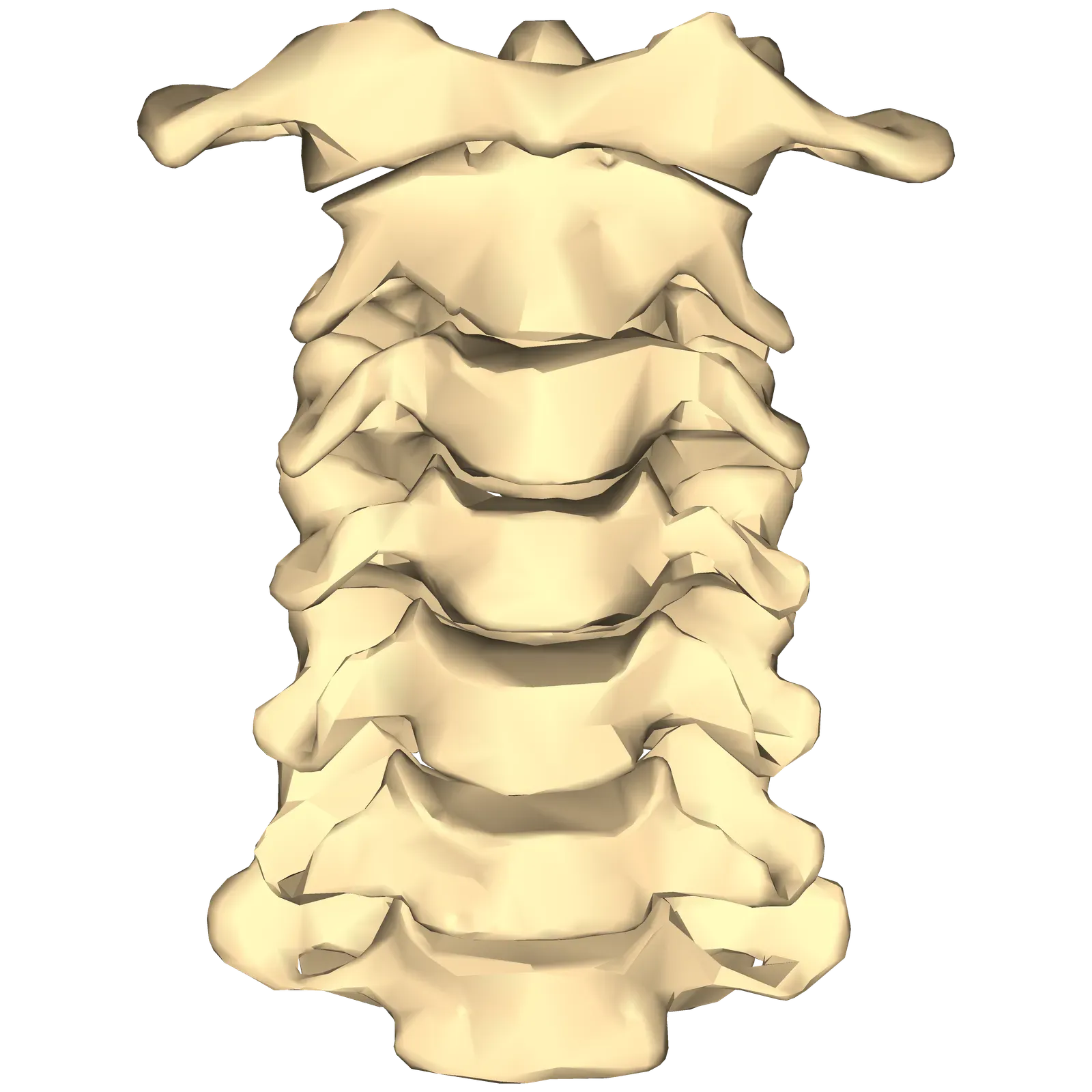
Zoom in on the spine, and you see a column made of stacked vertebrae separated by cushioning discs, tied together by ligaments and moved by muscles. In a horizontal animal, each vertebra shares the load more evenly across the body, and the discs mainly handle bending and flexibility. In a fully upright human, every vertebra above your pelvis is part of a vertical tower carrying the weight of the head, arms, and trunk, plus any extra loads you lift, twist with, or carry in front of you. That extra vertical compression asks a lot from structures that evolved from a more balanced, four‑limb load‑sharing system.
The discs in particular are caught in a tough spot: they need to be soft enough to act like tiny shock absorbers and stiff enough to keep the vertebrae from slipping out of place. Over time, especially when exposed to repeated strain, poor posture, or lack of movement, they can dry out, crack, or bulge. Since nerves exit the spinal cord through narrow openings near these discs, even mild changes in shape can cause pain, numbness, or weakness. It is not that our discs are badly made; they are just operating at the edge of what a once‑horizontal spine can handle when turned on end and asked to carry us through decades of upright living.
The pelvis, childbirth, and why evolution had to compromise
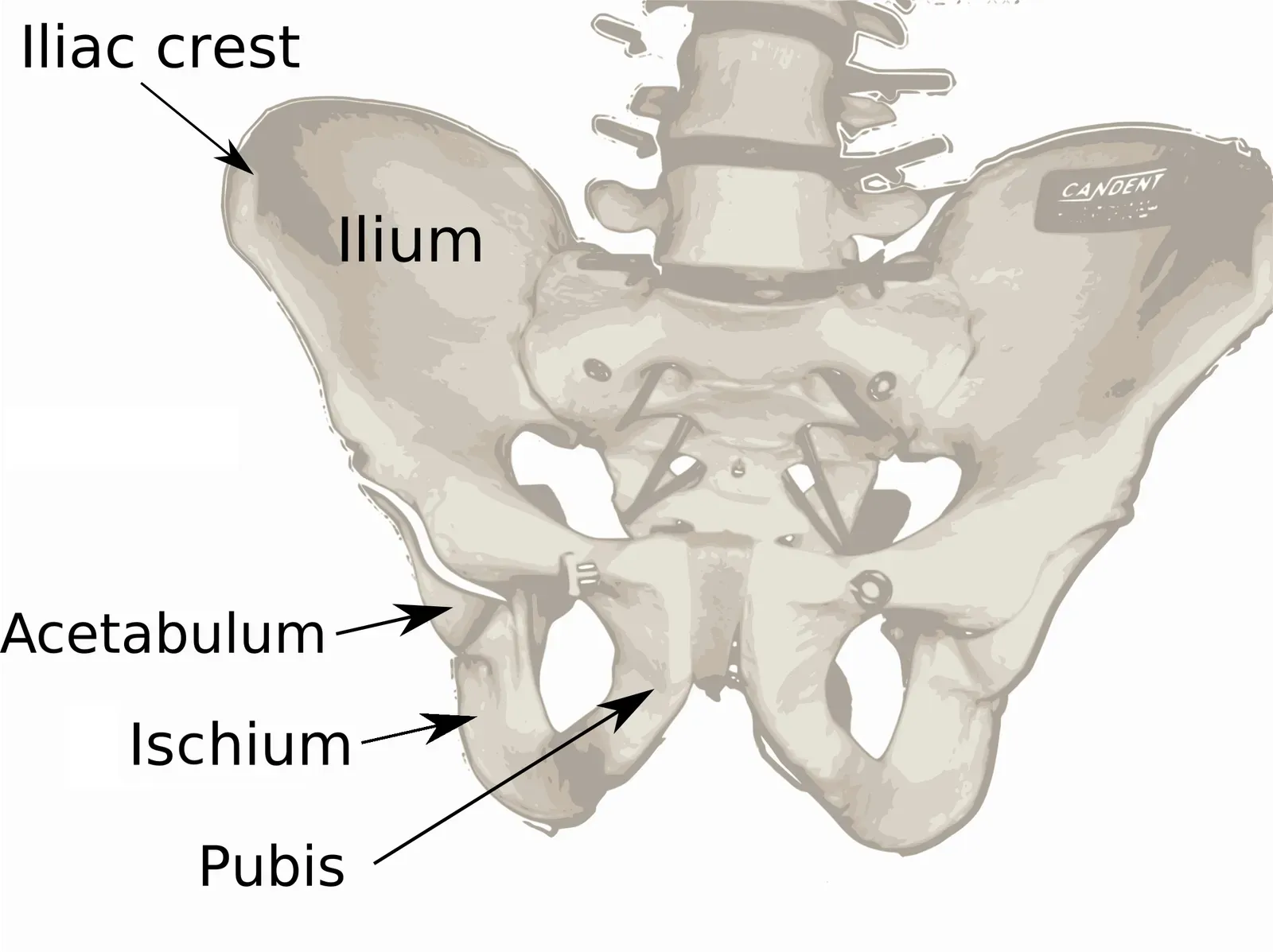
Our spine does not stand alone; it is anchored into a pelvis that changed dramatically as we became upright walkers. To support the weight of the upper body and transfer it efficiently to the legs, the pelvis became shorter and broader and rotated into a bowl‑like shape. This gave the spine a firm base and allowed the lower back to curve forward, keeping the torso balanced over the hips during walking. Without this redesigned pelvic base, our spines would tip us forward like unstable towers.
But there was another evolutionary pressure shaping the pelvis: childbirth. As our ancestors’ brains grew larger, babies’ heads got bigger, while the pelvis still needed to stay narrow enough for efficient walking and energy‑saving stride mechanics. The result was a compromise that made human birth uniquely difficult and left the pelvic region under intense biomechanical pressure. That tension between locomotion and reproduction indirectly affects the spine: the angle at which the spine attaches to the pelvis, and how much the lower back must curve to keep balance, both raise the mechanical demands on the lumbar region. We literally carry the cost of big brains and upright hips in our lower backs.
Modern life versus Stone Age spines

If our spines were already a compromise solution in the Stone Age, modern lifestyles crank the mismatch up several notches. Our ancestors evolved walking long distances, squatting, climbing, and frequently changing position; their days were full of varied, moderate movement spread across many hours. In contrast, many of us now sit for most of the day, crane our necks toward screens, and only occasionally shock our bodies with intense but irregular bursts of exercise. A spine that evolved for constant dynamic motion is now asked to tolerate stillness, awkward angles, and repetitive strain.
This mismatch does not just “cause” back pain on its own, but it amplifies every built‑in vulnerability. Prolonged sitting can tilt the pelvis, flatten the natural curves, and weaken the muscles that help stabilize the spine, so when we do move or lift, the discs and joints take the hit. Screen use pulls the head forward, dramatically increasing the load on the neck and upper back. It is like driving a rugged off‑road vehicle exclusively in city traffic with the handbrake slightly on – eventually, something will grind, wear, or overheat, and you cannot really blame the original design for conditions it never anticipated.
Why back pain is everywhere, yet rarely “just in your head”

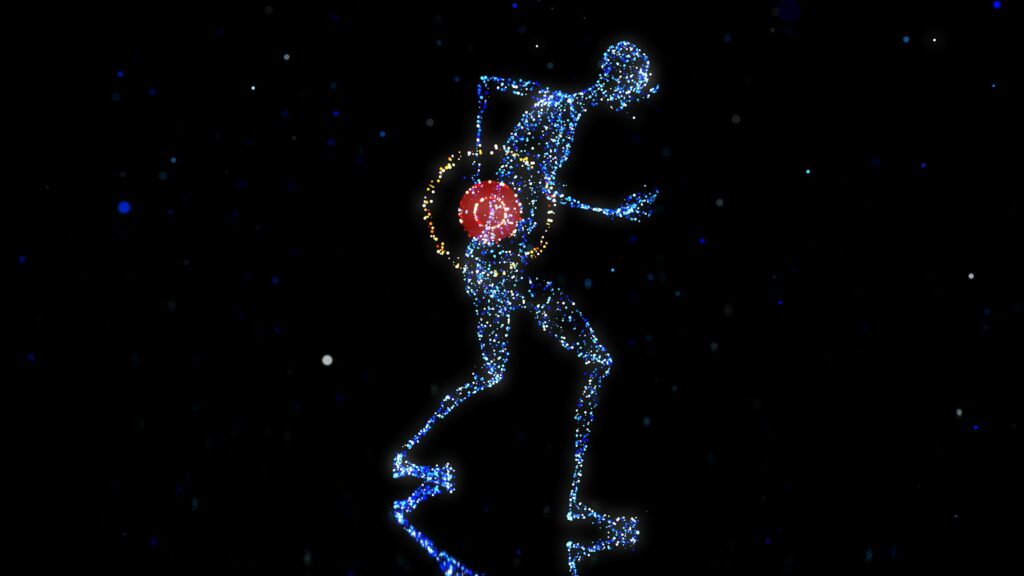
By adulthood, almost everyone has experienced some form of back pain, from a fleeting twinge on waking to chronic, life‑shaping discomfort. Part of this is simply the math of mechanical stress over time: a retrofitted, S‑curved, vertical spine carrying body weight every minute of every day will accumulate microscopic damage in discs, joints, and muscles. Over years, especially when combined with injury, genetics, and lifestyle, those tiny insults can add up into real structural changes that become painful. In that sense, back pain is not a strange exception; it is more like gray hair, a common outcome of a long life upright.
At the same time, pain is not just about structure; it is also about how the nervous system interprets signals. Stress, poor sleep, and emotional strain can all lower the threshold at which the brain flags a sensation as threatening, making existing spinal wear and tear feel much worse. That does not mean the pain is imaginary. It means that a brain evolved to keep us alive in dangerous environments is using a very sensitive warning system plugged into a very imperfect mechanical design. When doctors or friends brush off back pain as “nothing” or purely psychological, they miss the deeper truth: the odds are stacked against our spines from both the body and the brain side.
Working with the spine we have, not the one we wish we had

Once you accept that our spine is a clever but flawed evolutionary remix, not a flawless engineered beam, the goal stops being to “fix” it back to some mythical ideal. Instead, the task is to work with its strengths and respect its weaknesses. That usually means keeping the whole system – muscles, joints, discs, and nervous system – as adaptable as possible: varied movement, strength in the legs and hips, flexibility where needed, and habits that do not overload one area over and over. Small, regular adjustments to how we sit, stand, lift, and rest can, over time, matter more than any single dramatic intervention.
I say this partly from experience: I used to think my recurring lower back pain meant I was broken or doing life wrong. Learning about the spine’s evolutionary story reframed it for me; instead of feeling defective, I started to see my back as a piece of ancient hardware running very new software. That shift did not magically erase the pain, but it made me more patient, more curious, and frankly, kinder to my body. Our spines are doing a hard job with hand‑me‑down tools; giving them a bit of help is less about perfection and more about partnership.
Conclusion: evolution owes us nothing, so we owe our backs more
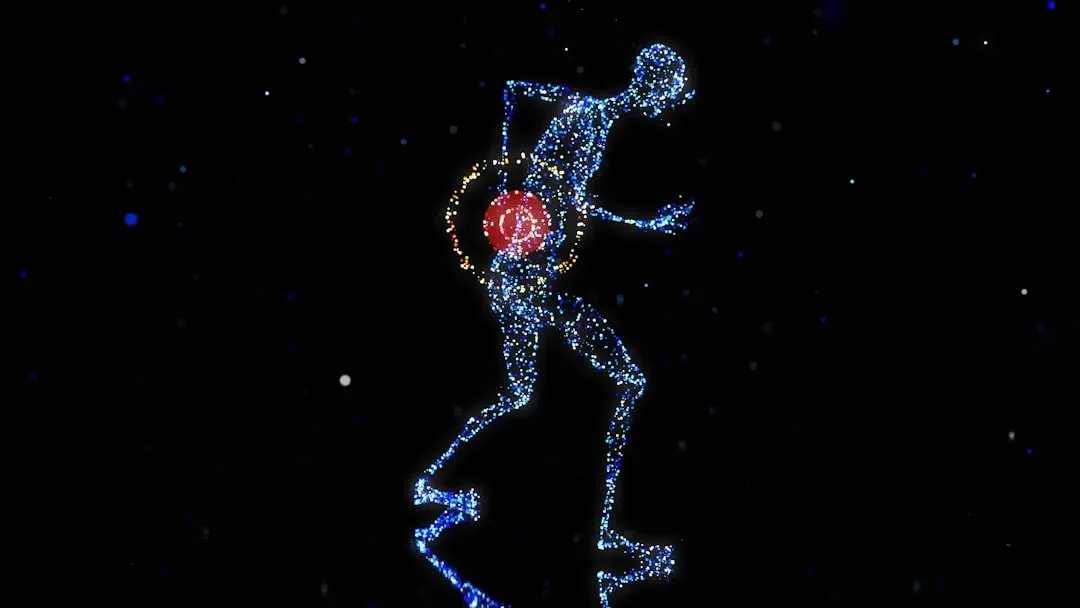
It is tempting to be angry at your spine, as if it were badly manufactured and shipped with a secret defect. But evolution is not a warranty department; it only has to get organisms to reproduce, not to glide pain‑free through decades of office work and weekend sports. The human backbone is proof of that ruthless pragmatism: it was never designed from scratch for walking upright, only reshaped just enough over millions of years for our ancestors to move, hunt, carry children, and survive. The near‑universal epidemic of back pain is the bill that comes due when we stretch that improvised design across modern lifespans and lifestyles.
My opinion is that we should stop treating back pain as a personal flaw or a mysterious curse and start seeing it as the predictable side effect of our evolutionary history colliding with our current way of living. That perspective does not make the pain any less real, but it does shift responsibility away from individual “weakness” toward a clearer understanding of the system we are all stuck with. If our spine is an old house that has been converted into a high‑rise, then our daily choices are the maintenance plan that keeps it standing. Knowing that, what will you do differently for your back tomorrow?