
Close your eyes for a second and notice what it feels like to be you right now. That quiet hum of awareness, the sense of being a someone looking out at the world, probably feels so obvious and solid that it is hard to imagine it ever not being there. Yet one of the most intriguing ideas in modern evolutionary science is that this inner spotlight did not flip on like a light switch. Instead, it may have brightened slowly, step by step, across millions of years, long before there were humans to wonder about it.
I still remember reading about this gradualist view for the first time and feeling both thrilled and slightly unsettled. If consciousness emerged in layers rather than all at once, then the line between “mindless” matter and “conscious” experience is blurrier than we like to think. That raises all kinds of questions: When did the first faint flicker of feeling appear? How much awareness does a fish have, or an octopus, or an infant? And what does it mean for us if consciousness is not some magical all‑or‑nothing gift, but an evolving process written into biology itself?
From Simple Sensing to Subjective Feeling
One of the key ideas in evolutionary approaches to consciousness is that you do not leap straight from lifeless chemistry to human self-reflection. Early life forms almost certainly started with extremely basic sensing: detecting light and dark, following chemical gradients, or responding to touch. These simple responses already gave organisms an evolutionary edge, helping them move toward food and away from danger without needing anything like our rich inner world.
Over vast timescales, sensing became more complex. Nervous systems appeared, then centralized nerve clusters, then brains that could integrate signals from different senses. At some point along this continuum, many researchers think that mere detection of stimuli shaded into something more like experiencing them: not just registering light, but seeing; not just reacting to damage, but feeling pain. The tricky part is that evolution does not draw a bright red line where this shift happens, so the boundary between “just reacting” and “actually feeling” is probably more like a fading gradient than a sharp cliff.
The Brain as an Evolving Prediction Machine
Modern neuroscience increasingly sees the brain as a prediction machine, constantly guessing what will happen next and updating those guesses based on incoming signals. From an evolutionary point of view, this predictive ability did not appear out of nowhere. Very simple organisms can already anticipate patterns in their environment in primitive ways, such as expecting light after dawn or tracking regular changes in temperature or tides. These early forms of prediction made behavior more efficient and flexible than pure reflexes.
As brains grew more complex, especially in vertebrates, they began generating internal models of the body and the world: what will happen if I move this way, which sound usually signals a predator, when food is likely to appear. Many scientists argue that consciousness is tied to these self-updating models, especially those that track the state of the organism itself. On this view, feeling like a subject is the brain’s way of organizing and predicting its own internal and external conditions. That means you do not suddenly “gain consciousness” at some magic threshold; you get progressively better at building models, and with that improvement, the quality and richness of experience gradually intensify.
Gradualism Versus the “Light Switch” View
There is a popular but increasingly challenged picture of consciousness as something that either exists or does not. In that “light switch” view, matter is mindless right up until a particular neural trick is achieved, and then inner experience bursts into existence all at once. This is appealing because it feels clean and decisive, but it does not sit comfortably with what we know about how traits tend to evolve. Almost everything else in biology comes in degrees, from eyesight to flight to social behavior.
Many evolutionary scientists instead favor a gradualist picture: as nervous systems became more integrated and flexible, creatures gained more complex, layered forms of awareness. In this story, there is no single generation where consciousness appears from nowhere. Instead, there are long stretches where organisms have partial, limited, or fragmented forms of experience that build on each other over time. You can think of it less like flipping a switch and more like dimmer lights in a foggy room slowly growing brighter, revealing more of the world and of the organism itself.
Animal Minds and the Spectrum of Awareness
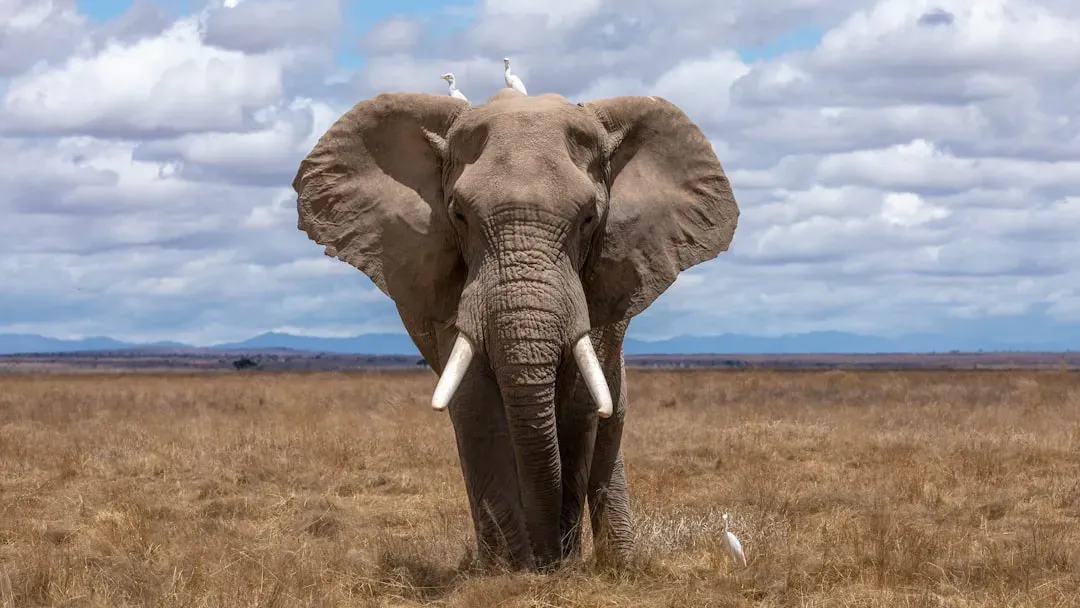
Looking at animals today gives us tempting clues about how consciousness could be graded rather than absolute. Many mammals and birds show signs of sophisticated awareness: they solve puzzles, recognize individuals, seem to show empathy or grief, and adapt their behavior in flexible ways. It would be strange to say they are completely without inner life when their brains share so many structural and functional similarities with our own, only scaled and specialized differently.
At the same time, there are creatures with much simpler nervous systems that still display surprising behavior. Cephalopods like octopuses, for example, have distributed nervous systems and can solve mazes or play with objects in ways that look exploratory, maybe even curious. Insects can navigate complex environments, communicate, and learn from experience. It feels more reasonable to place these minds on a spectrum of consciousness, with varying degrees and kinds of felt experience, rather than to slam a door that says “conscious” on one side and “not conscious” on the other.
Developmental Clues: How Human Consciousness Grows

We can also peek at the evolution of consciousness by watching how it unfolds in human development. Newborn babies are almost certainly not conscious in the same way adults are, even though they already respond to touch, sound, and light. Their brains are under intense construction, strengthening some connections, pruning others, and slowly building the circuits required for things like self-recognition, memory of past events, and imagining the future. Those capacities appear in steps, not all at once, over months and years.
These developmental stages hint that consciousness itself might be layer-based. Early on, infants likely have raw sensory experiences and body feelings without much narrative or self-concept wrapped around them. Gradually, they begin to connect those sensations into a more coherent perspective, eventually learning to say things like “I did this” or “I remember that.” If that is how consciousness grows within a single lifetime, it is at least plausible that something similar happened across evolutionary time, with lineages slowly stacking cognitive layers on top of simpler feelings and perceptions.
Information Integration and the Rise of Unified Experience
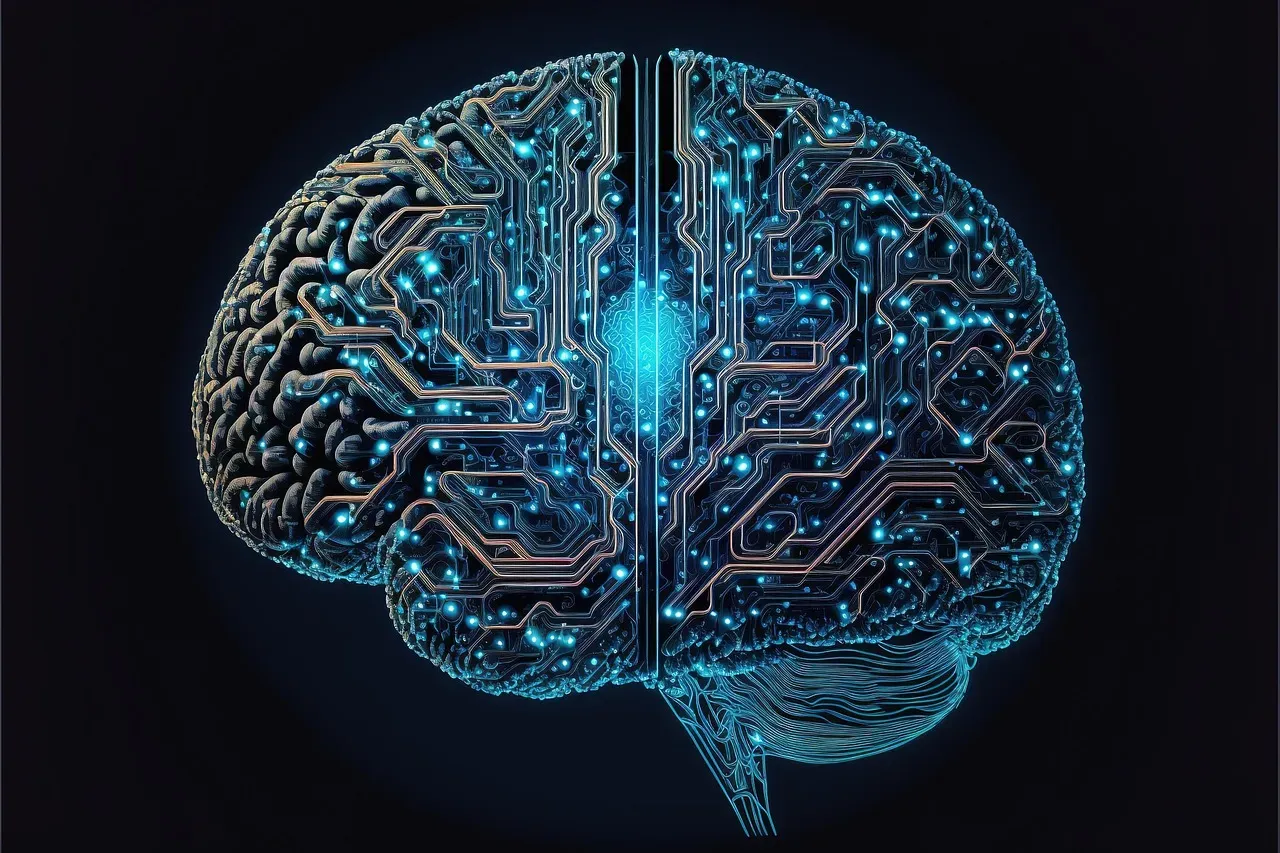
One major theoretical approach in consciousness science focuses on how information is integrated in the brain. The basic idea is that conscious experiences feel unified because underlying neural processes bind together many different streams of information at once. Seeing a red apple, for example, involves color, shape, background context, emotional associations, and expectations all coming together into a single moment of awareness. Earlier nervous systems probably did far less of this binding, handling signals in more separate, modular ways.
As brains evolved more cross-talk between regions, especially in creatures with complex sensory lives and social environments, integration ramped up. That may have gradually created the kind of seamless, global workspace where information is widely shared and can guide a rich variety of actions. The feeling of being a subject at the center of a coherent world could be the brain’s way of marking information that has reached this high level of integration. Under this view, there is no singular evolutionary jump; there are many small structural and functional tweaks that together make experiences more unified, stable, and self-aware.
Why Evolution Would Favor Consciousness in Degrees
From a cold evolutionary standpoint, consciousness needs to earn its keep. It is energetically expensive to build and maintain big, complex brains, so they must deliver survival and reproductive benefits. A gradual rise in consciousness makes sense here: even slightly richer internal models, more nuanced feelings, or the ability to simulate possible futures would offer advantages such as better foraging, more effective escape from predators, and more sophisticated social strategies. You do not need a fully human mind to benefit from a basic sense of fear, comfort, or curiosity.
As these benefits stacked up, natural selection would tend to favor organisms whose nervous systems could represent more, feel more, and flexibly act on those feelings. Over long spans of time, this may have created a sliding scale of conscious depth across species. Instead of consciousness being a mysterious add-on with no obvious evolutionary path, it starts to look like an especially intricate extension of the same adaptive logic that produced eyes, wings, and cooperative behavior, only this time turned inward as well as outward.
The Hard Problem, AI, and Why Gradual Emergence Matters
All of this still leaves open what philosophers call the hard problem of consciousness: why and how physical processes in the brain are accompanied by subjective experience at all, rather than just silent information processing. Evolutionary explanations mostly describe the functional roles consciousness plays, not why it has this felt quality. But even if that deep mystery remains, acknowledging the likely gradual emergence of consciousness helps ground the debate in biology instead of treating consciousness as a sudden, unexplainable gift dropped into the universe.
This matters increasingly as we build advanced artificial systems that can learn, predict, and adapt. If consciousness comes in degrees and depends on certain kinds of integrated modeling and self-monitoring, then there might be a point at which some synthetic systems cross into at least low-level awareness. That is not guaranteed, and the science is far from settled, but thinking in gradual, evolutionary terms pushes us to take the question seriously instead of assuming machines will always be mere tools. Personally, I think we are going to be forced to refine our criteria for consciousness much sooner than we are emotionally ready for.
Conclusion: Consciousness as a Slowly Rising Tide
When I look at the evidence from evolution, development, animal behavior, and neuroscience, the idea that consciousness emerged gradually feels not only plausible but almost unavoidable. The “light switch” model is tidy, but biology is messy, and most complex traits arrive as a slow accumulation of tweaks rather than a single miraculous leap. To me, consciousness looks more like a tide that crept up over millions of years, flooding the inner landscapes of different species to different depths, rather than a sudden storm that drenched only humans.
This view also carries a quiet but powerful ethical punch. If awareness comes in shades, then our moral concern cannot stop neatly at our own species or at some arbitrary cognitive threshold. We might need to reconsider how we treat animals, how we build machines, and even how we think about our own evolving inner lives. Maybe the most humbling lesson is that our cherished sense of self is part of a much older, broader story written in the language of evolution. In a universe where consciousness is a slowly rising tide rather than an on–off switch, the real question becomes: just how far out does that tide reach, and what responsibilities come with knowing we are swimming in it?