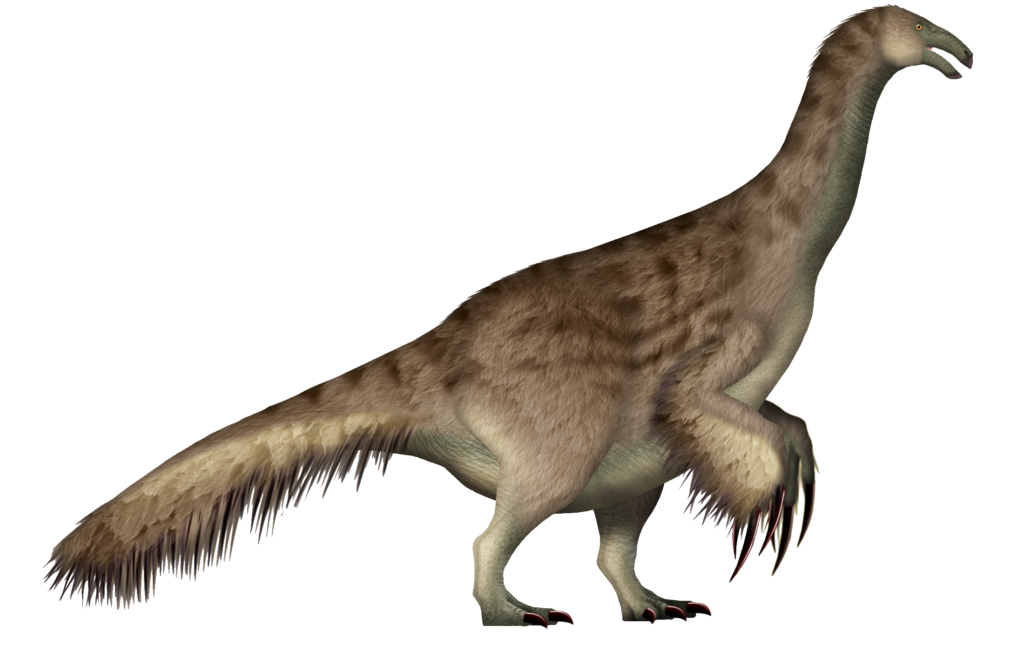
If you tried to design a dinosaur after a sleepless night and three cups of coffee, you’d probably end up with something that looks a lot like Therizinosaurus. Picture a pot‑bellied, feathered giant, walking on two legs, with a long neck like an ostrich, the body bulk of a small car, and hand claws longer than your forearm. For decades, paleontologists were not even sure what this creature really was; at first, they thought those insane claws belonged to an enormous turtle. The more fossils researchers have dug up across Asia, the clearer it has become that Therizinosaurus is not just odd – it may be one of the strangest experiments evolution ever ran on land.
What makes this animal so fascinating is that it breaks almost every casual rule people think they know about dinosaurs. It was a cousin of the most famous carnivores on Earth – T. rex and Velociraptor – yet everything about its body screams slow, picky plant‑eater. It looked like it was built from spare parts stolen from other animals: a bit of sloth here, a dash of giant bird there, and just enough raptor ancestry to keep things slightly terrifying. The result is a creature that forces us to rethink what dinosaurs could look like, how they lived, and how messy and creative evolution really is.
A Raptor Cousin Built Like a Giant, Gentle Sloth
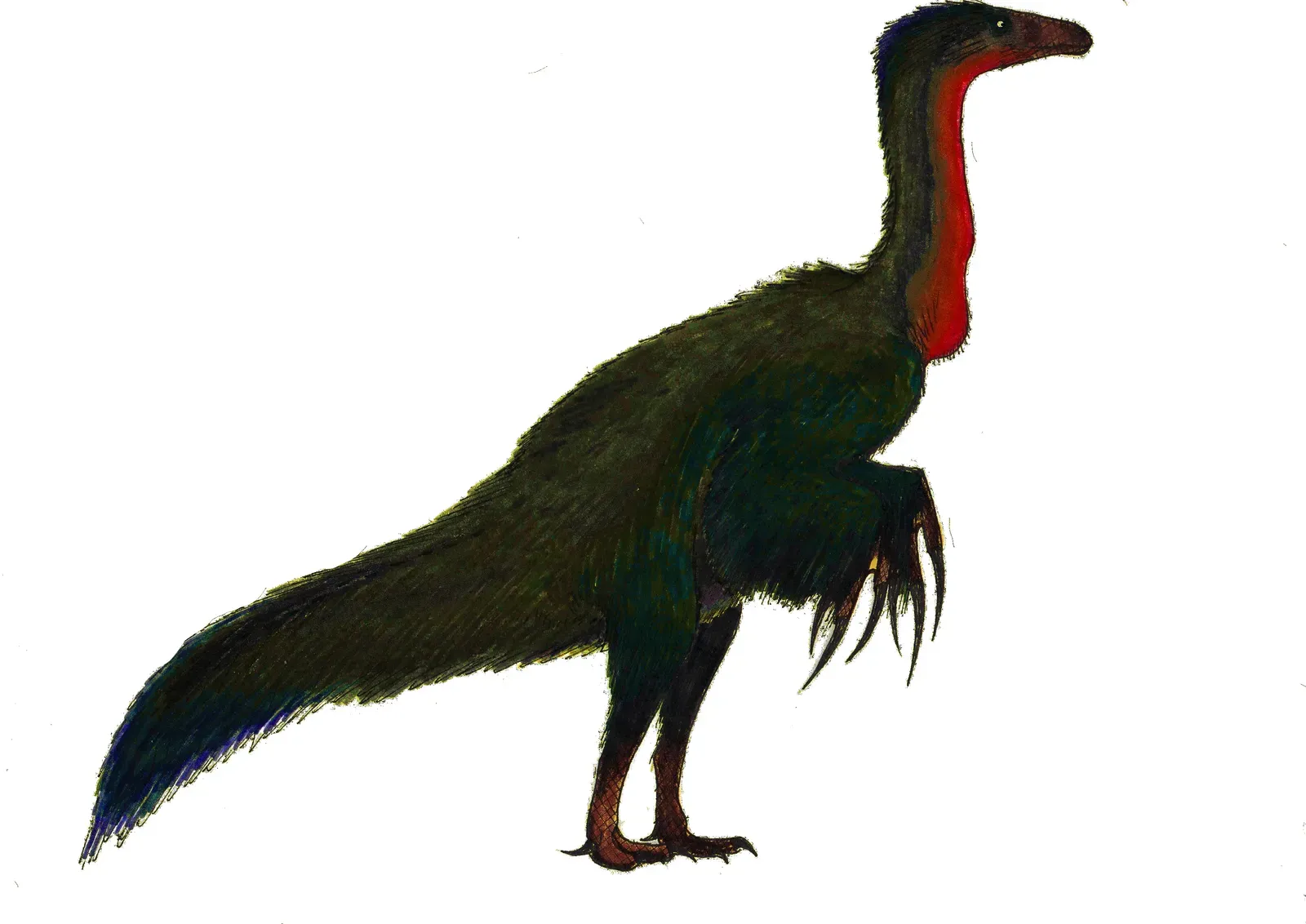
The weirdest thing about Therizinosaurus is not just what it looked like, but who it is related to. It sits inside the same broad group as some of the sleekest, deadliest predators of the Mesozoic – dromeosaurs and tyrannosaurs – yet you look at this thing and it seems like the dinosaur equivalent of a vegan yoga instructor. Its skull appears to have been relatively small with a beaked snout, its teeth more suited to munching vegetation than tearing flesh. That puts it in a rare category: a former meat‑eater lineage that seems to have gone hard in the direction of plants.
To me, that reversal is one of the most delightful plot twists in dinosaur evolution. It is like discovering that a family of sports‑car engineers suddenly pivoted and built an electric minivan that still has racing stripes. The bones say this is a theropod, descended from classic predators, but the lifestyle points toward a slower, bulkier animal spending its days browsing in forests. Evolutionary theorists love this kind of case because it shows how deeply behavior and diet can shift while the ancestry stays the same; the family tree does not force a body plan to remain locked into a single role forever.
Those Nightmare Claws That Probably Weren’t for Killing
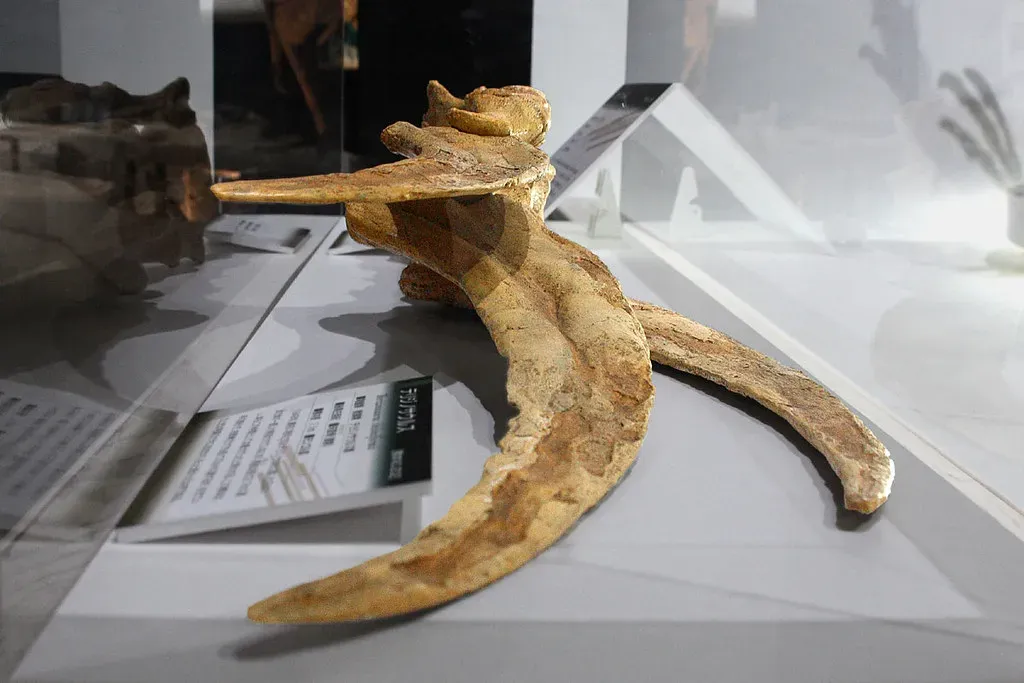
Let’s be honest: the claws are the whole reason Therizinosaurus became a paleontology rock star. Each hand carried three huge, blade‑like claws that could reach over half a meter in length in the largest individuals. At first glance, they look like the ultimate slashing weapons, something you’d see on a movie monster designed to rip open armored prey. Early interpretations leaned in that direction, if only because no one had seen anything quite so exaggerated in a land animal before.
But when scientists looked more carefully at the shape and structure, a different picture began to emerge. The claws are long and somewhat flattened, not the stout, strongly curved tools you typically see in animals that grapple and kill. A growing view is that they were more likely used to hook and pull branches closer, strip leaves, or maybe dig and rake through vegetation, a bit like an enormous gardening tool attached to a shaggy, bird‑like giant. Some researchers have also suggested defensive use – those claws would certainly make a predator think twice – but their primary job may have been surprisingly mundane. Personally, I love that: evolution built the most metal‑looking claws imaginable, then probably used them like a rake and salad tongs.
Feathers, Pot Bellies, and the Ugly‑Cute Factor
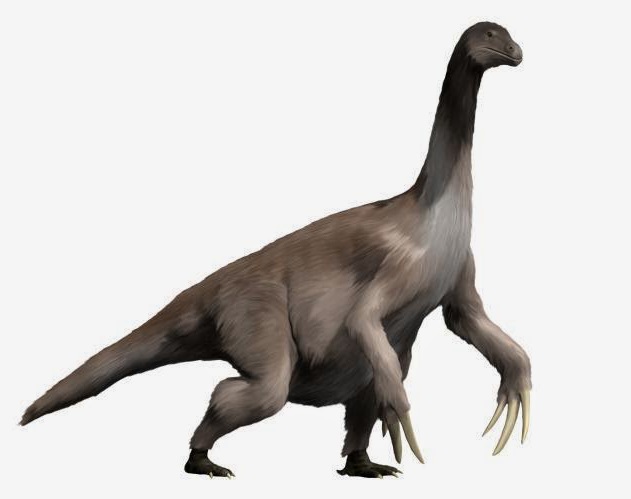
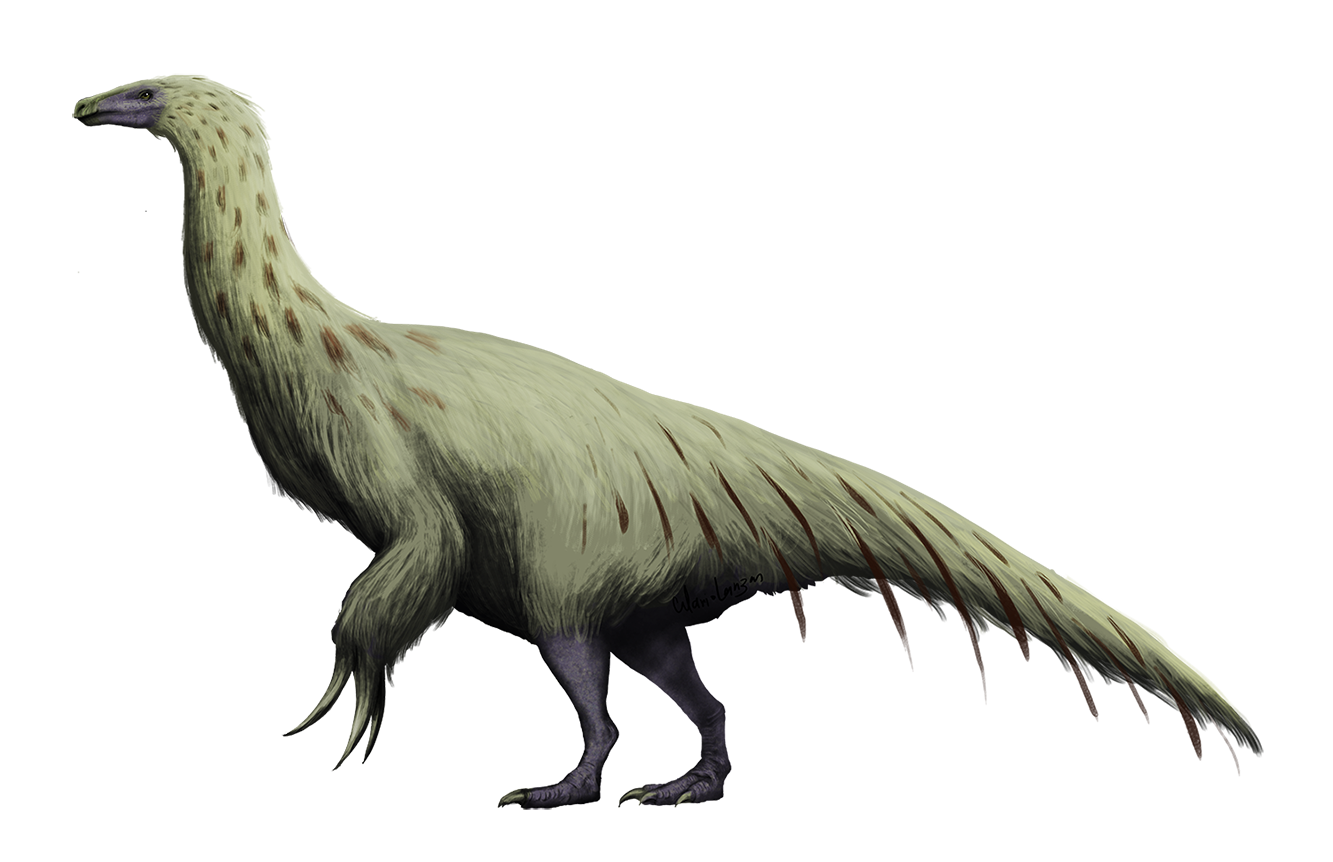
Therizinosaurus lived in the Late Cretaceous, at a time when many theropods were sporting feathers, and its close relatives preserve clear evidence of feathery coats. While we do not yet have a perfect full‑body feathered fossil of Therizinosaurus itself, it is very likely it wore a covering of simple feathers or hair‑like filaments. Add that to a wide, bulky torso and long neck, and you get something that might have looked oddly like a cross between a giant ground sloth and an overgrown, bad‑tempered emu. It is a long way from the sleek, scaly movie monsters many of us grew up with.
The pot belly actually makes functional sense. Plant‑based diets demand larger guts to break down fibrous material, so you end up with a more rounded body shape, the way many herbivorous mammals have big, barrel‑shaped torsos. To me, that gives Therizinosaurus a kind of ugly‑cute energy: it is intimidating in size and hardware, but the overall silhouette is almost comical, like an overinflated bird waddling through the Cretaceous underbrush. This mix of alarming and ridiculous is exactly why it has become such a fan favorite; you cannot quite decide whether to be scared or to laugh, and that tension is weirdly endearing.
How a Meat‑Eating Lineage Turned into a Plant‑Eating Specialist
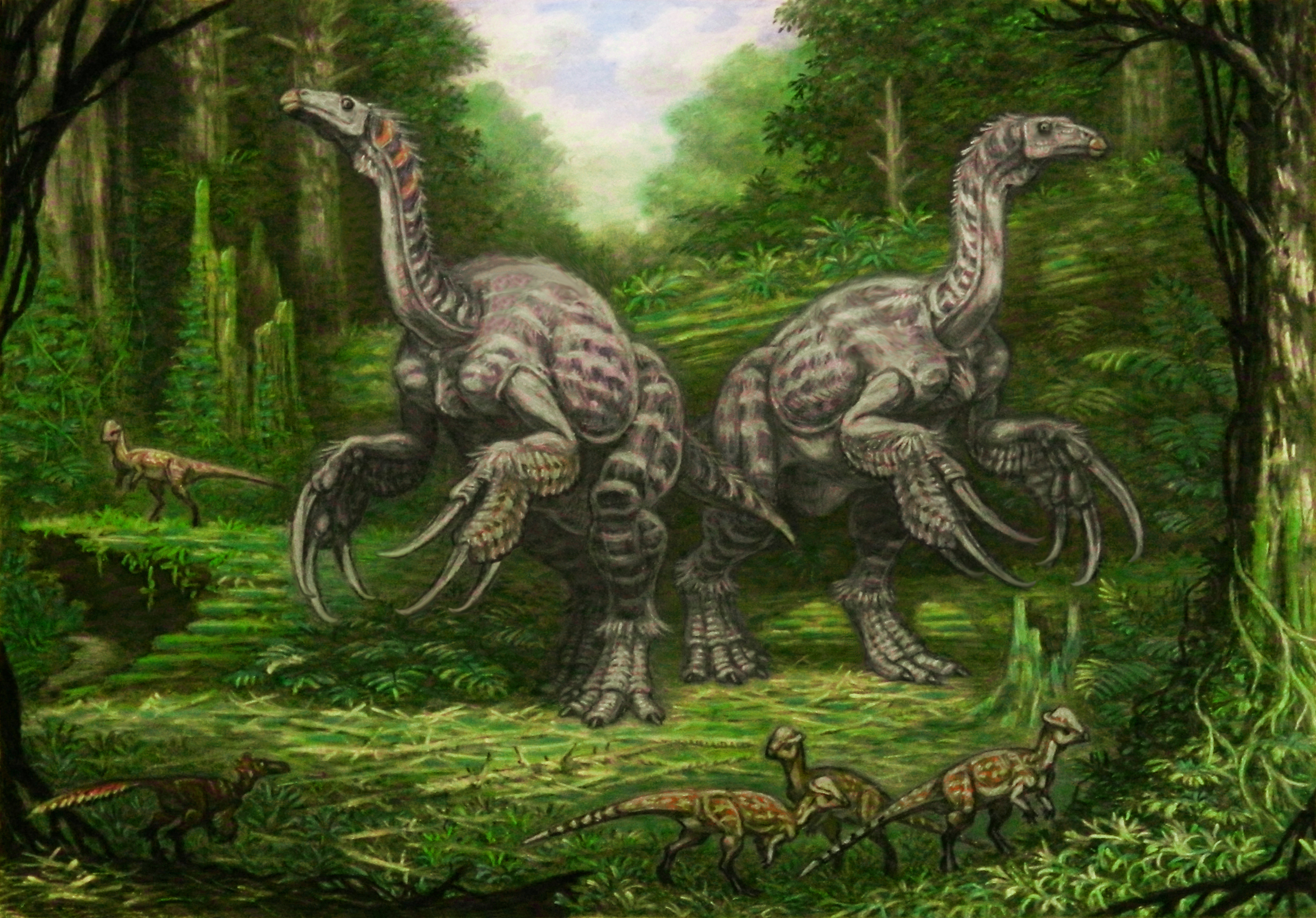
From an evolutionary theory point of view, Therizinosaurus is a fantastic example of what happens when a lineage jumps into a new ecological role. Its ancestors were sharp‑toothed hunters, but over time, the group we call therizinosaurs shifted toward herbivory, reshaping their skulls, teeth, and bodies to handle plant diets. You see changes like the development of a beak, leaf‑shaped teeth, and that huge gut space – classic moves for a herbivore. At the same time, they kept key theropod features like walking on two legs and having grasping hands, then exaggerated those hands into something entirely new.
This kind of evolutionary makeover is not instant; it unfolds over millions of years as species explore what works in their changing environments. I like to think of it as a family business that gradually changes specialties across generations – starting as hunters, then shift to foraging, then finally becoming full‑time leaf‑eaters with tools custom‑built for that job. Evolutionary theorists highlight these transitions because they show how flexible life really is: even lineages that begin as apex predators can end up as slow, bulky browsers if the ecological opportunity is there. Therizinosaurus sits near the extreme end of that path, a late and highly specialized branch that turned the predator blueprint inside out.
A Bizarre Body Shaped by Forest Life and Giant Neighbors
Why would evolution reward such a strange combination of features? One leading idea is that Therizinosaurus and its relatives were taking advantage of lush, plant‑rich environments where tall shrubs and low trees offered a buffet of leaves. Its height and long arms would have allowed it to reach food other herbivores could not get to easily, and those oversized claws might have been ideal for pulling branches within reach or clearing away competing plants. In ecosystems crowded with massive plant‑eaters, being tall, armed, and a bit weird might have been a real advantage.
There is also the question of predators. The Late Cretaceous was not exactly a peaceful time; large carnivores stalked many of the same regions where therizinosaurs lived. A slow, bulky animal needs some deterrent, and a wall of long, intimidating claws would be a powerful visual and physical defense. Imagine being a predator sizing up dinner and seeing this towering, feathered form turning sideways to show off a rack of hooked blades – that alone might encourage you to find an easier target. This mix of foraging tools and potential weaponry makes Therizinosaurus feel like an evolutionary multitool, combining offense, defense, and feeding strategies in a single, outlandish package.
Why Scientists Keep Calling It One of the Weirdest Dinosaurs
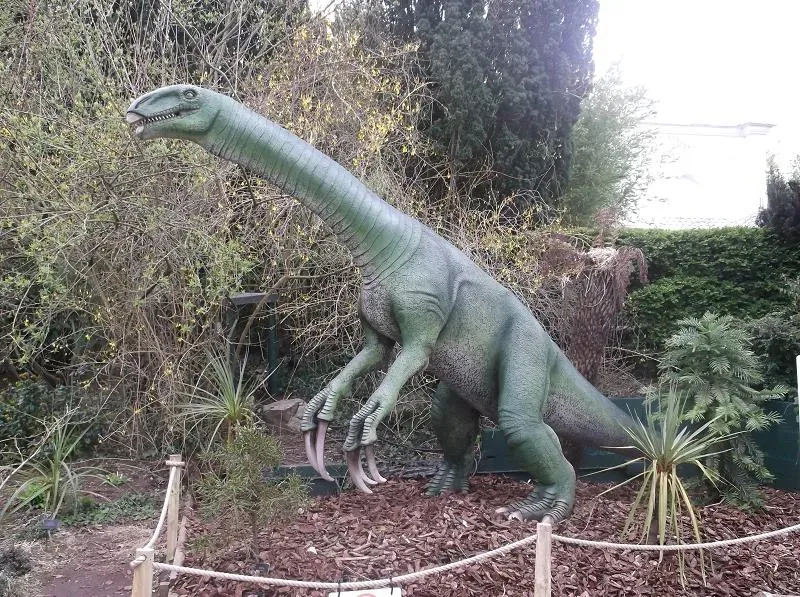
When paleontologists describe Therizinosaurus as possibly the weirdest dinosaur, they are not just being dramatic. It breaks expectations in multiple categories at once: it is a theropod that acts like a large herbivore, a raptor cousin with a pot belly, a feathered giant with oversized claws that probably did more gardening than hunting. Most dinosaurs have one or two features that stand out; this one feels like a stack of contradictions walking on two legs. The more we learn, the more it sits in a category of its own, even among other strange therizinosaurs.
And yet, that weirdness is exactly what makes it scientifically valuable. It forces researchers to test their assumptions about what different body plans can do, how diet and behavior evolve, and how often evolution runs experiments on familiar blueprints. In a way, Therizinosaurus is like the oddball cousin at a family reunion who reveals just how diverse the family really is. By studying this creature, scientists get a clearer picture of how flexible dinosaur evolution was and how many paths a single lineage could explore. As someone who has followed dinosaur discoveries for years, I honestly think calling it one of the weirdest is not hype – it is almost an understatement.
How Pop Culture Turned a Niche Oddball into a Dinosaur Icon
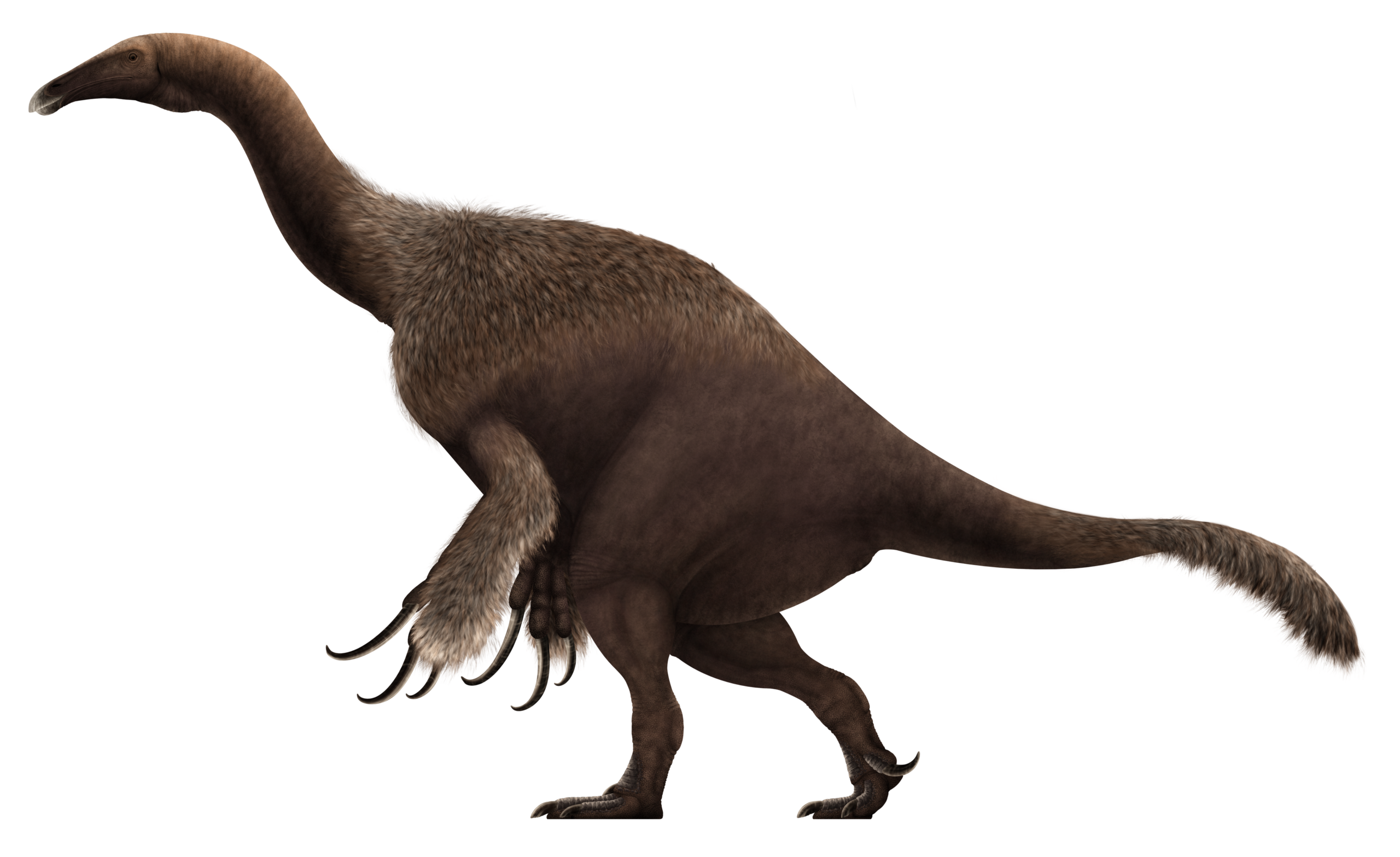
For a long time, Therizinosaurus was more of a paleontology in‑joke than a household name. The fossils were fragmentary, mostly those outrageous claws, and it lurked in technical papers rather than coffee‑table books. That started to shift as better fossils of its relatives appeared and artists began reconstructing it in detail: feathered, towering, and armed like nothing else. Once people actually saw what this animal might have looked like, it was only a matter of time before it broke into mainstream dinosaur culture.
When it finally showed up in big‑budget media and games, you could feel the collective reaction: what on Earth is that thing, and how is it real? In my own circle, friends who never cared about obscure Cretaceous fauna suddenly had a favorite dinosaur that was not a T. rex or Triceratops. Pop culture did what it does best – turned a niche, specialist animal into an icon – while also raising real questions about its biology and behavior. I think that feedback loop between science and art is healthy; even if the movie versions play up the horror angle, they push people to learn more and discover that the truth is, in many ways, even stranger than the fiction.
What Therizinosaurus Really Tells Us About Evolution (Opinionated Take)
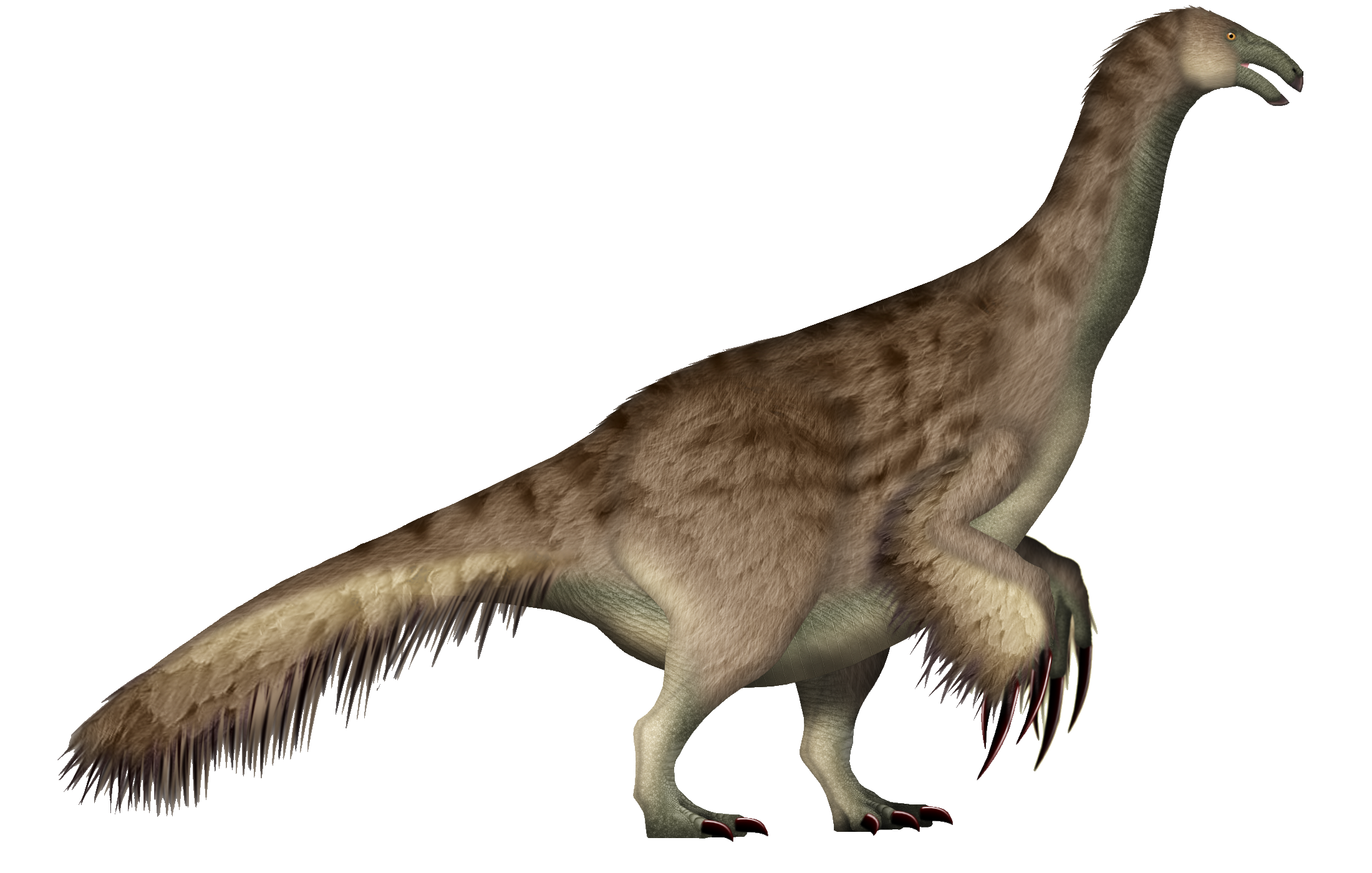
For me, Therizinosaurus is a walking argument against the idea that evolution is neat, orderly, or conservative. Here is a creature that started with the same basic toolkit as some of the sleekest carnivores that ever lived and turned it into something that looks like a feathered scythe‑armed gardener. That transformation says a lot about how willing evolution is to push a body plan to its limits when the environment offers the right incentives. It also quietly undermines our habit of boxing entire groups into simple labels like predator or plant‑eater, as if those roles cannot be swapped over time.
If anything, I think we should lean into the claim that Therizinosaurus might be the weirdest dinosaur we know, not because it is a guaranteed winner in some imaginary ranking, but because its weirdness forces us to stay humble. Every time we think we have a tidy story about dinosaur evolution, a fossil like this walks in and flips the table. That is a good thing; it keeps science honest and reminds us that nature is not obligated to match our expectations. So the next time you picture dinosaurs as rows of toothy reptiles, ask yourself: somewhere out there, how many more Therizinosaurus‑level surprises are still waiting in the rock?