Imagine you’re working a routine day, mapping rock layers for a scientific survey, when suddenly you spot something that changes everything. That’s exactly what happened to a team of geologists near Mississippi State University when they stumbled upon what could be the most significant marine fossil discovery in the state’s history. Sometimes the greatest discoveries come when you least expect them.
What started as a simple geological mapping project turned into an extraordinary encounter with an ancient sea monster. The team wasn’t searching for fossils at all, yet fate placed them face to face with the vertebra of a creature so massive it defies imagination. Let’s dive into this incredible story.
A Chance Discovery That Changed Everything
You might think major fossil discoveries require years of careful excavation and planning. This one happened by complete accident. The team was out in the field near Starkville’s Mississippi State University to create a 3D map of local geologic layers when fellow geologist Jonathan Leard realized he misplaced a pile of ancient seashells he had collected. While searching for the missing shells, Starnes noticed a partially exposed bone in the muck. It didn’t take long before it became clear this was something much larger than any seashell.
When geologist James Starnes first spotted the bone protruding from the mud, he was “completely awe-struck by its size.” The exposed portion alone was the size of a baseball. Leard carefully dug the marl away from around the weathered vertebral processes and pulled it out of the ground. Their hearts were racing as they passed it around in disbelief at the size.
The Monster That Once Ruled Ancient Seas
What they discovered was a massive, fossilized mosasaur vertebra that measured more than seven inches across at its widest point. They turned the bone over to the Mississippi Museum of Natural Science, and paleontologists identified it as belonging to Mosasaurus hoffmannii, which was one of the biggest mosasaur species to roam the planet.
Based on its size, researchers estimate the massive creature was around 56 feet long when it roamed the shallow seas that covered the region roughly 66 million years ago. This particular individual may represent the largest mosasaur ever discovered in Mississippi. The experts believe the apex predator of the ancient seas could have weighed around 30,000 pounds.
Understanding the Ancient Sea Dragon
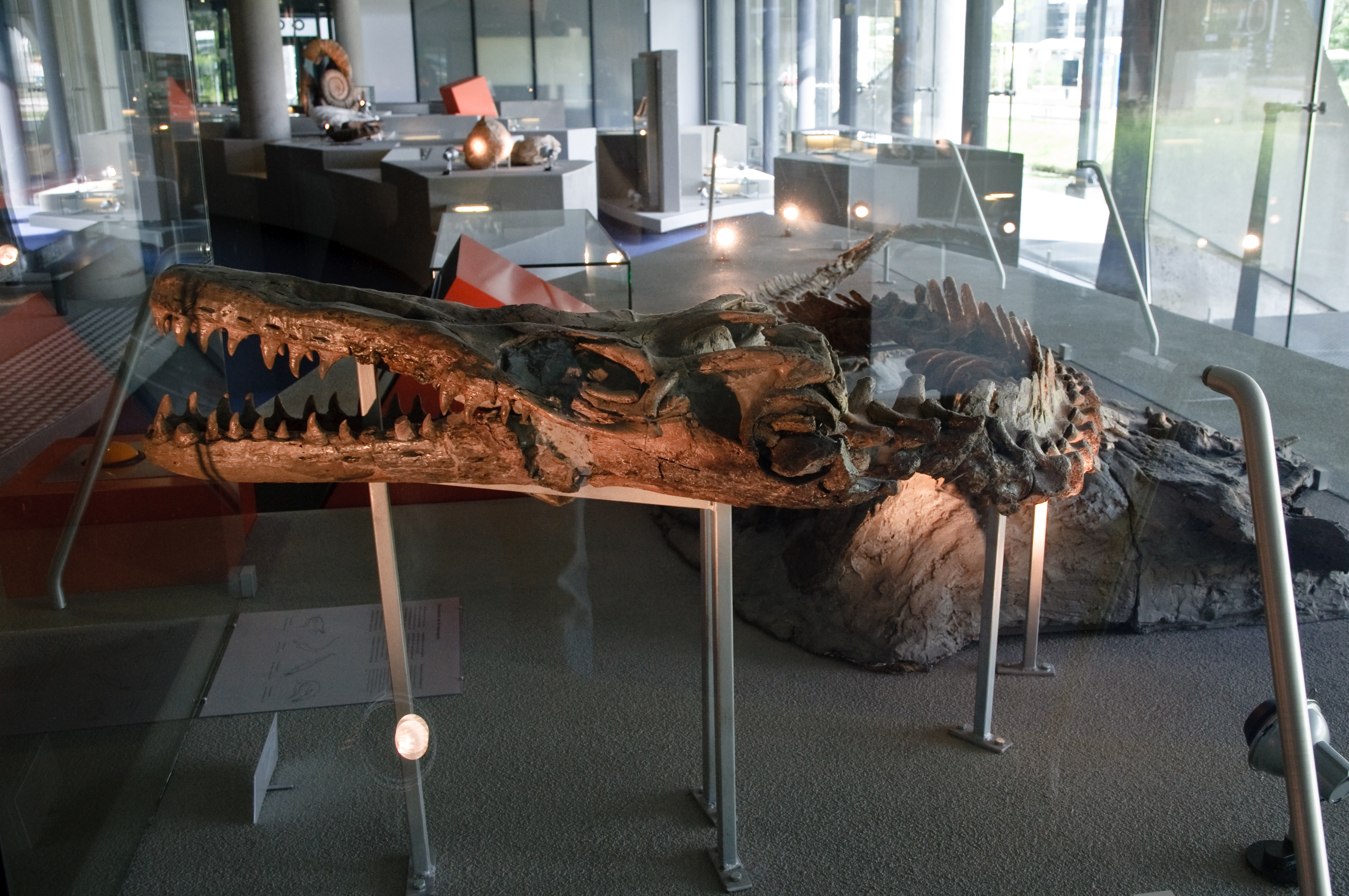
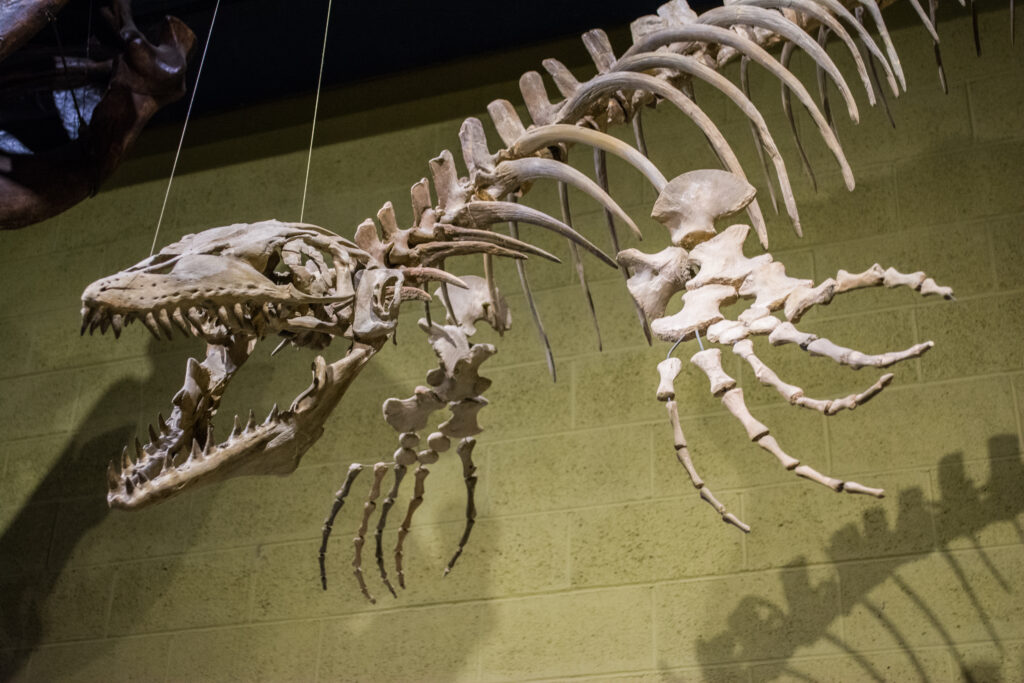
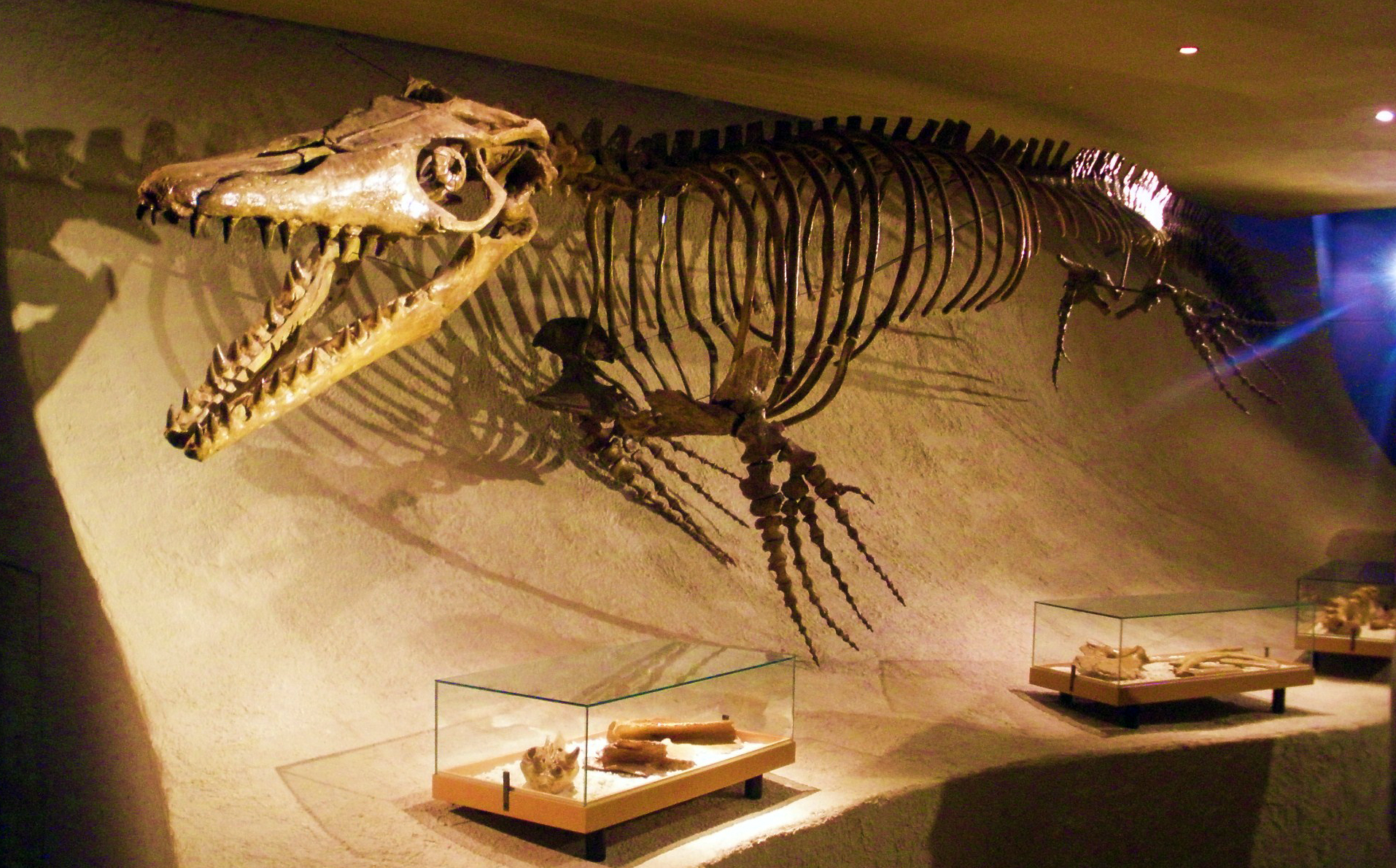
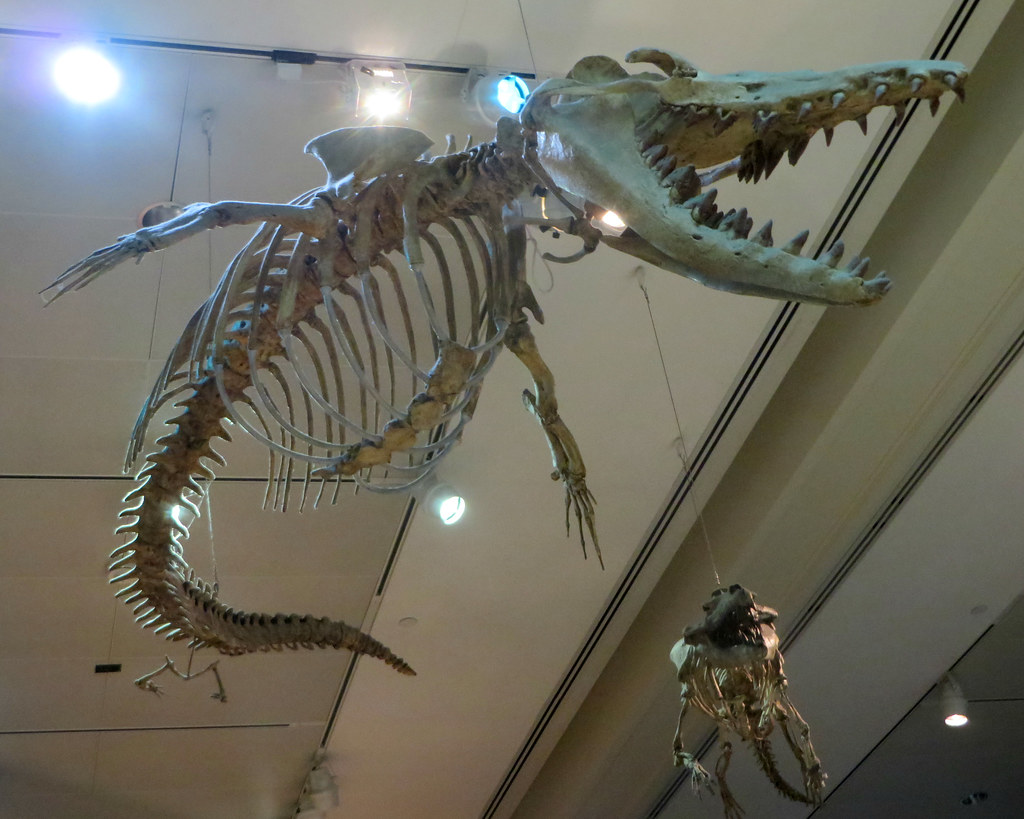
The skull of Mosasaurus had robust jaws and strong muscles capable of powerful bites using dozens of large teeth adapted for cutting prey. Its four limbs were shaped into paddles to steer the animal underwater. Its tail was long and ended in a downward bend and a paddle-like fluke.
For modern-day comparison, a mosasaur is similar to a crocodile – an aquatic reptile built for speed, but the size of a school bus and with the hunting instincts of an orca – with a long tail, paddle-like limbs and powerful jaws capable of taking down even other mosasaurs. It had jaws lined with dozens of dagger-like pointed teeth curved inward – with additional rows of teeth at the roof of the back of their mouths to help secure large prey, including other mosasaurs – and the subaquatic dinos could regrow the teeth, which they frequently lost while hunting.
The Perfect Prehistoric Hunter
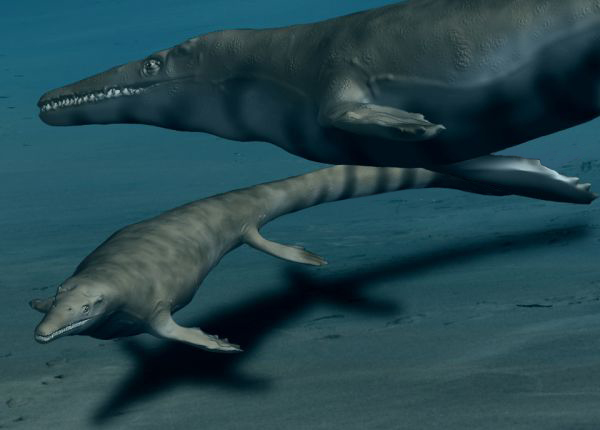
Mosasaurus possessed excellent vision to compensate for its poor sense of smell, and a high metabolic rate suggesting it was endothermic, an adaptation in squamates only found in mosasaurs. Mosasaurs are likely endothermic, able to generate favorable body temperatures with their own internal bodily functions. With body temperatures similar to those of seabirds during their time, mosasaurs were able to stay warmer than the surrounding waters, making them highly-active predators capable of short bursts of energy and speed, an advantage over ectothermic competitors and prey. This is one factor that led to them becoming the apex predators in seas and oceans all over the world during the Late Cretaceous.
While previous theories likened the mosasaur’s underwater maneuvers to present-day sea snakes, recent evidence indicates many of the predators featured large, crescent-shaped tailfin flukes similar to a shark. These would have allowed mosasaurs to quickly ambush their targets instead of chasing them over long distances. While Mosasaurus is able to cover great distances in a short amount of time, its hunting strategy does not rely on the long-term pursuit of prey. Rather, this predator prefers to camouflage itself with its non-reflective, countershaded body, stealthily ambush its prey and, in a short burst of speed, strike them with a sudden killing bite.
A Voracious Appetite for Everything
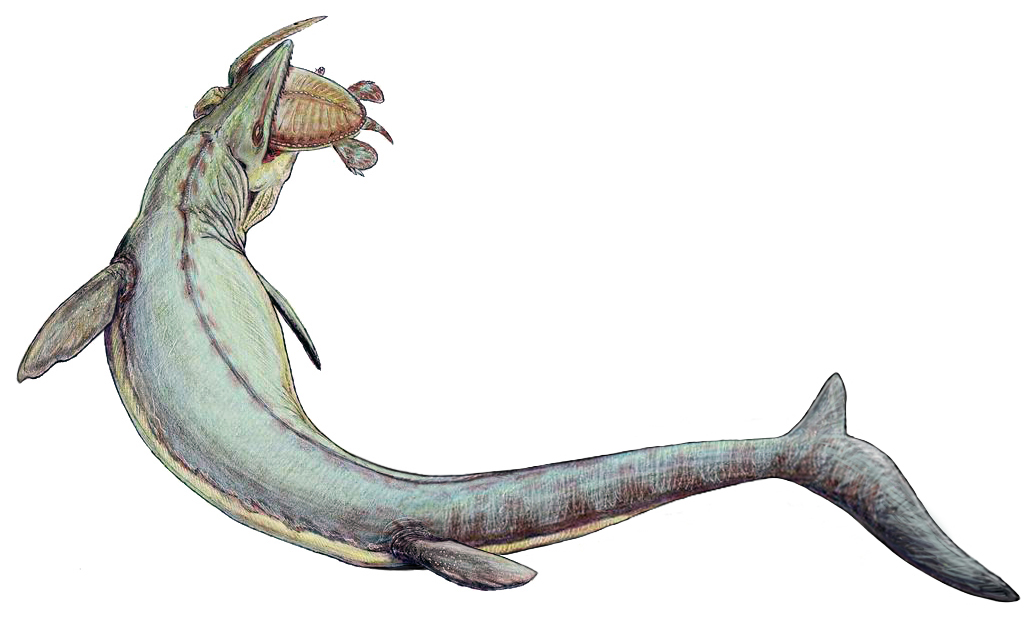
Paleontologists believe its diet would have included virtually any animal; it likely preyed on bony fish, sharks, cephalopods, birds, and other marine reptiles including sea turtles and other mosasaurs. Mosasaurus was a large generalist predator that pretty much ate anything it could catch in the prehistoric seas, from sharks and large fish to ammonites and other mosasaurs. Even dead dinosaurs, floating out at sea, were likely mosasaur chow.
Some, like Mosasaurus itself, were fearsome apex predators that ambushed their prey much the way large sharks hunt seals. Such formidable carnivores tore their prey into chunks and swallowed the parts without chewing. No mosasaurs swallowed prey larger than their head, whole, so they must have reduced a large food item into a bite size before swallowing. Several Mosasaurus fossils have bite marks, both healed and unhealed, that were certainly made by other mosasaurs.
Mississippi’s Ancient Underwater World
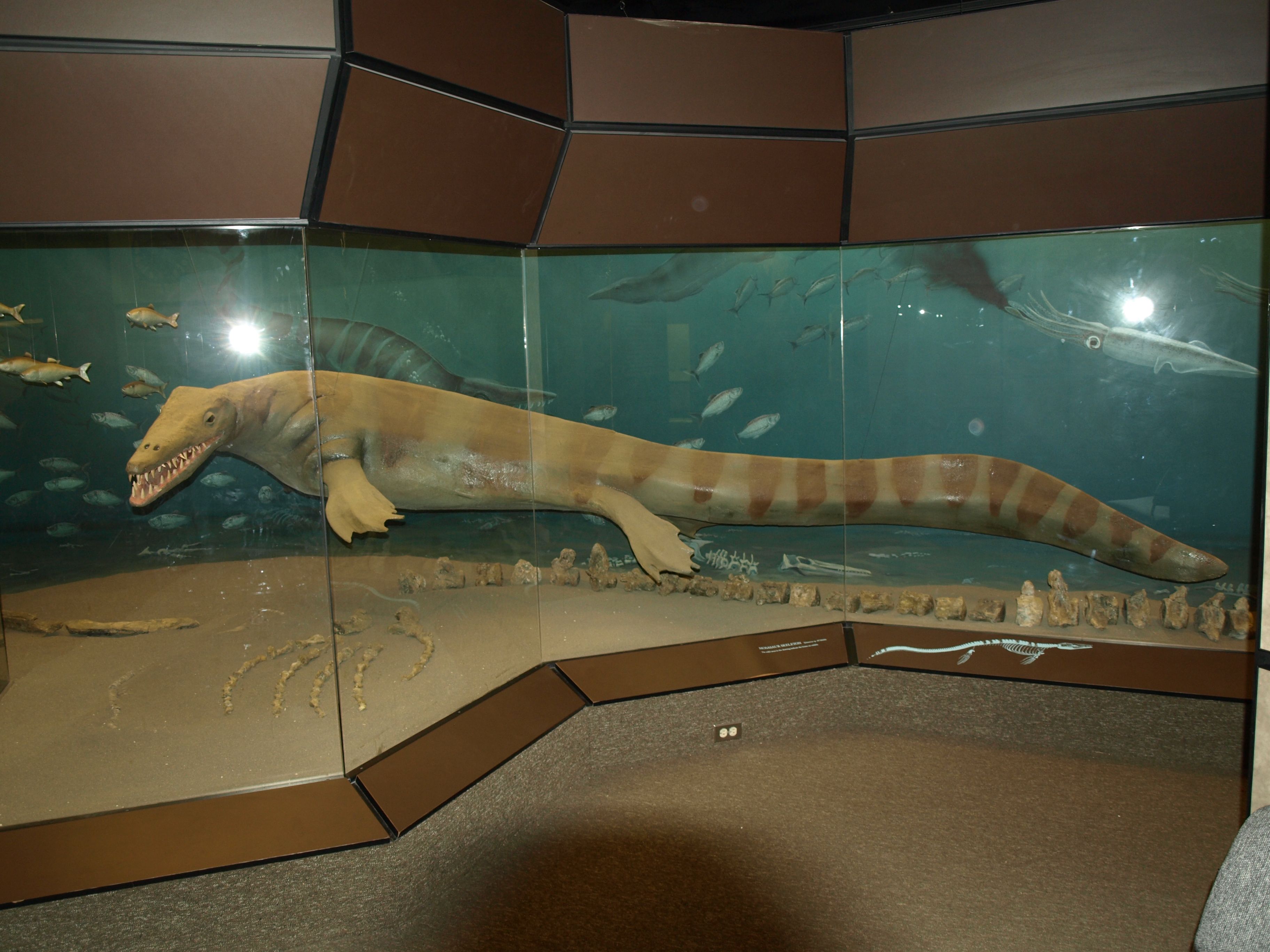
Mississippi has a rich geologic past with a fossil record that includes a history in the Mesozoic era, also better known as the days of the dinosaurs. Outcrops from the Late Cretaceous period underly the rich soils of the Black Prairie and uplands of the Pontotoc Ridge physiographic regions of northeast Mississippi. Much of these deposits were formed in warm tropical shallow seas teaming with life and now rich with their fossil remains. While the dinosaurs walked and ruled the land, giant marine reptiles and a variety of ferocious sharks ruled these ancient seas.
Over 70 million years ago, during the late Cretaceous period, the southeastern U.S. was a warm, subtropical region covered by a vast shallow sea known as the Western Interior Seaway. Much of the area was a coastal plain with swamps, rivers, and dense vegetation. Dinosaurs like hadrosaurs, tyrannosaurs, and ceratopsians roamed the land, while giant marine reptiles such as mosasaurs and plesiosaurs dominated the waters. The climate was humid, and the region was rich in diverse plant and animal life, resembling modern coastal wetlands and estuaries.
Mosasaurs are believed to have thrived near the end of the Cretaceous period in the warm, shallow sea that covered Mississippi – an ecosystem rich with marine predators, sharks and flying reptiles.
The Team Behind the Discovery
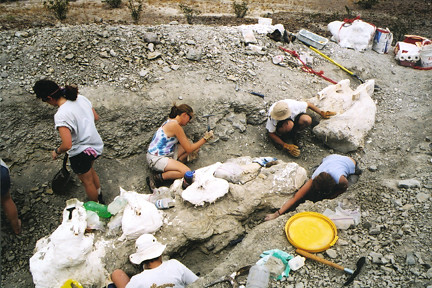
MSU doctoral researchers Jonathan Leard and Tim Palmer – both full-time professional geologists with the Mississippi Geological Survey – recently helped identify and recover a massive, fossilized mosasaur vertebra while working on a project with James Starnes, director in the Mississippi Department of Environmental Quality’s geological division. Leard and Palmer are experienced scientists pursuing their doctoral degrees in earth and atmospheric sciences at MSU while continuing full-time work in the field. They plan to complete their degrees through MSU’s Department of Geosciences later this year.
The find was made near Starkville during a geologic survey intended to create a three-dimensional map of the region’s subsurface. The team had already uncovered fossilized marine shells when the vertebra emerged from the muddy sediment. As James Starnes put it, “The feeling you get when you find a fossil, even as a professional, never gets old. But when you find something you have never seen before, the elation can be overwhelming.”
Mississippi’s Hidden Fossil Treasures
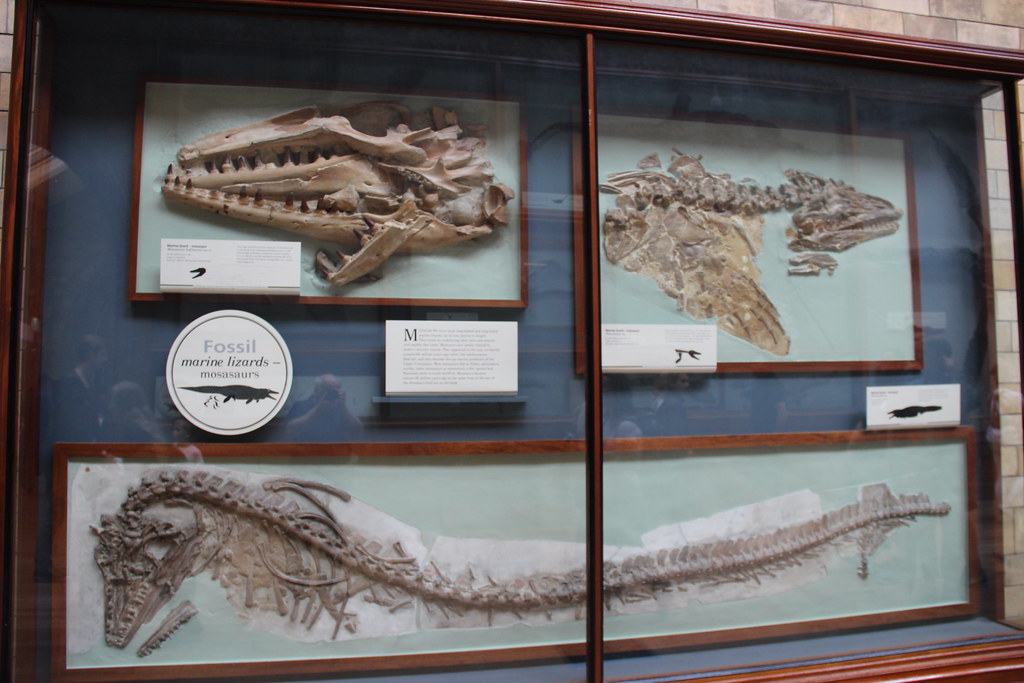
The vertebra found in Mississippi is now considered the largest mosasaur fossil ever recorded in the state. Its discovery not only adds a new chapter to Mississippi’s paleontological record but also provides fresh insights into the diversity and scale of marine life during the late Cretaceous. Mississippi is no stranger to remarkable fossil finds. The state’s rich geological history, shaped by ancient seas and shifting landscapes, has yielded a treasure trove of prehistoric remains – from marine reptiles to ancient sharks.
In 2023, researchers announced the discovery of a new mosasaur species called Gnathomortis stadtmani from fossils found in northeast Mississippi that lived more than 80 million years ago. In Mississippi, Cretaceous rocks and sediments exposed in the northeastern part of the state supply a variety of marine fossils. Fossilized evidence of invertebrate marine organisms like oysters, sponges, and bivalves can all be found here.
The Catastrophic End of an Era
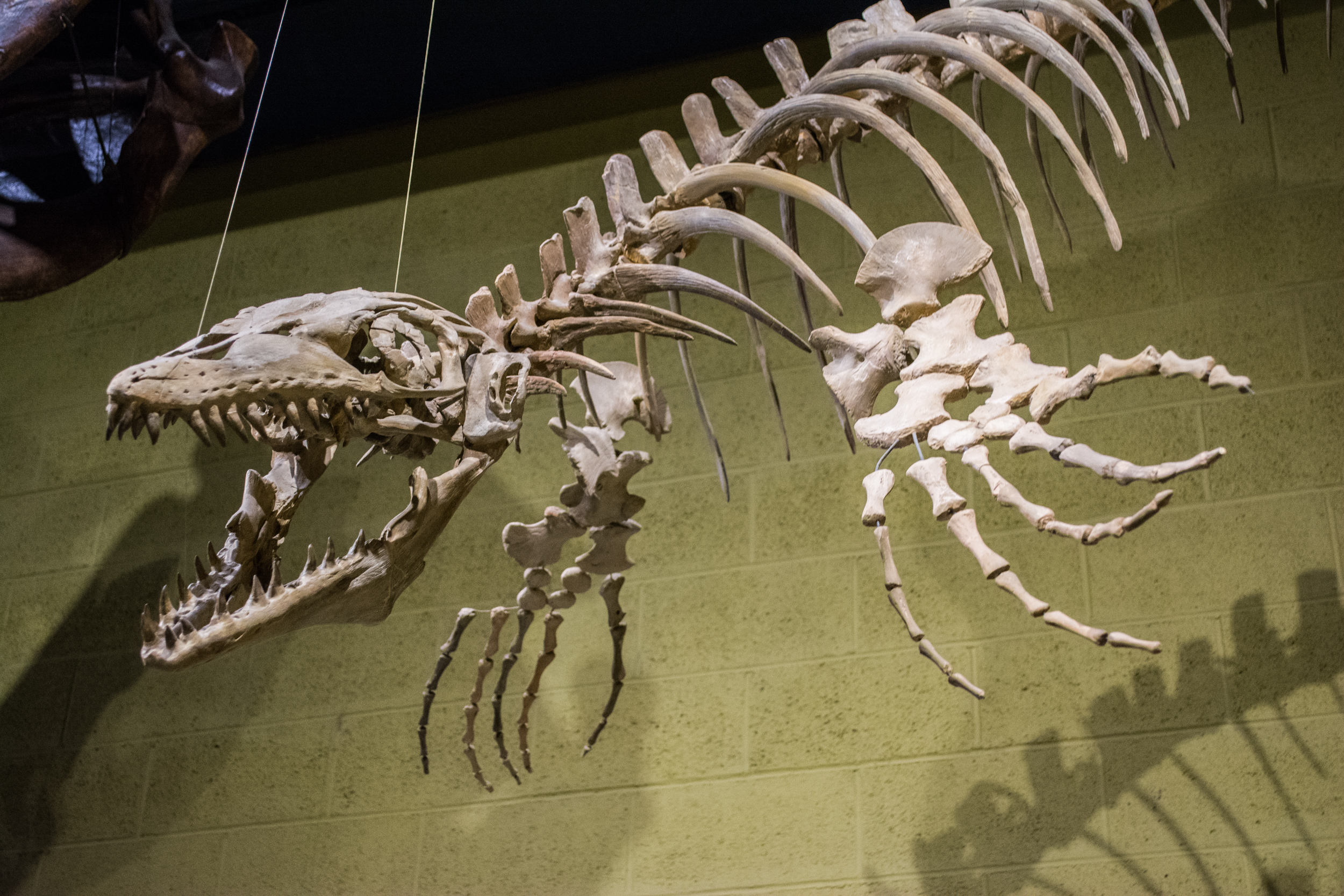
The gigantic mosasaur lived at the end of the Cretaceous period, around 66 million years ago. Mosasaurs disappeared, along with the dinosaurs, when an asteroid collided with Earth some 66 million years ago. However, their fossilized remains continue to fascinate researchers in Mississippi and beyond.
Mosasaurs disappeared at the end of the Cretaceous period, approximately 66 million years ago, during the K-Pg event, when around 75 percent of all species on the planet became extinct. While the exact cause of their extinction is not fully understood, it is believed to be related to the aftermath of a massive asteroid impact in the Yucatan Peninsula in Mexico. When top predators, such as the mosasaurs, disappeared, it opened the way for whales and seals to become dominant in the oceans, and fish like swordfish and tuna also appeared.
This discovery represents far more than just another fossil find. The discovery of this mosasaur vertebra is more than just a scientific milestone; it’s a reminder of the ever-changing nature of our planet. The muddy banks of a modern river conceal stories of ancient seas, monstrous reptiles, and the dramatic events that shaped life on Earth. The fact that such an incredible specimen could emerge from a routine geological survey shows us that Earth still holds countless secrets waiting to be discovered in the most unexpected places.
What do you think about the incredible power of serendipity in scientific discovery? Tell us in the comments.