Imagine standing at the edge of an unknown world, surrounded by frozen winds, enormous herds of woolly mammoths, and a vast expanse of open land that connected two continents. No GPS. No map. No idea of what lay ahead. That was the reality faced by some of the bravest, and most resourceful humans who ever lived. Their crossing of what we now call the Bering Land Bridge would go on to shape the entire story of human civilization in the Americas.
This is not just a dusty prehistoric footnote. It’s one of the most fascinating detective stories in all of science, a puzzle that archaeologists, geneticists, and anthropologists are still piecing together today. You might be surprised just how much we’ve learned, and how much still remains gloriously mysterious. Let’s dive in.
What Was the Bering Land Bridge, and Where Did It Come From?
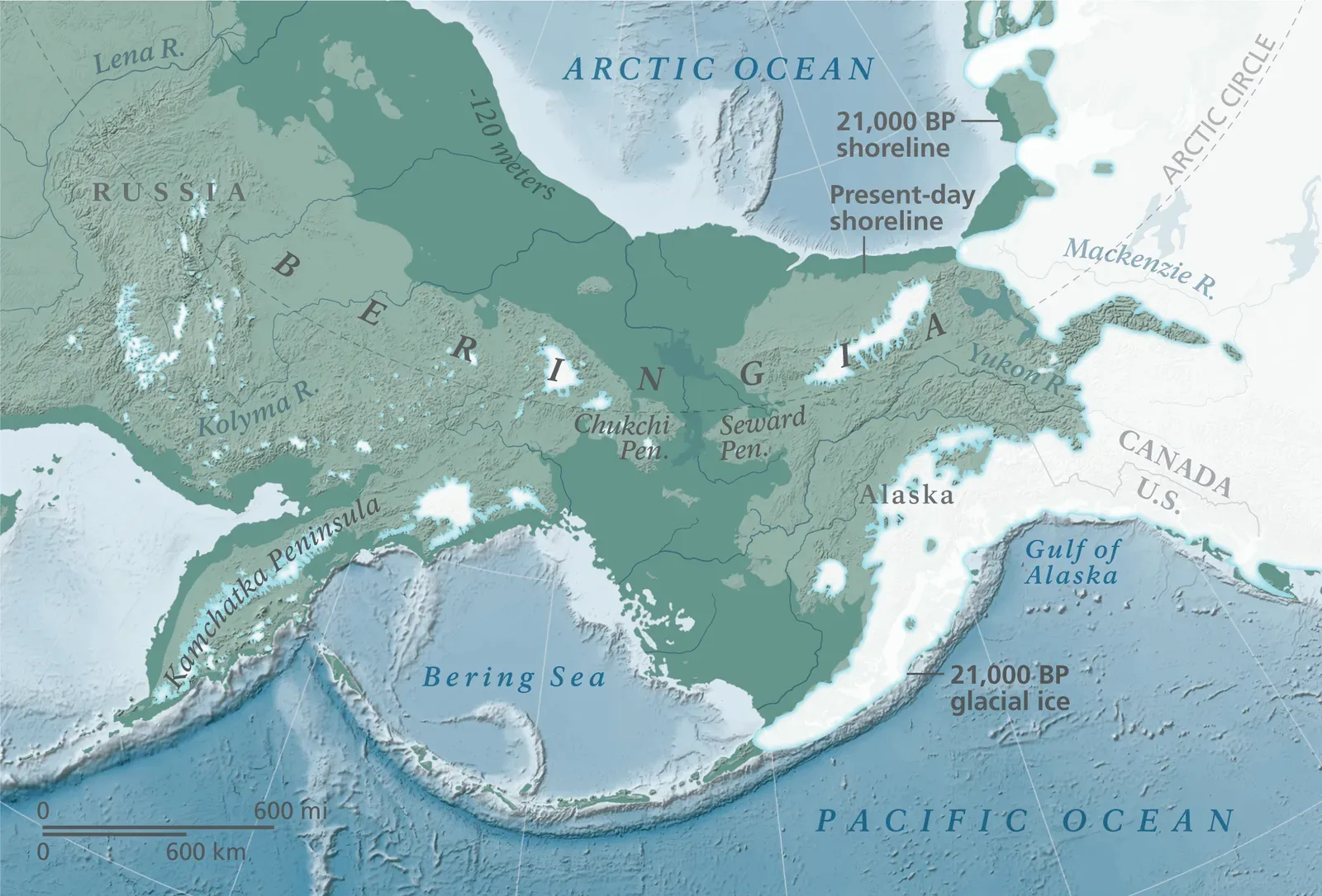
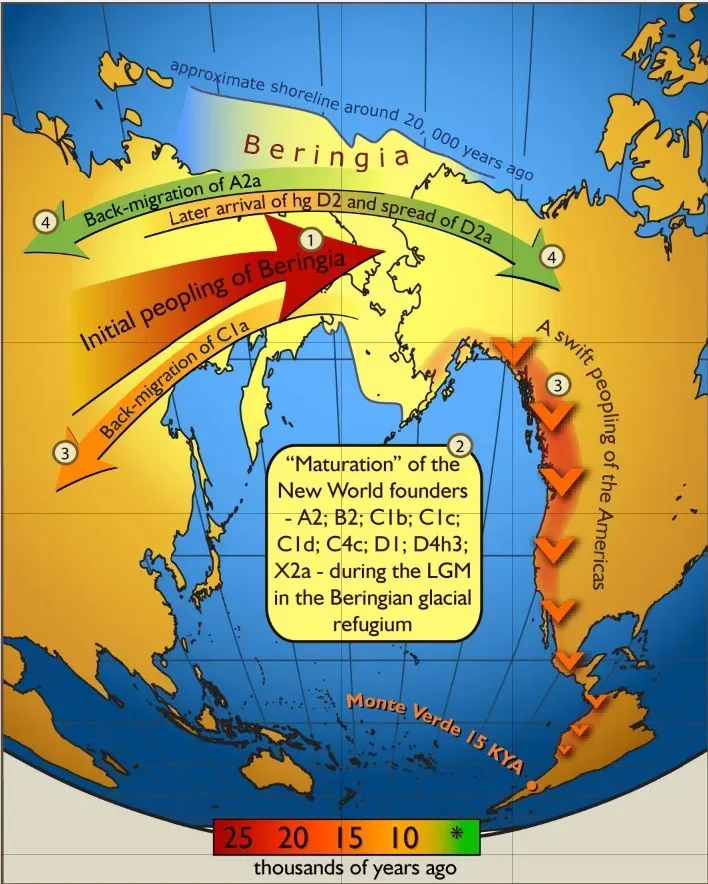
Before you can appreciate the crossing, you have to understand the stage. The Beringia land bridge formed between northeastern Siberia and western Alaska due to the lowering of sea level during the Last Glacial Maximum, which occurred roughly 26,000 to 19,000 years ago. Think of it like draining a bathtub just enough to reveal a strip of porcelain between two rubber ducks. The ocean level dropped, and suddenly a bridge between worlds appeared.
A drop in sea level of roughly 60 to 120 metres from present-day levels, commencing around 30,000 years before present, created Beringia as a durable and extensive geographic feature connecting Siberia with Alaska. At its peak, this was not some narrow strip of mud. The land bridge was up to 1,000 km wide at its greatest extent and covered an area as large as British Columbia and Alberta combined, totaling about 1.6 million square kilometers.
A Land That Was Surprisingly Alive
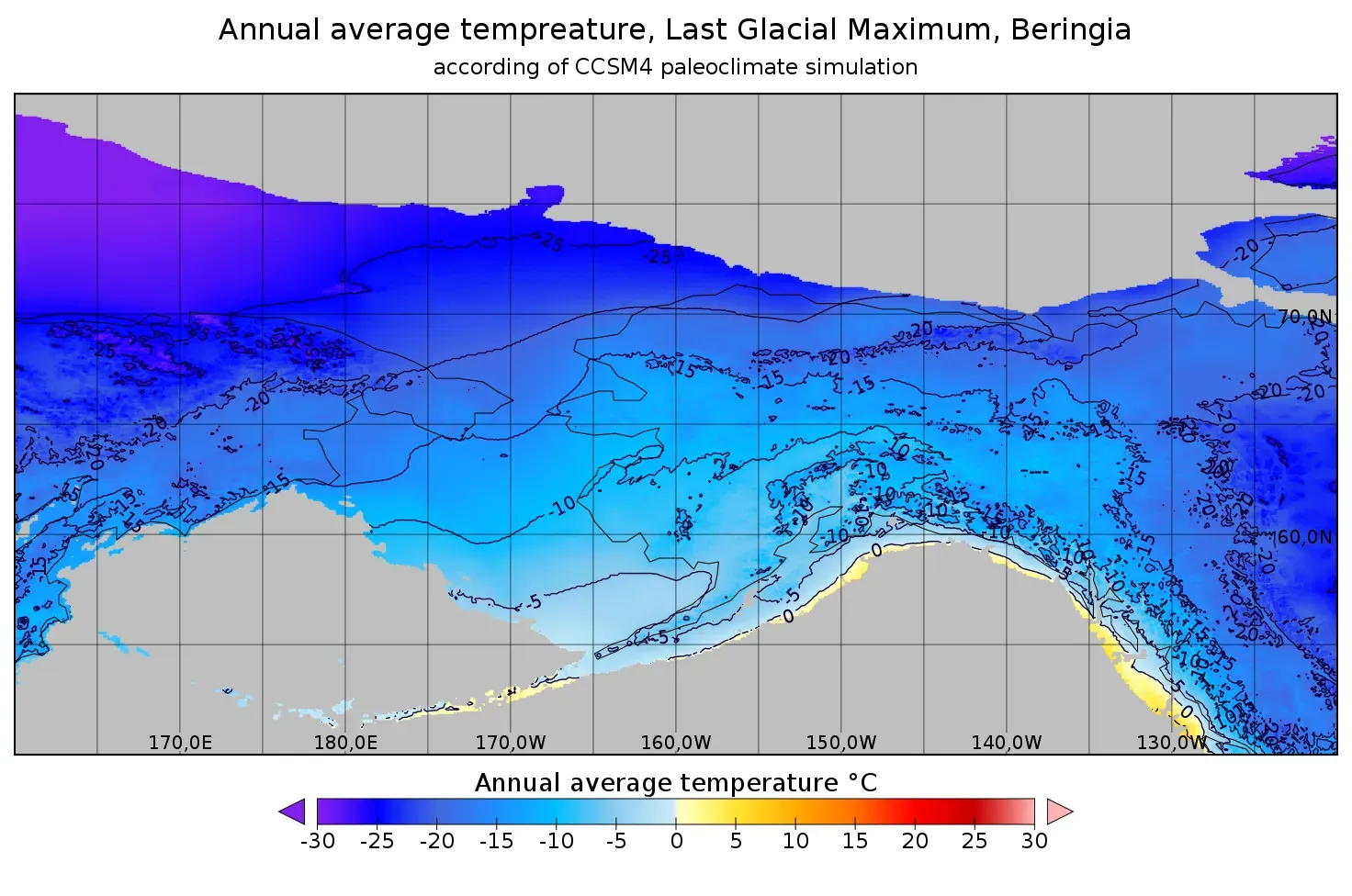
Here’s the thing a lot of people get wrong: Beringia wasn’t just a frozen, barren wasteland. You might picture a bleak corridor of ice, but the reality was far more interesting. Although glaciation throughout much of the Northern Hemisphere was extensive during the late Wisconsin period, research has shown that much of Beringia had a dry climate and was not glaciated, supporting cold-hardy tundra vegetation that allowed land mammals to venture eastward into North America.
Sediment cores from the Bering Sea and Alaskan bogs contained pollen, plant, and insect fossils, suggesting the Bering land bridge wasn’t just barren grassy tundra steppe, but was dotted by refugia where there were brushy shrubs and even trees such as spruce, birch, willow, and alder. Studies of beetle remains found in cores show that even at the height of the last glacial maximum, temperatures in the Bering Strait region were about the same as they are today, because of the benign influence of North Pacific currents that brought warmer and wetter conditions to the land bridge. Honestly, that’s astonishing.
Who Were the People Who Made the Crossing?
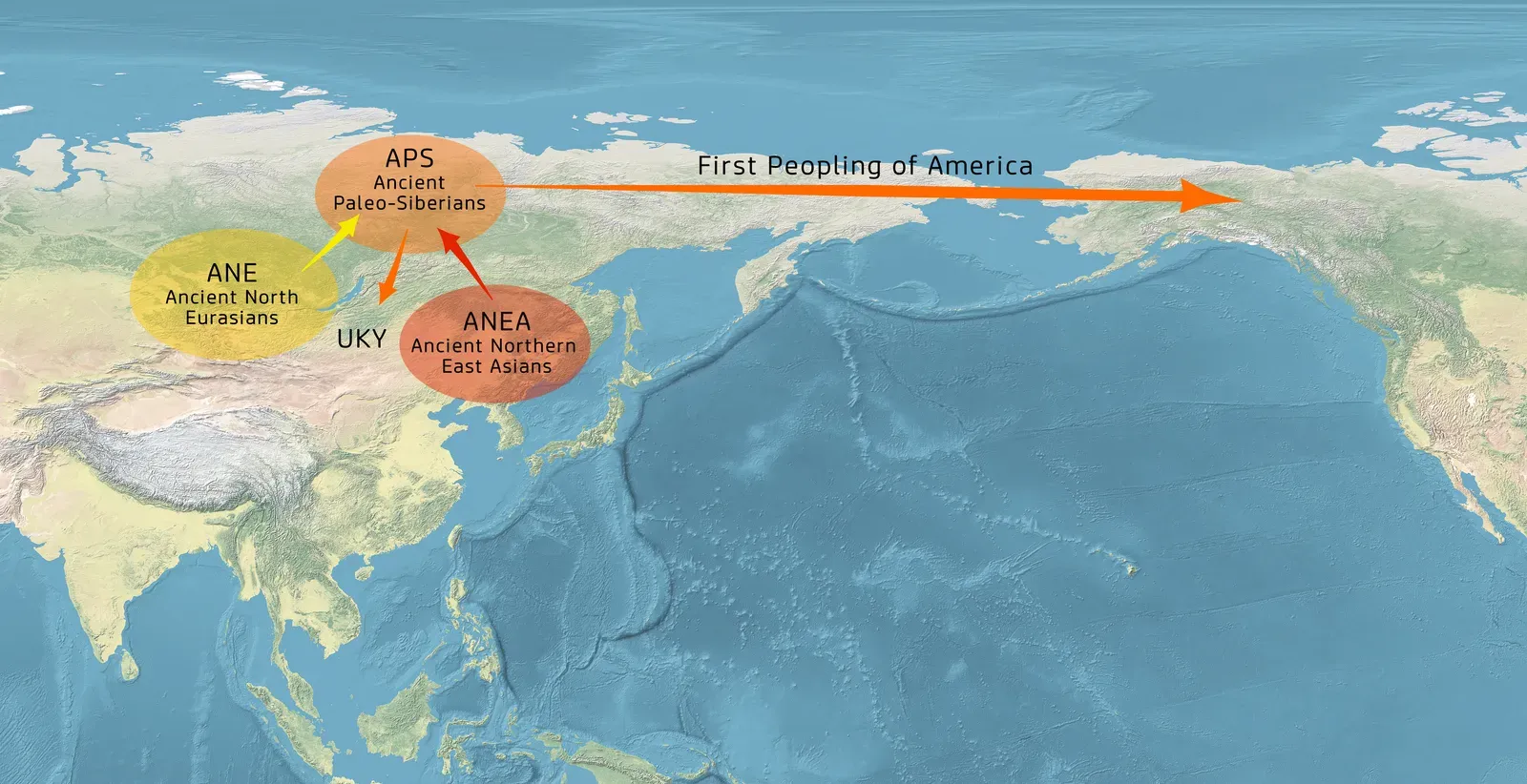
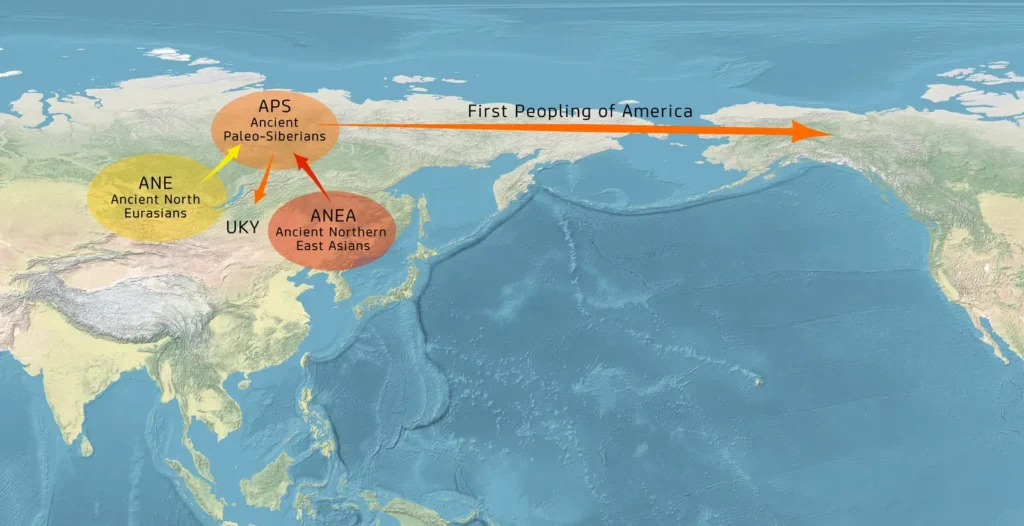
It is believed that the peopling of the Americas began when Paleolithic hunter-gatherers, known as Paleo-Indians, entered North America from the North Asian Mammoth steppe via the Beringia land bridge. These were not primitive wanderers stumbling blindly into the cold. They were skilled, adaptable, and highly intelligent people who had already mastered survival in some of the harshest environments on earth. Archaeological and genetic evidence suggests that the first humans to cross the Bering Land Bridge were small groups of hunter-gatherers in search of animal food sources and more favorable climates.
A comparison of DNA from 600 modern Native Americans with ancient DNA recovered from a late Stone Age human skeleton from Mal’ta near Lake Baikal in southern Siberia shows that Native Americans diverged genetically from their Asian ancestors around 25,000 years ago, just as the last ice age was reaching its peak. The Asian ancestry of Native Americans is further supported by dental patterns, blood group markers, and other physical and genetic characteristics, which indicate that American Indians are more similar to Asians than to any other human populations. The genetic trail doesn’t lie.
The Beringian Standstill: Thousands of Years on the Bridge
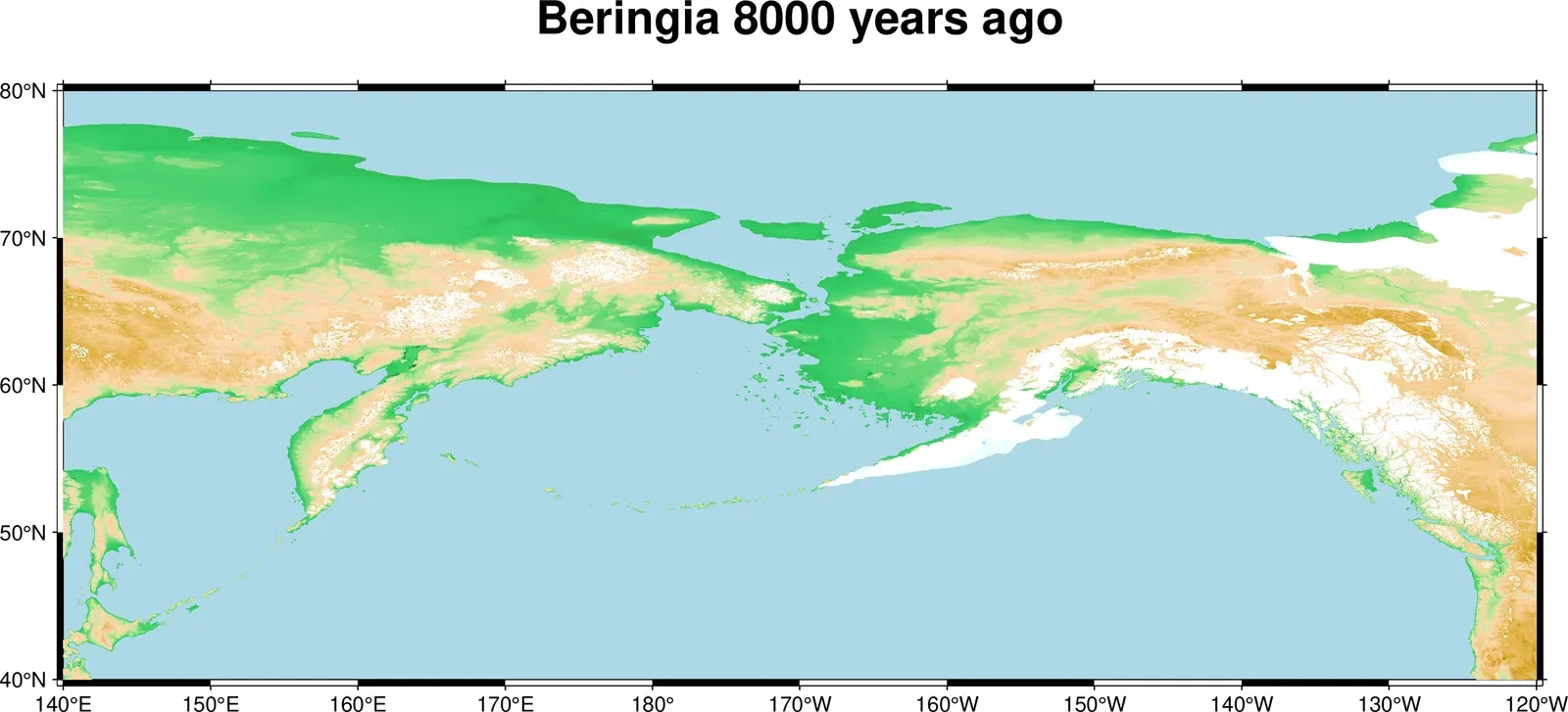
Here’s where it gets genuinely mind-bending. You might assume people simply walked across and kept going. But the evidence suggests something far more dramatic. The answer seems to be that they lived on the Bering Land Bridge itself, the region between Siberia and Alaska that was dry land when sea levels were lower, as much of the world’s freshwater was locked up in ice, but which now lies underneath the waters of the Bering and Chukchi Seas.
The genetic evidence records mutations in mitochondrial DNA passed from mother to offspring that are present in today’s Native Americans but not in the Mal’ta remains, indicating a population isolated from the Siberian mainland for thousands of years, who are the direct ancestors of nearly all of the Native American tribes in both North and South America. So entire generations were born, lived, and died right there on that land bridge. The Beringian standstill hypothesis is based on years of highly specialized, fine-grained research by scholars from many disciplines and from both sides of the Bering Strait and further afield. It’s a remarkable chapter in our shared human story.
How Did They Actually Move South? The Two Great Route Theories
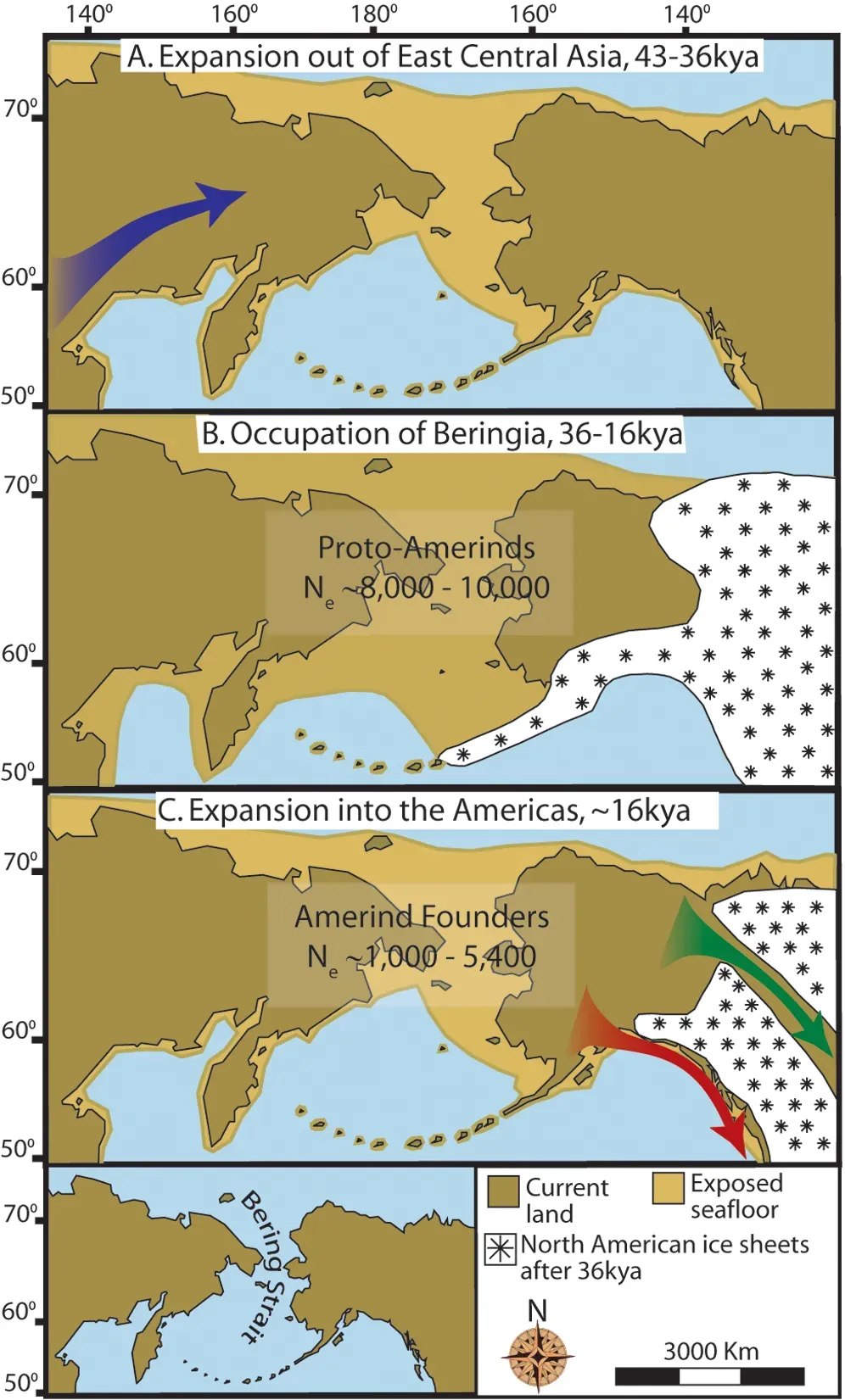
The theory with near-unanimous support from both archaeologists and geneticists is that the first humans to populate the Americas arrived on foot via a temporary land bridge across a region known as Beringia, that connected Eastern Siberia to Alaska for a span of roughly 5,000 years. Once across, though, how did they push deeper into the continent? Two main theories compete for dominance, and both are fascinating in their own right.
One model suggests that the first people to reach North America traveled across the Bering Land Bridge and then into North America along an ice-free cross-continental corridor around 14,000 to 8,000 BCE. The other theory is more audacious. Under the Pacific Coastal Route Hypothesis, people traveled south along the “kelp highway” of the western coast of the Americas because it was mainly ice-free and therefore easier to traverse than the ice-covered inland areas, with coastal waters supporting rich ecosystems that provided food such as sea bass, cod, rockfish, sea urchins, abalones, and mussels for the migrating people. You have to admire the resourcefulness of people who turned the ocean’s edge into a highway.
Pre-Clovis Evidence: Rewriting the Timeline
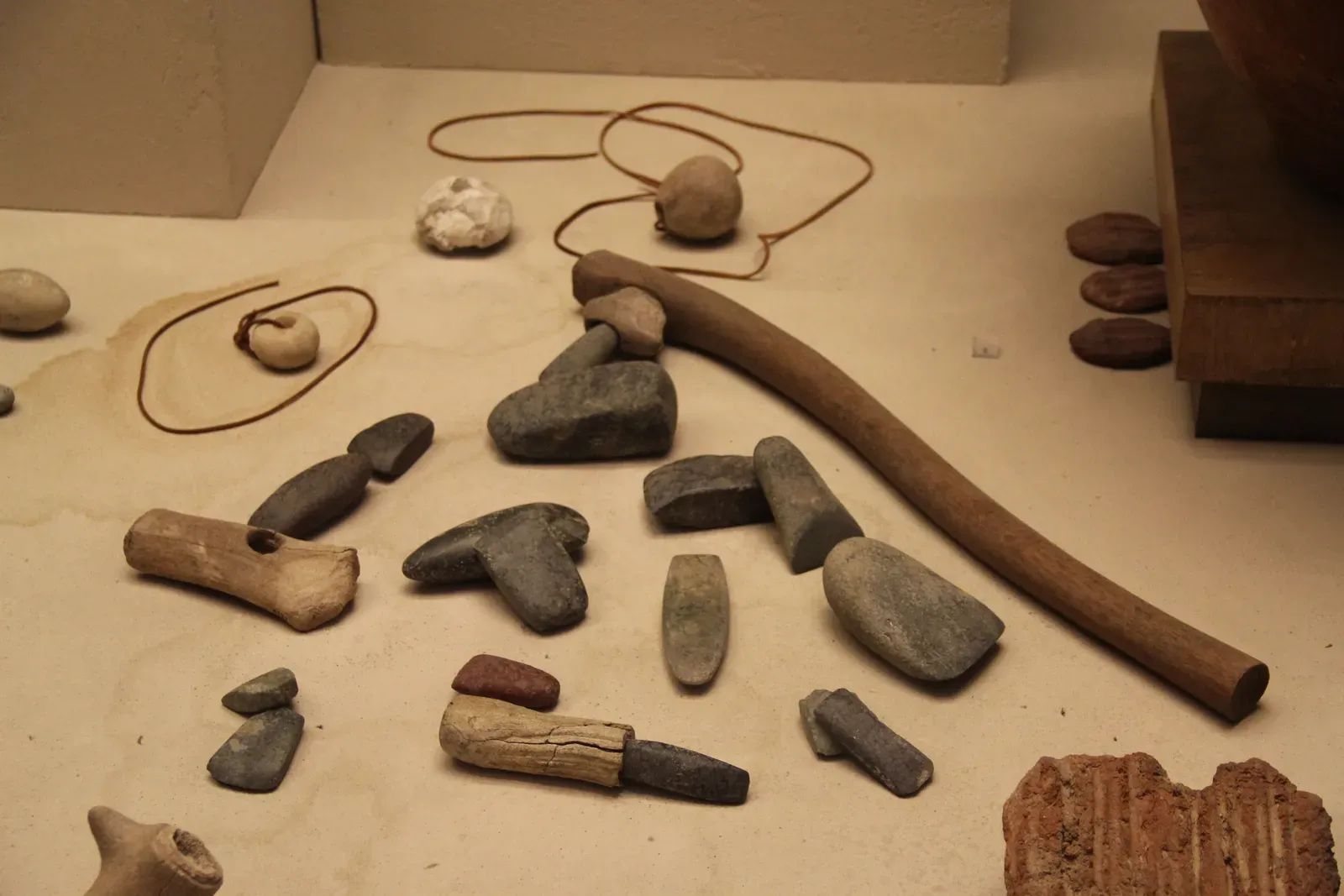
For a long time, scientists believed the first Americans arrived no earlier than about 13,000 years ago, a model tied to distinctive stone tools called Clovis points. The widespread “Clovis-first model” proposed that the first Americans migrated over the Beringia land bridge from Asia during a time when glacial passages opened, linking the first inhabitants to distinctive spear points known as Clovis points, ranging in age from 13,250 to 12,800 years old. It seemed neat, tidy, and settled. Then the evidence started to fight back.
Numerous claims of earlier human presence began to challenge the Clovis-first model beginning in the 1990s, culminating in significant discoveries at Monte Verde, Chile, dating back 14,500 years. At Oregon’s Paisley Caves, fossilized human feces date back 14,300 years, and in Texas, at the Buttermilk Creek complex, stone tool fragments date back 15,500 years. The timeline was further shaken by 23,000-year-old footprints found at White Sands National Park in New Mexico. Let’s be real, that fundamentally reshapes everything we thought we knew.
What Happened When the Bridge Finally Disappeared?
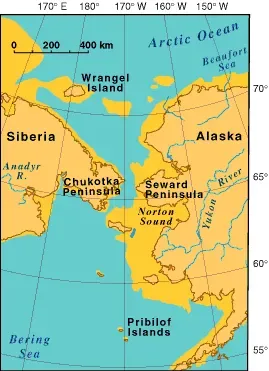
All good things, even ancient land bridges, must come to an end. The last ice age ended and the land bridge began to disappear beneath the sea some 13,000 years ago. Global sea levels rose as the vast continental ice sheets melted, liberating billions of gallons of fresh water, and as the land bridge flooded, the entire Beringian region grew more warm and moist. The world those first migrants had known literally vanished beneath the waves.
While the flooding spelled the end of the woolly mammoths and other large grazing animals, it probably also provided the impetus for human migration. As retreating glaciers opened new routes into the continent, humans traveled first into the Alaskan interior and the Yukon, and ultimately south out of the Arctic region and toward the temperate regions of the Americas. These populations spread rapidly southward, occupying both North and South America no later than 14,000 years ago, and possibly before 20,000 years ago. From a frozen bridge to the tip of South America. It’s hard to even grasp the scale of that journey.
The Search Continues: What Science Still Doesn’t Know
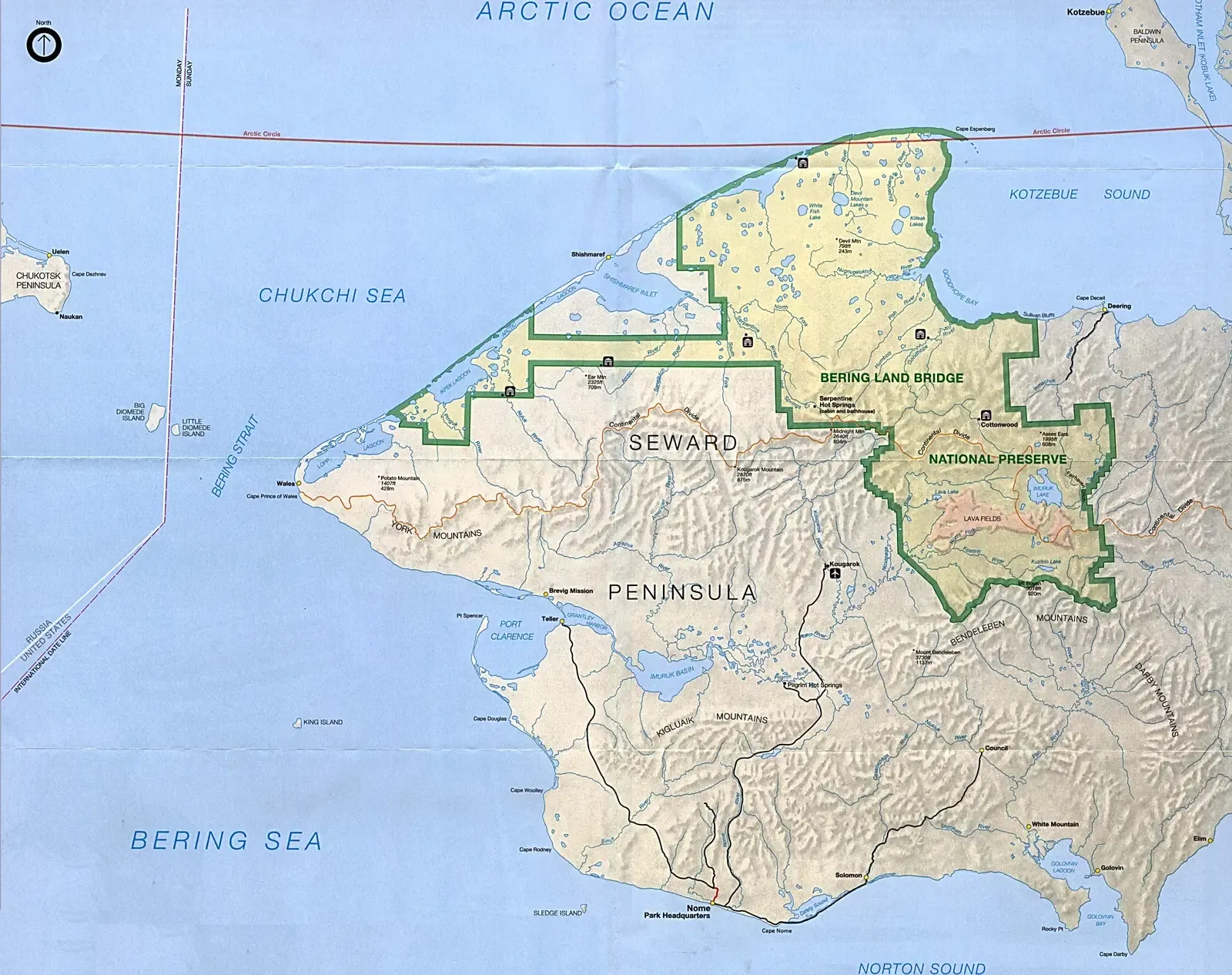
It’s hard to say for sure that we’ll ever have the full picture, and that’s part of what makes this story so compelling. Exploring the buried Bering Land Bridge would be exceedingly difficult and costly, but the archaeological payoff could be extraordinary. The problem is that the very land where those ancient peoples camped, hunted, and raised their children now sits under frigid ocean water. At least 10 to 50 feet of sediment have settled on the seafloor in the past 10,000 to 11,000 years alone.
Research continues into the exact timing and pathways of these migrations, with evidence suggesting multiple waves of migration and interactions with existing populations. Researchers note that they have only a handful of archaeological sites in this area from the end of the ice age, meaning literally any new site found could completely change what we know about these early people. The science is alive, still evolving, and full of surprises waiting just beneath the surface, sometimes literally.
Conclusion
The crossing of the Bering Land Bridge is not just a story about ancient migration. It is the story of human determination, adaptability, and an almost reckless willingness to follow life into the unknown. These were real people navigating ice, predators, and an entirely unmapped world with nothing but their ingenuity and each other. The ancestors of every Native American alive today made that crossing possible.
What’s most striking is how much of this epic journey still lies hidden from us, buried under the cold waters of the Bering Sea, locked in ancient DNA, or waiting in a cave yet to be discovered. Science keeps pulling back the curtain, and every new find rewrites a chapter. The story of how humans first reached the Americas is arguably the greatest road trip in history, one that lasted tens of thousands of years and changed the world forever.
Isn’t it incredible to think that a drop in sea level, driven by glaciers miles thick, quietly built a bridge that sent humanity tumbling into an entirely new world? What do you think the first person to step onto North American soil actually felt in that moment?