Picture a world ruled by creatures the size of buses, where the ground trembles beneath every footstep and the sky belongs to winged reptiles. For roughly 160 million years, this was reality on Earth. Yet hiding in the shadows, burrowing underground, and scrambling through the treetops, a humble group of small, furry creatures was quietly making history.
Honestly, it sounds almost impossible. How did our ancient mammalian ancestors not only survive the Age of Dinosaurs, but eventually outlast them? The story is far more surprising, dramatic, and layered than most textbooks let on. Let’s dive in.
Ancient Origins: Mammals and Dinosaurs Were Born at the Same Time
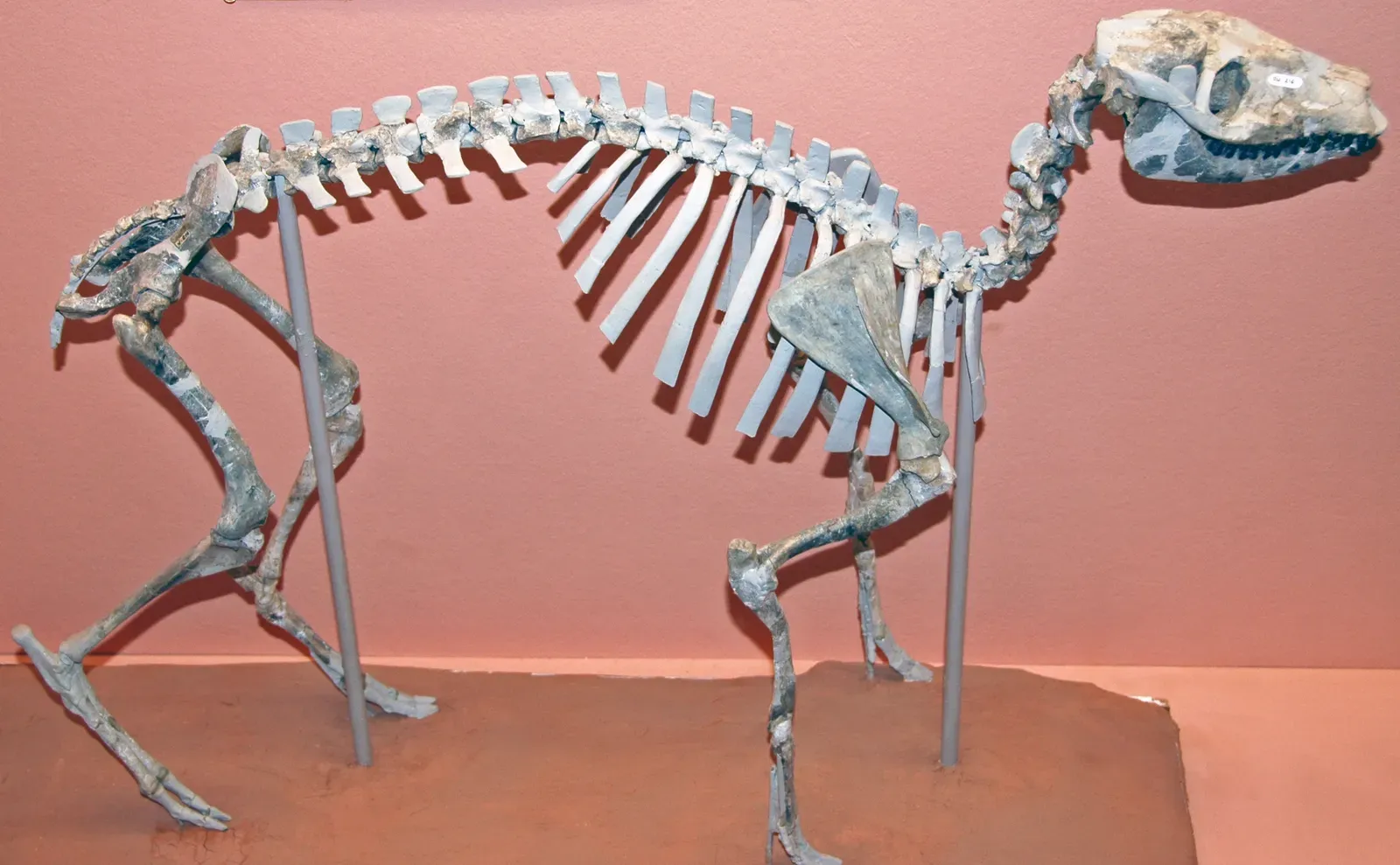
You might assume mammals came along after dinosaurs had already claimed the Earth. In fact, the reality is far more fascinating. Both mammals and dinosaurs trace their origins to roughly the same time and place, around 225 million years ago, when all of Earth’s land was gathered into the supercontinent Pangea.
The earliest known members of our furry family date back to about 225 million years ago, a time when dinosaurs themselves were newcomers on the evolutionary stage in the Triassic. They were never latecomers to the party. They arrived together, which makes what happened next all the more remarkable.
Both dinosaurs and mammals started off after a catastrophic event at the Permian-Triassic boundary, around 252 million years ago, which extinguished the majority of land vertebrates. Life, in other words, rebooted. From that reset button, two very different evolutionary paths emerged, side by side.
Mammals have their origins deep in geological history. Just more than 200 million years ago, in the late Triassic period, primitive cynodont mammals evolved from their mammal-like reptile progenitors, the Therapsids. Think of it like two companies launching on the same day. One grew enormous and loud. The other stayed small, quiet, and surprisingly adaptable.
Staying Small: The Underdog Strategy That Actually Worked
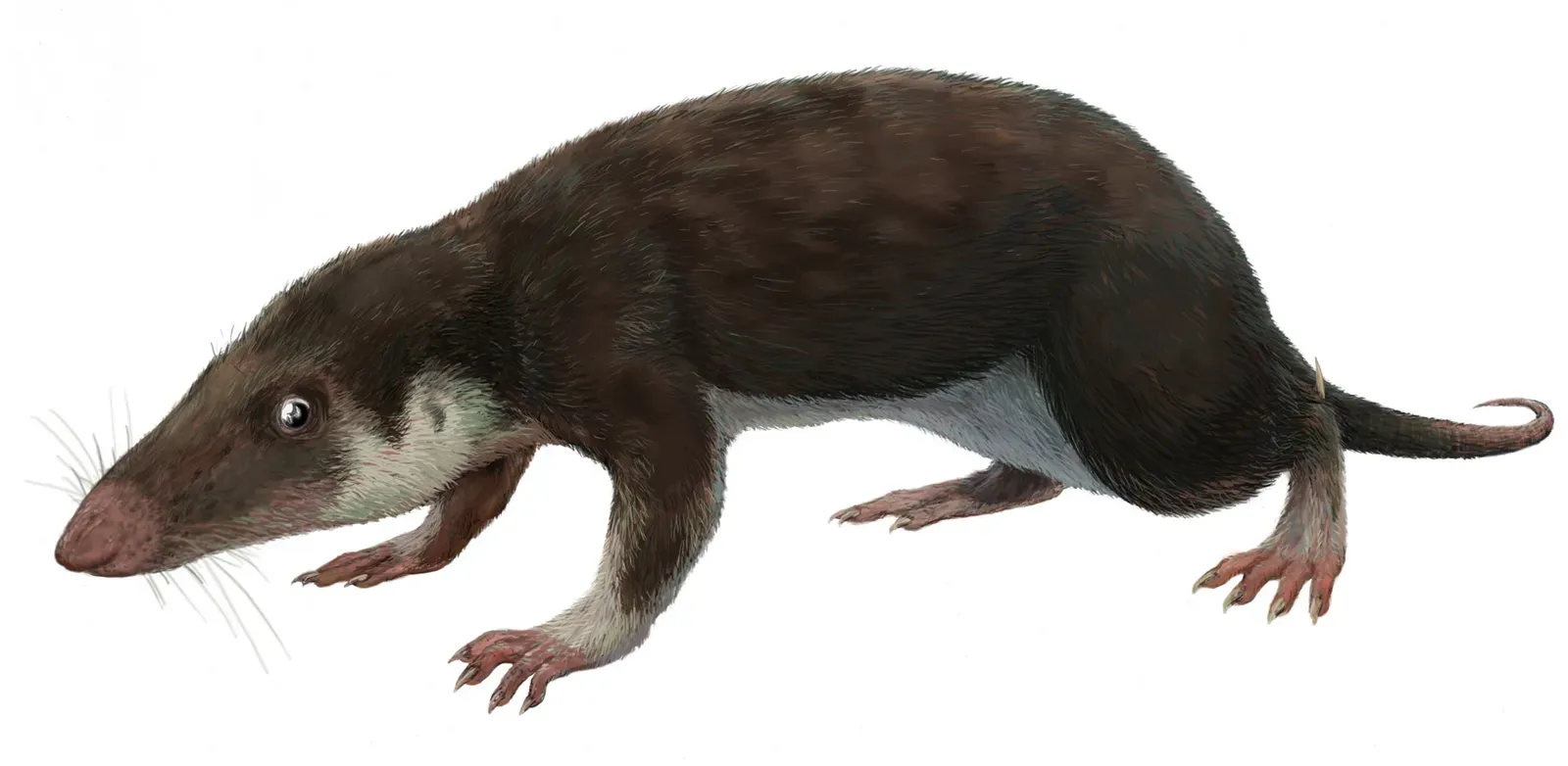
Here’s the thing. Being tiny wasn’t a weakness. It was arguably the most powerful survival strategy of the entire Mesozoic Era. Although mammals were present during much of the 185 million years of the Mesozoic Era, all were small-bodied, none larger than living cats, and they were probably nocturnal in their habits.
Mesozoic mammals possessed distinct characteristics that set them apart from their reptilian predecessors. Most were small, comparable in size to modern shrews, rats, or mice, though some evolved to the size of foxes or beavers. A defining feature was their endothermy, meaning they maintained a constant internal body temperature, a trait linked to their higher metabolic rates.
The mammalian body plan evolved essentially for a nocturnal, insectivorous life through the miniaturization of one of the synapsid lineages, while the dinosaur body plan evolved from a lineage of large archosaurs for a diurnal life. In simpler terms, mammals owned the night. Dinosaurs owned the day. That division was not accidental.
Mammals stayed small, in mainly nocturnal niches, with insects being their largest prey. The development of warm-blooded circulation and fur may have responded to this lifestyle. Being warm-blooded in the dark, cold hours of the Mesozoic night was an extraordinary competitive advantage that dinosaurs simply did not share.
Surprisingly Diverse: Early Mammals Were Far More Than Bug Eaters
New discoveries about Mesozoic mammals challenge the classical picture of small, insect-hunting, vulnerable animals that lived in the Age of Dinosaurs. For decades, scientists imagined these creatures as uniformly timid. That image has been shattered by a wave of remarkable fossil discoveries.
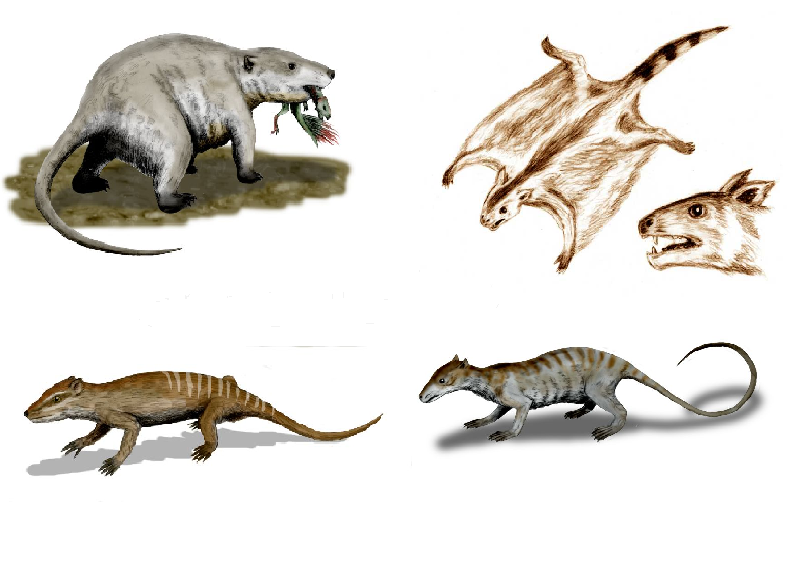
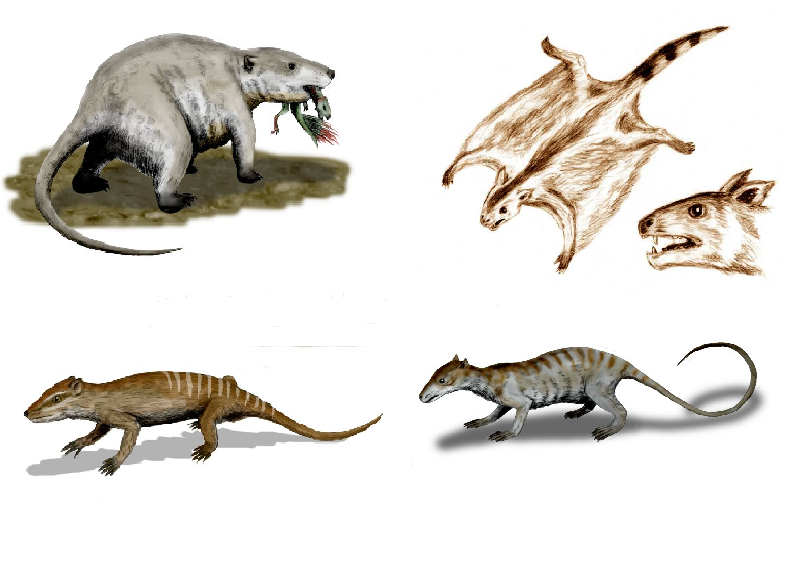
An explosion of fossil finds reveals that ancient mammals evolved a wide variety of adaptations allowing them to exploit the skies, rivers and underground lairs. Gliders, swimmers, burrowers, climbers. Early mammals were genuinely experimenting with life in ways that look surprisingly modern.
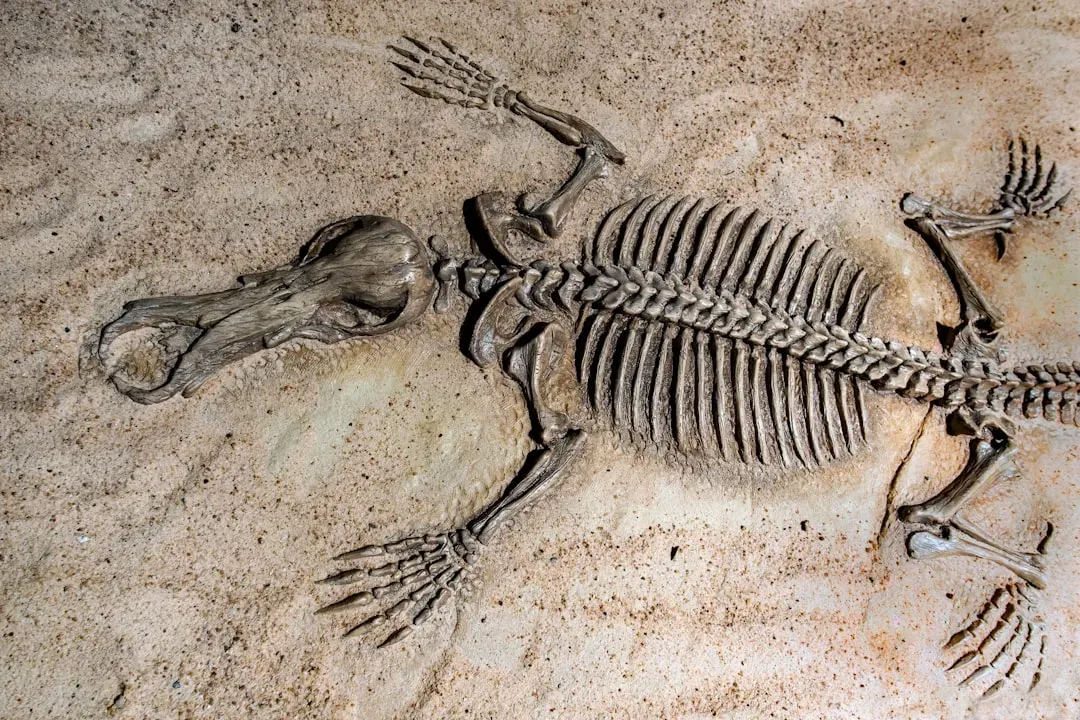
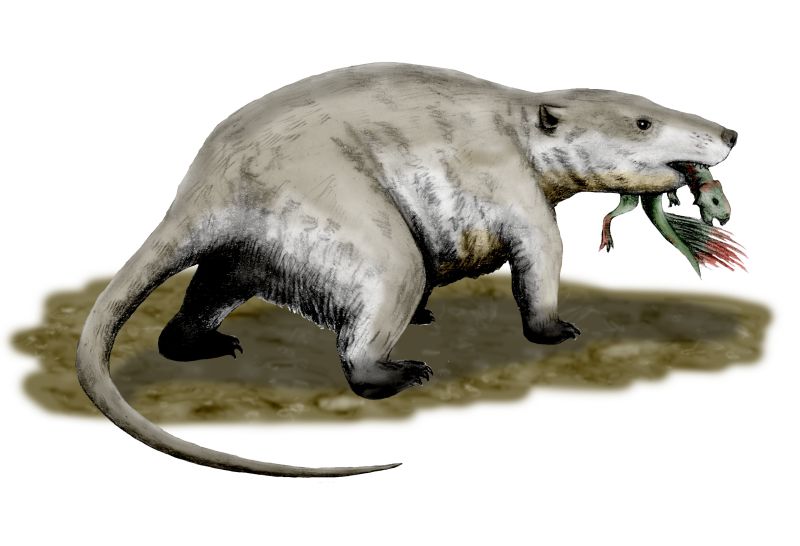
For example, the Middle Jurassic Castorocauda showed aquatic adaptations for swimming and fish-eating, while Fruitafossor from the Late Jurassic had teeth and limbs suited for digging into social insect nests. That level of ecological diversity is extraordinary for creatures we once dismissed as evolutionary wallflowers.
Let’s be real, the most jaw-dropping discovery of all involves a mammal that actually ate dinosaurs. We tend to think of Mesozoic mammals as being at the mercy of dinosaurs, but in at least one case the mammals had the upper hand. The badger-sized eutriconodont Repenomamus contains in its gut the remains of several baby dinosaurs. The hunters became the hunted, at least occasionally.
The Nocturnal Bottleneck: Life in the Dark as a Survival Tool
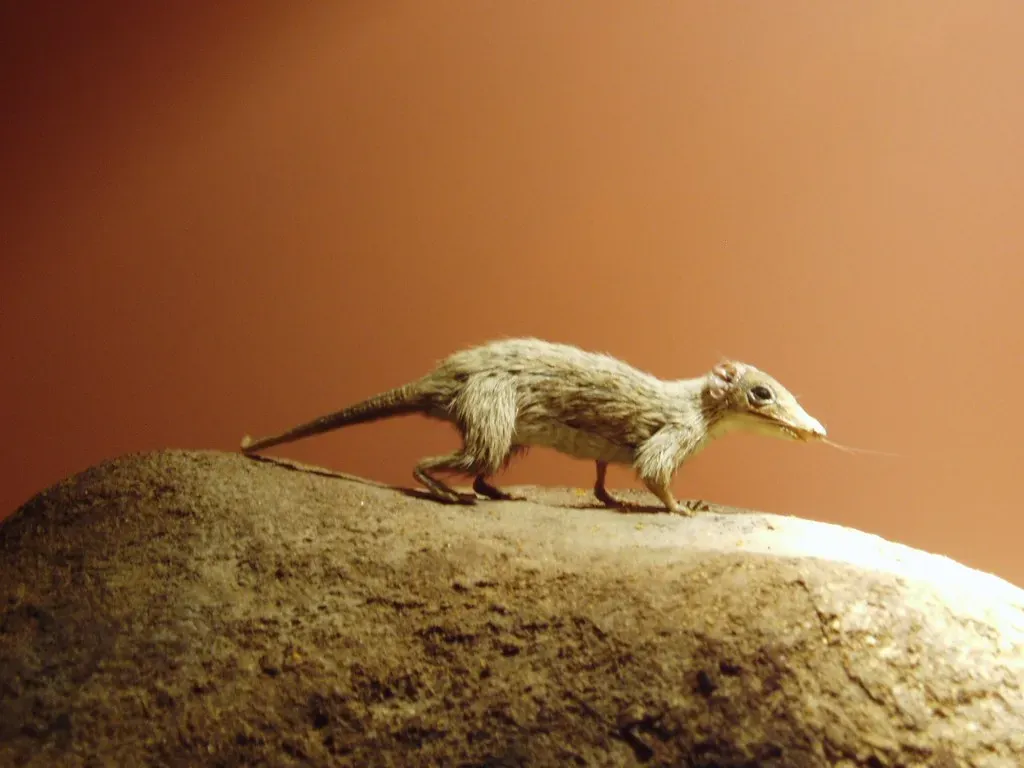
Probably as a side-effect of the nocturnal life, mammals lost two of the four cone opsins, photoreceptors in the retina, present in the eyes of the earliest amniotes. Paradoxically, this might have improved their ability to discriminate colors in dim light. This retreat to a nocturnal role is called a nocturnal bottleneck, and is thought to explain many of the features of mammals.
I know it sounds strange that losing something made you stronger, but that is essentially what happened. By being forced into the dark, early mammals evolved sharper hearing, a better sense of smell, and improved brain function. It was like being trained in the hardest gym imaginable and coming out more capable on the other side.
Early mammals had to be clever to survive in a world filled with giant dinosaurs. They likely used a combination of agility, cleverness, and nocturnal habits. These small creatures were often active during the night, which helped them avoid predators. Avoiding conflict entirely, rather than winning it, was the smarter move.
As more time passed, early mammals evolved to become almost entirely nocturnal, and some would eventually master the arboreal lifestyle of living in the trees. The trees gave them yet another refuge, a three-dimensional escape route that ground-dwelling predators could not easily follow.
The Competition Surprise: It Was Not Just the Dinosaurs Holding Mammals Back
Scientists used to believe that dinosaurs were the primary force keeping mammals small and suppressed. A major study from Oxford University overturned that assumption in a way almost nobody expected. New research finds dinosaurs were likely not the main competitors of mammals during the age of the dinosaurs. The ancestors of modern mammals remained less diverse because of competition with other mammal groups.
There were lots of exciting types of mammals in the time of dinosaurs that included gliding, swimming and burrowing species, but none of these mammals belonged to modern groups. These other kinds of mammals mostly became extinct at the same time as the non-avian dinosaurs, at which point modern mammals started to become larger and explore new diets and ways of life.
That is a genuinely mind-bending finding. The real obstacle for your direct ancestors was not a T. rex. It was a rival mammal group competing for the same resources, the same food, the same space. When both the dinosaurs and those rival mammal lineages vanished together, the door was finally wide open.
Mammals actually began their massive diversification ten to twenty million years before the extinction that ended the age of the dinosaurs. So the rise of mammals was not a sudden miracle triggered by one asteroid. It was a slow, quiet build-up that had been gathering momentum for millions of years beforehand.
The Asteroid and After: Generalists Inherited the Earth

When the asteroid struck near what is now Mexico’s Yucatan Peninsula roughly 66 million years ago, the consequences were catastrophic on a scale that is almost impossible to visualize. Dust and soot clogged the atmosphere, turning the world dark for years. Plants couldn’t photosynthesize, forests collapsed, herbivores died, carnivores followed. Ecosystems crumbled.
Underground burrows and aquatic environments protected small mammals from the brief but drastic rise in temperature. That physical shelter was the difference between life and death. While enormous dinosaurs stood fully exposed to a world on fire, small mammals disappeared underground and waited the catastrophe out.
Early mammals were hit by a selective extinction at the same time the dinosaurs died out. Generalists that could live off of a wide variety of foods seemed more apt to survive, but many mammals with specialized diets went extinct. Being a picky eater, in the most literal sense, was a death sentence in the post-impact wasteland.
Mammals could eat insects and aquatic plants, which were relatively abundant after the meteor strike. As the remaining dinosaurs died off, mammals began to flourish. What followed was one of the greatest biological explosions in Earth’s history, as mammalian taxonomic richness doubled over the first 100,000 years, and mammals also recovered to the size of the pre-extinction period, up to 7 kg in weight compared with the 0.5 kg of the immediate survivors of the asteroid impact.
Conclusion
The survival of prehistoric mammals through the Age of Dinosaurs was not luck. It was the result of deep evolutionary wisdom accumulated over hundreds of millions of years. Staying small, staying nocturnal, staying flexible in diet and habitat, and living underground when the world literally caught fire. Each of those traits was a carefully sharpened tool.
The story of your most ancient ancestors is a story of resilience, patience, and radical adaptability. They did not outlast the dinosaurs by being stronger. They outlasted them by being smarter, quieter, and almost invisible. Every mammal alive today, from a blue whale to a tiny house mouse to you reading this right now, owes its existence to those small, unassuming creatures that refused to be wiped out.
The next time you see a mouse dart across the floor, maybe give it a little more respect than you normally would. Its ancestors survived the literal end of the world. What would you have needed to survive it?