
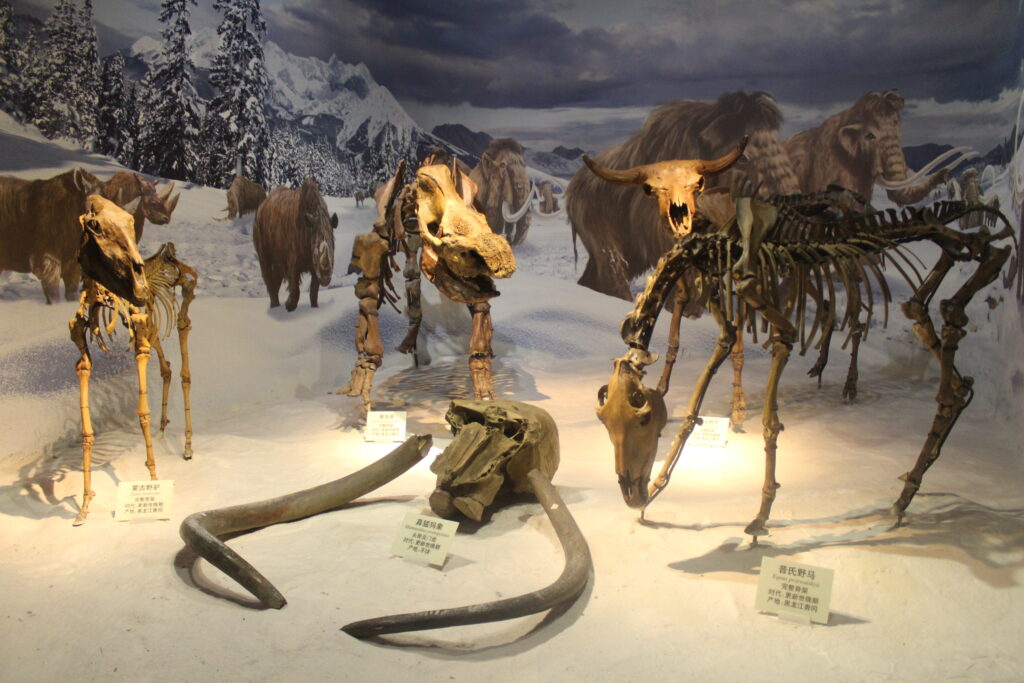
Ten thousand years ago, give or take a millennium, something enormous and slow finally gave way. Ice sheets that had buried entire continents for tens of thousands of years began retreating, and within a geological blink, mammoths, giant sloths, saber-toothed cats, and dozens of other outsized creatures vanished from the planet almost entirely.
What’s strange is that scientists still can’t fully agree on why either of these things happened. The end of the ice age itself remains an active research question, and the disappearance of the megafauna that lived through it has turned into one of the longest running arguments in all of paleontology, a debate that started in the 1800s and shows no sign of quietly resolving itself.
The Slow Thaw: How Orbital Cycles Set the Ice Age’s End in Motion
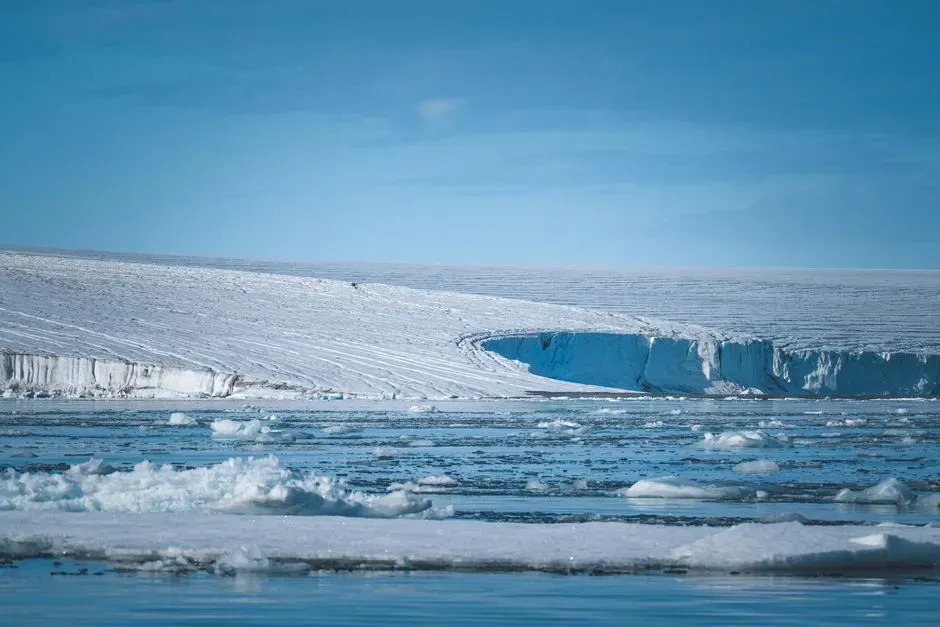
The traditional starting point for explaining ice age endings goes back to Milutin Milankovitch, who worked out that wobbles and eccentricities in Earth’s orbit change how much sunlight different latitudes receive over time. The traditional explanation for why ice ages begin and end is a series of eccentricities and wobbles in the planet’s orbit known as the Milankovitch cycles, and over time, the planet’s orbit around the sun alternates from being more circular to more egg-shaped, while the axis tends to both tilt and wobble. Roughly twenty thousand years ago, these orbital rhythms shifted enough to change the balance of sunlight reaching the Northern Hemisphere.
Research from the University of Melbourne adds a useful detail here. Ice ages over the last million years ended when the tilt angle of Earth’s axis was approaching higher values, and during these times, longer and stronger summers melted the large Northern Hemisphere ice sheets, propelling the climate into a warm interglacial state. Even the speed of that melting seems tied to the same mechanism. Summer energy levels at the time these ice-age terminations were triggered controlled how long it took for the ice sheets to collapse, with higher energy levels producing faster collapse. None of this happened overnight, but on geological timescales, it was fast.
The Carbon Feedback: Oceans, Ice Sheets, and a Warming Planet
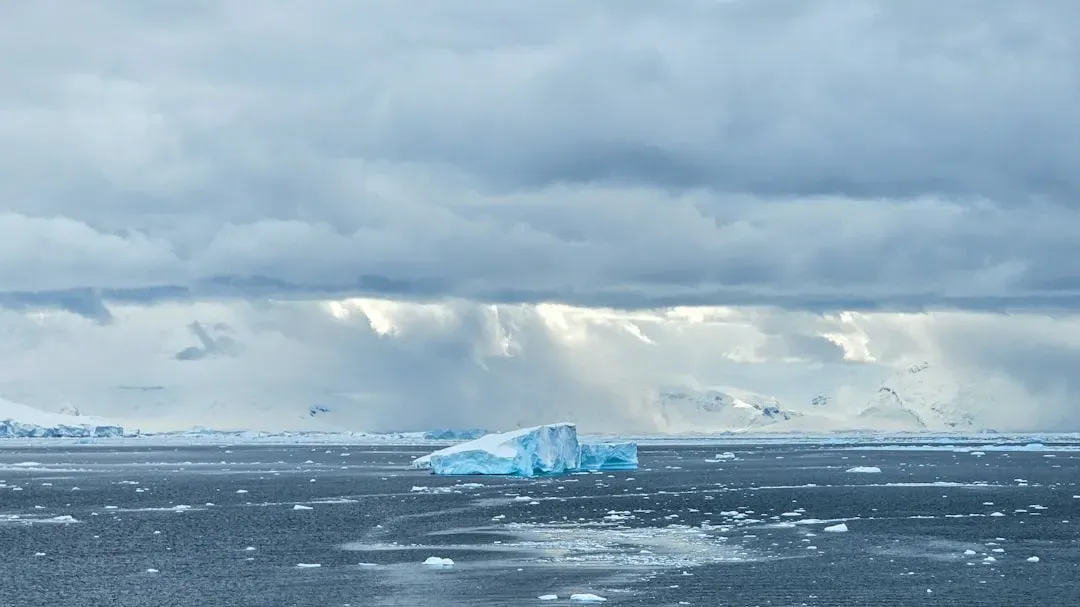
Orbital nudges alone don’t explain the full scale of warming that ended the ice age, which is where carbon dioxide enters the story as an amplifier rather than a trigger. Roughly 20,000 years ago the great ice sheets that buried much of Asia, Europe, and North America stopped their creeping advance, and within a few hundred years sea levels in some places had risen dramatically, with this freshwater flood filling the North Atlantic and shutting down ocean currents that conveyed warmer water northward, which warmed the precincts of Antarctica instead and shrank fringing sea ice. That chain of ocean rearrangements set off something scientists still find puzzling.
As a result, and for reasons that remain unexplained, the waters of the Southern Ocean may have begun releasing carbon dioxide, enough to raise atmospheric concentrations by more than 100 parts per million over millennia, which then warmed the globe and melted back the continental ice sheets. A widely cited 2013 study reached a similar conclusion from a different angle. Shakun and colleagues argued that changes in orbital cycles triggered initial melting of ice sheets in the north, and this southern hemisphere warming caused ocean releases of CO2, which in turn warmed the entire planet, with the vast majority of global warming at the end of the last ice age occurring after CO2 increased. It’s a feedback loop, not a single cause, and that distinction matters when people try to draw simple lessons from it for today’s climate.
The Younger Dryas: A Sudden Freeze in the Middle of the Melt
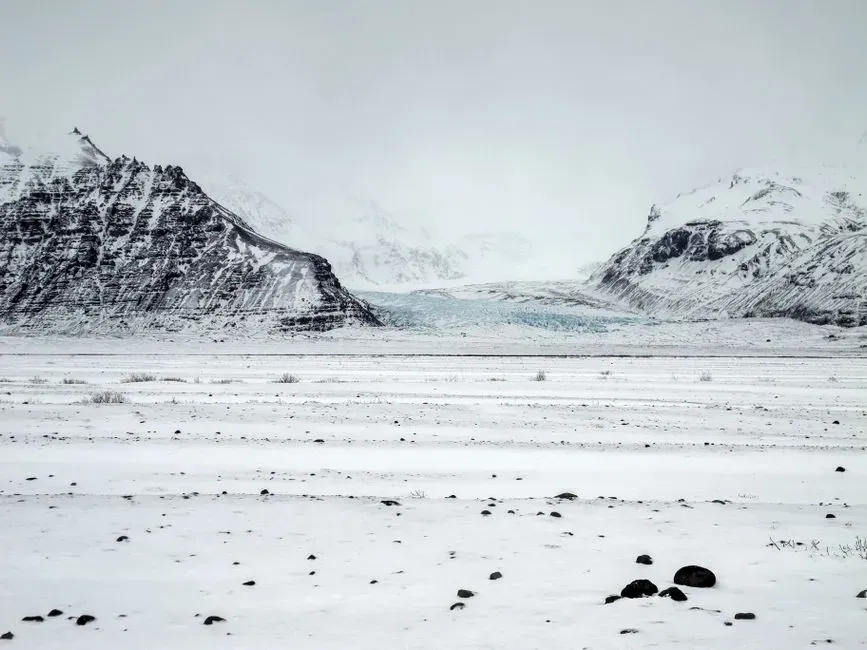
Just when the planet seemed committed to warming, it lurched backward. About 12,900 years ago, just as the world was emerging from the last Ice Age and warming up, temperatures plummeted, glaciers advanced, and the Earth was thrust back into a mini ice age that lasted for roughly 1,200 years before the climate warmed again. This event, known as the Younger Dryas, sits right at the center of the megafauna debate because its timing overlaps almost perfectly with when so many large animals disappeared.
The scale of that overlap is striking once you look at the numbers. The Younger Dryas overlaps almost exactly with the disappearance of North America’s large mammals, and thirty-five genera of megafauna vanished during the late Pleistocene, with twenty-nine genera including mastodons, mammoths, saber-toothed cats, giant ground sloths, native horses, and camels going globally extinct, while another six disappeared from North America but survived elsewhere. Whether that cold snap delivered the final blow to animals already struggling, or whether it’s mostly a coincidence of timing with human hunting, is exactly where the scientific consensus breaks down.
Vanishing Giants: What Exactly Went Extinct, and When
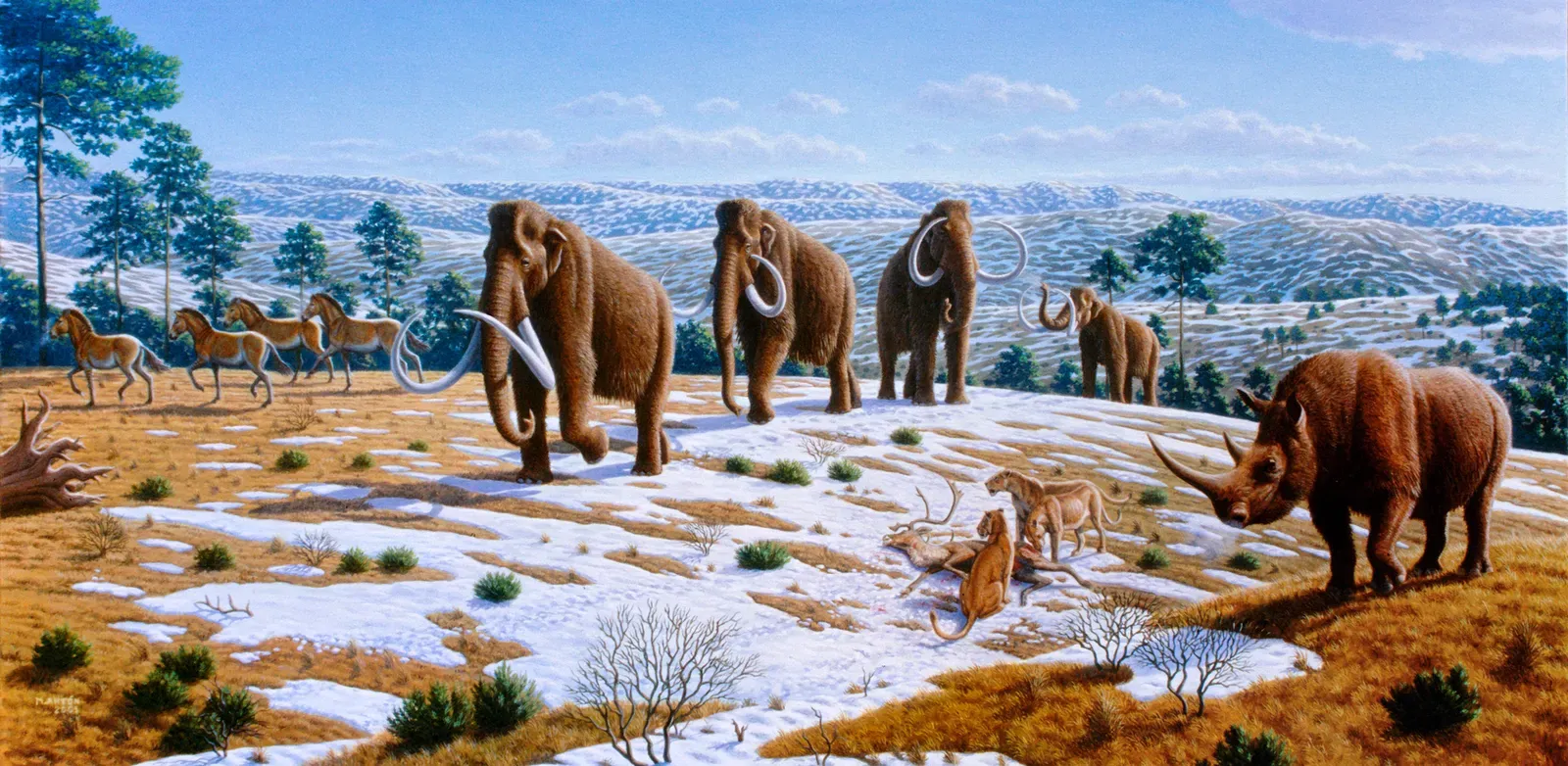
Before getting into causes, it helps to appreciate just how much was lost. Before humans arrived, the Americas were home to woolly mammoths, saber-toothed cats, giant ground sloths and other behemoths, an array of megafauna more impressive than even Africa boasts today. These weren’t isolated losses either. A carbon-dating study of prehistoric mammal bones found something remarkable about how synchronized the die-off was. Researchers carbon-dated prehistoric North American mammal bones from 31 different genera and found that all of them seemed to meet their end simultaneously between roughly 13,800 and 11,400 years ago.
The pattern outside North America looks different, which is part of what keeps the debate alive. Starting about 50,000 years ago, Eurasia lost about 36 percent of its megafauna, while North America saw a decline of 72 percent. Even individual species tell inconsistent stories. Woolly rhinos, ancient bison, and mammoths each seem to have followed somewhat different trajectories toward extinction, and researchers investigating saber-toothed cats found little evidence that declining prey resources were a primary cause of extinction for these large cats, which complicates any tidy single-cause narrative.
The Overkill Hypothesis: Blaming the Hunters

The idea that human hunters wiped out the megafauna dates back further than most people realize. Paul Martin popularized what’s now called the overkill hypothesis in the 1960s, proposing that small bands of highly mobile hunters swept through newly colonized continents and drove naive, unwary animals to extinction with remarkable speed. The blitzkrieg, or rapid overkill, hypothesis holds that human hunters armed with Clovis spear points overhunted naive American megafauna, with Clovis technology named for a site in New Mexico where fluted spear points were found alongside mammoth remains.
Supporters of this view point to a pattern that seems hard to dismiss. Almost all the slow-breeding survivors in Australia, the Americas and Madagascar are nocturnal, arboreal, alpine, or deep forest dwellers, which makes climate change alone seem less able to explain these extinctions than an overkill hypothesis. Island ecosystems offer some of the strongest supporting evidence. On islands, humans cause extinctions through multiple synergistic effects including predation, and only rarely have island megafauna been demonstrated to go extinct because of environmental change without human involvement, though extrapolating that pattern to entire continents remains genuinely disputed among researchers.
The Climate Case: Why Many Scientists Point to a Changing World
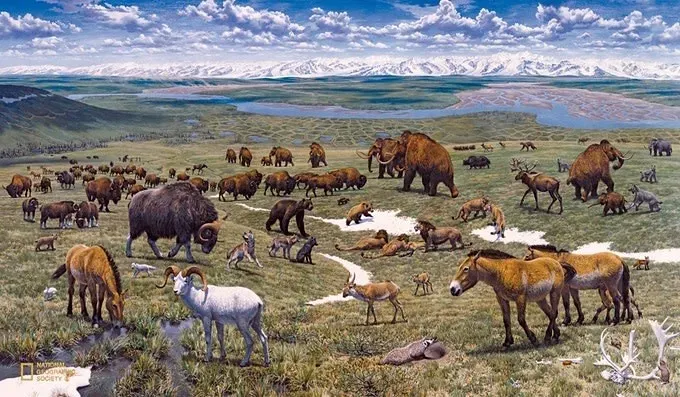
Not everyone buys the hunting narrative, and the pushback has been sharp at times. One University of Washington anthropologist went as far as calling overkill a “faith-based credo” that bows to Green politics, arguing instead that climate shifts during the late Pleistocene epoch, and subsequent changes in weather and plants, were the likely culprits in the demise of North America’s megafauna. The core climate argument rests on a mismatch in adaptation speed. The climate change view argues that megafauna extinction occurred because large species were slower to adapt to advancing and retreating ice sheets than the plant communities upon which they grazed, since plants adapted relatively quickly to abrupt climate change while the large mammals did not.
A frequently cited weakness of the overkill camp concerns basic demographics. The chief criticism of the prehistoric overkill hypothesis has been that the human population at the time was too small and not sufficiently widespread geographically to have been capable of such ecologically significant impacts. A 2021 study examining North American data found something that complicated the hunting story further. For some scholars, details such as widespread body-size reductions and range shifts among surviving species demonstrate that the extinction event was part of a drawn-out restructuring of animal and plant communities driven by late Pleistocene climatic and environmental changes, with humans playing at most a marginal role. Most researchers today acknowledge the picture probably isn’t purely one or the other. While proposed causes for megafaunal extinction are varied, most researchers fall into three broad camps emphasizing human overhunting, climate change, or some combination of the two.
Australia’s Diprotodon Puzzle: A Continent-Sized Case Study in Uncertainty
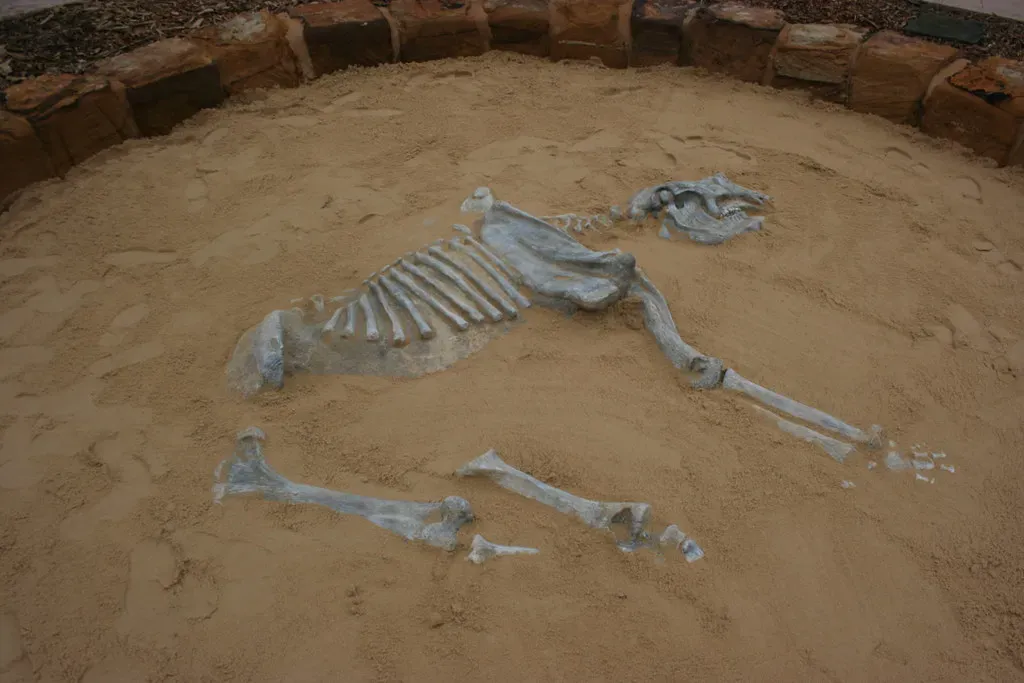
If North America’s debate is heated, Australia’s is arguably older and even more contentious. The dispute over what killed off creatures like Diprotodon, a two and a half ton wombat relative, and giant short-faced kangaroos goes back further than most people expect. This is probably the oldest debate in Australian science, dating to 1877 when the anatomist Sir Richard Owen suggested these animals had been driven extinct by the hostile agency of man, hunting, in a process now called overkill, while others responded that climate change must have been the cause.
Timing is the crux of the disagreement, and the data genuinely point in different directions depending on the site and dating method used. Some researchers argue for a fairly tight overlap. Analyzing a 130,000-year sediment sequence, one team suggested the Australian megafauna rapidly declined in numbers some 40,000 years ago, soon after people are thought to have first arrived in the region. Others push back hard against that framing. An alternative view holds that late-surviving megafauna became extinct as late as 16,000 to 23,000 years ago, more than 25,000 and perhaps as much as 50,000 years after the arrival of people, which would suggest that a prolonged coexistence of megafauna and people, combined with peak Late Pleistocene climate change, means people were not the primary cause. A separate large-scale review found evidence pointing toward a slow, staggered decline that predates humans almost entirely. The last appearance dates in Sahul are consistent with a staggered extinction process that was in train well before the arrival of humans, with as many as 50 of the 88 known extinct megafaunal taxa absent from fossil records postdating around 130,000 years ago and additional taxa disappearing around 85,000 to 80,000 years ago, leaving firm evidence for only about 8 to 14 now-extinct species overlapping with human presence on the continent. Two well-funded research groups, using overlapping fossil sites, have reached genuinely opposite conclusions, which tells you something about how difficult this dating problem really is.
Why the Debate Refuses to Die: Dating Problems and Missing Evidence
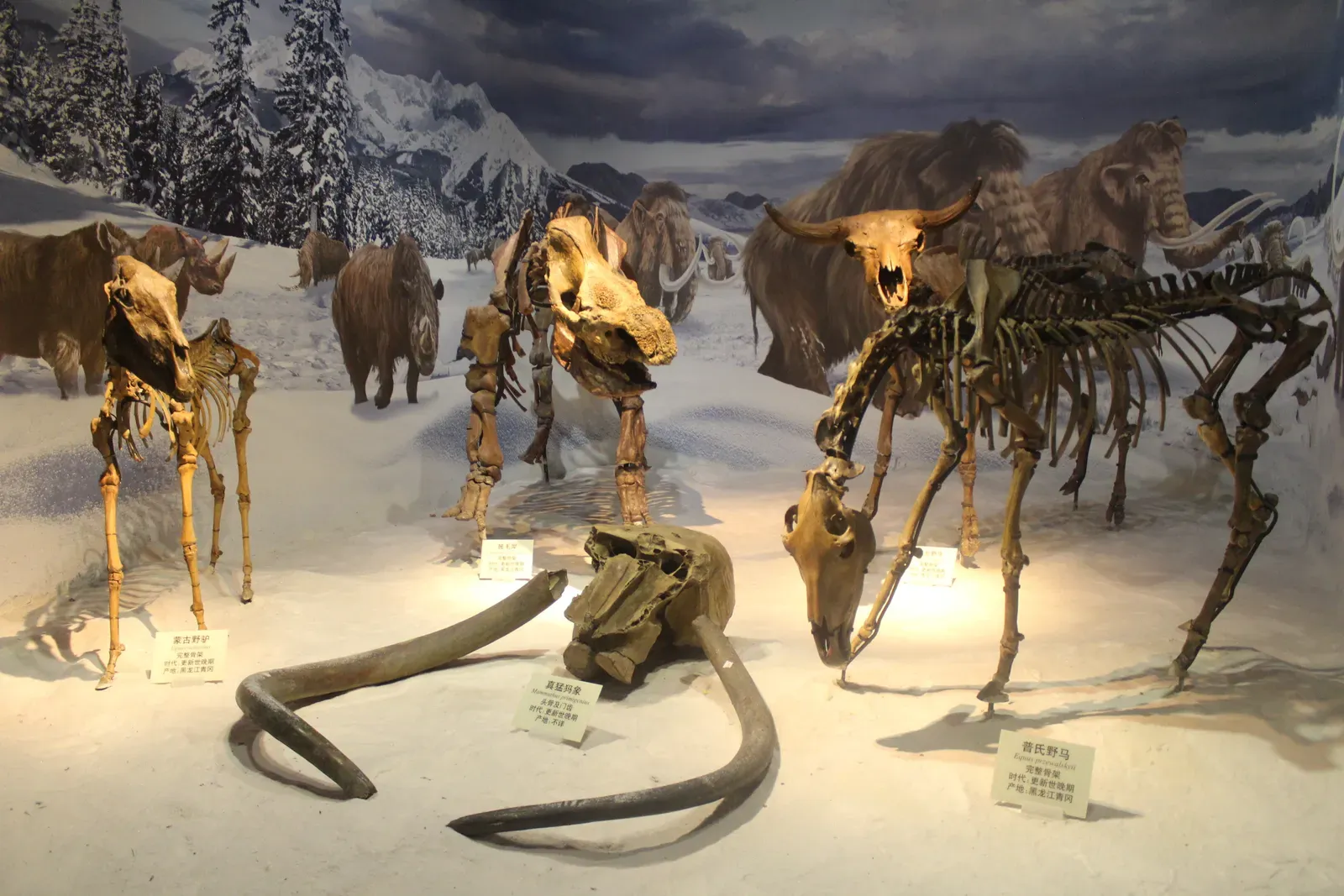
Part of what keeps this argument alive after roughly a century and a half is a simple, frustrating fact: the timing of human arrival on most continents lines up almost exactly with the timing of the ice age’s end. In North America, human colonization coincided with the end of the last Ice Age, stymieing the disentanglement of human from environmental causes. That overlap makes it extraordinarily hard to isolate one variable from the other using fossil evidence alone.
The physical evidence itself is thinner than people often assume, which cuts both ways in the argument. Overkill, which is not an anti-climate-change hypothesis, is perhaps too flexible to persuade all scientists, especially because a lack of megafaunal kill sites is considered by some to be as corroborative as positive evidence. Modeling work out of Australia underscores just how rare direct evidence should be even if hunting really did happen. A comparison of archaeological and fossil dates suggests humans and megafauna overlapped for only about 4,000 years continent-wide, and modelling suggests that if hunting caused extinction it would have been all over in less than 1,000 years in any given place, meaning no more than 8 percent, perhaps as little as 2 percent, of the Australian archaeological record covers the period of human-megafauna interaction. With a window that narrow, both sides can reasonably claim the fossil record is failing to give them what they need.
Having spent time with the research on both sides of this argument, I’ll say plainly that the search for one clean answer feels increasingly like the wrong approach. The evidence keeps showing regional variation, staggered timing, and species that responded to pressure in wildly different ways, which suggests the honest answer is a messy combination of climate stress and human pressure acting differently on different continents. Anyone offering a single, tidy explanation for why the mammoths and the giant sloths and Diprotodon all disappeared is probably telling you more about their own preferred narrative than about what actually happened at the end of the ice age.