You’ve felt it before, even if you’ve never thought much about it. A car horn blares, a door slams, someone shouts your name from behind, and for a split second your whole body locks up before you even decide what to do next. That tiny pause, the one that happens before your mind catches up with your muscles, turns out to have a much older story behind it than most people realize.
Scientists who study the nervous system across species have traced this freezing instinct through the fossil record and through the brains of living animals, from fish to reptiles to us. What they’ve found suggests the reflex didn’t start with humans, or even with mammals. It appears to trace back to a moment in Earth’s history when our distant ancestors first dragged themselves out of the water and had to figure out, fast, how to survive on solid ground.
A Reflex Older Than Almost Anything Else We Do

Most of what makes a human brain distinct, our capacity for language, planning, self reflection, sits in structures that are evolutionarily quite young. The freeze response is not one of those things. The startle reflex and its associated defensive motor circuits represent one of the most conserved elements of the vertebrate nervous system, and across taxa, from lampreys to humans, the ability to abruptly interrupt behavior, stiffen the body, and prepare for escape or confrontation is preserved in form and function.
That kind of consistency across such a wide range of animals is rare in biology. It usually signals that a trait was so useful, so early, that natural selection simply never found a reason to replace it. These circuits do not generate new voluntary action; instead, they operate as a global interrupt signal, locking musculature in transient isometric co-contraction and thereby freezing the organism in time and space. In plain terms, your body hits pause before your brain has even finished processing what scared you.
The First Vertebrates To Face Land, And Its Dangers
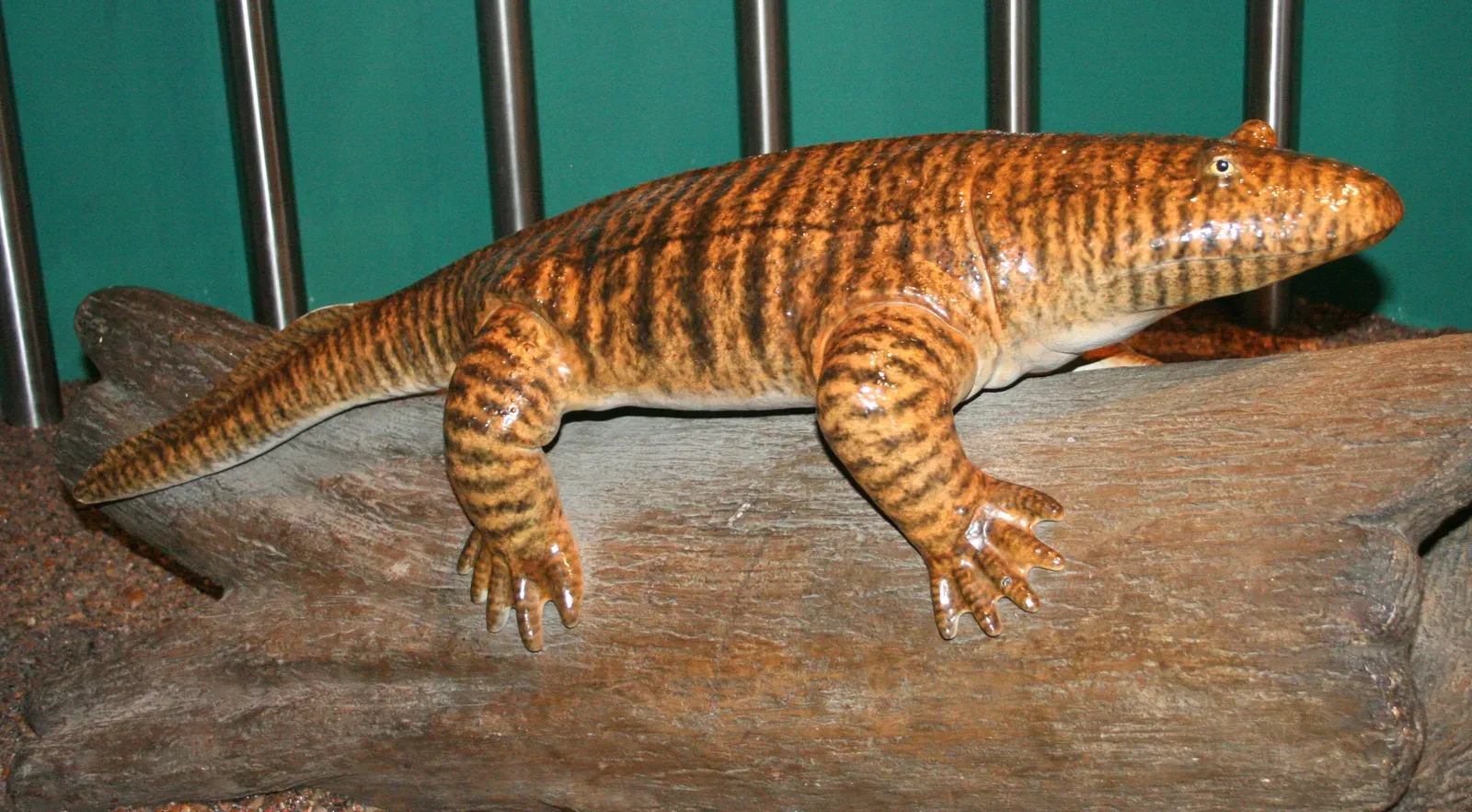
To understand where this reflex comes from, it helps to go back to a specific and strange chapter in animal history. Somewhere between roughly 400 and 360 million years ago, a group of lobe finned fish began experimenting with life outside the water. This fish-to-tetrapod transition took place somewhere between the Middle and Late Devonian, roughly 400 to 360 million years ago, and represents the onset of a major environmental shift, when vertebrates first walked onto land.
Fossil evidence from this period paints a picture of animals that were still clumsy on land, with bodies built for water. Basal tetrapods such as Ichthyostega and Acanthostega from Greenland were medium sized, half a meter to a meter long, with long sinuous bodies, lateral line canals, and short limbs inadequate for rapid locomotion on land. These were not fast, agile creatures. They were animals figuring out an entirely new set of physical rules while things with teeth were still very much around.
Why Stillness Was The Smartest Move On The Menu
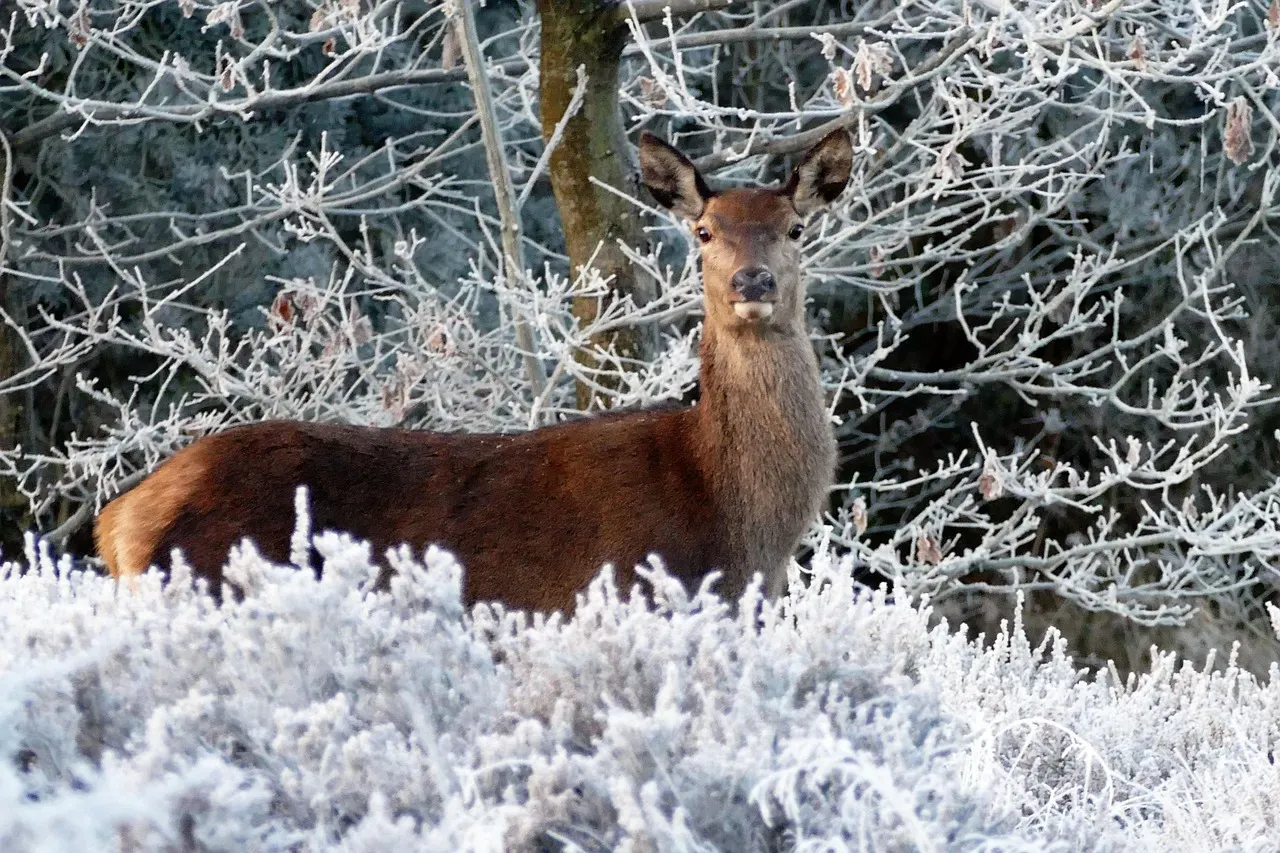
Put yourself in the fins, or early limbs, of one of these creatures. You are slow, unfamiliar with gravity and open air, and you have just become aware that something large and hungry is nearby. Fleeing takes coordination you might not yet fully possess, and fighting is rarely a good option against something bigger or faster. Freezing costs almost nothing and buys time to assess the threat.
Modern research on animal defense backs up why stillness works so well. A freezing response is triggered almost as soon as an animal spots a predator, and suspending all movement at this stage helps it avoid detection by the predator. Many predators are wired to notice motion above almost everything else, which means an animal that goes rigid at the right moment can become functionally invisible, even standing in plain sight.
The Ancient Wiring Behind The Freeze
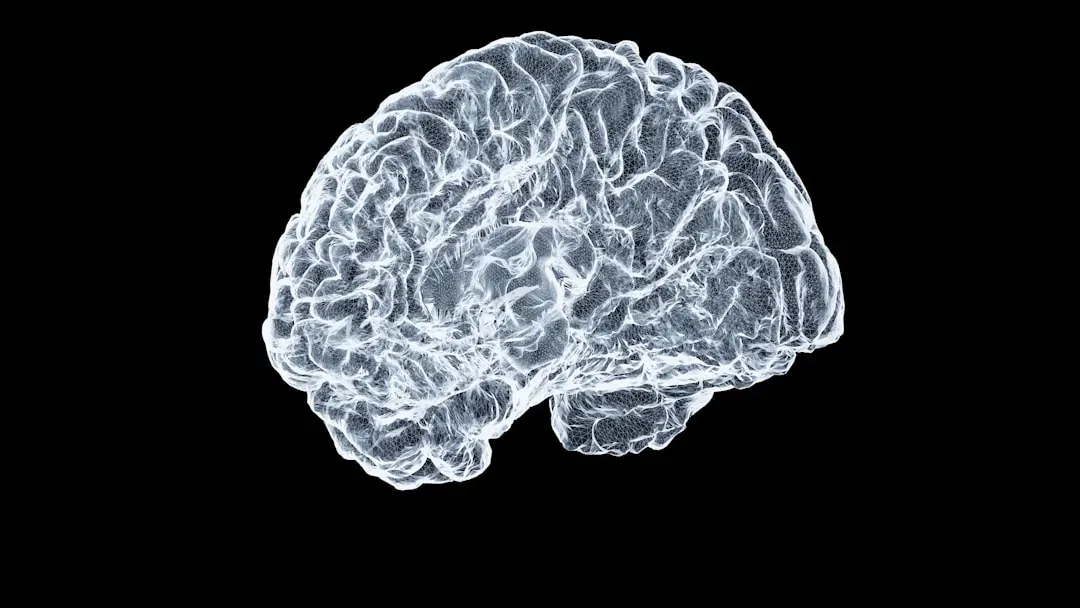
None of this happens because an animal, or a person, consciously decides to hold still. It happens because of hardware built deep in the oldest part of the brain, well below the level of conscious thought. Freezing is not a passive state but rather a parasympathetic brake on the motor system, relevant to perception and action preparation. The body is not shutting down so much as loading a spring.
The specific circuitry involved has been mapped with a fair amount of precision in recent decades. Studies in rodents have shown that freezing depends on amygdala projections to the brainstem, specifically the periaqueductal grey. That midbrain structure, the periaqueductal gray, sits in one of the most ancient regions of the vertebrate brain, present in some form across fish, amphibians, reptiles, birds, and mammals alike.
Tracing One Circuit Across 400 Million Years Of Descent
What makes the freeze reflex such a compelling case study in evolution is how little the underlying machinery has changed, even as the animals carrying it have transformed almost beyond recognition. The story of the startle and defensive circuits begins with the earliest vertebrates, jawless fishes such as hagfish and lampreys, which diverged more than 500 million years ago, and the presence of giant reticulospinal neurons in lampreys establishes a continuity with later vertebrate structures such as the Mauthner cell in teleost fish and the giant neurons of the pontine reticular formation in mammals.
This means the reflex’s deepest roots may stretch back even further than the move onto land, into the ocean itself, before later being carried forward and refined as vertebrates adapted to a terrestrial existence around 400 million years ago. By the time jawless vertebrates had emerged, the core circuitry of startle and freezing was already in place, with large reticulospinal command neurons capable of issuing whole-body interrupt signals and early vestibular projections stabilizing posture and bracing against environmental challenges. Evolution, in other words, did not invent a new solution for early land animals. It repurposed one that already worked.
Freeze, Then Flee, Then Fight: The Real Order Of Operations

Pop culture tends to talk about fight or flight as if freezing is some kind of failure state, a glitch in the system. Researchers who study defensive behavior see it differently, as the actual first step in a sequence rather than a breakdown of one. Unlike the near instant startle response, the freeze response isn’t determined by a stimulus’s intensity, and freezing behaviour can last anywhere from seconds to 30 minutes, during which the brain processes information from separate neural circuits and releases neurotransmitters that keep an animal calm by slowing its breathing and heart rate while sharpening its mind for rapid decision-making if the threat proves real.
That extended freeze window matters. It gives an animal, or a person, time to gather more sensory information before committing to a costly action like running or fighting. Related but distinct is a more extreme version called tonic immobility, which kicks in once a predator has actually made contact. Tonic immobility is in most cases initiated when a predator catches its prey, and the animal’s sudden motionlessness either distracts the predator or makes it lose interest, offering the prey a chance to escape.
What Happens Inside A Frozen Human Brain
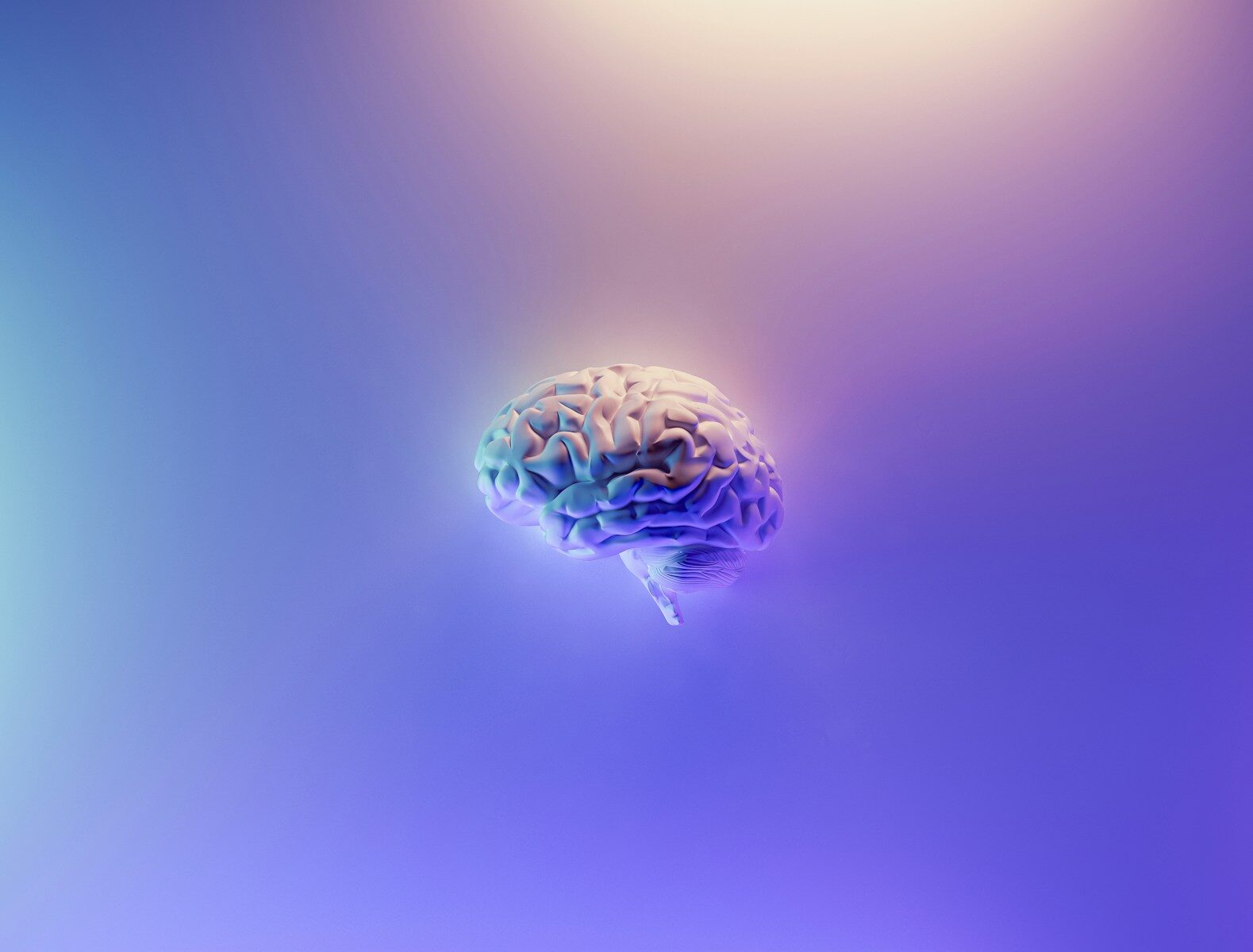
Human neuroscience has started catching up with what animal studies long suggested, using brain imaging instead of behavior alone. Researchers have intricately mapped direct neuronal connections from the central nucleus of the amygdala to the ventrolateral periaqueductal gray, and onwards to premotor areas in the brainstem, to underlie freezing behaviours. That pathway, amygdala to midbrain to spinal motor control, appears to function in humans much the way it does in far simpler vertebrates.
This is one reason the freeze response feels so involuntary, almost embarrassing in the moment. It is not a personality trait or a character flaw showing up under pressure. In humans, this state is linked to trauma responses, particularly in cases of severe stress, and the mechanism involves activation of the parasympathetic nervous system, which slows heart rate and suppresses movement, while the brain’s fear centers trigger the response. It is worth noting that scientists are still working out finer details of how these ancient circuits interact with distinctly human cognition, so some of the picture remains an active area of research rather than settled fact.
An Old Reflex In A New World

Here is where I’ll offer a genuine opinion rather than just a summary of findings. There is something almost humbling about the idea that one of your most personal, embarrassing moments, freezing when you’re startled or overwhelmed, is not a personal failing at all. It is a piece of inheritance from creatures that had no brain to speak of by modern standards, just enough wiring to survive one more day on a dangerous, unfamiliar shore.
I think that reframing matters more than it gets credit for, especially in conversations about trauma and stress, where freezing is too often mistaken for weakness or a lack of courage. The science increasingly supports treating the freeze response as evidence of a body doing exactly what four hundred million years of selection built it to do. That does not mean the reflex is always useful in a modern world full of car alarms, video calls, and other threats no early tetrapod ever faced. It does mean the next time your body locks up before your mind catches up, you are, quite literally, in very old and very good company.