Indonesia – Officials have projected Rp153.78 trillion, equivalent to about US$9.2 billion, to rehabilitate 12 million hectares of critical lands and degraded forests by 2034.
A Massive Scale Demands Bold Action
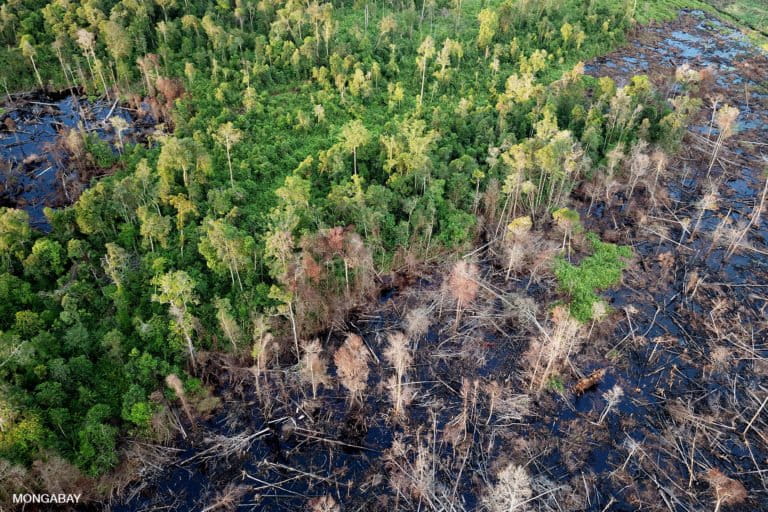
A Massive Scale Demands Bold Action (Image Credits: Imgs.mongabay.com)
The Ministry of Forestry aims to restore 6.3 million hectares inside forest areas and 5.7 million hectares outside them, targeting roughly 1.3 million hectares each year. This effort follows President Prabowo Subianto’s directive and responds to decades of damage from fires in the 1990s and 2016, as well as ongoing deforestation. Forestry Minister Raja Juli Antoni announced the plan in November 2024, pledging a detailed roadmap with input from private sectors and academics.
Recent disasters, such as the 2025 floods and landslides in Sumatra linked to deforestation, underscore the urgency. Communities bore the brunt, while industries profited. The government now seeks transparency through public maps and consultations to define exact locations and conditions of these lands.
Breaking Down the Price Tag
The ministry’s figure translates to roughly US$767 per hectare, excluding long-term maintenance. Indonesian studies suggest a wider range, from US$100 to US$4,000 per hectare, depending on factors like soil type, remoteness, and ecosystem – such as peatlands or mangroves. Forestry expert Aida Greenbury estimates an average of US$2,000 per hectare based on Sumatra projects, pushing the total toward US$24 billion.
This potential shortfall raises questions about fiscal planning amid tight budgets. Annual funding needs hit Rp17.08 trillion from national and regional sources alone. Critics highlight overlaps with the 12.7 million hectares targeted under the Social Forestry Program, complicating resource allocation.
| Cost Estimate | Per Hectare (US$) | Total for 12M ha (US$) |
|---|---|---|
| Ministry Projection | 767 | 9.2 billion |
| Expert Average | 2,000 | 24 billion |
| Study Range | 100–4,000 | N/A |
Pinpointing Deforestation Drivers
Major industries fueled the degradation. A 2019 study identified palm oil concessions as responsible for 23% of deforestation from 2001 to 2016, dropping to 13% in 2024. Timber plantations contributed 14% historically and 6% recently, while logging and mining added to the toll.
Only a few dozen conglomerates dominate these sectors. Taxpayers now face the bill, despite limited direct responsibility. Greenbury argues this shifts accountability away from polluters who gained billions, even as affected regions grapple with poverty.
- Palm oil: 23% (2001-2016), 13% (2024)
- Timber plantations: 14% (2001-2016), 6% (2024)
- Logging: 18% (2024)
- Mining: 2% (2001-2016), 5% (2024)
- Pulp/paper and others: Remaining share
Innovative Paths to Funding
Beyond state budgets, options include commitments from permit holders, carbon trading, and corporate social responsibility funds. Deputy Minister Rohmat Marzuki highlighted carbon schemes at the 2025 Global Carbon Summit, aligning with COP30 MoUs for international support. These could tap 1.34 billion tons of CO2e potential through afforestation.
Greenbury advocates a public-private split: industries cover 80% via license conditions, modeled on the Forest Stewardship Council’s Remedy Framework, with government at 20%. Fines from violations could also contribute, as noted in recent proposals. Community involvement ensures Free, Prior, Informed Consent.
- The plan covers 12 million hectares over nine years at an estimated US$9.2 billion, but experts warn of underestimation.
- Corporate sectors drove most degradation; shared responsibility could ease public burden.
- Carbon markets and accountability frameworks offer viable funding boosts.
Indonesia stands at a crossroads where restoration promises ecological recovery and disaster prevention, yet success hinges on transparent costs and equitable financing. Balanced approaches will safeguard forests for generations. What do you think about balancing public funds with corporate accountability? Tell us in the comments.