Imagine walking across a landscape where every stone beneath your feet might be older than entire civilizations. Where a casual glance at a canyon wall could reveal the skeleton of a creature that roamed the Earth tens of millions of years before humans ever drew breath. That’s the extraordinary reality waiting for you in America’s national parks. The United States holds one of the most spectacular collections of fossil-rich landscapes on the planet, and much of it is wide open, protected, and free for you to explore.
Fossils have been documented in at least 286 units of the National Park System. Think about that for a moment. That’s not a niche interest or a specialist’s hobby. That’s a country literally built on deep time. From ice-age mammals to ancient sea creatures half a billion years old, you don’t need a lab coat or a research grant to come face to face with prehistoric life. You just need the right destination. Let’s dive in.
1. Dinosaur National Monument, Colorado and Utah – Where the Jurassic Comes Alive
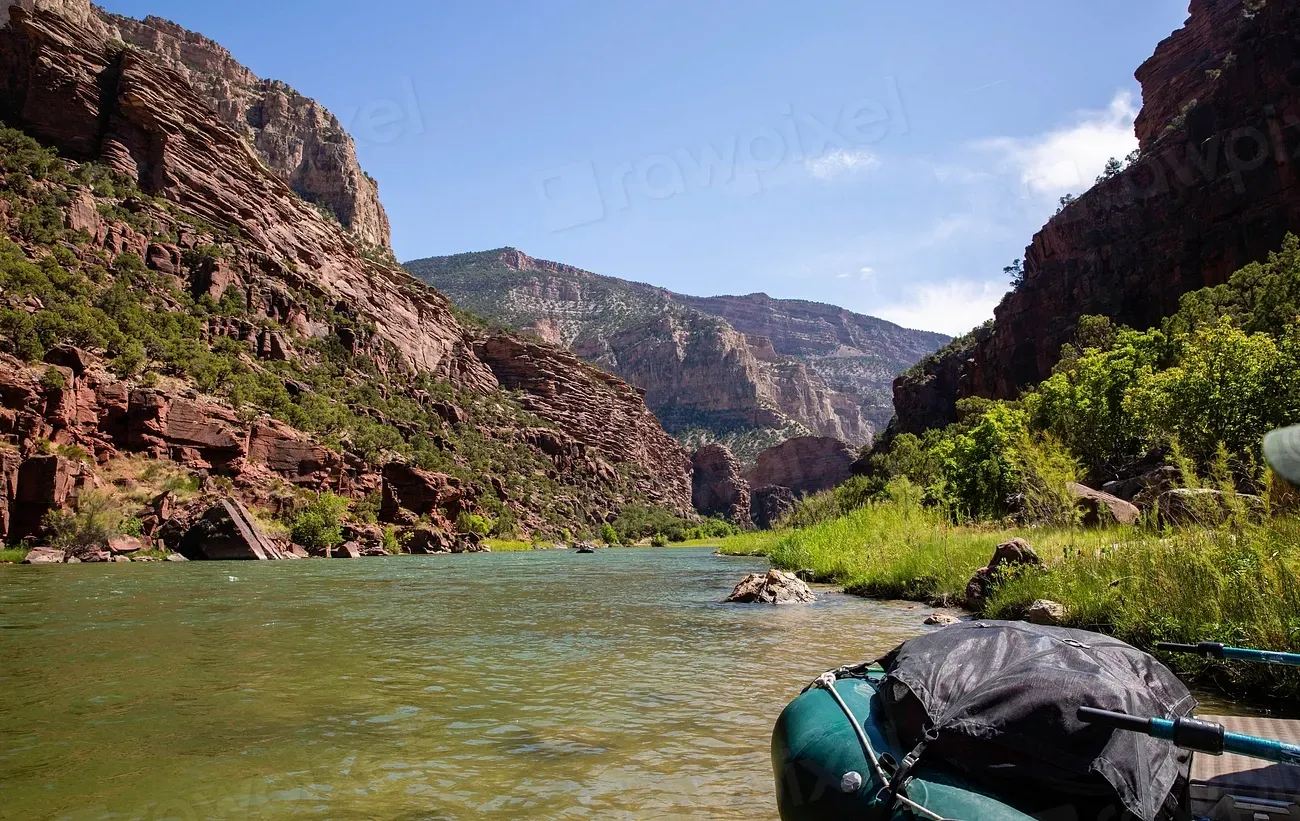
Here’s the thing: if there’s one place in America that earns the label “real Jurassic Park,” it’s Dinosaur National Monument. It is one of the best places in the world for people to see dinosaur fossils in situ. You’re not peering at replicas behind glass. You’re standing inches from the actual bones. That distinction matters more than most people realize.
The exhibit hall contains bones of Allosaurus, Apatosaurus, Camarasaurus, Diplodocus, Stegosaurus, and other species, and the fossils in the exhibit hall are in the Morrison Formation, which was deposited in a terrestrial environment including rivers, floodplains, and lakes during the Jurassic Era. You can even touch dinosaur remains from 149 million years ago. Honestly, I can’t think of a more mind-bending way to spend an afternoon.
2. Badlands National Park, South Dakota – The Birthplace of American Paleontology
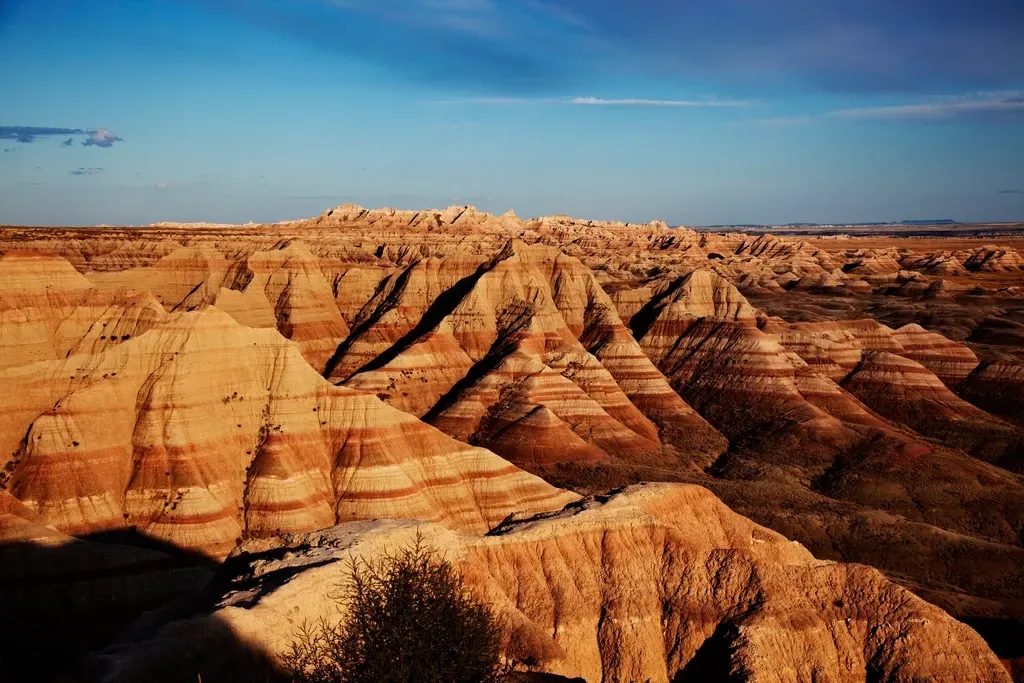
You’d never guess it from the arid, jagged scenery, but the Badlands of South Dakota are one of the most scientifically significant fossil sites on Earth. Badlands National Park is home to one of the world’s richest fossil mammal beds from the late Eocene and early Oligocene epochs. The numbers alone are staggering. Badlands National Park deposits contain one of the world’s richest fossil beds, with finds of more than 250 fossil vertebrate species, including both herbivores and carnivores.
The area now included in Badlands National Park is considered to be the birthplace of vertebrate paleontology in the American West. The first Badlands specimens are now a part of the National Museum of Natural History at the Smithsonian Institution in Washington, D.C., and by the mid-1800s, 84 distinct species of animals had been identified in the North American fossil record, 77 of which were found in the White River Badlands. That’s not a coincidence. That’s a landmark.
3. Petrified Forest National Park, Arizona – A Forest Frozen in Stone
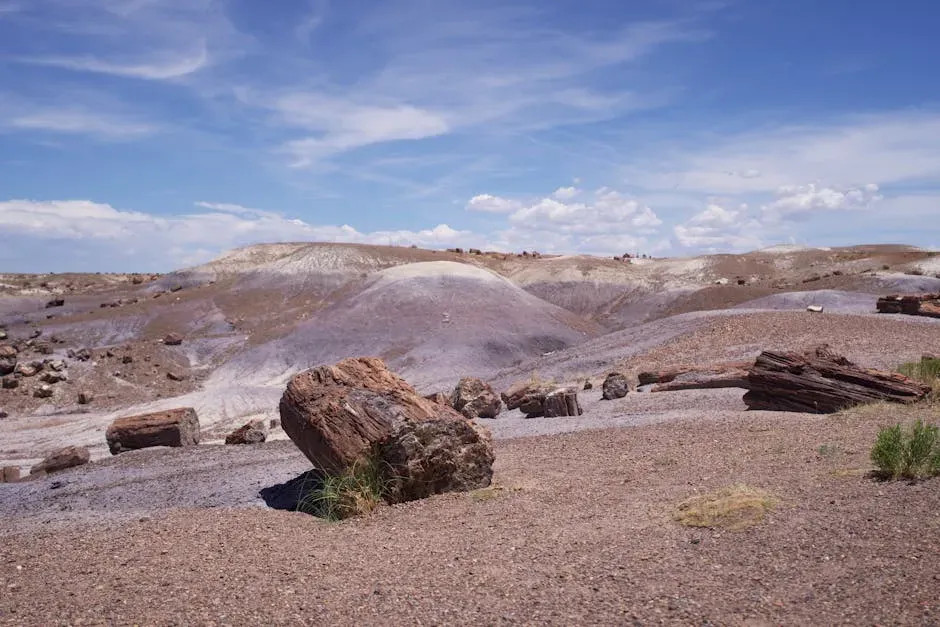
Let’s be real: the name alone sounds like something out of a fantasy novel. Petrified Forest National Park in Arizona is named after logs that were washed into an ancient river system, buried, and converted into colorful, almost solid quartz. Fossils formed when sediment and volcanic ash buried the downed trees that accumulated in river channels. Quartz crystals formed in the logs as groundwater seeped in and dissolved the ash into silica, replacing wood cells with stone. It’s basically nature’s version of turning lead into gold, only far more spectacular.
In addition to petrified wood, the park’s rich paleontology resources also encompass a wealth of fossilized reptiles. One of Petrified Forest National Park’s main reptile groups is the Archosaurs, which includes the ancestors of ancient pterosaurs and dinosaurs, but also of modern-day crocodiles, lizards, and birds. There are many invertebrate fossils, too, including mussels, corals and snails, along with prehistoric sharks. In short, you get an entire ancient ecosystem, not just pretty rocks.
4. Grand Canyon National Park, Arizona – Billions of Years Written in Stone
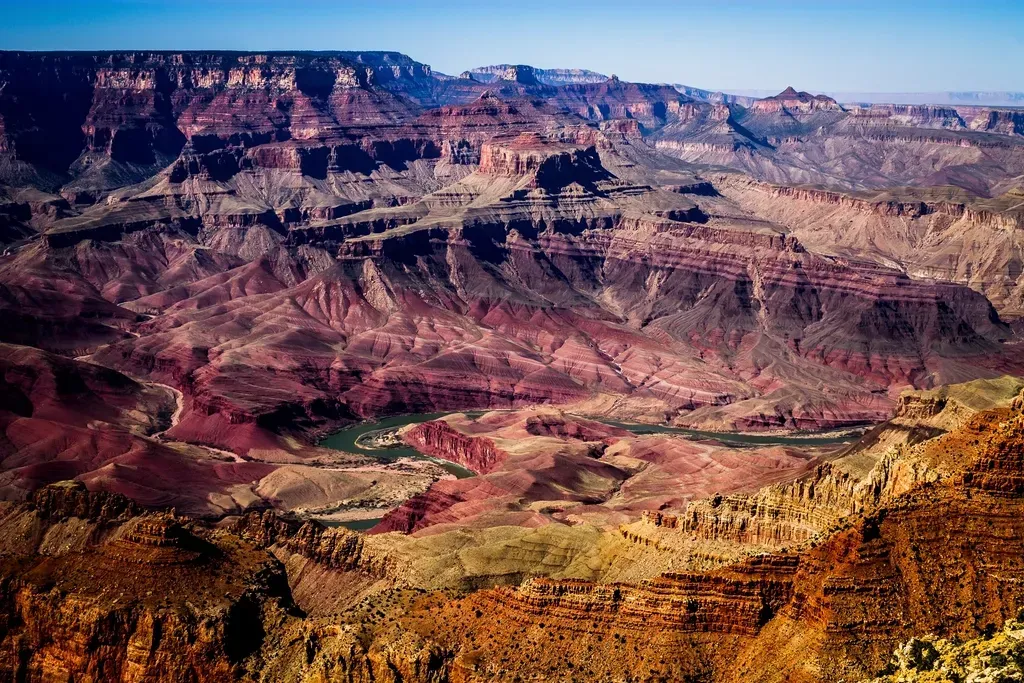
Most visitors come for the views. Few realize they’re also standing at one of the greatest open-air fossil museums on the planet. Grand Canyon National Park in Arizona has a long and diverse fossil record that provides an excellent example of how life has changed through evolution across the expanses of time. This park contains fossiliferous sedimentary rocks that range in age from the Proterozoic (Precambrian) through the Paleozoic and into the Triassic, as well as much younger fossiliferous cave deposits from the last 50,000 years.
Trilobites are some of the oldest fossils to appear in the Grand Canyon’s fossil record. These sea creatures, related to insects and crustaceans, roamed a shallow ocean between 525 to 505 million years ago searching for dead organic material to eat. Trilobite fossils can be found in the Tapeats Sandstone, Bright Angel Shale, and Muav Limestone rock layers. Other marine invertebrates found within the park include fossils of corals, sponges, and crinoids (sea lilies). Every layer you look at is a different chapter of Earth’s autobiography.
5. Florissant Fossil Beds National Monument, Colorado – The World’s Most Detailed Snapshot
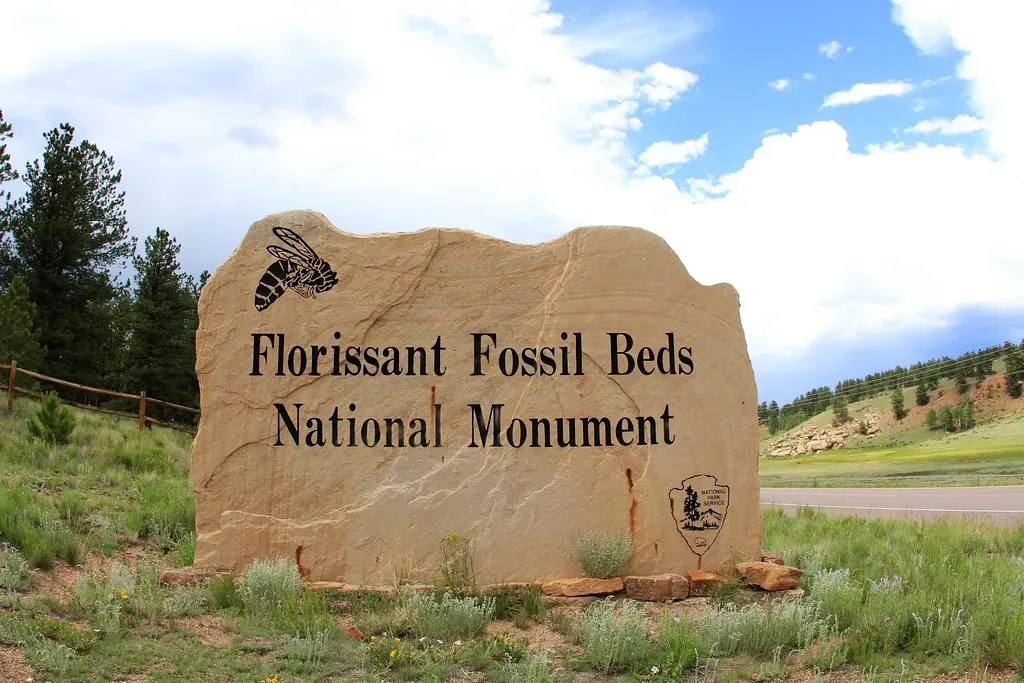
Florissant Fossil Beds National Monument is one of only nine National Park Service lands set aside expressly for the protection of fossils. Centered around the site of an ancient lake, the monument captures the ecosystem of central Colorado circa 34 million years ago and is considered one of the best and most diverse paleontological resources on Earth. Think of it like a prehistoric photograph album, except the “photos” are buried in stone and cover an entire ecosystem in extraordinary detail.
Florissant Fossil Beds National Monument features one of the richest and most diverse fossil deposits in the world, up to 1,700 species. Sequoia tree fossils are some of the largest diameter petrified trees in the world and are massive among the insect and plant fossils in the monument. In addition, as many as 1,500 different kinds of fossil insects and spiders have been unearthed in the monument’s fossil beds. It’s hard to say for sure which detail is more astonishing – the sheer diversity or the delicate preservation.
6. John Day Fossil Beds National Monument, Oregon – 40 Million Years of Evolution in One Park
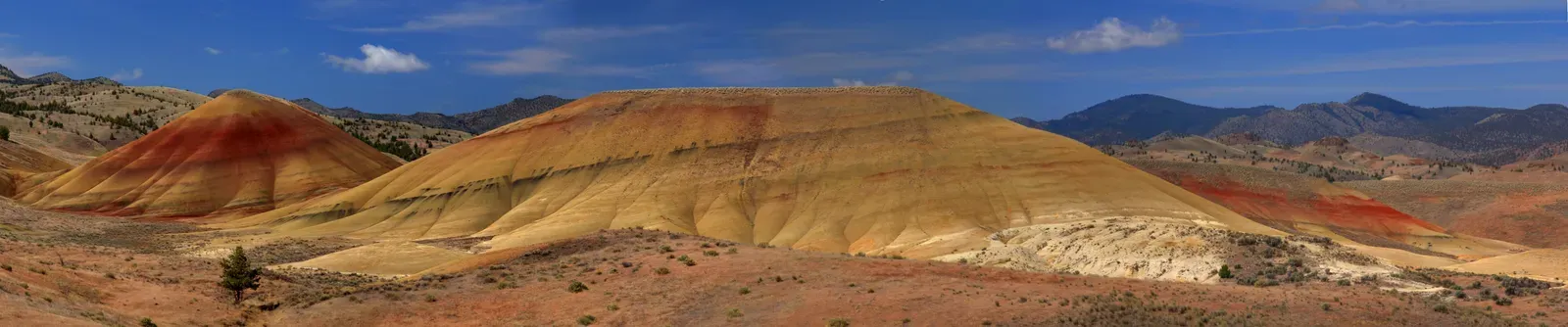
Oregon doesn’t always come to mind when you think about prehistoric landscapes. That’s your first mistake. John Day Fossil Beds National Monument protects one of the longest and most continuous records of evolutionary change in North America. The monument is divided into three units dispersed throughout east-central Oregon and requires more than one day to explore. Think of it as a time-lapse film of life on Earth, played out over a stretch of land that’s quietly spectacular.
It may be difficult to picture herds of rhinoceros tromping through east-central Oregon, but relatives of this horned mammal known as brontotheres, or “thunder beasts,” roamed the area 35 million to 50 million years ago. Visually similar to the rhinoceros, these enormous animals are actually more closely related to horses and believed to be social animals; the odd dual horns protruding from the animal’s snout may have been used to compete for mates. The Sheep Rock Trails take visitors through different geological formations and layers that host a rich variety of fossils, while the stunning Painted Hills display the artistic quality of these layers of time. Paleontology field work is ongoing at John Day with staff visiting the over 700 fossil sites at the monument in the summer months.
7. Agate Fossil Beds National Monument, Nebraska – The Golden Age of Mammals
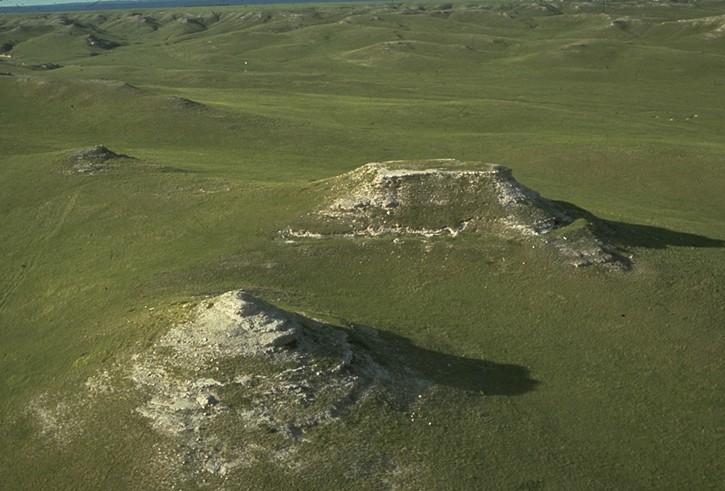
Nebraska might surprise you here. According to the National Park Service, this national monument has one of the world’s most complete collections of mammal fossils from the Miocene epoch, which lasted from about 23 million years ago to 5 million years ago. This was the age when the dinosaurs were long gone and mammals were essentially taking over the world, running wild across ancient grasslands that covered much of what is now North America.
Fossils found here include the coyote-sized beardog Daphoenodon (Italian for “blood-reeking tooth”), the extinct two-horned North American rhinoceros Menoceras, and the terrifying-looking bison-sized pig-like Daeodon that had a 3-foot-long head. Among the most unusual finds in the Agate Fossil Beds are two sites containing “devil’s corkscrews,” twisting fossilized burrows once made by ancient beaver ancestors. Two of these strange pieces have been preserved as part of an exhibit on-site. That level of weird, wonderful detail is what makes this place unforgettable.
8. Guadalupe Mountains National Park, Texas – An Ancient Reef in the Desert
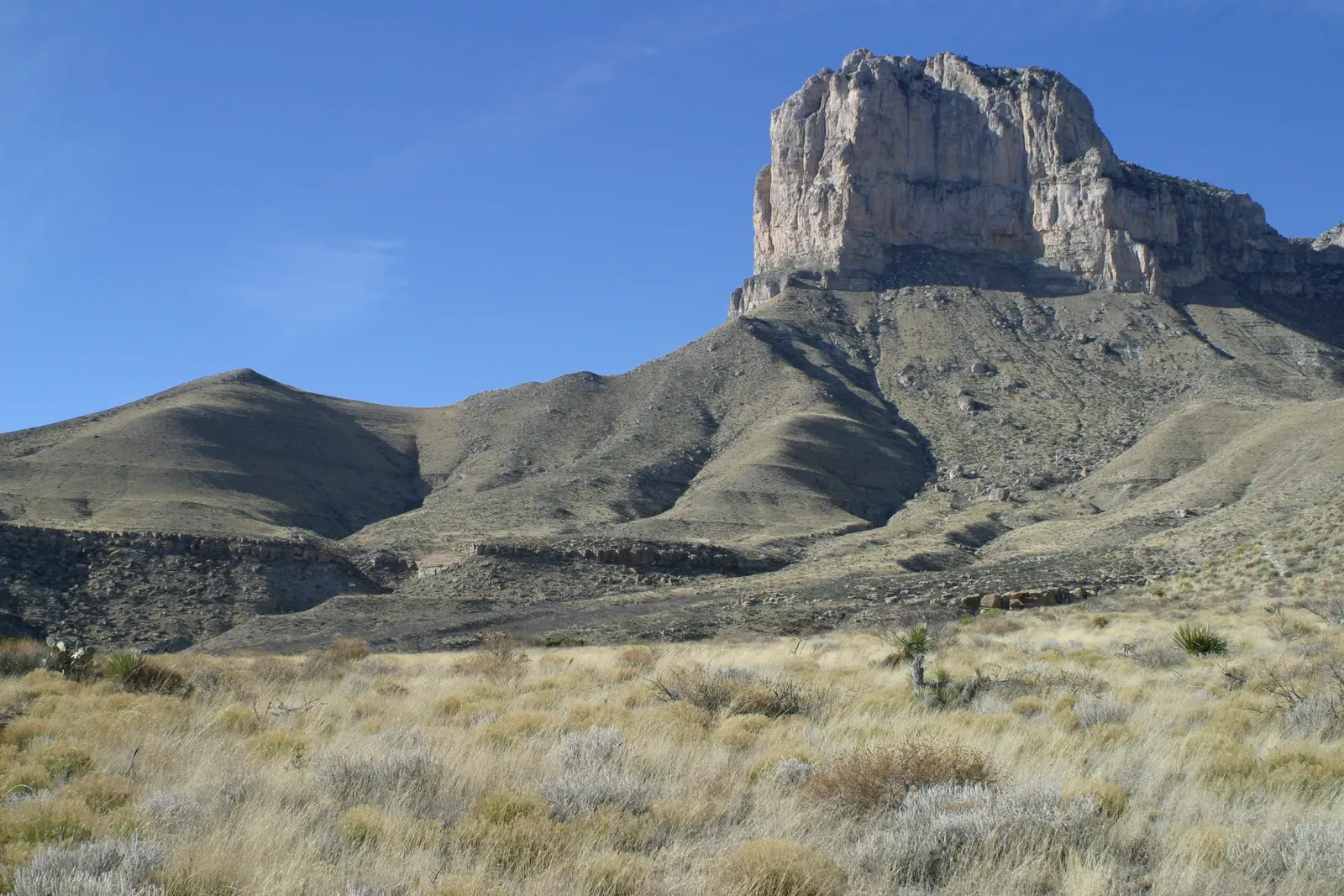
Here’s a surprising one. You’re standing in a dry Texan desert, yet what surrounds you was once a vast, tropical marine reef. Two hundred and sixty five million years ago, the mountains of Guadalupe Mountains National Park were part of a massive prehistoric reef called the Capitan Reef. Today, you can find a variety of fossils at the park, including swirls of algae, ancient cephalopods (squids) and nautiloids, and sea creatures related to present-day oysters and clams.
Guadalupe Mountains National Park is known as one of the best examples of an ancient, marine fossil reef on Earth. Imagine a vast tropical sea full of lime-secreting organisms that formed at this well-preserved reef as you look across what now is an arid landscape of jagged peaks, vast desert vistas, and a diverse ecology. Visitors can hike the Permian Reef trail or the McKittrick Canyon Nature Loop for the best chance of seeing these fossils. Be sure to stop by the visitor center beforehand, where a park staff member can show you examples of fossils, so you know exactly what you are looking for.
9. Channel Islands National Park, California – Where Pygmy Mammoths Roamed
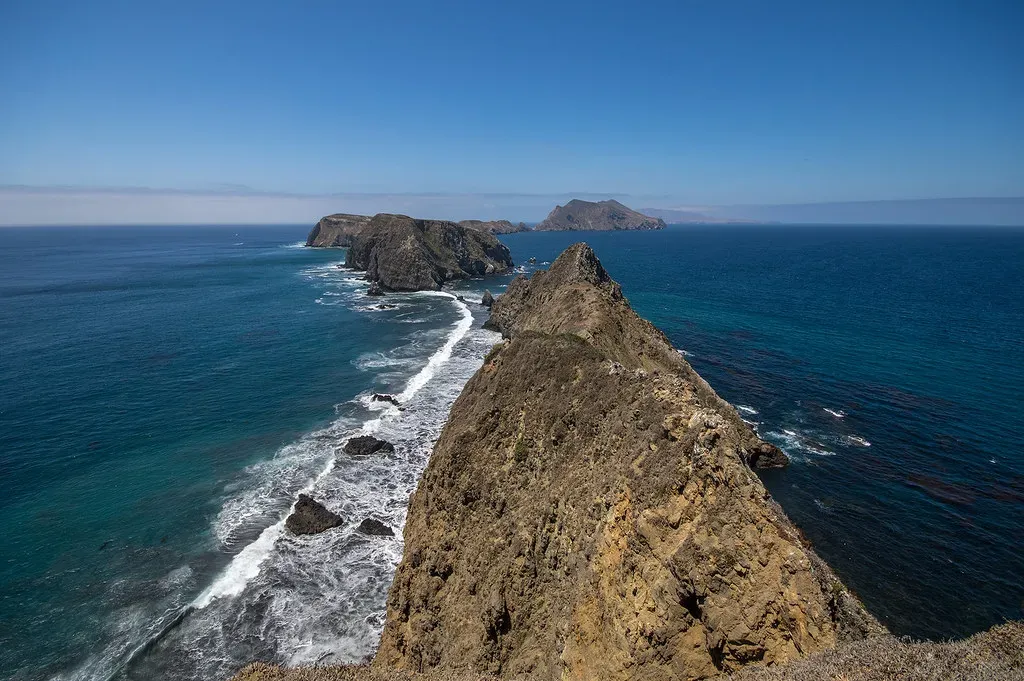
Made up of five islands on the southern coast of California, Channel Islands National Park protects unique island-based and marine ecosystems as well as valuable paleontological and archeological resources. It’s a place that feels remote and elemental, which makes it all the more exciting when you discover what lies beneath the surface. The fossil story here is genuinely unlike anything found on the mainland.
The park’s most well-known fossils discovered are Quaternary pygmy mammoths. The animals appear to have swum to Santa Rosa Island before dwarfing over time in response to island factors such as a restricted land area and lack of predation. The Channel Islands also have rich records of marine invertebrate fossils, particularly of mollusks, and microfossils. Miocene-aged fossils of marine mammals have also been recovered on the islands, as well as fossils of a variety of bird species and terrestrial small mammals. A mammoth that evolved to become smaller just because of island life – honestly, that’s one of the strangest, most incredible examples of evolution you’ll ever hear about.
A Final Thought Worth Taking With You
What ties all nine of these extraordinary places together is something deeper than just old bones in rock. Fossils and paleontological sites are irreplaceable and nonrenewable. They are invaluable to science as they provide our only evidence of the history of life on Earth. A single fossil may be the only evidence of the existence of an entire species. That’s a responsibility every visitor carries, whether they realize it or not.
From a Jurassic bone wall you can touch in Utah, to pygmy mammoths that shrunk on a California island, to ancient sea creatures locked in a Texas mountain range, these parks are not just destinations. They are windows. These fossils tell the ancient stories of our national parks, and bring us back to times well before recorded human history. The next time you lace up your hiking boots and head for the trail, remember – you might be walking over something that changed life on Earth forever. How does that make you feel? Tell us in the comments below.