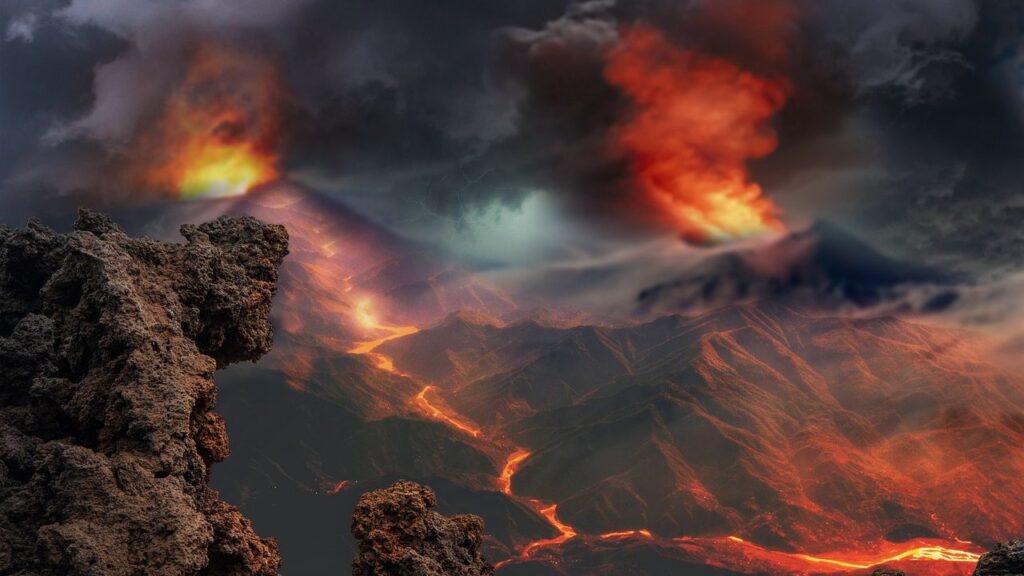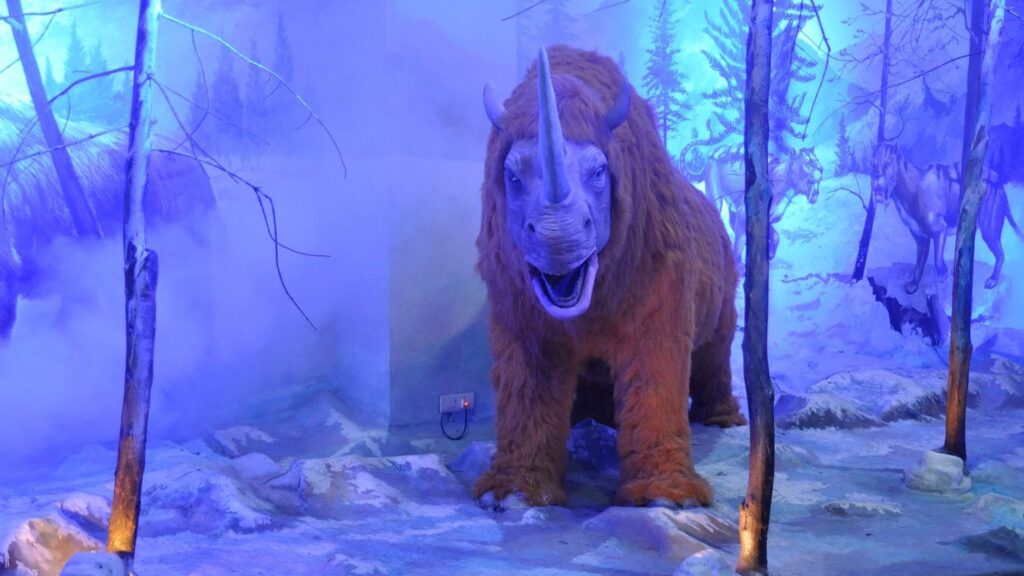
Imagine walking across what is now Illinois, Texas, or California roughly twelve thousand years ago. You would not recognize the land. Not because the landscape looked so different, but because the creatures filling it were almost unimaginably large. Towering elephant-like beasts, short-faced bears the size of small cars, and saber-toothed predators lurking in the shadows. This was a continent of giants, and it was all about to vanish.
The story of North America’s Ice Age megafauna is one of the most gripping and still-debated mysteries in science. These animals thrived for millions of years, only to disappear in what amounts to an eye-blink in geological time. What you are about to discover might surprise you, unsettle you, and perhaps even make you question how much you truly know about the world beneath your feet. Let’s dive in.
A World Unrecognizable: The Scale of Ice Age North America
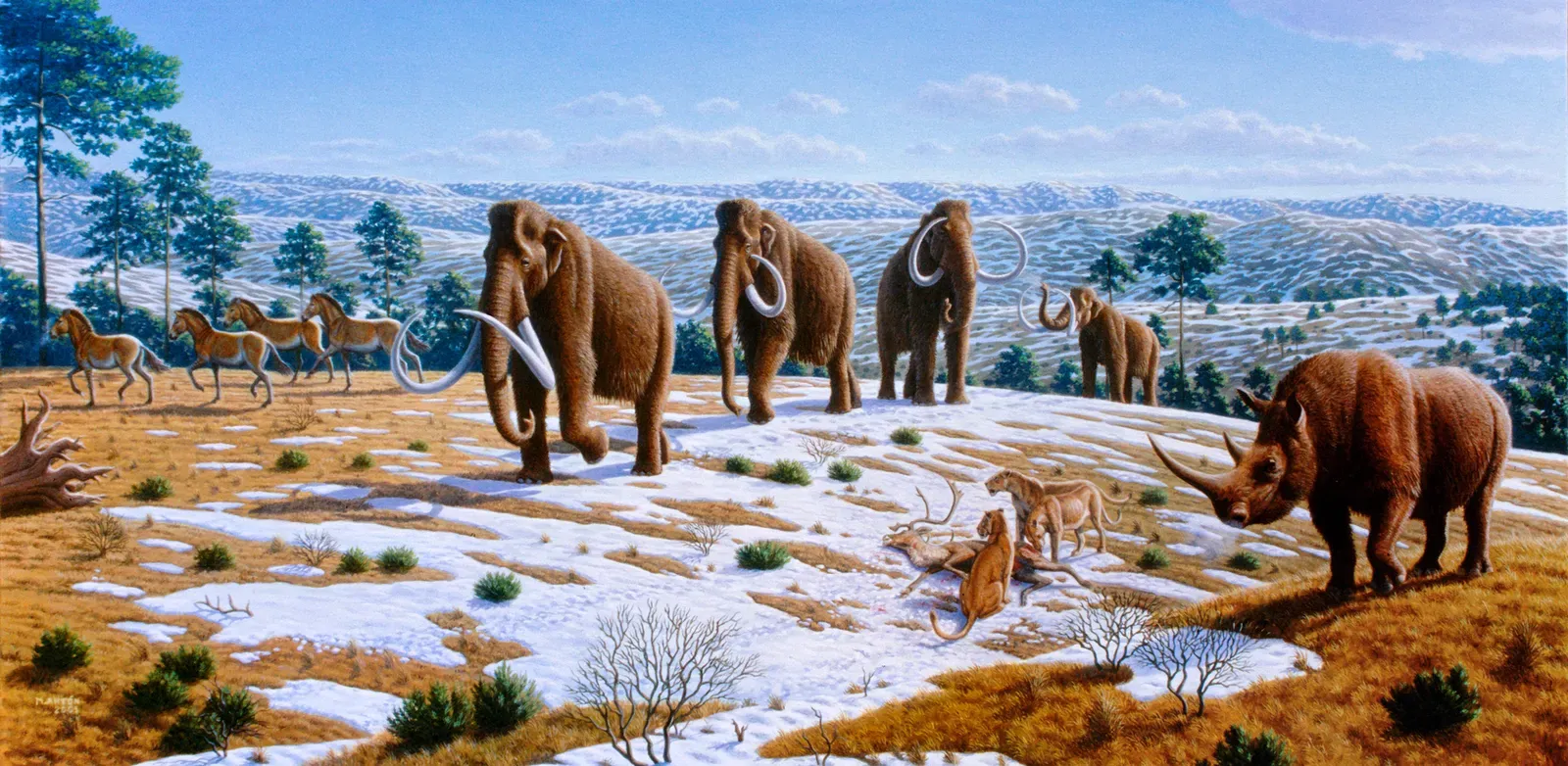
The Late Pleistocene to the beginning of the Holocene saw the extinction of the majority of the world’s megafauna, typically defined as animal species having body masses over 44 kg, which resulted in a collapse in faunal density and diversity across the globe. To put that in perspective, you are not talking about a few unusual creatures disappearing quietly. You are talking about entire guilds of large animals being erased from an entire continent.
The end of the Pleistocene in North America saw the extinction of 38 genera of mostly large mammals. That number should genuinely shock you. Thirty-eight entire genera, not just individual species. It is the kind of biodiversity loss that modern conservation biologists look back on with a kind of stunned reverence. Honestly, if you stop and picture what that actually looked like, it is nothing short of staggering.
The Woolly Mammoth: An Icon That Actually Outlived the Pyramids
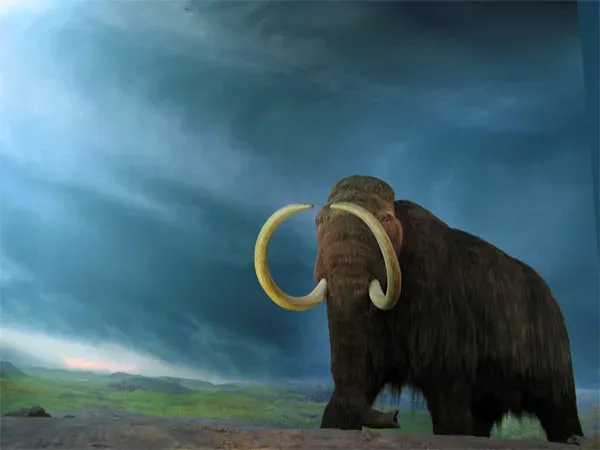
The woolly mammoth is one of the most famous extinct Ice Age megafauna. Standing roughly twelve feet tall at the shoulders and weighing six to eight tons, the woolly mammoth grazed the northern steppes of Ice Age North America using its colossal, fifteen-foot curved tusks to dig under the snow for food and defend itself against predators. Think about that for a moment. Tusks longer than most living rooms.
Woolly mammoths were largely extinct by about 10,000 years ago, due to the pressures of a warming climate combined with hunting by humans. Scientific evidence suggests that small populations of woolly mammoths may have survived in mainland North America until between 10,500 and 7,600 years ago. Other evidence suggests that woolly mammoths persisted until 5,600 years ago on St. Paul Island, Alaska, and as late as 4,300 years ago on Wrangel Island, before succumbing to extinction from inbreeding and loss of genetic diversity. In other words, mammoths were still alive while the Egyptians were stacking the first stones of the pyramids. Let that land.
The American Mastodon: The Ancient Forest Dweller You’ve Never Heard Enough About
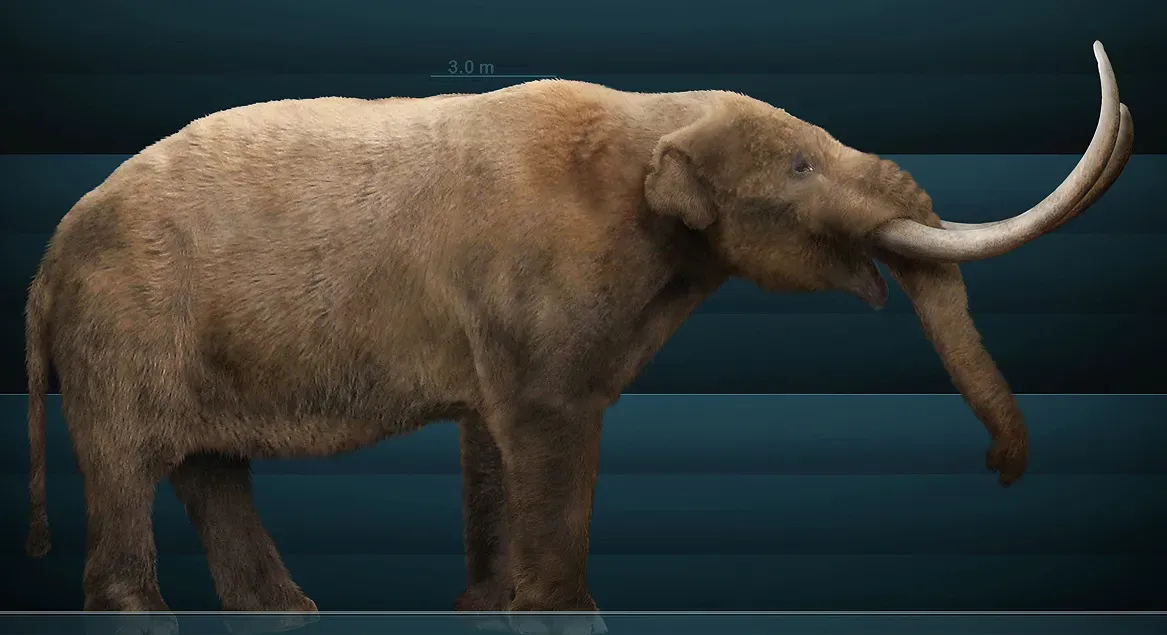
The American mastodon is the most ancient of the North American “elephants.” Its ancestors crossed the Bering Strait from Asia roughly fifteen million years ago and evolved into the American mastodon about 3.5 million years ago. The mastodon was shorter and stockier than the later mammoths, and the shape of its teeth indicates that mastodons didn’t graze on grass like mammoths, but ripped off leaves and entire tree branches for food. They were, in a way, the forest bulldozers of their time.
Mastodons were smaller than mammoths, bearing a sloped forehead, straighter and shorter tusks, and they are easily distinguished from mammoths by their teeth. Mastodon molars have two rows of raised and rounded cusps that were effective at crushing branches and leaves. This morphology is consistent with their dietary preference as browsers. Here’s the thing – people often conflate mammoths and mastodons as if they are the same creature. They are not. They diverged more than twenty million years ago and lived in completely different habitats.
Smilodon: The Saber-Toothed Cat That Was Built Like a Bear
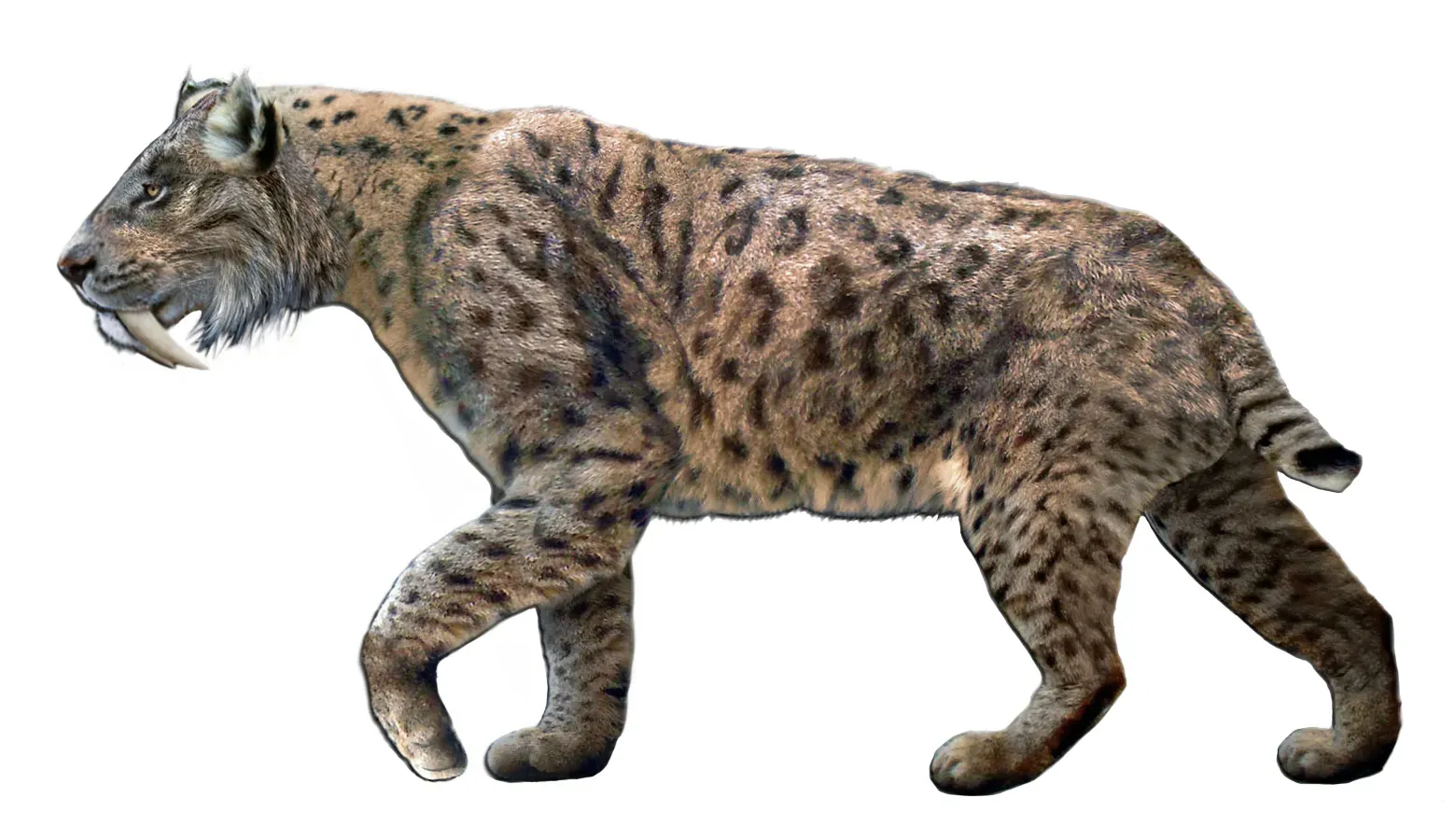
The saber-toothed cat Smilodon fatalis is one of the most iconic animals of Ice Age North America. Saber-tooth skeletons pulled from sites like the La Brea tar pits in Los Angeles were armed with upper canines averaging seven inches long and a jaw that could open an astonishing 130 degrees. Saber-toothed cats aren’t related to modern tigers or any living felines at all. They were a foot shorter than an adult lion, but almost twice as heavy, over 600 pounds in some cases. Saber-toothed cats had relatively short legs and a bobbed tail, meaning they were built for ambush attacks, not long sprints.
The documentation of numerous Smilodon bones with healed injuries and degenerative diseases, many of which would have been debilitating to the animal, suggests that these cats were social animals who lived in packs. Without assistance from other cats, at least in the form of food, the injured animals would have died before their bones could start to heal. I find that detail genuinely touching. These terrifying apex predators apparently looked after their wounded. It makes them feel somehow more real.
The Giant Short-Faced Bear: North America’s Ultimate Apex Predator
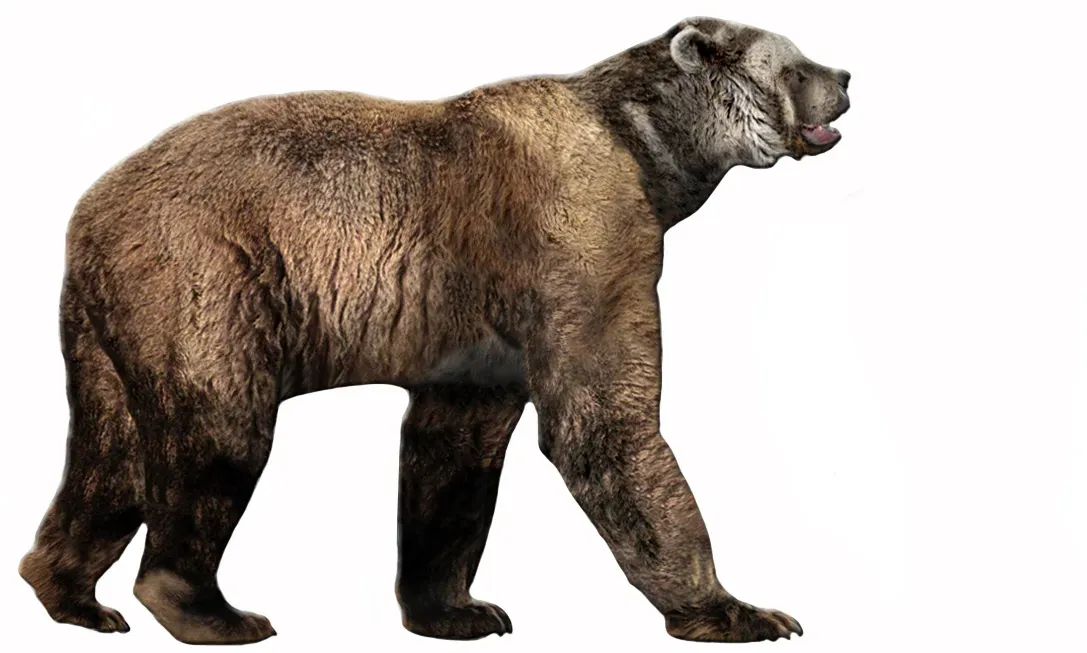
The illustration was originally uploaded by Dantheman9758 at http://dantheman9758.deviantart.com/art/Arctodus-simus-53736084, and later added to Wikimedia Commons by user: Ark., CC BY-SA 3.0)
The giant short-faced bear (Arctodus simus) was the largest carnivorous mammal to ever roam North America. Standing on its hind legs, an adult giant short-faced bear boasted a vertical reach of more than fourteen feet. To put that in a way you can feel – it could comfortably look over the top of a double-decker bus. This was not a creature you stumbled upon casually and walked away from.
A prominent feature of the short-faced bear is their remarkably long, thin limb bones and feet that supported a heavy torso. These limbs were adapted for efficient long-distance pacing, rather than the explosive acceleration and high speed pursuits typical of other large predators, like lions. The limbs and feet of a short-faced bear could not support their large bodies for the rapid acceleration or sudden changes in direction necessary to take down a fleeing bison or horse. Some scientists now think it was more of an enormous, terrifying scavenger than a classic pursuit predator. Either way, you wouldn’t want to be around it.
Giant Ground Sloths: The Plant-Eaters That Towered Over Men
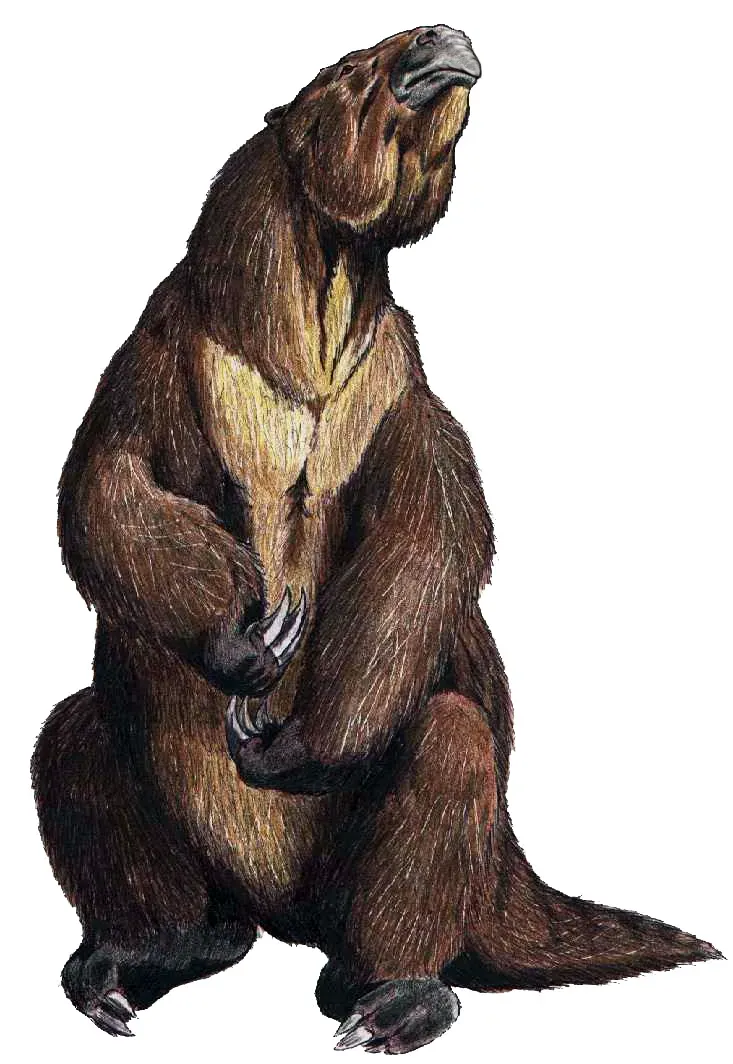
In Ice Age North America, sloths were an entirely different beast. The giant ground sloths of the late Pleistocene were bear-sized herbivores that stood twelve feet on their hind legs and weighed up to 3,000 pounds. You probably picture sloths as the slow, endearing creatures dangling from trees in nature documentaries. Now forget everything you know and multiply the size by roughly twenty times.
Not cute and endearing like present-day sloths in South America, these sloths were one of the strangest animals of the ice age. They weighed as much as, or more than, the short-faced bear at around one tonne and stood three metres tall, growing to the size of an ox. These giants were slow and awkward moving. Although these sloths looked fearsome, they fed on leaves and twigs of the northern forests and posed no threat to possible human newcomers. In fact, Thomas Jefferson himself once mistook giant sloth fossils for a colossal carnivorous cat and asked Lewis and Clark to keep an eye out for one on their western expedition. Imagine the look on their faces.
The Giant Beaver: A Rodent the Size of a Black Bear
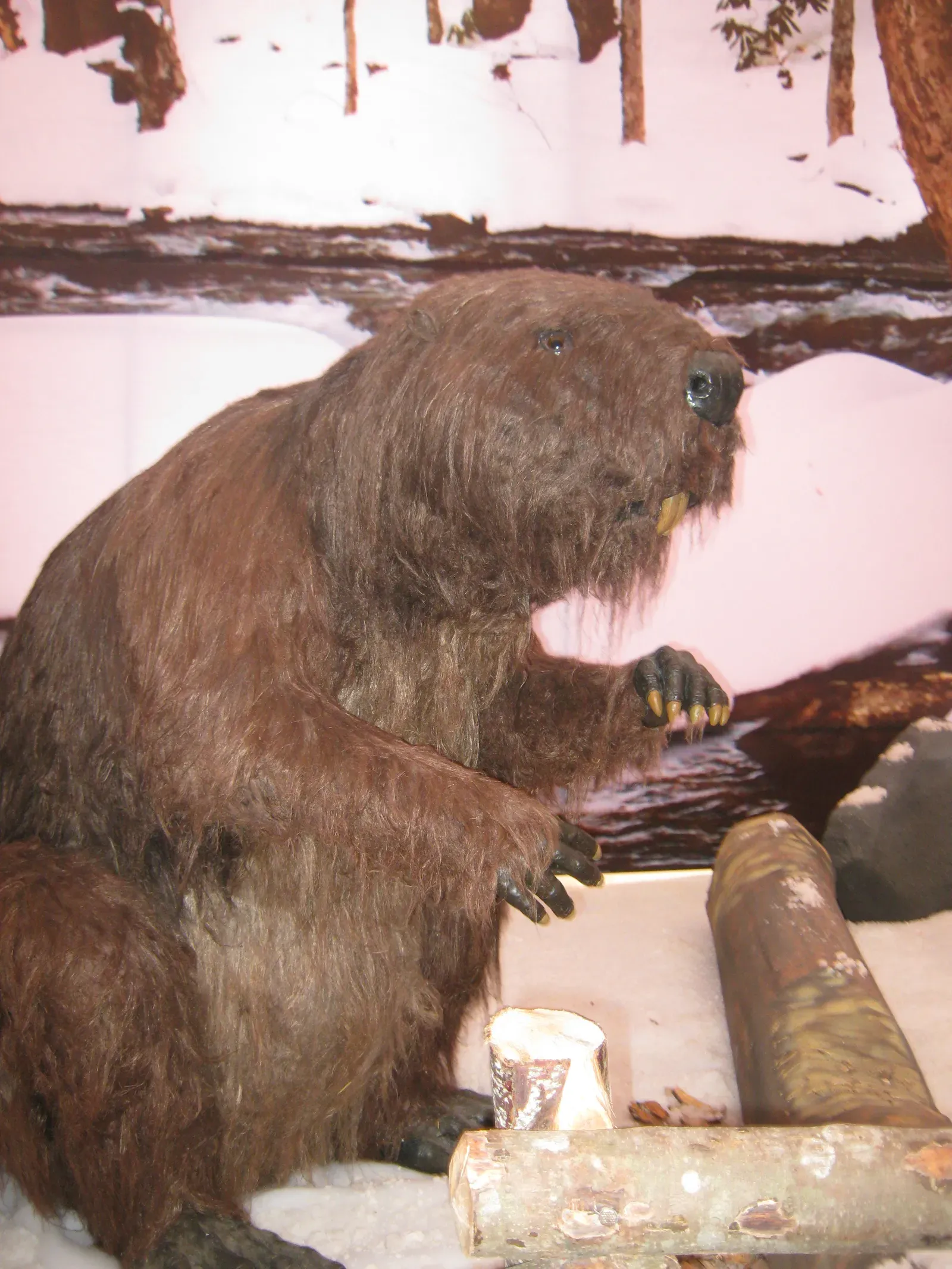
The giant beaver is the largest beaver that we know about. It was the largest rodent to have ever lived on the North American continent. It is one of the giant animals, called megafauna, that lived in North America during and immediately after the last great ice age. When you picture a beaver, you probably picture something modest and industrious. Now imagine it scaled up to the body size of a black bear.
Stable isotopes suggest that giant beavers probably predominantly consumed submerged aquatic plants, rather than the woody diet of living beavers. There is no evidence that giant beavers constructed dams or lodges. The shape of the incisors would have made them much less effective at cutting down trees than living beavers. They were likely heavily dependent on wetland environments for both food and protection from predators. Honestly, the giant beaver may have been the least threatening creature on this list, but it also highlights just how extreme Ice Age scale could get across all species.
Ancient North American Horses and Camels: The Ones That Got Away
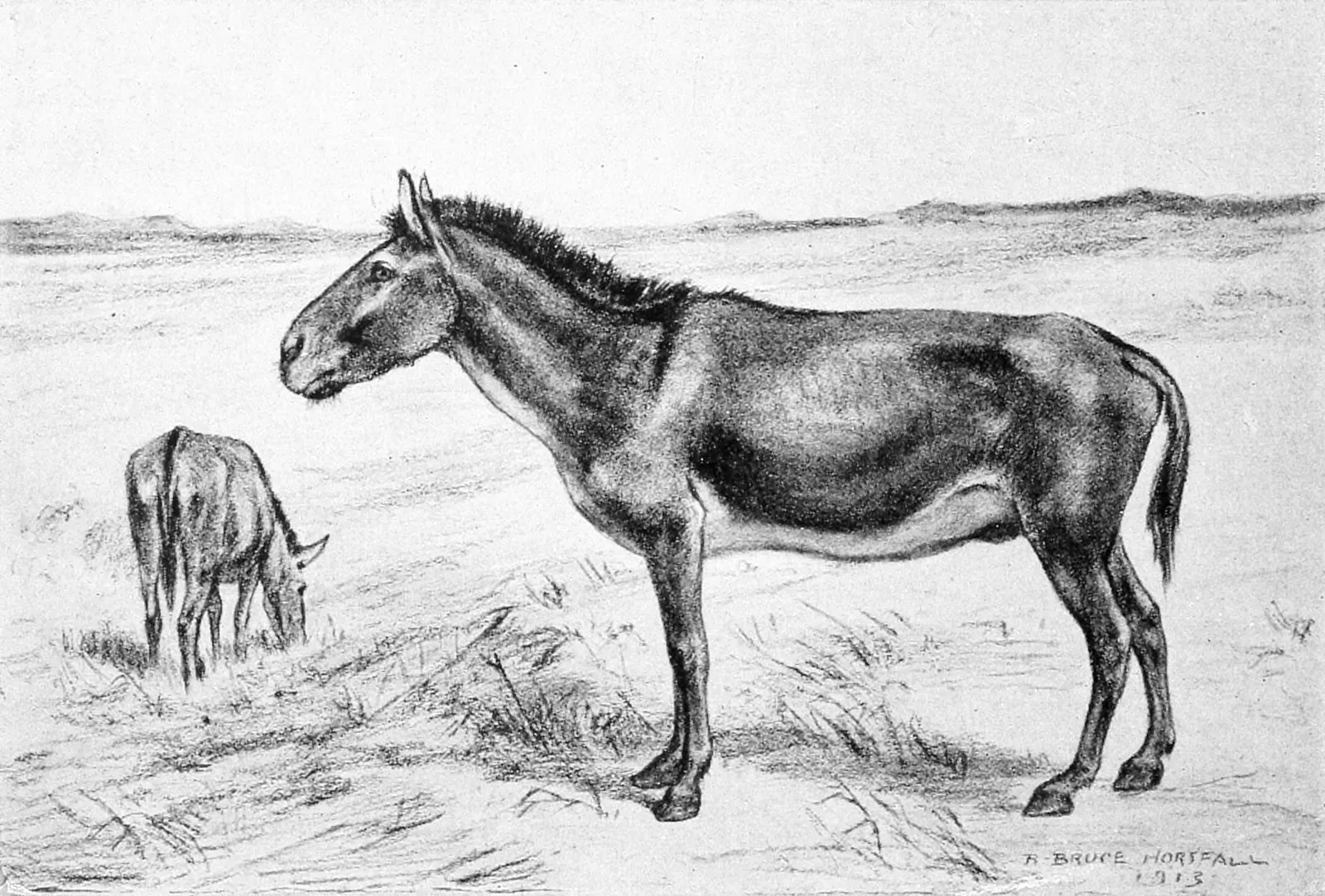
Ancient horses lived in North America from about 50 million to 11,000 years ago, when they went extinct at the end of the last ice age. Here is a genuinely mind-bending fact – horses are not native to the Americas in the way most people assume. The horses that Spanish colonizers introduced in the 1500s were actually returning to the continent where their entire lineage began. North America was the original homeland of the horse, and then it disappeared completely from here.
There is no archaeological evidence that in North America megafauna other than mammoths, mastodons, gomphotheres, and bison were hunted, despite the fact that camels and horses are very frequently reported in fossil history. So if humans didn’t hunt them directly, what killed them? The horses and camels that survived in Eurasia and Africa somehow made it through the same global climate shifts that wiped them out here. That asymmetry is one of the most haunting puzzles in all of paleontology.
The Extinction Debate: Climate, Humans, or Something Worse?
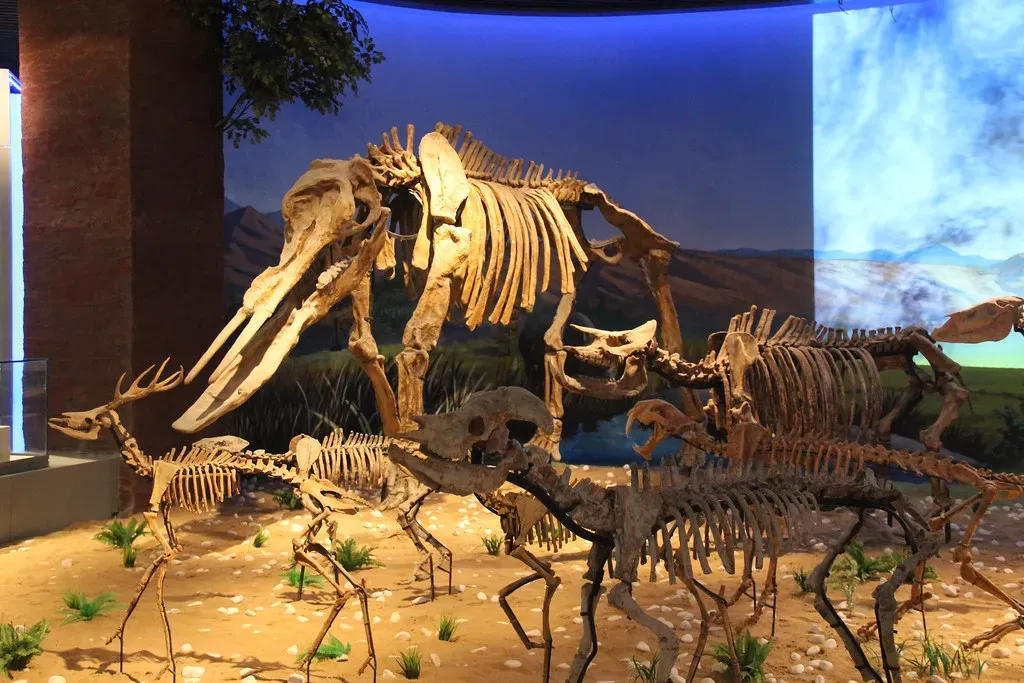
Around 12,700 years ago, North America lost roughly seventy percent of its large mammals – a megafaunal extinction event paleontologists and archaeologists have been arguing over for more than half a century. The debate is not a simple one, and anyone who tells you they have the definitive answer is oversimplifying a problem that continues to challenge the best minds in science. There are at least three major competing theories, and the truth is probably a painful cocktail of all of them.
The mass extinctions may have been triggered by a sudden climatic shift that rapidly cooled the planet 12,800 years ago – the so-called Younger Dryas – or animals could have been stricken with diseases carried by paleo-humans and their dogs. It has also been suggested that a comet, asteroid, or meteor struck Earth 12,900 years ago and caused the global cooling that killed off the Ice Age mammals. However, this theory is widely considered discredited, as it doesn’t explain why megafauna on different continents went extinct at different times. The mystery, it’s hard to say for sure, may never be fully resolved.
What the La Brea Tar Pits Revealed: A Crime Scene Frozen in Time
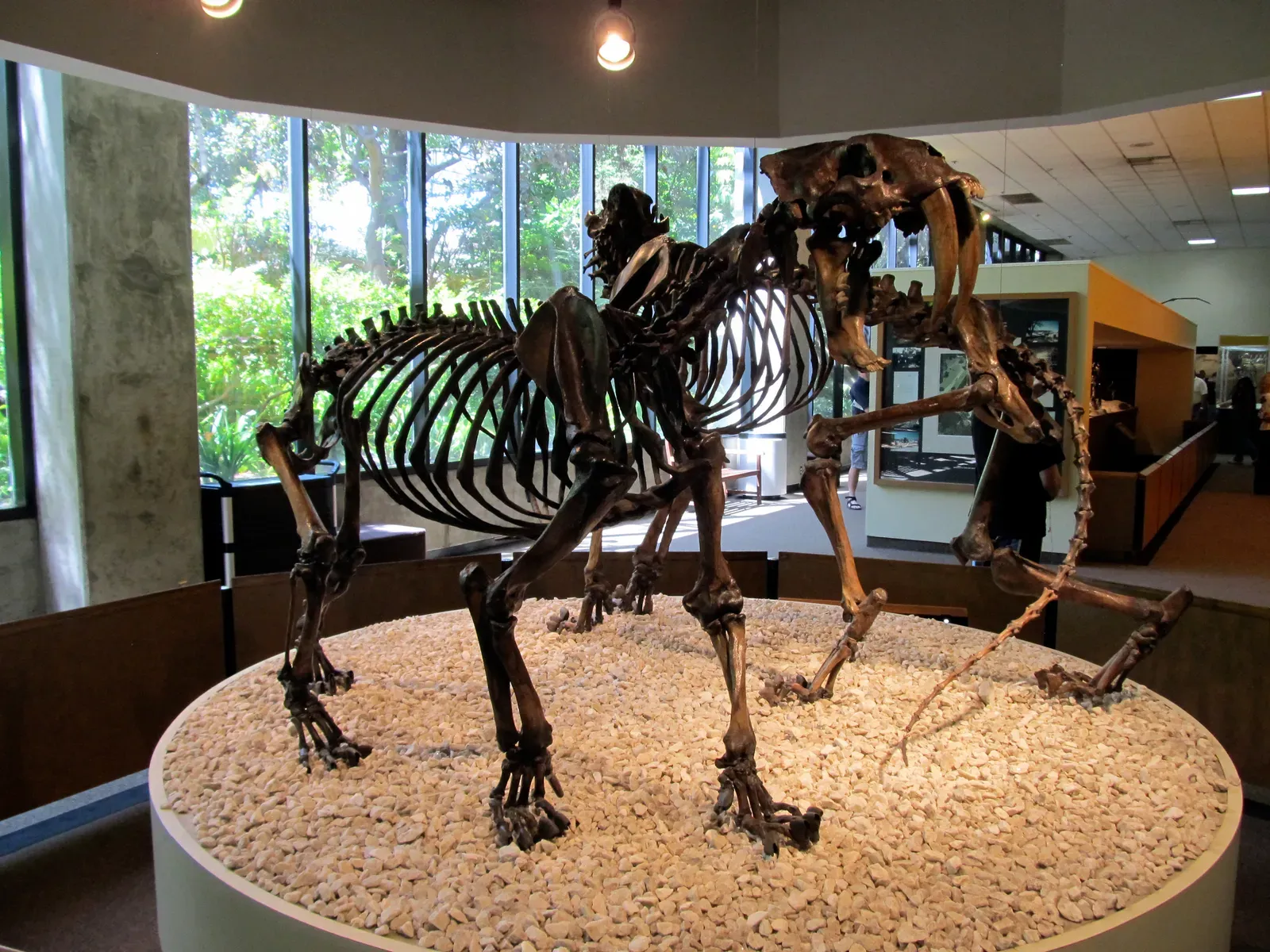
Uploaded by FunkMonk, CC BY-SA 2.0)
Using a method devised specifically for dating fossils preserved in asphalt, a research team of nineteen scientists obtained more than 170 new radiocarbon dates on La Brea Tar Pits fossils, focusing on the eight most common large mammals: coyotes, horses, camels, bison, saber-toothed cats, giant ground sloths, American lions, and dire wolves. The fossil record at La Brea Tar Pits is unique because it comprises hundreds, and in some cases thousands, of animals of various species. Think of it as a snapshot of an entire lost ecosystem, preserved in pitch-black asphalt for tens of thousands of years.
A model found a disastrous chain of ecological connections: a warming climate, reduction in tree pollen, and an increase in human population all forecasted a decline in large herbivore numbers. The reduction in tree pollen also predicted an increase in fires. The strongest relationship the scientists found by far was between human population growth and a large increase in fire activity. That finding is both fascinating and sobering. It suggests humans may not have simply hunted these animals to extinction – they may have burned their world down around them, slowly and systematically.
Conclusion
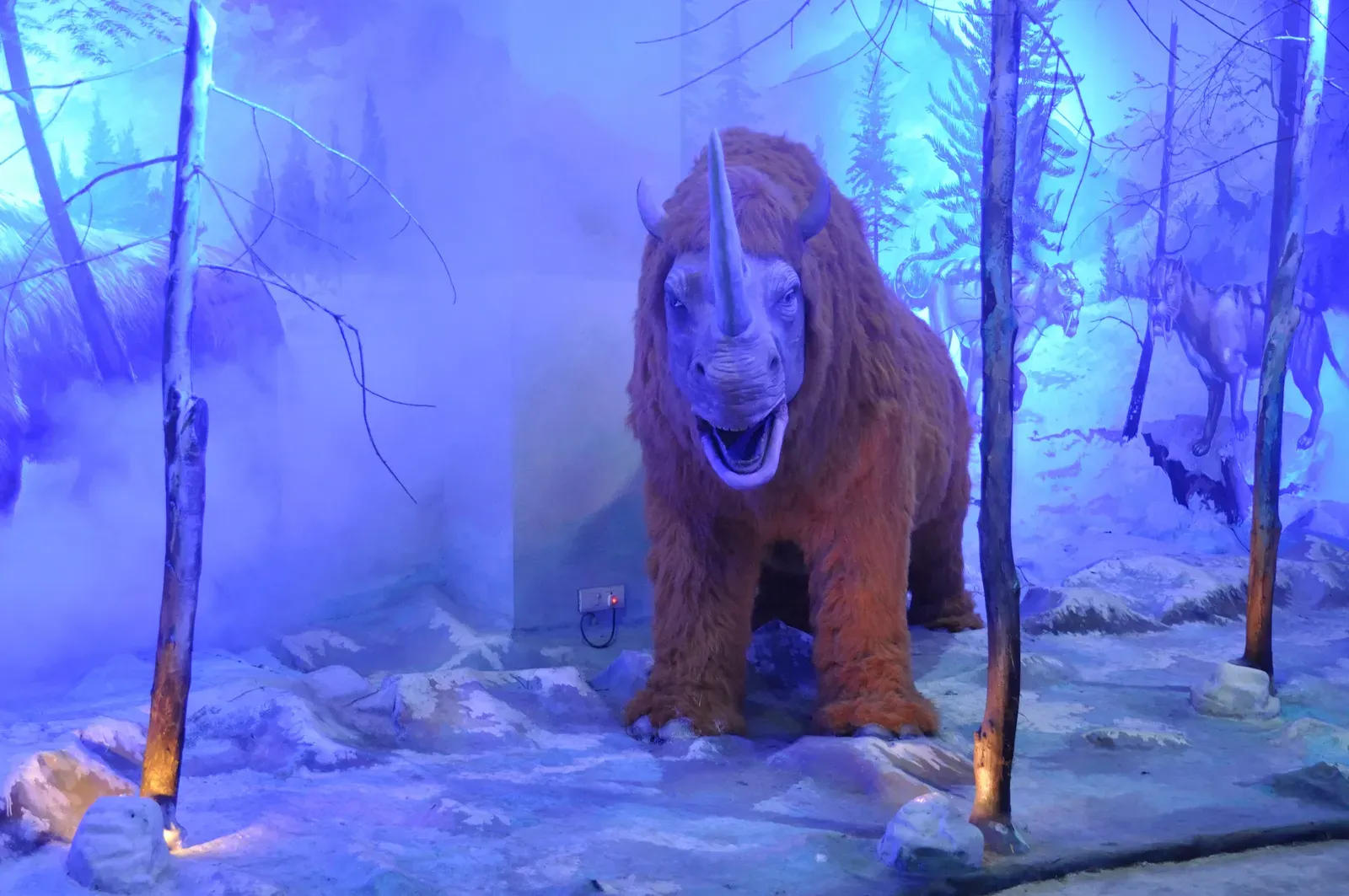
The lost giants of the Ice Age were not myths or exaggerations. They were real, breathing, thundering animals that shaped this continent for millions of years. You have walked on the same ground where woolly mammoths grazed, where saber-toothed cats ambushed prey, and where the largest land carnivore in North American history padded silently through the undergrowth. That is not ancient history in any comfortable sense – it is our recent past.
What is perhaps most striking is how fast it all ended. The extinction event is most distinct in North America, where 32 genera of large mammals vanished during an interval of about 2,000 years. In geological time, that is barely a heartbeat. Whatever combination of forces was responsible – climate, hunting, fire, disease – the result was a continent fundamentally altered, stripped of its most spectacular inhabitants, never to recover that lost biodiversity. The world you inherited is, in a real sense, the impoverished aftermath of a catastrophe that most people have never stopped to consider.
So here is the question worth sitting with: knowing what you now know about these lost giants, what does it say about the world we are shaping today? Tell us your thoughts in the comments.