Mallorca – Researchers uncovered a set of fossil footprints along the island’s Serra de Tramuntana coastline, preserving traces from 270 to 280 million years ago. These ichnites, etched into Permian sediments, belonged to a gorgonopsian, a saber-toothed therapsid often called an early mammal precursor. The tracks coincide with skeletal remains from the same rock layers, a fortuitous alignment that illuminates the creature’s movement during a pivotal era in evolutionary history.
A Breakthrough Union of Bones and Prints
A Breakthrough Union of Bones and Prints (Image Credits: Reddit)
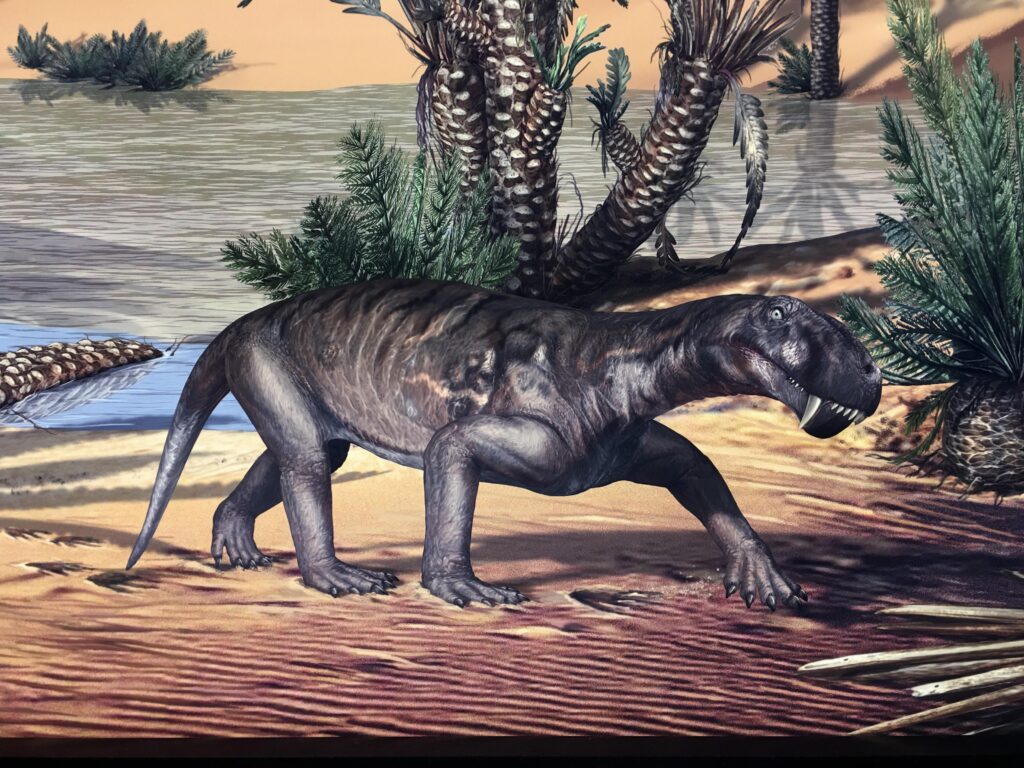
Teams from institutions including the Museu Balear de Ciències Naturals and the Stuttgart State Museum of Natural History pinpointed the tracks near Banyalbufar in the Port des Canonge Formation. This site yielded partial gorgonopsian bones in 2024, marking the oldest known specimen of its kind. Now, the footprints – classified as a new ichnotaxon, Algarpes ferus – offer direct evidence of the animal’s gait.
Eudald Mujal, a paleoenvironmental expert involved in the study, highlighted the rarity of such finds. “Finding footprints and bones in the same rock layers is extremely rare – and linking them to the same animal is even rarer,” he stated. “For us, that’s a real stroke of luck.” The pes tracks aligned precisely in size and proportions with the skeletal foot elements, confirming the match. Published in Palaeogeography, Palaeoclimatology, Palaeoecology in 2025, the research by Rafel Matamales-Andreu, Mujal, Àngel Galobart, and Josep Fortuny underscores Mallorca’s unexpected role in Permian paleontology.
Decoding the Gorgonopsian’s Distinctive Stride
The tracks displayed feet markedly larger than hands, with robust digits ending in prominent claws. Trackways showed a narrow gauge, long strides, and wide pace angulation – hallmarks of an efficient traveler. Estimated at the size of a medium dog, weighing 30 to 40 kilograms, the gorgonopsian prowled floodplains with confidence.
Rafel Matamales-Andreu noted the posture’s implications: “This body posture is associated with animals closer to mammals than to reptiles.” Unlike sprawling reptiles, its legs positioned nearly beneath the body, enabling parasagittal motion. Such traits hinted at speed and stability suited to equatorial Pangaea’s vast landscapes.
- Pes (hind foot) significantly outsized manus (forefoot).
- Clawed digits for traction on soft sediments.
- Long stride lengths suggesting agile predation.
- Narrow track gauge indicating upright limbs.
- High pace angulation for dynamic turns.
From Reptile Spread to Mammal Efficiency
Gorgonopsians belonged to therapsids, a clade that diverged from reptiles toward mammals. Prior evidence placed advanced upright gaits in later Permian forms. These Mallorca prints pushed that timeline back, showing primitive mammalian locomotion emerged earlier.
The Permian floodplain environment featured temporary ponds where tetrapods gathered. Gorgonopsians likely dominated as apex predators, their gait aiding dispersal across supercontinent lowlands. This adaptation foreshadowed the mobility that propelled therapsids’ global radiation before dinosaurs rose.
Reshaping Views on Equatorial Origins
Mallorca, then part of tropical Pangaea, challenged assumptions that therapsids thrived mainly in higher latitudes. The fossils highlighted palaeoequatorial hotspots for their diversification. Co-occurring remains of reptiles like Tramuntanasaurus painted a vibrant community.
Analysis of track metrics confirmed a shift from ancestral sprawling to more energetic postures. This evolutionary tweak enhanced endurance and hunting prowess, setting therapsids apart. Researchers emphasized how such insights refine timelines for mammal-like traits.
Key Takeaways
- Mallorca’s tracks provide the earliest evidence of upright, mammal-like gait in therapsids, dating to 270-280 million years ago.
- Rare bone-footprint correlation in the same strata confirms gorgonopsian authorship and reveals predatory efficiency.
- The findings illuminate Permian equatorial ecosystems and therapsid dispersal, bridging reptile and mammal locomotion.
These footprints from Mallorca’s ancient shores stand as a testament to incremental evolutionary leaps that shaped life’s trajectory. They remind us that mammal supremacy traces back to agile steps in forgotten floodplains. What do you think about this window into prehistory? Tell us in the comments.