Seabirds navigate vast ocean expanses, linking remote breeding islands with distant feeding grounds across multiple nations. Conservation efforts, however, frequently end at political boundaries, leaving these migratory species vulnerable to fragmented protection. Nearly half of migratory seabird species now experience population declines, underscoring the need for coordinated strategies that match their borderless journeys.
The Alarming Extent of Seabird Declines
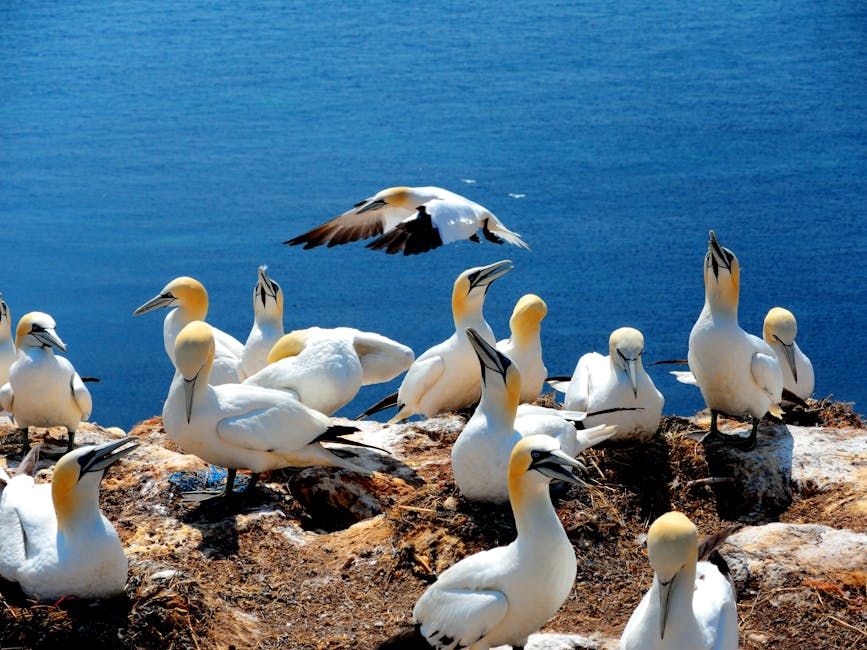
The Alarming Extent of Seabird Declines (Image Credits: Pexels)
Researchers revealed that over half of seabird species with known population trends showed decreases, with 55.5% declining overall. This crisis affects 151 migratory and pelagic species that rely on marine pathways, representing 41% of all 366 extant seabirds. Among these, 42% faced global threat status, exceeding the seabird average of 30%.
Tracking data highlighted regional variations. The East Indian Ocean Flyway registered the steepest drops, with 72.7% of species declining. Such patterns emerged from analyses of movements by long-distance travelers, exposing how isolated protections fail to address full life cycles.
Unpacking the Marine Flyways Concept
Scientists identified six marine flyways – broad, recurring migration routes spanning the Atlantic, East Indian, North Indian, West Pacific, Pacific, and Southern Oceans. These pathways connected breeding sites, foraging zones, and corridors used by 151 species. Unlike terrestrial flyways, which aided waterbird conservation for decades, marine versions drew from advanced tracking of 48 pelagic migrants.
The flyways overlapped waters of 54 countries, including 36 parties to the Convention on Migratory Species. France intersected all six, while others like Australia covered four. This alignment offered leverage for multinational action, mirroring successful land-based models that fostered data sharing and funding.
- Atlantic Ocean Flyway: 54 species
- East Indian Ocean Flyway: 14 species
- North Indian Ocean Flyway: 13 species
- West Pacific Ocean Flyway: 28 species
- Pacific Ocean Flyway: 87 species
- Southern Ocean Flyway: 45 species
Persistent Threats Hampering Recovery
Bycatch in fisheries, invasive species on islands, and climate change emerged as primary dangers. In the Southern Ocean Flyway, bycatch impacted 37.8% of species, while invasives affected up to 25% in the West Pacific. Many birds encountered multiple stressors, amplifying risks across their ranges.
Over 1,300 Key Biodiversity Areas supported these species, yet coverage proved uneven – 23 species linked to two or fewer sites, and five to none. Juveniles and non-breeding phases remained understudied, complicating threat mapping. Fisheries longlines and island predators persisted despite known mitigations.
Building Momentum Through Global Coordination
Governments adopted a resolution on Seabirds and Marine Flyways at CMS COP15 in March 2026, held in Campo Grande, Brazil. The measure urged safeguarding critical sites, eradicating invasives, and listing additional species on CMS appendices. Delegates from 105 nations, alongside scientists and Indigenous representatives, endorsed 15 recommendations.
Proven tools offered promise. Eradicating invasive mammals from islands became routine, while bycatch reductions exceeded 95% in adopting fisheries. Flyway initiatives aligned with targets like 30% ocean conservation by 2030 and the High Seas Treaty, promoting connected protections.
| Flyway | Key Threat | % Species Affected |
|---|---|---|
| Southern Ocean | Bycatch | 37.8% |
| West Pacific | Invasives | 25% |
| Atlantic | Bycatch | 20.4% |
Key Takeaways
- 151 species use six flyways, with 42% threatened.
- CMS resolution provides a framework for cross-border action.
- Addressing bycatch and invasives yields high success rates.
Marine flyways provide a structured blueprint to reconnect fragmented efforts, potentially halting declines for ocean-spanning seabirds. While challenges like data gaps and political hurdles remain, this approach signals a shift toward holistic ocean governance. What steps should nations prioritize next? Share your thoughts in the comments.