Everything you thought you knew about when and how the first humans spread across the planet is being quietly, but seriously, rewritten. Piece by piece, discovery by discovery, researchers are uncovering fossils, ancient tools, and DNA signatures that push the dates of human movement far earlier than the textbooks ever suggested. It’s one of those slow-burning scientific revolutions that doesn’t make a lot of noise, until suddenly you realize the whole story has changed.
This is not just an academic debate among paleoanthropologists sipping coffee at conferences. These findings reshape how you understand your own origins, your ancestors’ resilience, and the sheer audacity of early humans who crossed deserts, seas, and ice fields thousands of years before we once imagined possible. So let’s dive in.
The Old Timeline Was Never as Solid as You Thought
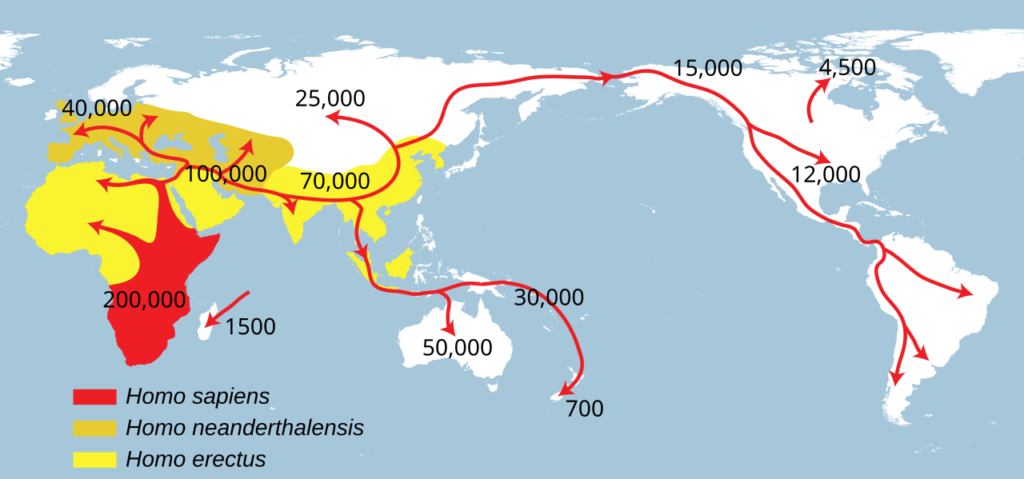
For decades, the conventional wisdom held that modern humans began spreading out of Africa somewhere between 70,000 and 60,000 years ago. The textbook narrative told us that between 70,000 and 60,000 years ago, our earliest modern human ancestors traveled out of Africa on a journey that led them to nearby continents. Simple, clean, satisfying. The problem? The evidence refused to stay inside those neat boundaries.
The factors that drove this mass exodus, as well as when it occurred and whether there was more than one big migration event, have long been points of spirited debate and contention. Honestly, if you look closely at how archaeologists have always dated these movements, the timeline was always more of an educated guess than a confirmed fact. New digging, new dating tools, and new genetic techniques are showing just how much was missed.
This journey was not straightforward and didn’t follow a neat path. It’s a story of false starts and ghost populations, of extinct human species and vast distances. It’s a tale that’s constantly rewritten as new fossils are discovered, changing our understanding of the human evolution timeline. That rewriting is happening right now, in real time, and the new chapters are genuinely astonishing.
A Finger Bone in the Saudi Desert Changed Everything
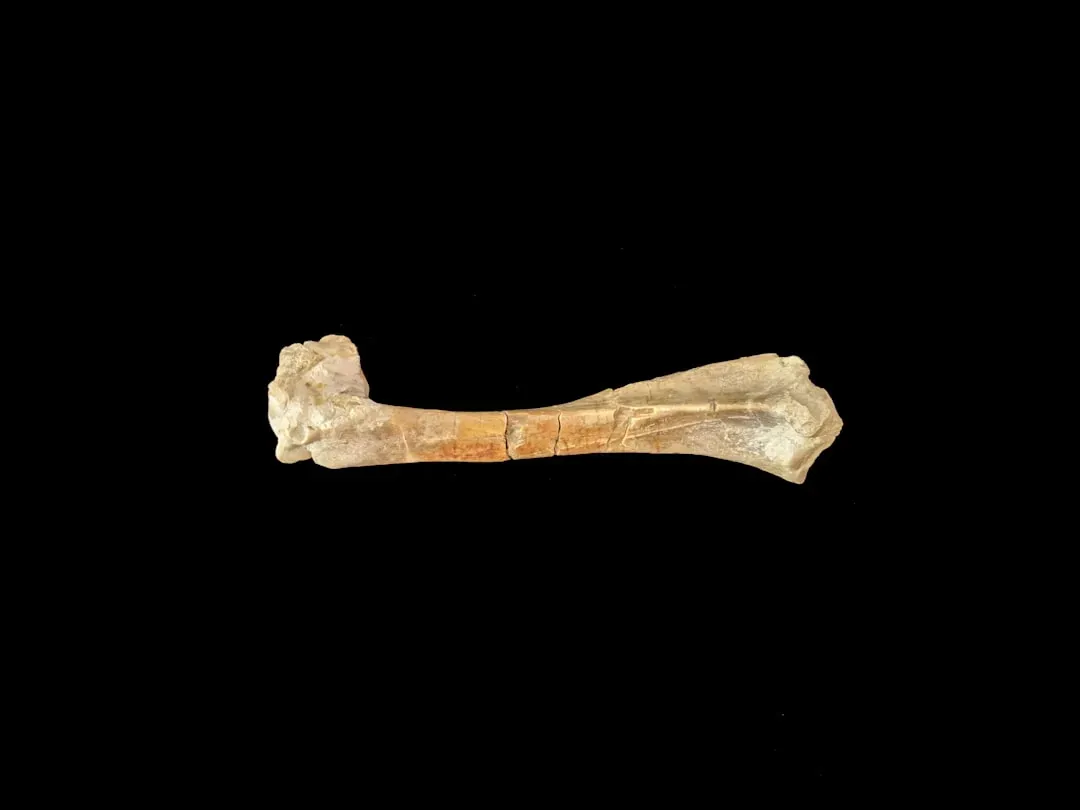
Here’s a story that sounds almost too cinematic to be real. In the Nefud Desert of Saudi Arabia, a multinational research team spent years combing ancient lake beds for signs of early human life. The first Homo sapiens fossil discovery in Saudi Arabia, and the oldest directly dated fossil for modern humans outside Africa and the Levant, was found in the Nefud Desert, showing that our species had spread beyond Africa much earlier than previously thought. What did they find? A single finger bone. One tiny fragment of human remains that turned an entire field of study upside down.
Research showed that Homo sapiens was in the Arabian Peninsula before 85,000 years ago. The Al Wusta-1 intermediate phalanx from the site of Al Wusta in the Nefud desert, Saudi Arabia, is the oldest directly dated fossil of our species outside Africa and the Levant. That discovery alone pushed the known presence of modern humans outside Africa back by tens of thousands of years. Think about that. One bone, buried under desert sands, waiting to be found for 85 millennia.
The discovery supports the argument that there were multiple dispersals out of Africa, and that these spread further than previously known. It indicates that out-of-Africa migrations happened in continuous waves and trickles over a prolonged period, possibly through a different route that cuts through the heart of Saudi Arabia. The picture that emerges is not of one heroic journey, but of repeated, persistent attempts by our ancestors to explore the world around them.
Stone Tools as a Trail of Breadcrumbs Across Continents
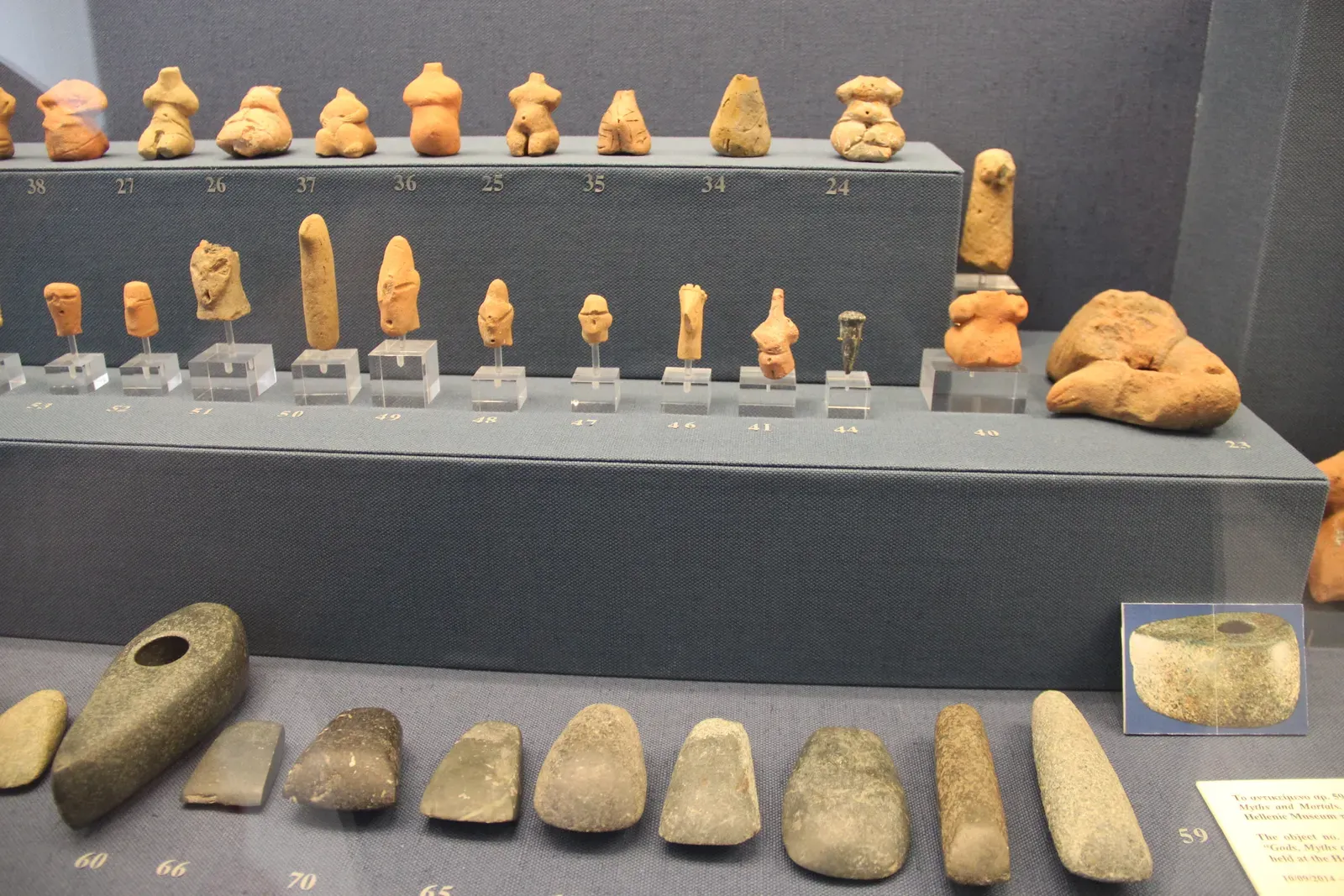
Bones are rare. Stone tools, however, survive just about everything. And when researchers started finding very specific types of ancient stone tools in places they had no business being, it sent shockwaves through the archaeological community. The distinctive method of toolmaking found in Oman, classified as “Nubian Middle Stone Age,” is unique to a region of Sudan in northeast Africa and has never been found outside the Nile Valley in northeast Africa. A dating technique called optically stimulated luminescence revealed that the tools are roughly 106,000 years old.
Think of it like finding a very specific regional recipe being cooked in a kitchen thousands of miles away from its origin. The culinary tradition traveled with the people. The fact that two prehistoric groups living at the same time in Sudan and Oman made the same choices as they shaped their tools, especially at the beginning of the chipping process when the number of available choices is nearly infinite, is very convincing evidence for a cultural connection between the two regions.
A multinational team of researchers at the site of Jebel Faya in the United Arab Emirates gathered evidence that now suggests that groups of Homo sapiens may have migrated from Africa across the southern end of the Arabian Peninsula as early as 125,000 years ago. These tools were not flukes or coincidences. They were deliberate signatures, left behind by people who knew exactly what they were doing. I think what’s remarkable here is how intentional these migrations appear to have been.
Climate Was the Real Engine Driving Human Expansion
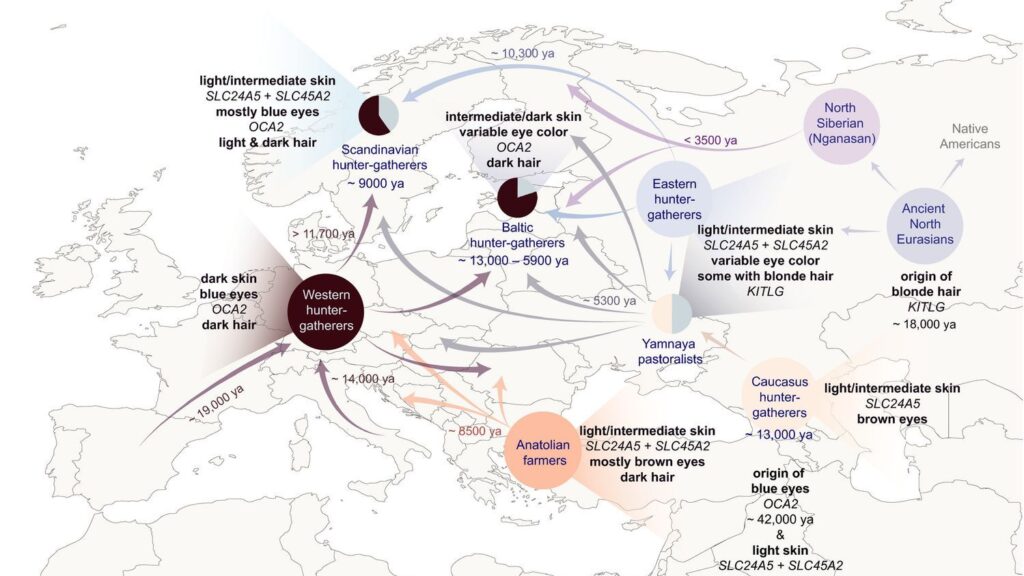
![Climate Was the Real Engine Driving Human Expansion (Skin colour and vitamin D: An updateProvided under Creative Commons free license (p.1, with link to Attribution 4.0 International (CC BY 4.0) page)"This is an open access article under the terms of the Creative Commons Attribution License, which permits use, distribution and reproduction in any medium, provided the original work is properly cited. © 2020 The Authors. Experimental Dermatology published by John Wiley & Sons Ltd" [1], CC BY-SA 4.0)](https://nvmwebsites-budwg5g9avh3epea.z03.azurefd.net/dinoworld/5c0caa84ff9b200276143667595846ed.webp)
Provided under Creative Commons free license (p.1, with link to Attribution 4.0 International (CC BY 4.0) page)
“This is an open access article under the terms of the Creative Commons Attribution License, which permits use, distribution and reproduction in any medium, provided the original work is properly cited. © 2020 The Authors. Experimental Dermatology published by John Wiley & Sons Ltd” [1], CC BY-SA 4.0)
You might wonder what actually pushed people to pick up and walk into an unknown world. The answer, it turns out, is largely climate. Not fleeing disaster, but chasing opportunity. Dramatic climate fluctuations created favorable environmental conditions that triggered periodic waves of human migration out of Africa every 20,000 years or so, beginning just over 100,000 years ago. Like clockwork, the planet’s changing rhythms opened and closed corridors across continents.
Long periods of cold, dry, inhospitable conditions closed the valve on migration. But when warm, moist, tropical conditions set in, they opened the valve, connecting adjacent regions that were previously out of reach. Imagine the Arabian Peninsula not as the arid sand sea it appears today, but as a lush, green landscape. The remains of ancient lakes have been found at sites in the Nefud Desert, showing that conditions were right for permanent freshwater lakes to exist in the region at least five times between 400,000 and 55,000 years ago.
Scientists discovered that before a successful migration, humans began using a much broader range of environments across Africa, from dense forests to harsh deserts. This ecological flexibility, developed over thousands of years, gave them the tools they needed to survive in entirely new landscapes. In other words, they didn’t just wander into Europe or Asia unprepared. They had spent tens of thousands of years becoming remarkably adaptable, and that adaptability was the real secret weapon.
The Americas Were Reached Far Earlier Than the Clovis Model Claimed
For most of the twentieth century, researchers operated under what was called the “Clovis-first model.” This model proposed that the first Americans migrated over the Beringia land bridge from Asia during a time when glacial passages opened, linking the first inhabitants to distinctive spear points known as Clovis points, ranging in age from 13,250 to 12,800 years old. It was clean, well-supported, and taught in schools everywhere. It was also, increasingly, looking wrong.
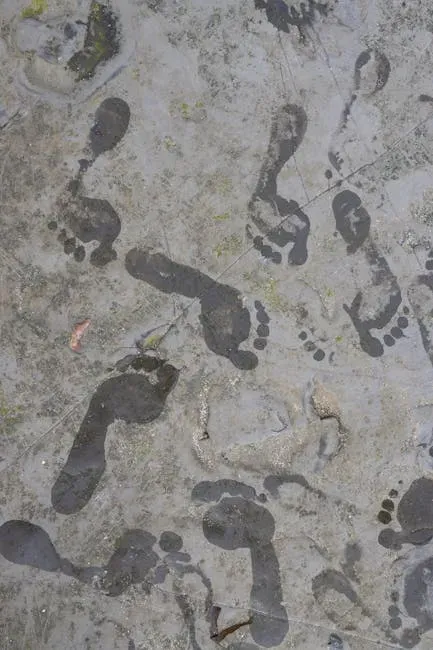
Recent archaeological discoveries have the potential to significantly alter our understanding of when early humans first reached America. A geologist from the Smithsonian Institution unearthed artifacts suggesting that humans inhabited North America 7,000 years earlier than previously believed. That alone is staggering. British and American archaeologists also discovered footprints in White Sands National Park, dating back to between 21,000 and 23,000 years ago. These prints, preserved in soft mud, were dated using radiocarbon dating of seed layers above and below the tracks. Footprints. Real, physical footprints of people walking in New Mexico over 20,000 years ago.
The Chiquihuite Cave in Mexico is a possible Upper Paleolithic archaeological site in the Astillero Mountains, Zacatecas State, in North-Central Mexico, and may be evidence of early human presence in the Western Hemisphere up to 33,000 years ago. Let that number settle for a moment. Thirty-three thousand years. At a time when the Clovis model said humans were still thousands of years away from even crossing Beringia.
Ancient DNA Is Now Rewriting the Migration Map at the Molecular Level

Perhaps no tool has shaken up the study of early human migration more than ancient DNA. Where archaeologists once had only bones and tools, geneticists can now read the actual genetic code of people who lived tens of thousands of years ago. Ancient DNA has emerged as a powerful tool for studying human migration through the detection of admixture signatures. It’s like reading a letter written by your ancestor, in a language that turns out to be surprisingly readable.
An analysis of ancient Eurasian genomic datasets reveals signatures of strong selection, including at least 57 hard sweeps after the initial human movement out of Africa. Scientists identified a previously unsuspected extended period of genetic adaptation lasting around 30,000 years, potentially in the Arabian Peninsula area, prior to a major Neanderthal genetic introgression and subsequent rapid dispersal across Eurasia as far as Australia. Think of this as a kind of genetic pause button, a long waiting period during which early humans were quietly adapting their bodies to survive in entirely new environments.
A model including a new ancient genome suggests that African ancestors of modern people diverged from Neanderthal-Denisovan ancestors between 825,000 and 694,000 years ago, maybe 50,000 to 100,000 years earlier than the previous estimate. Each new genome that gets sequenced nudges the dates further and further back. It’s hard to say for sure where the final timeline will land, but the direction of travel is unmistakable. Our story is older, longer, and more complicated than we ever imagined. The DNA evidence collected in recent years certainly suggests a more complicated picture, and the debate has not yet been settled. The tools of both archaeology and molecular genetics continue to reveal new insights into the puzzle of human evolution and the rise of Homo sapiens.
Conclusion: The Story of Human Migration Is Still Being Written
The more scientists dig, sequence, and date, the more they realize just how astonishingly restless our ancient ancestors were. These were not helpless, stumbling creatures pushed around by the planet. They were adaptable, curious, and apparently very motivated travelers who crossed seas, deserts, and mountain ranges far earlier than we once gave them credit for.
What’s most exciting, honestly, is that we are nowhere near the end of these discoveries. Every new excavation site, every ancient genome, every dated artifact is another sentence in a story that’s still being written. The maps are being redrawn, the timelines are being stretched, and the humans at the center of it all keep surprising us with how capable they truly were.
So the next time someone tells you they know exactly when the first humans arrived somewhere, smile politely and remember: somewhere out there, buried under sand or ice or ocean sediment, there is probably evidence that says it happened much, much earlier. What do you think about it? Tell us in the comments.