
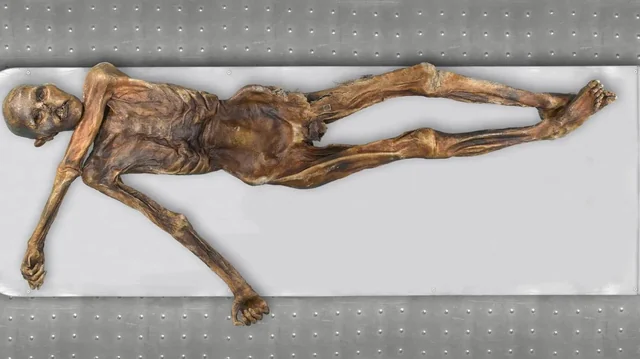
Imagine hiking through the Alps and stumbling not on a rock or a patch of ice, but on a human being who died more than five thousand years ago and is still staring back at you. That is essentially what happened in 1991 when a frozen, mummified body emerged from the ice on the border between modern-day Italy and Austria. Overnight, this anonymous figure was transformed into Ötzi the Iceman, one of the most famous and most puzzling crime victims in human history. His death was violent, his body was surprisingly well preserved, and the clues found on and inside him read like a Stone Age detective novel.
Three decades later, scientists have scanned him, dissected tiny pieces of tissue, analyzed his last meal, reconstructed his face, and even mapped his genome. Yet the big question refuses to sit still: who killed Ötzi, and why? Every new study adds another layer instead of a final answer, turning his story into a kind of prehistoric whodunnit that keeps being rewritten. The deeper researchers dig, the more human he becomes: a middle-aged man with health problems, bad luck, enemies perhaps, and a very bad day in the mountains that ended with an arrow in his back.
The Chance Discovery That Changed Prehistory
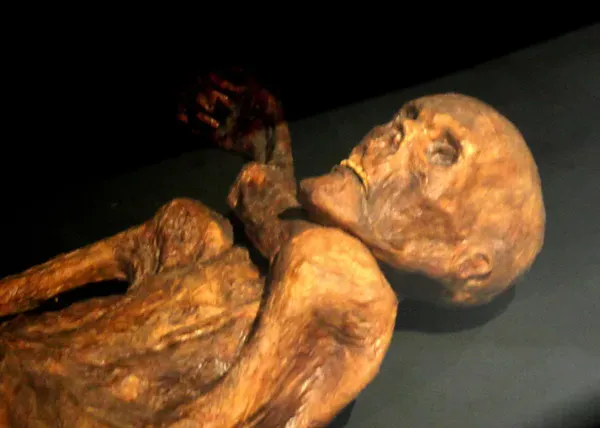
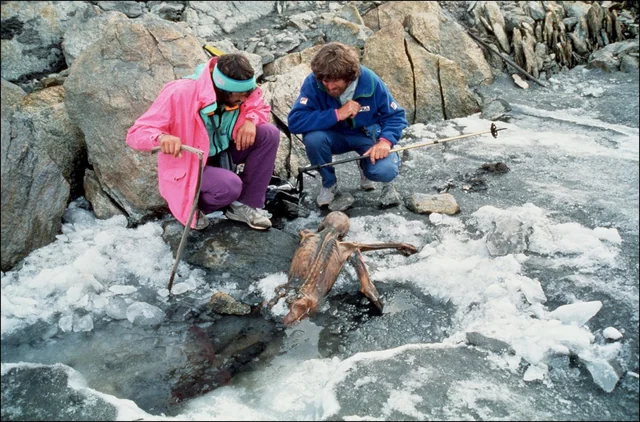
On a late summer day in 1991, two German hikers spotted what they first thought was trash or a modern mountaineer’s corpse emerging from the shrinking ice high in the Ötztal Alps. Only later did anyone realize that the body, trapped in a small gully and partly encased in ice, was older than the Roman Empire, older than the pyramids of Giza, and even older than written language in much of Europe. The location was brutal: more than three thousand meters up, in a rocky, wind-scoured pass where snow and ice normally erase traces of human life in hours. For once, though, the ice had acted like a time capsule instead of a destroyer.
Rescue workers originally treated the find like a recent accident, using metal tools that sadly damaged some of the body and gear before the true age was understood. When radiocarbon dating came back, though, scientists realized they were dealing with a man who had died roughly about five thousand three hundred years ago during the Copper Age. In a single stroke, prehistory went from a puzzle built on broken pots and scattered bones to an almost eerily intact snapshot of one person’s final hours. This was not just a skeleton; it was a frozen human body with skin, organs, clothing, tools, and even the contents of his stomach still present, waiting to be read like a forensic report.
What Ötzi’s Body Reveals About His Life
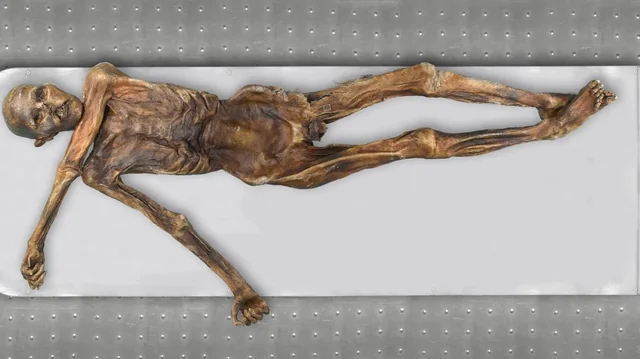
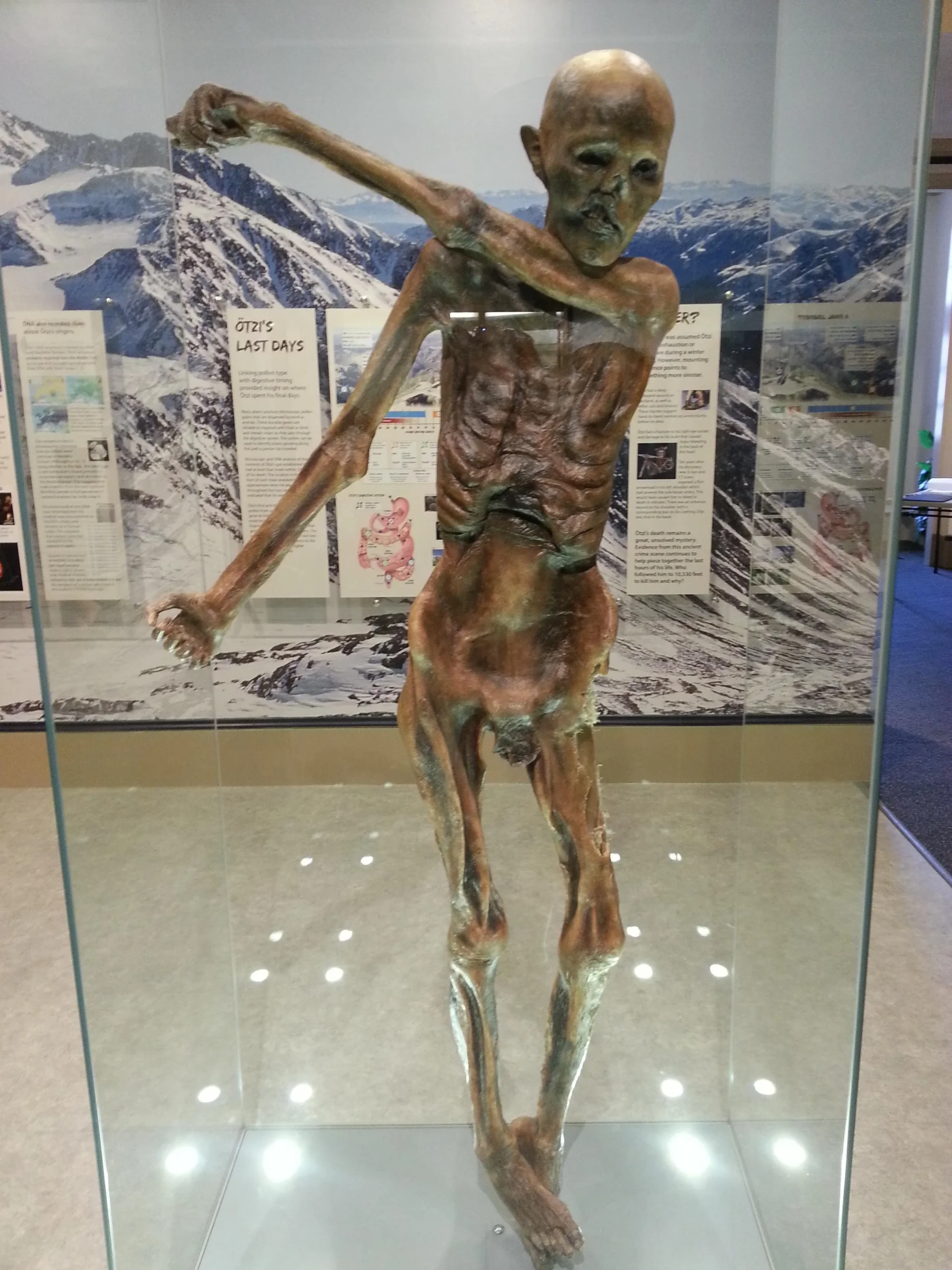
Ötzi was not some mythical warrior king or superhuman hunter; he was surprisingly ordinary, and that is part of what makes him so compelling. Analysis of his skeleton and tissues shows that he was a man in his mid-forties, relatively short by modern standards, and not in peak condition. He suffered from worn joints, especially in his knees and lower back, the kind of damage you would expect from someone who walked long distances over harsh terrain. Evidence of hardened arteries suggests he carried a genetic risk for heart disease that many people today would recognize on their own medical charts.
Scientists have detected traces of lung damage consistent with frequent exposure to smoke, likely from fires in enclosed spaces, and microscopic particles in his teeth hint at a diet that often included coarse, gritty bread made from stone-ground grains. Isotope analysis of his teeth and bones suggests he grew up and lived in the region south of the Alps where he died, moving through alpine valleys rather than traveling across distant lands. In short, he was a local, a man of his landscape, whose day-to-day life probably involved farming, herding, hunting, and navigating complex social ties that we can only guess at. For all the technological shine around his study, his life story feels oddly familiar: chronic pain, genetic health risks, a demanding job, and, as we now know, serious trouble at the end.
The High-Tech Gear of a Copper Age Traveler
One of the most surprising parts of the discovery was how much Ötzi carried with him into his death. This was not some unarmed wanderer; he was effectively walking through the mountains with a toolkit and wardrobe that reflected the best available technology of his time. He wore carefully stitched garments made from different animal hides, layered for insulation and protection, along with shoes stuffed with grass for warmth and grip. Even his cloak and leggings were engineered for survival in unpredictable alpine weather, revealing expertise in clothing design that people rarely imagine when they think about prehistoric Europe.
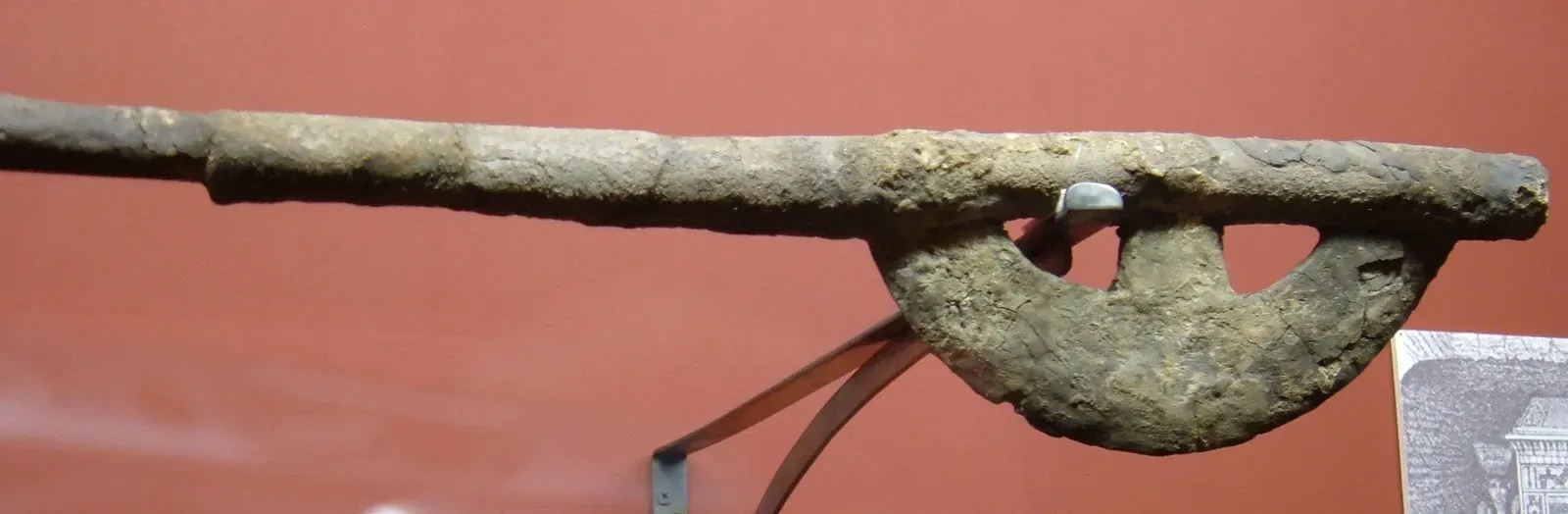
Then there were his weapons and tools, which read like a prehistoric survival kit. He had a copper axe with a high-quality metal blade fixed to a wooden handle, a sign that he had access to valuable resources and possibly status in his community. Alongside the axe were a longbow in the making, arrows (some finished, some not), a flint dagger, and a range of smaller tools for cutting, scraping, and repairing. He also carried birch bark containers, one of which likely held embers or charcoal to transport fire, and pieces of medicinal fungi that may have served as antibiotics or an anti-parasitic remedy. When you look at the collection as a whole, you do not see a desperate victim; you see a prepared, competent traveler whose death was not due to simple lack of skill or equipment.
The Arrow in the Back: Evidence of a Violent End
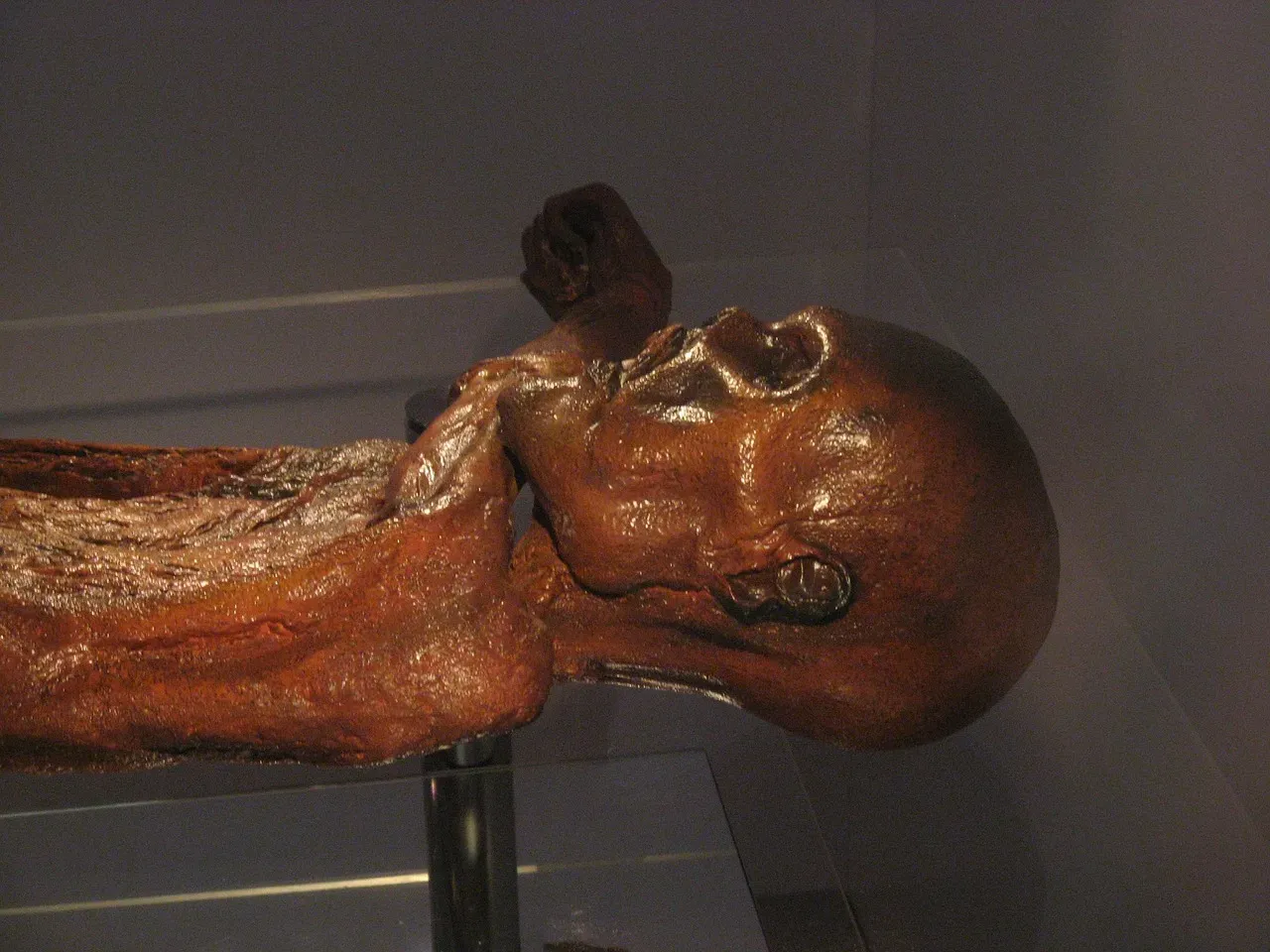
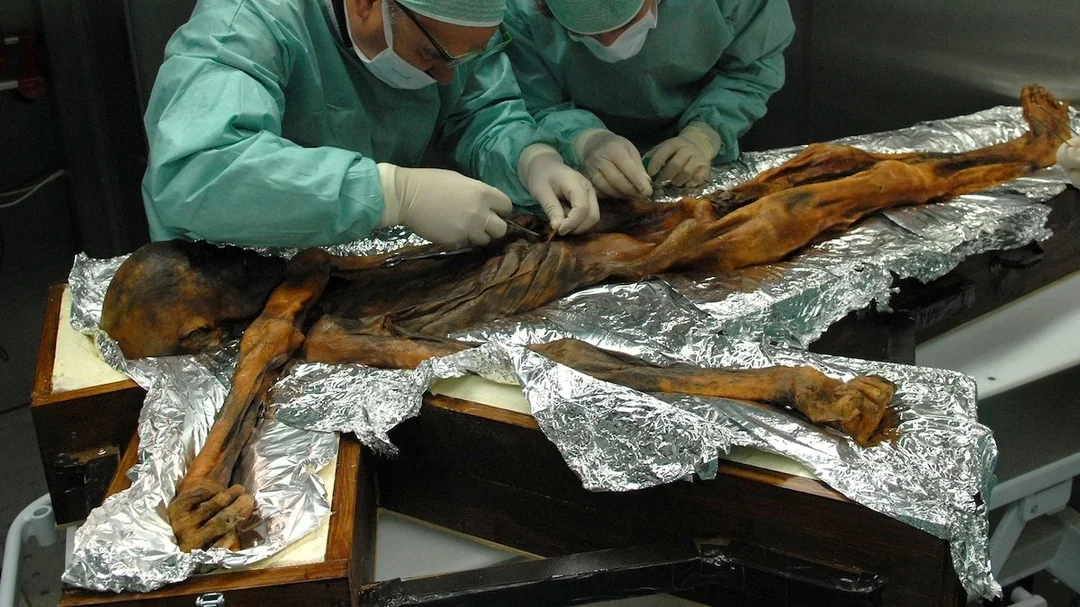
For a while after Ötzi was found, people spun almost romantic stories that he might have died in a sudden snowstorm or simply fallen asleep and never woken up. Detailed scans shattered that gentle image. Imaging of his body revealed a stone arrowhead lodged in his left shoulder, having entered from behind and severed a major artery. That kind of wound would have caused rapid internal bleeding, likely leading to death within minutes. This was not an accident of nature; it was an attack by another person, delivered from a distance, when he probably had little chance to react.
Further analysis shows bruises, cuts, and defensive-type injuries that suggest some kind of struggle shortly before his death. There is also blood from at least one other individual on his gear, hinting that he was not alone in whatever conflict unfolded. Some researchers have argued that the arrow was removed hastily after impact, perhaps by the attacker or by someone trying to help, based on damage around the entry site and the missing shaft. The position of his body, apparently arranged with some care rather than just sprawled at random, has led to speculation that someone may have turned him or placed him in a more dignified posture after he died. Put together, the physical evidence paints a picture that is deeply uncomfortable: Ötzi did not simply collapse; he appears to have been hunted, shot, and left to die high in the mountains.
Theories, Suspects, and Social Tensions in a Vanished World
Once scientists accepted that Ötzi was murdered, the next question became inevitable: why? The honest answer is that we do not know, and we probably never will, but that has not stopped researchers from building careful, evidence-based scenarios. One popular theory suggests that he had been involved in a fight or conflict in a village or valley below and fled into the mountains, perhaps wounded already, hoping to escape. The presence of other people’s blood on his gear and possible recent injuries supports the idea that he might have been part of a confrontation that did not go his way. In that reading, the arrow in his back becomes the final act in a chase, fired by someone determined not to let him get away.
Another line of thinking focuses on status, property, and social tension in Copper Age communities. A copper axe was not an everyday object; it could signify wealth, craftsmanship, or leadership. Some researchers have wondered whether envy, a dispute over resources, or a power struggle might have turned lethal. Yet there is a twist that complicates the crime story: the murderer did not take the axe or much of his other valuable gear. That either points to a hurried kill under pressing circumstances or to motives that were more personal than practical. Was it revenge, an honor dispute, a betrayal within a small group? Here the science reaches its limits, and we are left filling the gaps with informed imagination, which is both fascinating and slightly frustrating.
DNA, Diet, and the Last Meal Before Death
One of the eeriest details about Ötzi is that scientists have reconstructed not only who he was over a lifetime, but also what he ate in the hours before he died. Microscopic examination of his stomach contents revealed a heavy, calorie-dense meal of meat and grains, including wild game like ibex along with processed cereal products. Fatty tissue in the mix suggests he was deliberately stocking up on slow-burning calories, the kind of thing you would do before or during a demanding journey through harsh terrain. This was not the diet of someone casually strolling around; it was a strategic choice that fits the image of a man on the move, possibly under pressure.
DNA analysis has added even more layers to the picture. Researchers have identified genetic markers linked to lactose intolerance, a higher risk of cardiovascular disease, and certain eye and skin traits that help build a realistic portrait of his appearance and health. They have also traced connections between his genetic profile and modern populations in parts of southern Europe, underlining how much continuity there can be across vast stretches of time. Interestingly, studies of bacteria preserved in his gut provide clues about ancient microbiomes and infections, showing that he carried pathogens and stomach bacteria that have evolved but not completely vanished. It is a strange feeling to realize that some of the microscopic life forms inside him are distant cousins of microbes living in people today, as if tiny witnesses of his final journey are still echoing through modern bodies.
Why Ötzi’s Murder Still Matters Today
So what do we do with a five-thousand-year-old unsolved murder, beyond the initial thrill of the mystery? To me, the most powerful part of Ötzi’s story is how it collapses the distance between us and the deep past. He was not a symbol or a myth; he was a person with arthritis, bad arteries, and probably days when he woke up in a bad mood. He worried about staying warm, staying fed, staying alive, and navigating relationships that could tip from cooperation to conflict. When we study his wounds and his belongings, we are not just collecting data; we are brushing up against the messy reality of human life that has always included love, fear, competition, and sometimes lethal violence.
At the same time, I think there is a quiet warning in how obsessed we are with solving his murder like a tidy TV crime story. Real life, especially in the distant past, rarely gives us a neat confession or a final reveal of the killer. We have to sit with uncertainty and keep updating our ideas as new evidence appears, even when it disrupts satisfying theories. That humility feels important in an age when people want fast answers and clear villains in every story, from history to politics. Maybe the most honest conclusion is that we will never fully know who killed Ötzi or why – and that is okay. The value lies in the relentless, careful effort to understand him as a whole person, not just as a crime scene. In the end, his frozen body forces us to ask a quietly uncomfortable question: if someone dug up our lives five thousand years from now, would they really understand us any better than we understand him?