There is something quietly magnificent about the idea that a herd of enormous creatures walked across warm, muddy ground roughly 210 million years ago, and today those very footsteps are still here, frozen in stone, waiting to be found. You’d think that after centuries of fossil hunting, paleontologists would have turned over every ancient rock worth turning. Honestly, you’d be wrong.
From the frozen heights of the Italian Alps to the limestone quarries of England, recent discoveries are reshaping everything scientists thought they knew about the age, range, and behavior of some of the earliest dinosaurs to ever walk the Earth. The sheer scale and timing of these findings are nothing short of breathtaking. Let’s dive in.
A Wildlife Photographer Stumbles Into History
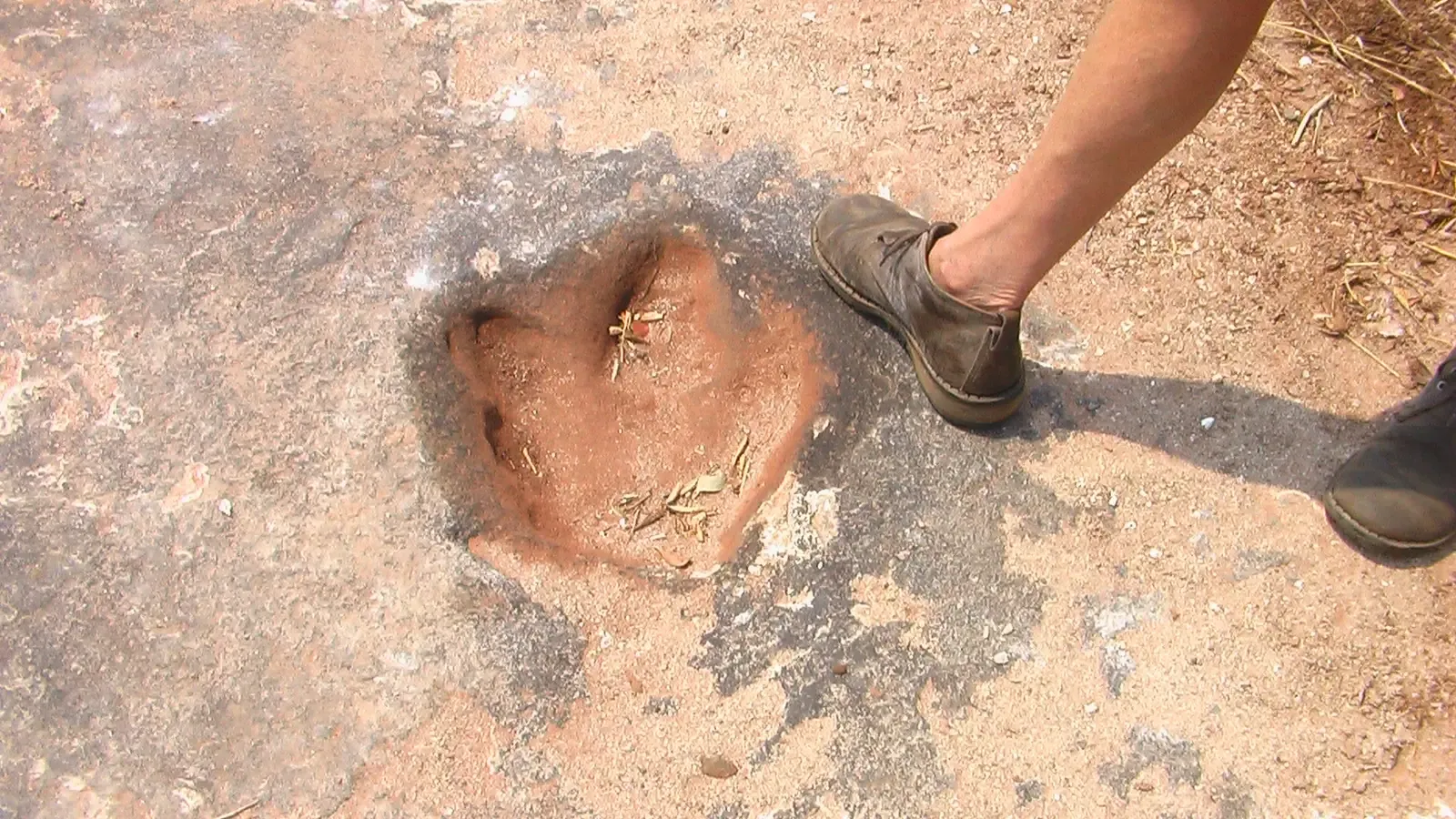
Sometimes the greatest scientific discoveries don’t come from laboratories or planned expeditions. They come from someone following deer through a national park with a camera. In September 2025, nature photographer Elio Della Ferrera was exploring the remote Fraele Valley inside Stelvio National Park in northern Italy when something stopped him cold. He was looking for deer and vultures near the Swiss-Italian border when he noticed a rock face riddled with unusual depressions through his binoculars.
After hiking cross-country for half a mile through thick terrain, Della Ferrera arrived at the site and photographed it, sending the images to Cristiano Dal Sasso, a paleontologist at the Natural History Museum of Milan. What followed would quickly become one of the most talked-about paleontological revelations in recent memory. Della Ferrera himself said: “The huge surprise was not so much in discovering the footprints, but in discovering such a huge quantity. There are really tens of thousands of prints up there, more or less well-preserved.”
The Staggering Scale of the Italian Alps Discovery
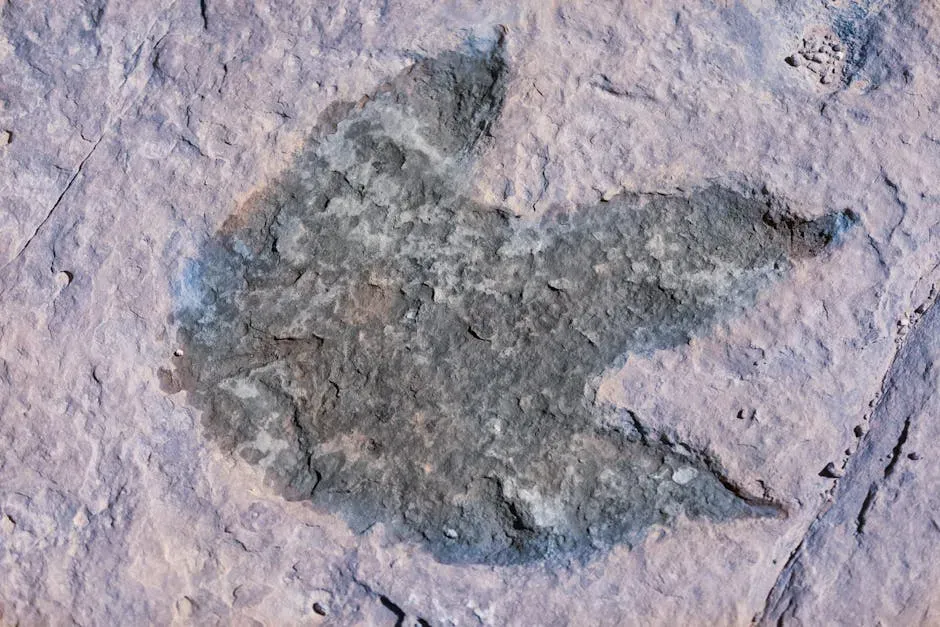
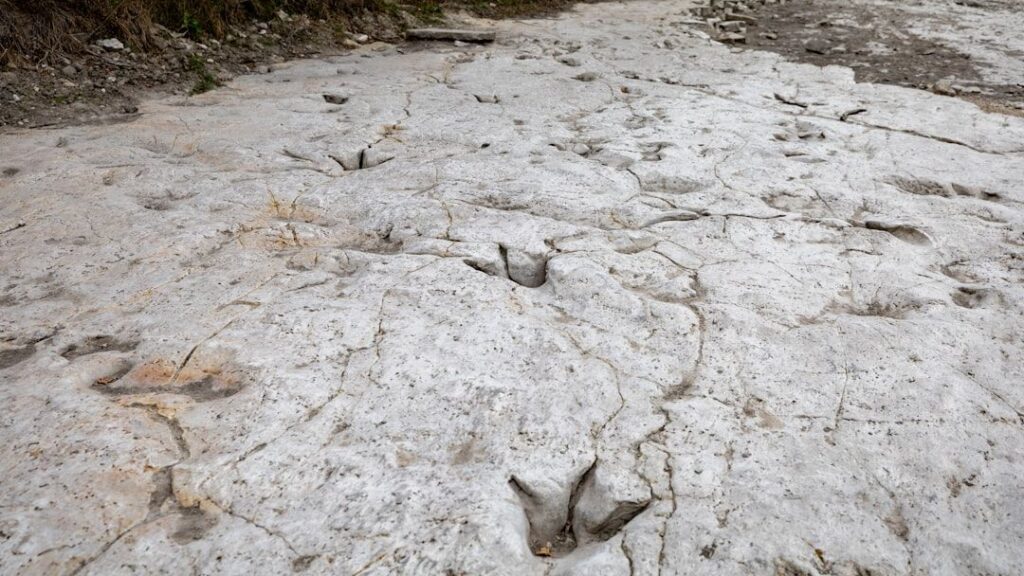
Here’s the thing: when scientists say “thousands of footprints,” you might picture a manageable stretch of rock. This was something else entirely. The discovery in Stelvio National Park was striking for the sheer number of footprints, estimated at as many as 20,000 over some five kilometers, dating back about 210 million years to the Triassic Period. The location near the Swiss border, once a prehistoric coastal area, had never previously yielded dinosaur tracks.
In Val di Fraele, between Livigno and Bormio, within the Stelvio National Park, thousands of dinosaur footprints dating back some 210 million years have been identified, making this one of the largest and richest deposits of Triassic trace fossils known so far worldwide, as well as the first such find ever documented in Lombardy. Think about that for a moment: an entire region of Italy, thousands of meters above sea level, and no one had ever found a single dinosaur print there before. Scientists call it a milestone. I think “jaw-dropping” barely covers it.
Who Made These Tracks? Meet the Prosauropods
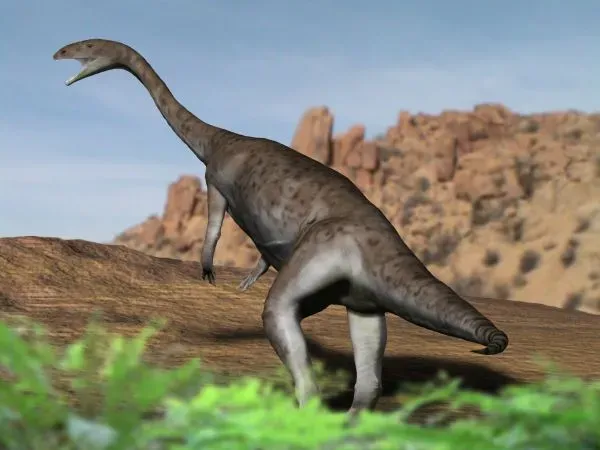
The dinosaurs responsible for these ancient impressions were not the fearsome T. rex types you might be picturing. Initial studies have confirmed that most of the tracks are attributable to herbivorous prosauropod dinosaurs, characterized by long necks and small heads, which could reach up to 10 meters in length and weigh 4 tons. They date back to the Late Triassic and are considered ancestors of the great herbivores of the Jurassic period.
These animals are thought to be ancestors of huge Jurassic sauropods like the Brontosaurus, sharing that group’s small head and long neck, and could have been up to 33 feet long. They weren’t alone, though. Not all of the prints belonged to sedate leaf-eaters. Some appeared to have been left by predator dinosaurs, and archosaurs, the ancient predecessors of modern-day crocodiles, may have made some of the other prints. It’s a prehistoric traffic jam, essentially.
A Tropical Lagoon Becomes a Vertical Alpine Cliff
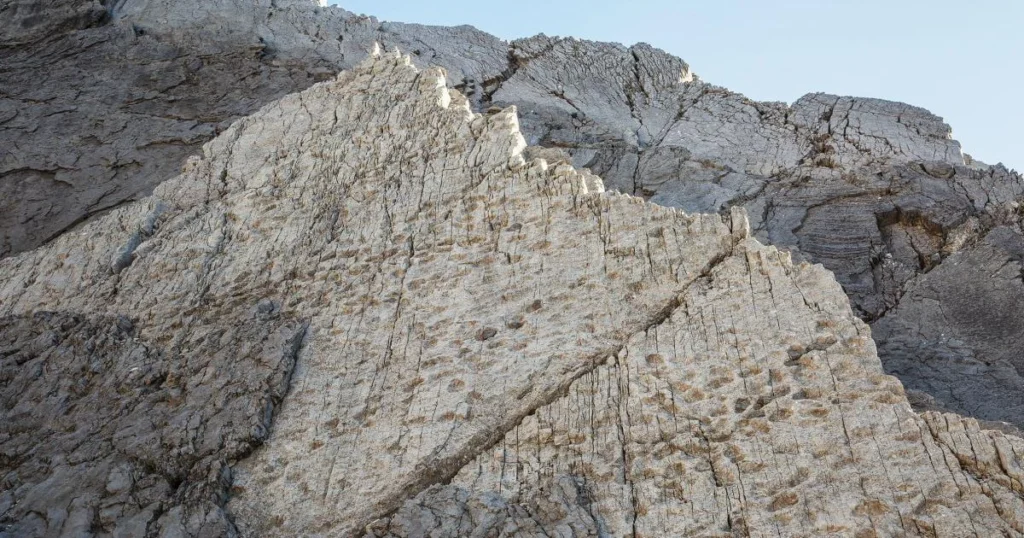
One of the most mind-bending parts of this story is where these footprints ended up. You’d expect dinosaur tracks to be found lying flat, the way they were originally made. The prints were discovered on a near-vertical rock face 2,000 metres above sea level, which was once the floor of a warm lagoon, ideal for dinosaurs to roam along beaches. The thought of ancient creatures padding along tropical mud, now frozen vertically into a mountain cliff, is the kind of thing that makes your brain do a double take.
During the Triassic period, what is now a vertical wall of rock would have been a warm lagoon or tidal plain that the dinosaurs could cross. Their prints in the soft sediment have since turned into rock and now lie more than 2,000 meters above sea level. This shift will have occurred during the formation of the Alps as the African tectonic plate moved north, colliding with the Eurasian plate. It’s hard to say for sure, but this might be one of the most dramatic geological transformations ever captured by a fossil site.
The Behavior Clues Hidden in the Mud
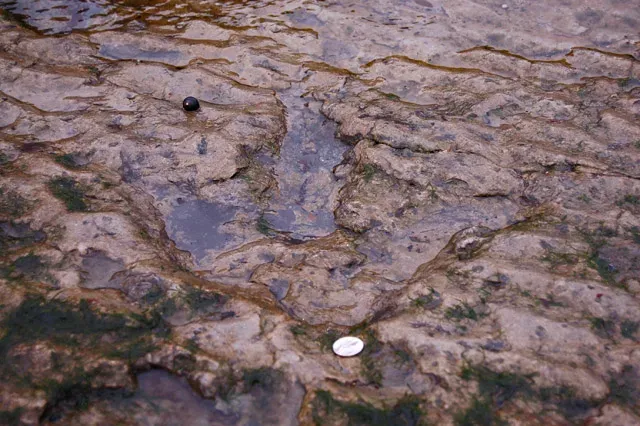
Footprints don’t just tell you who walked somewhere. They can reveal how these animals lived, moved, and interacted. Scientists believe the tracks belong to herds of large bipedal herbivores, and the number of footprints and their alignment across the rock give clear evidence of herds moving in synchronized groups, with traces of more complex behaviors, such as groups of animals gathered in a circle, possibly for defense. That kind of social organization from an animal that lived over 200 million years ago is genuinely surprising.
The range of footprint sizes suggests groups composed of individuals of different ages, providing rare behavioral insights into dinosaur social structure during the Triassic. Occasionally, smaller impressions appear alongside the larger tracks, possibly representing forelimb support when animals paused or changed direction. Think of it like a family photo album, except instead of photographs, you have stone impressions that survived nearly a quarter of a billion years of geological upheaval. They are so well preserved that, in some cases, they show clear traces of toes and claws.
England’s “Dinosaur Highway” Adds Another Piece to the Puzzle
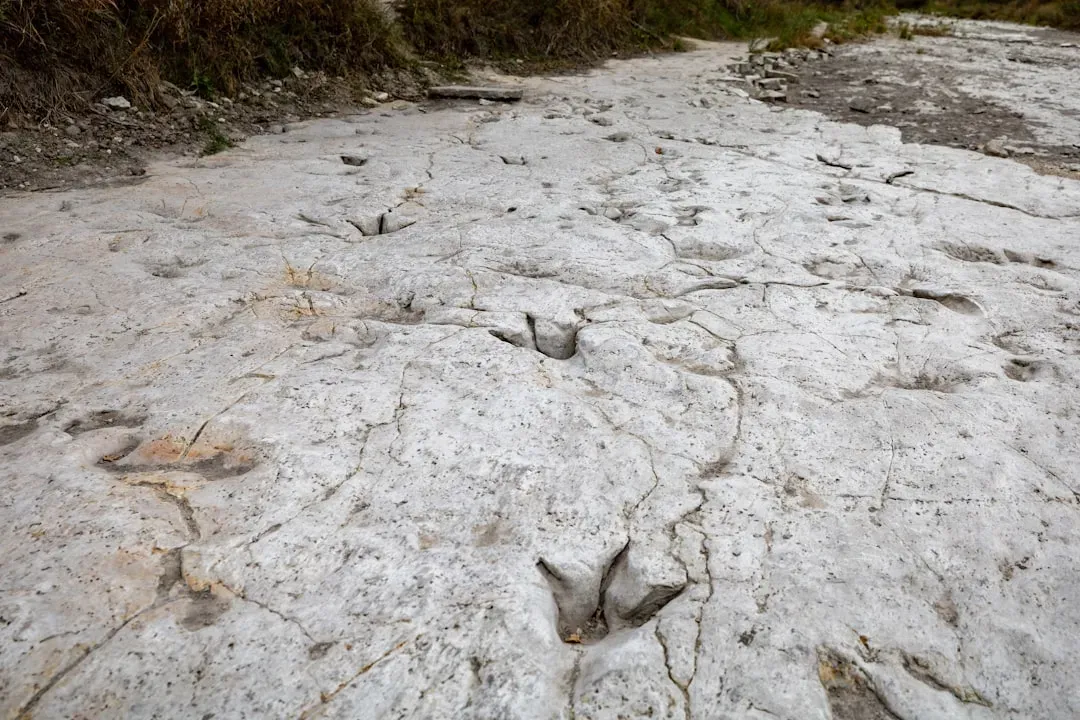
The Italian Alps were not the only major footprint story of recent years. On the opposite end of the age spectrum, England delivered its own stunning chapter. Scientists unearthed nearly 200 dinosaur footprints, dating back 166 million years to the Middle Jurassic Period, at Dewars Farm Quarry in Oxfordshire, England. The find came about in a very unexpected way. The remarkable discovery, first spied in 2023 when quarry worker Gary Johnson sensed “unusual bumps” on the ground while extracting limestone for road construction, has been nicknamed the “dinosaur highway” as a nod to the extensive pathways left by these prehistoric creatures.
The footprints form five extensive trackways, with the longest stretching for more than 150 metres. Four of the trackways were made by a species of gigantic, long-necked, herbivorous sauropod. The fifth trackway belonged to something far more dramatic. That fifth trackway was made by Megalosaurus, a ferocious carnivore that would have been around six to nine metres long – an agile hunter that walked on two legs and was the largest known predatory dinosaur in Jurassic Britain. Let’s be real: a carnivore that size crossing the same ground as a herd of sauropods raises some very interesting questions about what was happening that day.
What Footprints Reveal That Bones Simply Cannot
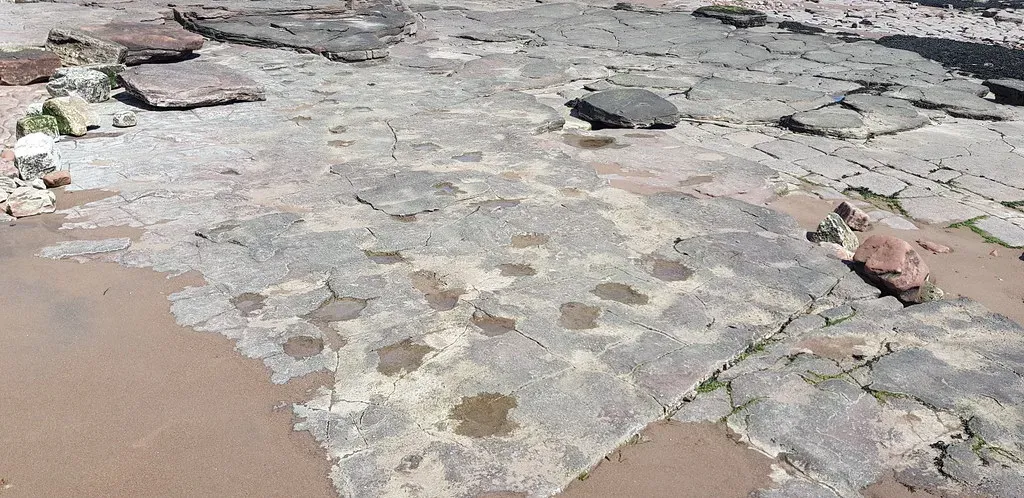
Dinosaur bones get all the glory. Museums display skeletons, movies animate them, and children can name them by the time they’re six years old. Yet honestly, footprints may actually be the more valuable scientific tool. While Jurassic bone discoveries often draw significant attention, dinosaur tracks provide more specific insights into the lives of these extinct animals. Unlike bones, which can be transported to different areas by wind, water, or scavengers, footprints remain in the exact locations where they were made. Tracks not only indicate the size of the dinosaurs but also provide clues about their behavior, such as group dynamics and predator-prey interactions.
The latest England discovery, made public on January 2, 2025, is being extensively documented with modern technology. Scientists have captured over 20,000 high-resolution images and developed detailed 3D models to enable further research. As for the Italian Alps site, the area of the tracks is not accessible by trails, meaning researchers will rely on drones and remote sensing technologies to study them. Science is catching up to these ancient mysteries in astonishing ways, and the next few years of analysis promise to be extraordinary.
Conclusion: The Past Is Still Being Written
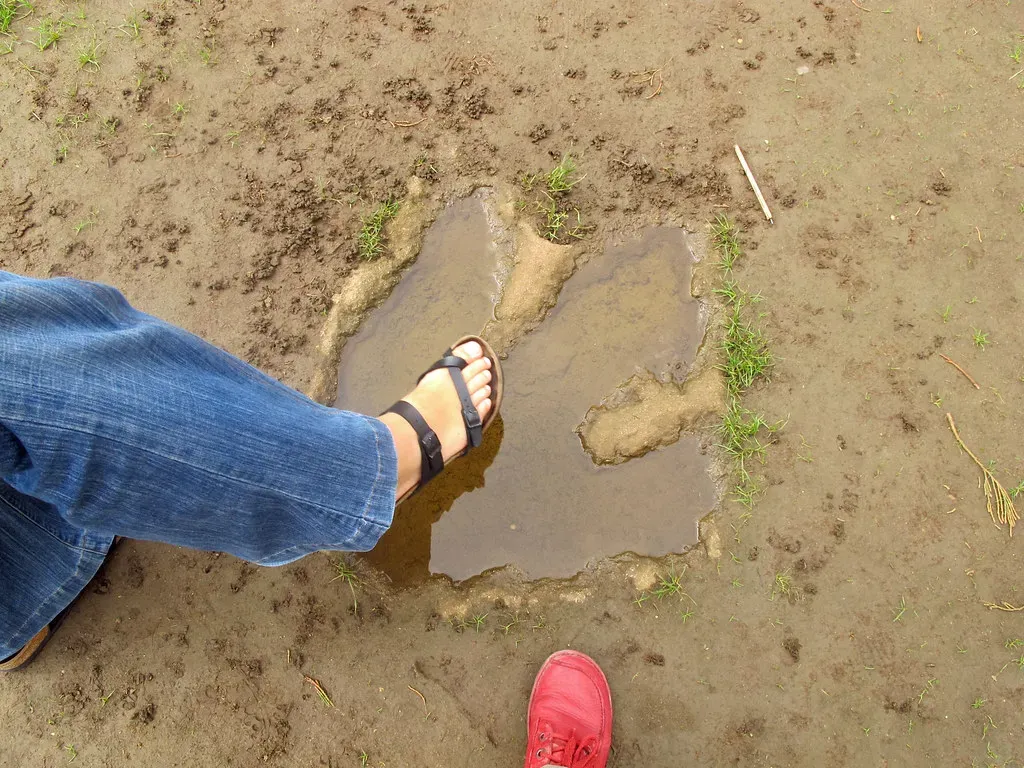
What these discoveries remind you of, more than anything, is how much of Earth’s story is still waiting underground, in mountain walls, beneath quarry floors, and inside national parks no one has properly surveyed yet. A wildlife photographer following deer. A quarry worker feeling “unusual bumps.” These are the people rewriting prehistoric history right now, in 2026, not just trained scientists in organized digs.
The Italian Alps site remained completely unknown until recently, and its discovery is already being described by experts as a scientific milestone destined to reshape European paleontology and occupy researchers for decades to come. Every new tracksite discovered pulls back the curtain a little further on creatures we think we know well, and humbles us with just how much remains unknown.
are out there, stamped into rock, telling a story 210 million years in the making. The question that keeps lingering is a simple one: how many more are still waiting to be found? What do you think? Drop your thoughts in the comments below.