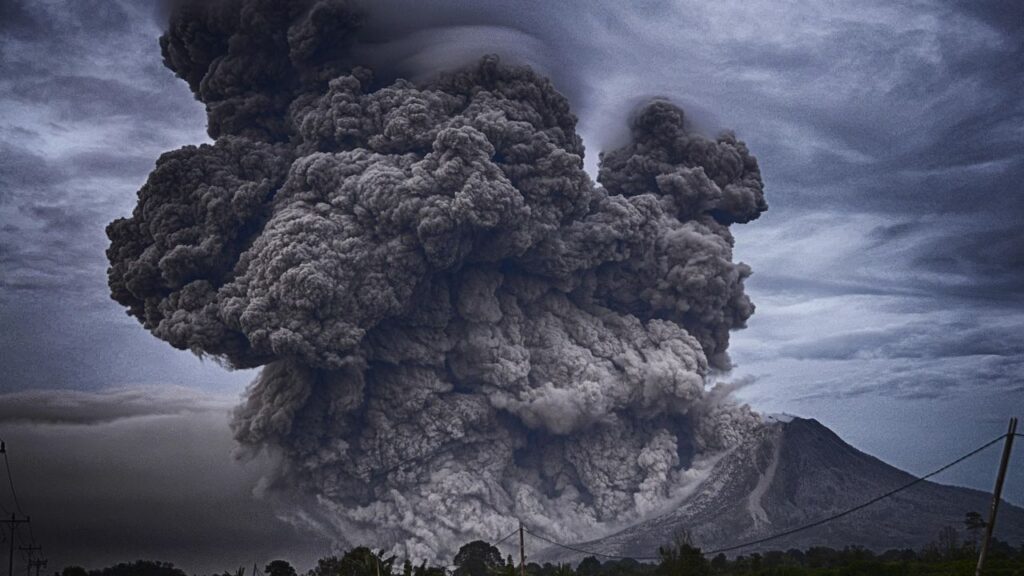
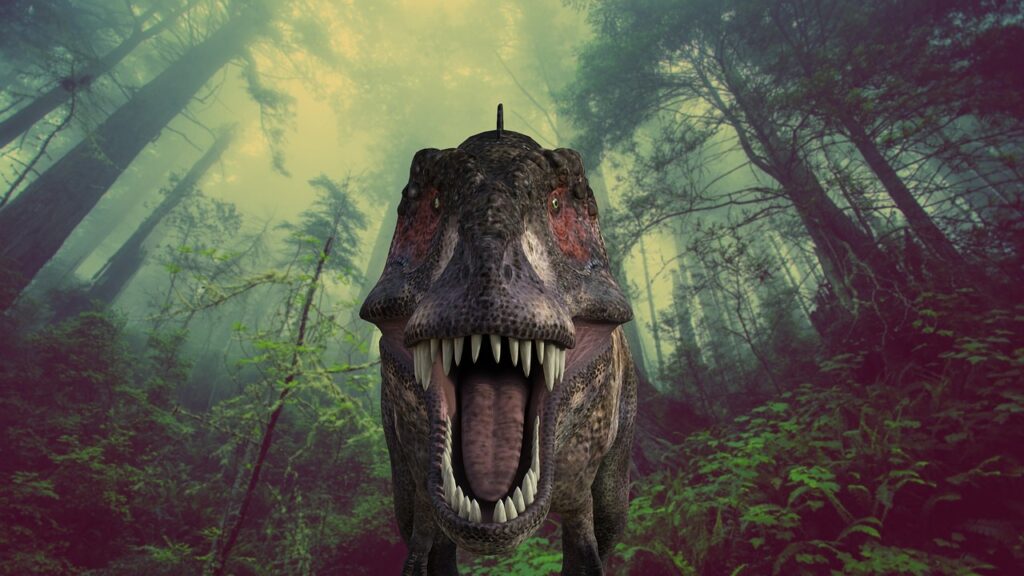
Picture this: you’re walking through a peaceful forest when suddenly, a massive reptilian beast crashes through the trees, its eyes locked on you with predatory intent. This isn’t some Hollywood fantasy – it’s the central premise of the BBC series Primeval, where temporal anomalies rip holes in time itself, allowing prehistoric creatures to spill into our modern world. While the show captivated audiences with its thrilling monster-of-the-week format, it also posed fascinating questions about time, evolution, and what might happen if the barriers between past and present suddenly disappeared.
The Time Anomaly Phenomenon

At the heart of Primeval lies the concept of temporal anomalies – mysterious rifts that connect different time periods like cosmic subway tunnels. These shimmering portals don’t discriminate, pulling creatures from the Permian period into shopping malls or sending modern humans tumbling into primordial swamps. The show’s anomalies appear randomly, defying prediction and control, much like how real geological phenomena can surprise scientists with their sudden emergence. While we can’t create actual time portals, the idea taps into our deep fascination with accessing the unreachable past. The visual representation of these anomalies as crystalline, mirror-like structures adds an almost mystical quality to what is essentially a scientific concept pushed to its absolute limits.
Evolutionary Biology Through Deep Time

Primeval’s greatest strength lies in its showcase of evolution’s incredible diversity across millions of years. The series doesn’t just feature dinosaurs – it spans from the Cambrian explosion to the far future, highlighting how life has constantly reinvented itself in spectacular ways. Each time period brings its own evolutionary innovations, from the bizarre arthropods of the Paleozoic to the massive marine reptiles of the Mesozoic. The show demonstrates how environmental pressures shaped these creatures, turning some into apex predators while driving others toward bizarre specializations. This temporal sampling gives viewers a crash course in evolutionary biology, showing how random genetic mutations and natural selection created the incredible menagerie of life forms that once dominated our planet. It’s like having a living museum where every exhibit can potentially eat you.
Predator-Prey Dynamics Across Millennia

When ancient predators suddenly appear in modern settings, Primeval explores fascinating questions about ecological relationships and survival strategies. A creature that dominated its environment 200 million years ago might find itself completely out of its depth in contemporary London, lacking familiar prey species and facing entirely new threats. The show cleverly illustrates how predator-prey relationships evolved together, creating intricate balances that took millions of years to develop. Modern humans, despite our technological advantages, often find themselves woefully unprepared for encounters with creatures that evolved entirely different hunting strategies. These scenarios highlight how every ecosystem is a delicate web of relationships, where removing or adding even one species can cause cascading effects throughout the entire system.
Paleontological Accuracy vs. Dramatic License

While Primeval takes considerable liberties with scientific accuracy for the sake of entertainment, it still manages to introduce viewers to legitimate paleontological concepts. The show’s creature designs often reflect genuine fossil evidence, even when their behaviors are exaggerated for dramatic effect. Real paleontologists work like detectives, piecing together fragmentary evidence to reconstruct ancient ecosystems and animal behaviors. The series captures this sense of discovery, even if it accelerates the process from years of careful research to split-second life-or-death decisions. Some creatures in the show are based on actual fossil discoveries, while others represent educated speculation about how certain evolutionary lineages might have developed. This blend of fact and fiction creates an engaging entry point for viewers to explore real paleontology.
Temporal Paradoxes and Causality Loops

The show grapples with the mind-bending implications of time travel, particularly the famous grandfather paradox and its variations. If a modern human travels back in time and accidentally prevents a crucial evolutionary event, would they erase their own existence? Primeval explores these concepts through characters who sometimes find themselves trapped in temporal loops or facing the consequences of their actions across different time periods. The series suggests that time might be more resilient than we think, with events having a tendency to correct themselves even when disrupted. This touches on real theoretical physics discussions about the nature of time and causality, even though our current understanding of these concepts remains largely speculative. The show’s approach to temporal mechanics reflects ongoing debates among physicists about whether time travel could ever be possible and what rules might govern such phenomena.
Extinction Events and Mass Die-Offs

Throughout its run, Primeval showcases creatures from various extinction events, bringing these pivotal moments in Earth’s history into sharp focus. The series highlights how sudden environmental changes could wipe out entire ecosystems, leaving only scattered survivors to evolve in new directions. Mass extinction events like the one that ended the age of dinosaurs reshaped life on Earth, creating opportunities for new groups to flourish while condemning others to oblivion. The show’s creatures often represent the final members of their lineages, living fossils that somehow survived long past their supposed extinction dates. This concept resonates with real paleontological discoveries of “Lazarus taxa” – species thought extinct that suddenly reappear in the fossil record. These scenarios remind us how fragile life can be, even for seemingly dominant species.
Convergent Evolution and Parallel Development

One of the most scientifically intriguing aspects of Primeval is how it showcases convergent evolution – the process by which unrelated species develop similar traits in response to comparable environmental pressures. The show features creatures from different time periods that evolved similar solutions to survival challenges, like echolocation or powered flight. This phenomenon demonstrates that evolution isn’t random but follows certain patterns dictated by physics and environmental constraints. A predator from the Permian might develop hunting strategies remarkably similar to those of a Cretaceous carnivore, despite evolving completely independently. The series uses these examples to illustrate how life tends to find similar solutions to similar problems, regardless of when or where those challenges arise. This concept helps explain why certain body plans and behaviors appear repeatedly throughout the fossil record.
Atmospheric and Environmental Differences

Primeval occasionally touches on how different atmospheric conditions in ancient Earth would affect both the creatures and any time travelers encountering them. The Carboniferous period, for instance, had oxygen levels nearly twice as high as today, allowing for the evolution of massive arthropods like giant dragonflies and millipedes. These environmental differences would create immediate challenges for modern organisms transported backward in time, just as ancient creatures might struggle with our current atmospheric composition. The show hints at these scientific realities while focusing on the more dramatic aspects of temporal displacement. Changes in atmospheric pressure, gas composition, and even gravitational effects from different continental configurations would all impact how creatures from different eras might survive in unfamiliar time periods. These environmental factors add another layer of complexity to the already challenging concept of temporal travel.
Fossil Evidence and Scientific Reconstruction

The creatures featured in Primeval often reflect the ongoing evolution of paleontological understanding, with some designs updated between seasons to reflect new fossil discoveries. This mirrors how real paleontology constantly refines its interpretations as new evidence emerges from fossil sites around the world. The process of reconstructing ancient animals from fragmentary remains requires tremendous scientific creativity and educated speculation. The show’s creature design team worked with paleontological consultants to ensure that even their most speculative creations had some basis in scientific possibility. This collaboration between entertainment and science demonstrates how popular media can serve as a bridge between academic research and public understanding. The visual representations in Primeval have likely influenced how many viewers imagine prehistoric life, highlighting the responsibility that comes with scientific speculation in entertainment.
Behavioral Ecology of Ancient Creatures

Beyond physical reconstruction, Primeval attempts to portray how ancient creatures might have behaved based on their anatomical features and environmental contexts. Determining behavior from fossil evidence presents enormous challenges for real paleontologists, who must infer social structures, hunting strategies, and survival mechanisms from bones, teeth, and occasional trace fossils. The show takes creative license in depicting everything from pack hunting strategies to complex mating rituals, often drawing parallels with modern animals that occupy similar ecological niches. These behavioral interpretations, while speculative, help viewers understand that extinct creatures were once living animals with complex social lives and survival strategies. The series demonstrates how ecological roles and behaviors are often more conserved than physical forms, with similar lifestyles emerging repeatedly throughout evolutionary history. This approach helps bridge the gap between sterile museum displays and the vibrant, dynamic ecosystems these creatures once inhabited.
Technological Solutions to Paleontological Mysteries

The high-tech gadgets used by Primeval’s team reflect real advances in paleontological research methods, from ground-penetrating radar to sophisticated dating techniques. Modern paleontology increasingly relies on cutting-edge technology to unlock secrets hidden in ancient rocks and fossils. The show’s anomaly detectors might be pure fiction, but they represent the very real human desire to predict and control natural phenomena that currently lie beyond our understanding. Advanced imaging techniques, chemical analysis, and computer modeling have revolutionized how scientists study prehistoric life, allowing them to examine fossil specimens in ways that would have been impossible just decades ago. The series captures the excitement of scientific discovery while acknowledging that some mysteries might require entirely new approaches to solve. These technological elements help ground the show’s fantastic premise in recognizable scientific methodology.
Future Evolution and Speculative Biology

Primeval’s exploration of future creatures represents one of its most creative scientific endeavors, attempting to project evolutionary trends millions of years into the future. The show’s future predators and other organisms reflect potential evolutionary pathways based on current environmental pressures and biological constraints. This speculative biology challenges viewers to think about evolution as an ongoing process rather than something that happened only in the distant past. The future creatures often represent extreme adaptations to environmental changes, including potential responses to human-induced climate change and habitat destruction. These scenarios serve as cautionary tales about the long-term consequences of current environmental trends while showcasing evolution’s incredible adaptability. The design of future organisms requires understanding both evolutionary principles and ecological pressures, making it a fascinating exercise in applied biology.
Conservation Implications of Temporal Displacement

The show’s premise raises intriguing questions about conservation ethics and the value of extinct species, even when they’re transported through time rather than truly resurrected. If we could somehow access living representatives of extinct species, would we have obligations to protect them even if they posed dangers to modern ecosystems? Primeval’s characters often struggle with these dilemmas, torn between scientific curiosity and public safety concerns. The series highlights how every species, no matter how dangerous or alien, represents millions of years of evolutionary innovation that can never be replicated once lost. These scenarios parallel real-world conservation debates about de-extinction technologies and the ethics of bringing back species like woolly mammoths or passenger pigeons. The show suggests that every creature, regardless of its time period or apparent threat level, has intrinsic value as a product of evolution’s creative processes.
The Reality of Deep Time Visualization

Perhaps Primeval’s greatest contribution to public understanding of paleontology is its visceral demonstration of deep time – the almost incomprehensible spans of millions and billions of years that separate us from these ancient worlds. The show makes these vast temporal distances feel immediate and tangible by literally bringing the past into the present. This approach helps viewers grasp concepts that are notoriously difficult to visualize, like the fact that T. rex lived closer in time to us than to Stegosaurus. The series transforms abstract geological time scales into concrete, dramatic encounters that stick in viewers’ memories long after the credits roll. By compressing deep time into episodic adventures, Primeval makes the enormity of Earth’s history more accessible to general audiences. This temporal compression, while scientifically impossible, serves as a powerful educational tool for understanding how life has changed over vast periods of time.
The intersection of paleontology and speculative science fiction in Primeval creates a unique lens through which to examine our planet’s incredible biological heritage. While we may never develop actual time portals or encounter living dinosaurs in shopping centers, the show’s premise encourages us to think more deeply about evolution, extinction, and our place in the grand sweep of natural history. The series reminds us that the creatures we know from museums and textbooks were once living, breathing animals that faced the same fundamental challenges of survival that confront all life on Earth. What fascinates you more – the possibility of witnessing these ancient ecosystems firsthand, or the realization that evolution is still creating new wonders we can’t yet imagine?