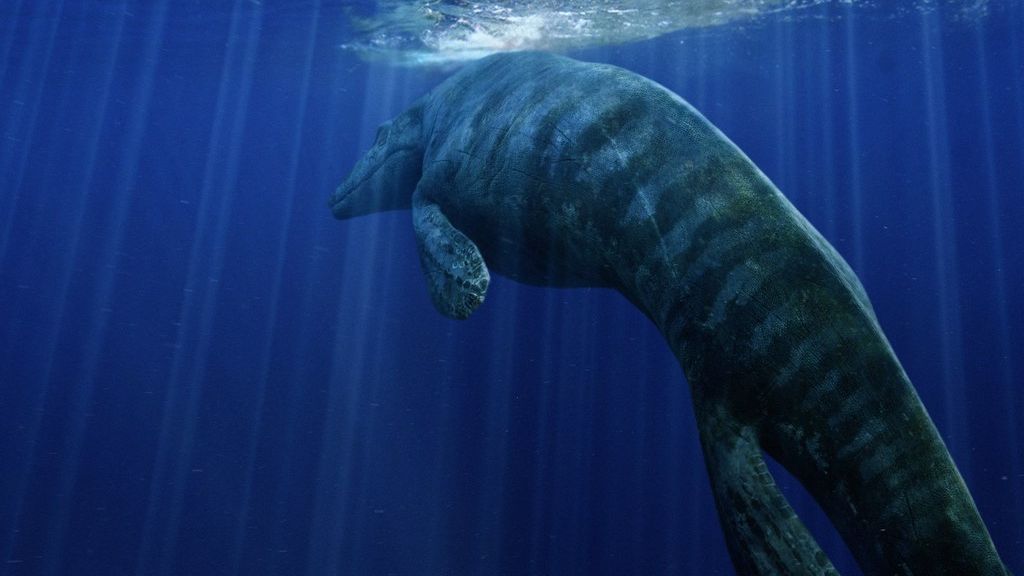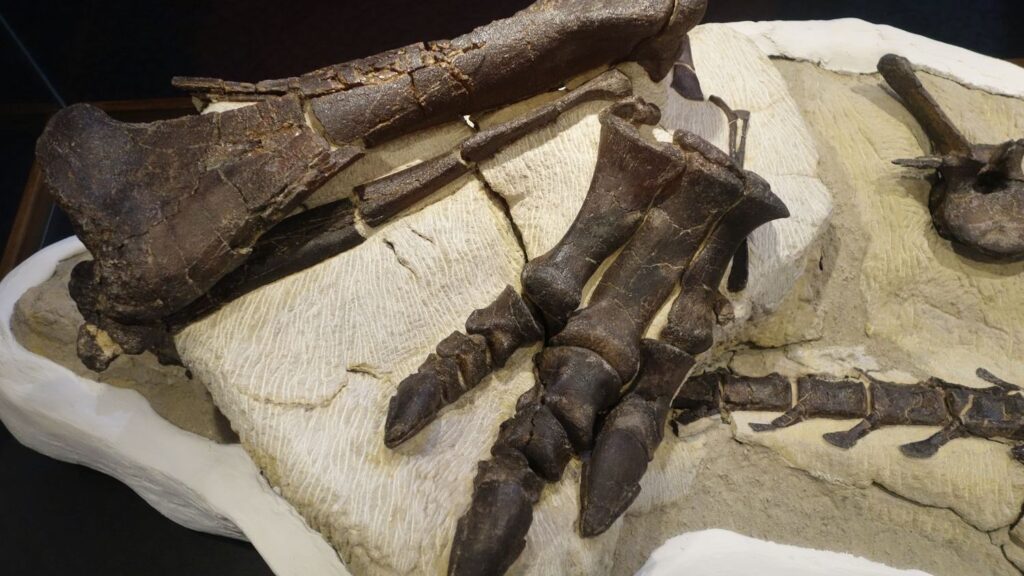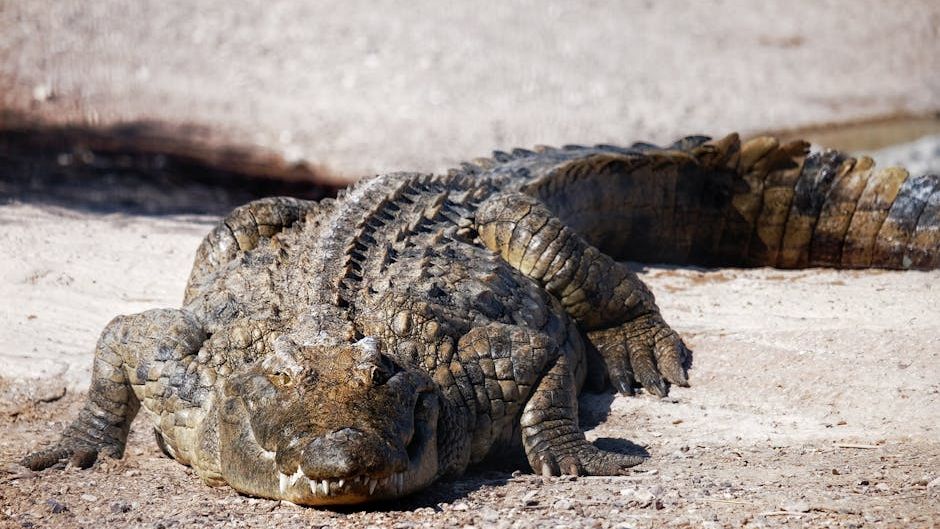
If today’s crocodiles already make your skin crawl, wait until you meet their prehistoric relatives. You are used to seeing crocs as lurking, low-slung ambush hunters, but in deep time they came in giant, dinosaur-crushing, even land‑stalking varieties that make modern species look almost modest. These animals were not just a bit bigger or a bit meaner; they pushed the crocodile blueprint into extremes that are honestly hard to picture until you compare them directly with what you know today.
As you explore these ancient monsters, you start to realize something unsettling: crocodiles have survived multiple mass extinctions not by staying the same, but by being incredibly flexible killers. Some prehistoric forms grew longer than a bus, others evolved mammal‑like teeth, and a few may have sprinted after prey on land. Once you see how wild their evolutionary history really is, the idea of calling modern crocodiles terrifying begins to feel almost unfair to their ancestors.
The Giants That Dwarfed Modern Crocodiles
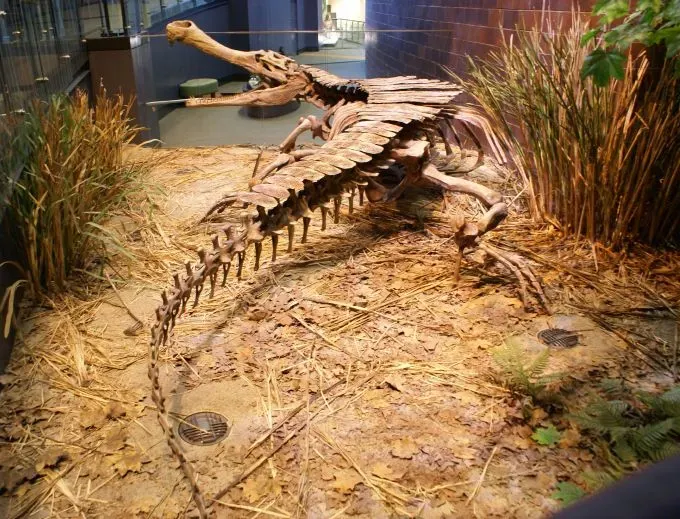
You might think the saltwater crocodile is the final boss of reptilian predators, but prehistoric giants like Sarcosuchus, Deinosuchus, and Purussaurus would have treated it like an appetizer. A really big saltwater crocodile can reach around seven meters in length, yet fossils of these ancient crocodyliforms suggest bodies stretching close to nine or even ten meters, with weights of several tons. You are not dealing with a bigger zoo crocodile here; you are looking at something closer to a living, armored barge.
When you picture these animals in their environments, the size difference becomes painfully clear. Imagine standing by a Cretaceous riverbank and seeing a bulky, scaly ridge slide through the water that is roughly as long as a city bus and far heavier than a modern hippo. If today’s crocs make you hesitate before stepping into murky water, prehistoric ones would have made that water effectively off‑limits to anything that wanted to keep its limbs attached. In sheer physical presence alone, the ancient giants were in a different league from what you see today.
Dinosaur‑Hunters Lurking in Primeval Rivers
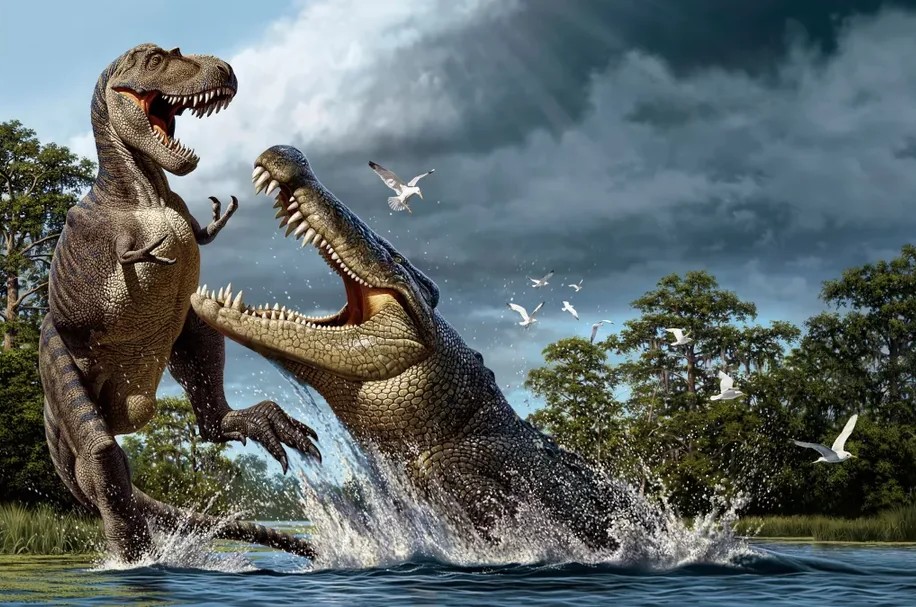
You probably grew up hearing that dinosaurs were the unstoppable rulers of their world, but some prehistoric crocodiles were more than capable of turning the tables. Evidence from bite marks and fossil sites suggests that massive species like Deinosuchus were ambushing dinosaurs that came too close to the water’s edge. Instead of grabbing a wading antelope, these crocodilians were lunging at multi‑ton duck‑billed dinosaurs and maybe even juveniles of larger species, dragging them down in violent, thrashing attacks.
When you think about that, it completely changes how you see crocodiles in deep time. You are not just looking at scavengers picking at leftovers; you are looking at apex or near‑apex predators sharing top billing with dinosaurs in coastal wetlands and river systems. A dinosaur could dominate the landscape, but the moment it stepped near the shoreline, the advantage flipped. In that narrow zone where land met water, the odds suddenly leaned toward the crocodile, and that invisible boundary might have been the most dangerous line an animal could cross.
The “Boar Croc” and Land‑Stalking Killers
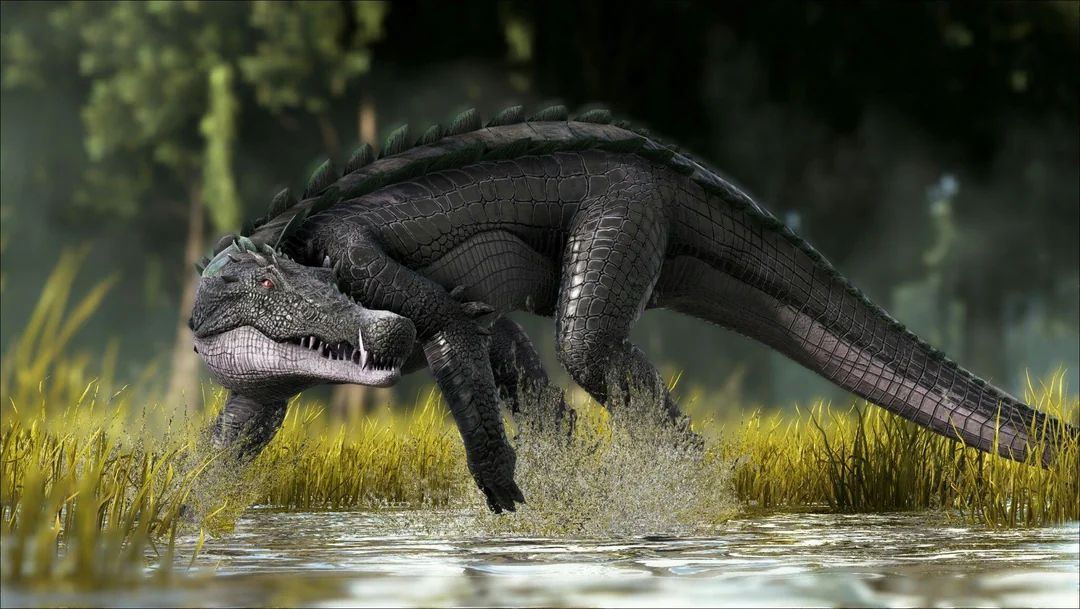
If you assume every prehistoric crocodile was chained to the water like modern species, that idea falls apart the moment you meet forms like Kaprosuchus, sometimes called the “boar croc.” Fossil skulls show huge, boar‑like tusks and a snout shaped less for catching slippery fish and more for seizing and stabbing struggling prey. The limb proportions and body design suggest an animal that may have spent much more time on land, potentially moving with a higher, more upright posture than the belly‑dragging stance you associate with modern crocs.
Now imagine you are a small dinosaur wandering across a Late Cretaceous floodplain. Instead of only worrying about something bursting out of the river, you also have to watch for a stocky, tusk‑toothed croc launching at you from behind a clump of vegetation. That kind of ambush is very different from the low, silent slide of a Nile crocodile into a river. Some ancient crocodyliforms were experimenting with the kind of terrestrial hunting style you usually reserve for big cats or wolves, and that alone makes them feel more versatile and, frankly, more unnerving than their modern kin.
Bite Forces and Bone‑Crushing Jaws You Would Not Survive
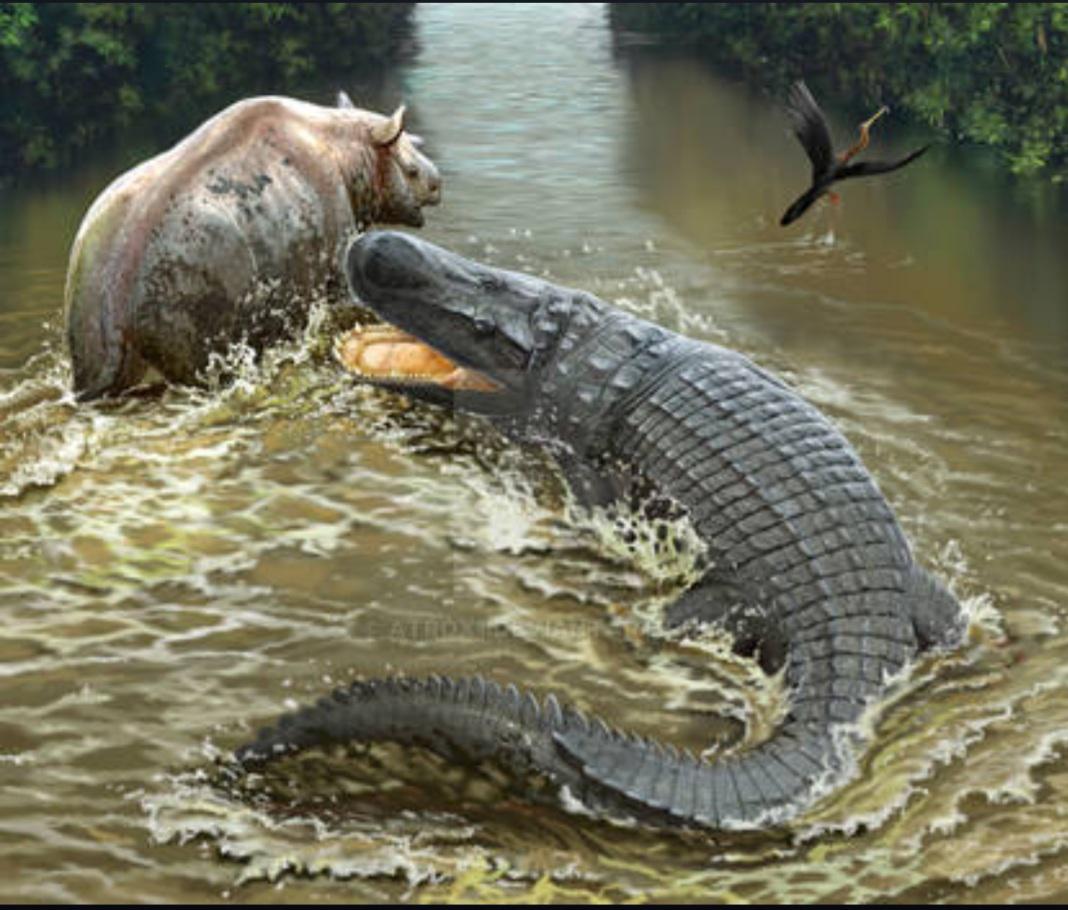
You already know a large modern crocodile can snap bones like dry twigs, but prehistoric giants pushed jaw power into extreme territory. Based on skull size, shape, and muscle attachment areas, scientists estimate that some species, such as Deinosuchus and Purussaurus, generated bite forces far beyond what any modern crocodilian can produce. You are talking about jaws capable of crushing turtle shells, dinosaur limb bones, and thick mammal skeletons, not just clamping onto soft flesh.
That level of power matters for how these animals hunted and what they could tackle. If a modern croc can subdue a large zebra, an ancient titan with even greater bite strength could realistically handle prey as big as the largest land animals of its time. When you picture a head nearly as long as you are tall, lined with robust, conical teeth and powered by muscles like flexed steel cables, the word “terrifying” does not feel like hyperbole anymore. Up close, you would not just be facing a predator; you would be facing a living industrial press.
Beyond the Water: Crocs That Ran, Climbed, and Filled Odd Niches
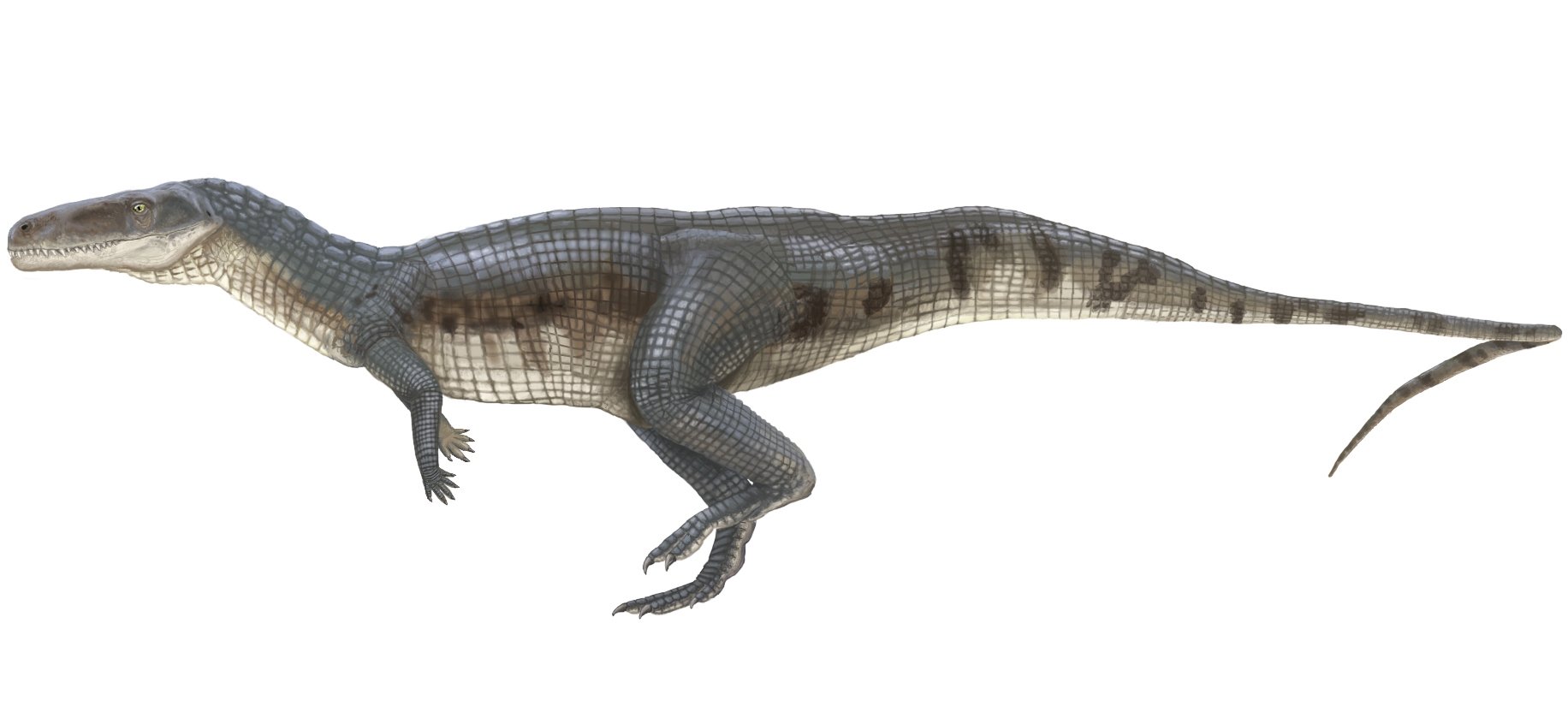
You may be tempted to think of prehistoric crocodiles as simple scaled‑up versions of today’s river lurkers, but the fossil record tells a much stranger story. Ancient crocodyliforms experimented with body plans that look almost wrong to your expectations: some had long, slender legs and lighter bodies suited for running, others had shortened snouts and complex cheek teeth for crushing food rather than just stabbing it. In a few cases, their skeletons suggest a lifestyle that blended traits you associate with small mammals and reptiles rather than the classic swamp ambusher.
What this means for you is that crocodiles once filled a much wider range of ecological roles than they do now. Instead of only picturing them as lurking in rivers, you have to imagine them chasing prey across open ground, snapping up insects, or chewing on tough, armored food sources. That variety makes modern crocodiles look like the last surviving specialists of a once wildly experimental group. The reality is that, over millions of years, crocodile relatives tried almost every predatory niche you can think of, and that evolutionary creativity adds another layer of menace to their story.
Armor, Scutes, and Natural Tank Design
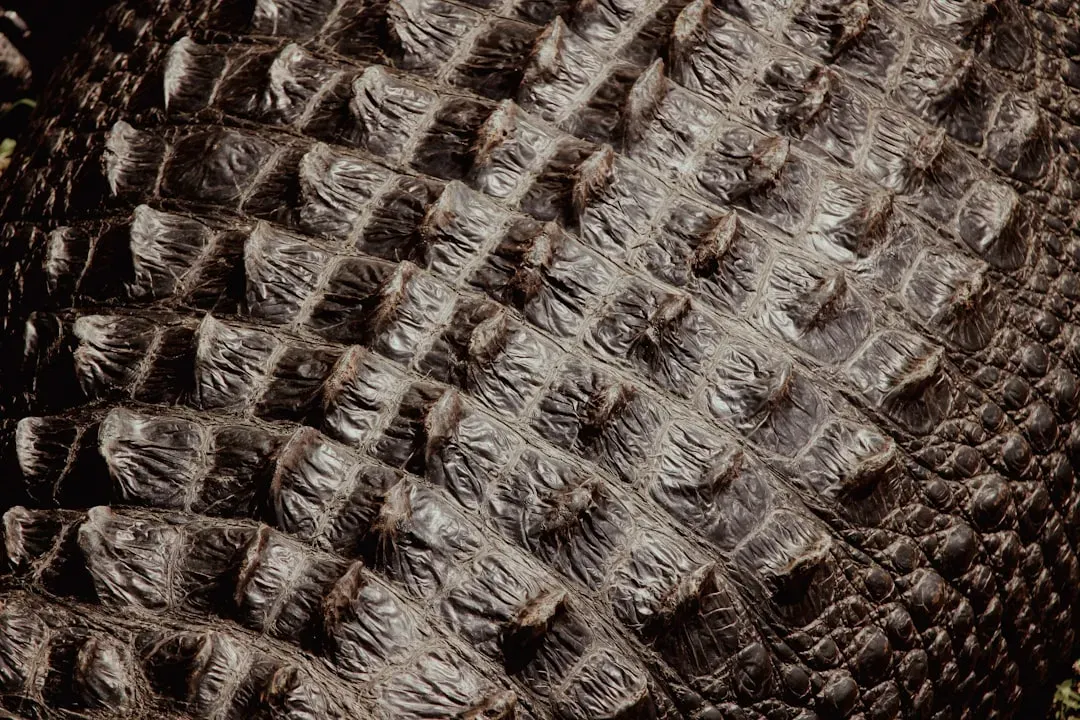
You already see today’s crocodiles as armored, but some prehistoric species turned that defense up a notch. Fossils show rows of thick bony plates, known as osteoderms, fused into continuous shields along the back and neck in ways that differ from modern patterns. In certain forms like Sarcosuchus, these scutes created a massive, rigid carapace that would have made penetrating bites and slashing attacks from other predators extremely difficult. You are basically looking at a living tank slowly cruising through ancient rivers and lakes.
When you combine that armor with sheer size, the message is clear: these animals were built to take damage and keep going. A big theropod dinosaur attacking such a crocodile might only succeed in scratching armor and provoking a violent counterattack from an animal that felt almost invulnerable from above. You can imagine how intimidating it would be to see one of these armored giants haul itself onto a sandbank, plates glinting in the sun like overlapping shields. Compared with that, the rough skin of a modern Nile crocodile suddenly seems relatively delicate.
Why Only the Less Terrifying Ones Survived
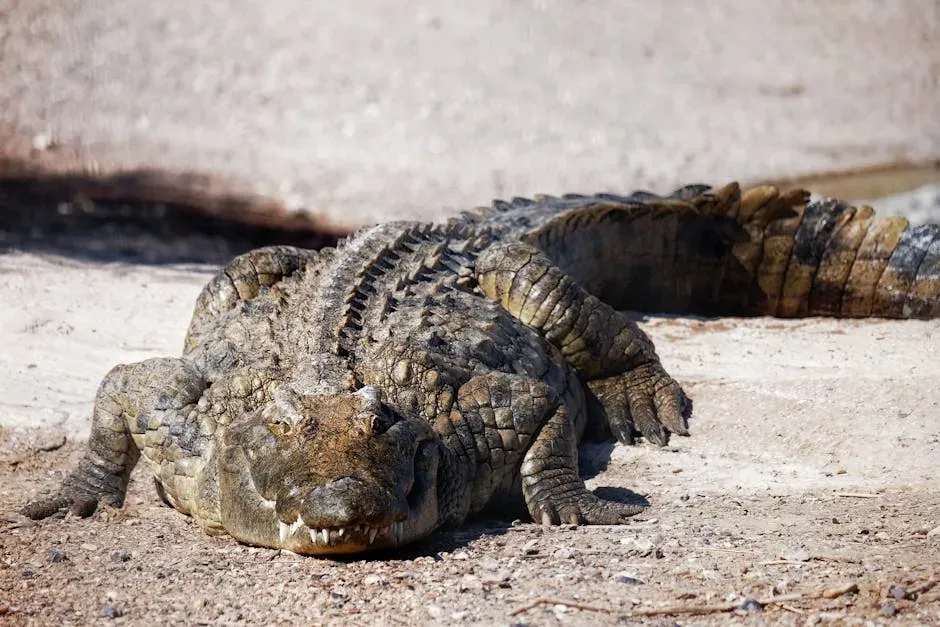
Here is the twist you might not expect: the crocodiles you know today are, in many ways, the toned‑down survivors of a much wilder era. Over tens of millions of years, climate shifts, changing sea levels, and mass extinctions wiped out many of the more extreme forms. What you are left with are species that are smaller, more specialized, and more tightly tied to aquatic ambush habits than many of their ancestors. It is not that modern crocs are harmless; it is that evolution trimmed away the most monstrous experiments, leaving behind the versions best suited to the environments that remained.
When you see a living crocodile basking on a riverbank, you are looking at the end of a long, brutal filter. The species that survived were the ones that could ride out dramatic environmental swings and competition from mammals and birds, not necessarily the ones that looked the most nightmarish to you. That perspective is strangely humbling: if the world had shifted differently, your planet might still be sharing space with bus‑sized, dinosaur‑mauling crocodilians. In that light, the fact that you only have to worry about seven‑meter saltwater crocs almost feels like a lucky break.
In the end, when you stack prehistoric crocodiles against modern ones, you are comparing a gallery of extreme predators with their relatively restrained descendants. Ancient forms were bigger, more diverse, and in many cases more versatile in how and where they hunted, from river ambushers to land‑stalking tusked killers. The crocodiles you see today are still formidable, but they are just the last surviving chapters of a much more terrifying saga. Knowing that, the next time you watch a croc slide into the water, you might quietly wonder: if this is the toned‑down version, how would you have felt standing face to face with its giants from the past?