When most people imagine prehistoric life, their minds immediately jump to dinosaurs thundering across dry land. Towering T. rexes. Stampeding herds of sauropods. It’s a familiar picture. Yet somewhere far beneath the surface of those ancient worlds, something far more awe-inspiring was happening. The oceans were absolutely teeming with enormous, breathtaking, and frankly terrifying reptilian predators that make even the greatest land dinosaurs look like neighbourhood pets.
These weren’t distant cousins of the creatures on land. Millions of years ago, the oceans teemed with incredible creatures called prehistoric marine reptiles. These weren’t actually dinosaurs, but a separate group of reptiles that adapted entirely to life in the water. Honestly, that distinction matters more than most people realise. You’re about to discover why these ocean rulers deserve far more credit than they typically get. Let’s dive in.
From Land to Ocean: An Evolutionary Leap That Changed Everything
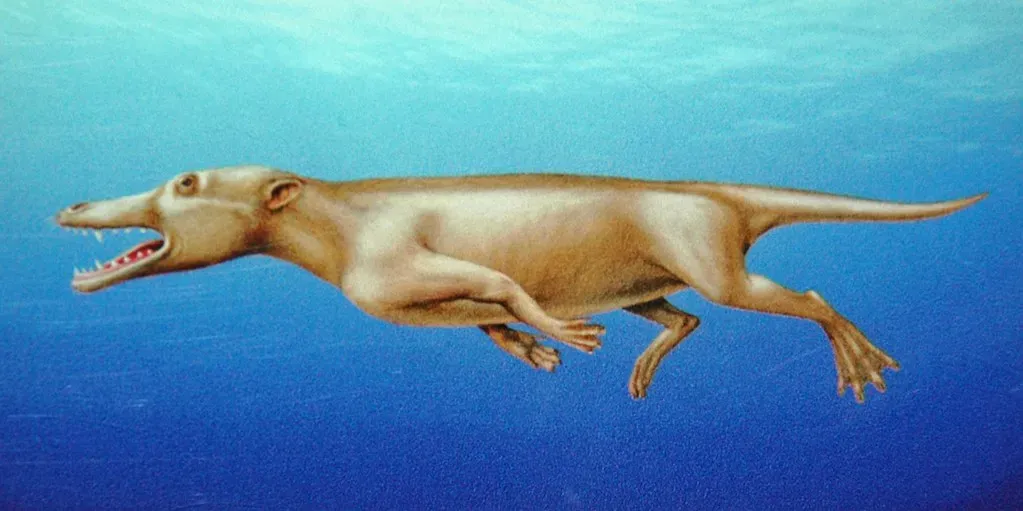
Here’s the thing about evolution: it rarely takes the obvious path. At some point hundreds of millions of years ago, land-dwelling reptiles looked out at the water and, in a very gradual but dramatic sense, decided the ocean was calling. Sauropterygians were an extinct group of diverse aquatic reptiles that originated from terrestrial ancestors shortly after the end-Permian extinction, and they flourished throughout the Triassic, Jurassic, and Cretaceous periods, inhabiting prehistoric oceans for approximately 185 million years.
Previous studies found that marine reptiles were wildly diverse and displayed a variety of specialized feeding modes during the Middle Triassic, in the aftermath of the Permian-Triassic extinction. Think of it like this: imagine an entire ocean ecosystem wiped nearly clean, then watching a new group of creatures rush in and fill every single available role at breathtaking speed. Some marine reptiles, such as ichthyosaurs, plesiosaurs, metriorhynchid thalattosuchians, and mosasaurs, became so well adapted to a marine lifestyle that they were incapable of venturing onto land and gave birth in the water.
The Ichthyosaurs: Speed Demons of the Ancient Sea
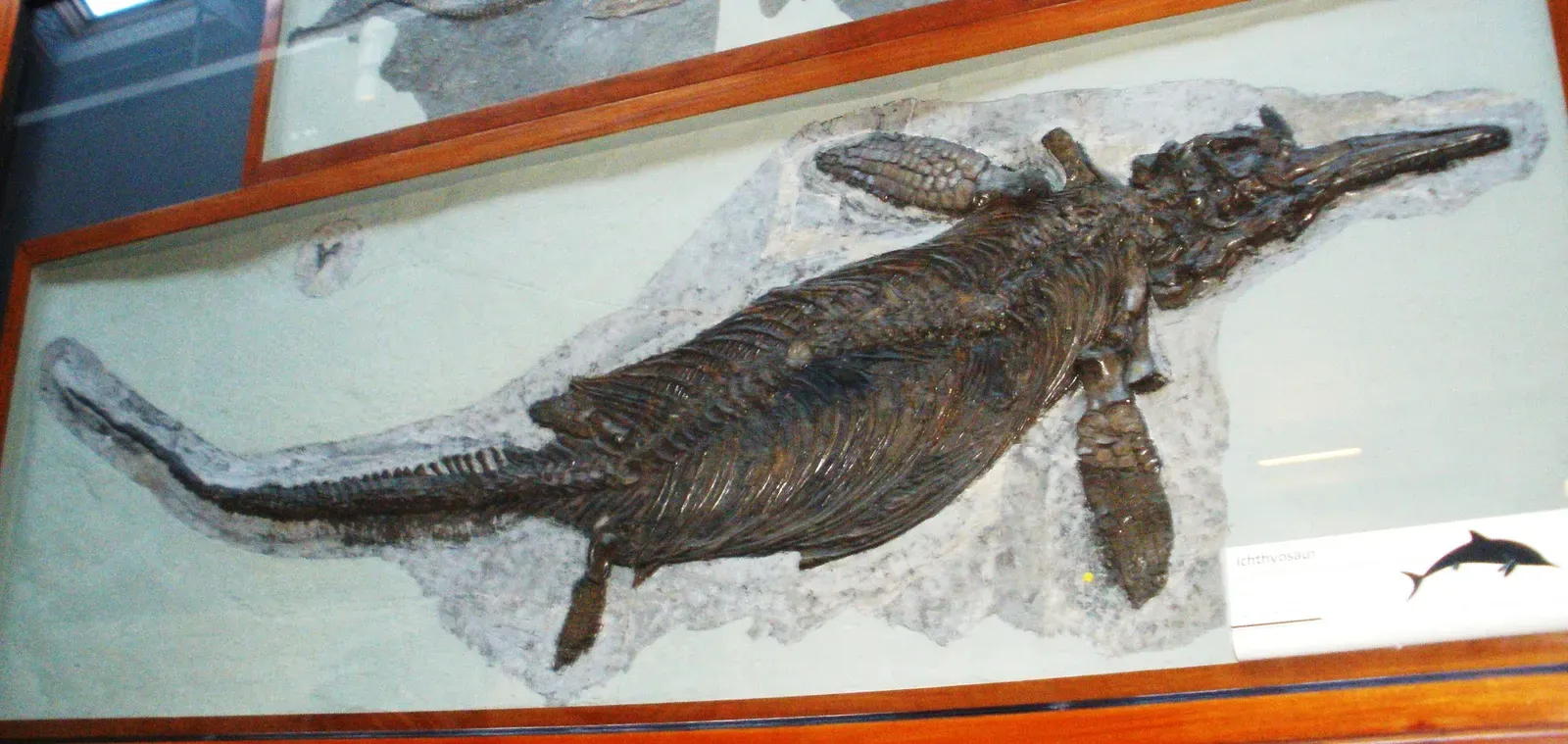
Ichthyosaurs were marine reptiles with a dolphin-like body shape that flourished during the Mesozoic era. If you crossed a dolphin with a swordfish and gave it the ambition of a great white shark, you’d come close to imagining one. They are perhaps the most elegant example of convergent evolution in all of prehistory. At the beginning, their appearance resembled that of a dolphin, with long bendy bodies and crescent-shaped tails, and over time their bodies became more rigid and their tails developed extra bones, allowing them to manoeuvre through the water at great speeds of 40 kilometres per hour.
Researchers found that ichthyosaurs had elevated body temperatures compared to ancient fish, suggesting the reptiles were likely warm-blooded, which is consistent with the idea that they actively pursued prey instead of hunting by ambush as a crocodile does. That’s a stunning realisation. These weren’t slow, cold-blooded lurkers. Ichthyosaurs evolved true viviparity, completely eliminating any need to return to land, with multiple fossil specimens captured in the moment of giving birth, with the young emerging tail-first to prevent drowning during delivery, and their embryos developed within the mother’s body, receiving nourishment directly through a placenta-like connection rather than from yolk, similar to modern mammals.
Plesiosaurs: The Mysterious Long-Necked Hunters
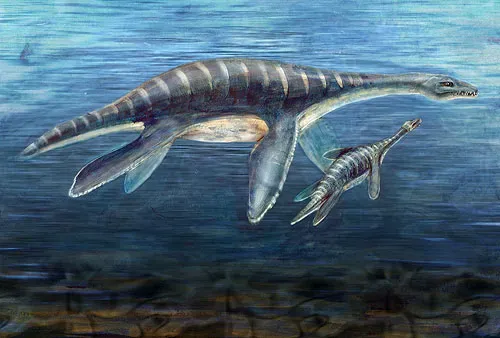
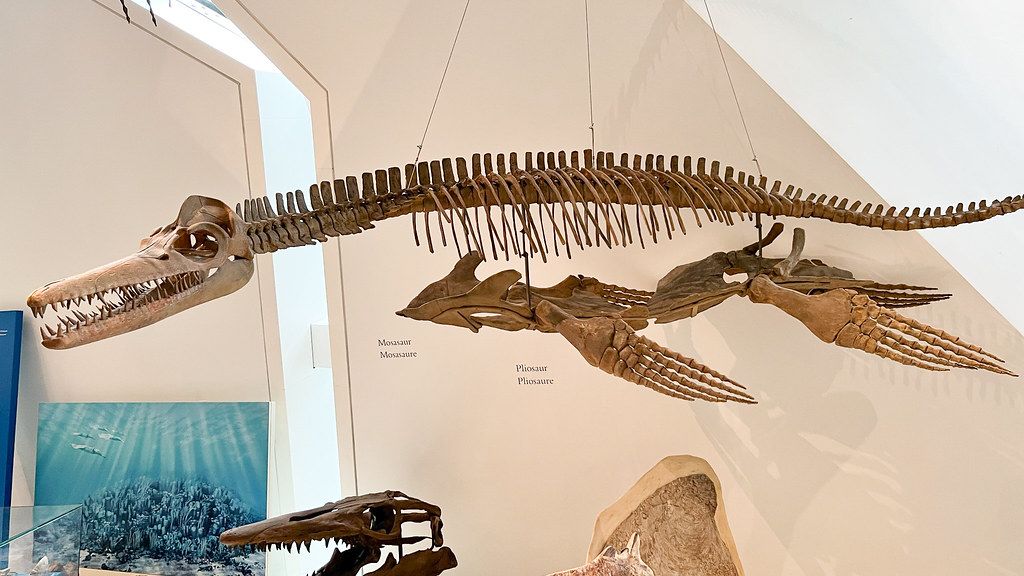
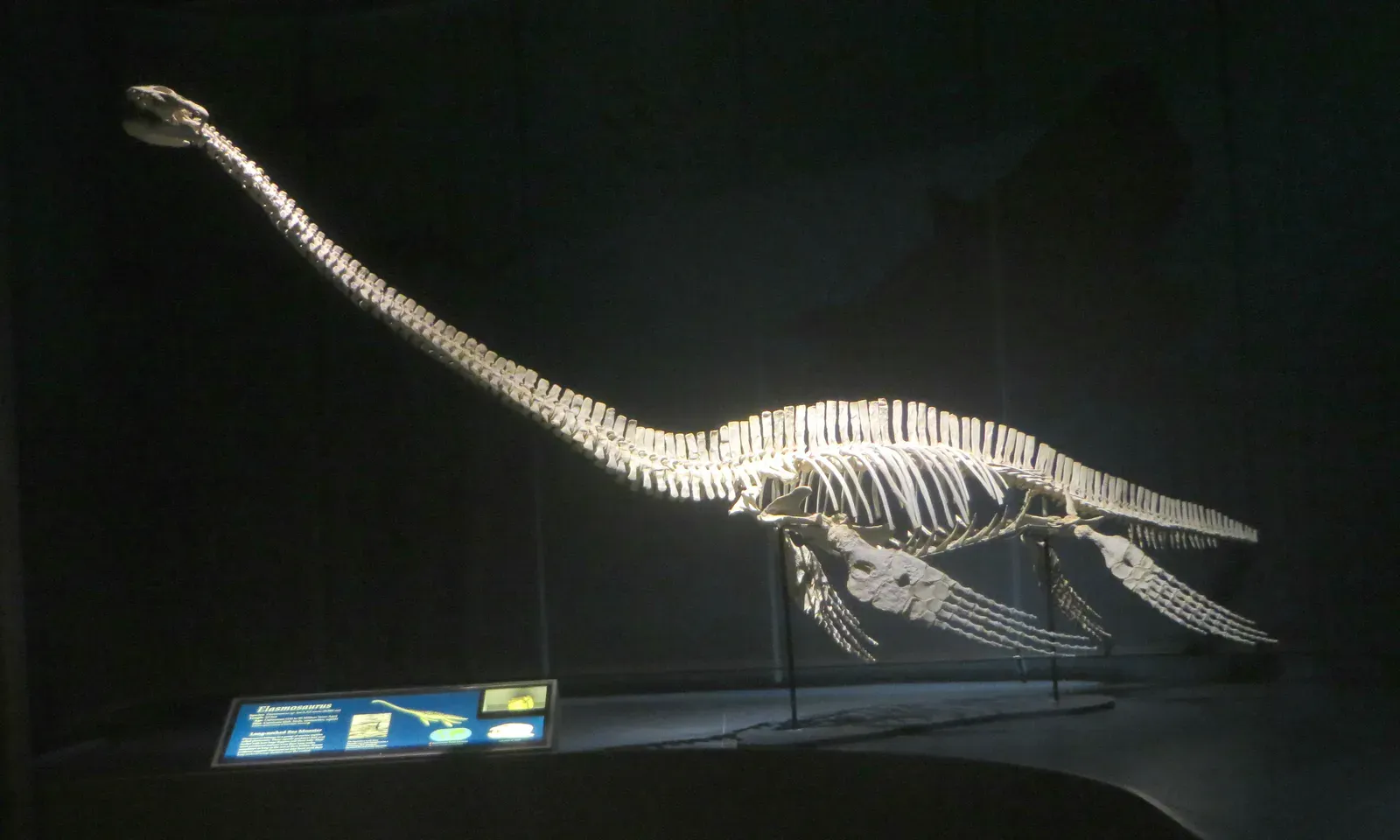
You’ve almost certainly seen a plesiosaur before, even if you didn’t know it. The famous Loch Ness Monster legend? That’s essentially a plesiosaur in popular imagination. Plesiosaurs ruled the oceans for over 135 million years, surviving multiple extinction events and diversifying into one of the most successful groups of marine reptiles in Earth’s history. Some plesiosaurs had necks longer than their entire bodies, with as many as 70 or more vertebrae, more than any other known vertebrate animal.
Fully aquatic plesiosaurs, which had evolved large flippers from their four limbs, propelled themselves through the water using an “underwater flight” motion, similar to modern sea lions, and while all four flippers were used for propulsion, their short tails likely assisted with directional control. It’s a beautiful image, isn’t it? Enormous, long-necked creatures essentially flying through the water in slow, powerful wingbeats. Fossils of plesiosaurs, including pliosaurs, have been found on every continent, even Antarctica, revealing that they thrived in oceans that once connected the globe.
Pliosaurs: The Short-Necked Apex Killers
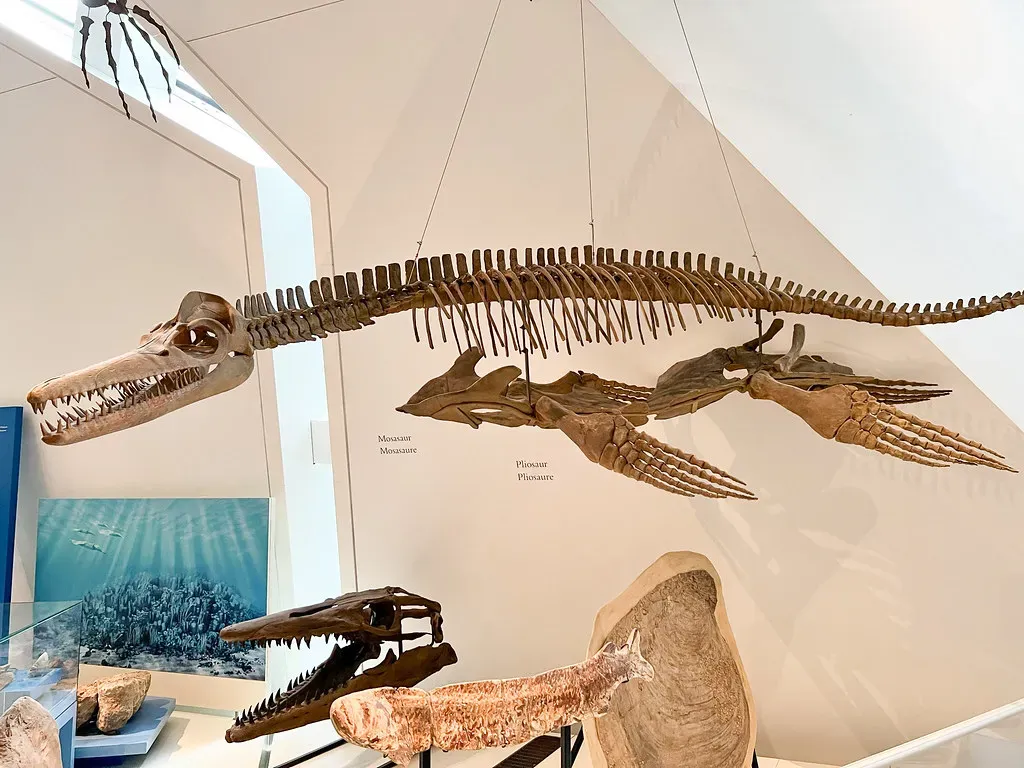
If the long-necked plesiosaurs were graceful hunters, their short-necked cousins, the pliosaurs, were something far more menacing. Some plesiosaurs abandoned long necks entirely in favor of massive skulls, short muscular necks, and immense bite strength. These short-necked forms are commonly known as pliosaurs, and they represent one of the most extreme predatory body plans ever to evolve in the sea.
At the upper end of the scale, the largest pliosaurs reached lengths of 35 to 40 feet, rivaling or exceeding the size of modern killer whales. These animals dominated Jurassic seas and represent some of the most powerful predatory vertebrates ever to evolve in the ocean. Let’s be real: that is genuinely terrifying. Jurassic pliosaurs such as Liopleurodon, Pliosaurus, and Simolestes developed enormous skulls, sometimes over 2 meters long, and robust bodies capable of generating tremendous speed and bite force. These animals occupied the role of apex predators, feeding on large fish, ammonites, sharks, and other marine reptiles, including plesiosaurs themselves.
Mosasaurs: The Last and Most Fearsome Rulers
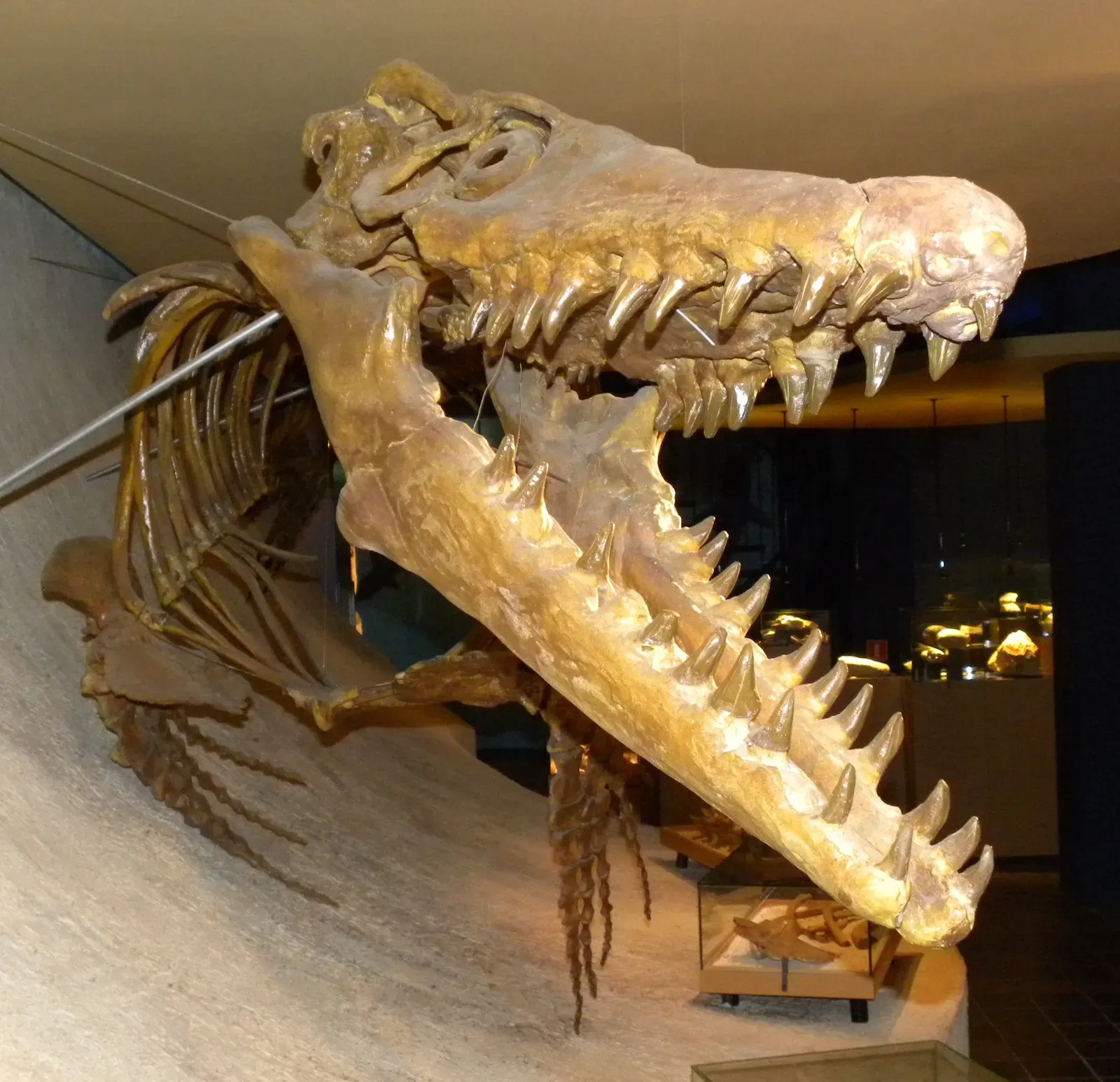
If you had to point to the single most ferocious chapter in the story of marine reptile dominance, the mosasaurs might be your answer. Mosasaurs were formidable predators that dominated ocean ecosystems during the Late Cretaceous period. Unlike ichthyosaurs and pliosaurs, mosasaurs were relatively late arrivals to marine environments, first appearing about 98 million years ago and evolving from semi-aquatic lizards closely related to modern monitor lizards and snakes.
During the last 20 million years of the Cretaceous period, with the extinction of the ichthyosaurs and pliosaurs, mosasaurids became the dominant marine predators, and they themselves became extinct as a result of the K-Pg event at the end of the Cretaceous period, about 66 million years ago. Their diet was extraordinary in its variety. Mosasaurs had double-hinged jaws and flexible skulls, much like those of snakes, which enabled them to gulp down their prey almost whole. I think that detail alone should give you pause the next time you wade into the ocean.
Astonishing Adaptations: Built for the Deep
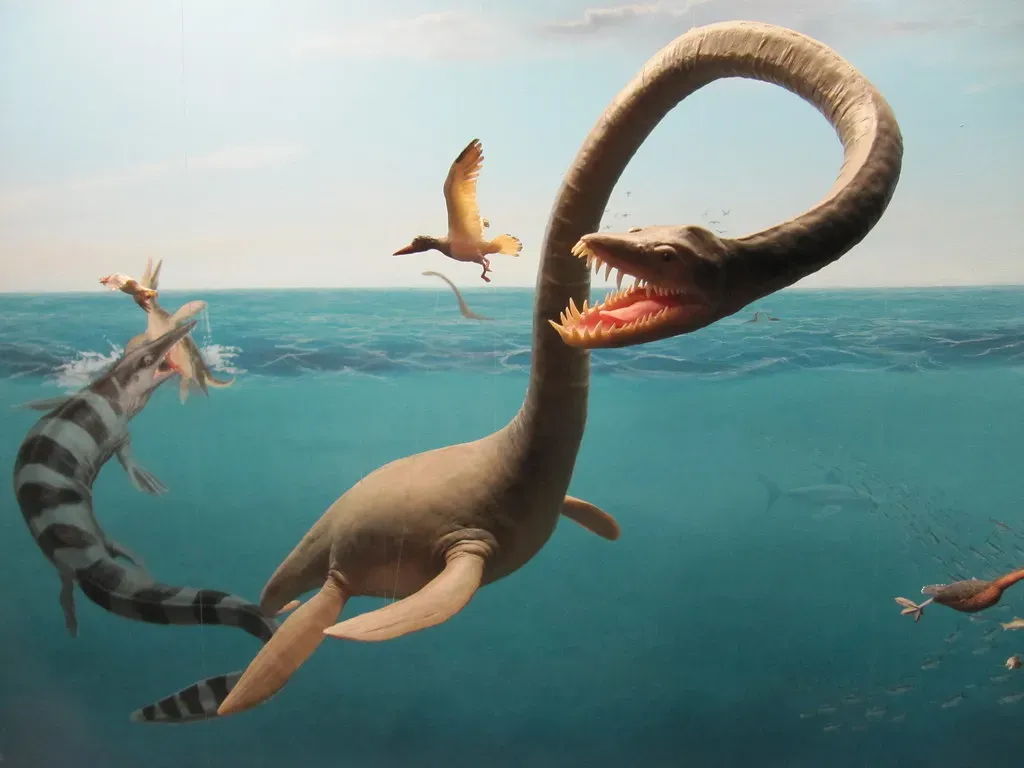
Varied lineages of marine reptiles all underwent different modifications as they evolved in the aquatic realm. The physical disparities among ichthyosaurs, plesiosaurs, mosasaurs and other marine reptiles underscore the fact that there was no single, optimal way to be a saurian in the water. Evolution, it seems, was willing to experiment endlessly. While ichthyosaurs slid through the water with slick skin, other marine reptiles evolved streamlined scales. A fossil of the large mosasaur Plotosaurus preserved fossil soft tissues along with the bones, including scaly skin. The scales of Plotosaurus were small and roughly similar to those of modern lizards, but they possessed an important specialization: they were keeled in such a way that they streamlined the lizard’s body and would have allowed it to swim with less effort, a critical adaptation for a predator thought to have cruised open waters.
The most striking similarity between today’s top predators and the top predators of ancient seas is the tail fluke. Time and time again, creatures have evolved a crescent moon-shaped tail, and not only is this visible in whales, dolphins, and sharks, it is also the case for mosasaurs and ichthyosaurs. Nature kept returning to the same solution. It’s honestly one of the most beautiful patterns in all of biology. Their evolutionary radiation coincided with significant changes in marine invertebrate communities, particularly affecting cephalopod evolution, as ammonites and belemnites developed more sophisticated defensive adaptations in response to predation pressure.
What Their Fossils Reveal About Our Ancient Planet
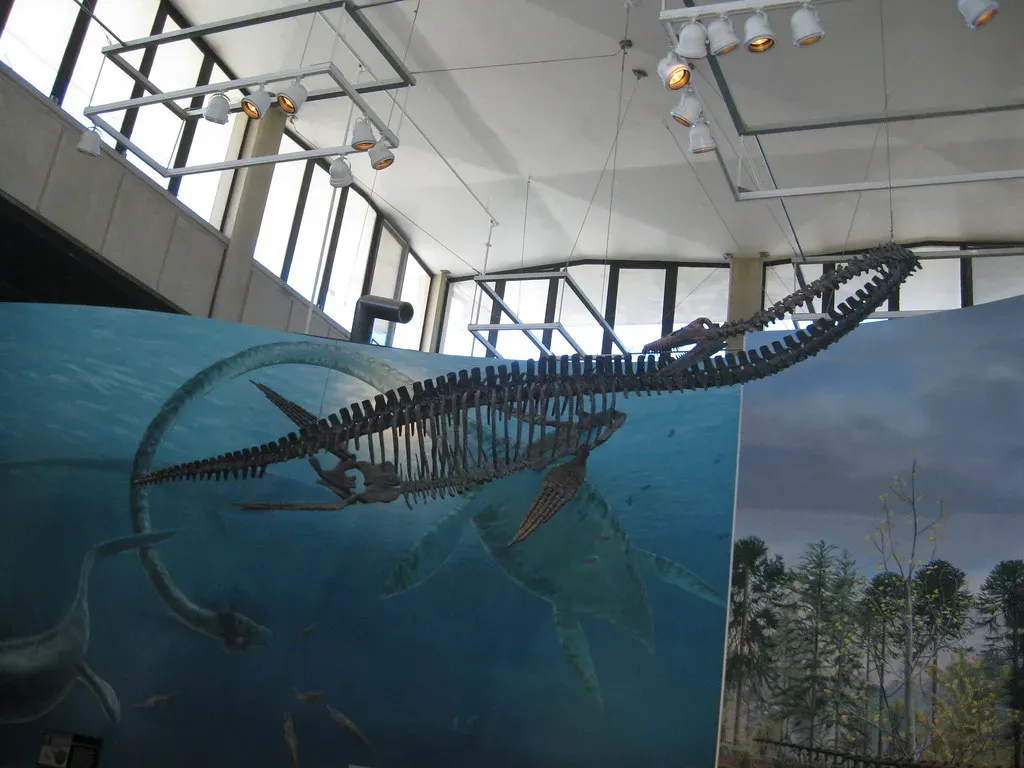
You might wonder why any of this matters beyond sheer fascination. The answer is that these creatures are time capsules. Through the fossil record, researchers can unravel the secrets of paleogeography, gaining insights into the shifting positions of continents and the connection between distant lands. The fossils also reveal the evolutionary adaptations that enabled these reptiles to conquer the marine realm, from limb modifications to streamlined bodies.
The presence of similar fossils on opposite sides of the modern Atlantic Ocean suggests that these landmasses were once connected. By studying the isotopes and minerals in fossilized bones and teeth, scientists can infer information about the water temperature, salinity, and chemistry of prehistoric oceans, providing vital data for reconstructing ancient climates. It’s hard to say for sure just how much remains to be discovered, but considering marine reptile groups like plesiosaurs and ichthyosaurs were swimming in near-freezing seas during parts of the Early Jurassic, and during the Jurassic the marine faunas of western Europe were connected via the Viking Corridor to the Boreal Ocean in the far north, marine reptiles thrived in all of these places and the presence of related species shows that groups moved around via these various seaways.
The Great Extinction and the Ocean’s New Order
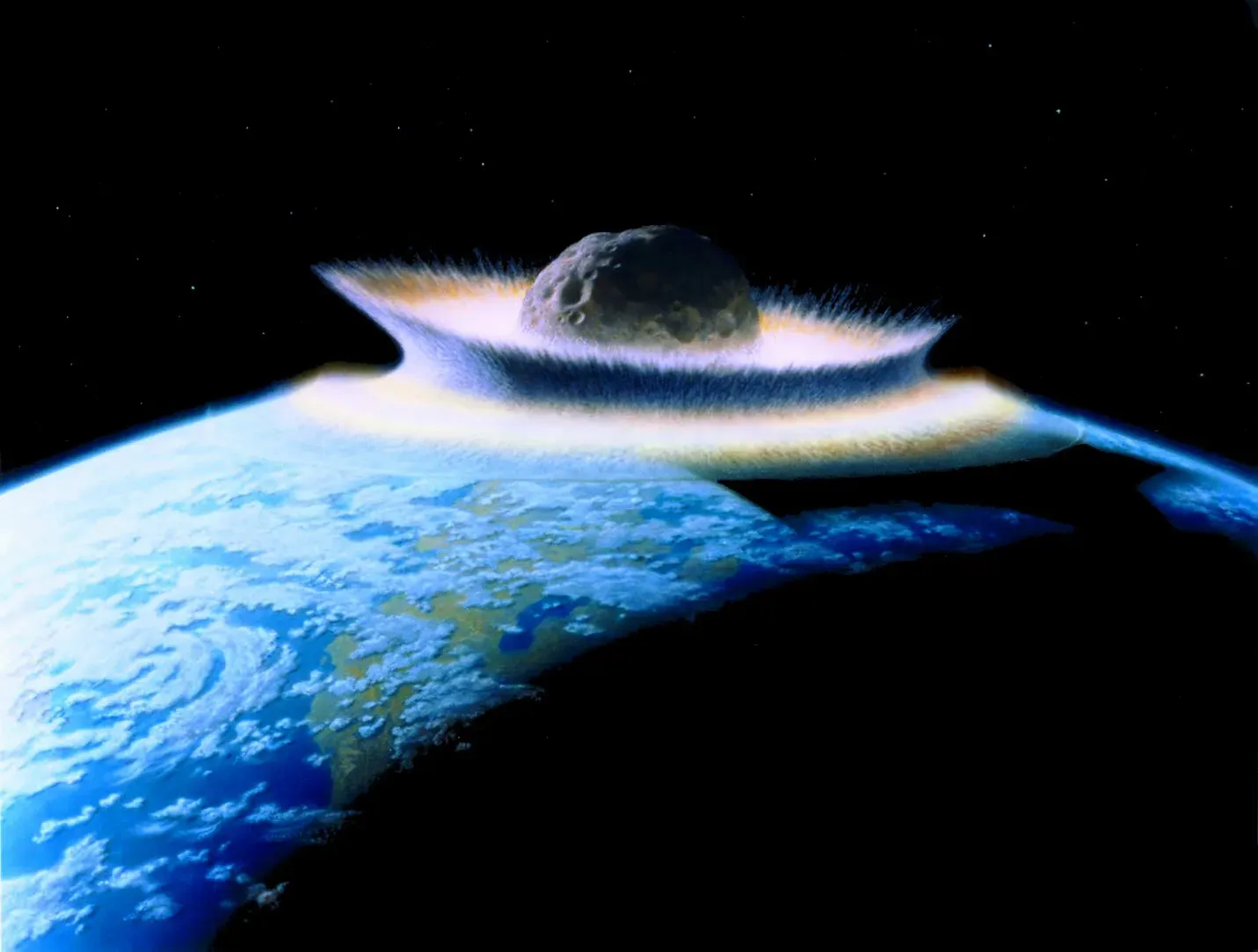
Every reign must end, and the end of the marine reptiles’ dominance was as dramatic as their rise. The long reign of sauropterygians in prehistoric oceans came to an end approximately 66 million years ago, during the Cretaceous-Paleogene extinction event. This event marked the mass extinction of about three-quarters of Earth’s plant and animal species, and the leading theory attributes this extinction to a massive asteroid or comet impact that struck the Yucatán Peninsula in Mexico.
The impact released immense energy, leading to widespread environmental devastation. This included massive tsunamis, firestorms, and drastic climate changes, along with a prolonged “impact winter” that halted photosynthesis due to blocked sunlight. While the asteroid impact is the primary theory, other contributing factors may include extensive volcanic activity and significant climate and sea-level fluctuations. Yet the story didn’t end entirely. The disappearance of sauropterygians, alongside non-avian dinosaurs and other marine reptiles, reshaped global ecosystems and paved the way for the diversification of new life forms. The ocean floor simply waited for its next rulers, and the whales, dolphins, and sharks we know today stepped into a role first defined by something far older.
Conclusion: Giants Forgotten by Time
There’s something quietly humbling about realising that the ocean you see today, with its sharks and whales and sea turtles, is essentially version two of an ecosystem that was shaped and dominated by giant reptiles for over 180 million years. Occupying roles similar to those of modern sharks, seals and whales, they filled the ancient oceans for a period of 180 million years. That is a span of time our human minds can barely comprehend.
The fossils of these creatures reveal more than anatomy. They uncover stories of adaptation, survival, and collapse. These were not simple, slow-moving lizards paddling around in the shallows. They were warm-blooded, fast, intelligent hunters that gave birth to live young at sea, evolved sophisticated body armour, and filled every ecological niche the ocean had to offer. The evolution of Mesozoic marine reptiles wasn’t static, but dynamic and complex, with major overturns and innovations happening right to the end.
Dinosaurs get all the glory. They always have. Yet the next time you stand on a beach and stare out at the horizon, consider what was swimming just beneath that surface for tens of millions of years before us. The real rulers of the ancient world were not stomping across the land. They were gliding silently through the dark, deep water. What do you think: does the ocean hold more wonder than the land ever could? Tell us your thoughts in the comments.