

If you’ve ever wondered why a throwaway comment can ruin your entire day, or why your heart races before a tough conversation like you’re facing a predator, you’re not alone. Our bodies and brains evolved for a world of spears, campfires, and small tribes, not group chats and performance reviews. Yet those ancient emotional survival systems are still running in the background, quietly shaping how we react, bond, and protect ourselves.
Modern psychology and neuroscience keep circling back to the same uncomfortable truth: in many ways, we’re Stone Age humans living in a smartphone age. Our fears, social instincts, and even our pettiness often make perfect sense if you imagine them in a prehistoric village instead of an office or a dating app. Once you start seeing those patterns, everyday drama stops feeling so random – and starts looking like emotional survival strategies that outlived their original purpose.
Why Your Brain Treats Embarrassment Like a Life-or-Death Threat

Have you noticed how your stomach drops and your face burns when you say something awkward in a group, as if you’ve just made a catastrophic mistake? From an evolutionary perspective, social humiliation used to be much more than cringe; it could mean losing status in a tiny tribe where your safety, food, and protection depended on belonging. Being excluded or mocked was not just uncomfortable, it could tilt the odds of survival against you, so the brain learned to treat social shame as a serious alarm signal.
Today, that same system fires when you stumble over a word in a meeting or post something that gets fewer likes than you hoped. The reaction feels wildly disproportionate because your brain cannot fully tell the difference between a tribe whose acceptance you needed to stay alive and a group of coworkers who simply move on five minutes later. That overreaction is not a personal flaw; it is a Stone Age social radar trying to keep you inside the circle, screaming danger where there is now mostly inconvenience.
Hypervigilance: When Your Threat System Is Still Looking for Lions

If you often feel on edge, scanning for what might go wrong next, that is your ancient threat-detection network doing exactly what it was wired to do. In early human environments, the cost of missing a threat – a predator, an enemy, a poisoned plant – was enormous, while the cost of overreacting was relatively small. So our brains tilted heavily toward caution, anxiety, and quick startle responses, favoring survival over calm at almost every turn.
In the modern world, very few of us are dodging actual predators, but our nervous systems still treat ambiguous emails, unfamiliar noises at night, or subtle changes in someone’s tone as potential danger. Chronic anxiety, overthinking, and catastrophic imagining can be seen as an ancient survival setting stuck on high, constantly scanning for lions in a landscape now filled with deadlines and notifications instead. Knowing this does not magically erase anxiety, but it does soften the shame around it and makes it easier to treat your nervous system with respect instead of frustration.
Tribalism and In-Groups: Why “Us vs. Them” Feels So Natural

Think about how quickly people split into teams, cliques, fandoms, and political camps, sometimes over things that barely affect their actual lives. For most of human history, loyalty to a small group was not just emotionally satisfying; it was essential. Your tribe was your protection, your food supply, your childcare arrangement, and your healthcare system all rolled into one, so favoring your own group and being suspicious of outsiders helped keep you and your genes alive.
That tendency did not vanish when we built cities and social media platforms. It simply shifted into new arenas: sports rivalries, online communities, social labels, and even disagreements about trivial preferences. The emotional charge behind “us vs. them” can feel wildly intense precisely because you’re running Stone Age loyalty software on top of modern conflicts. The instinct to defend your group, sometimes irrationally, is an emotional survival behavior that once kept the village safe but now can make workplaces tense and public conversations toxic.
Rejection Sensitivity: Social Pain as an Ancient Warning System

Rejection hurts so much that it can feel almost physical, and that is not just a metaphor. Brain imaging studies have found that some of the same neural regions involved in physical pain light up during social exclusion or harsh criticism, suggesting that our brains treat social disconnection as a kind of injury. In prehistoric settings, being rejected by your group could eventually lead to being left without protection or shared resources, so a strong pain signal would motivate you to repair bonds quickly.
In modern life, this can turn into heightened rejection sensitivity, where a delayed text or neutral comment gets interpreted as a looming breakup or friendship collapse. That spiraling fear is your emotional alarm system trying very hard to prevent social exile, even when actual exile is not on the table. I’ve caught myself reading meaning into a “seen” message with no reply, only to realize later that my brain had spun an entire story to protect me from abandonment that was never really happening.
People-Pleasing and Conflict Avoidance: The Old Fear of Rocking the Boat
Many people hate conflict so much that they will swallow their needs, agree to things they don’t want, or endlessly smooth over tension just to keep the peace. In a small band of hunter-gatherers, chronic conflict could be disastrous; with nowhere else to go and no anonymous cities to disappear into, making others angry too often could place you in dangerous territory socially and physically. So behaviors that minimized open conflict, like appeasing, fawning, or quickly apologizing, could genuinely be life-preserving.
Today, those instincts can show up as chronic people-pleasing: saying yes when you mean no, tiptoeing around others’ moods, or turning every disagreement into self-blame. Psychologists sometimes describe this as a fawn response, where someone tries to increase safety by becoming as agreeable and non-threatening as possible. It might look like kindness from the outside, but inside it can feel like constantly shape-shifting just to avoid being metaphorically pushed out of the tribe.
Hoarding, Scarcity Anxiety, and the Stone Age Fear of “Not Enough”

Even in relatively comfortable circumstances, many of us carry a gnawing fear that there will not be enough – enough money, food, time, or security. For our ancestors, scarcity was not an abstract anxiety; it was a regular, brutal reality. Periods of famine, drought, or seasonal shortage meant that grabbing and storing resources when they were available could be the difference between life and death, so strong instincts to keep, hoard, and overvalue immediate gains were heavily reinforced.
In the present, this can manifest as over-shopping, difficulty throwing things away, or feeling oddly panicked when your pantry is not full, even if you have plenty of access to stores and income. On a psychological level, behaviors like hoarding or constantly chasing more can be understood as attempts to soothe that deep survival fear of going without. I’ve seen people with stable jobs still feel compelled to stash items “just in case,” like an inner ancestor is whispering that winter is always around the corner, no matter what the calendar says.
Jealousy, Mate Guarding, and the Ancient Logic of Attachment
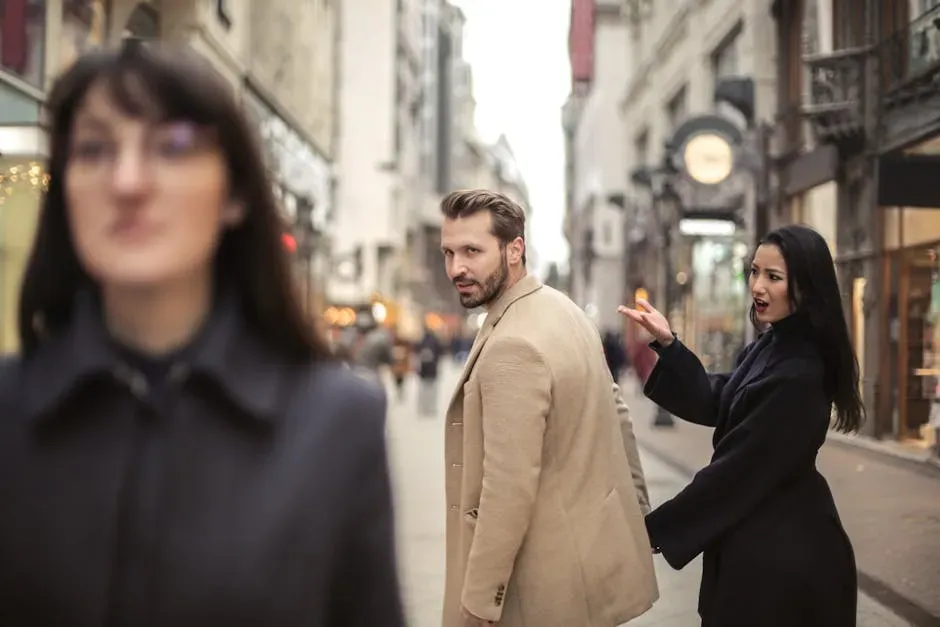
Romantic jealousy can feel irrational and ugly, but it makes more sense when seen through an evolutionary lens. In small ancestral groups, who you mated with – and how stable that bond was – had direct consequences for reproduction and the survival of children. Emotions like jealousy, possessiveness, and vigilant attention to rivals probably helped our ancestors protect their partnerships and ensure consistent investment of time and resources in their offspring.
Of course, that does not justify harmful behavior, but it does explain why even secure people can feel a rush of panic when a partner seems unusually distant, flirty with someone else, or vague about their plans. The intensity of that feeling is often out of step with the actual situation, yet your emotional brain is still guarding something it was once programmed to treat as precious territory. Understanding jealousy as a relic of Stone Age mate protection can transform it from something shameful into a signal to communicate, reflect, and consciously choose how to respond instead of blindly acting on old wiring.
What We Can Do With Our Stone Age Hearts in a High-Tech World

Once you see how much of your emotional life is shaped by ancient survival strategies, it is hard to unsee it. But that realization is not depressing; it is empowering. It means your anxiety, your fear of rejection, your sensitivity to group dynamics, and even your occasional overreactions are not random defects. They are outdated but understandable attempts by your nervous system to keep you safe in a world it still doesn’t fully recognize.
In my view, the healthiest path forward is not to shame or suppress these Stone Age behaviors, but to renegotiate with them. We can acknowledge that our brains evolved for a very different reality, and then consciously build habits, relationships, and environments that match the world we actually live in. Therapy, mindfulness, supportive communities, and honest self-reflection are not indulgences; they are how we gently update ancient emotional software without denying where we came from. The real question is not whether we still carry Stone Age survival behaviors – we clearly do – but how bravely and compassionately we choose to work with them rather than let them drive the whole show.