Walk into any room full of strangers and your brain quietly starts sorting people, long before you’ve shaken a single hand. Someone who looks or talks like you? Your body relaxes a bit. Someone who feels unfamiliar, intense, or just “off”? Your guard goes up, even if you smile politely. You think you’re being open‑minded and modern, but deep in the background, very old software is still running: safe tribe vs. possible danger.
What makes this so striking is that most of us sincerely believe we judge people based on character, values, and individual actions. Yet a growing body of psychological and neuroscientific research suggests that our brains still rely heavily on fast, automatic categorization that evolved to keep our ancestors alive. We’re not doomed to be prisoners of those instincts, but we do need to understand how they work, where they misfire, and how to catch ourselves in the act. Once you start noticing this hidden tribal filter, you might be shocked by how many of your “gut feelings” are really just ancient wiring wearing modern clothes.
The Ancient Brain Behind Your Modern Opinions
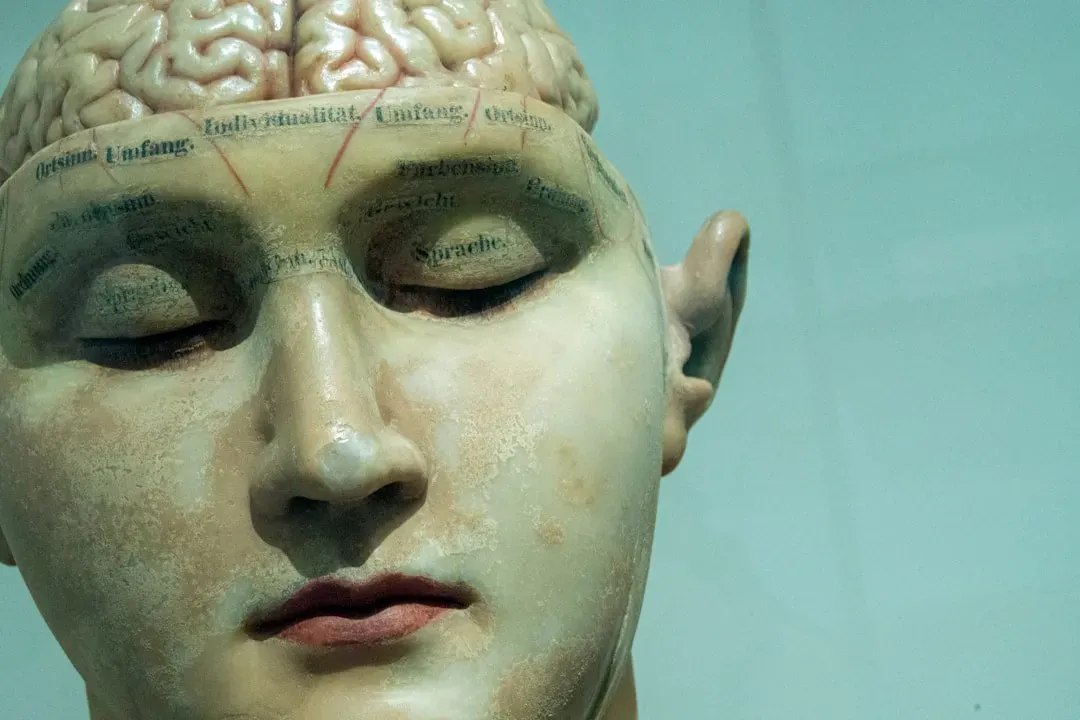
Imagine your brain as a high‑tech smartphone running on a very old operating system. The sleek apps – your conscious reasoning, your progressive beliefs, your carefully worded opinions – sit on top of ancient survival code that was written tens of thousands of years ago. Back then, misreading a stranger could get you killed, so our nervous system learned to snap‑judge: Is this person from my group or from a rival group that might hurt me? That rough and ready logic was efficient in a harsh environment where food, territory, and safety were always at risk.
Today, we live in cities, shop at supermarkets, and meet people from all over the planet, but the ancient operating system never got fully uninstalled. It scans for cues like appearance, accent, posture, clothing, and even facial micro‑expressions, then nudges you toward “feels safe” or “feels risky” before you realize it. What’s tricky is that this process is fast, automatic, and mostly unconscious. We like to think we’ve evolved beyond all this, and intellectually we have in many ways, but biologically we’re still running survival code that reacts in milliseconds while our reasoning only kicks in later to explain what we already feel.
In‑Groups, Out‑Groups, and Why Your Brain Loves “Us”

Psychologists call this basic sorting “in‑group” and “out‑group” processing. Your in‑group is the set of people you instinctively experience as “us” – they feel familiar, relatable, and relatively safe. Out‑groups are “them,” the people who feel more distant, harder to read, or potentially unpredictable. Here’s the twist: these groups are not fixed. They can be built around almost anything – language, sports teams, hobbies, political views, music taste, even parenting styles. Your brain will grab whatever categories are handy and build a tribe around them.
Once someone lands in your mental in‑group, you usually give them the benefit of the doubt. If they mess up, you’re more likely to see it as a one‑off mistake. Put the same behavior in an out‑group member, and suddenly it looks like a pattern or a character flaw. You will not feel this shift as “I am now applying a bias;” you will just feel like your reaction is reasonable. That’s the dangerous part: our tribal brain does not announce itself. It just quietly colors how warm or cold we feel toward people, how much patience we have, and how quickly we assume good or bad intentions.
The Subtle Cues Your Brain Uses to Tag “Safe” or “Threatening”

Because this sorting system evolved in a pre‑language world, it relies heavily on nonverbal and surface cues. Think about how quickly you notice someone’s body language when you step into an elevator: relaxed vs. tense, open vs. closed off, smiling vs. scowling. Your brain also picks up on clothing style, symbols on hats or shirts, tone of voice, slang, and even smell, then cross‑checks all that against your stored experiences. It is not asking, “Is this fair?” It is asking one blunt question: “Have people who look and act like this usually been safe for me or not?”
The result is that your nervous system can calm down or tighten up in a fraction of a second, long before you’ve heard a full sentence. Sometimes this is useful – recognizing aggression, noticing someone truly acting suspiciously – but often it is wildly overgeneralized. People get flagged as “risky” not because they’ve done anything wrong, but because they fall outside your personal sense of normal. It might be their accent, their tattoos, their disability, their age, their clothing, or their political sticker. To you it just feels like a vibe; under the hood it’s a tribal guess wrapped in a feeling.
How Social Media Supercharges Tribal Sorting

Whatever tribal instincts humans carried into the digital age, social media put them on steroids. Most platforms nudge you to form follower circles, join communities, and curate feeds that look and think like you. Over time, this creates tight echo chambers where “our side” feels increasingly normal and obviously right, and “their side” feels more alien, extreme, or dangerous than it really is. The brain loves this because it gets constant reassurance that its in‑group is safe and good, and that its judgments are correct.
At the same time, algorithms often boost posts that trigger strong emotions – anger, outrage, disgust – because those emotions keep people engaged. That means you are disproportionately exposed to the worst, loudest, or most provocative examples of whatever group you already distrust. Your survival instincts interpret that as confirmation: the out‑group really is as bad as you felt they were. The screen hides all the ordinary, nuanced, decent people in that group and spotlights the dramatic few, leaving your ancient threat detector convinced it was right all along.
Implicit Bias: The Modern Face of Old Tribal Wiring

When psychologists talk about implicit bias, they are essentially describing how this safe‑tribe vs. threat logic leaks into daily decisions without our consent. You may genuinely believe that all people are equal and that you treat everyone fairly, and still unconsciously pause before trusting a job candidate, a neighbor, or a date who does not fit your mental template of “my people.” This is not because you are secretly malicious; it is because your brain is automatically pulling from old patterns, stereotypes, and partial memories in the background.
Studies consistently show that people can hold negative or fearful associations about groups they consciously support or even belong to, just from growing up in a certain media environment or social climate. That means your inner tribal map may contain distortions you do not endorse and would reject if you saw them clearly. The tricky part is that implicit biases do not show up as thoughts like “I dislike them.” They show up as tiny hesitations, different levels of warmth or eye contact, slightly harsher judgments of mistakes, or a subtle sense that you “just clicked more” with someone who mirrors your own background.
How to Notice When Your Inner Tribe Filter Kicks In

Catching this process in real time is uncomfortable, but also strangely liberating. A useful first step is to pay attention to your body, not just your thoughts. Do certain people or groups consistently make your shoulders tense or your jaw tighten, even when nothing bad is happening? Do you suddenly feel safer or more relaxed around people who share your style, language, or background, even when you know nothing about their character? Those internal shifts are often your tribe filter at work, quietly coloring the atmosphere of the interaction.
You can also watch for patterns in your snap judgments. Who gets labeled “aggressive” vs. “confident”? Who seems “weird” vs. “interesting”? Who feels like “one of us” before they’ve said much at all? I sometimes notice this when I join a new group: my brain instantly warms to people who remind me of past friends and stays oddly cool toward others, even when they’re being completely kind. When I see that happening, I try to mentally hit pause and ask a simple question: if this person looked, dressed, or spoke more like me, would I be reading this situation the same way?
Building a Bigger Tribe Without Pretending Instincts Don’t Exist

Some people respond to all this by saying we should just stop being tribal altogether, but that is like saying we should stop being hungry. The drive to connect with “our people” is not going away; it is wired into attachment, safety, and belonging. The more realistic goal is to expand who counts as “us,” and to build environments that make it easier for the brain to redraw its tribal boundaries. Regular, positive contact with people who are different from you is one of the most powerful ways to retrain those automatic reactions.
At a personal level, that can mean small choices: sitting next to someone new, asking a curious question instead of making a quick assumption, or actually listening when someone explains a worldview that clashes with yours. Over time, these micro‑interactions give your brain fresh data that says, “People like this can be safe too.” You are not erasing your instincts; you are upgrading their accuracy. The world does contain real dangers, but when your inner map is updated, fewer harmless people get misfiled as threats, and more potential allies get a chance to move from “them” into “us.”
Opinionated Conclusion: Our Brains Are Tribal, Our Choices Don’t Have to Be
It is tempting to push all of this away and say, “That’s not me, I treat everyone the same.” In my view, that is exactly how the old wiring wins: by staying invisible behind good intentions. Admitting that your brain still quietly divides the world into safe tribe and possible threat does not make you a bad person; it makes you an honest one. The real moral problem is not that these instincts exist – it is what we do, or refuse to do, once we know they are there.
If we keep insisting that only other people are tribal and biased, we hand over the steering wheel to reflexes that were designed for a different world. But if we own our instincts and stay curious about them, we can use our modern minds to challenge, stretch, and sometimes override those ancient lines in the sand. In the end, the question is simple and uncomfortable: will you let your oldest software quietly decide who is safe and who is suspect, or will you take responsibility for updating it? When you walk into your next room full of strangers, whose side do you think your brain will choose by default – and do you want to leave it that way?