
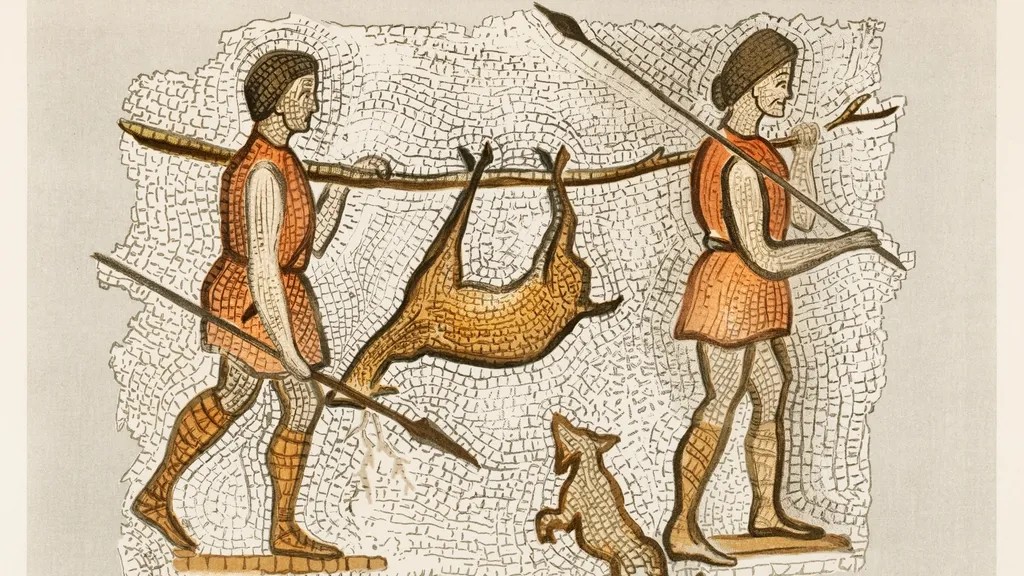
Scroll through social media for five minutes and you’ll see it: videos about hunter‑gatherers, stone tools, barefoot running, ancestral diets, cold plunges, tribal rituals. It is oddly mesmerizing. Many people who feel strangely drawn to early humans are not just being nerdy about prehistory; on a deeper level, they are trying to answer a more personal question: what did modern life strip away that our nervous systems still miss? That quiet itch you feel when you see a photo of a campfire in the dark or a small band walking across a savanna is not just aesthetic preference. It is your brain, shaped by hundreds of thousands of years of evolution, recognizing something that feels like home.
Psychologists and evolutionary scientists increasingly argue that our minds are adapted for a world that no longer exists, a phenomenon sometimes called an evolutionary mismatch. We live in cities, but our bodies expect forests and open plains; we scroll feeds, but our brains expect face‑to‑face gossip around a fire. When you feel pulled toward documentaries about Neanderthals, cave art, or the first migrations out of Africa, it might not be random curiosity. It might be a quiet attempt to reconstruct a lost blueprint of how humans were meant to live, relate, work, and rest. And once you see it that way, the fascination stops being trivial and starts looking like a psychological compass pointing backward to understand what we need going forward.
The Stone Age Mirror: Why We Look Back to Understand Ourselves Now
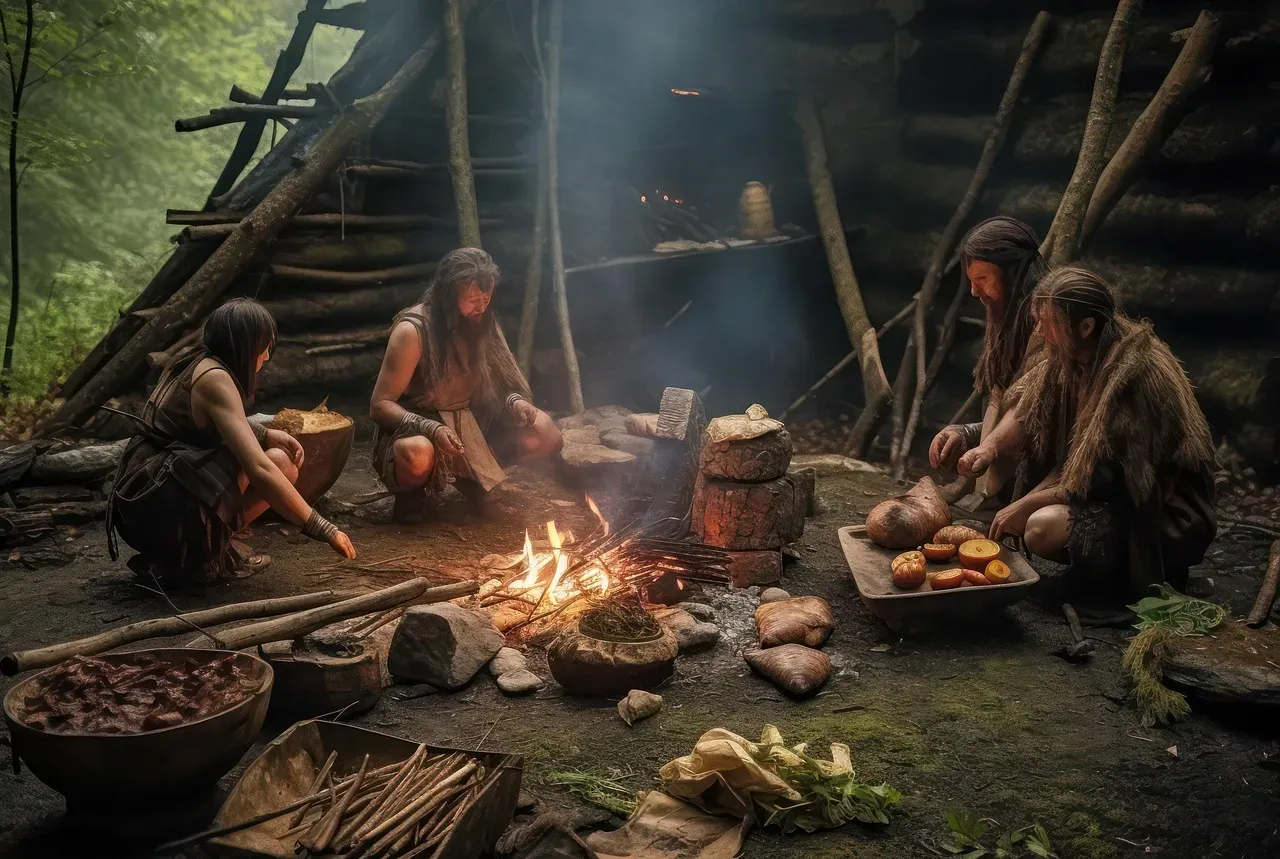
One of the most surprising things modern psychology keeps circling back to is that for nearly all of our species’ history, we lived as small bands of hunter‑gatherers. Agriculture, cities, money, and smartphones are unbelievably recent in evolutionary terms, more like a last‑minute software patch than a full redesign. Our brains, emotions, and social instincts were forged in a world of shared dangers, shared food, and shared stories, not notifications and HR policies. So when people binge books, podcasts, and videos about early humans, they’re often using the deep past as a mirror for their own anxieties and longings in the present.
This mirror works in a subtle way. Learning that early humans lived in tight‑knit bands, cooperated to survive, and depended heavily on one another can throw your own life into sharp relief. If your days feel like fragmented solo battles with email, commute, and bills, the contrast can sting. The fascination then becomes a kind of self‑diagnostic: by staring at how we used to live, you start to notice what feels off about how you live now. It is less about nostalgia for caves and spears and more about a half‑conscious question: if this is what we were built for, why does this modern setup feel so strangely hollow?
Craving Belonging: The Lost Tribe Our Brains Still Expect
Psychological research is very clear on one thing: humans are intensely social, and chronic loneliness harms both mental and physical health in ways comparable to major risk factors like smoking and obesity. For most of our evolutionary story, being alone was dangerous, even life‑threatening. We evolved brains that constantly monitor social standing, acceptance, gossip, alliances, and threats. Small bands, often only a few dozen adults, were not just communities; they were survival itself. So when people become obsessed with the social life of early humans, what they are often aching for is the feeling of being deeply woven into a tribe that needs them.
Modern life, with its long commutes, remote work, and digital friendships, can feel like living among thousands of strangers yet being truly close to almost no one. The idea that hunter‑gatherers knew nearly everyone they saw daily, shared food, and jointly raised children hits a nerve. It paints a picture of a social world in which you were almost never truly alone, and where your absence would be immediately noticed. For someone living in a high‑rise who can disappear for days without anyone checking in, that image can be both comforting and painful. Studying ancient human evolution then becomes a way of mourning an invisible loss: the tribe your nervous system still thinks you should have.
Simpler Threats, Clearer Minds: The Overloaded Modern Brain

Early humans faced terrifying risks: predators, injuries, starvation, conflict with neighboring groups. But those threats were usually concrete and immediate. You knew what you were afraid of and why. In contrast, many modern stressors are abstract, chronic, and diffuse: mortgage interest rates, climate anxiety, long‑term career insecurity, health fears triggered by a late‑night search, constant comparison to others online. Our stress response system, tuned for short bursts of survival mode, never evolved for decades of low‑grade dread. This mismatch leaves many people feeling wired yet exhausted, busy yet strangely pointless.
When someone feels drawn to ancient human evolution, they might be captivated by the idea of a life where threats, while very real, were at least understandable and directly actionable. You either made it back from the hunt or you did not; you saw the storm coming or you did not. That clarity can look almost peaceful compared to the fog of modern anxiety. The fascination, then, is not about romanticizing danger but about imagining a life where the brain is not constantly processing emails, deadlines, and social media drama. At a gut level, people sense that our ancient cousins spent more time fully present in their environment and less time trapped in abstract worry, and they wonder what that kind of mental silence would feel like today.
Movement, Body, and Nature: The Physical World We Quietly Miss

From a scientific standpoint, our bodies are still those of highly active foragers who walked long distances, climbed, squatted, carried loads, and interacted constantly with the physical environment. Yet a large share of modern life happens sitting, staring at screens under artificial light. That gap shows up in skyrocketing rates of metabolic disease, chronic pain, and sleep problems. People who dive into the study of early humans often become fascinated with how much movement, sunlight, and environmental variation shaped our evolution. It is not really about romantic camping fantasies; it is about a bodily homesickness modern language does not have good words for.
This is why trends like barefoot running, cold‑water exposure, or outdoor fitness feel almost ritualistic to some. They are not random wellness fads so much as intuitive attempts to recreate the conditions our bodies expect: uneven ground, temperature swings, fresh air, direct contact with the elements. When someone reads about how our ancestors tracked animals over vast landscapes or navigated by stars, they are not just admiring skill. On a deeper level, they are imagining a life where their muscles, senses, and instincts are fully engaged. The obsession with ancient human evolution is, in this sense, a negotiation with a body that keeps whispering that fluorescent lights and ergonomic chairs are not the full story.
Meaning, Ritual, and Story: The Spiritual Blueprint Modern Life Diluted
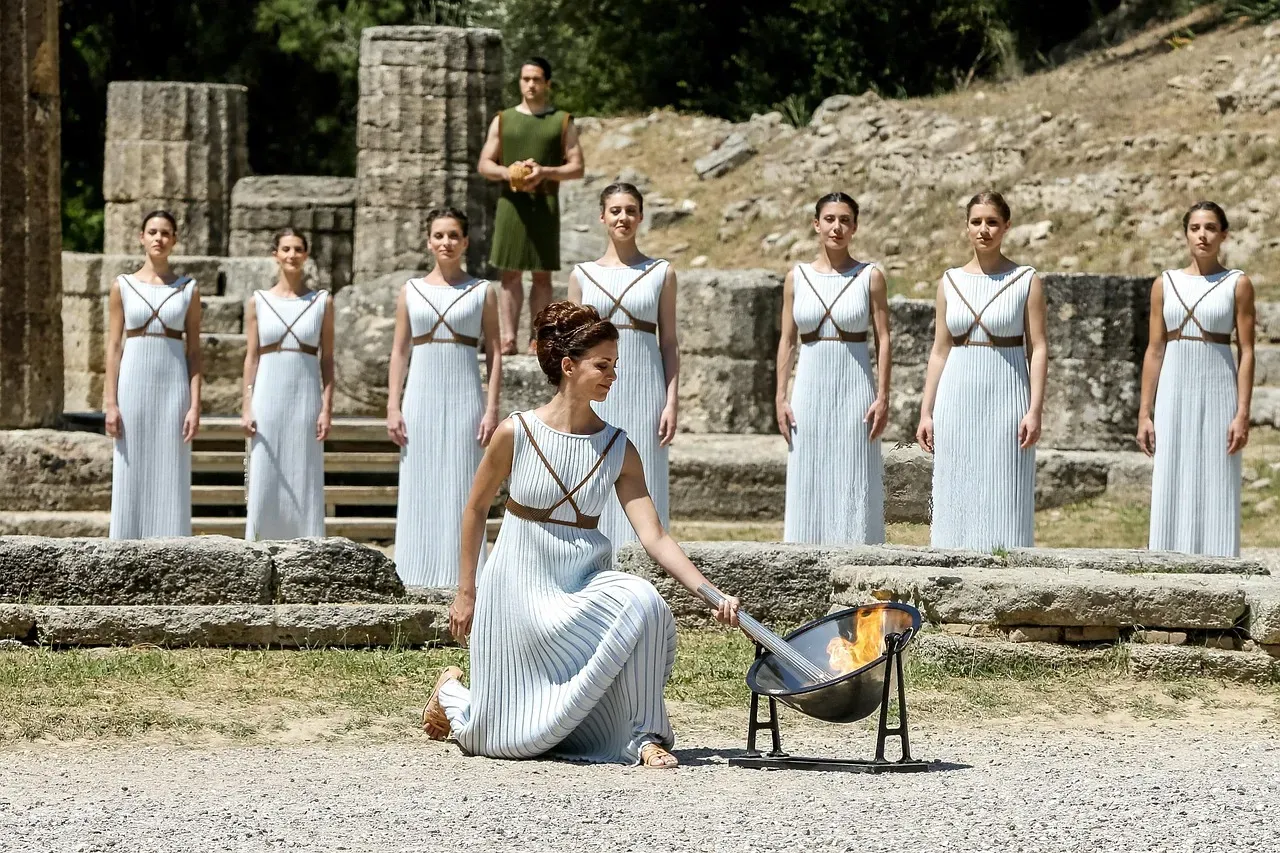
Archaeology and anthropology show that early humans were not just practical survivors; they were meaning‑makers. Cave paintings, burial sites, figurines, and ritual objects all hint that humans have been telling stories about life, death, purpose, and the sacred for a very long time. In small groups, collective rituals and shared myths helped people understand their place in the world and strengthened social bonds. Today, formal religion may be declining in many places, but the psychological need for meaning and shared narrative has not gone anywhere. It just often goes unmet or gets scattered across brands, fandoms, and fragmented online communities.
People captivated by ancient human evolution are sometimes sensing this missing thread. They are drawn to the idea that once, meaning was not an individual DIY project but something woven into daily life and community practices. The thought of gathering regularly around a fire to share stories, celebrate transitions, grieve together, and look up at a truly dark sky can feel almost unbearably poignant. In that longing, there is a quiet criticism of modern life: that it has flooded us with information while starving us of coherent stories about why we are here and what we owe each other. Studying ancient rituals becomes less academic and more like searching for a lost instruction manual on how to be human together.
From Scarcity to Excess: Why Abundance Feels So Strangely Unsatisfying

Our ancestors evolved in a world of frequent scarcity. Food was not guaranteed, shelter had to be secured, and comfort was intermittent at best. In that environment, brains that craved sugar, fat, and rest had a survival advantage. Fast‑forward to the present, and many of us live in a world of nearly constant availability: calorie‑dense food, on‑demand entertainment, indoor climate control, everything one tap away. The trouble is that our reward circuits still think we are in the Stone Age, so they relentlessly push us toward more, even when more does not feel good anymore. This is a classic evolutionary mismatch: ancient drives dropped into a world of super‑stimuli.
People who are fascinated by ancient human evolution often feel this mismatch viscerally. Reading about humans who had to work hard for every meal challenges the assumption that comfort is always better. It raises uncomfortable questions about why endless streaming options and food delivery do not translate into deep satisfaction. There is a growing sense that modern abundance can dull our appreciation, fragment our attention, and leave us weirdly numb. Looking back at a life of physical effort, clear stakes, and genuine hardship, some people suspect that meaning may have grown out of that very friction. The fascination becomes a quiet rebellion against the idea that convenience is the ultimate goal.
Rebuilding What We Can: Bringing Ancient Wisdom Into Modern Life

Here is the hard truth: we are not going back. No amount of nostalgia will turn office parks into savannas or email threads into firelight councils. But the psychological pull toward ancient human evolution can be incredibly useful if we treat it as data rather than fantasy. It is our nervous system sending up flares about what it is missing: consistent community, clear purpose, daily movement, contact with nature, shared rituals, manageable information flows. Instead of wishing we were born ten thousand years ago, we can ask more practical questions about how to smuggle some of those ancestral conditions into twenty‑first‑century life.
That might look like deliberately shrinking your social world to a core group you see often, prioritizing regular meals with the same people, or joining a community where your contribution clearly matters. It could mean building small rituals around mornings, evenings, or weekly gatherings that give your life a rhythm beyond deadlines. It might be as simple as walking more, turning your face to actual sunlight, or replacing part of your digital consumption with hands‑on skills that would have made sense to your ancestors: cooking, mending, growing, crafting. None of this fully recreates a hunter‑gatherer band, but it does respect the blueprint instead of pretending it does not exist.
Conclusion: Our Obsession With Ancient Humans Is a Quiet Critique of Modern Life
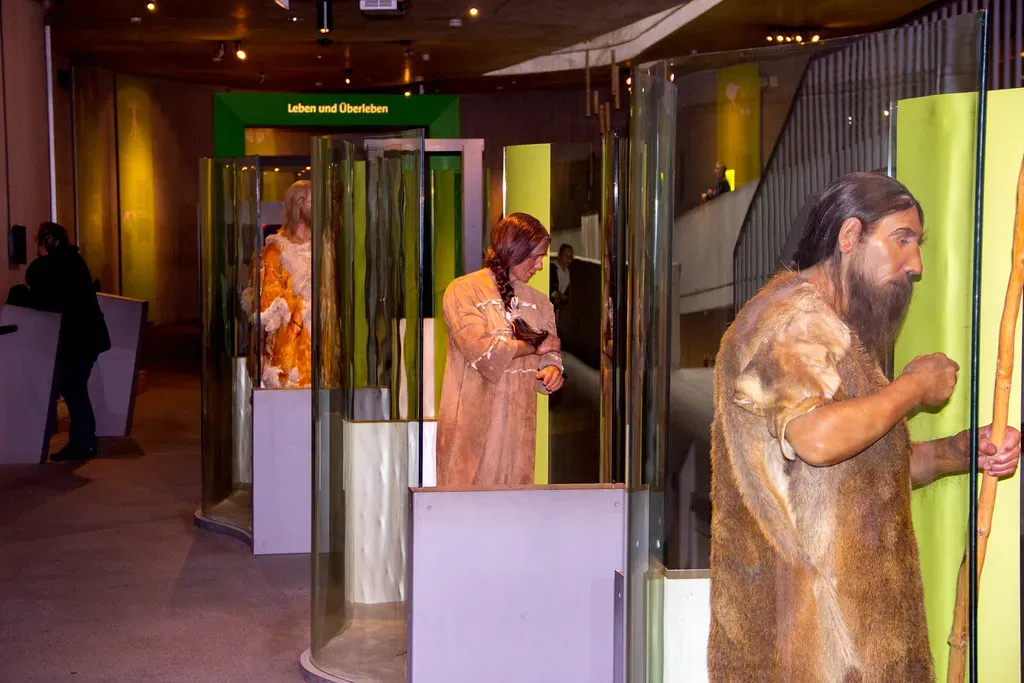
In my view, the rising fascination with ancient human evolution is not a quirky hobby or a passing trend; it is a cultural symptom. It reveals that, beneath all the progress and comfort, many of us suspect something essential has been edited out of the human experience. When you feel a tug toward stories of small bands moving across wild landscapes, you are not secretly wishing for saber‑toothed tigers and famine. You are wishing for a life where your body is used, your presence matters, your community is real, and your days fit into a story larger than your to‑do list. That longing is not naive; it is psychologically intelligent.
Of course, we should be honest: ancient life was often brutal, unjust, and short. Romanticizing the past can blind us to the genuine gains of modernity, from medicine to human rights. But refusing to listen to what our obsession with the past is trying to tell us is just as dangerous. The healthiest stance, I think, is unapologetically critical: grateful for the present, yet unafraid to admit that our nervous systems are still shaped by a world we can barely imagine. The real challenge of our time is not to go back, but to redesign modern life so that it feels less like a glitch in our evolutionary story and more like a continuation of it. If your eyes light up at the mention of ancient humans, maybe the right question is not what they lacked, but what we have quietly let slip through our fingers – what do you secretly suspect we were never meant to lose?