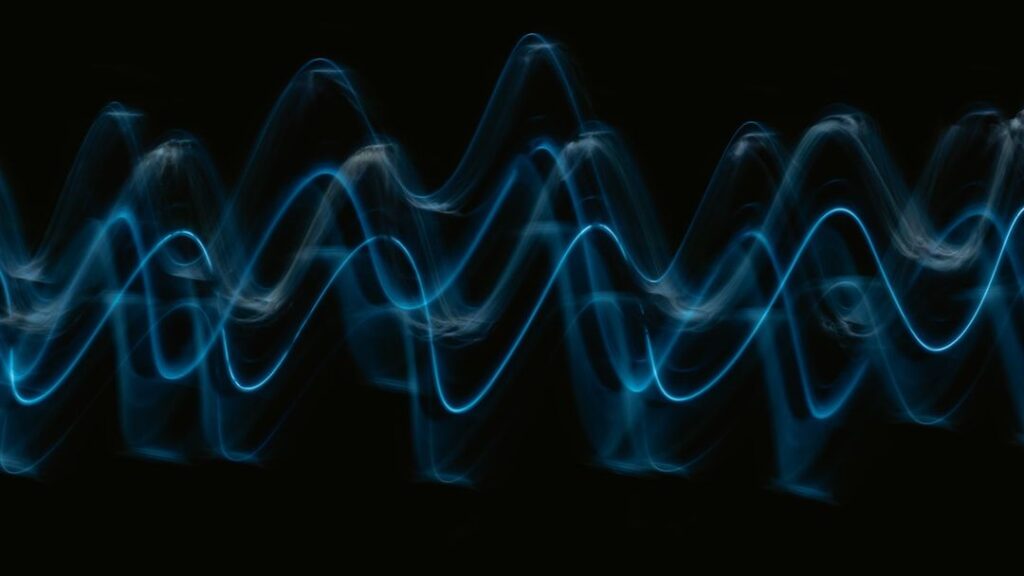
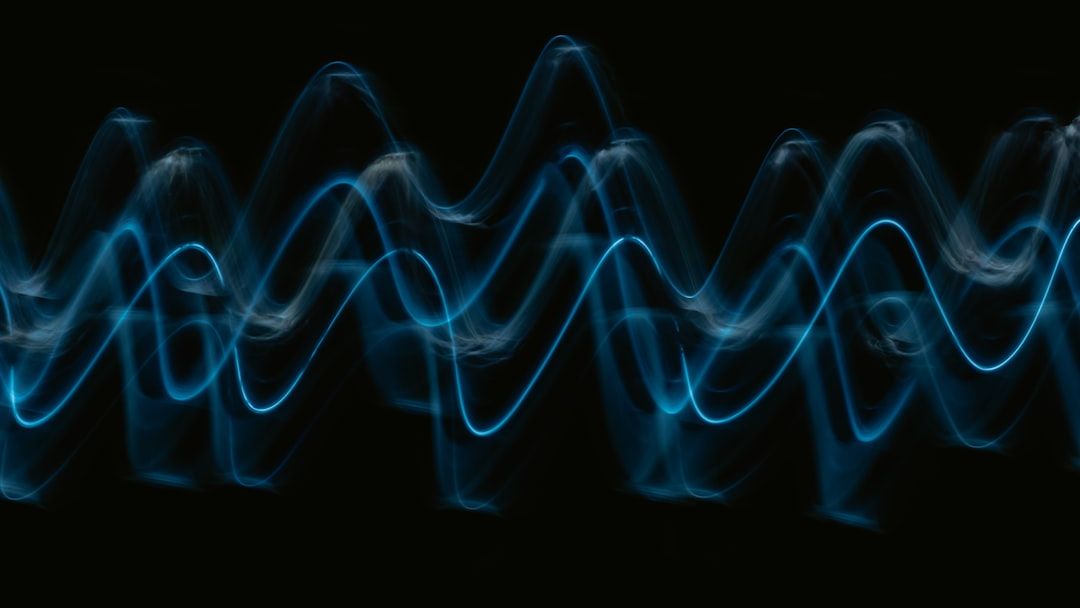
Visualizing sound: Scientists reveal hidden behaviors of sound waves – Image for illustrative purposes only (Image credits: Unsplash)
Sound has been measured and modeled for generations, yet researchers have now identified subtle patterns in how waves travel through ordinary air that escaped detailed notice for decades. An international group led by scientists at City St George’s, University of London examined these movements in a study published in Scientific Reports. Their work focuses on the physical paths sound takes and the possibility that those paths could become visible under certain conditions.
Tracing Movement That Defies Simple Expectations
The analysis began with established equations describing pressure changes in air, then added layers of observation that previous models had set aside. Small variations in wave shape and speed appeared consistently across different frequencies and distances. These variations did not contradict core physics but showed that everyday sound carries more internal structure than most textbooks describe.
Researchers tracked how individual wave fronts interact with surrounding molecules over short intervals. The resulting picture suggests that sound does not simply expand outward in smooth spheres. Instead, it develops localized irregularities that persist longer than expected before dissipating.
Why Earlier Studies Missed These Details
Most prior work concentrated on average intensity or overall direction, quantities that remain useful for engineering applications. The finer spatial and temporal features required both higher-resolution recording equipment and fresh mathematical filters to isolate. Once those tools were applied, the overlooked behaviors became measurable rather than theoretical.
The team noted that laboratory conditions often suppress the very effects they later highlighted. Controlled chambers tend to dampen the small-scale turbulence that occurs in open air, which may explain why the patterns stayed hidden during routine tests.
Links to Visual Perception of Sound
One line of inquiry explored whether the newly mapped wave features could produce detectable optical effects. Changes in air density along a sound path can, in principle, bend light slightly. The study outlines conditions under which such bending might accumulate enough to register on sensitive imaging systems, though practical demonstration remains limited.
Current evidence stops short of claiming routine visibility. The researchers emphasize that any visual signature would depend on precise alignment of sound source, observer, and background light. Further experiments are needed to determine whether the effect can be isolated outside specialized setups.
What the Findings Suggest Next
The work opens questions about how these wave details influence acoustic design in rooms, outdoor spaces, and medical imaging. Engineers may eventually incorporate the additional structure into simulations that predict sound behavior more accurately. At the same time, the study leaves open how much practical difference the overlooked features will make once they are routinely included in models.
Key points from the research include the identification of persistent wave irregularities, the role of improved measurement techniques in revealing them, and the cautious outlook on visual detection. Continued testing will clarify which applications benefit most from this added precision.